
Knowledge · Knots
How to tie a drop shot knot
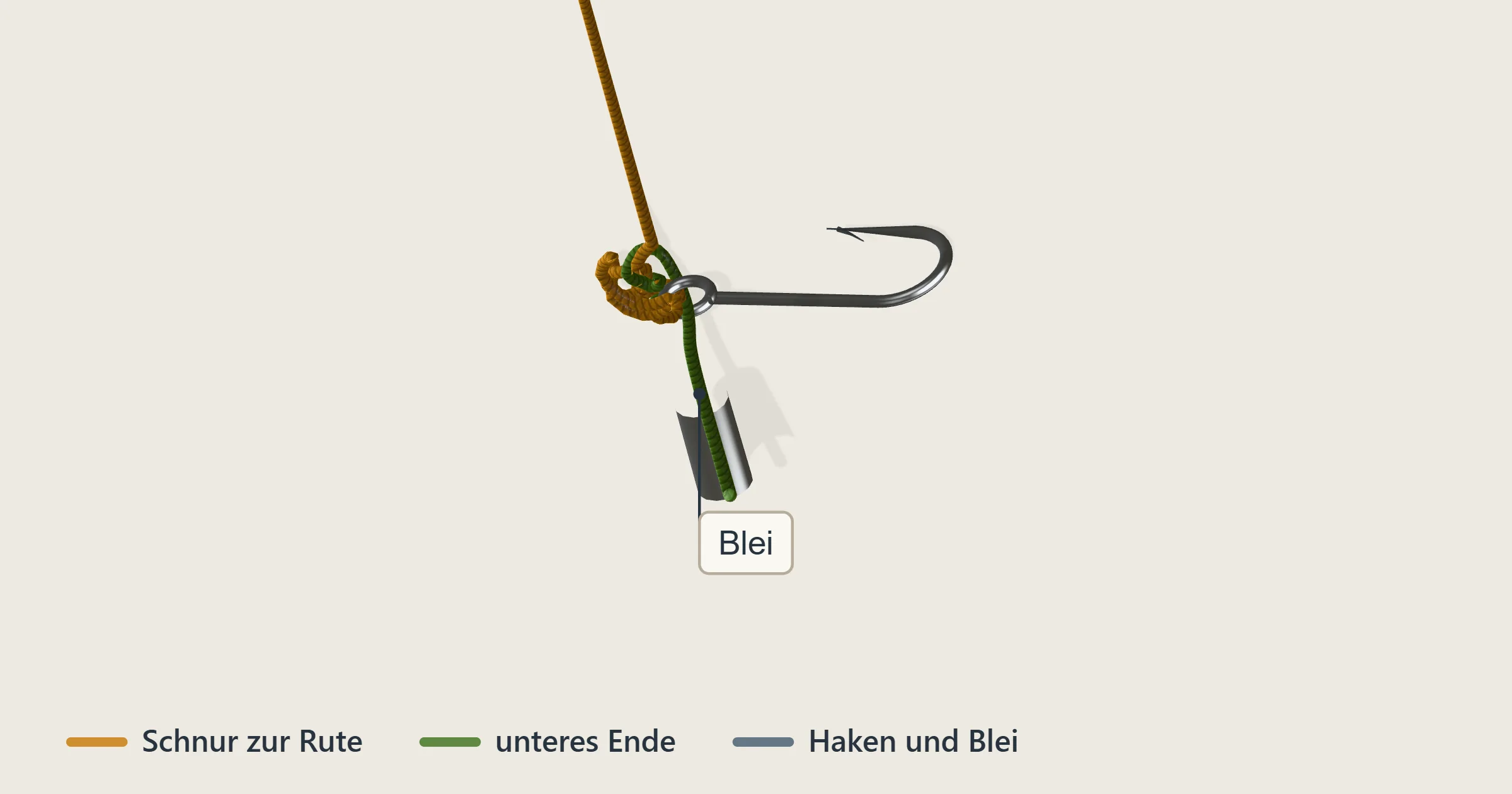
The Drop shot knot is a Palomar knot tied in the middle of the leader. At the end the lower end of the line runs once more from above through the eye. This makes the hook stand out horizontally from the line, with the weight hanging below.
What is the drop shot knot good for?
In drop shot fishing the bait hovers above the bottom while the weight hangs on the end of the line below. Because the knot is tied into the continuous line, it lets you decide how high the bait sits above the weight.
It is quick and easy to tie. The basic form without the last step is the Palomar knot for hooks, swivels and eyelets. According to Blinker, the Palomar knot is the basis of every drop shot rig; if the lower end of the leader is then threaded back through the hook eye, the hook stands out horizontally.
Tying the drop shot knot: step by step
- Double the line. Double the line at the point where the hook is to sit and leave enough line protruding for the weight. NetKnots gives 12 to 30 inches depending on the bait height wanted, which is about 30 to 75 cm.
- Loop through the eye. Pass the loop through the eye. The hook point faces up.
- Overhand knot. Tie a loose overhand knot with the doubled line. The hook hangs at the bottom of the loop.
- Loop over the hook. Pass the loop over the whole hook and push it up past the eye.
- Tighten. Moisten the knot and pull on both ends of the line until the knot sits at the eye.
- Lower end through the eye. Pass the lower end, which will later carry the weight, once more through the eye from above. Then check that the hook point still faces up.
- Attach the weight. Attach the weight at the distance you want to the lower end and trim the rest.
Common mistakes
- Last step forgotten: Only the second pass of the end through the eye turns the Palomar into the drop shot knot.
- Hook faces down: The point belongs facing up, even after the end has gone through the eye a second time.
- Too little line doubled: The length of the doubled section decides how high the bait later sits above the weight.
Pull test and knot strength
First check that the turns lie neatly side by side and the line is undamaged. Then pull steadily on both sides of the connection. For practice use a blunt ring; do not pull with bare fingers on an open hook or on thin line. If an end slips or the knot distorts, tie it again. A pull test does not measure breaking strength, it only shows gross tying faults.
Material, diameter and tying technique affect every connection. The line calculator gives you a rough guide using cautious knot factors of our own.
Related knots
The basic form is the Palomar knot. The page Drop shot rig shows the whole rig with weight distance and bait presentation.
Used in the rig: Drop shot rig.
Note: Other ways of tying with wraps around the main line also circulate under the name drop shot knot. This page describes the Palomar variant shown by NetKnots and Blinker.
Sources
- NetKnots – Drop Shot Rig
- Blinker – Der Palomarknoten
- Blinker – Dropshot: alles, was du über die Montage wissen musst
Sources opened and checked on 2 October 2026. Texts in our own words, sketch drawn independently; no graphics taken from the sources. You will find all knots in the overview of fishing knots.
All figures are guide values without guarantee. Follow the line manufacturer’s instructions.