
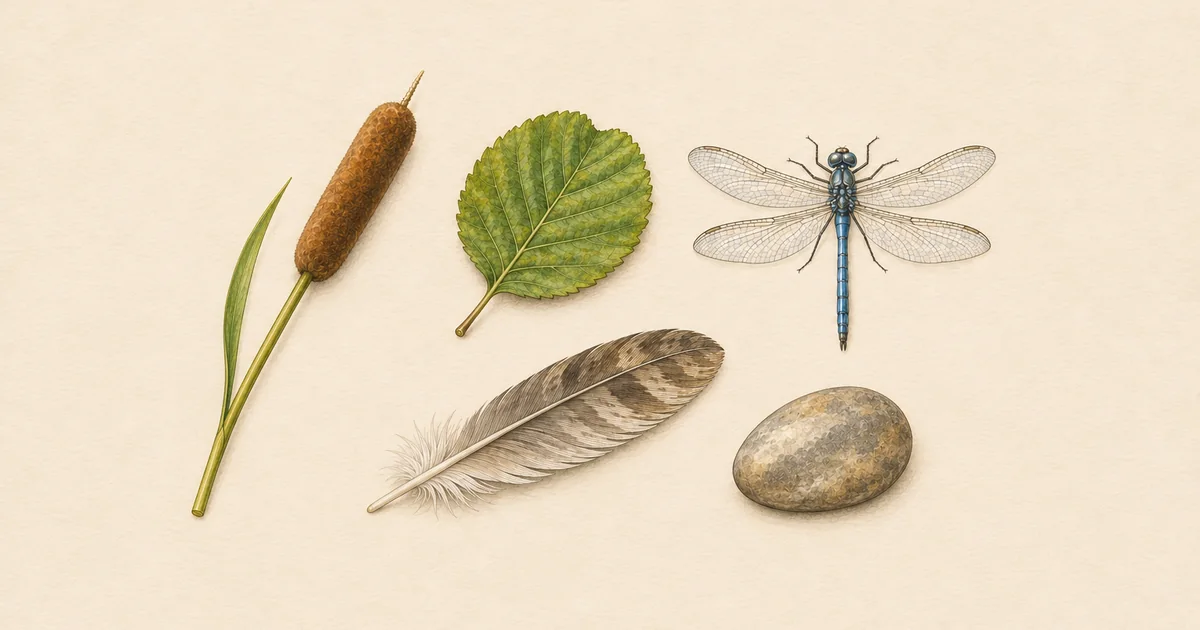
Knowledge · Category
Nature & environment
A day’s fishing leaves traces: bits of line, cigarette ends, lead, a trampled patch of reeds, or water from another lake in your bucket. This section on nature and the environment in angling brings together what authorities, conservation organisations and research say about it, and what you can do differently on the bank. The legal position varies by federal state and protected area, so the pages give their references.
At the swim
Leaving your fishing spot clean
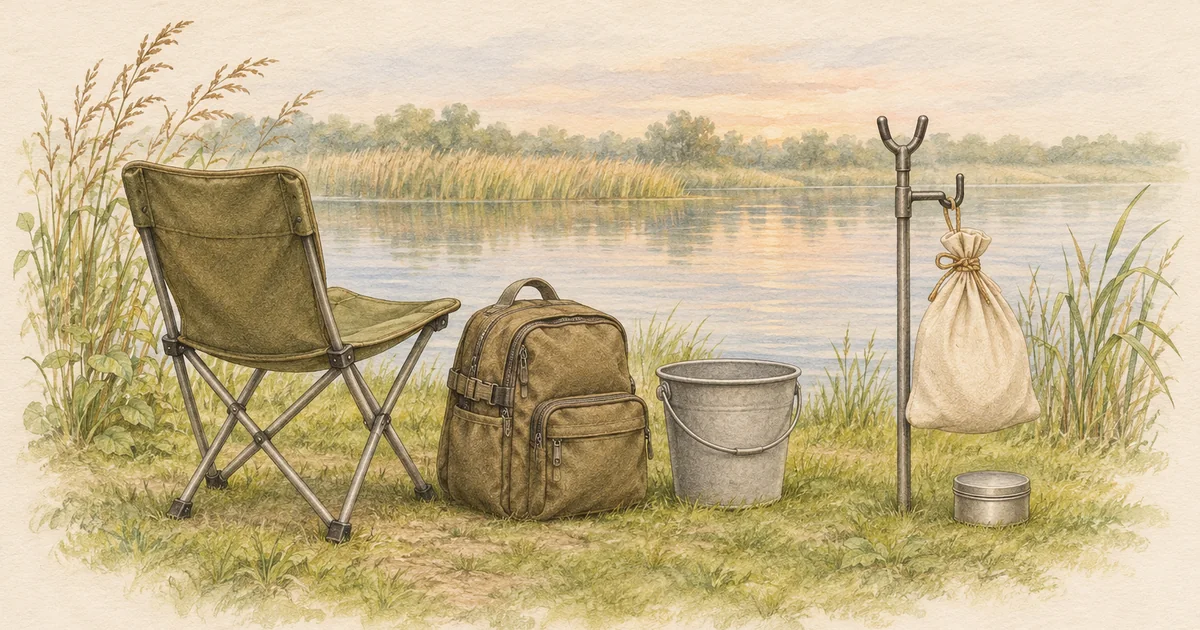
Cigarette ends, leftover groundbait and glow sticks: what does harm, what the law says and what to take for clearing up.
Disposing of fishing line and hooks
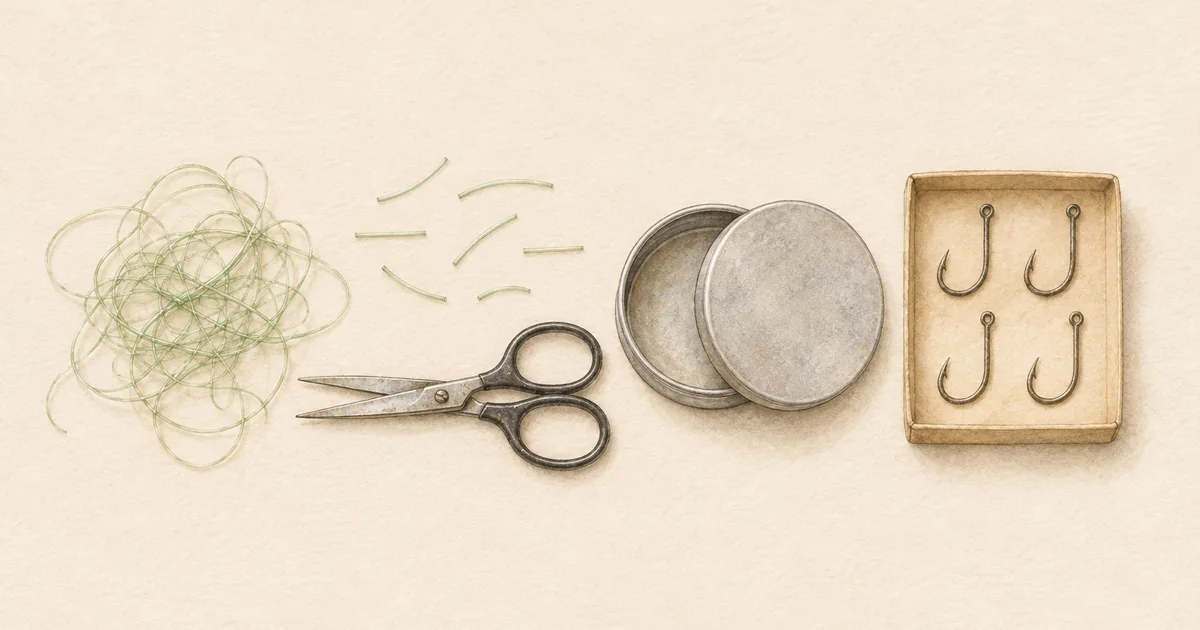
Where old line, hooks and soft plastics belong and how to free snags without leaving anything behind.
Lead in angling
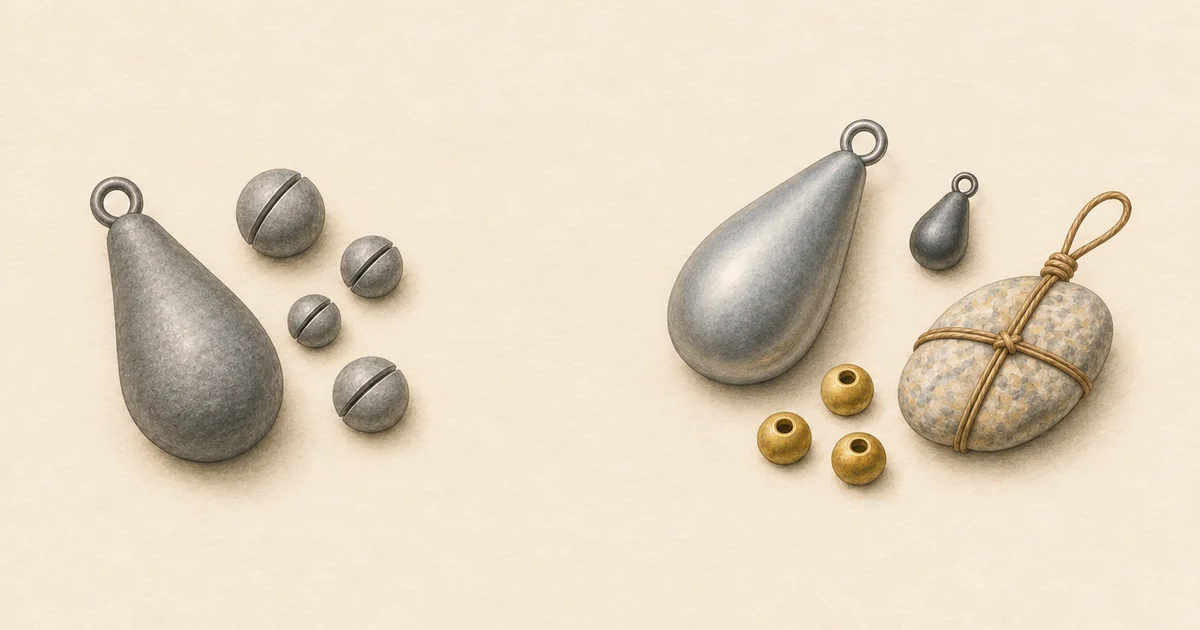
Why lead endangers waterbirds, what the EU has decided and which substitute materials exist.
Protecting waters and banks
Nature conservation on the bank
Protected areas, reed beds and breeding seasons: what applies on the bank and where to look up the rules.
Not spreading species and diseases
Baitfish, bucket water, wet landing nets: how species and pathogens travel and how you can prevent it.
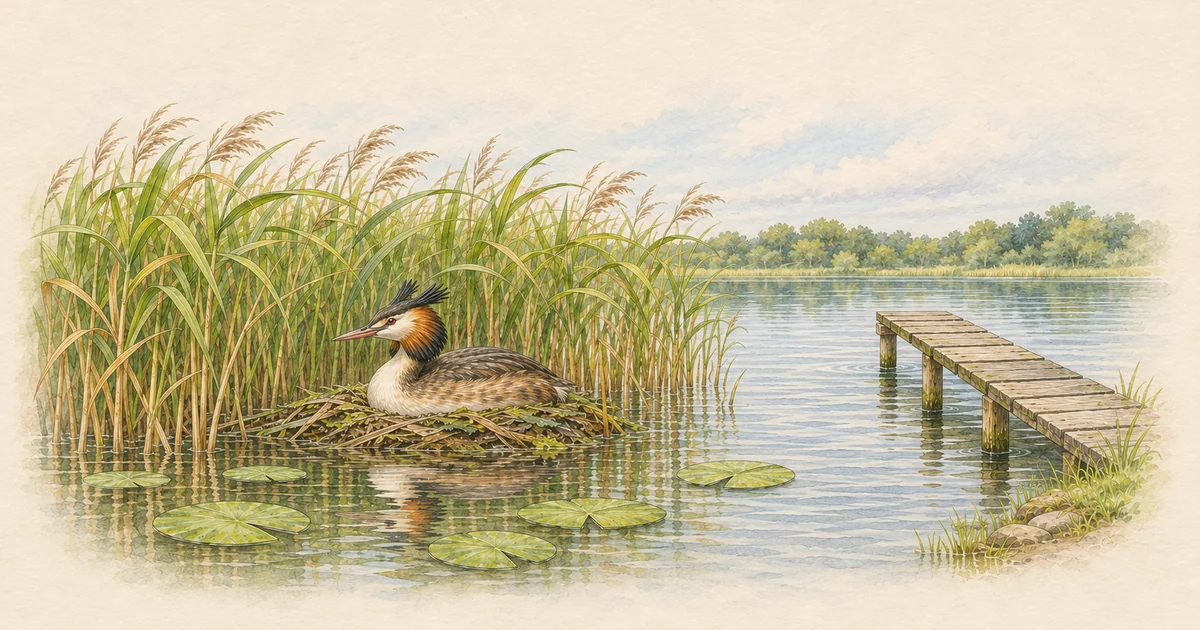
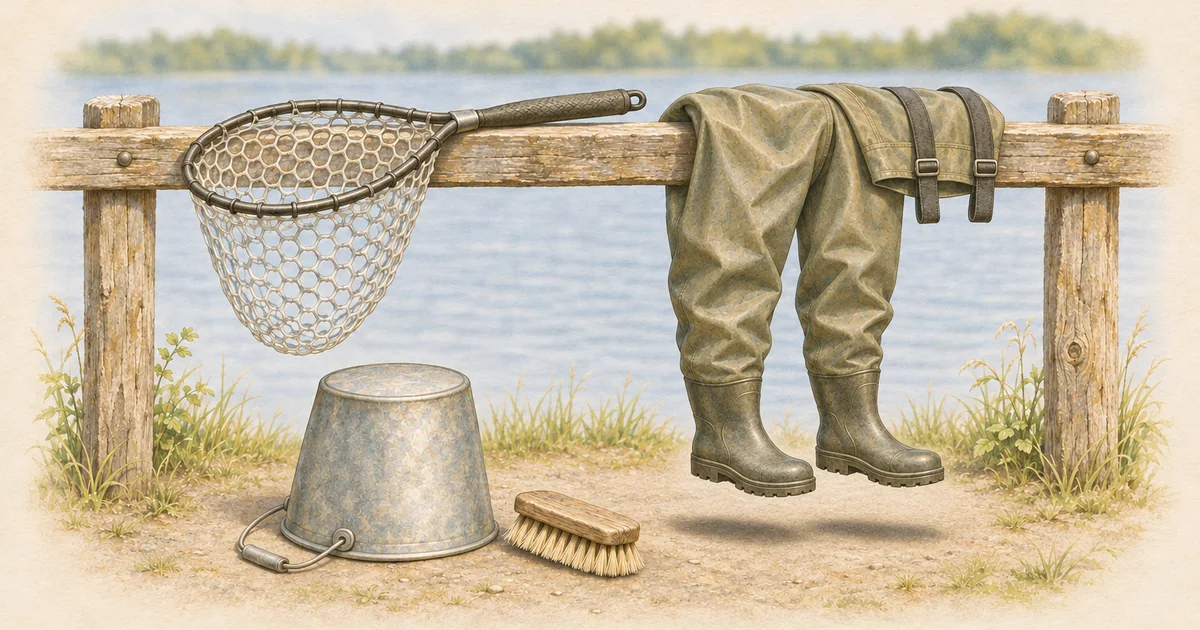
Images: AI-generated
Why this section
Anglers are often the first to see when something is wrong at the water, and many clubs clear up banks regularly. At the same time, angling puts things into the water that do damage there: line that birds get tangled in, lead that dabbling waterbirds pick up from the bottom, and pathogens or alien species that travel with bait and wet tackle.
The pages explain where the problems come from, what federal and state law say about them and which practical steps help at the water. Where authorities or studies give no figures, we don’t either.
Related sections
Gentle handling of the fish itself, from bait to release, is described in Fish welfare & practice; what to do if a bird gets on the hook is covered under Bird or wild animal on the hook. Fishing permit, closed seasons and state law are explained in Law & licences.
Note: Protected area regulations, water rules and fishing permits can be stricter than general law. What applies on your bank is stated there and in your federal state’s map services.
Principles for all pages
- Statements come from laws, authorities, conservation organisations and specialist publications and are marked as such in the text.
- Legal information gives the reference and the date on which we checked it.
- No product or buying recommendations, only materials and practical steps.
Sources
- Bundesnaturschutzgesetz § 39 (allgemeiner Artenschutz, Röhricht)
- Kreislaufwirtschaftsgesetz § 28 (Abfall nur in dafür zugelassenen Anlagen beseitigen)
- Verordnung (EU) Nr. 1143/2014 (invasive gebietsfremde Arten)
All information is without guarantee and does not replace legal advice. What counts is the law of your federal state, the regulation for the protected area and the water rules.