
Knowledge · Category
Waters and fish behaviour
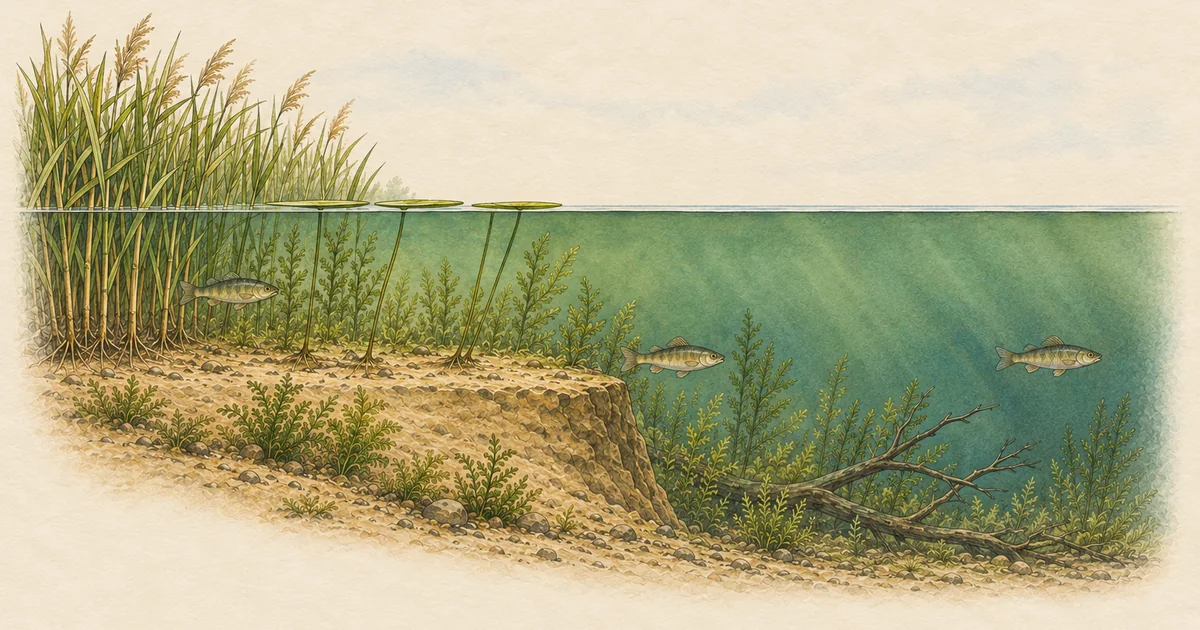
Fish behaviour depends on the water and on environmental factors: on current and depth, on temperature and oxygen, on weather and on the season. Here you will find the overview and the routes to the subpages.
Why the water matters
A fish does not hold just anywhere by chance. Where it sits and how active it is depends on the water it lives in and on factors such as water temperature, oxygen, light and season. Anyone who knows these connections searches more purposefully and reads a water better than fixed rules would allow. These pages organise the knowledge: what applies to river, lake and canal, what temperature and layering in a lake mean, what is proven about the weather and what is experience.
One thing applies throughout: fish behaviour can only be predicted roughly. The pages therefore keep a clear line between what is in specialist sources and what anglers report.
The subpages
Reading the water
What kind of water it is, how it flows and how the sea rises and falls.
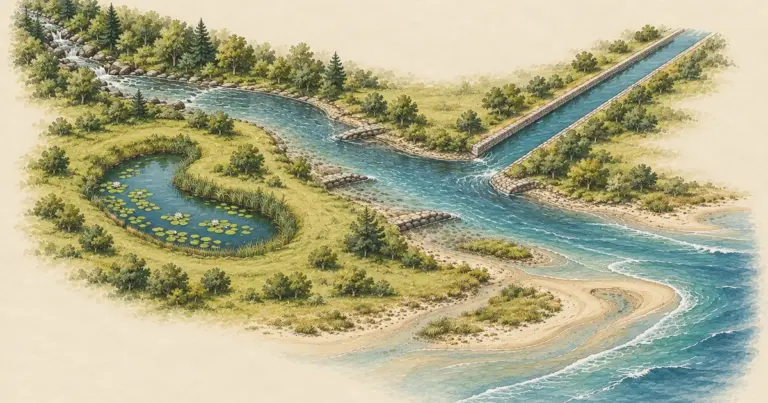
Water types
Flowing water, lake, pond, canal and coast with their typical features and what they mean for fishing.
Image: AI-generated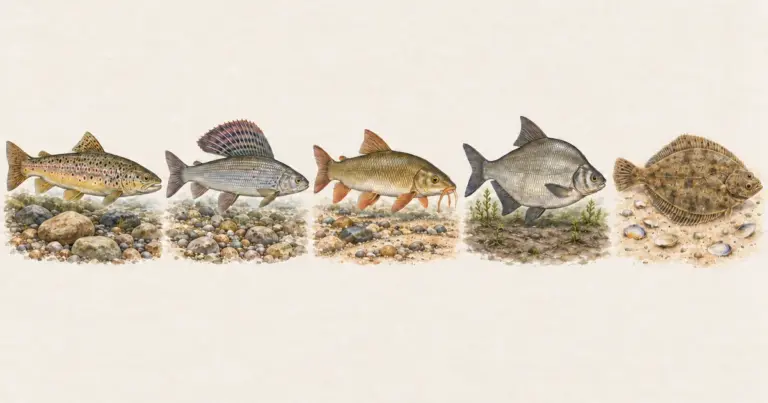
Fish zones in a river
Five sections from source to mouth, their characteristic fish and how you recognise them.
Image: AI-generated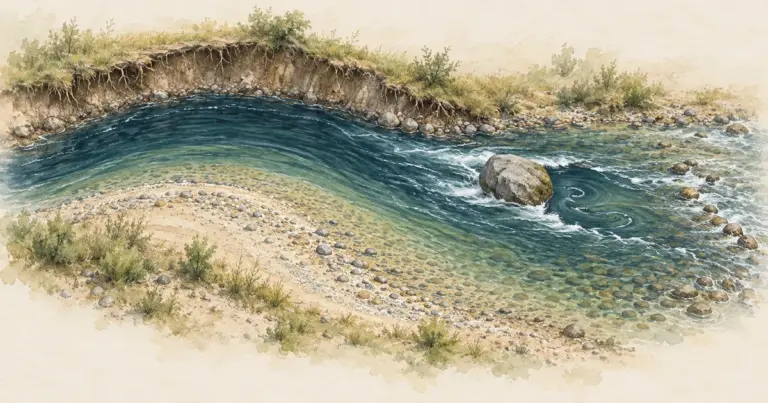
Reading the current
How water flows in a river, what places result from it and why fish hold exactly there.
Image: AI-generated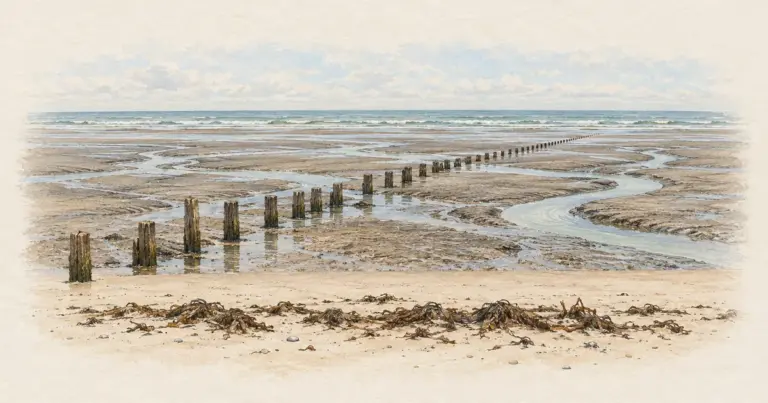
Tides: ebb and flood
Flood, ebb, tidal range and spring tide explained, plus the official forecasts and safety on the tidal flats.
Image: AI-generated
What drives the fish
Temperature, oxygen, weather and season determine how active fish are and where they hold.
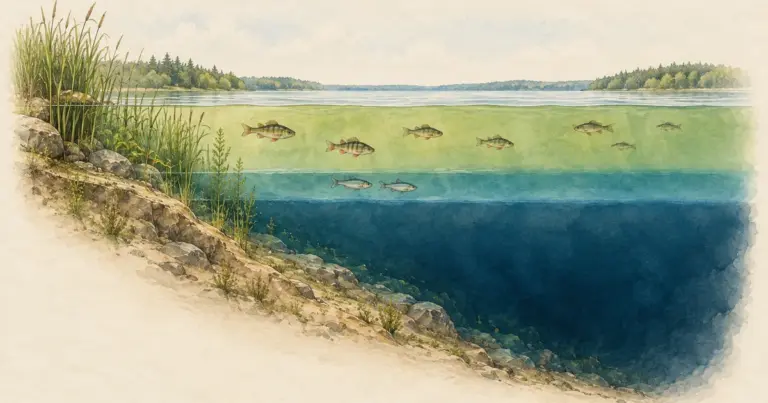
Water temperature and oxygen
How temperature and oxygen drive activity and how layering arises in a lake.
Image: AI-generated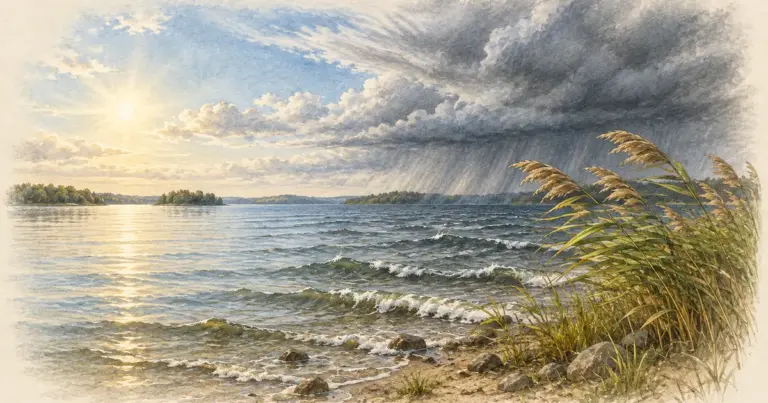
Weather, air pressure and wind
What research and experience say about light, wind, rain and air pressure, kept clearly apart.
Image: AI-generated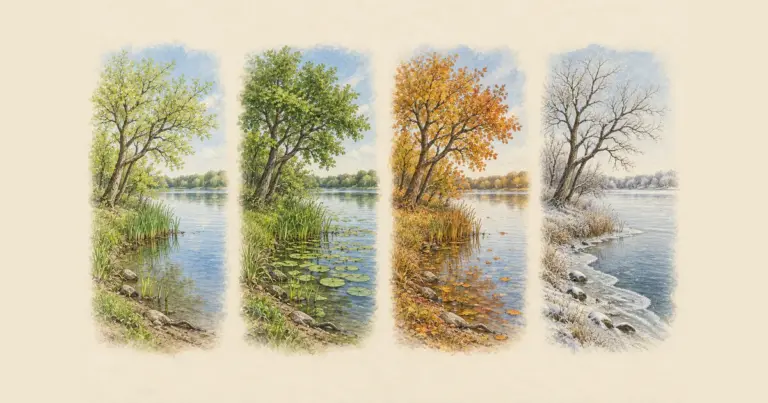
The year at the water
The four seasons at the water in key points.
Image: AI-generated
What they eat
From plankton to prey fish: the bait depends on it.
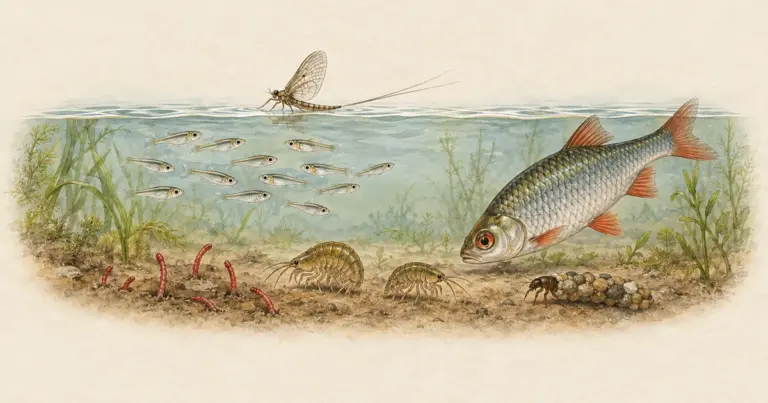
What fish eat
Plankton, bottom animals, insects from the air and fish fry: what fish eat and how to choose your bait accordingly.
Image: AI-generated
New here? A reading path
- Water typesWhich water lies in front of you
- Reading the currentWhere fish hold in a river
- Water temperature and oxygenWhy they hold deeper in summer
- The year at the waterWhat changes through the year
- Weather, air pressure and windWhat the weather really does
From knowledge to the water
How to use these connections on a particular water is shown by the nine pages under Types of water.
Keep reading
Which species is good to catch when is shown by the Catch calendar. How to fish river, lake or coast is covered under Types of water, and species and their requirements under Fish.
Note: fish behaviour depends on many factors. The pages give guidance, not a guarantee of a catch.