
Knowledge · Types of water
Fishing on a lake
In a natural lake the fish are not spread evenly. They stay near plants, drop-offs and raised areas on the bottom, and the spots change with the seasons. Before you cast to the first spot, read the fishing permit and the water rules, because individual lakes have their own rules.
At a glance
- Spots
- Reed edge and water lilies, weed edge, drop-off, perch hump, sunken wood, inflow, open water
- Fish
- Pike, perch, zander, tench, bream, plus roach, rudd, carp, eel and whitefish
- Through the year
- Shallow in spring, in summer at the edge or above the thermocline, deeper in autumn, deepest in winter
- Papers
- Fishing licence (Fischereischein) and fishing permit (Erlaubnisschein); whether you may fish from a boat is set out in the water rules (Gewässerordnung)
- Take care
- Reeds are protected and not for walking into; in a boat a life jacket is part of the kit
What makes a natural lake
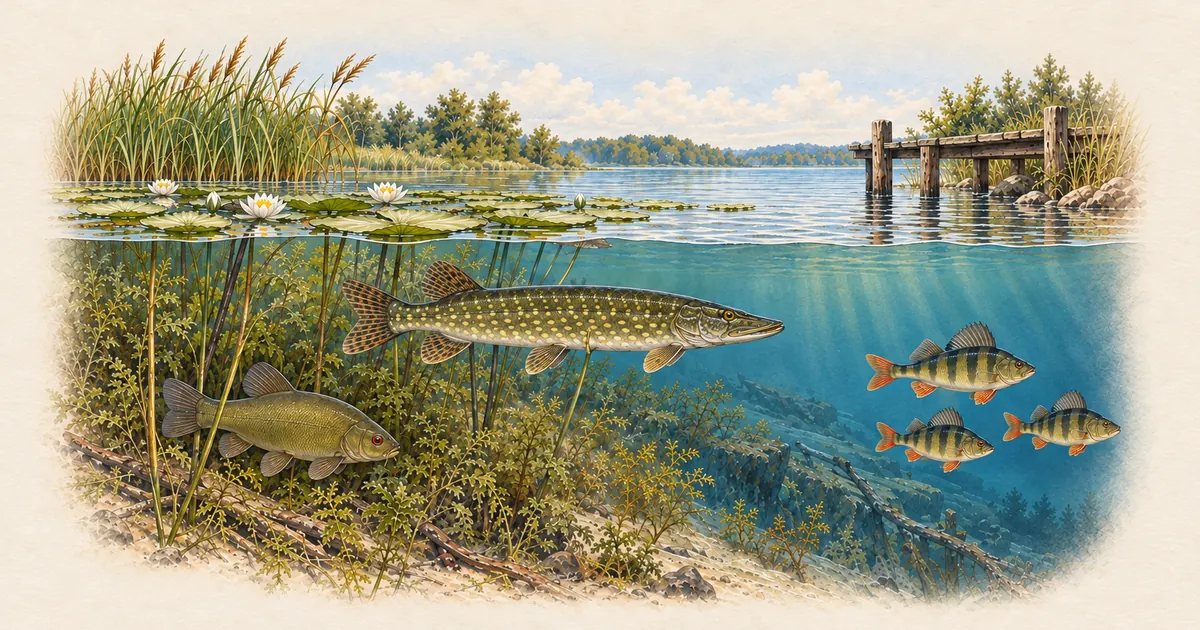
Natural lakes usually formed after the Ice Age. They often have an inflow and an outflow, and a belt of reeds and floating-leaved plants is typical of them (Leibniz-Institut für Gewässerökologie und Binnenfischerei). Limnology divides a lake into the littoral zone, the deep zone and open water; higher plants grow only in the littoral zone (Lexikon der Geowissenschaften).
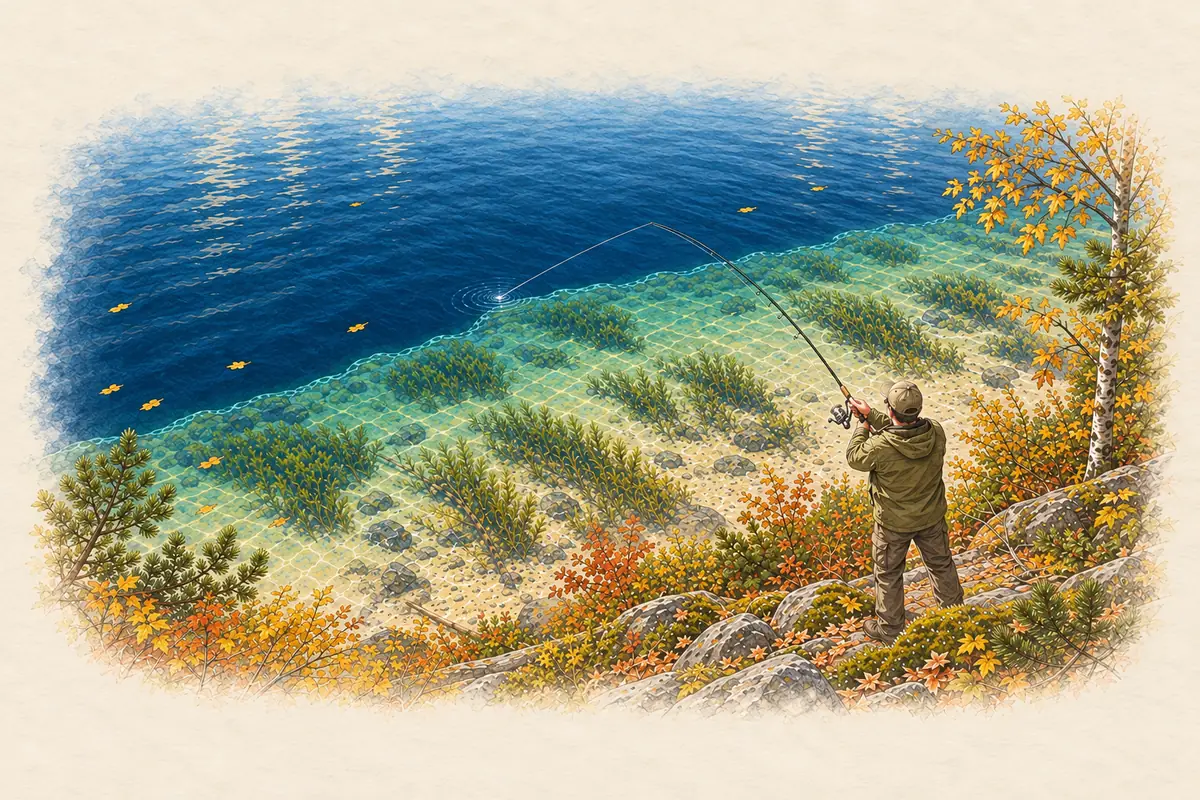
In front of the bank there is usually a shallow marginal shelf, called Schaar or Wysse depending on the region. Where it drops away into the depths, anglers speak of the drop-off (Scharkante). How a lake differs from a river and a pond is explained under Types of water.
On your first visit to a lake, according to Blinker you first get a depth chart, usually from the angling club or a local dealer. From a boat an echo sounder shows humps and edges; from the bank a plummet helps you plumb the depth.
Where the fish hold
The cross-section shows a lake from bank to bank. Tap a number and below it you will see who holds there and why.
- Reeds and water lilies: The pike stands hidden among water plants and waits for prey. The tench stays in the plants during the day and only searches the bottom at dusk (Landesfischereiverband Bayern). Reed beds and floating-leaved plants offer fish food and shelter (Fischereiamt Berlin). A Blinker author found metre-long pike along reed edges in no more than half a metre of water in spring (Blinker).
- Weed beds: The perch prefers places with lush plant growth, and the rudd stays close to the bank and close to the surface (Landesfischereiverband Bayern). In dense weed the bait is lost. At the weed edge, where the weed thins out, Blinker describes a „tench lane“ in about 6 metres of water.
- Drop-off (Scharkante): Small fish gather at the drop of the marginal shelf, which is why predators such as zander patrol the edge. Larger bream, too, are often found there (Wikipedia: Zander, Bream).
- Perch hump (Barschberg): This is what a rise standing up from the deep bottom is called. According to Blinker, perch love such structures and stay near shoals of silver fish; they give themselves away at the surface when they chase small fish.
- Sunken wood: In a research project on gravel-pit lakes, pike and perch liked to stay at sunken bundles of branches, especially in winter when the underwater plants have died back (IGB).
- Inflows: At impoundments, Blinker calls the inflow area in spring a very promising place for zander: shallow, with oxygen-rich water.
- Open water: Pelagic whitefish move through the open water and filter plankton (Landesfischereiverband Bayern). A Blinker author caught big pike in the middle of the open water on a gravel-pit lake.
Which lake, which fish
The type of lake helps decide who holds there. According to Blinker, two features make a good zander water: firm bottom with plenty of gravel and sand, and cloudy water. On very clear or weedy lakes, by contrast, pike dominate. According to LFV Bayern, whitefish live in larger, clear, nutrient-poor lakes.
Reeds, water lilies, weed, later also open water.
Weed, perch humps, wood, sheet-pile walls.
Drop-off, cloudy water with firm bottom.
Weed and reed zones, at night on the bottom.
Drop-off, in winter deep places.
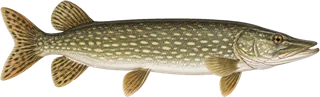
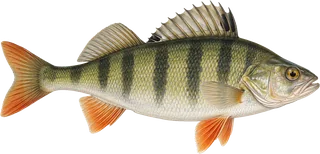
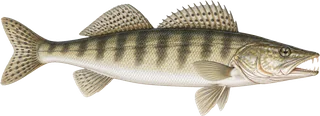
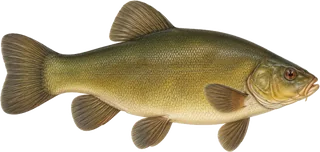
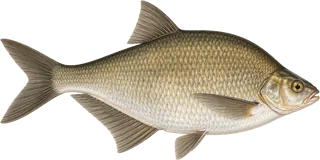
Fish pictures: AI-generated illustrations. A click opens the portrait.
Bands and red dots come from the catch calendar. The fish lexicon of the LFV Bayern gives the spawning time as February to May for pike, March to June for perch, April to June for zander, May to July for tench and May to June for bream. Closed seasons (Schonzeit) are set by your federal state (Bundesland), more under Closed season and minimum size explained. In addition there are roach, rudd and carp, the nocturnal eel and the whitefish in clear lakes. Which species occur where you fish is told by the manager of the water; when they bite, by the catch calendar.
How the spots shift through the year
Spring
In spring many species move into the shallows. Pike and bream lay their eggs at shallow, weedy spots along the bank, and the roach spawns in shallow water at plants, roots or stones (LFV Bayern). According to Blinker, zander stand in the shallow areas for a few weeks directly after spawning, because the silver fish spawn soon afterwards. The article recommends soft plastics 10 to 15 centimetres long on light jig heads, close to the bottom.
Summer
In summer a deep lake is stratified. What that means for the depth at which you fish is explained under Water temperature and oxygen. When trolling in open water, the bait for zander runs just above the thermocline, according to Blinker. The pike author leaves shallow areas alone in high summer. Bream search the shallow bank areas for food at night, and tench come down to the bottom at dusk.
Autumn
In autumn pike feed up to build reserves, and the pike author fishes down to 10 metres when they move to their winter places. Zander stand deeper as the temperature falls; the zander article still rules out areas below 10 metres for autumn.
Winter
In winter the fish stand deeper. Bream spend the winter rest in large shoals at deeper, sheltered spots, and tench bury themselves in the mud. The weed dies back, leaving wood, edges and humps. The whole course of the year is shown on the page The year at the water.
Fishing a spot systematically
A large lake becomes manageable when you treat the area in front of you as your own beat. The pike author first casts a fast-sinking bait and counts the sink time (in the example 1 second per metre) to estimate the depth. This conversion only works for a bait whose sink rate you know. Without it, more seconds only tell you that it is getting deeper, not by how many metres. Then he fans his casts out at intervals of about 5 metres, first shallow, then deeper. This suits spinning along reeds, weed edge and drop-off, for perch at the edge also the dropshot rig, in weed the Texas rig.
The tench demands a different approach. According to Blinker, the rig lies right in front of the reeds, where the water is on average half a metre to one metre deep. The author expects regular bites there until about nine in the morning. As tackle he names a match or float rod of 3,60 to 3,90 metres, a 0,20 mainline (0,25 in weedy water) and hooks in sizes 10 to 14. Float fishing with the float rig suits this. On the baited spot, fine feeding bubbles give the tench away; carp bubbles are denser and larger. For bream and eel, bottom fishing and feeder fishing suit, for example with the running rig with bottom weight.
Methods and rigs
On the bottom
For bream and eel, bottom fishing and feeder fishing suit, for example with the running rig with bottom weight.
In front of the reeds
Float fishing with the float rig, for example for tench. You find the amount of lead with the calculator Float shotting.
For predators
Spinning along reeds, weed edge and drop-off, for perch at the edge with the dropshot rig, in weed with the Texas rig. More under Baits and lures.
Drawings: AI-generated, schematic.
Common mistakes
- Depth not plumbed: According to Blinker, the bait sinks into the sediment or the weed, where no fish will find it.
- Tackle too heavy for tench: According to Blinker it is not needed; fishing fine usually works better.
- At the water at the wrong time: The tench bites distinctly better in the early morning than later in the morning, followed by a lull as a rule (Blinker).
- Bait below the thermocline in a cloudy lake: The fish stand above it. The page Water temperature and oxygen explains the layer.
- Going into the reeds: Reed beds are protected, and the fishing permit (Erlaubnisschein) often contains further conditions (see below).
Papers, boat and reeds
Alongside the fishing licence (Fischereischein), at a lake you also need the fishing permit (Erlaubnisschein) of the holder of the fishing rights. In Bavaria, for example, everyone who is not the rights holder or tenant must carry a valid fishing permit (Bayerisches Fischereigesetz, Art. 26). More on this: Fishing permit and water map, Fishing licence.
- Boat: Whether you may fish from a boat is stated in the fishing permit or the water rules. The Landesanglerverband Brandenburg permits boats on its association waters unless otherwise specified. The fisheries regulation prohibits trolling under sail or with motor power there (Gewässerordnung des LAVB, BbgFischO, § 4).
- Reeds: Reed beds and near-natural silting-up zones are legally protected biotopes nationwide. Anything that can destroy them or significantly impair them is prohibited (§ 30 Bundesnaturschutzgesetz). In Brandenburg you may neither enter nor drive into the vegetated bank zone (BbgFischO, § 15). According to the association’s water rules you may fish it from the solid bank, from a jetty or from a boat lying in front of it.
- Distance: The Fischereiamt Berlin forbids entering reed beds and asks boat anglers to keep at least 10 metres away from reeds and water lilies (Fischereiamt Berlin).
Note, status: October 2026: the examples come from Bavaria, Brandenburg and Berlin. Elsewhere and at individual lakes other rules may apply. Read the fishing permit (Erlaubnisschein) and the water rules before you go to the water.
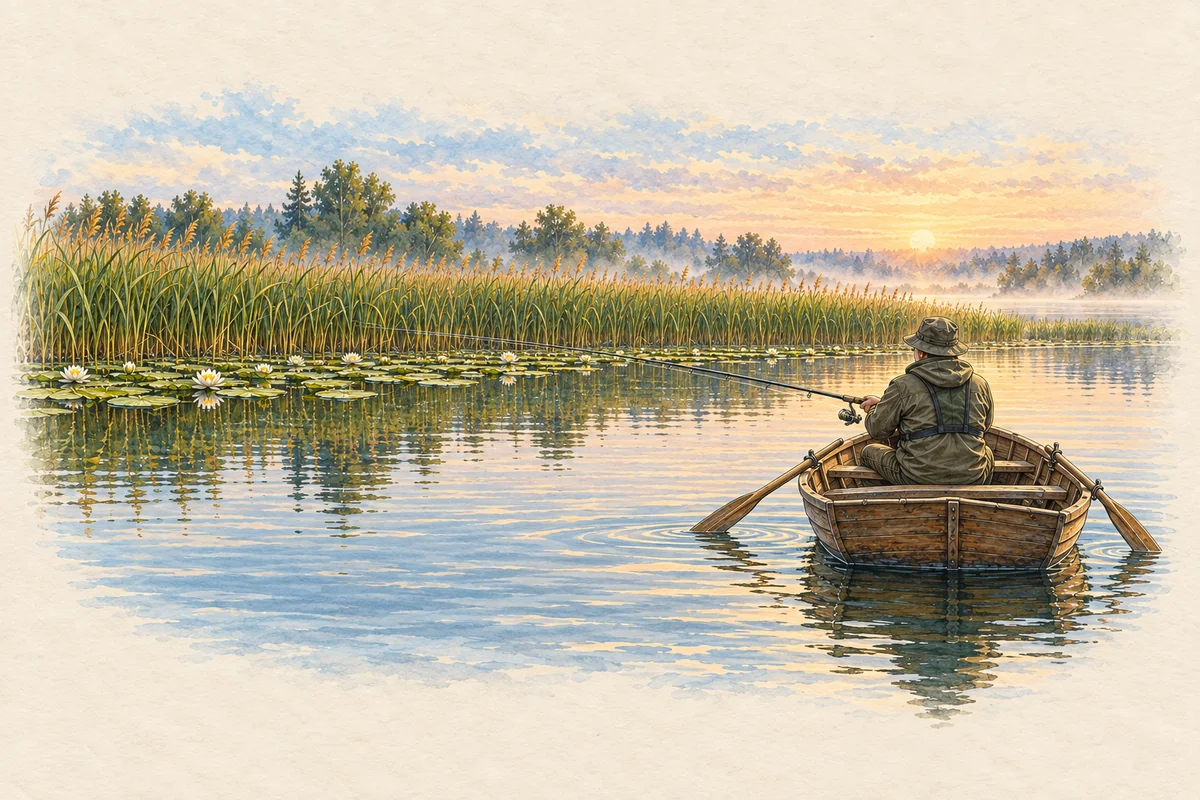
In a boat you wear a life jacket, even on a small lake. What you check before casting off is under Boat and life jacket. If a thunderstorm is brewing, the page Thunderstorms and weather helps.
Before you set off
- Fishing permit (Erlaubnisschein) and water rules read: boat allowed, which stretches of bank
- Fishing licence (Fischereischein) packed
- Depth chart obtained or plummet with you
- Distance from reeds and water lilies planned for, in Berlin at least 10 metres
- Life jacket for the boat trip, see Boat and life jacket
- Wind and thunderstorms checked with Weather at the water
- Early for the tench: bites are best until about nine o’clock
Frequently asked questions
How do I find the best spots on an unfamiliar lake?
A depth chart shows drop-offs and underwater humps, plus reeds, water lilies, weed edges and wood. Then cast in a fan at intervals of about 5 metres and count the sink time to get a feel for the depth.
When do tench bite best on a lake?
Tench bite at dusk, more clearly in the early morning. According to Blinker, bites come regularly until about nine o’clock, then there is a lull until things pick up again in the evening.
May I go into the reeds when fishing on a lake?
Usually not. Reed beds are protected as a biotope, and in Brandenburg the fisheries regulation prohibits entering and driving into the vegetated bank zone. What applies at your lake is in the fishing permit (Erlaubnisschein).
Where do the fish stand on a lake in winter?
Bream rest in shoals at deeper, sheltered spots, and tench lie in the mud (LFV Bayern). According to the IGB, pike and perch seek shelter at sunken bundles of wood.
Examples in the areas
These area pages describe waters of this type with their local rules:
Germany: Lake Constance, Müritz and the Mecklenburg Lake District, Chiemsee, Hanover region, Steinhuder Meer, Starnberger See and Ammersee, Edersee, Berlin with the Havel and Spree, Möhnesee, Fishing in Mecklenburg-Western Pomerania, Talsperre Bautzen, Leipzig New Lakeland, Bostalsee, Franconian Lake District, Scharmützelsee, Arendsee
Denmark: Gudenå and the Silkeborg lakes
Norway: Inland lakes and the fjell
Sweden: Vänern and Vättern, Lapland, Småland, Blekinge and the skerries
Poland: Masuria, Pomeranian Lake District
The Netherlands: IJsselmeer and the Randmeren, Frisian lakes, Biesbosch and Hollands Diep, Randmeren, Vinkeveense and Loosdrechtse Plassen
Austria: Fishing in the Salzkammergut, Fishing on the Carinthian lakes, Fishing on Lake Neusiedl, Fishing in Tyrol, Fishing in Vorarlberg and on Lake Constance, Fishing in Salzburg, Fishing in Styria, Fishing in Lower Austria, Fishing in Vienna
Switzerland: Lake Lucerne, Lake Zurich, Lake Geneva, Ticino, Lake Thun and Lake Brienz, Lake Neuchâtel, Graubünden
Italy: Lake Garda, South Tyrol, Lago Maggiore, Lake Como and Lake Iseo, Trentino
Related
- Water temperature and oxygen: the thermocline in summer
- The year at the water: the whole course
- Types of water: lake, pond and river
- Echo sounder: seeing depth and bottom
- Fishing permit and water map: rules at the water
- Banks and waders and Landing a fish and unhooking
- Weather at the water and Float shotting: calculator
Sources
- Landesfischereiverband Bayern: Fischlexikon (Lebensraum, Lebensweise, Laichzeiten)
- Leibniz-Institut für Gewässerökologie und Binnenfischerei: Naturnahe Gestaltung von Uferzonen an Baggerseen (Naturseen, Röhricht, versunkenes Holz)
- Spektrum, Lexikon der Geowissenschaften: See (Uferbank, Uferzone, Tiefenzone, Freiwasser)
- Bundesnaturschutzgesetz, § 30; Bayerisches Fischereigesetz, Art. 26
- Fischereiordnung des Landes Brandenburg; Landesanglerverband Brandenburg: Gewässerordnung
- Fischereiamt Berlin: Die Angelkarte und ihre Auflagen
- Blinker: Schleie fangen: Tipps, Das erste Mal auf Schleie, Krautkante, perch, Zander im See, Hecht im Baggersee (Praxis-Richtwerte einzelner Autoren)
- Wikipedia: Zander, Brachse (Standplätze)
- Saisonbänder und Laichpunkte der Fischkarten: Fangkalender von Angel Momente (redaktionelle Einschätzung mit den dort genannten Quellen)
Text AI-assisted, drawings AI-generated. Sources opened and checked in October 2026; no graphics taken from the sources.
A guide without guarantee, status October 2026. All figures are guide values from individual sources. What counts is the law of your federal state (Bundesland), the fishing permit (Erlaubnisschein) and the water rules of the lake.