
Waters · Austria
Fishing in Salzburg
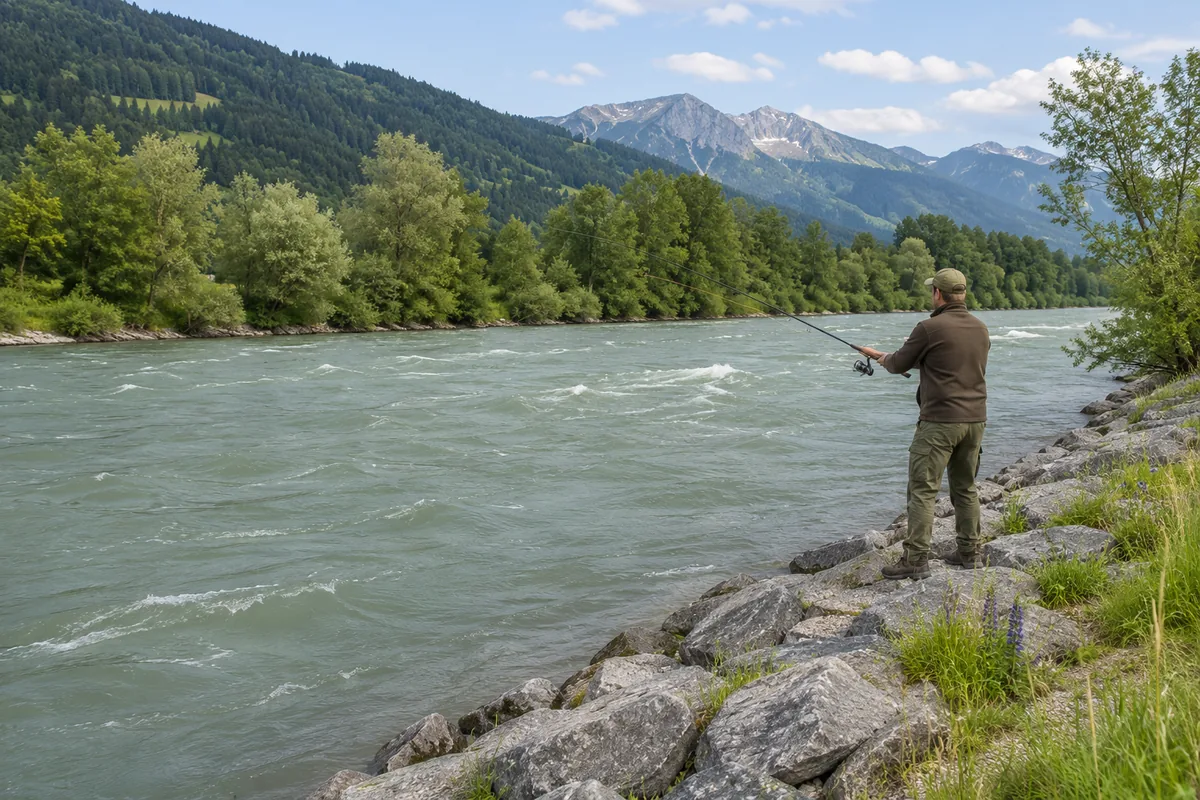
Fishing in Salzburg means fishing mountain rivers across the whole state, such as the Salzach, Saalach, Lammer and Gasteiner Ache, the lakes of the Salzburger Seenland and the Zeller See. High in the Tauern there are hundreds of small mountain lakes. As a guest you can get a fishing card for just a single day.
- Papers
- Guest fishing card (Gastfischerkarte), the water manager’s licence and photo ID
As of October 2026
At a glance
- Papers
- Guest fishing card (Gastfischerkarte), the water manager’s licence and photo ID
| Fish | Minimum size | Closed season | Note |
|---|---|---|---|
| Brown trout | 25 cm | 1.10.–28.2. | from 800 m above sea level 22 cm |
| Rainbow trout | – | none | |
| Grayling | 33 cm | 1.1.–31.5. | |
| Huchen (Danube salmon) | 85 cm | 1.2.–31.5. | |
| European lake trout | 50 cm | 1.10.–31.12. | |
| Alpine char | 25 cm | 16.10.–31.12. | |
| Whitefish (Renke, Reinanke) | 33 cm | 1.11.–31.12. | |
| Pike | 50 cm | 1.2.–30.4. | |
| Zander | 40 cm | 16.3.–31.5. | |
| Barbel | 35 cm | 1.5.–15.6. | |
| Burbot | 35 cm | 1.12.–31.3. | |
| Common nase | – | protected all year round | asp likewise |
Schonzeiten-Mindestlängen-Verordnung des Landesfischereiverbands Salzburg, also applies in the Salzburg part of the border waters. The water manager (Bewirtschafter) and the licence can be stricter. Status: October 2026. What counts are the regulation and your fishing permit (Erlaubnisschein).
Location and waters Salzach, Saalach, Trumer Seen and Wallersee
At roughly 225 kilometres to its mouth at the Inn, the Salzach is the largest river in the state, and almost three quarters of the state’s area drains into it. Near Anthering it forms the border with Bavaria. The Saalach also rises in Salzburg and has a border stretch with Bavaria. The state counts the Lammer and the Gasteiner Ache among its large running waters.
The larger lakes:
- Obertrumer See, Mattsee and Grabensee: The three lakes in the Seenland were once a single lake and lie at 502,8 metres. The Obertrumer See measures 4,8 km² and is up to 36,3 metres deep, the Mattsee 3,6 km² at 42,3 metres, the Grabensee 1,3 km² at 14 metres.
- Wallersee: 5,9 km², up to 23,3 metres deep.
- Zeller See: 4,55 km², up to 69,8 metres deep, at 749,7 metres in the Pinzgau.
- Mountain lakes: 426 small lakes lie above 1.600 metres. In the High Tauern National Park state law governs fishing, and special protected areas may have their own rules.
You will find Fuschlsee and Wolfgangsee in the profile Salzkammergut.
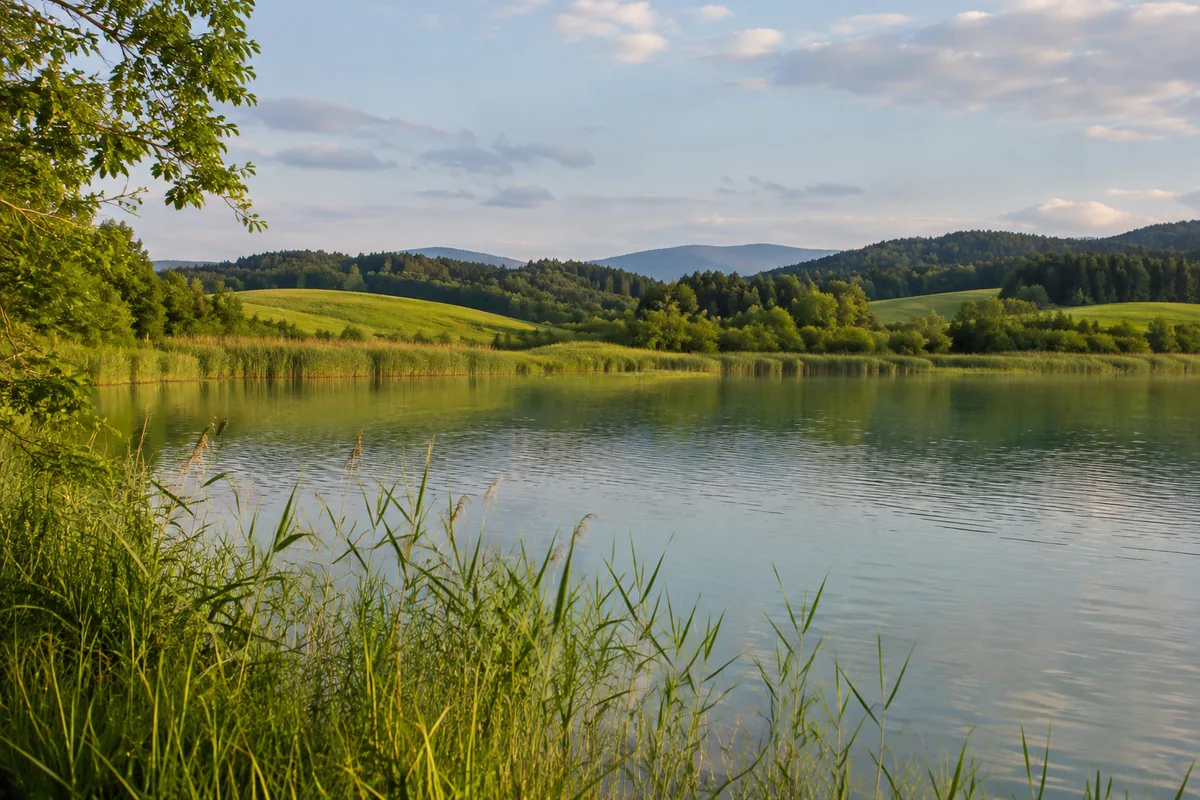
Fish and best time Trout, Salzach grayling, whitefish, pike and zander
In Salzburg’s rivers brown trout and rainbow trout are the most common, in the lakes whitefish, pike and carp. The mountain streams are trout and grayling waters, a few also barbel waters. The Salzach holds the Salzachäsche, a native form of the grayling.
- Trumer Seen: Among others, whitefish, pike, zander, lake trout, carp, tench, wels catfish, perch and burbot live here. In the Obertrumer See the whitefish is native, and there has never been an Alpine char there. Besides anglers, professional fishermen fish there with nets.
- Wallersee: The main catches are pike, zander, perch, eel and bream. Besides stocked pike, a pike population native for around 11.000 years lives there.
- Zeller See: It is one of the few lakes in Austria and Germany where the lake bleak (Seelaube) occurs.
- Mountain lakes: The fish of the high-mountain lakes are regarded as a genetic reserve. The Tappenkarsee holds Alpine char that came from the Königssee.
The catch calendar shows which species bites when.
Papers and permit Guest fishing card for 24 hours and licence
Under the Salzburger Fischereigesetz 2002 you need a fishing card (Fischerkarte) and the permission of the water manager (Bewirtschafter) as a guest. The angling licence is called Fischerkarte here, and guests have the guest fishing card (Gastfischerkarte):
- Guest fishing card: It is valid for 24 hours, one week or two weeks throughout the federal state. You can get it from the age of 12 from the water manager or from an issuing point authorised by the Landesfischereiverband. You do not need an angling exam (Fischerprüfung) for it; the state only requires one for the annual fishing card. The Landesfischereiverband charges 10 euros for 24 hours, 25 euros for one week and 34 euros for two weeks (as of January 2026). Where you live does not matter. You can also get it from the association itself and, according to the association, online, where it comes together with the licence. Salzburg law has no day card: for one day of fishing you take the guest fishing card for 24 hours plus the licence.
- Licence: The water manager’s permission is valid for his water. When fishing you carry the guest fishing card, the licence and an official photo ID. After fishing you report to the water manager what you caught.
- Children: Until their 15th birthday they may fish without a fishing card if an adult holder of fishing rights accompanies them.
For the annual fishing card the Salzburger Fischereiverordnung 2020 recognises angling exams from many German states, including Bavaria and Baden-Württemberg. The first annual fishing card costs a one-off 121 euros. After that you pay the fishing levy (Fischereiumlage) every year, 33 to 37 euros depending on how you pay, and 13 euros until your 18th birthday.
Special rules Minimum sizes, protected species and bait bans
The Landesfischereiverband sets closed seasons and minimum sizes in its Schonzeiten-Mindestlängen-Verordnung, and the values for the most important species are in the box “At a glance”. Among others, nase, dace, asp and ide are protected all year round. In the Salzburg part of the border waters these values apply, or the stricter ones of the water manager. Fish under the size limit go back at once and gently (Releasing a fish). Live vertebrates as bait are not allowed unless the state government permits it for a water manager. Live or dead crayfish as bait, artificial light sources and chemical glow products such as glow sticks are banned. You never leave your rods unattended.
The introduced signal crayfish lives almost throughout the state, and the spiny-cheek crayfish also lives in the Zeller See. The pumpkinseed has been recorded in the Trumer Seen and in the Wallersee. The quagga mussel has not yet been officially sighted in Salzburg’s lakes. Check, empty and clean your boat and gear every time you change water, let everything dry for at least four days and never use non-native baitfish.
Status: October 2026. What counts are the Salzburger Fischereigesetz 2002, the Schonzeiten-Mindestlängen-Verordnung of the Landesfischereiverband and the terms of your licence, which can be stricter.
Safety
There are 22 storm warning lights at Grabensee, Mattsee, Obertrumer See, Wallersee, Zeller See and at Fuschlsee and Wolfgangsee. The state switches them on when wind gusts above 60 km/h are expected, and they then flash once a second. In that case leave the water as quickly as possible.
There are many hydroelectric power stations on Salzburg’s rivers, with more than 500 plants in the state. Before wading check the water level at Hydris Online and do not go in any deeper if the water is rising. More under Banks and waders, Boat and life jacket and Thunderstorms and weather.
Related
- Fishing in rivers, fishing in lakes and fish zones in a river
- Fishing in Austria, plus Salzkammergut, Tyrol and Styria
- Closed season and minimum size explained and fly fishing
- In the fish lexicon: grayling, huchen, whitefish (Renke), pike, burbot (Aalrutte) and Alpine char
Sources
- RIS: Salzburger Fischereigesetz 2002 (zuletzt geändert durch LGBl Nr 76/2025), Salzburger Fischereiverordnung 2020 und Salzburger Nationalparkgesetz 2014
- Landesfischereiverband Salzburg: Schonzeiten-Mindestlängen-Verordnung, Gastfischerkarten, Fischerprüfung und Lake bleak
- Land Salzburg: Fließgewässer, Seen mit Obertrumer See, Grabensee, Wallersee, Zeller See und Bergseen, invasive Arten mit Krebspest, Sonnenbarsch und Quagga-Muschel, Wasserkraft, Sturmwarndienst
- Land Salzburg, Reihe Gewässerschutz Band 17: Die großen Seen Salzburgs (2015)
- Landeskorrespondenz: Sturmwarnleuchten (2026), Salzachäsche (2026), Naturpark Salzachauen (2025), Fischer-Jahrtag (2023), Zustand der Flüsse (2008) und große Fließgewässer (2006)
- Bundesamt für Wasserwirtschaft, Scharfling: Renken- und Seesaiblingsbestände österreichischer Seen, Teilbericht Obertrumer See (2020); Österreichische Bundesforste: Fischerei-Regionen
- Landesfischereiverband Salzburg: Jahresfischerkarten und Folder „Gesetzliche Fischerkarten Salzburg“ (September 2025)
A guide without guarantee, status October 2026. What counts are Salzburg fisheries law, the protection rules of the Landesfischereiverband and the terms of your licence.