
Knowledge – Fish
Alpine char: Depth, spawning, hegene rig and baitfish
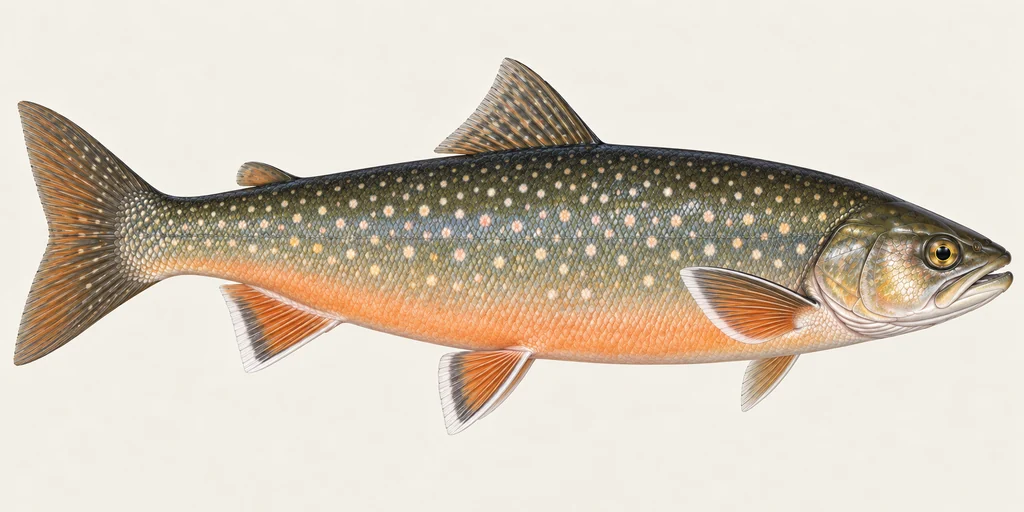
The Alpine char (Seesaibling, Salvelinus umbla), also known as Rotforelle, lives in deep, cold lakes of the Alps and the Alpine foothills and is regarded as a relic of the last Ice Age. Depending on the lake it forms its own forms, from the small Schwarzreuter to the large fish-eater. It is mostly fished for in the depths.
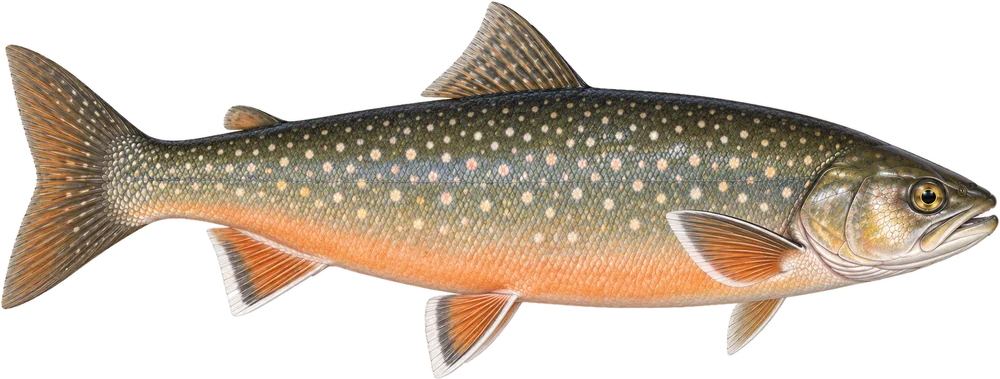
In short: You catch Alpine char best from May to June. Good spots in the lake: deep bottom. Proven baits: hegene rig with small nymphs, a thumb-length dead baitfish on a rig, in summer streamers and dry flies. Formerly listed as Salvelinus alpinus, which is how it still appears in many regulations. In Bavaria it is protected by a closed season (Schonzeit) from 1 October to 31 December, minimum size (Mindestmaß) 30 centimetres (as of October 2026). Step by step: fishing for Alpine char.
- White edges on the front margins of the pectoral, pelvic and anal fins
- Clearly notched tail fin on a slim caudal peduncle
- Yellowish to reddish spots on grey-green to brownish flanks
Catch chances through the year
- Hardly any chance
- Possible
- Good
- Peak season
- Spawning (observe the closed season)
Editorial assessment for waters in Germany, not a measured value and no guarantee. Spawning time is not the same as the legal closed season.
Species profile and sources in the catch calendarAll species compared month by monthThe rules of your federal state
How to recognise the Alpine char
The body is spindle-shaped and almost round in cross-section, the caudal peduncle slender, the tail fin clearly forked. The colouring is very variable and depends on the lake: the back and flanks are grey-green, blue-green or brownish with yellowish spots, the belly yellow-orange to whitish. The mouth is wide and the scales are very fine.
The surest feature is the white-edged leading edges of the paired fins and the anal fin. At spawning time the belly of the male turns bright red, and older males develop a spawning hook. The Alpine char is a fish with many forms. The Landesfischereiverband Bayern gives 25 to 40 centimetres on average and up to 80 centimetres depending on the group of forms. The Austrian agriculture ministry gives an average of 25 to 35 centimetres; the largest fish weigh up to 7, rarely up to 10 kilograms. Blinker, by contrast, speaks of 40 to 75 centimetres.
The forms include the Schwarzreuter, a stunted form that hardly grows longer than 20 centimetres. “Wildfangsaiblinge” is the term for large-growing Alpine char that hunt fish. Growth is slow: the Alpine char can reach 40 years of age, and most fish live up to 22 years.
It is told apart from trout by the white edge on the pelvic and anal fins and the larger mouth. Both are missing in the brown trout.
The brook trout also has white fin edges, but in addition a black line in the edge, and its back and dorsal fin are lightly marbled. In the Alpine char the back and dorsal fin are not marbled. Alpine char and brook trout cross to produce the Elsässer Saibling, which carries features of both species.
On the name: the Landesfischereiverband Bayern lists the species as Salvelinus umbla and alpinus. The Rote-Liste-Zentrum gives the name Salvelinus umbla priority over alpinus and writes that it remains unclear how many species hide behind the Alpine char.
Side by side
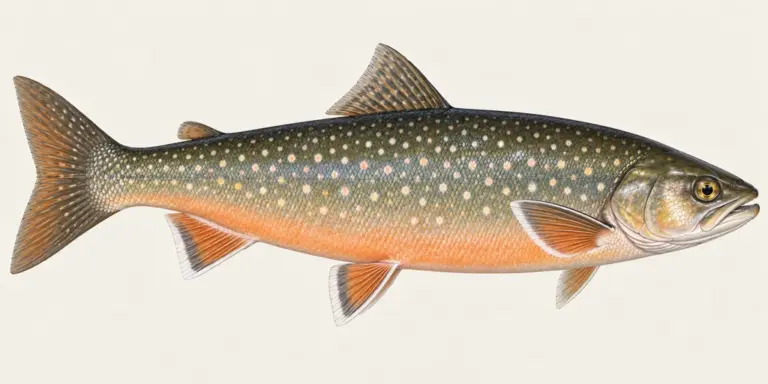
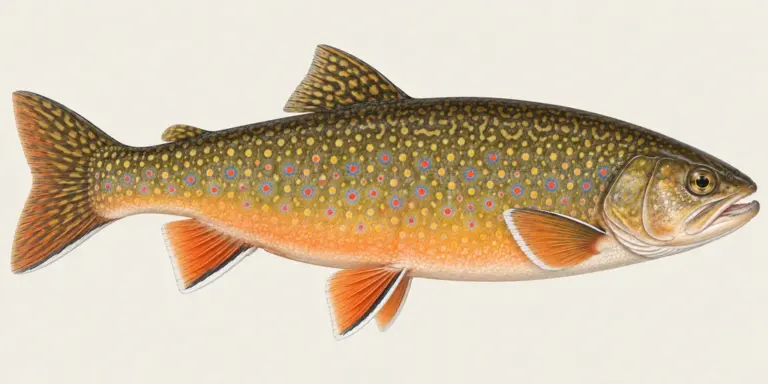
AI-generated illustrations.
Where the Alpine char is found
The Alpine char lives in deep, cold, oxygen-rich mountain lakes. In Germany these are mainly the Alpine lakes. In the Alps it occurs up to 2.600 metres above sea level according to the Naturschutzbund; FishBase names deep lakes in glacial valleys and high-mountain lakes. It is also stocked in trout lakes.
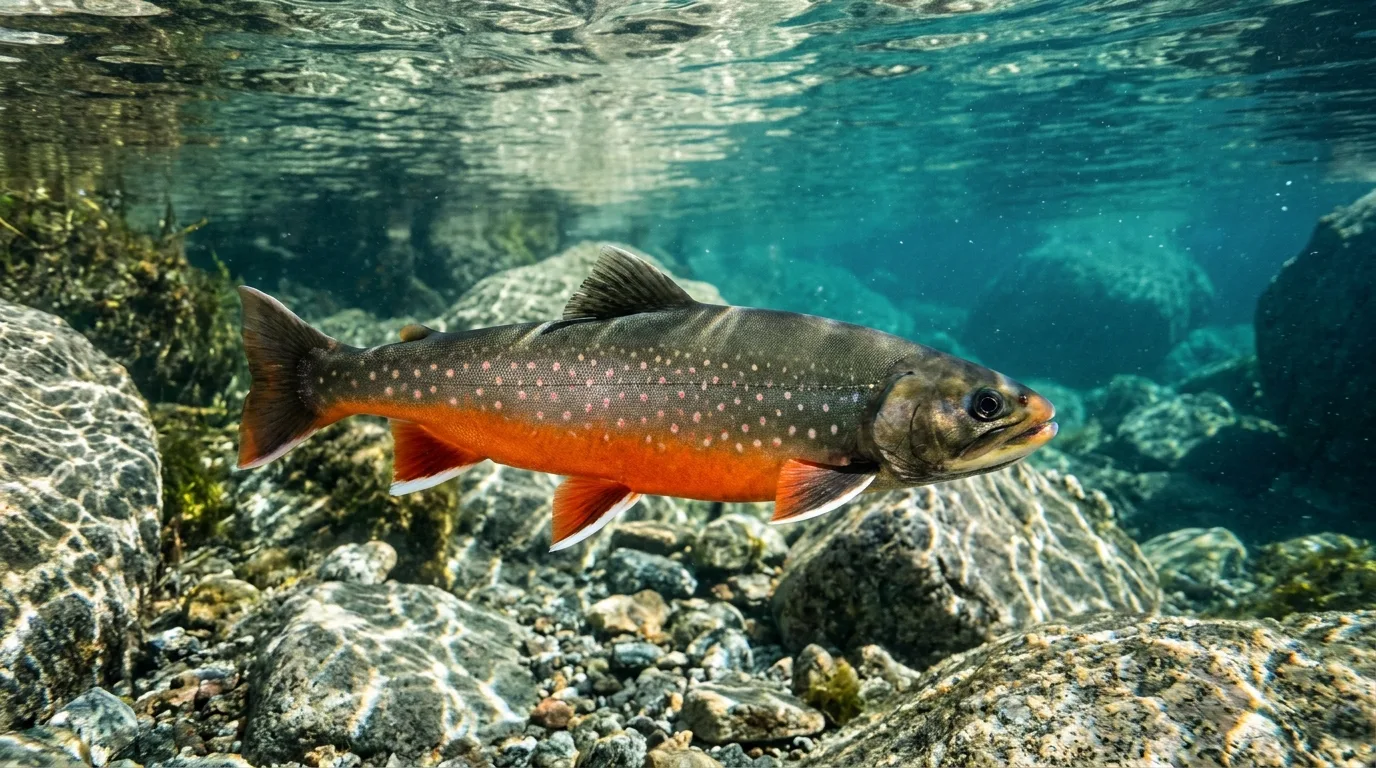
It prefers hard bottom of rubble, rock and gravel and usually stays deep. In some lakes that means down to about 100 metres. The best fishing spots are therefore underwater structures lying deeper than the usual perch humps (fishing on lakes).
Cold is its element: the Alpine char is fully active almost down to freezing point. It tolerates warm water badly. For eggs the Austrian ministry gives 12 °C as the limit, for adult fish 21 to 22 °C; the Naturschutzbund says that adult animals die from 21 °C. The oxygen limit is 4,5 to 6 milligrams per litre (water temperature and oxygen).
Holding spots in the picture
Choose the season and time of day: the picture shows where the species stands then. Spots outlined in red apply only in the chosen season. Tap a fish or a spot in the list to bring it closer. The picture is schematic and AI-generated, every water is different.
Chance of a catch in springgood
Catch chance in summergood
Catch chance in autumnpossiblespawning, observe closed seasons
Catch chance in winterhardly any
- J
- F
- M
- A
- M
- J
- J
- A
- S
- O
- N
- D
Spawning season
In the lake
jetty, sheet piling, harbour
Alpine char are found here in spring only.
Shelf edge
Alpine char are found here in autumn only.
Deep bottom
Alpine char are found here all year round.
Just below the surface
Alpine char are found here in summer only.
The Alpine char lives in deep, cold, oxygen-rich lakes and mostly stays in the depths. It prefers hard ground of scree, rock and gravel. Young fish live in shoals; from about 35 centimetres the fish become loners.
Spring: catch chances according to the catch calendar are good in March and April, peak season in May. As soon as the ice melts, the char start to feed. On the Thunersee they usually move close to the shore in May or June and then hold at depths of 10 to 20 metres. On the Schliersee they can also be caught from the bank from March to May, for example by the boat and bathing huts; on other mountain lakes they hold deeper at first after the ice melts.
Summer: catch chances according to the catch calendar are peak season in June, good in July and August. In summer char also come to the surface and hunt insects there.
Autumn: catch chances according to the catch calendar are good in September, possible in October, hardly any in November. This is when spawning takes place, so observe the closed seasons. At spawning time the shore spawners move to gravelly slopes and gravel banks near stream mouths. Other forms spawn deep, over gravel and stone on steep slopes at 30 to 120 metres. The species is then protected in many places.
Winter: catch chances according to the catch calendar are slim. Depending on the lake, the shore spawners‘ spawning season lasts into January.
Depth: The Alpine char usually stays deep, down to about 100 metres in some lakes. For Swiss lakes, 20 to 80 metres are quoted.
Size comparison: AI-generated drawing, schematic.
How it feeds and spawns
Alpine char eat zooplankton, bottom animals, crustaceans, insect larvae and mussels, and individual fish also small fish such as minnows. Dwarf forms live on plankton. Young fish form shoals; from about 35 centimetres they become loners. For hunting they use the depths, at spawning time also the shore.
Two types are distinguished in spawning. Shore spawners spawn between September and January close to the shore, bottom spawners in summer on stony bottom at depths of 20 to 80 metres. The Naturschutzbund names debris cones, stream mouths and groundwater outflows, in places at depths of over 40 metres. FishBase describes spawning grounds on steep slopes with gravel and stones at depths of 30 to 120 metres. The males fight fiercely over the spawning grounds. The eggs take up to 100 days to develop.
Alpine char become sexually mature at 2 to 6 years of age, depending on the population. Stunted forms can be mature at 12 centimetres.
When it bites
As soon as the ice thaws, the char begin to feed. On Alpine-foothill lakes such as the Schliersee, the period from early March to the end of May is considered the best according to Fisch & Fang; catches are then possible from the bank too. On other mountain lakes the fish at first still stand deep after the ice melts. In summer they sometimes come to the surface and hunt insects, and then fly anglers have chances too. The Austrian agriculture ministry names May and June as the most favourable months. Closed seasons (Schonzeit) and open seasons differ from lake to lake; on some mountain lakes the angling season ends as early as September.
Spawning begins in autumn and winter. Depending on the lake and form it can also fall in summer (the year at the water).
Today’s catch index needs JavaScript. Season and spawning time are in the catch calendar.
You will find the monthly overview of all species and the water temperature check in the catch calendar.
What you catch it with
Step by step: Fishing for Alpine char: tips on bait, rig and tackle – season, swims, baits, tackle and rules on one page.
Two methods are considered successful. The char is cautious, so special techniques are an advantage. The first is a thumb-length dead baitfish on a rig, such as a bleak or a small perch (baitfish rig). From a boat you work it vertically, from the bank on a light spinning rod (spinning); small spinners and spoons catch there too. It should dance up and down in front of the fish: you raise and lower the rod from the wrist, which in Austria is called Tupfen (dabbing). Rigs with a lead in front or a small spoon imitate a fish chasing prey. A downrigger or a heavy lead brings the bait to greater depths.
The second method is the hegene rig (side-arm rig), a long hooklength with three to five stiffly projecting side arms and small flies. Here too you raise and lower the rig with a small weight on thin line in the depths, a variant of bottom fishing. A rod of about 1,80 metres is enough for this. For natural bait fished more slowly, maggots and caddis larvae have proved their worth, on a float or ledger rig.
For the baitfish Blinker recommends a light spinning rod with a stiff tip of 2,40 to 2,80 metres and a casting weight of 10 to 30 grams, so that the fish does not flee under the boat. The line should offer the current little surface to act on, about 0,18 to 0,22 millimetres. In summer you catch at the surface with the fly rod (fly fishing): silver streamers and dry flies for rising fish such as March Brown, Zulu and stonefly.
Look for hard bottom: Char stand over rubble, rock and gravel. Look for structures lying deeper than the usual perch humps, best with the echo sounder.
Choose thin line: At great depth the line should offer the water little surface to act on. A line diameter of 0,18 to 0,22 millimetres is usually sufficient.
Let the bait dance: Raise and lower the rig from the wrist so that the bait dances up and down in front of the fish. Both methods need a fine touch to detect bites.
Suitable lures
Hegene rig with small nymphs, a thumb-length dead baitfish on a rig, in summer streamers and dry flies.
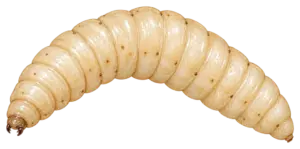
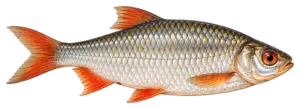
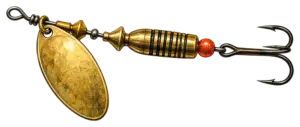
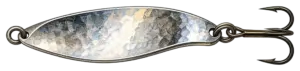
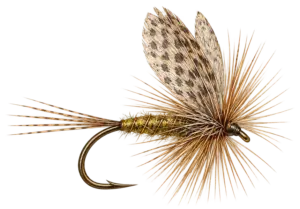
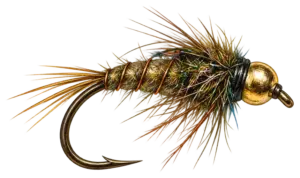
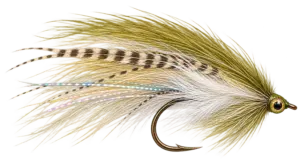
AI-generated illustrations. A click opens the lure’s page.
Rigs for these lures: float rig, running ledger rig.
Whether baitfish is allowed is regulated by the fishing permit (Erlaubnisschein).
What Alpine char tastes like and what to do with it
The Alpine char is an excellent table fish. Its flesh is white to salmon-coloured, firm and fine-grained, the taste delicate and mild, the bones soft. It can be fried, blue-poached, grilled or smoked. In a comparative tasting by the Landesanstalt für Landwirtschaft with 195 test persons it scored significantly better than rainbow trout.
Stun and kill it straight after the catch (stunning and killing a fish) and chill it. For preparation: gutting a fish and smoking a fish.
What you need to observe
Closed seasons (Schonzeit), minimum sizes (Mindestmaß) and harvest windows are set by the federal states (Bundesland), and on many waters additionally by the club or leaseholder. They differ depending on the water and the time of year. We give figures only with a date and a source; always binding are the fisheries regulation of your federal state and your fishing permit (Erlaubnisschein). You will find a list of links to the official sources in the catch calendar.
A fish of legal size that you want to keep you stun and kill at once, in line with animal welfare rules. Protected, undersized fish or fish too large under a harvest slot you unhook, if possible still in the water and with wet hands, and release gently. What exactly applies is regulated by state law and your fishing permit (Erlaubnisschein).
Many federal states (Bundesland) expressly forbid fishing with live baitfish; use dead baitfish. Whether it is permitted on the lake in question is stated in the fishing permit (Erlaubnisschein).
The 2023 Red List of freshwater fish of Germany lists the Alpine char Salvelinus umbla as not endangered, the population situation as very rare with a stable trend. As threats the Landesfischereiverband Bayern names over-fertilisation of the lakes and loss of spawning grounds, and the Naturschutzbund also overfishing.
What closed season, minimum size and harvest slot mean and where to find them is explained on the page Closed season and minimum size explained.
What state law says about the closed season (Schonzeit) and minimum size (Mindestmaß) for this species is in the “At a glance” box on the state page for Bavaria. Our overview does not list this species for the other states; the state fisheries regulation applies there.
Frequently asked questions (FAQ)
At what depth does the Alpine char stand?
Usually deep over hard bottom of rubble, rock and gravel, in some lakes down to about 100 metres. In summer the fish temporarily come up and hunt insects.
What do you catch Alpine char with?
With the hegene rig, with a thumb-length dead baitfish on a rig or in summer with the fly. The bait has to be worked up and down from the wrist.
What is a Schwarzreuter?
A stunted form of the Alpine char in Alpine lakes that hardly grows longer than 20 centimetres and feeds mainly on plankton.
Sources
The rating of catch chances is an editorial assessment. The facts come from these sources, and the text is worded in our own words. The illustration is an original design by Angel Momente in the style of a natural history plate (AI-generated, see the AI notice).
- Landesfischereiverband Bayern: Fischlexikon (Laichzeit, Lebensraum, Nahrung, Aktivität)
- FishBase: Salvelinus umbla (Verbreitung, Merkmale, Laichtiefe)
- Blinker: Steckbrief Seesaibling (Aufenthaltstiefe, Hegene, Köderfisch)
- Rote-Liste-Zentrum: Alpensaibling, Salvelinus umbla (Rote Liste der Süßwasserfische Deutschlands 2023: ungefährdet, sehr selten)
- BMLUK Österreich: Seesaibling (traditionelle Lebensmittel; Lebensraum, Laichtypen, Angeln, Fleisch)
- Naturschutzbund Österreich: Seesaibling, Fisch des Jahres 2017 (Lebensraum, Laichplätze, Gefährdung)
- Bayerische Landesanstalt für Landwirtschaft: Leistungs- und Qualitätseigenschaften zweier Herkünfte des Seesaiblings und des Bachsaiblings sowie ihrer Kreuzungen (Schriftenreihe 19/2006)
- Fisch & Fang: Bayern, der Schliersee (Seesaibling: beste Zeit März bis Mai, Uferfänge, Spinner und Köderfisch-Systeme)
- Fisch & Fang: Die Ödseen in Österreich (Seesaibling im Frühjahr tief, im Sommer ufernah; Blinker und Koppensysteme)
- Bundesartenschutzverordnung, Anlage 1 (Formica spp., hügelbauende Waldameisen, besonders geschützt)
- Wikipedia: Seesaibling (Merkmale, Lebensweise, Systematik)
- NÖ Landesfischereiverband: Fischarten in Niederösterreich, Seesaibling (Formen, Laichplätze)
- Petri-Heil (Schweizer Fischereizeitschrift): Saiblingshochburgen (Tiefen, Thunersee, Zugersee)
Created with AI support from the sources listed. Figures only appear in the text if a source gives them. Last updated: 27 October 2026. Found a mistake? Write to us. Who is behind this site: About me.
More in the lexicon
- All fish species at a glance
- Catch calendar – month, water temperature and profile for 93 species
- Line calculator – breaking strain after the knot, drag guideline, backing
- Angling methods