
Knowledge · Law and licences
Closed season and minimum size explained
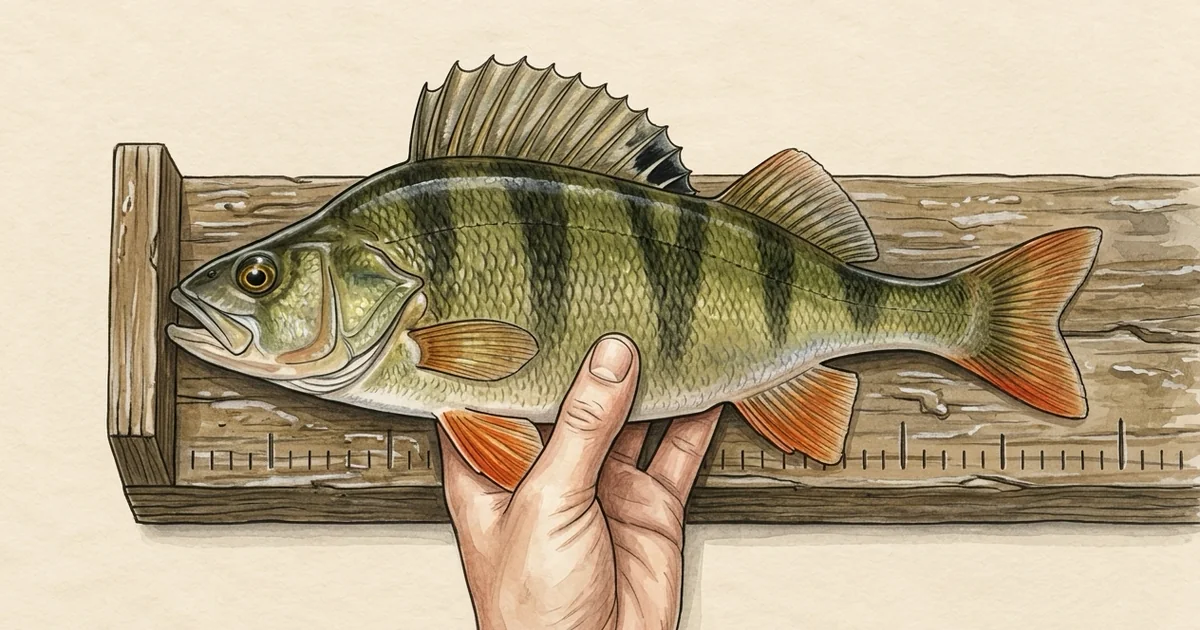
Closed season (Schonzeit) and minimum size (Mindestmaß) decide whether a caught fish stays in the water or may be kept. The page explains the terms including the harvest window, shows from the wording of the regulations how to measure, and compares pike, zander and burbot in three states. A binding table of values is deliberately not given here, because state law changes.
The terms
- Closed season: a period in which a species is protected. Under the Bavarian implementing regulation, fish may be caught all year round as long as no closed season is set. Some species are protected all year round; North Rhine-Westphalia has its own list for this.
- Minimum size: the length from which you may keep a fish. Bavaria calls it Schonmaß. Smaller fish go back into the water.
- Harvest window (Entnahmefenster): minimum and maximum size together. According to the DAFV (interview of June 2020), small and large fish are protected and medium ones may be kept, so that young fish can spawn at least once and large ones are preserved as spawners. The DAFV sees it as a tool for managing individual waters, not as a requirement of a state regulation.
- Catch limit: a maximum number or quantity per period. The DAFV gives an example from the Baltic in 2026: anglers may keep one salmon with a clipped adipose fin per day.
Spawning season and closed season are not the same thing. The spawning season is a biological period, the closed season a legal provision. The Brandenburg fisheries regulation names, as possible content of a management plan (Hegeplan), a closed season for pike and zander of four consecutive weeks within their spawning season. More on the biology is under Reproduction and spawning season. The verb also differs by state: Bavaria and Brandenburg already forbid catching in the closed season, North Rhine-Westphalia forbids keeping.
How to measure
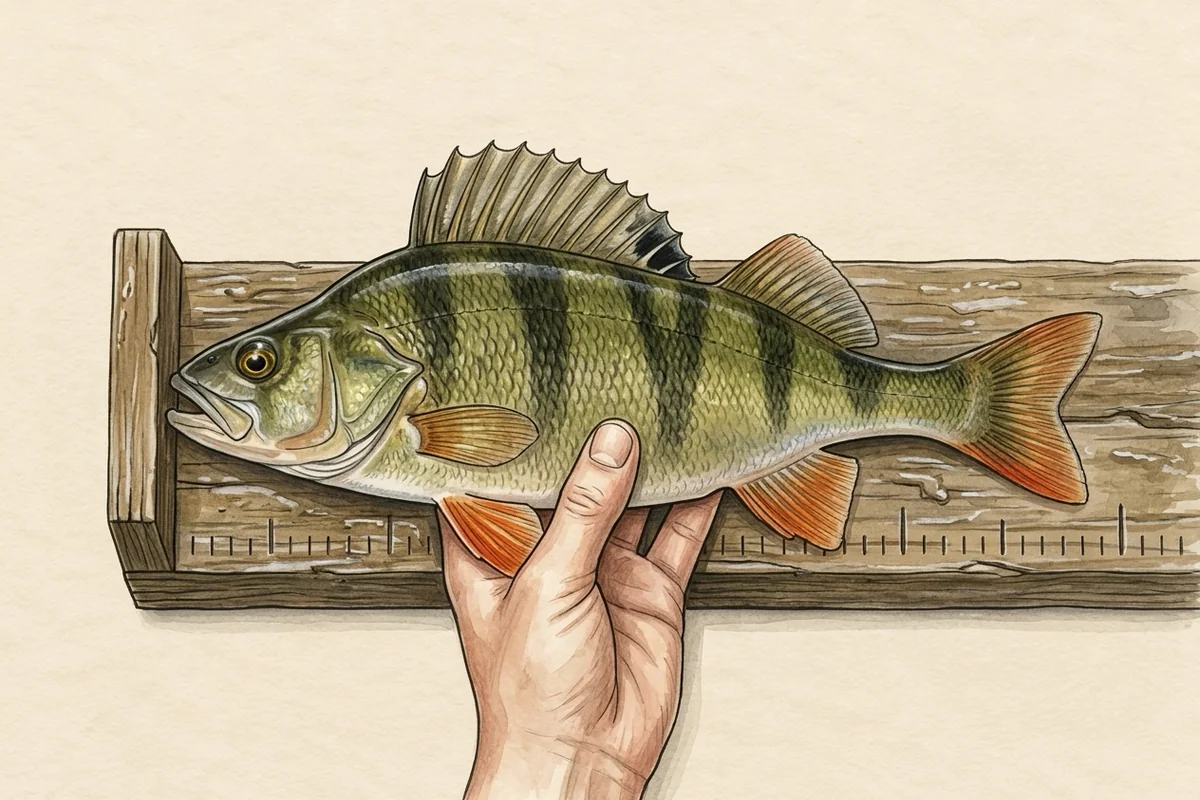
The total length is measured: from the tip of the head to the end of the tail fin. Measuring to the base of the fin is wrong under all three regulations. What differs is how the fin is described:
- Bavaria (§ 11 para. 3 AVBayFiG): to the end of the body including the tail fin folded together or the tail fan.
- Brandenburg (§ 2 para. 1 BbgFischO): to the end of the naturally spread tail fin.
- North Rhine-Westphalia (§ 3 LFischVO): to the end of the longest part of the tail fin.
How the fish is to lie is set out solely in the regulation of your state. If a fish lies exactly on the limit, the method of measuring decides, according to these texts, whether it is kept or returned. If in doubt, put it back.
Where it is regulated and who may deviate
Closed seasons and minimum sizes are set out in state law. In Bavaria the annex to the implementing regulation contains the closed season and minimum size for each species, and the districts may set or change restrictions by regulation (§ 11 para. 5). The LALLF in Mecklenburg-Western Pomerania keeps separate columns for inland and coastal waters. Schleswig-Holstein points out (as of 26 February 2026) that the rules are revised regularly and that temporary general rulings differ for some species.
Then there are the water regulations. The LALLF expressly points out that on inland waters the rights holder may have further-reaching provisions, to be read on the fishing permit. The Brandenburg fisheries regulation also lists, among the contents of a management plan, provisions on larger minimum sizes and longer closed seasons than the regulation itself.
Practical tip: Before every change of water you check three places: state regulation, water regulations and fishing permit. The permit is explained on the page Fishing permit and water map. This page is a guide and not legal advice.
Three states, three answers
The figures come from the regulation texts (read in October 2026) and are an example, not a reference work. For Brandenburg, the version that the state portal shows as current applies (last amended on 24 August 2026), and for pike and zander the line for fishing with a hand line.
| State (version) | Pike | Zander | Burbot |
|---|---|---|---|
| Bavaria (from 1.6.2025) | 15.2. to 30.4., 50 cm | 15.2. to 30.4., 50 cm | no closed season, 40 cm |
| North Rhine-Westphalia (from 3.7.2026) | 15.2. to 30.4., 45 cm | 1.4. to 31.5., 40 cm | protected all year round |
| Brandenburg (hand line) | 1.2. to 31.3., 45 cm | 1.4. to 31.5., 45 cm | no closed season, 30 cm |
So pike may be kept in Bavaria only from 50 cm, in North Rhine-Westphalia and Brandenburg already from 45 cm. With zander the range is even wider, and burbot shows the extreme case: in Bavaria a minimum size of 40 cm applies, in Brandenburg 30 cm, and in North Rhine-Westphalia it may not be kept at all. A figure from another state is therefore no information for your water.
Fish caught in the closed season or undersized
What to do then is regulated similarly by the regulations, but not identically:
- Release: Bavaria requires viable undersized fish or fish caught in the closed season to be returned without delay and with the necessary care to the same stretch of water. North Rhine-Westphalia prescribes returning them without delay and with due care to the water where they were caught.
- Deeply lodged hook: Brandenburg orders the line to be cut level with the tip of the head before the fish goes back.
- Not viable: North Rhine-Westphalia regulates the case expressly. If death is to be expected, the fish is to be killed and buried unless other disposal is prescribed at the water. You may not make use of it, even dead.
- Consequences: Bavaria lists catching in the closed season, keeping before the minimum size is reached and failing to release in its fines section (§ 32 AVBayFiG). What you face in your state is decided by state law.
The handling for gentle treatment is under Releasing fish and Landing and unhooking fish; how a fish is killed in line with animal welfare is under Stunning and killing fish.
Common mistakes
- The size is right, so the fish can come along. Minimum size and closed season are separate rules, and in the closed season even a fish above the size does not count.
- Take values from a neighbouring state, from memory or from an old notice. The table above shows the differences.
- Read only the state regulation. According to the LALLF, the water regulations may go further.
- Equate spawning season with closed season.
Example cod: when EU law is added
In the Baltic the state list alone is not enough. Under Article 10 of Regulation (EU) 2025/2454, recreational fishing for cod in subdivisions 22 to 32 is prohibited, and any cod caught by accident must be returned to the sea without delay. Only in the eastern Baltic (subdivisions 27 to 32) may an unintended bycatch be kept when fishing for other species. The regulation applies from 1 January to 31 December 2026. The DAFV confirms the ban on keeping fish for the western Baltic (subdivisions 22 to 24).
The LALLF list still gives a minimum size of 35 cm and a closed season from 15 January to 31 March for cod in coastal waters, but notes in a footnote that the EU has set a fishing ban for anglers for 2026. The recitals of the regulation intend to leave stricter national measures unaffected. The ban applies for 2026. You will find the note on this in the Catch calendar under cod.
How to find the rules
- Determine the state and type of water: inland waters and the coast are regulated separately.
- Open the regulation or authority page from the list below and look for the species, closed season and size.
- Check the water regulations and fishing permit for stricter rules.
- In case of deviations or doubt, ask the rights holder or the fisheries authority (Fischereibehörde).
Official sources for the 16 states, the same as in the Catch calendar:
- Baden-Württemberg (Landesfischereiverordnung (LFischVO))
- Bavaria (Ausführungsverordnung zum Fischereigesetz (AVBayFiG))
- Berlin (fisheries office: minimum sizes and closed seasons)
- Brandenburg (Fischereiordnung (BbgFischO))
- Bremen (Bremische Binnenfischereiverordnung)
- Hamburg (Durchführungsverordnung zum Fischerei- und Angelgesetz (HmbFAnGDVO))
- Hesse (Hessische Fischereiverordnung (HFischV))
- Mecklenburg-Western Pomerania (LALLF: minimum sizes and closed seasons; for coastal waters the coastal fisheries regulation (Küstenfischereiverordnung), amended in September 2026, applies (PDF))
- Lower Saxony (Binnenfischereiordnung (BiFischO))
- North Rhine-Westphalia (Landesfischereiverordnung (LFischVO))
- Rhineland-Palatinate (ministry: fisheries law)
- Saarland (Landesfischereiordnung (LFO))
- Saxony (Sächsische Fischereiverordnung (SächsFischVO))
- Saxony-Anhalt (Fischereiordnung (FischO))
- Schleswig-Holstein (minimum sizes and closed seasons (state portal))
- Thuringia (Thüringer Fischereiverordnung (ThürFischVO))
Frequently asked questions
Is a minimum size the same across Germany?
No. Each state sets closed seasons and minimum sizes itself. For pike, the Bavarian annex gives 50 cm, the North Rhine-Westphalian regulation 45 cm. The water regulations may be stricter.
Where do I start measuring and where does the fish end?
The measurement is from the tip of the head to the end of the tail fin. Whether the fin is folded, naturally spread or measured to its longest part, each state words in its own way. The wording of your regulation counts.
What do I do with a fish in the closed season?
It must go back into the water without delay and with due care. If the hook sits deep, Brandenburg prescribes cutting the line level with the tip of the head. For fish that would not survive, North Rhine-Westphalia has a separate rule.
May the water regulations be stricter than state law?
Yes, that is possible. According to the LALLF, on inland waters the rights holder may have further-reaching provisions, which are written on the fishing permit. The stricter requirement applies to you.
Related
- Catch calendar: which species bites when, with the official state links
- Fishing permit and water map: what is on the permit and what you must carry
- Fishing licence and angling exam: who needs which document
- Releasing fish: when it is compulsory and how to do it gently
- Landing and unhooking fish: handling from the fight to removing the hook
- Stunning and killing fish: what applies to a fish that is not viable
- Reproduction and spawning season: the biology behind closed seasons
- Cod: the fish behind the Baltic fishing ban of 2026
Sources
- Freistaat Bayern: Verordnung zur Ausführung des Bayerischen Fischereigesetzes (AVBayFiG), Fassung ab 1. Juni 2025 (§ 11 Messweise, Zurücksetzen und Bezirksverordnungen, § 32 Bußgeld, Anlage mit Schonzeiten und Schonmaßen)
- Land Nordrhein-Westfalen: Landesfischereiverordnung (LFischVO), Fassung ab 3. Juli 2026 (§§ 1 bis 4: ganzjährige und befristete Schonzeiten, Mindestmaße, Messweise, Behandlung)
- Land Brandenburg: Fischereiordnung des Landes Brandenburg (BbgFischO) (§ 1 Hegeplan, § 2 Messweise, § 3 Zurücksetzen, Anlage mit Schonzeiten und Mindestmaßen)
- Rat der Europäischen Union: Verordnung (EU) 2025/2454, Fangmöglichkeiten in der Ostsee 2026 (Artikel 10 Dorsch, Geltungsdauer 2026, Erwägung zu strengeren nationalen Maßnahmen)
- LALLF Mecklenburg-Vorpommern: Mindestmaße und Schonzeiten (Hinweis auf weitergehende Bestimmungen, Dorsch mit Fußnote zum EU-Fangverbot 2026)
- Land Schleswig-Holstein: Welche Mindestmaße und Schonzeiten gelten in Schleswig-Holstein? (Verweis auf die Verordnungen, regelmäßige Änderungen, befristete Allgemeinverfügungen, Stand 26. Februar 2026)
- DAFV: Interview zum Entnahmefenster (Prinzip und Zweck des Entnahmefensters, Einordnung als Mittel der Hege, Stand Juni 2020)
- DAFV: Ostsee 2026, Angler können weiterhin einen Lachs pro Tag entnehmen, Fangverbot für Dorsch bleibt bestehen (Lachs pro Tag, Entnahmeverbot für Dorsch)
Text AI-assisted, drawings AI-generated. Sources opened and checked in October 2026; no graphics taken from the sources.
All information is indicative, without guarantee, and not legal advice. Only the regulation of your federal state in its current version, the water regulations and your fishing permit are binding.