
Knowledge · Fish welfare and practice
Stunning and killing fish
A fish you keep is first stunned and then killed, in that order and without a pause in between. This is required by the Animal Welfare Act (Tierschutzgesetz) and the Animal Welfare Slaughter Ordinance (Tierschutz-Schlachtverordnung). The page shows how stunning and killing fish works in practice, how you recognise a successful stun and where different rules apply to eel and flatfish.
What the act and the ordinance require
Under § 4 paragraph 1 of the Animal Welfare Act, a vertebrate may in principle only be killed after an effective stun has made it unable to perceive or feel; only where this is not reasonable in the circumstances is killing while avoiding pain sufficient. In addition, only someone with the necessary knowledge and skills may kill. For fish the Animal Welfare Slaughter Ordinance is more specific: whoever kills a fish must stun it immediately beforehand according to Annex 1 number 9 (§ 12 paragraph 10).
Annex 1 permits four methods for fish: electric current, a blunt blow to the head, carbon dioxide for salmonids and a substance with a stunning effect that does not also remove the slime. The examination materials of the states describe the blow to the head for anglers. According to number 5.2 it is to be delivered with a suitable object and with sufficient force, and a method that causes death follows immediately. According to number 5.3 the time between catching and stunning should be as short as possible.
Behind this stands the principle in § 1: nobody may cause an animal pain, suffering or harm without a reasonable cause, and killing a vertebrate without a reasonable cause is a punishable offence under § 17. The Bavarian exam questions answer the question of whether a fish may be killed without a reasonable cause with no. Further requirements come from state law and the fishing permit (Erlaubnisschein); an overview is given by Law & permit.
Stunning with a blow to the head
The blow stuns through concussion. If it hits the right spot with enough force, the fish is immediately insensible, according to the Federal Office for Agriculture and Food (BLE). The official materials describe the spot slightly differently. Bavaria teaches a forceful blow above the eyes, as do the leaflets of Schleswig-Holstein and Mecklenburg-Western Pomerania. Saxony-Anhalt places the hindbrain between the rear edge of the eye and the end of the skull. Both meet on the skull above and behind the eye, as Fig. 1 shows. A targeted blow to the nape counts as a wrong answer in Bavaria.
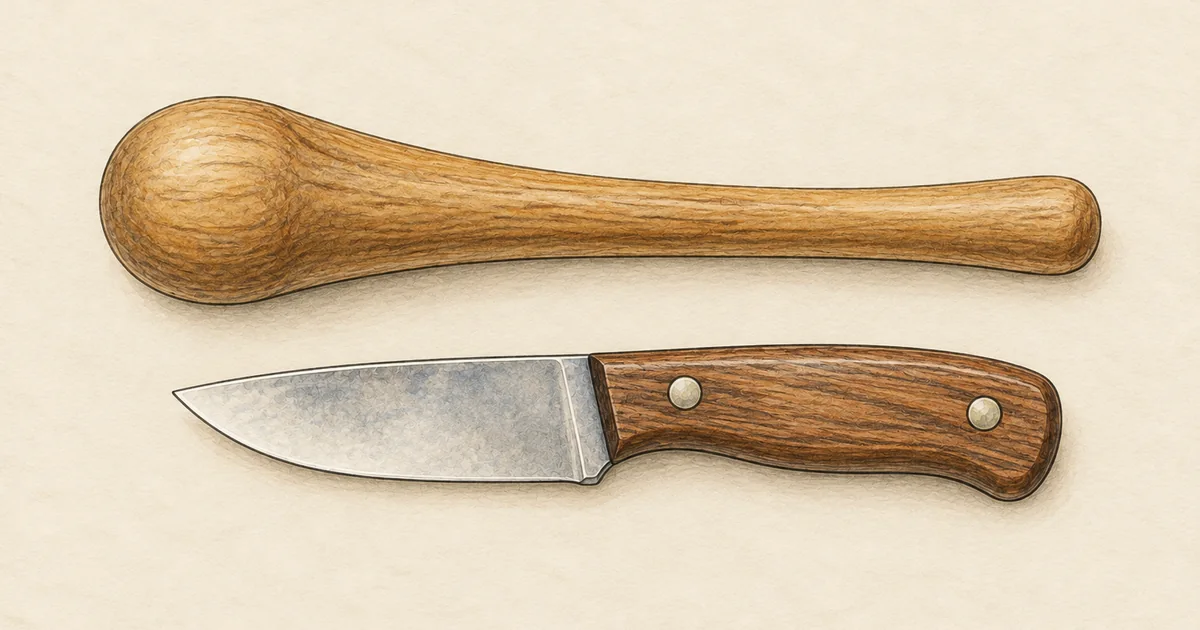
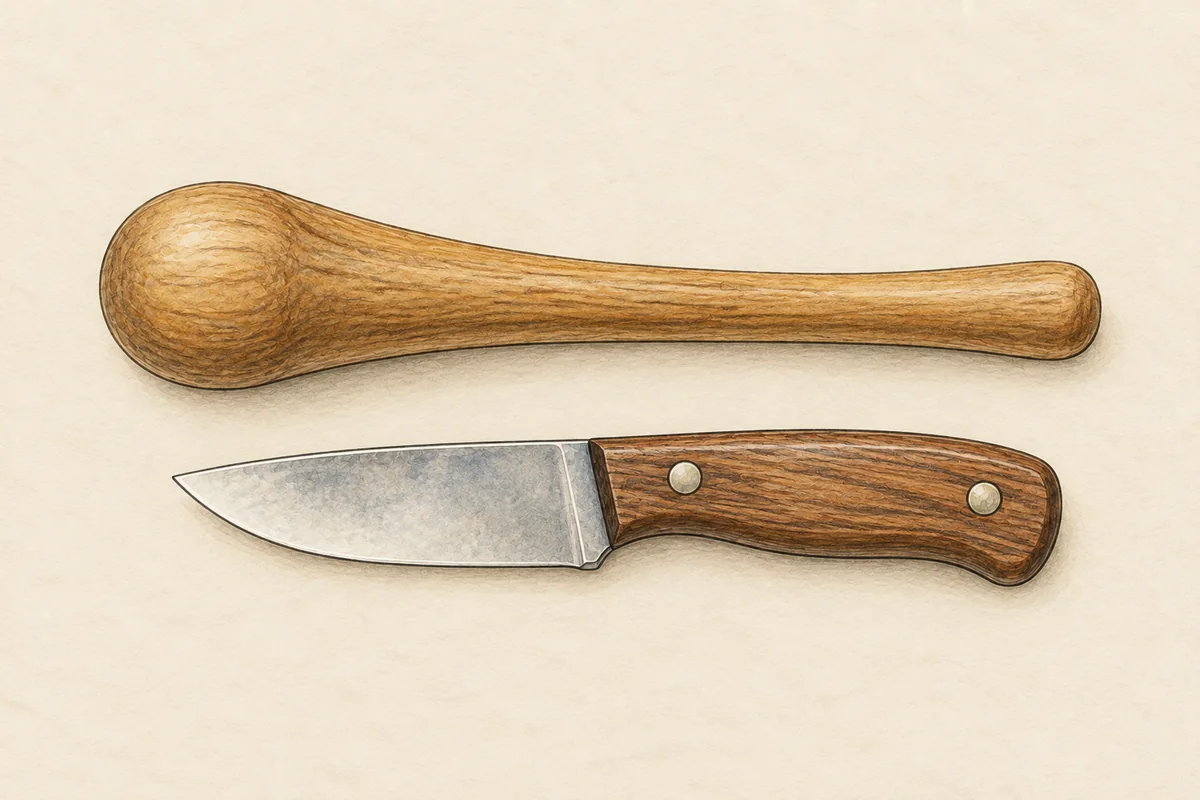
As a tool, the states name a heavy object such as a priest; Schleswig-Holstein and Mecklenburg-Western Pomerania speak of a forceful, quick blow. The authorities give no weights in grams. The University of Veterinary Medicine Hannover (Tierärztliche Hochschule Hannover) points out that the blow to the head can lead to failed stuns in some species and in large fish if the force is not enough or the spot is missed. The BLE names large species from fish farming, such as sturgeons and African catfish, as clearly harder to stun. A conclusion from this, not a requirement: choose the priest according to the biggest fish you want to take. For the gear itself see fish stunner.
Check: eye-roll reflex and breathing
You check immediately whether the blow has worked. To do so you lay the fish on its side. The Landesfischereiverband Baden-Württemberg teaches: in an unstunned fish the eye rotates in the socket, in a stunned one this rotation does not occur. The BLE also names the breathing reflex, that is, the movement of the gill covers. If both are absent, the fish is sufficiently stunned. The Bavarian exam questions highlight the absence of the eye-rolling reflex as the correct sign, while the gill covers flaring open appears there among the wrong answers.
If the fish still shows one of these reactions, it counts as not stunned. Because the ordinance requires stunning before killing, you then strike a second time before the knife comes into play.
Killing: stab to the heart or gill cut
Killing follows without delay, while the fish still perceives nothing. The Landesfischereiverband Baden-Württemberg names the stab to the heart or severing the blood vessels in the gill area; in trout the stab to the heart is placed between the pectoral fins. The BLE describes the circular gill cut on both sides, which opens the large arteries, as the way to quick bleeding out. Bavaria teaches bleeding by a circular gill cut. Schleswig-Holstein and Mecklenburg-Western Pomerania name the stab to the heart as the preferred method and the gill cut as an alternative; whoever wants to stab must, according to Schleswig-Holstein, know the exact position of the heart.
You remove the hook only afterwards. The Landesfischereiverband Baden-Württemberg and Schleswig-Holstein lay it down that way, and Saxony-Anhalt asks for the order stun, kill, unhook, process. For a 40-centimetre carp the correct exam answer from Bavaria is: first stun, then kill and gut. How the belly cut is done is explained under gutting a fish.
Practical tip: Schleswig-Holstein advises having an experienced angler show you stunning and killing and processing your first fish under their supervision. Baden-Württemberg prescribes a practical day in its preparatory courses, at which everyone practises until the movements are secure.
Eel, flatfish and gaff
For two groups § 12 paragraph 10 provides an exception to the duty to stun. Schleswig-Holstein counts flounder, dab and plaice among the flatfish.
| Fish | Stunning beforehand | Method |
|---|---|---|
| Fish in general | yes | Blow to the head, then stab to the heart or gill cut |
| Flatfish | not necessary | quick cut through the throat and spine |
| eels | not necessary for 30 a day at most | Stab behind the head through the spine, immediately remove the entrails together with the heart |
The eel has its own page, which covers gear and procedure: Eel dispatcher. If a fish was landed with the gaff, it must, according to the Landesfischereiverband Baden-Württemberg, be stunned and killed without delay, and Saxony-Anhalt requires the same in its question catalogue.
Common mistakes
- A blow to the nape instead of the skull: in Bavaria this is a wrong exam answer.
- A priest too light for the fish. With large species a blow that is too weak leads to failed stunning.
- No check after the blow, the knife comes out despite the eye-rolling reflex.
- Removing the hook or bait first even though the fish is still alive.
- Looking for the priest and knife only at the moment of the catch. The ordinance wants the time until stunning kept short.
- Treating the eel like any other fish or putting it into a salmiac solution. Bavaria lists salmiac as a wrong answer, and Annex 1 excludes ammonia as a stunning substance.
Keeping in a keepnet
Keeping live fish in a keepnet is regulated differently by state law. Lower Saxony, according to the state’s leaflet, regards the keepnet as generally not permissible, and Mecklenburg-Western Pomerania rejects it on animal welfare grounds. In Schleswig-Holstein it is allowed for keeping the catch fresh: made of knotless textile material, at least 3.50 metres long, ring diameter at least 0.50 metres, only for uninjured fish and at most until the end of the day of fishing. As material, Bavaria in an exam question and Baden-Württemberg in its tackle instruction name knot-free textile netting.
Schleswig-Holstein expressly recommends keeping the already killed catch in a cool box or cool bag and using the keepnet only in exceptional cases. The Bavarian exam questions also provide for a cool box with ice packs for a slaughtered carp in summer, see cool box and cool bag. What applies to your water is regulated by the fisheries rules and the fishing permit (Erlaubnisschein).
Frequently asked questions
Do I always have to stun a fish?
Almost always. The Animal Welfare Slaughter Ordinance requires stunning immediately before killing. The only exceptions are flatfish and eels with the prescribed cut or stab, for eels up to 30 animals a day.
How can I tell that the fish is stunned?
You lay it on its side. If the eye no longer rolls with the movement and the gill covers are not moving, it is sufficiently stunned. If not, a second blow follows.
When do I remove the hook?
With a fish you are keeping, only after stunning and killing. If the fish is going back into the water, you remove the hook straight away, ideally with wet hands and a disgorger, as Landing and unhooking fish describes.
May I leave the catch in a keepnet (Setzkescher) until the evening?
That depends on the federal state (Bundesland). Lower Saxony does not allow it in principle, Schleswig-Holstein permits it under conditions until the end of the day’s fishing. Where possible, kill the fish straight after catching it.
Related
- Fish club: design and club for the blow to the head
- Eel killer: the spike and the special rule for eels
- Disgorger pliers and artery clamp: taking the hook out of a dead fish
- Landing and unhooking fish: what happens before stunning
- Releasing fish: when the fish is not kept
- Gutting fish: the work after killing
- Cool box and cool bag: keeping the catch fresh
- Law & permits: overview of state law and the fishing permit (Erlaubnisschein)
Sources
- Bundesministerium der Justiz: Tierschutzgesetz § 4 (Töten nur unter Betäubung, Kenntnisse und Fähigkeiten)
- Bundesministerium der Justiz: Tierschutzgesetz § 1 (vernünftiger Grund) und § 17 (Strafvorschrift)
- Bundesministerium der Justiz: Tierschutz-Schlachtverordnung § 12 (Betäubungspflicht für Fische, Ausnahmen für Plattfische und Aale)
- Bundesministerium der Justiz: Tierschutz-Schlachtverordnung Anlage 1 (vier zulässige Verfahren, Anforderungen an den Kopfschlag, kurze Zeit bis zur Betäubung, Ammoniak ausgeschlossen)
- LfL Bayern: Staatliche Fischerprüfung, Prüfungsfragen 2023/2024 (PDF) (Schlag oberhalb der Augen, Nackenschlag falsch, Augendrehreflex, Kiemenrundschnitt, Reihenfolge beim Karpfen, Setzkescher, Kühlbox, vernünftiger Grund)
- Land Sachsen-Anhalt: Fragenkatalog zur Fischerprüfung, Stand 28.04.2022 (PDF) (Lage des Nachhirns, Reihenfolge, Gaff)
- Landesfischereiverband Baden-Württemberg: Gerätekunde (PDF) (Schlag, Augendrehreflex, Herzstich und Kiemenschnitt, Haken zuletzt, Gaff, Setzkescher)
- Land Baden-Württemberg: Landesfischereiverordnung, Stand 2022 (PDF) (Praxistag im Vorbereitungslehrgang)
- BLE, nutztierhaltung.de: Tierschutzgerechte Betäubung und Schlachtung von Fischen (Wirkung des Kopfschlags, Reflexe, Kiemenrundschnitt, große Arten)
- Tierärztliche Hochschule Hannover: Betäubung großer Fische mit Bolzenschuss oder Kopfschlag (Fehlbetäubungen beim Kopfschlag)
- Landwirtschaftsministerium Schleswig-Holstein: Merkblatt zum Urlauberfischereischein (Stand Februar 2026, PDF) (Schlag, Herzstich, Aal und Plattfische, Haken zuletzt, Setzkescher, Kühlbox)
- Ministerium für Landwirtschaft und Umwelt Mecklenburg-Vorpommern: Angeln in MV, aber richtig (Faltblatt, 2017, PDF) (Schlag, Herzstich, Setzkescher abgelehnt)
- LAVES Niedersachsen: Merkblatt zur Verwendung von Setzkeschern (Setzkescher grundsätzlich nicht zulässig)
Text AI-assisted, drawing AI-generated. Sources opened and checked in October 2026; no graphics taken from the sources.
All figures are guide values without guarantee and do not replace legal advice. What counts are the Tierschutz-Schlachtverordnung in its current version, the law of your federal state (Bundesland) and your fishing permit (Erlaubnisschein).