

Knowledge · Category
Rigs
When people talk about fishing rigs, they mean the connection of main line, hooklength, hook and weight or float. It decides at what depth the bait sits, how it moves and whether you feel or see bites. This category describes the common rigs for fresh water and the sea.
Artificial lures on the bottom
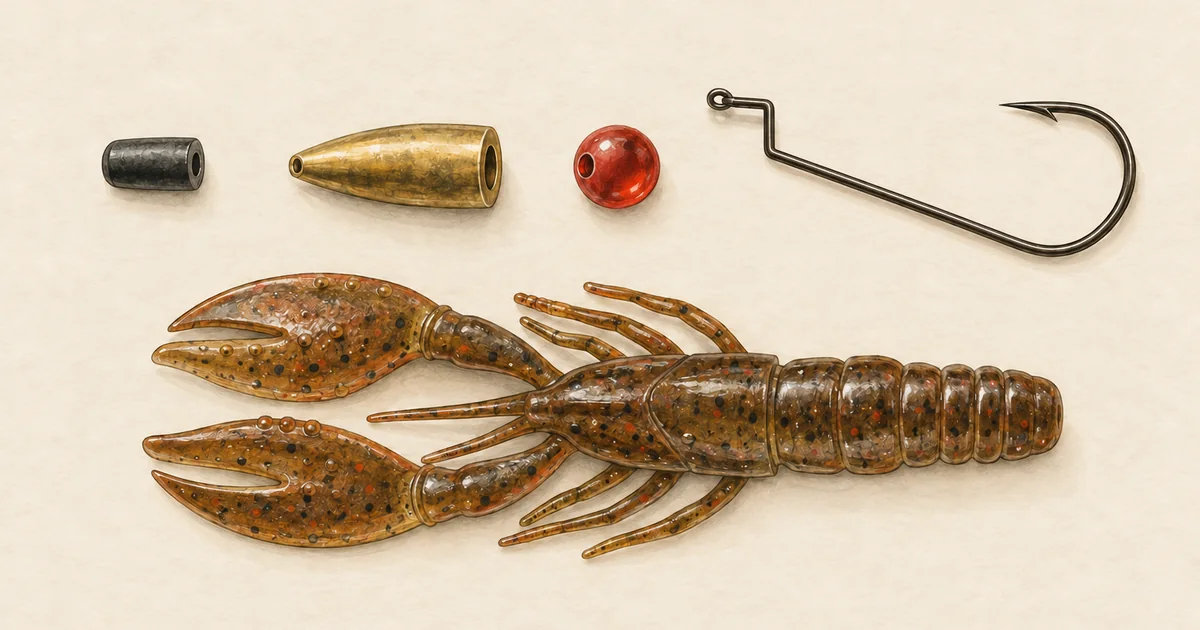
Texas rig
Soft plastic with a hidden hook point and sliding weight for weed and obstacles.
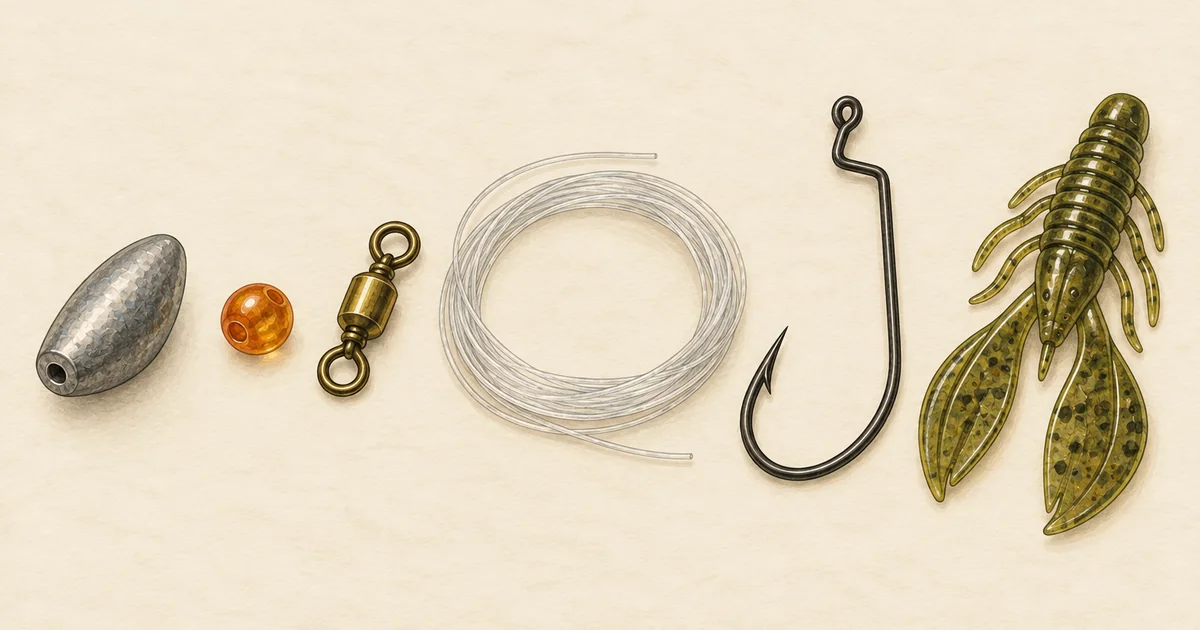
Carolina rig
Weight and bait separate: design, guide values and presentation of the Carolina rig on the bottom.
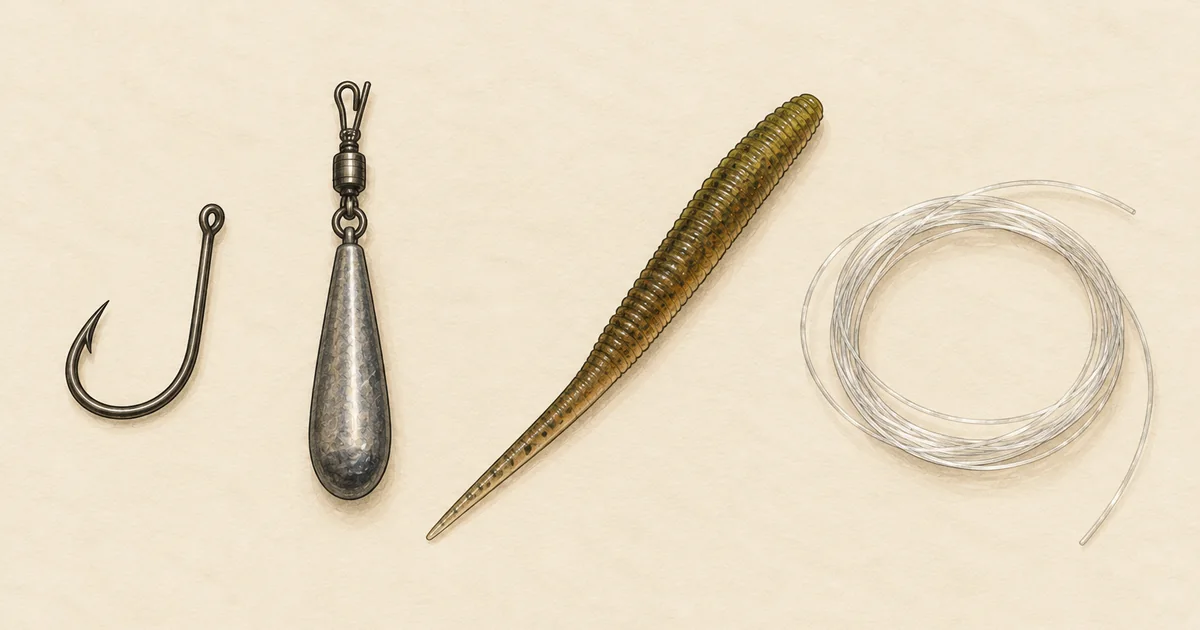
Drop-shot rig
Hook above the weight, the bait works on the spot above the bottom.
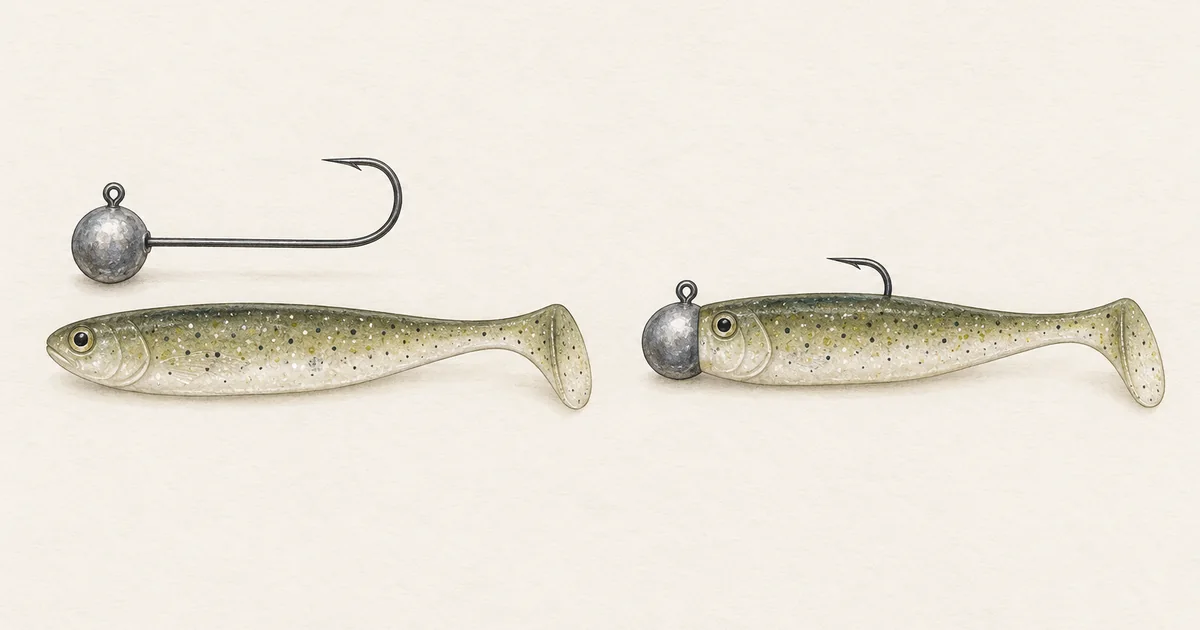
Jig head rig
Rig a soft plastic shad straight, choose head weight and hook size, add a stinger treble and hooklength.
Ledger and feeder rigs
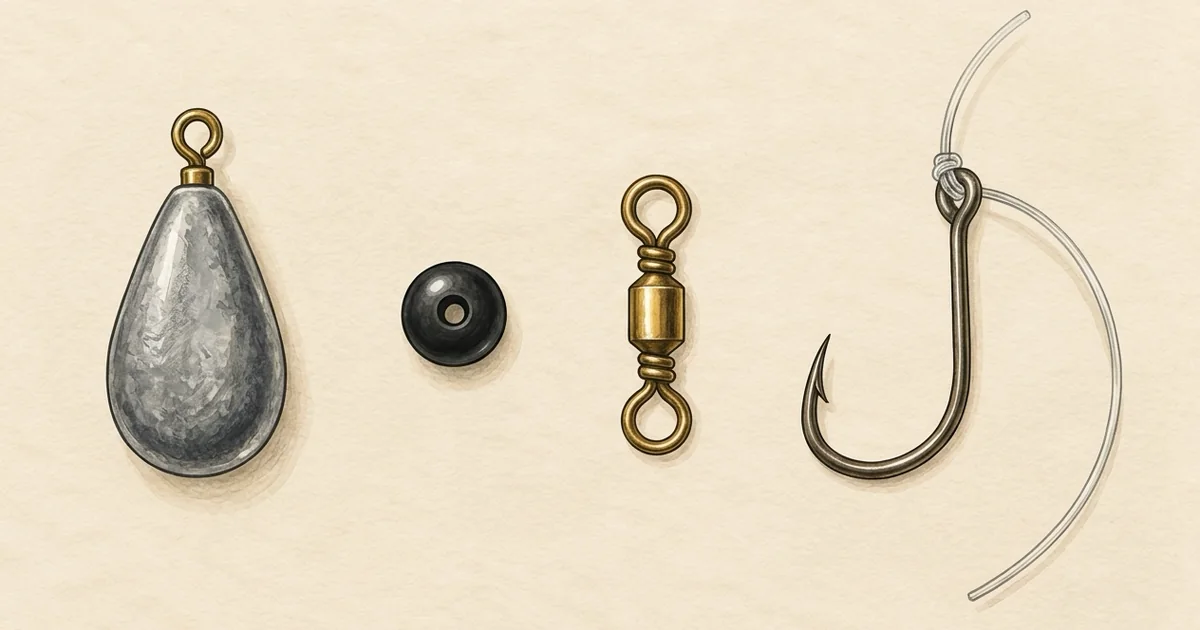
Running leger rig
The weight slides freely on the line, the bait lies on the bottom.
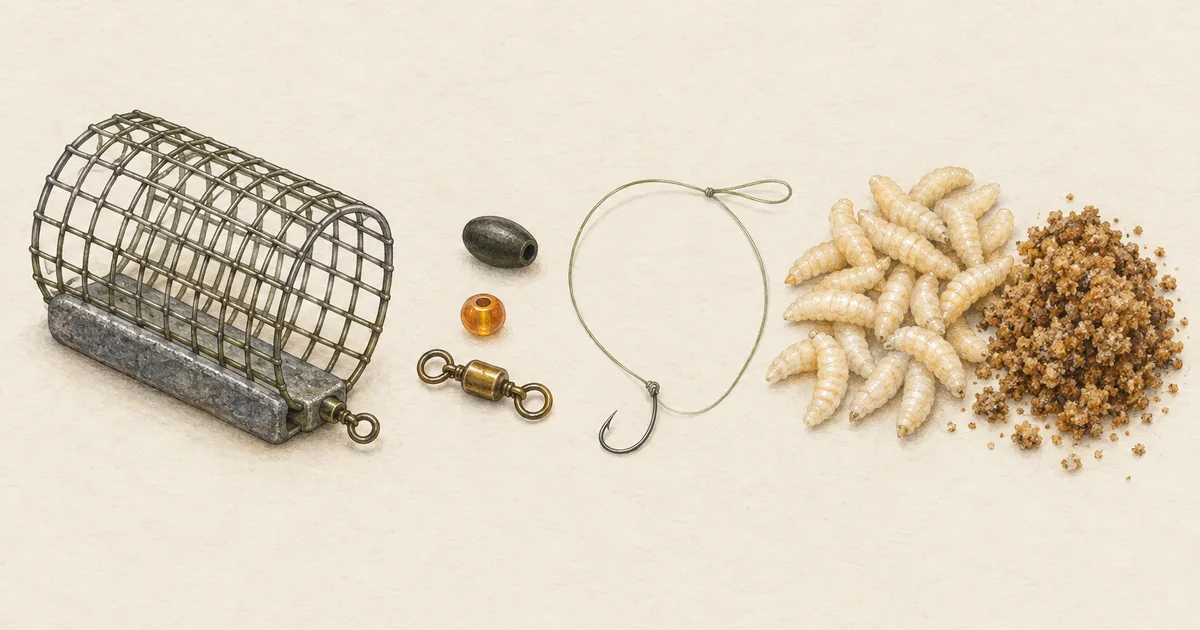
Feeder rig
Running and loop rigs: design, tying steps and guide values for hooklength, hook and feeder.
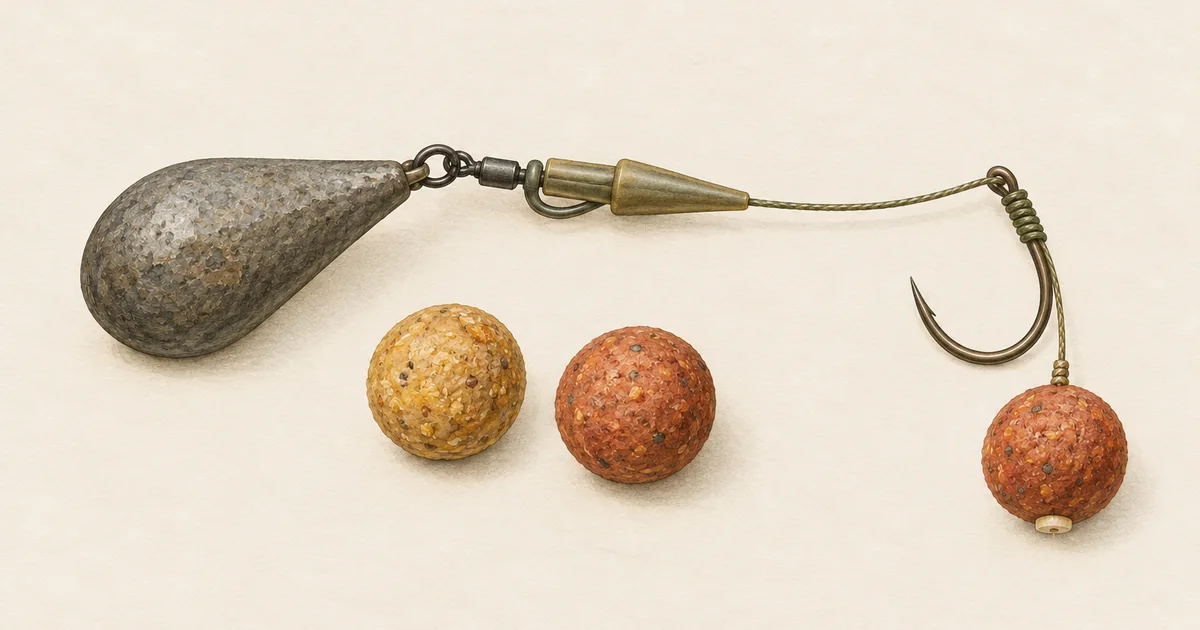
Hair rig
Bait on the hair, hook free: design, tying steps and guide values of the self-hooking rig for carp.
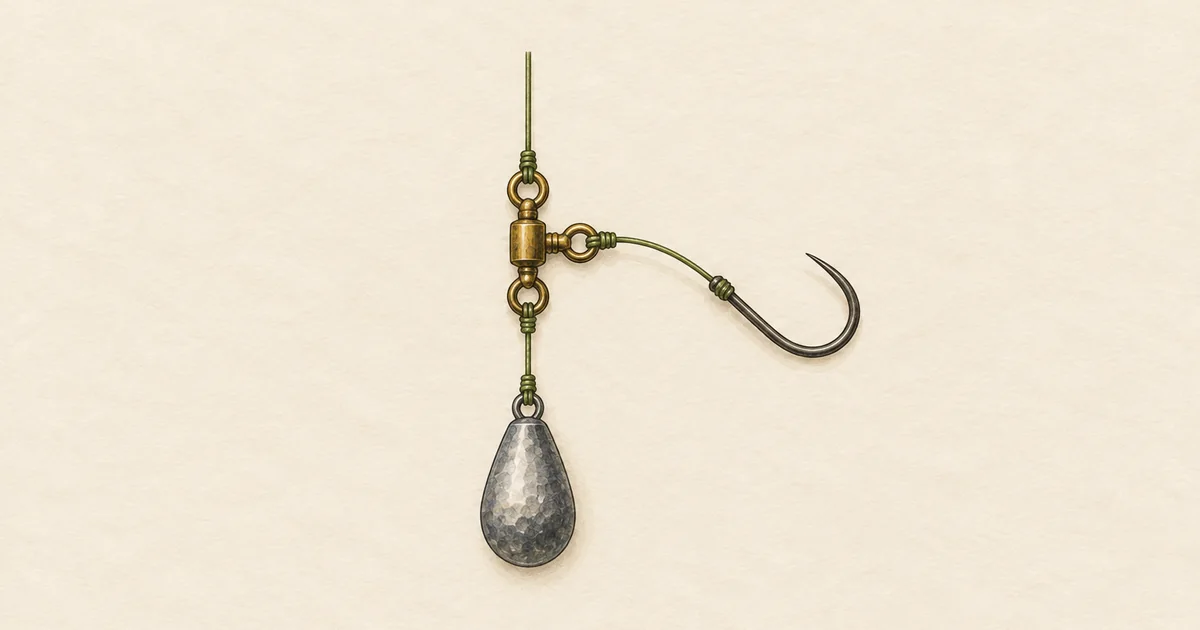
Dropper rig
Weight at the end, hook on an arm above it: design, weak link, guide values and use in river and sea.
With a float
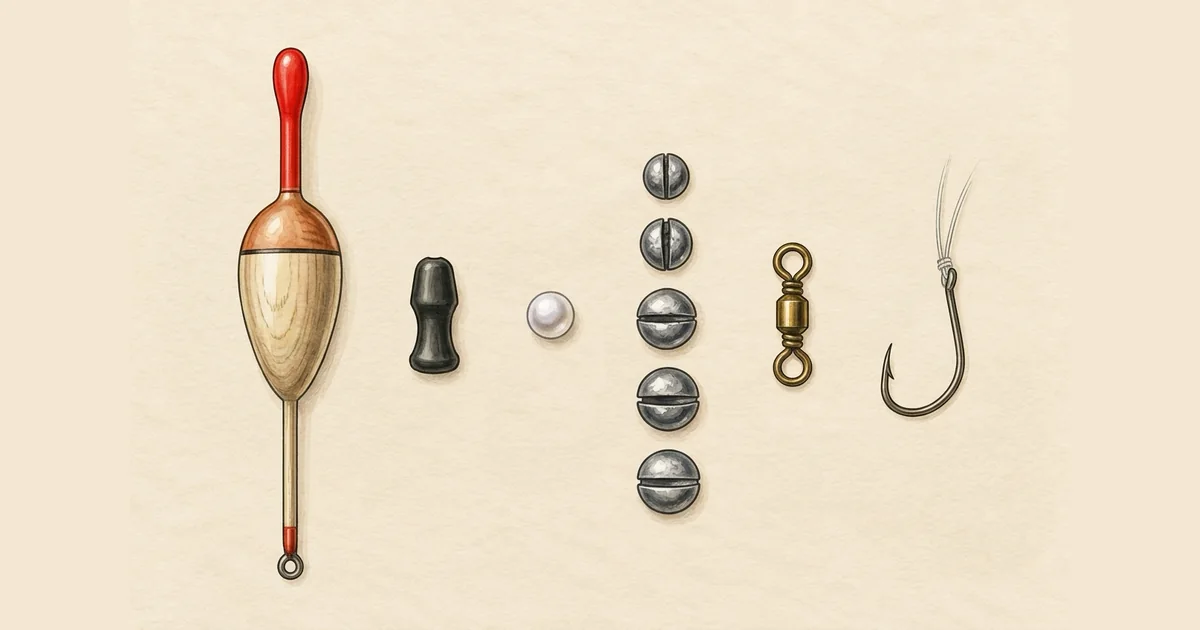
Float rig
The float holds the bait at a fixed depth and shows bites.
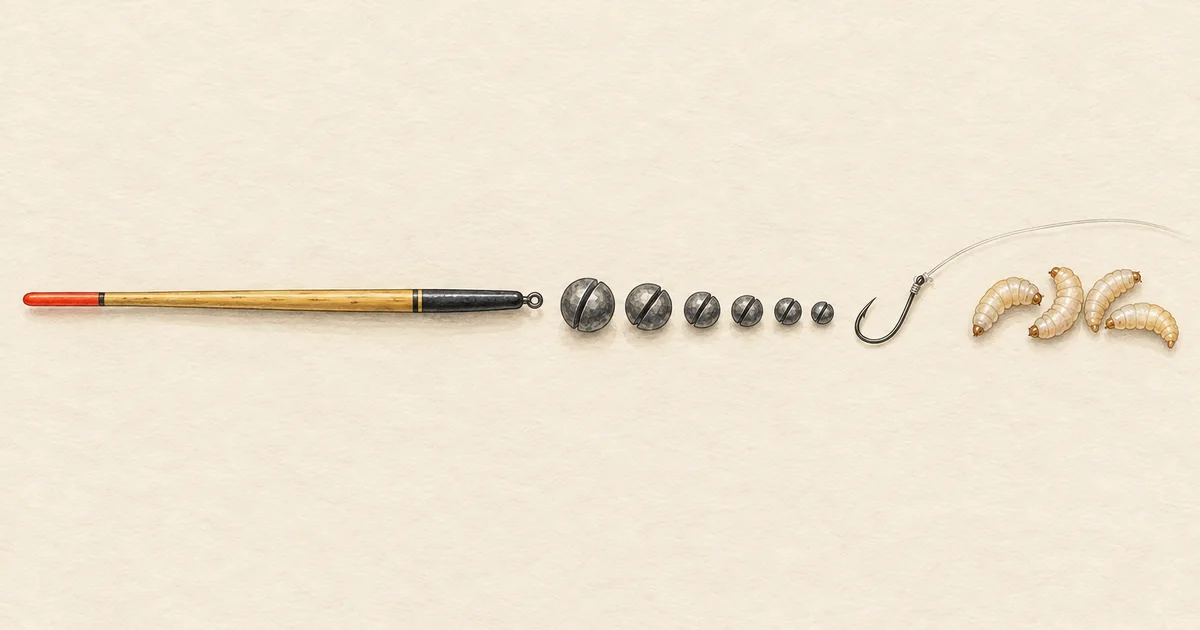
Waggler rig
Float attached at the bottom only: distribute the weight correctly, sink the line and set the depth.
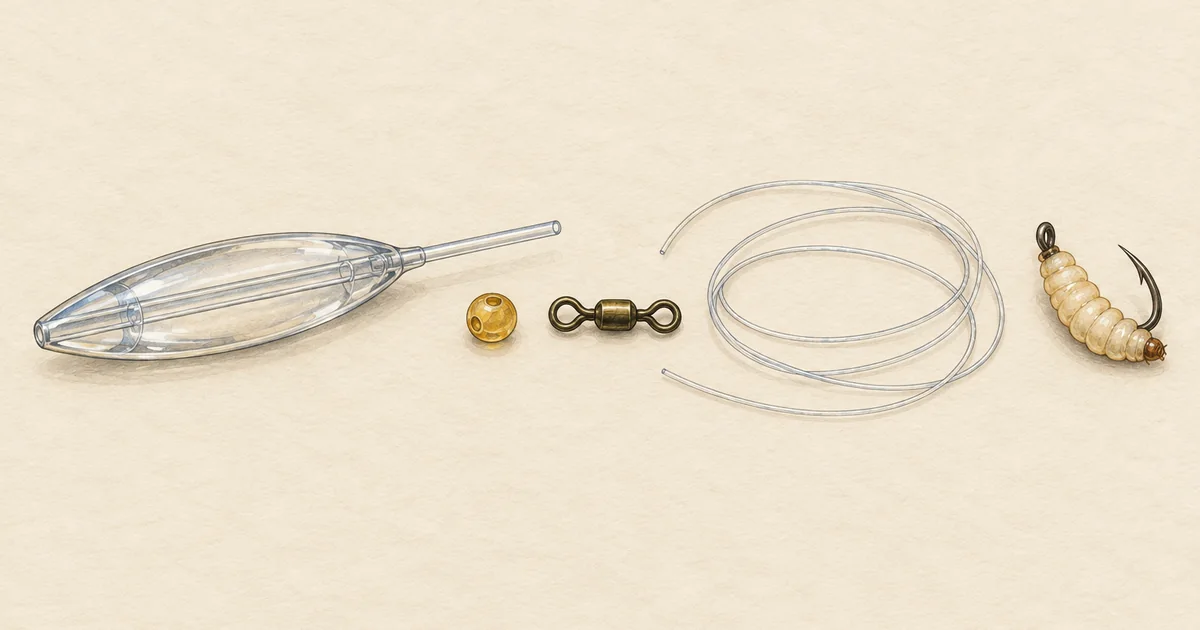
Sbirolino rig
Cast light baits far and work them at the right depth: design, guide values, presentation and mistakes.
Deadbait and sea
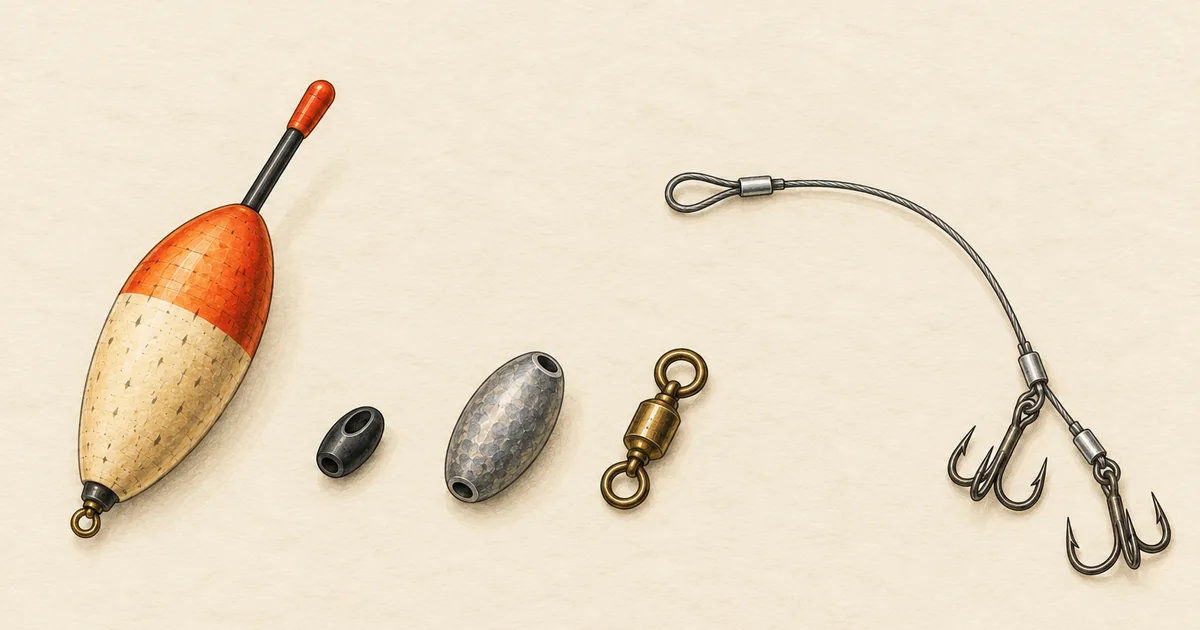
Baitfish rig
Dead baitfish on a float or ledger weight: law, design, wire trace and trebles.
Surf rig
Paternoster with two snoods and a grip lead for fishing from the beach.
Natural-bait rig for the sea
Side arms or flowing traces with fish strips for fishing from a boat.

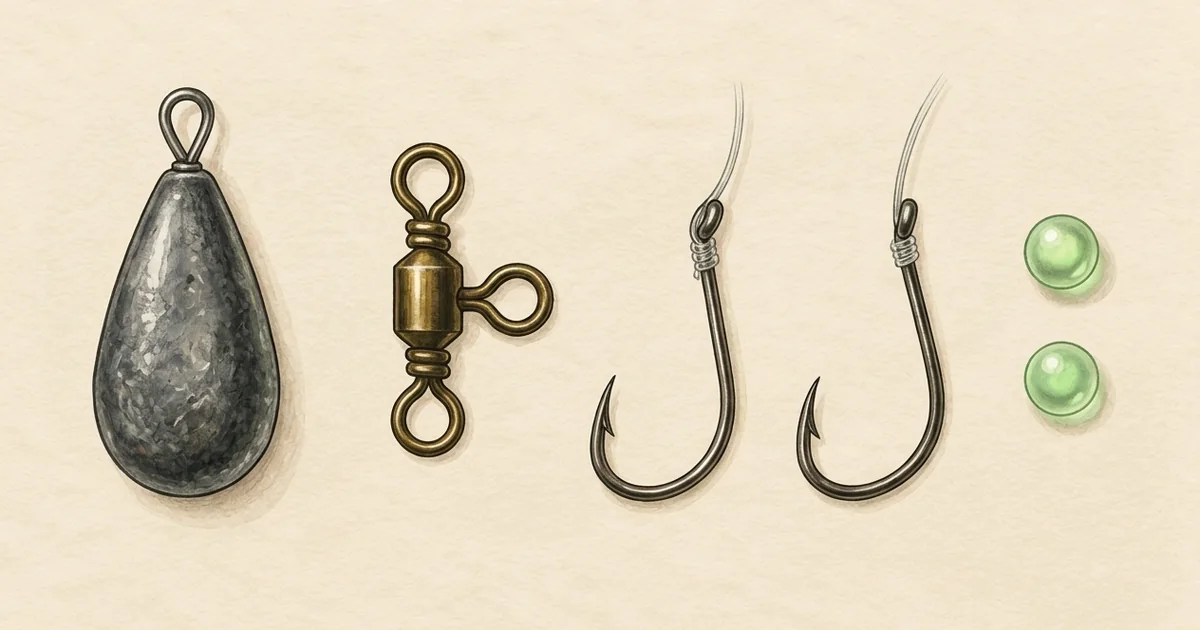
Images: AI-generated
What makes a rig
The main line comes from the reel, and the hooklength carries hook and bait. In between sits whatever puts the bait in place: a weight that pulls it to the bottom, or a float that holds it at a certain depth. Which rig suits depends on the fish, the bait and the water. Some are built for obstacles, others for calm bait presentation or for sitting and waiting.
Rig and bait
The bait pages describe what sits on the hook, these pages the rig to go with it. For soft plastics see the soft baits, for example soft worm and soft plastic crayfish. For sitting and waiting, look at the animal natural baits; for the sea, lugworm and ragworm belong here.
Related topics
How to attach hooks and swivels securely to the line is covered under knots. Which line to use for the main line and the hooklength is in tackle. You can work out breaking strain and diameter in the line calculator.
Note: Weights and lengths are guide values from practice. If lead is restricted at your water, it says so in the water’s rules.
All figures are guideline values without guarantee. Observe the water rules and state law.