
Knowledge · Lures
Rubber crab
Soft baits · Spin fishing
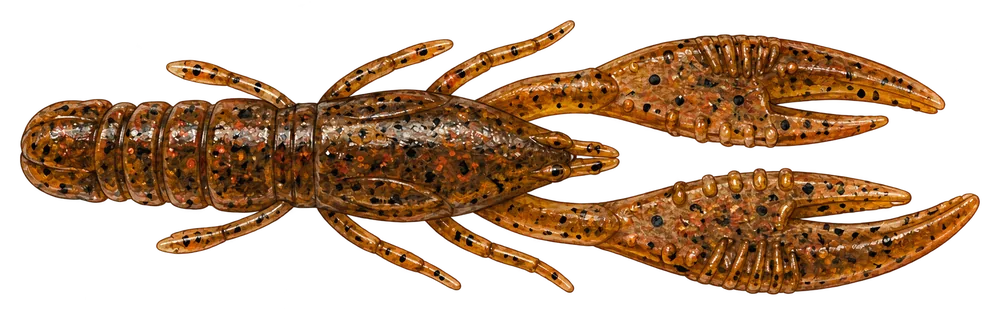
A soft-plastic crayfish is one of the creature baits: soft plastic lures with claws and arms that imitate a crayfish. You hop it just above the bottom and often leave it lying for a long time, because its appendages keep working in the pause. The main target is perch; on a Texas rig it also catches zander.
- Water depth
- Bottom
- Retrieve
- Active: in short hops over the bottom, with long pauses in between
- Fishing method
- Spinning
- Category
- Soft baits
How it works
A creature bait stands out from the mass of shads with its claws, feelers and arms. The crayfish imitation flares its claws strongly just above the bottom and suggests a fleeing prey animal. Its pressure wave and movement pattern differ from those of a soft plastic shad, which experienced anglers see as an advantage, especially on heavily fished spots.
How strongly the claws work depends on mass and shape. Thin, light claws spring into action at the slightest lift, and big ones move more lively than small ones. In the pause on the bottom, claws, arms and legs keep playing gently; bites often come in exactly this quiet phase.
Soft-plastic crayfish are made of soft plastic. There are sinking models and ones with buoyant claws that rise up in the pause, and some carry a rattle in the body. An experienced angler most often fishes models of three to four inches, so around 8 to 10 centimetres. Perch often suck in their prey greedily and then have the hook deep in the mouth.
How to work the lure
Active: in short hops over the bottom, with long pauses in between
Schematic illustration, AI-generated.
- Cast
- sink to the bottom
- drag slowly over the bottom
- reel in
Anatomy
The points on the picture above explain the most important parts – on hover or tap.
- Rear body: The flexible rear section with the tail. It sways as the lure sinks and keeps working slightly in every pause.
- Legs: Fine appendages that move even in a light current and with small twitches.
- Body: Takes the offset hook, with its point hidden in the soft plastic. Some bodies carry a rattle.
- Claw: Flares out on a twitch and stands up in the pause; the lighter it is, the sooner it starts to work.
- Second claw: Together the two claws give the lure the profile of a crayfish and imitate an escape.
Rig in three steps
- 1. Tie on the hooklengthFluorocarbon for perch and zander. As soon as pike are in the water, choose a bite-proof leader, for example steel.
- 2. Texas rigThread the bullet weight onto the line, then a bead behind it, then knot on the offset hook and hide its point in the soft plastic. The weight runs freely. Texas rig step by step
- 3. Or on a jig headThe hook is exposed and bites in at once on the strike. Where weed and wood are a threat, use the offset hook instead. Jig-head rig step by step
Drawings: AI-generated, schematic.
When the target fish are in season
Hardly any chancePossibleGoodPeak seasonValues from the catch calendar.
When and where
The crayfish is a lure for cold days. As temperatures fall, big perch move from rivers into harbours and connected gravel pits. Plenty of crayfish often live there, and in winter they make up a large part of the big perch’s diet. One angler reports that even specimen fish do not necessarily sit deep: in the Rhine delta he caught them at one to three metres, in reservoirs at six to nine metres. Feeding spells are short, and often come early or late in the day.
Because the fishing is slow, you need drop-offs, steep banks or plateaus where fish hold. One angler first searches for them with fast-retrieved rattling lures and then switches to the crayfish when the fish only nudge. In canals, perch often change spots daily. In summer and autumn, on the other hand, perch often take fast crankbaits or surface lures. On a Texas rig, the crayfish also works in weed and deadwood, for example on shallow holding spots where pike hunt prey fish and small crayfish.
How to choose size, hook and weight
- Choose the hook size Pick an offset hook to match the size of the lure: size 1 to 1/0 for lures under 10 centimetres.
- Weight, bead, hook Thread on the bullet weight, then a bead behind it, and knot on the offset hook. The weight runs freely.
- Hide the point in the soft plastic The crayfish body takes the hook, with the point buried in the rubber. That way it snags less often on stones, wood and weed.
For the Texas rig, Blinker gives guideline values: for lures under 10 centimetres a hook of size 1 to 1/0 fits, for 10 to 14 centimetres 2/0, and from 15 centimetres 3/0 to 5/0. The bullet weight depends on depth: up to 2 metres 2 to 5 grams, up to 4 metres 5 to 9 grams, up to 6 metres 8 to 12 grams, deeper 13 to 18 grams. A few grams do not matter much here.
On the kickback rig, a bottom rig with a side arm, a size 4 hook goes on typical perch soft plastics and size 1 to 2 on zander lures. The side arm measures 10 to 15 centimetres, the distance to the lure 20 to 40 centimetres, otherwise bite detection becomes imprecise. The crayfish has to sink here, otherwise it sits above the weight.
On lure size: big lures tend to catch bigger perch, but catch rates can drop. In winter eight to ten centimetres is long enough; according to one angler, more brings neither bigger fish nor more bites.
How to work the crayfish and make the most of bites
Twitch the lure across the bottom in small, hard hops and then take in no more than one or two turns of the handle. Alternate between single, double and triple hops, and keep letting it rest for a few seconds. On the Texas rig, bites usually come on the drop and show as a light tug or the line moving sideways.
Strike decisively, but not too hard. On the Texas rig, unlike on a lead head, you can wait a second or two, and after a missed bite fish often take hold again. With a stiff rod, loosen the drag after the strike, because otherwise the hook can pull out. Quick reaction bites often sit at the side of the mouth; a slow fight helps here, in which you keep the fish deep for as long as possible.
How to store soft plastics properly
Use only lure boxes marked PE or PP, because the plasticisers attack other plastics. Never put lures with and without plasticiser in the same compartment, or they clump together. Keep matching colours together so they do not bleed. Before long storage, take the hooks out and rinse them with tap water; salted soft plastics can make them rust.
Which colour?
Starting points to try, not rules. Depth and speed are usually more important than colour.
Soft-plastic crayfish, or another lure?
| Baits and lures | Depth | Retrieve | Take this lure if … |
|---|---|---|---|
| Soft-plastic crayfish | Bottom | Active: in short hops over the bottom, with long pauses in between | this page |
 Soft plastic worm | Bottom | Active: draw slowly along the bottom, twitch and let it lie | you want even less built-in action and the fish do not react to appendages |
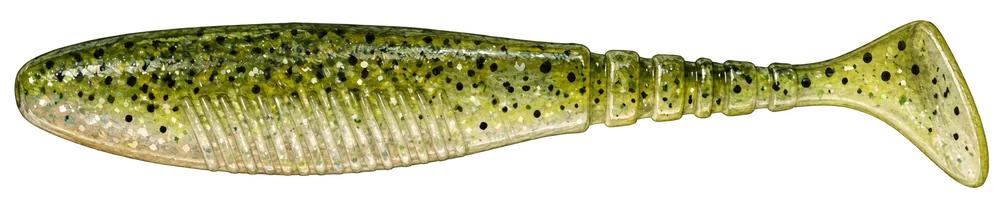 Soft plastic (shad) | Bottom to mid-water | Active: jigging with the rod or lift-and-drop with the reel, bites usually come on the drop | the fish are chasing prey fish and you want to cover more ground faster |
What you need
- Spinning rodA stiff, fast tip transmits small movements and drives the strike home; with a soft tip it fizzles out. More
- LineBraided main line for direct contact, with fluorocarbon in front; for pike a bite-proof leader. More
- Hook and weightOffset hook and bullet weight for the Texas rig, jig heads for open water. More
- Disgorger pliersPerch often have the hook deep in the mouth; long pliers let you remove it gently. More
More on the method: Spinning.
At a glance
Editorial assessment, not measured values.
If it does not work
Small hops, one or two turns of the handle at most, then a pause. Many bites come when it is still.
Strike decisively so the point goes through the rubber. On the Texas rig, wait a second or two; after a missed bite fish often take hold again.
On the kickback rig, use a sinking model; buoyant claws are fine all the same.
With a hard rod, ease the drag after the strike and play the fish slowly and as deep as possible.
In dense weed, leave out the glass bead and fix the weight firmly to the lure; the hook point stays in the soft plastic.
Use only PE or PP boxes and keep lures with and without plasticiser apart.
Frequently asked questions
What is a creature bait?
A soft plastic lure that does not imitate a fish, but with claws, arms or feelers recalls crayfish and other small creatures. The soft-plastic crayfish is its best-known example.
Why the Texas rig?
The hook point is buried in the lure, so it snags less often on stones, wood and weed. The freely running weight lets the fish suck in the lure without resistance.
When does the soft-plastic crayfish catch best?
Mainly in winter, when perch are sluggish and crayfish make up a large part of their diet. In summer, fast lures often catch better.
Which hook size fits?
On the Texas rig, Blinker gives size 1 to 1/0 for lures under 10 centimetres and 2/0 for 10 to 14 centimetres. On the kickback rig, size 4 is usual for perch soft plastics.
May I use treble hooks or extra hooks?
Rules on the number of hooks and trebles are set out in the water rules (Gewässerordnung) and the fishing permit (Erlaubnisschein). A single hook is kinder to fish than a treble; the soft-plastic crayfish works without a treble.
Before fishing, the current permits, state rules and water rules apply: bait bans, number of hooks, closed seasons, protected species and catch limits can differ. Many federal states expressly ban live baitfish. Take bait remains and packaging away with you. All details are guide values without guarantee and do not replace legal advice.
Sources
- Blinker: Barschangeln mit Krebs in Slow Motion
- Blinker: Tuning für den Gummikrebs
- Blinker: Texas-Rig, die Erfolgsmontage mit dem Klick
- Blinker: Gummifische richtig aufbewahren
- Rute & Rolle: Angeln mit Creature Baits
- Rute & Rolle: Mit Krebsen auf Kanal-Barsch
- Rute & Rolle: Kickback Rig, Vorsicht Rückschlag
- Deutscher Angelfischerverband: Der Flussbarsch, Fisch des Jahres 2023
- Fisch & Fang: Fünf Winter-Barsch-Mythen
- Bayerische Landesanstalt für Landwirtschaft: Prüfungsfragen zur Fischerprüfung 2023/2024
The sources explain terms and basic principles. Retrieve, colour choice and values are editorial starting points and depend on water, weather and lure.
More soft baits
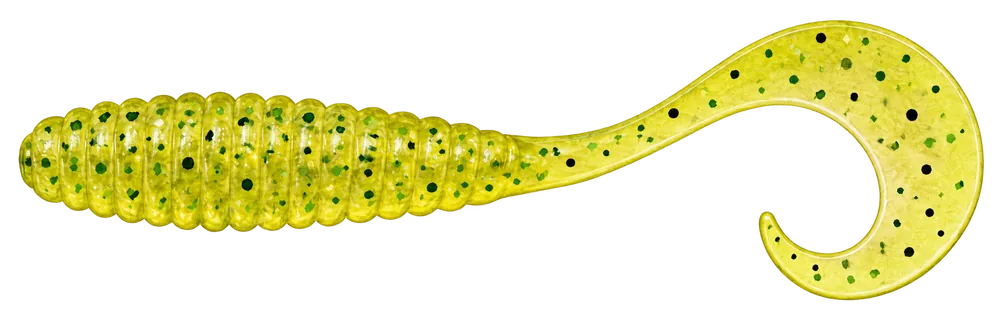 Twister
 Pintail (no-action shad)
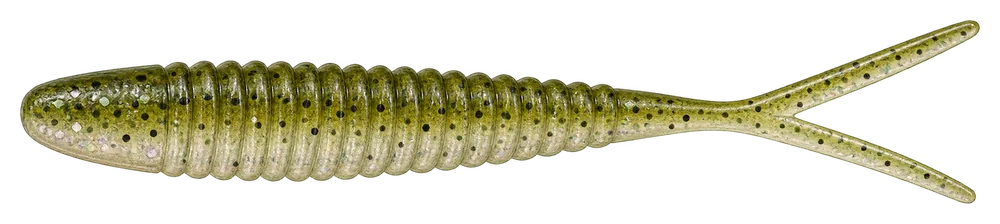 V-tail
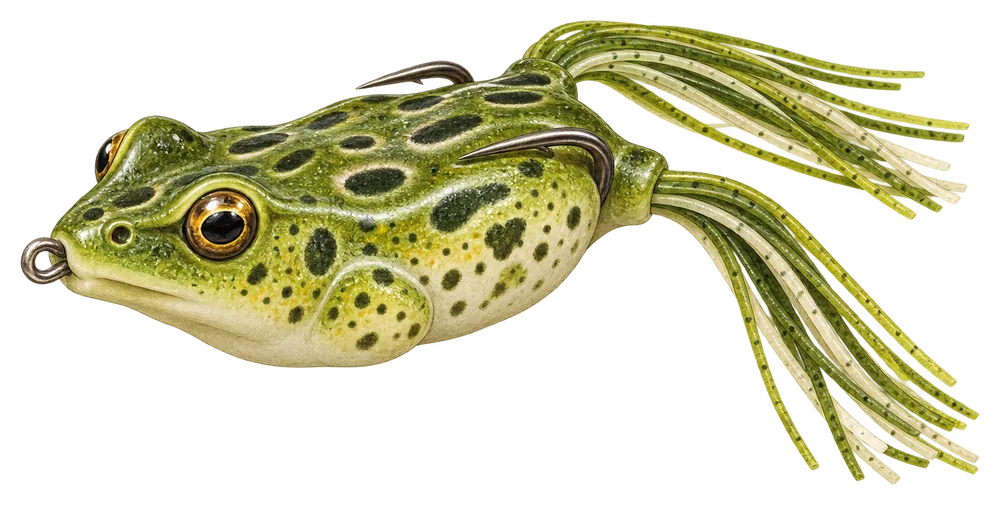 Soft-plastic frog
Created with AI support from the sources named (AI notice). Last updated: 25 October 2026. Found a mistake? Write to us. Who is behind the site: About me.