
Knowledge · Lures
V-tail
Soft baits · Spin fishing
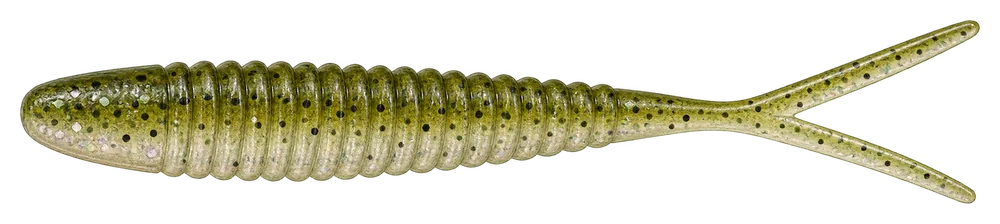
A V-tail is a slim soft plastic lure with a forked tail. Unlike a paddle tail, it hardly moves on its own; what makes it catch comes from the way you work it. Like the pintail, it is one of the no-action shads and is regarded as a winter lure for cautious zander and perch.
- Water depth
- Bottom to mid-water
- Retrieve
- Active: lift slowly, hold it steady near the bottom and let it sink again
- Fishing method
- Spinning
- Category
- Soft baits
How it works
Instead of a paddle tail, the V-tail has two narrow tail tips. Its own movement is slight: the strikes come entirely from the way you work it, that is lifting, sinking and pauses. Without a braking tail paddle, the lure falls to the bottom unhindered.
Alongside the pintail, it is one of the no-action shads. By tail shape, V-tails count as winter lures, paddle tails as summer and current lures, and lures with a curly tail, that is twisters, as beginner lures for almost any situation.
Many of these soft lures were originally soft jerkbaits from the USA, fished there on a single hook at the surface. On a lead head they count as top lures for vertical jigging, and Dutch professionals prefer to fish no-action or low-action shads.
The soft body often folds on a bite. The tail can then press on the single hook and cover its point; the fish cannot be hooked in that case. That is why many vertical anglers fish with an extra treble as a matter of course.
How to work the lure
Active: lift slowly, hold it steady near the bottom and let it sink again
Schematic illustration, AI-generated.
- Cast
- sink to the bottom
- lift and let fall
- reel in
Anatomy
The points on the picture above explain the most important parts – on hover or tap.
- Head: Sits on the jig head or the drop-shot hook.
- Ribbed body: Soft and flexible; on a bite it often folds up and can cover the hook point.
- Upper tail tip: One of the two narrow tips; it hardly moves on its own.
- Lower tail tip: Together with the upper one it forms the fork that gives the lure its name.
Rig in three steps
- 1. Tie on the hooklengthFluorocarbon for perch and zander. Where pike are present, a bite-proof steel or titanium leader belongs in front of it.
- 2. On a jig headThread it on straight; a short hook shank leaves the lure mobile, and the weight depends on depth and drift. Jig-head rig step by step
- 3. Or on the drop shotHook above the weight: the lure stands off the bottom. Drop-shot rig step by step
Drawings: AI-generated, schematic.
When the target fish are in season
Hardly any chancePossibleGoodPeak seasonValues from the catch calendar.
When and where
In lakes and quiet harbours, zander bite so cautiously in winter that one angler catches almost only on no-action shads worked very slowly along the bottom. Sometimes only leaving the lure lying or dragging it slowly across the bottom brings the bite. In current, on the other hand, a paddle tail usually does more, because it moves even without twitching.
When vertical jigging from a boat, on a river for example, you present the V-tail just above the bottom. If the water temperature drops below ten degrees, go deeper than six metres. In summer, perch and zander also bite in the shallows, even at two metres‘ depth. Pike occur there too, so a bite-proof leader is a must.
How to choose length, head and hook
- Round head, short shank Take a round head with a short-shank hook from 1/0 to 4/0. It keeps the lure level and leaves it freedom of movement.
- Thread it on straight Thread the V-tail on straight. You choose the head weight to suit depth and drift.
- Extra treble, where allowed Where allowed, you hang an extra treble on the back or at the base of the tail; on the tail it tends to dampen the movement.
In summer, shads of 12 to 15 centimetres catch when vertical jigging; from October, lures of up to 23 centimetres are mentioned. They do not bring as many bites, but more often a big zander. Colour plays a minor role here.
The head has to reach the bottom even in a drift. One angler gives 17 grams up to five metres‘ depth, 21 grams at five to ten metres, and at least four grams more in wind or current; another calls for at least 20 and up to 50 grams. A head that is too light drifts away when you lift. A round head keeps the lure level, and short-shank hooks from 1/0 to 4/0 leave it freedom of movement.
Opinions differ on the extra treble: one author hangs it on the back of the lure because on the tail it restricts movement, others put it at the base of the tail. A strong line with a breaking strain of at least 15 kilos serves as the connection. Whether extra hooks are allowed is regulated by the federal state (Bundesland), the water rules (Gewässerordnung) and the fishing permit (Erlaubnisschein).
How to work the V-tail vertically
Let the lure sink to the bottom on a tight line, lift it slowly with the rod tip, hold it still for five to ten seconds and lower it again. Bites come on the way down. The lift height is given as 10 to 30 or 30 to 50 centimetres; one angler adjusts it to the activity of the fish and varies it.
Ripping it upwards brings no bites and in winter tends to scare fish off. Give the lure a pause above the bottom after every lift. Keep the rod tip just above the water so there is room to strike when a fish bites.
Which colour?
Starting points to try, not rules. Depth and speed are usually more important than colour.
V-tail, or another lure?
| Baits and lures | Depth | Retrieve | Take this lure if … |
|---|---|---|---|
| V-tail | Bottom to mid-water | Active: lift slowly, hold it steady near the bottom and let it sink again | this page |
 Pintail (no-action shad) | Bottom | Active: short twitches, pauses and sinking, also on the drop shot | you prefer a needle-tail lure on a drop-shot or Ned rig |
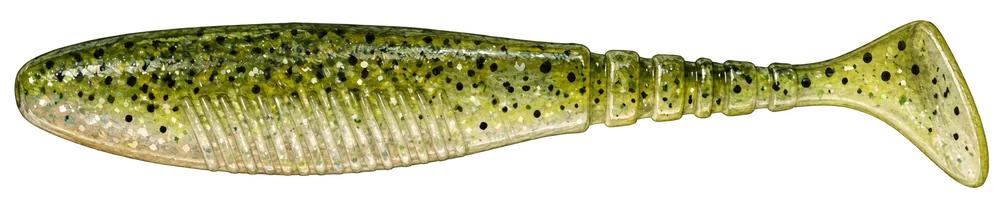 Soft plastic (shad) | Bottom to mid-water | Active: jigging with the rod or lift-and-drop with the reel, bites usually come on the drop | you are fishing in warm water or in current and want the lure to work by itself |
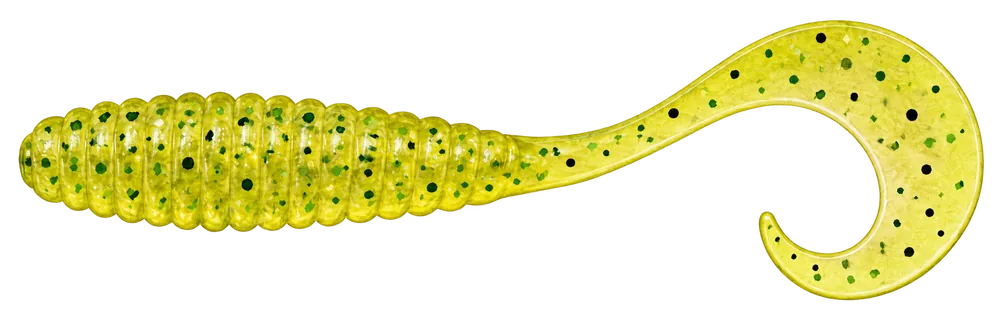 Twister | Bottom to mid-water | Active: reel in steadily or jig, with long sinking phases for sluggish fish | you want a beginner lure for almost any situation that flutters even at low speed |
What you need
- Vertical rodShort, up to about 2.10 metres, stiff and fast, with a casting weight of around 14 to 28 grams. More
- LineThin main line has less water resistance and gives better control of the lure. More
- Jig headsHeavy heads of roughly 20 to 50 grams keep the lure on the bottom; take several weights. More
- Fish finderShows drop-offs, rock piles and fish holding spots under the boat. More
More on the method: Spinning.
At a glance
Editorial assessment, not measured values.
If it does not work
Work it with slow lifts, a steady hold and a sink. Bites come on the way down; in the cold, long pauses or simply leaving it lying help.
Use a heavier head. In drift or current it is better to go one size too heavy, because a head that is too light drifts away when you lift.
Soft plastics fold up on the bite and cover the point. Where allowed, an extra treble helps, even on lures of 12 centimetres.
Frequently asked questions
V-tail or pintail?
Both are no-action shads and live off the way you work them. How lively a model runs depends not only on tail shape but also on the rubber compound and body shape.
Does a V-tail also work for vertical fishing?
Yes, that is its most important use. Lift it slowly, hold it steady near the bottom and let it sink again. Jerky hops tend to scare fish off in winter.
When is the best time for V-tails?
The V-tail counts as a winter lure because fish in cold water prefer calm, slow lures. In summer and in current, reach for a paddle tail instead.
How heavy must the jig head be for vertical jigging?
Heavy enough to reach the bottom even in a drift. Depending on depth and current, the range runs from about 17 to 50 grams; better one size too heavy than too light.
Do I need an extra treble?
Many vertical anglers fit one, because soft lures fold up on the bite and cover the hook. Whether it is allowed is regulated by the federal state (Bundesland), the water rules (Gewässerordnung) and the fishing permit (Erlaubnisschein).
Before fishing, the current permits, state rules and water rules apply: bait bans, number of hooks, closed seasons, protected species and catch limits can differ. Many federal states expressly ban live baitfish. Take bait remains and packaging away with you. All details are guide values without guarantee and do not replace legal advice.
Sources
- Blinker: Vertikalangeln, erfolgreich unter der Rutenspitze
- Blinker: Zanderangeln, Wackelschwanz oder Gabelschwanz
- Blinker: Zanderangeln mit Gummifisch
- Fisch & Fang: Zielfisch Zander, Einmaleins des Vertikalangelns
- Rute & Rolle: So vermeidest du Fehlbisse
- Bayerische Landesanstalt für Landwirtschaft: Prüfungsfragen Staatliche Fischerprüfung 2023/2024
- Fischereiverein Löningen: Gerätekunde
The sources explain terms and basic principles. Retrieve, colour choice and values are editorial starting points and depend on water, weather and lure.
More soft baits
Soft plastic (shad)TwisterPintail (no-action shad)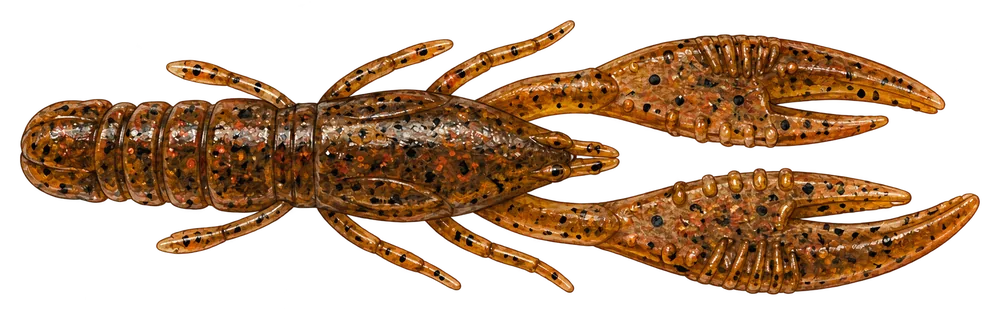 Soft-plastic crayfish
 Soft-plastic frog
 Soft-plastic worm
Created with AI support from the sources named (AI notice). Last updated: 25 October 2026. Found a mistake? Write to us. Who is behind the site: About me.