
Knowledge · Lures
Soft plastic (shad)
Soft baits · Spin fishing
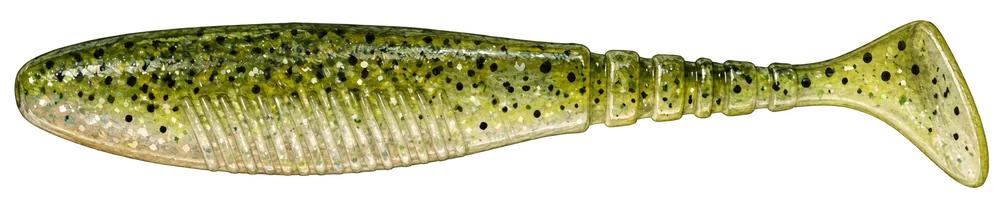
The soft plastic shad, in angling slang simply a shad, is a soft artificial lure shaped like a prey fish. On a jig head it moves in hops across the bottom while the paddle tail vibrates. For zander and perch it is the standard lure, and pike also take it readily.
- Water depth
- Bottom to mid-water
- Retrieve
- Active: jigging with the rod or lift-and-drop with the reel, bites usually come on the drop
- Fishing method
- Spinning
- Category
- Soft baits
ZanderPerchPikeCodColey (saithe)LingTusk (cusk)HalibutMonkfishTurbotHorse mackerelSea bassWels catfishHuchen (Danube salmon)
How it works
A soft plastic shad imitates a prey fish in shape and size. Its flat paddle tail stands at an angle from the body and beats from side to side on the retrieve. The resulting pressure waves stimulate the lateral line organ of predators.
The tail works as soon as water flows past it: on the retrieve, on the drop and in the current. On the drop the tail paddle brakes the lure like a small parachute, so it stays in view for longer.
The soft plastic shad is rigged on a jig head, a long-shanked hook with a lead head. The weight sits at the mouth, and the hook point exits at the back. The material is a soft plastic mixture; some contain flavourings and salts.
By tail shape you distinguish action shads with a large paddle tail and strong pressure waves from low-action models whose smaller tail beats quickly. No-action shads such as the pintail and V-tail hardly move on their own. In summer the strong action shads count as the first choice, in winter often the calm ones.
How to work the lure
Active: jigging with the rod or lift-and-drop with the reel, bites usually come on the drop
Schematic illustration, AI-generated.
- Cast
- sink to the bottom
- lift and let fall
- reel in
Anatomy
The points on the picture above explain the most important parts – on hover or tap.
- Head: This is where the jig head sits. The lead at the mouth moves the centre of gravity forward, and the hook exits centrally on the back.
- Back: The body must sit straight on the shank, otherwise the lure runs crooked. The hook point needs room to grip.
- Ribbed belly: Ribs and notches make the body more mobile, enlarge the surface and release attractant.
- Tail root: The thinner it is, the more easily the tail beats, even on a slow retrieve.
- Paddle tail: Creates the vibration on the retrieve that predators sense through the lateral line organ, and slows the sink.
Rig in three steps
- 1. Tie on the hooklengthFluorocarbon for perch and zander. Where pike are present, a bite-proof steel or titanium leader belongs in front of it.
- 2. Thread it straight onto the jig headMark the exit on the back, push the lure on to the head without twisting and check the clearance of the hook point. Jig-head rig step by step
- 3. Hook into the eyeletWith a snap or a direct knot to the eyelet; with a snap you change the head faster.
Drawings: AI-generated, schematic.
When the target fish are in season
Hardly any chancePossibleGoodPeak seasonValues from the catch calendar.
When and where
By day, zander almost always stand on the bottom of the water. The soft plastic shad therefore needs regular contact with the bottom; in mid-water the zander often does not see it at all. A lure wound straight through helps mainly in the dark, when the fish also hunt in the higher layers. Good spots are drop-offs, groynes and rock armouring.
Water temperature sets the pace. In warm water, predators and prey fish are ready for quick sprints, and active jigging then catches better. Below about ten degrees the fish become sluggish and calm reel-lift jigging (Faulenzen) suits. With perch, little time to look often triggers the bite: they snap it up before the neighbour does.
In murky water, zander stand shallower than you think, often right at the groyne at your feet. In a current, the lure’s own movement counts: a paddle tail wobbles even when you only hold the lure or it sinks to the bottom.
Fishing for cod in the Baltic Sea is banned in 2026 (as of October 2026). If one bites on the German coast anyway, put it back at once. Before every trip, check the current fishing rules for your area.
How to choose size, jig head and hook
- Mark the exit point Lay the hook against the outside of the plastic and mark on the back the spot where the point should exit.
- Push it on without twisting Push the lure over the hook without twisting until it sits against the head.
- Exit centrally on the back The point exits centrally on the back, and the body sits straight on the shank. Otherwise the lure runs crooked.
- Check the clearance A fingertip must fit between the back and the hook point, otherwise you rig the plastic again.
The length depends on the target fish and the season. For zander, slim soft plastics of 8 to 14 centimetres count as a solid basis, and in winter up to 25 centimetres is fine. Perch often take lures of around 6 centimetres, in winter eight to ten; larger ones bring neither bigger fish nor more bites there.
For the jig head the rule is: as light as possible, as heavy as necessary. In still water 5 to 15 grams is usually enough. One angler gets by with 15 grams on shallow stretches of the Elbe despite the current, while up to 35 grams is mentioned in deep Rhine groynes. For vertical fishing, 17 grams down to five metres of depth is a guide value, and in wind and current at least four grams more. A flat underside keeps the head upright on the bottom and snags less between stones.
Hook size follows lure length; for vertical fishing, short-shanked jig hooks from 1/0 to 4/0 fit. The point needs room: if your fingertip does not fit between the back and the hook point, you rig the plastic again. Some anglers always add a stinger treble, others only after missed bites. Whether it is allowed is governed by state law, the water rules and the fishing permit (Erlaubnisschein).
How to work the lure and make the most of the bite
With reel-lift jigging (Faulenzen), the rod points calmly towards the water, a few turns of the handle lift the lure off the bottom, and then it sinks on a tight line. How many turns there should be is disputed: two to three is usual, while one practitioner considers one gentle turn enough, because otherwise the lure rises too high and too fast.
When jigging, you start the lure with a short flick of the rod tip and take up the slack line before it sinks. In a river it lifts 20 to 30 centimetres at most, and the sink phase may last around five seconds there, while elsewhere two to three seconds is the guide value.
Close the bail arm straight after the lure lands, so that even the first fall runs on a tight line. Bites show as a tug, a twitch or suddenly slack line. Strike at once: then the hook usually sits at the front of the mouth, and the fish can be released gently.
How to make soft plastics and jig heads last longer
Lead and plasticiser react with each other. You should therefore not store fully rigged soft plastic shads for long, otherwise they turn white at the head. Separate the soft plastics from the lead heads and leave the box open to dry after the session.
The white coating on jig heads is formed by the lead in combination with moisture and air. If you leave the heads overnight in vinegar essence, it can be scrubbed off afterwards. On lead (as of November 2026): the EU has adopted the restriction on lead in fishing tackle with Regulation (EU) 2026/2501, which applies from 3 December 2026. It governs sales, not recreational angling. Weights and lures containing lead up to 50 grams may no longer be sold from 3 December 2029, heavier ones up to 1 kilogram from 3 December 2031, and lead wire and drop-off leads from as early as 3 June 2027.
Which colour?
Starting points to try, not rules. Depth and speed are usually more important than colour.
Soft plastic (shad) or another lure?
| Baits and lures | Depth | Retrieve | Take this lure if … |
|---|---|---|---|
| Soft plastic (shad) | Bottom to mid-water | Active: jigging with the rod or lift-and-drop with the reel, bites usually come on the drop | this page |
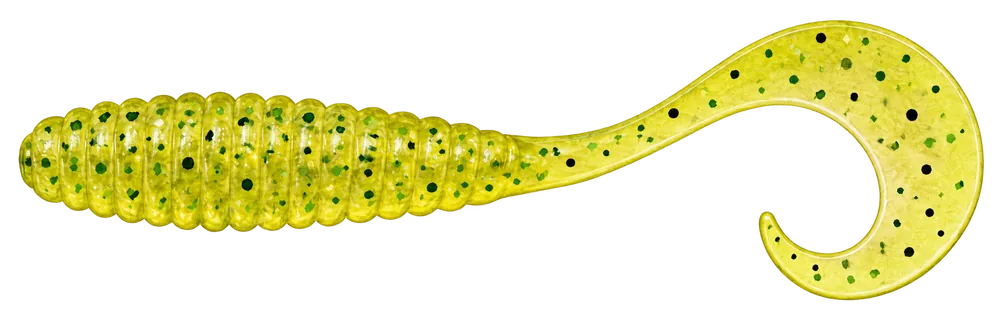 Twister | Bottom to mid-water | Active: reel in steadily or jig, with long sinking phases for sluggish fish | you are fishing in weed with an offset hook or want to wind quickly through a shoal of perch |
 Pintail (no-action shad) | Bottom | Active: short twitches, pauses and sinking, also on the drop shot | cautious fish hardly react to strong pressure waves and you want to bring the lure to life yourself |
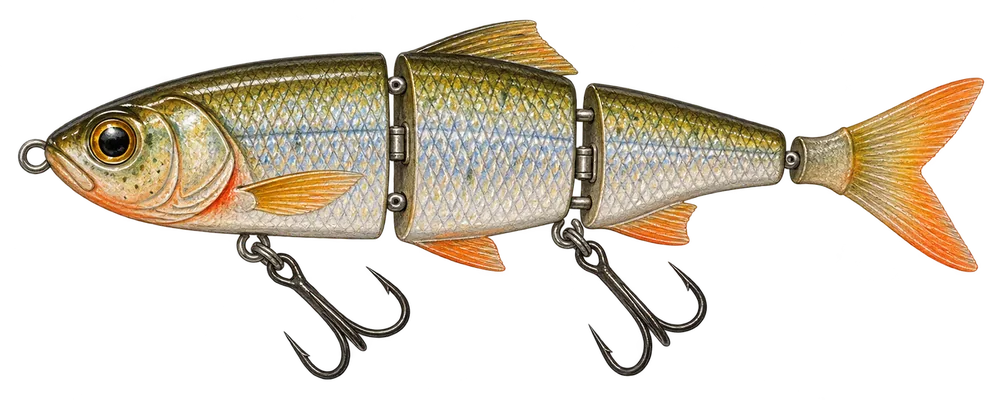 Swimbait | Mid-water | Active: retrieve steadily, with changes of pace and short pauses | you want to fish for pike in open water with a natural-looking lure |
What you need
- Zander rodA fast rod with a firm backbone, so that bottom contact and the strike come through directly. More
- LineBraided main line hardly stretches and transmits bites directly, with a length of fluorocarbon in front of it. More
- Jig headsTake several weights with you: light ones in still water, heavier ones in rivers and for vertical fishing. More
- Hook removerUnhook gently; if you strike at once, you usually hook the fish at the front of the mouth. More
More on the method: spinning and pirking.
At a glance
Editorial assessment, not measured values.
If it does not work
The head is too light, or you start winding straight after the cast. Use a heavier head and let the lure sink until the line goes slack.
Rig the soft plastic again: it must sit straight on the shank, with the hook point coming out in the middle of the back. Very soft baits twist easily; screw-in spirals keep them straighter.
Use a smaller bait or, where allowed, an extra treble at the base of the tail with only one point in the rubber.
Frequently asked questions
Jigging or reel-lift jigging (Faulenzen)?
Both catch fish. Lift-and-drop is easier for beginners, because the rod stays calm and only the reel does the work. In warm water with active fish, jigging often brings more; below ten degrees the calm retrieve suits.
When does the bite come?
Mostly on the sink, when the lure tumbles towards the bottom after being lifted. Keep the line taut and watch for a tug, a twitch or suddenly slack line. Then strike at once.
How heavy does the jig head have to be?
Light enough that the lure can hop and sink for a long time, heavy enough for reliable bottom contact. In still water 5 to 15 grams is often enough; in a river you need more, depending on depth and current.
Which size catches best?
For zander, slim soft plastics of 8 to 14 centimetres count as a solid basis, and in winter larger ones too. Perch often take 6 to 10 centimetres; in winter larger lures do not bring larger fish.
May I use a stinger treble?
That is governed by the federal state (Bundesland), the water rules and the fishing permit (Erlaubnisschein); if in doubt, ask the club or the authority. Where it is allowed, it helps against missed bites, but only one point of it sits in the lure.
Before fishing, the current permits, state rules and water rules apply: bait bans, number of hooks, closed seasons, protected species and catch limits can differ. Many federal states expressly ban live baitfish. Take bait remains and packaging away with you. All details are guide values without guarantee and do not replace legal advice.
Sources
- Blinker: Zanderangeln mit Gummifisch
- Blinker: Jiggen, diese 10 Fehler sollte man vermeiden
- Blinker: Zanderangeln, Wackelschwanz oder Gabelschwanz
- Rute & Rolle: Barsch-Special, Teil 2, Gummi und Blech
- Rute & Rolle: So vermeidest du Fehlbisse
- Rute & Rolle: So reinigst du Jigköpfe richtig
- Rute & Rolle: Schrauben statt stechen
- Fisch & Fang: Angeltechnik auf Zander
- Fisch & Fang: Zielfisch Zander, Einmaleins des Vertikalangelns
- Fisch & Fang: Fünf Winter-Barsch-Mythen
- Bayerische Landesanstalt für Landwirtschaft: Prüfungsfragen Staatliche Fischerprüfung 2023/2024
- EUR-Lex: Verordnung (EU) 2026/2501 der Kommission vom 12. November 2026, Blei in bestimmtem Fischereigerät (Stichtage nach Berichtigung vom 17. November 2026)
- DAFV: EU-Bleibeschränkung für Angelgeräte
- DAFV: Fangregeln Ostsee 2026
- Landesfischereiverband Baden-Württemberg, Gerätekunde (Präsentation März 2022)
The sources explain terms and basic principles. Retrieve, colour choice and values are editorial starting points and depend on water, weather and lure.
More soft baits
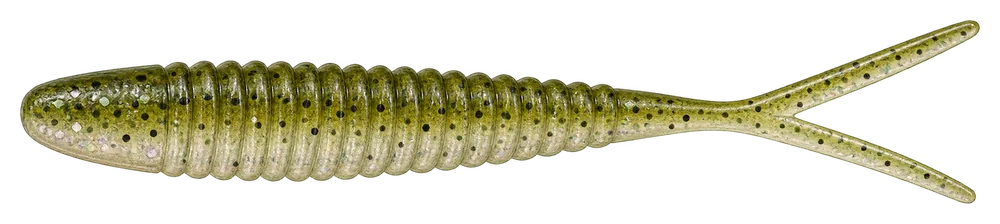 V-tail
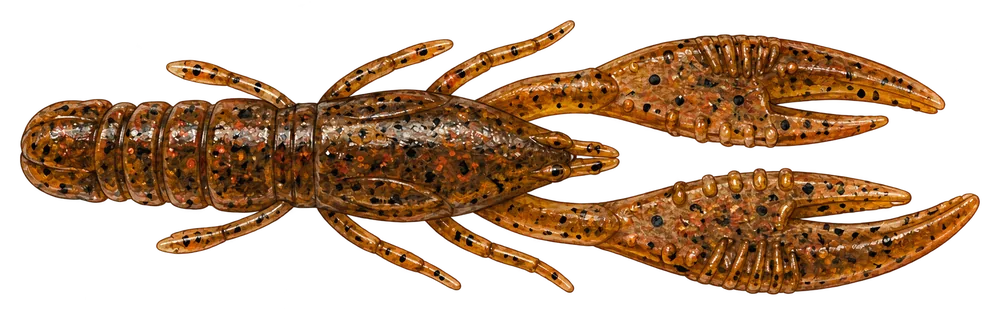 Soft plastic crab
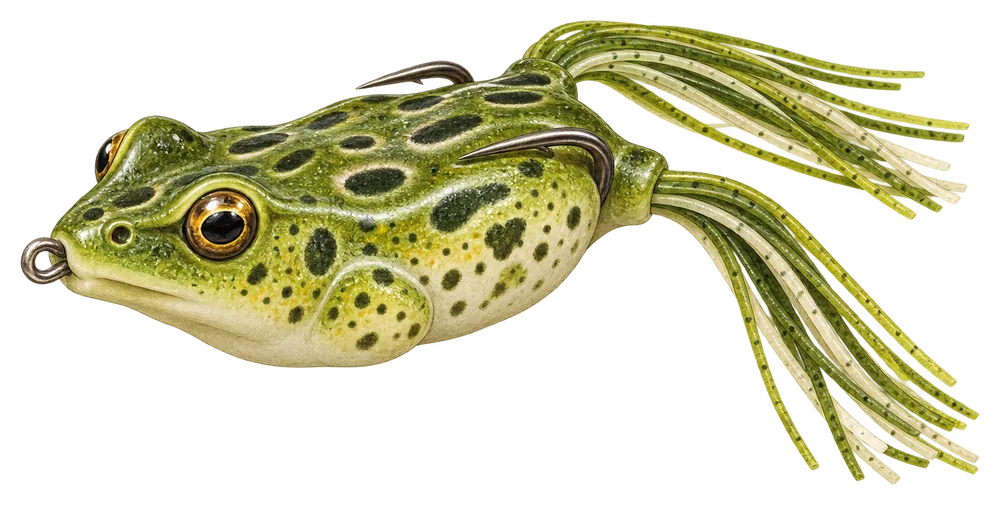 Soft plastic frog
 Soft worm
Created with AI support from the sources listed (AI notice). Last updated: 20 November 2026. Found a mistake? Write to us. Who is behind this site: About me.