
Knowledge – Fish
Coley: Features, spots, pirking
The coley (Pollachius virens) is a shoaling fish of the cod family. In the trade it is called Seelachs (sea salmon), but it is not a salmon. It hunts over banks and edges of the North Atlantic and in tidal streams, and is fished mainly in Norway, Scotland and Iceland.
In short: You catch the coley best from May to October, in the morning, during the day and in the evening. Good spots on the coast: open water, wreck, reef and edge. Proven baits: slim pirks with droppers, strips of mackerel or herring on the long-trace rig; when fish are feeding at the surface, streamers. Step by step: coley fishing.
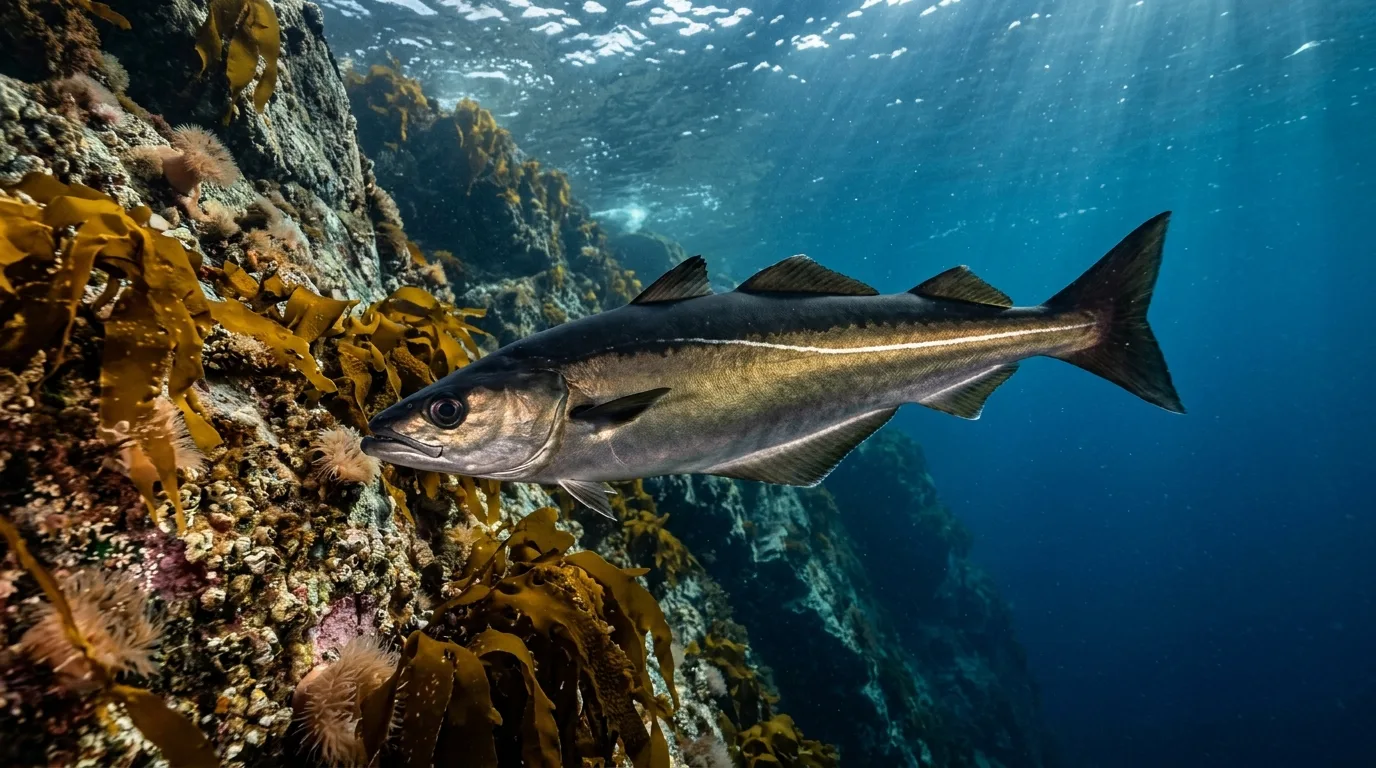
- Straight, pale lateral line standing out clearly against the dark body
- Slightly projecting lower jaw; the chin barbel is tiny or absent
- Dark, almost black back and three separate dorsal fins
Catch chances through the year
- Hardly any chance
- Possible
- Good
- Peak season
- Spawning (observe the closed season)
Editorial assessment for waters in Germany, not a measured value and no guarantee. Spawning time is not the same as the legal closed season.
Species profile and sources in the catch calendarAll species compared month by monthThe rules of your federal state
How to recognise it
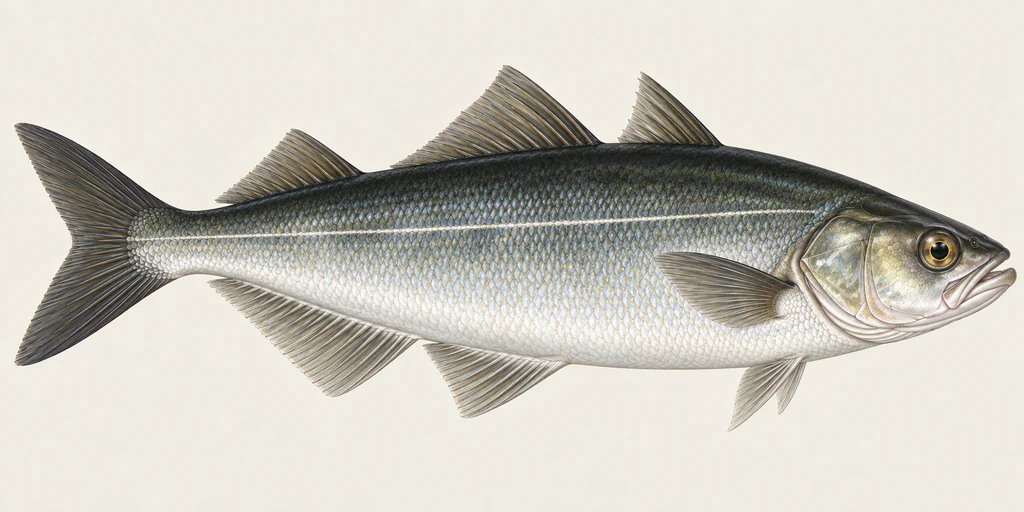
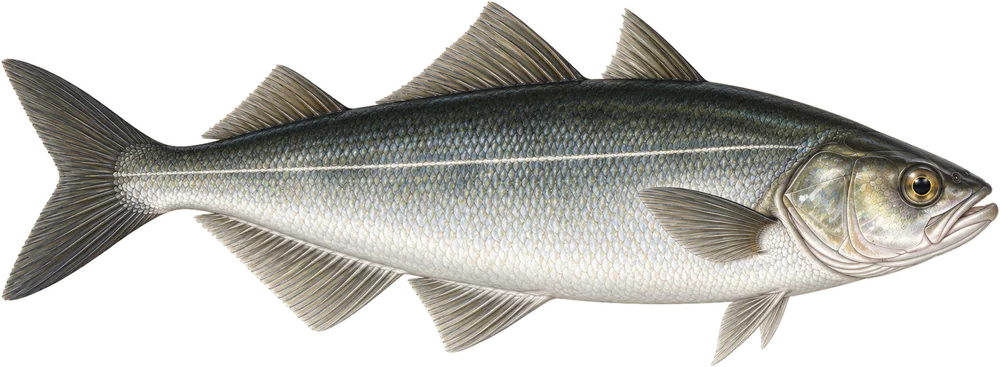
The coley is elongated and muscular. The back is almost black with an olive-green sheen, the flanks get lighter towards the whitish belly, and the fins are grey. The inside of the mouth is blackish too. The lower jaw projects slightly, and the chin barbel is small or absent.
The most reliable feature is the lateral line. It runs pale and straight from the head to the tail and stands out clearly against the dark body. Norwegian marine researchers name exactly this feature, plus the slight underbite.
According to FishBase, about 60 centimetres is usual, and the maximum values are given as 130 centimetres and 32 kilograms. The Swedish fisheries authority reports catches of over a metre and over 20 kilograms. Coley mature at four to six years. The maximum age is 25 to 30 years, depending on the source.
The pollack has a dark lateral line that swings clearly upwards over the pectoral fin, and strikingly large eyes. On the coley the inside of the mouth is black, on the pollack it is not. Especially with small fish from the shore, it pays to look at the lateral line.
What sets it apart from the cod and its relatives is the greenish, darker colouring and the darker flesh. It is not identical to Alaska pollock, which is also called pollock in English: that is a different species.
Side by side
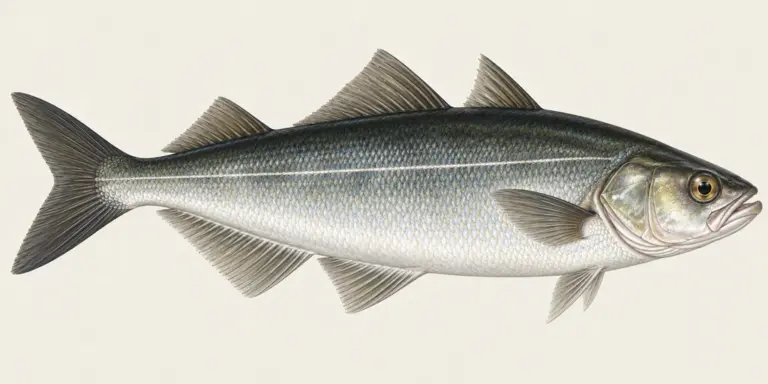
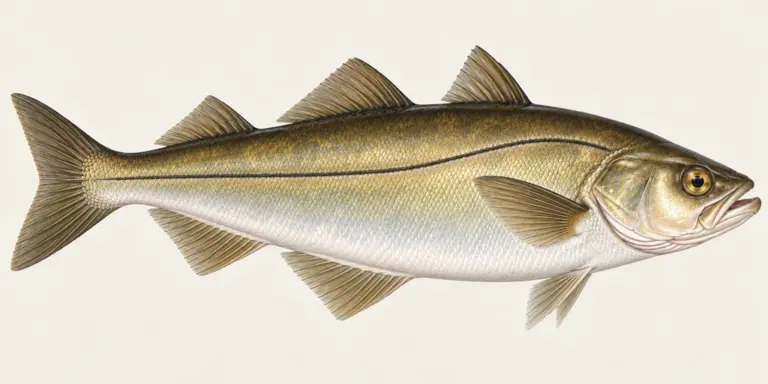
AI-generated illustrations.
Where it holds
The coley lives in the North Atlantic, in Europe from the Bay of Biscay to Iceland, Svalbard and the Barents Sea. In the north-east Atlantic, Norwegian researchers distinguish six stocks, centred west of Ireland and Scotland, around the Faroes and Iceland, in the North Sea and on the Norwegian coast north of latitude 62. Swedish experts name the Skagerrak and Kattegat. In the Baltic Sea it occurs only sporadically, because it tolerates low salinity badly.
It is not a purely bottom-dwelling fish. It occurs from the surface down to about 360 metres, on the bottom as well as in mid-water. According to ICES, adult fish migrate up and down daily: at night they can stand hundreds of metres above the bottom, by day they stay close to the bottom at more than 300 metres.
Habitat separates young fish from old ones. The young grow up close to the coast, in fjords and bays, in Scotland and Scandinavia right into the outer harbours. Only at two to four years do they move out onto the coastal banks. Big coley stand over reefs, banks and edges and wherever the current crowds prey fish together. This applies especially to the tidal streams in the narrows between Norwegian fjords, which anglers call Straumen.
Holding spots in the picture
Choose the season and time of day: the picture shows where the species stands then. Spots outlined in red apply only in the chosen season. Tap a fish or a spot in the list to bring it closer. The picture is schematic and AI-generated, every water is different.
Catch chance in springpossibleSpawning season, observe closed seasons
Catch chance in summerPeak season
Catch chance in autumnPeak season
Catch chances in winterpossiblespawning season, observe the closed seasons
- J
- F
- M
- A
- M
- J
- J
- A
- S
- O
- N
- D
Spawning season
Active time By day coley often stand 10 to 15 metres above the bottom, in the morning and evening hours higher in mid-water.
Active time By day coley often stand 10 to 15 metres above the bottom, in the morning and evening hours higher in mid-water.
Active time By day coley often stand 10 to 15 metres above the bottom, in the morning and evening hours higher in mid-water.
No peak time By day coley often stand 10 to 15 metres above the bottom, in the morning and evening hours higher in mid-water.
On the coast
Drop-off
Coley are found here only in spring, summer and autumn.
Wreck, reef
Coley are found here only in spring, summer and autumn.
Deep, colder water
Coley are found here only in winter.
Open water, mid-water
Coley are found here only in spring, summer and autumn.
Coley live in shoals, near the bottom or in mid-water, usually a good way above the bottom. They hunt over reefs and stony banks and stand in open water in front of steeply sloping rocks and underwater points, preferably where the current packs the prey together. Young fish live separately from them, close to the coast, along rocky shores and jetties.
Spring: catch chance according to the catch calendar possible in March and April, main season in May. Spawning falls in this period, so observe the closed season (Schonzeit). In spring the coley usually return to coastal waters.
Summer: catch chance according to the catch calendar main season. Adult coley are caught from May to October, in some places until December. For smaller fish high summer counts as a good time.
Autumn: catch chance according to the catch calendar is peak season in September and October, good in November.
Winter: catch chance according to the catch calendar good in December, possible in January and February. Spawning falls in this period, so observe the closed season (Schonzeit). In winter the fish move into deeper water. Spawning takes place in winter, peaking in February.
Depth: Coley occur from the surface down to about 300 metres. In Norway they are often caught at 40 to 100 metres.
Size comparison: AI-generated drawing, schematic.
How it hunts and spawns
The youngest coley eat copepods, krill and other crustaceans. From about 60 centimetres their food is mainly fish: herring, sprat, blue whiting, Norway pout and haddock fry are on the Norwegian researchers‘ list. Big coley follow the spring herring far out into the Norwegian Sea, a few as far as Iceland and the Faroes.
Coley hunt in shoals. They surround shoals of small fish and drive them against the surface. Anglers then speak of boiling water, and even from the shore you catch fish after fish.
Spawning takes place in winter. In Norway the peak is in February, on the coastal banks from the Lofoten to the North Sea. Overall the spawning season runs from January in the south to May in the north, at the edge of the shelf. The North Sea coley spawns from January to March at 150 to 300 metres. The eggs drift in open water, and a female of 75 centimetres lays on average about 2.9 million of them. Eggs and larvae drift with the current to the nursery areas on the coast.
When it bites
According to Blinker, adult coley are caught from May to October, in places until December. From January to April the shoals stand on the spawning grounds, at depths anglers hardly reach. This matches the spawning season in the calendar.
Small coley roam close inshore all year round and can be caught on rocky coasts, headlands and piers. The best time for spinning for two- to four-pounders is high summer. Then the shoals move through the fjords, and from the shore you catch fish after fish.
The day has its pattern too. Because the fish stand higher in the water at night than by day, when pirking from a boat it pays to search several depths instead of just ploughing the bottom.
Today’s catch index needs JavaScript. Season and spawning time are in the catch calendar.
You will find the monthly overview of all species and the water temperature check in the catch calendar.
What you catch it with
Step by step: Coley fishing: tips on bait, rig and tackle – season, spots, bait, tackle and rules on one page.
You catch small coley of one to three pounds from the shore or a small boat with a light spinning rod and slim small pirks. 12 to 30 grams and a 0.25 line are usual. The pirk is cast far out, sinks and is then retrieved in jerks. The bite is hard, and even pound-and-a-half fish fight fiercely. More on the technique under pirking.
If the coley are hunting just below the surface, the fly rod works too. You need a fast-sinking line, a strong leader about a metre long, and streamers or large flies.
You catch big coley from a boat or charter cutter. In Norway you must reckon with 40 to 100 metres of water and weights or pirks of up to 500 grams. Let the bait sink to the bottom first, then wind up about five metres. If the bites stop, go another five metres higher, because coley stand a good way above the cod. One or two droppers above the pirk bring extra bites. Alternatively you fish with strips of mackerel or herring on the natural-bait rig, more on bait under fish strips.
At the Straumen you must choose tackle one size stronger: Blinker reckons on four-pounders and up in the running water and recommends a robust sea rod or strong carp rod with pirks of 100 grams and more. The pirk sinks deep, is retrieved slowly and lowered again in between. When it nears the shore, wind quickly, otherwise you risk a snag. For big coley from a boat, a 0.50 monofilament or a 0.30 braid counts as the line.
Search the storeys: If bites stop, wind the bait up a few metres each time. Coley stand above the cod, at night often even higher than by day.
Set the drag beforehand: Big coley fight hard and pull line after the bite. Set the drag before the first drop, not only in the fight.
Use the boiling water: When the water boils, coley drive small fish to the surface. Cast into the zone at once and retrieve quickly before the shoal moves on.
Suitable lures
Slim pirks with droppers, strips of mackerel or herring on the long-trace rig; when fish are feeding at the surface, streamers.
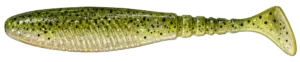
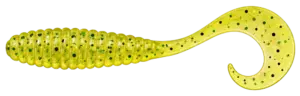
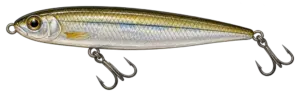
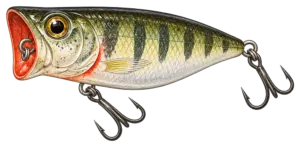

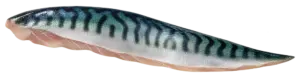
AI-generated illustrations. A click opens the lure’s page.
Rigs for these baits: natural bait rig for the sea.
What the coley tastes like and what you can do with it
The flesh of the coley is darker than that of the other cod fish. As Seelachs (sold in Germany under that name) it is one of the ten most eaten food fish in Germany and comes onto the market fresh, frozen, smoked, salted, dried and canned. FishBase names steaming, frying, grilling, boiling and baking as the usual ways of preparing it.
A fish you catch yourself first has to be stunned and killed, then gutted and chilled, as set out under storage and hygiene. After that it can be filleted or smoked.
What you need to observe
Closed seasons, minimum sizes and harvest slots are set by the federal states (Bundesländer) and by the fisheries authorities of the neighbouring countries on the coast (Denmark, Norway, Poland). They vary by type of water, stretch of coast and time of year. We only give figures together with the date and source; the fisheries regulation of your federal state and your fishing permit (Erlaubnisschein) are always what is binding. You will find a list of links to the official sources in the catch calendar.
A fish of legal size that you want to keep you stun and kill at once, in line with animal welfare rules. Protected, undersized fish or fish too large under a harvest slot you unhook, if possible still in the water and with wet hands, and release gently. What exactly applies is regulated by state law and your fishing permit (Erlaubnisschein).
Norway has its own rules for sea anglers: you may only fish with hand-held tackle, and selling the catch is prohibited. For the coley the Fiskeridirektoratet prescribes no minimum size (Mindestmaß) for recreational anglers as long as the catch is not sold; for other species such as cod and haddock, minimum sizes do apply. Fish you put back should be treated as gently as possible: wet your hands with seawater first and remove the hook carefully. The rules change, and the Fiskeridirektoratet is the binding source.
On the stock: according to the Thünen Institute, the North-East Arctic coley was most recently entirely in the green zone, but science recommended lower catch quantities. The Norwegian Institute of Marine Research recommends a smaller quota for 2027 than for 2026. For the North Sea it reported in June 2026 the lowest quota advice ever for coley. The IUCN lists the coley as of least concern in Europe; globally it has not been assessed.
What closed season, minimum size and harvest slot mean and where to find them is explained on the page Closed season and minimum size explained.
Frequently asked questions (FAQ)
Are coley and Seelachs the same fish?
Yes, Seelachs usually means the coley, sometimes also the pollack. Alaska pollock, by contrast, is a different species.
How do I tell a coley from a pollack?
On the coley the lateral line runs pale and straight, on the pollack it is dark and curved over the pectoral fin. The inside of the coley’s mouth is also black.
At what depth do big coley stand?
Usually a little above the bottom up to mid-water, in Norway often at 40 to 100 metres. Search several storeys by winding the bait up in steps of five metres.
Sources
The rating of catch chances is an editorial assessment. The facts come from these sources, and the text is worded in our own words. The illustration is an original design by Angel Momente in the style of a natural history plate (AI-generated, see the AI notice).
- FishBase: Pollachius virens
- Havforskningsinstituttet: Sei – nordaustarktisk (Laichzeit, Laichgebiet)
- Havforskningsinstituttet: Sei – Nordsjøen (Laichzeit, Laichgebiet, Tiefe)
- Thünen-Institut, Fischbestände online: Seelachs (Köhler und Pollack)
- Thünen-Institut, Fischbestände online: Nordost-arktischer Seelachs (Laichzeit, Laichgründe)
- ICES FishMap: Saithe, Pollachius virens (Laichzeit, Laichgebiet)
- Havs- och vattenmyndigheten: Gråsej (Laichzeit, Laichtiefe)
- Blinker: Steckbrief Köhler
- Fiskeridirektoratet: Sea angling in Norway, regulations (geschonte Arten, Ausfuhrquote)
- Fiskeridirektoratet: Minimum sizes for salt water species (untermaßige Fische, Messung)
- NOAA Fisheries: Atlantic Pollock (Pollachius virens)
- Fiskeridirektoratet: Minstemål i fritidsfiske (kein Mindestmaß für Sei und Lyr, Lange nicht aufgeführt)
- Havforskningsinstituttet: Sei, nordaustarktisk (Köhler)
- Blinker: Norwegen, Angeln im Fjord (Saison, Naturköderangeln)
Created with AI support from the sources listed. Figures only appear in the text if a source gives them. Last updated: 27 October 2026. Found a mistake? Write to us. Who is behind this site: About me.
More in the lexicon
- All fish species at a glance
- Catch calendar – month, water temperature and profile for 93 species
- Line calculator – breaking strain after the knot, drag guideline, backing
- Angling methods