
Knowledge · Lures
Stickbait
Hardbaits · Spinning
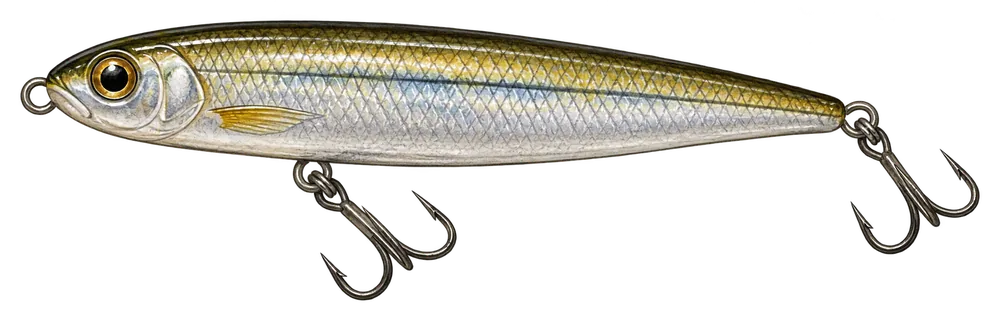
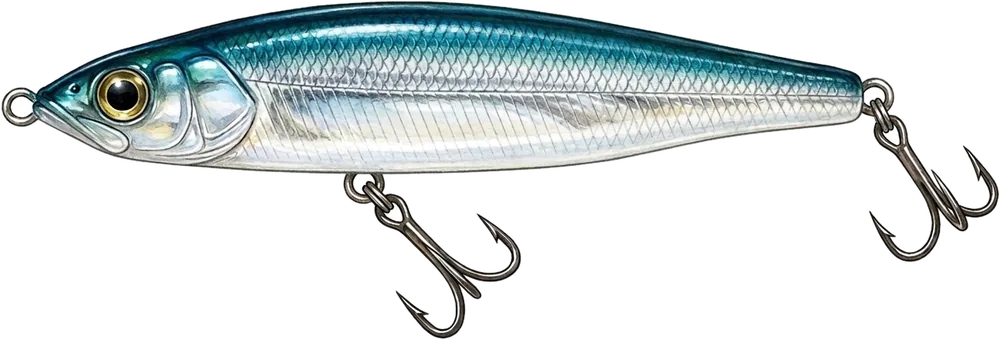
A stickbait is a plug without a diving lip that runs on or just under the surface. With short, rhythmic flicks of the wrist it zigzags across the water. Anglers call this walk the dog. Pike, perch and asp often attack it visibly and with spectacular strikes.
- Water depth
- Surface
- Retrieve
- Active: short twitches in a zigzag, build in pauses
- Fishing method
- Spinning
- Category
- Hardbaits
How a stickbait works
The stickbait is like a plug that lacks the diving lip. It floats or sinks slowly, but has no action of its own. Only your flicks and the stops during the retrieve make it run. With the walk-the-dog retrieve it swings its head alternately left and right and zigzags across the surface or just under it.
Compared with the popper, the stickbait is quiet. It does not plop, it glides, and that looks like an injured prey fish. Some models have rattles, others do not. Floating stickbaits run on the surface, sinking ones work just below. In wind and waves, sinking models have the advantage when loud lures no longer run well.
The appeal lies in the visibility: you see the bow wave behind the lure and the strike. The shallower the water, the less far the fish has to rise to the lure. Not every attack ends with a hooked fish; missed bites are part of it. The lure usually carries treble hooks, which catch the fish as it grabs.
How to work the lure
Active: short twitches in a zigzag, build in pauses
Schematic illustration, AI-generated.
- Cast
- rhythmic impulses
- zigzag on the surface
- reel in
Anatomy
The points on the picture above explain the most important parts – on hover or tap.
- Eyelet at the nose: Sits at the front tip, so the head can swing freely left and right.
- No diving lip: Without a lip the lure does not dive, but stays on or just under the surface.
- Elongated body: Elongated body with the weight mostly at the back. This makes the lure sit at an angle in the water and swing slightly.
- Belly treble: Hooks fish that strike from below.
- Tail treble: For bites from behind.
Rig in three steps
- 1. Tie on the hooklengthFor pike, a bite-proof steel or titanium leader. For perch and asp, mono or fluorocarbon in thinner strengths is enough.
- 2. Attach the snapA snap without a swivel lets the lure swing freely and makes changing quick. Even with a steel leader it does not have to hamper the action.
- 3. Into the lure’s eyeletAttach the snap to the front eyelet, never to the split ring of a treble hook.
Drawings: AI-generated, schematic.
When the target fish are in season
Hardly any chancePossibleGoodPeak seasonValues from the catch calendar.
When and where
The best times are early morning and dusk, when predators are often most active, and the summer months: higher water temperatures promote activity at the surface. Good spots are shallow zones, edges and structures such as weed beds, bank areas and plateaus. Pike is the main target fish in shallower water and near weed beds. Fish hunting at the surface are also a signal: when small fish splash, cast the lure there.
Perch often respond to small stickbaits in summer. Asp hunt close under the surface and have a large, upturned mouth. Good spots on rivers: bridge piers, weirs, locks, inflows, groynes and current seams. There you work the lure in a zigzag and expect hard bites. In waves and wind you reach for the sinking model. On a calm surface even the quiet stickbait stands out, without being too much of a good thing.
How to work the walk the dog step by step
Hold the rod slightly down. With the rod tip, make short, rhythmic strokes from the wrist and wind in line at the same time. The lure swings to the other side with every flick. Build in pauses, because that is where the bites often come. Vary the pace and the strength of the strokes until you work out what the fish want today.
Some models can also be worked sideways with longer pulls of the rod and then run in an S-shape. Another variant is burning: a few fast turns of the handle in one go. Here too, pauses are not a mistake.
A common mistake is striking at the moment you see the fish at the lure. Wait to strike until you feel the fish on the rod. Anglers report that fish often attack again after a missed bite, so keep working the lure calmly.
How to choose type, size and leader
- Tie on the leader For pike tie on a bite-proof leader of steel or titanium; for perch and asp, thinner mono or fluorocarbon is enough.
- Attach the snap A snap without a swivel goes on the leader. That way the lure swings freely and you can change quickly.
- Into the eyelet on the nose Hook the snap into the eyelet on the nose, never into the split ring of a treble hook.
In calm water a floating stickbait is enough, in wind and waves a sinking one. Even when fishing the surface, the lures do not always have to be small: bigger models often score, apparently because they are noticed better. Small stickbaits work for perch in summer.
For pike, a steel or titanium leader belongs on the lure; for small lures thin material of 3 to 4 kilograms is enough, and for targeted pike fishing about 9 kilograms and more applies. For asp the trade press names mono of 0.25 to 0.30 millimetres; the asp has no teeth in its jaw.
Which colour?
Starting points to try, not rules. Depth and speed are usually more important than colour.
A stickbait or a different lure?
| Baits and lures | Depth | Retrieve | Take this lure if … |
|---|---|---|---|
| Stickbait | Surface | Active: short twitches in a zigzag, build in pauses | this page |
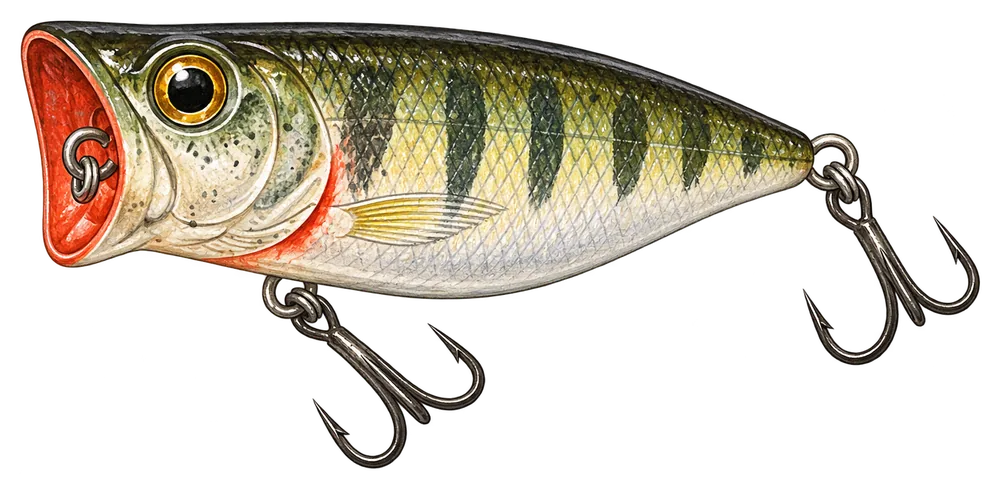 Popper | Surface | Active: short jerks, then a pause | you want to attract fish with a splash instead of a zigzag |
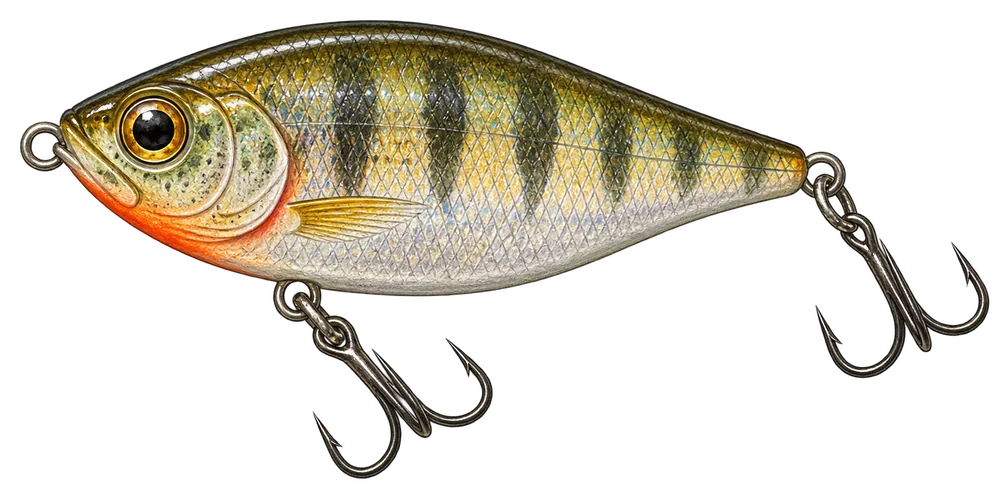 Jerkbait | Near the surface to mid-water | Active: rod strokes, taking up line in between | you want to target pike below the surface |
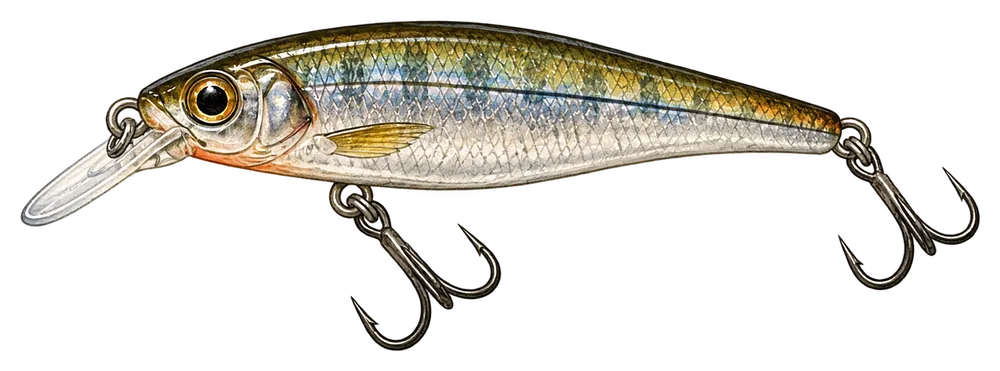 Twitchbait | Near the surface to mid-water | Active: twitch, reel, let it sit | the fish do not come to the surface |
What you need
- Spinning rodLong, from 2.10 to 2.70 metres, with a fast action. The tip can be softer than on a popper rod, because the stickbait is worked more gently. More on this
- LineBraid of 0.08 to 0.16 millimetres gives direct contact with the lure. For pike, add steel or titanium. More on this
- Pike leaderBite-proof, made of steel or titanium. Always when pike are a risk, even if you are looking for perch. More on this
- Landing net and disgorgerThe trebles quickly catch in the net or in your hand. Land with a landing net, unhook gently with a disgorger. More on this
More on the method: Spinning.
At a glance
Editorial assessment, not measured values.
If it does not work
Hold the rod down, flick briefly from the wrist and take up a little line between the flicks.
Do not strike at the moment of the attack, but wait until you feel the fish on the rod. Missed bites are part of surface fishing.
Vary the pace, the strength of the strokes and the pauses until the fish respond.
Use a sinking model that runs just under the surface.
Tie a bite-proof steel or titanium leader in front of the lure.
Try a bigger lure. Bigger models are often noticed better.
Frequently asked questions
What is the difference between a stickbait and a popper?
The popper has a cup on its head and makes a plop sound on short, hard twitches. The stickbait is subtler and glides across the water in a zigzag.
What does walk the dog mean?
That is the name for the classic retrieve: you hold the rod slightly down and flick rhythmically from the wrist. The lure swings alternately left and right.
When is the best time for stickbaits?
Early morning and dusk and the warm summer months are considered especially good. Then many predators are active and rise easily to the lure in shallow water.
Do I need a steel leader with a stickbait?
If pike are present, yes. You catch perch and asp on thinner material, but a pike bites through thin line. Titanium is a thinner alternative to steel.
May I fish stickbaits with treble hooks everywhere?
Not everywhere. The number of hooks, treble hooks and barbs are regulated by the state (Bundesland), the water rules (Gewässerordnung) and the fishing permit (Erlaubnisschein). On some waters trebles are banned, so read the fishing permit beforehand.
Before fishing, the current permits, state rules and water rules apply: bait bans, number of hooks, closed seasons, protected species and catch limits can differ. Many federal states expressly ban live baitfish. Take bait remains and packaging away with you. All details are guide values without guarantee and do not replace legal advice.
Sources
- Blinker: Stickbait, der vielseitige Oberflächenköder
- Blinker: Was kommt vorneweg? Raubfischvorfächer im Vergleich
- Rute & Rolle: Rapfen, rasante Räuber
- Bayerische Landesanstalt für Landwirtschaft: Prüfungsfragen zur Fischerprüfung 2023/2024
- Landesfischereiverband Baden-Württemberg: Gerätekunde, Präsentation 2022
- Humboldt-Universität zu Berlin und IGB: Waidgerechtes Zurücksetzen, Hecht
- Blinker: Popper, die richtige Köderführung
The sources explain terms and basic principles. Retrieve, colour choice and values are editorial starting points and depend on water, weather and lure.
More hardbaits
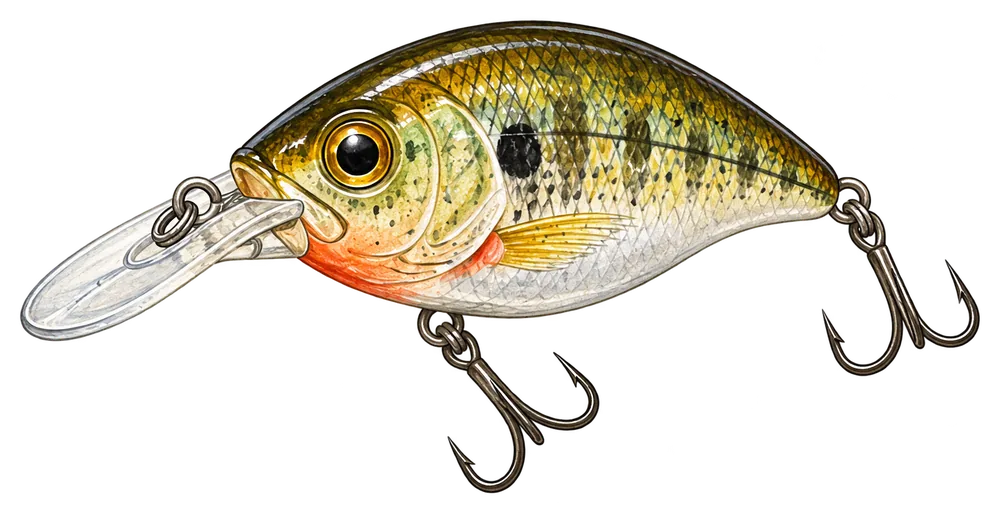 Crankbait
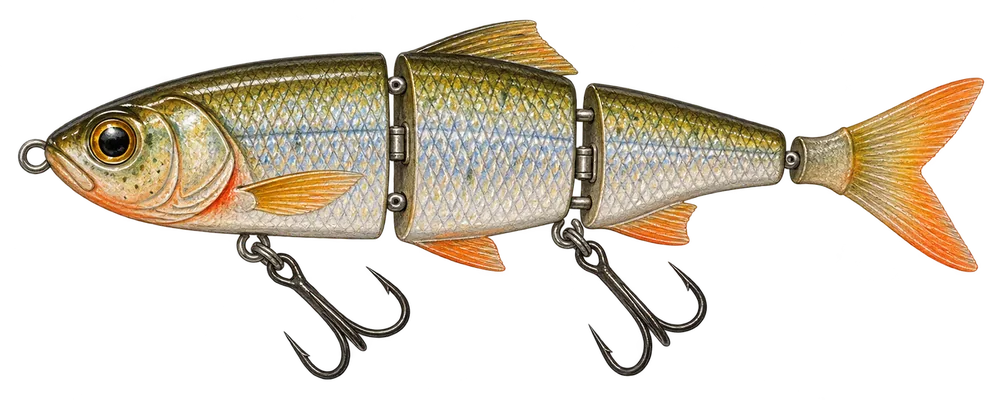 Swimbait
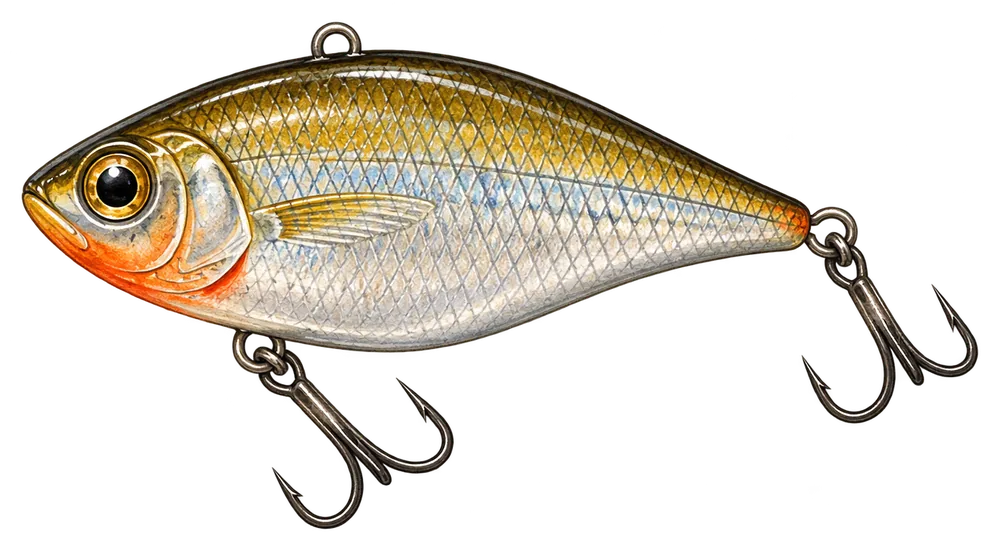 Lipless crankbait
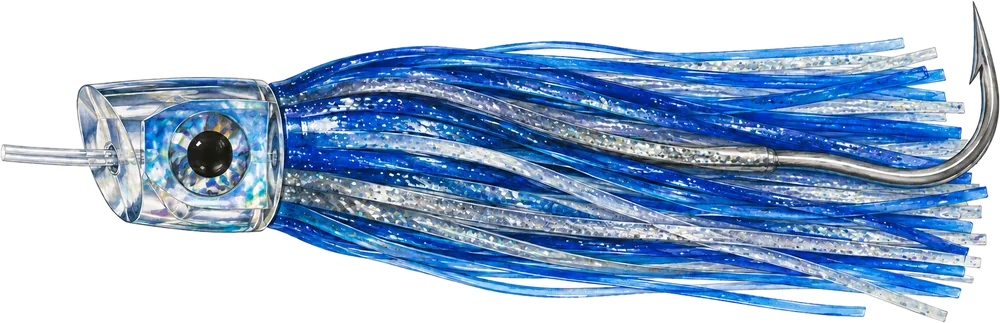 Deep-sea trolling lures
 Coastal plugs
Created with AI support from the sources listed (AI notice). Last updated: 2 November 2026. Found a mistake? Write to us. Who is behind the site: About me.