
Knowledge · Lures
Jerkbait
Hardbaits · Spinning
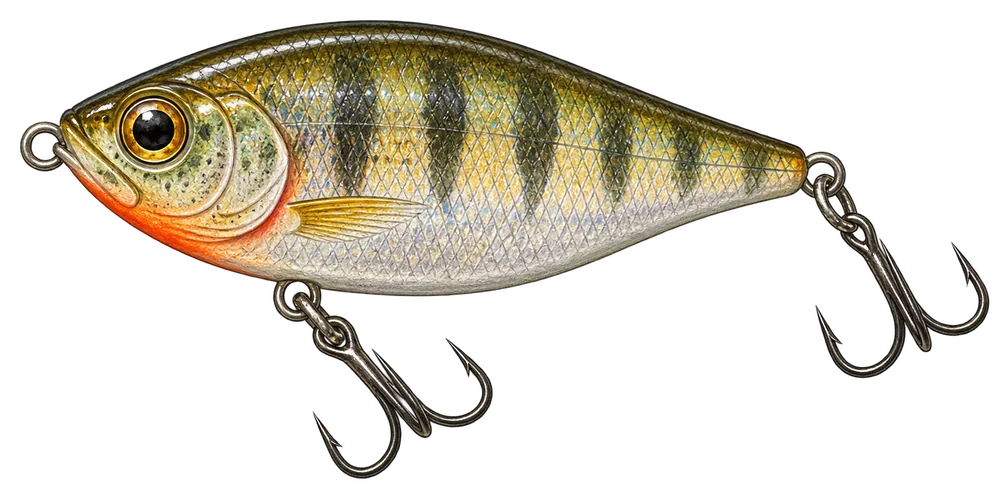
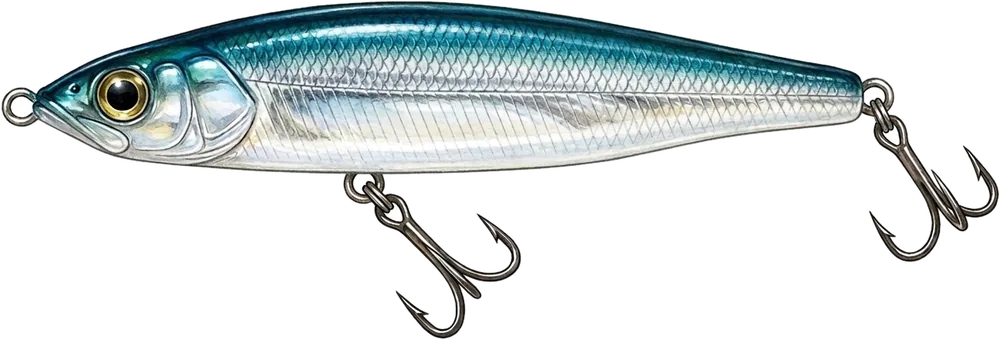
A jerkbait is a solid artificial lure without a diving lip that only comes to life through strokes of the rod. Depending on the design, it glides sideways in a zigzag or dives and rises again in the pause. It is above all a lure for pike.
- Water depth
- Near the surface to mid-water
- Retrieve
- Active: rod strokes, taking up line in between
- Fishing method
- Spinning
- Category
- Hardbaits
How a jerkbait works
Jerkbait means a lure that you jerk. In the German understanding it has no diving lip and hardly moves when you wind it in steadily. Only a stroke of the rod pulls it sideways or down. So you determine the movement, not the lure. In the USA, plugs with a lip also count as jerkbaits, because they can be worked with jerks. Anyone reading English-language sites will therefore come across different models.
There are two basic types. Gliders stay at one depth and glide in a zigzag left and right with every stroke. Divers dive down on the pull and rise again in the pause; seen from the side this gives a sawtooth pattern. Many jerkbaits are flattened from the sides, slightly bellied and high-backed in profile. There are floating and sinking models, some sink very slowly, others fast. There are also models that veer sideways even without rod strokes and run almost by themselves.
The irregular action is meant to imitate a sick fish. The appeal comes from the change of accelerating, tilting and stopping, and it is in the stops that predators like to strike. Because a jerkbait differs clearly from a soft plastic and a plug, it catches pike that no longer respond to familiar lures. Pike learn when they are shown the same lures repeatedly, for instance at a heavily fished weed bed.
How to work the lure
Active: rod strokes, taking up line in between
Schematic illustration, AI-generated.
- Cast
- hard rod strokes
- lure shoots sideways
- reel in
Anatomy
The points on the picture above explain the most important parts – on hover or tap.
- Eyelet at the front: The snap and leader hang here. When fishing for pike, always put a bite-proof leader in front.
- Head without a large lip: Without a large lip the lure runs only when pulled. The shape of the head decides whether it glides or dives.
- Large body with broad flanks: Flattened from the sides, bellied and high-backed in profile. The broad flanks flash with every swing to the side.
- Belly treble: Catches pike that grab the lure from the side.
- Tail treble: For bites from behind, when the pike follows.
Rig in three steps
- 1. Tie on the hooklengthA bite-proof leader of steel or titanium, with jerkbaits also thick monofilament or fluorocarbon. It has to be stiff so that the lure does not get caught in it.
- 2. Attach the snapA snap without a swivel lets the lure swing freely and makes changing quick. The snap has to withstand the strokes and the weight.
- 3. Into the lure’s eyeletAttach the snap to the front eyelet, never to the split ring of a treble hook.
Drawings: AI-generated, schematic.
When the target fish are in season
Hardly any chancePossibleGoodPeak seasonValues from the catch calendar.
When and where
Jerkbaits are pike lures for shallow to medium depths: over weed beds, at reed edges and in bays. Floating gliders run over weed and other obstacles that snag most lures. Jerking near the surface counts as the showpiece discipline of summer, because you see the action and the attack. Slowly sinking gliders can be worked very slowly in winter and tempt even sluggish pike.
With models that veer off by themselves, according to Rute & Rolle the most bites in spring and autumn come from winding them in, speeding up and letting them stand briefly. The jerkbait complements the soft plastic, it does not replace it. Start with the soft plastic and switch when the pike no longer bite on its pattern. Practise the retrieve first in clear, shallow water from a raised spot, such as a jetty or a boat. There you see straight away how the lure reacts to your strokes.
How to choose type, weight and tackle
- Stiff leader Tie on a bite-proof, stiff leader: steel or titanium, or thick monofilament or fluorocarbon. That stops the lure tangling in it.
- Attach the snap Attach a snap without a swivel that can withstand the jerks and the weight.
- Into the front eyelet The snap goes into the front eyelet, never into the split ring of a treble hook.
For getting started, practitioners recommend gliders, because their action differs most from the soft plastic. Models that veer off by themselves are wrongly regarded as beginners‘ lures: they catch just as well. Classic jerkbaits often weigh over 80 grams; alongside them are small formats of 5 to 6 centimetres, with which you can also fish for predators smaller than big pike.
Size affects hooking injury: in a study on pike, lures under 75 millimetres sat in the gills more often than larger ones. The Berlin research group therefore tends to recommend larger lures.
The tackle has to carry the weight: a rod of 1.80 to 2.10 metres with a casting weight of 50 to 150 grams, a robust baitcasting reel and braid of 0.17 to 0.25 millimetres with a breaking strain of at least 20 kilograms. For the leader, practitioners name monofilament or fluorocarbon of 0.8 to 1 millimetre or stiff steel wire of around 40 centimetres; with big lures, steel leaders go up to 16 kilograms. The leader must be stiff, otherwise the lure slides into it and tangles.
How to jerk and make the most of the bite
The classic stroke moves the rod from the three o’clock to the six o’clock position. In between you take up the slack line with the reel. With a glider, one turn of the handle with a light movement from the wrist is enough, and then it glides to the other side. This way you draw a zigzag right up to your feet. Do not thrash the rod: modern lures need much gentler strokes than they used to.
Always keep direct contact with the lure and avoid bellies in the line. Only then does the strike come through quickly and effectively. Anyone concentrating on working the lure sometimes forgets to strike at the bite. So be ready for a strike at every stage.
A landing net is needed for landing and a wet unhooking mat for unhooking. Hold the pike flat, not upright. At water temperatures above 22 degrees the Berlin researchers advise against catching pike and releasing them. Check the leader after every bite and replace it even at minor damage.
Which colour?
Starting points to try, not rules. Depth and speed are usually more important than colour.
A jerkbait or a different lure?
| Baits and lures | Depth | Retrieve | Take this lure if … |
|---|---|---|---|
| Jerkbait | Near the surface to mid-water | Active: rod strokes, taking up line in between | this page |
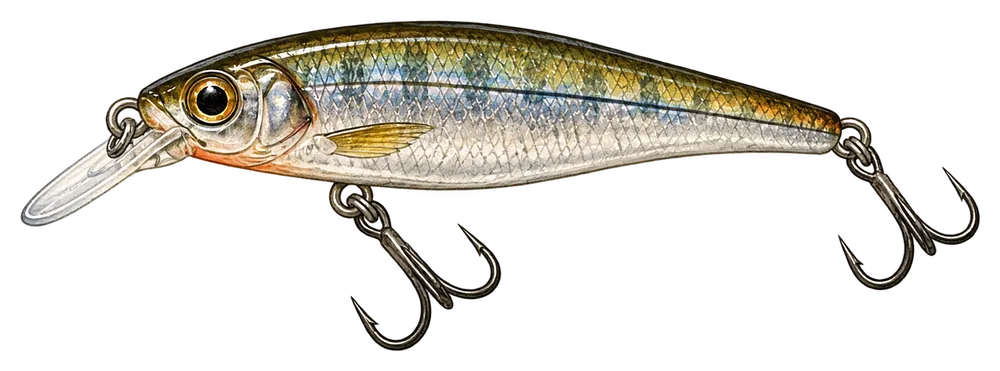 Twitchbait | Near the surface to mid-water | Active: twitch, reel, let it sit | you want to catch smaller predators such as perch with fine flicks |
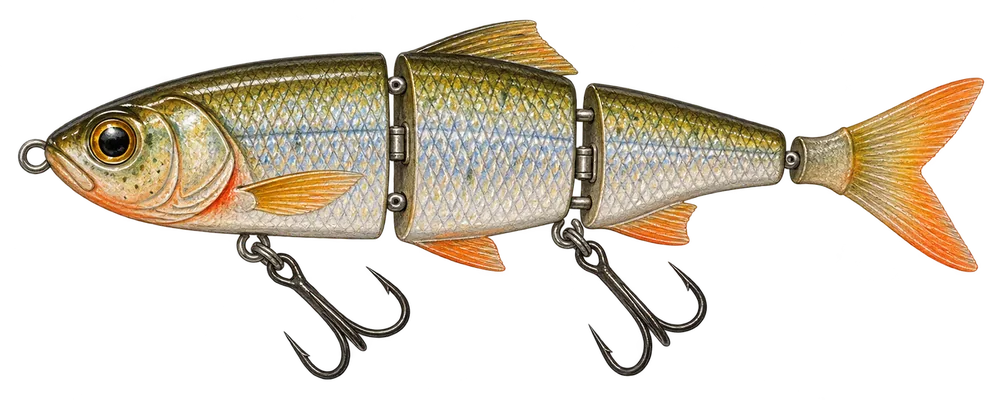 Swimbait | Mid-water | Active: retrieve steadily, with changes of pace and short pauses | you want a natural action without rod strokes |
What you need
- Pike rodShort and strong, with a sensitive tip and a strong backbone, so that strokes and the strike come through with heavy lures. More on this
- Baitcasting reelRobust gearing that withstands many casts and strokes. You brake the flight with your thumb shortly before the end. More on this
- Pike leaderStiff and bite-proof: steel, titanium or thick mono. Check after every bite and replace if damaged. More on this
- Unhooking mat and forcepsUnhook gently: wet mat, hold the pike flat, release the hook with the forceps. More on this
More on the method: Spinning.
At a glance
Editorial assessment, not measured values.
If it does not work
Make the twitches shorter and softer, and take up the slack line between them.
Use a stiff hooklength. Glide baits like to slide into the hooklength after the jerk.
Build in longer stops. It is in the pauses that predators strike.
Keep direct contact with the lure and expect the bite at every stage.
Use a thick braided line and slow the flight with your thumb just before the end.
Check it after every bite and replace it even at minor damage.
Frequently asked questions
What is the difference between a glider and a diver?
A glider glides sideways in a zigzag with every stroke and stays at its depth. A diver dives down on the pull and rises again in the pause, which creates a sawtooth pattern.
How heavy is a jerkbait?
Classic models often weigh over 80 grams. Alongside them are small formats of 5 to 6 centimetres. The weight determines which rod, reel and line you need.
What leader do I need when jerking?
A bite-proof, stiff one. Practitioners use steel or titanium, also mono or fluorocarbon from 0.8 millimetres. Check it after every bite and replace it if damaged.
Why does my jerkbait not zigzag?
Usually the strokes are too hard or the line is too slack. Stroke the rod lightly downwards, take up line between the strokes and keep contact with the lure.
May I fish jerkbaits with treble hooks everywhere?
Not everywhere. The number of hooks, treble hooks and barbs are regulated by the state (Bundesland), the water rules (Gewässerordnung) and the fishing permit (Erlaubnisschein). On some waters trebles are banned, so check before fishing.
Before fishing, the current permits, state rules and water rules apply: bait bans, number of hooks, closed seasons, protected species and catch limits can differ. Many federal states expressly ban live baitfish. Take bait remains and packaging away with you. All details are guide values without guarantee and do not replace legal advice.
Sources
- Blinker: Jerkbaits, zielsicher zum Räuber
- Blinker: Was kommt vorneweg? Raubfischvorfächer im Vergleich
- Rute & Rolle: Grundkurs Jerken, ein Ruck, ein Zuck, ein Biss
- Fisch & Fang: Zielfisch Hecht, Stahl der Wahl
- Bayerische Landesanstalt für Landwirtschaft: Prüfungsfragen zur Fischerprüfung 2023/2024
- Landesfischereiverband Baden-Württemberg: Gerätekunde, Präsentation 2022
- Carleton University und IGB Berlin: Hooking Mortality in Recreational Angling for Northern Pike
- Humboldt-Universität zu Berlin und IGB: Waidgerechtes Zurücksetzen, Hecht
The sources explain terms and basic principles. Retrieve, colour choice and values are editorial starting points and depend on water, weather and lure.
More hardbaits
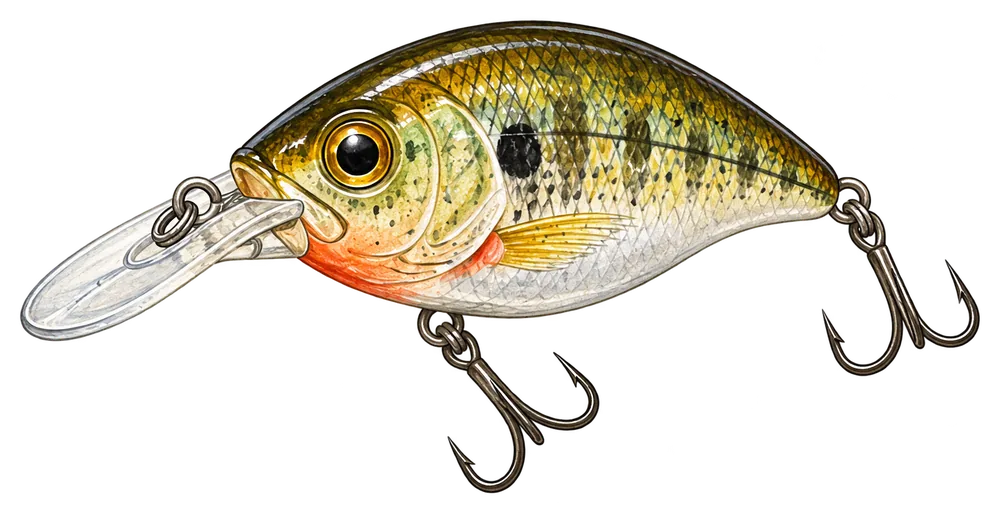 Crankbait
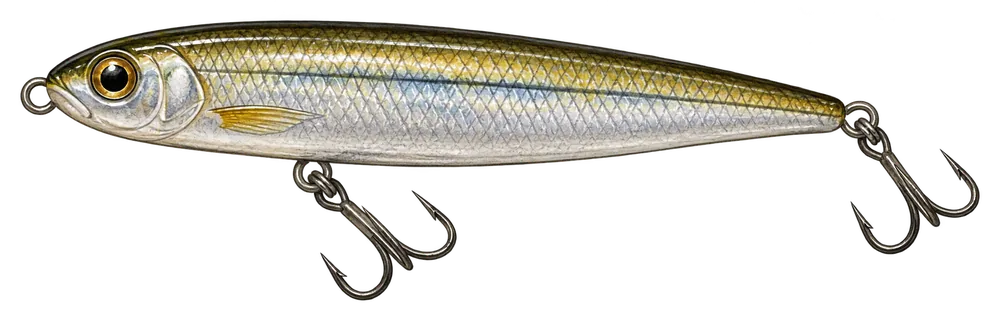 Stickbait
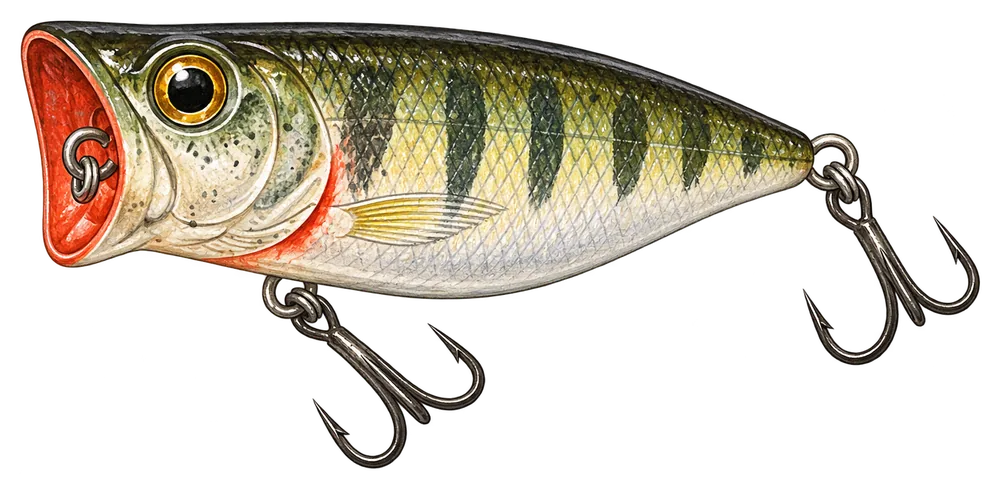 Popper
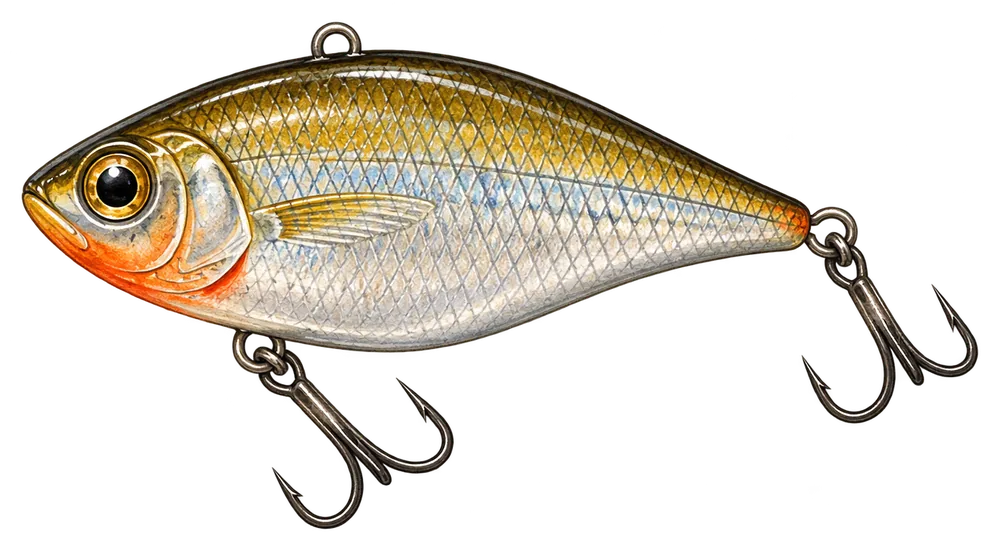 Lipless crankbait
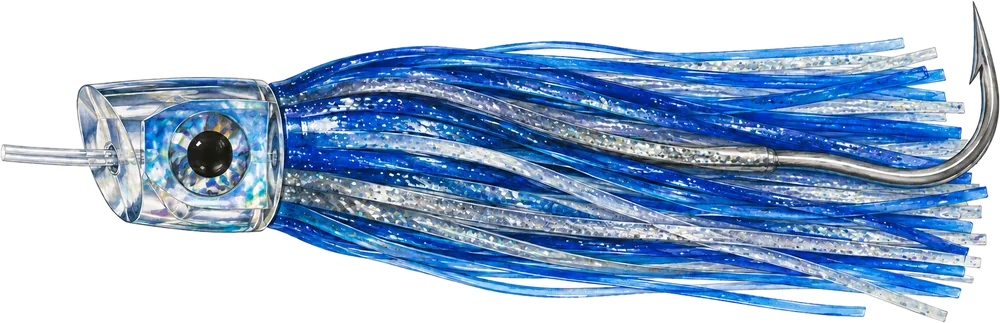 Deep-sea trolling lures
 Coastal plugs
Created with AI support from the sources listed (AI notice). Last updated: 2 November 2026. Found a mistake? Write to us. Who is behind the site: About me.