
Knowledge · Lures
Popper
Hardbaits · Spinning
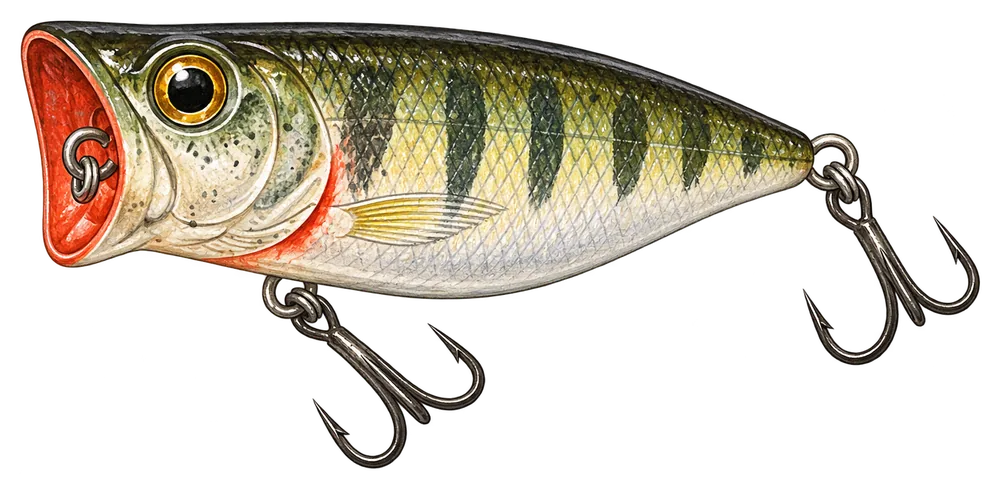
A popper is a surface lure with a dished head instead of a diving lip. Every short twitch makes it push water ahead of it, it plops and leaves a trail of bubbles. With it you attract asp, perch and pike that hunt on the surface, and you fish spots where other lures snag.
- Water depth
- Surface
- Retrieve
- Active: short jerks, then a pause
- Fishing method
- Spinning
- Category
- Hardbaits
How a popper works
Instead of a diving lip, the popper has a dished head. A short rod stroke pulls the lure, the dent catches the water, and it plops. A small fountain sprays up in front of the lure and a trail of bubbles stays on the water. Short, measured strokes are enough for this. You do not need more force.
To a predator this is a signal. The displaced water and the pop sound attract it, and the movement on the surface suggests easy prey. The popper runs fairly straight, hardly veers to the side and dips its front end only briefly. With big perch, one angler names food rivalry as the trigger: they follow the noise of a supposedly feeding fellow perch.
Many poppers carry a feather tuft on the tail treble. According to Blinker, American pros regard this tuft as the real lure and the popper only as the attention-getter. The position of the eyelet matters more. If it sits in the middle of the curve of the snout, then, going by one perch angler’s experience, the popper throws enough water forward and stays on the surface even in wind. If it sits closer to the back, the lure leaves the water more easily on hard twitches.
The range in the USA runs from about one to thirty centimetres in length. One perch angler fishes bulky models of six to eight centimetres in open water. In heavy waves anglers choose bigger poppers so that the fish notice the lure at all.
How to work the lure
Active: short jerks, then a pause
Schematic illustration, AI-generated.
- Cast
- short jerk: splash
- Pause
- reel in
Anatomy
The points on the picture above explain the most important parts – on hover or tap.
- Hollow snout: Takes in water with every twitch, makes the typical plop and a fountain.
- Eyelet in the snout: If the eyelet sits in the middle of the curve, the popper stays reliably on the surface even in wind.
- Floating body: Always stays on the surface, with the tail sitting slightly lower.
- Belly treble: Hooks fish that strike from below.
- Tail treble: For bites from behind, often with a feather tuft or fringes.
Rig in three steps
- 1. Tie on the hooklengthFluorocarbon withstands abrasion and is barely noticeable in the water. As soon as pike may be present, use a steel leader.
- 2. Tie on the snapA small snap connects the hooklength and the lure and allows quick changes.
- 3. Into the lure’s eyeletAttach the snap to the eyelet on the snout, never to the split ring of a treble hook.
Drawings: AI-generated, schematic.
When the target fish are in season
Hardly any chancePossibleGoodPeak seasonValues from the catch calendar.
When and where
A popper pays off where predators hunt at the top. You can tell by small fish jumping out of the water, bow waves or loud splashes. The magazine Blinker names places where lures do not run in mid-water: weed beds reaching almost to the surface, sunken trees, reed edges, jetties and locks. Shallow waters or shallow zones with plants and branches near the surface suit it best. In consistently deep waters, predators rarely or never hunt at the top. In heavily weeded waters you work the popper across the water over the green.
The best time is summer, especially late summer, when fry gather tightly packed at the top. For pike, high summer is the main time at the surface, even though the pike season overall is weak then and only peaks from October to December. In shallow, weedy waters anglers catch at the top as early as spring, but only after the closed season (Schonzeit). In most federal states (Bundesland) it runs from February to April or May, in Bavaria from 15 February to 30 April (as of October 2026). You will find the dates for your state in the catch calendar. Some pike respond only once or twice to loud lures and later only to quiet ones. You find asp at current seams, groynes, inflows, bridge piers, weirs and locks.
Perch mostly hunt in groups. On large lakes they also stand over deep water; one perch angler found them in open water at two to five metres over much deeper water. There he uses the popper as a search lure and likes to work it with the wind. The wind pushes the spray ahead of the lure, and the action stays calm.
How to choose size, colour and tackle
- Tie on the leader Fluorocarbon withstands abrasion and hardly shows. As soon as pike could be in the water, tie on a steel leader.
- Tie on the clip Tie a small clip to the leader, and you can change lures quickly.
- Into the eyelet on the snout The clip goes into the eyelet on the hollow snout, never into the split ring of a treble hook.
Choose your lure according to the weather. In heavy waves anglers take bigger models, and on glassy water gentler pulls are enough. One perch angler puts clean lure action above colour and prefers an eyelet in the middle of the curve of the snout.
In very clear water and with lots of small fish at the surface, an asp angler fishes natural tones such as silver and white, and in murky water bold patterns such as firetiger. Under overcast skies you choose darker tones, on a bright day lighter ones.
For tackle, Blinker names a stiff spinning rod of 1.80 to 2.40 metres in length with a casting weight of 20 to 25 grams, so that the strokes carry through to the lure. A thin braided line keeps contact, with a fluorocarbon hooklength in front. If a pike is possible, a steel leader belongs in front, and a small snap allows quick changes.
How to work the popper step by step
Cast out and let the popper rest for a few seconds after it lands. Then comes a short twitch that pulls it a little towards you and makes the plop. Pause afterwards and see whether a fish follows. The strokes belong on a tight line; you wind in slack line between the twitches.
Most bites come in the pauses, so patience matters more than speed. Vary the sequence and the pace. If that does not work, pull the popper across the water in steady pulls so that it throws a bow wave and looks like a fleeing prey fish. Asp often strike right in the movement.
If you strike too early at a bite, you pull the lure out of the fish’s mouth. Wait until you feel the weight in the rod. After a missed bite you do not stop, but speed the lure up once more so that the fish makes a fresh attempt. Half an hour is usually not enough to succeed with this technique.
Pike that bit on crankbaits and spinners in a study were hooked in the gills or throat less often than with natural baits, soft plastics and spoons. Keep a disgorger and an unhooking mat ready. Lure bans, the number of hooks and treble hooks are regulated by the state and the water rules (Gewässerordnung).
Which colour?
Starting points to try, not rules. Depth and speed are usually more important than colour.
A popper or a different lure?
| Baits and lures | Depth | Retrieve | Take this lure if … |
|---|---|---|---|
| Popper | Surface | Active: short jerks, then a pause | this page |
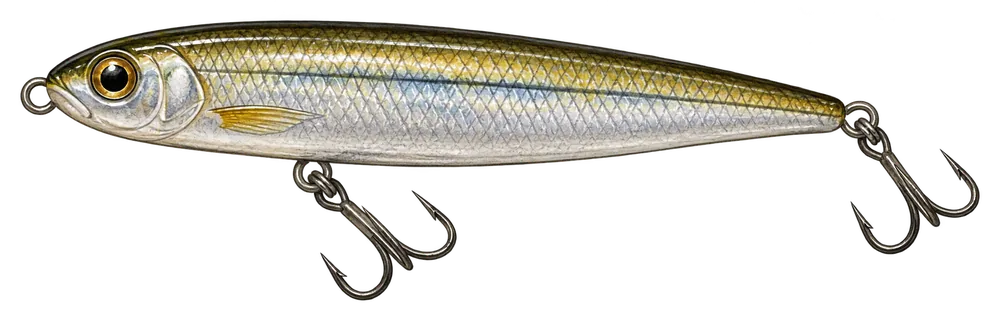 Stickbait | Surface | Active: short twitches in a zigzag, build in pauses | you want the lure to dart through the water with rod-tip strokes instead of plops and pauses |
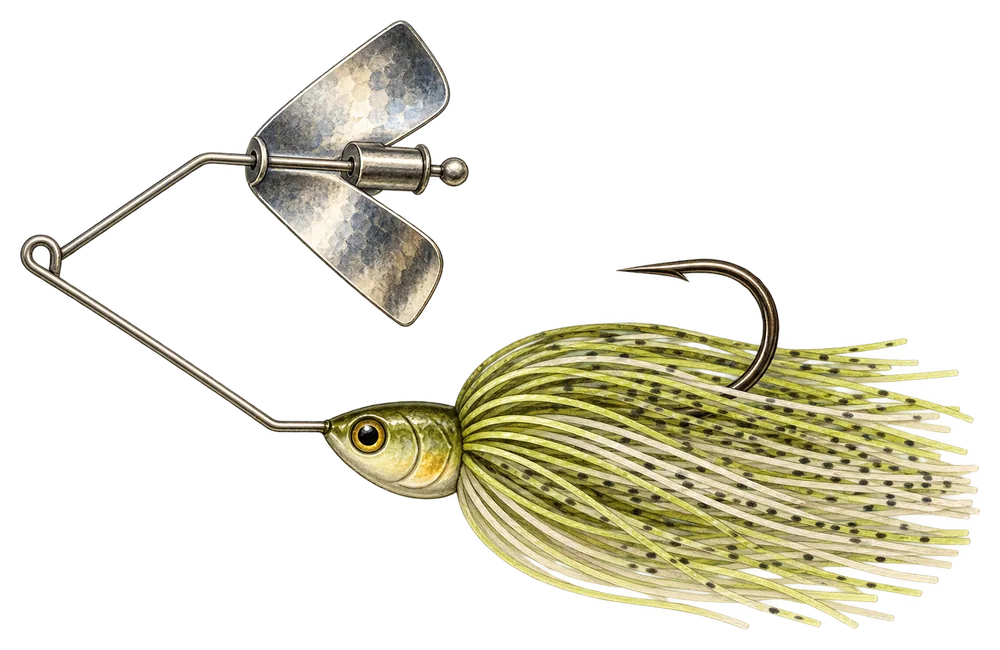 Buzzbait | Surface | Active: retrieve briskly at the surface | you want to fish plants and the surface steadily and quickly, without twitching and pausing |
What you need
- Spinning rodStiff, 1.80 to 2.40 metres and 20 to 25 grams of casting weight carry the strokes well to the popper. More on this
- BraidThin and low-stretch: it keeps contact with the lure, with an abrasion-resistant fluorocarbon hooklength in front. More on this
- Pike leaderWhere pike are about, a steel leader replaces the fluorocarbon. More on this
- SnapA small snap in the eyelet lets the lure work freely and makes changing easier. More on this
More on the method: Spinning.
At a glance
Editorial assessment, not measured values.
If it does not work
Give short, controlled impulses with the rod tip onto a taut line. With slack line the impulse does not reach the lure.
Put less force into the twitch. If the eyelet sits close to the back, switch to a model with a central eyelet.
Do not react to the fountain, but strike only when you feel the weight of the fish in the rod.
Speed the lure up once more. That gives the fish an incentive for a second attack.
Plan for several attempts and choose waters with shallow zones and visible small fish.
Where pike are about, replace fluorocarbon with steel.
Frequently asked questions
A popper or a stickbait?
The popper plops and is worked with short pauses. You work the stickbait with strokes of the rod tip, and then it darts through the water without plopping.
Does a popper work in waves too?
In waves anglers choose bigger models so that the fish notice the lure. It is best to work it with the wind, otherwise it often slaps straight into the next wave.
What fish can you catch with a popper?
In Germany mainly pike, perch, asp and chub. For asp the popper pays off especially in late summer, when fry gather tightly packed at the top.
Can I fish poppers in weedy waters?
Yes, because it runs on the surface and can be worked across the green. For pike, put a steel leader in front.
Why do most bites come in the pauses?
Often the fish follows the lure and bites in the pauses of the retrieve. Asp, by contrast, often strike in the movement. So vary the length of the pauses and the pace.
Before fishing, the current permits, state rules and water rules apply: bait bans, number of hooks, closed seasons, protected species and catch limits can differ. Many federal states expressly ban live baitfish. Take bait remains and packaging away with you. All details are guide values without guarantee and do not replace legal advice.
Sources
- Blinker: Popper, die richtige Köderführung
- Blinker: Rapfenangeln mit Popper
- Blinker: Barsche poppern im Freiwasser
- Blinker: Auf Hecht an der Oberfläche
- Rute & Rolle: Rapfen, rasante Räuber
- Bayerische Landesanstalt für Landwirtschaft: Prüfungsfragen zur Fischerprüfung 2023/2024
- Carleton University und IGB Berlin: Hooking Mortality in Recreational Angling for Northern Pike
- Deutscher Angelfischerverband: Der Flussbarsch, Fisch des Jahres 2023
- Bayern: Ausführungsverordnung zum Fischereigesetz (AVBayFiG), Anlage zu § 11: Schonzeiten und Mindestmaße
The sources explain terms and basic principles. Retrieve, colour choice and values are editorial starting points and depend on water, weather and lure.
More hardbaits
 Crankbait
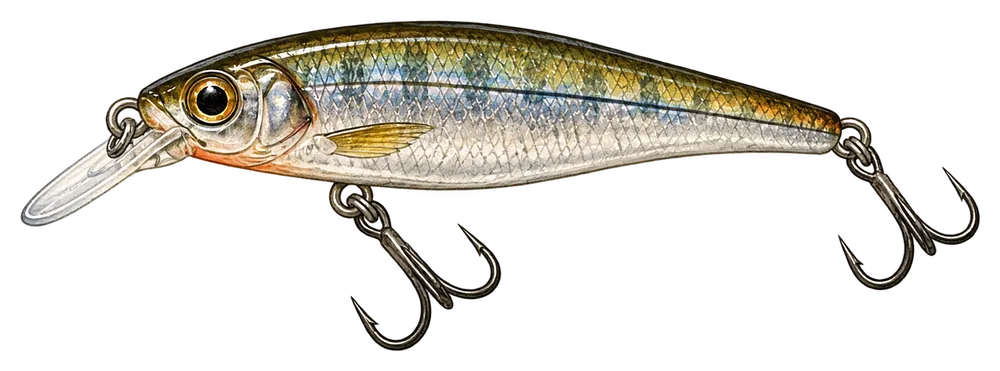 Twitchbait
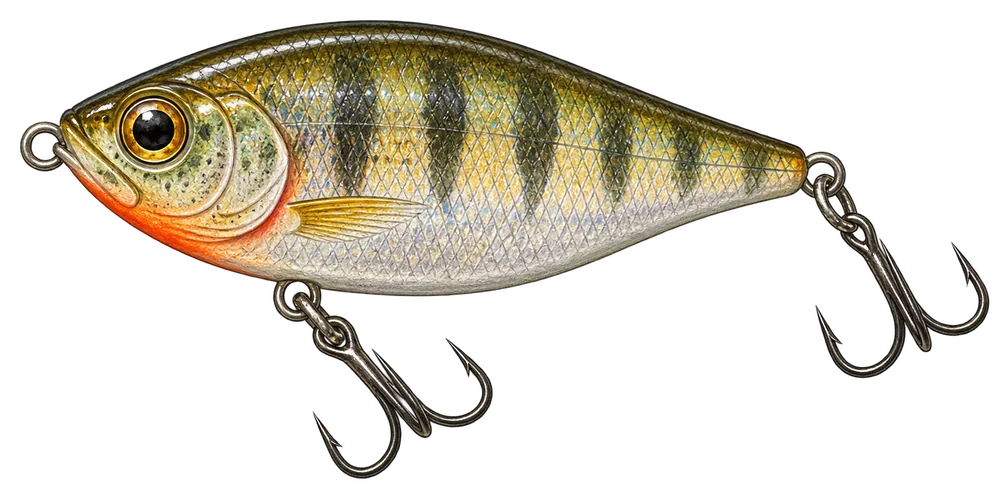 Jerkbait
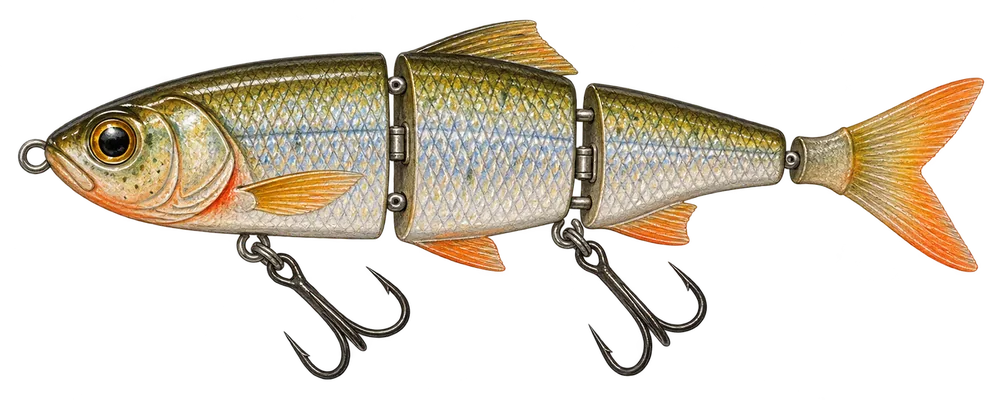 Swimbait
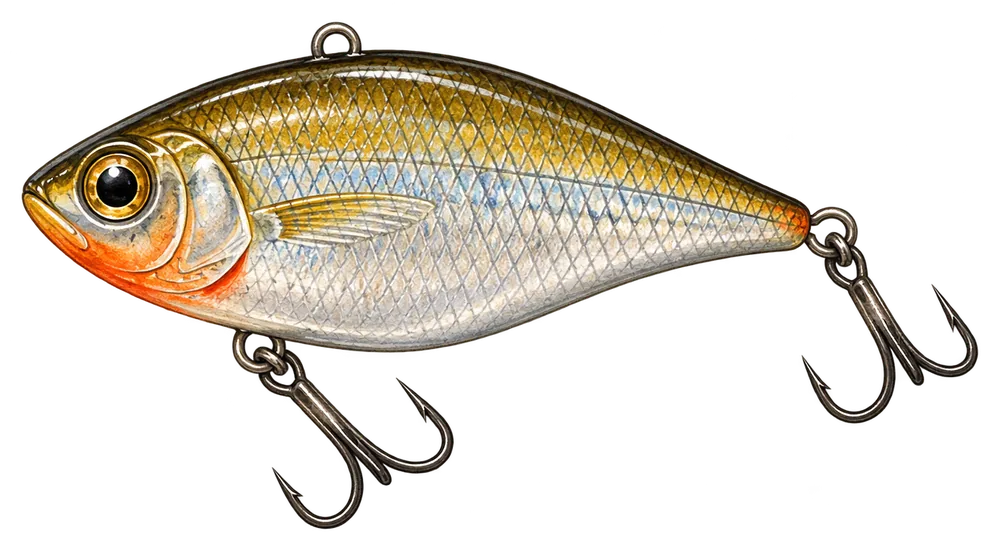 Lipless crankbait
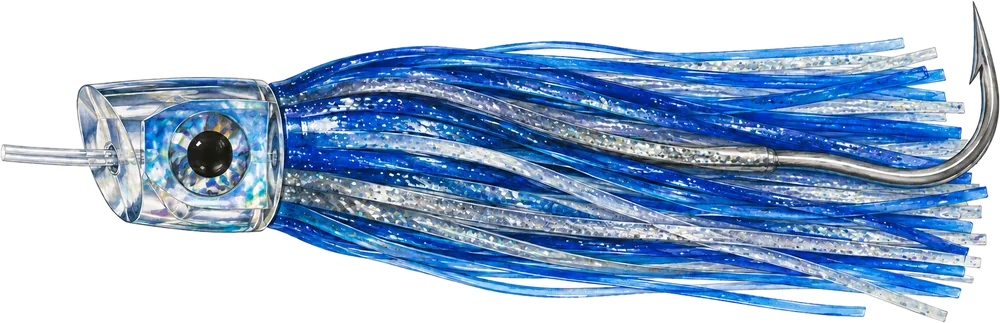 Deep-sea trolling lures
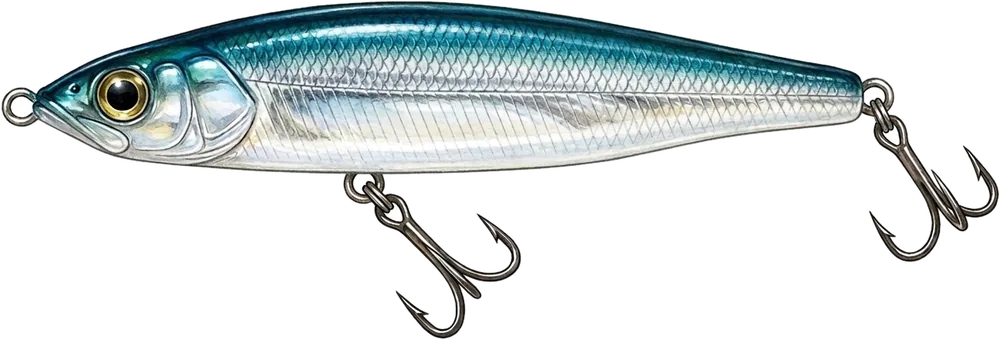 Coastal plugs
Created with AI support from the sources listed (AI notice). Last updated: 31 October 2026. Found a mistake? Write to us. Who is behind the site: About me.