
Knowledge · Lures
Offshore trolling lures
Hardbaits · Spinning
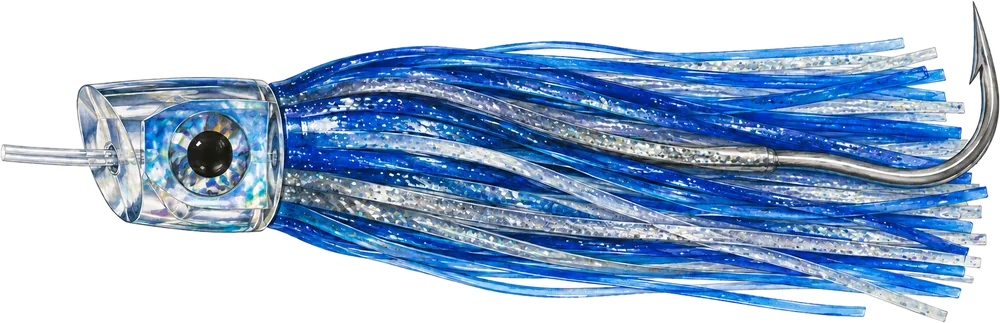
Offshore trolling lures run behind a moving boat on or just below the surface and so search large areas of open sea. The classic is a hard head of resin or metal with a soft fringed skirt, alongside there are plugs for high speeds. The skirt is often combined with a halfbeak (ballyhoo).
- Water depth
- Surface to just below
- Retrieve
- Trolled steadily behind the moving boat, depending on the lure about 4 to 12 knots
- Fishing method
- Spinning
- Category
- Hardbaits
Blue marlinSailfishYellowfin tunaWahooDolphinfish
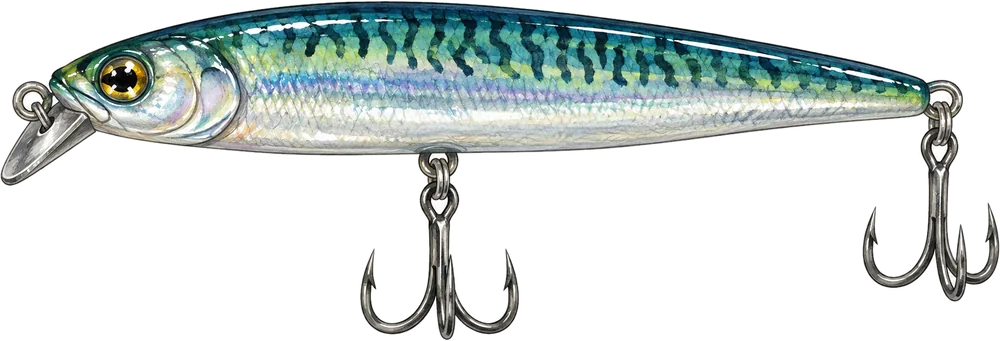
AI-generated illustrations
How an offshore trolling lure works
A skirted lure provokes with its restless action. The head pulls the fringes through the waves, dips briefly again and again and leaves a trail of air bubbles that predators see from afar. A broad, deeply hollowed face creates more bubbles, a pointed head runs more calmly. According to the Florida Museum, the dolphinfish feeds mainly by day, orients itself by sight and the lateral line, and around a quarter of its prey (by weight) is flying fish.
The head is made of resin or metal, behind it sit fringes of soft plastic or textile fibres. The leader runs through the middle of the head, the hook sticks out at the end of the skirt. On many ready-made lures the section between head and hook is steel and hidden by the skirt, with thick monofilament in front of it. Depending on lure size and target fish, the lure carries one or two hooks.
Off Cape Verde, a blue marlin of almost 400 kilograms took a skirted lure 36 centimetres long. For dolphinfish, bonito, wahoo or smaller tunas, self-assembled rubber octopus lures of about 15 to 20 centimetres are enough. Trolling plugs have to still run cleanly at 6 to 8 knots; high-speed models take 10 knots and more.
How to work the lure
Trolled steadily behind the moving boat, depending on the lure about 4 to 12 knots
Schematic illustration, AI-generated.
- Put the lures out behind the boat
- The boat runs steadily
- The lure runs just below the surface
- wait for the bite
Anatomy
The points on the picture above explain the most important parts – on hover or tap.
- Leader at the front: Runs straight through the middle of the head. The lure sits loosely on it and slides up during the fight, so the fish has no leverage.
- Head with face: Resin or metal, often with an eye. A deeply hollowed face pulls a strong trail of bubbles.
- Fringed skirt: Soft plastic or fabric fringes flutter when trolling and hide the steel inside.
- Hook in the skirt: Sticks out at the end of the skirt. Its bend is at least as wide as the head.
Rig in three steps
- 1. Heavy leaderThick monofilament ahead of the lure, often wire in the skirt. Where wahoo bite, wire right up to the head; for tuna, more inconspicuous monofilament.
- 2. Loop into the swivelThe leader ends in a protected loop that goes into a strong swivel or snap on the main line.
- 3. Free behind the boatThe lure runs from the outrigger or as a flat line near the stern, roughly 10 to 20 metres behind the boat in the wake.
Drawings: AI-generated, schematic.
When the target fish are in season
Hardly any chancePossibleGoodPeak seasonValues from the catch calendar.
When and where
You troll over deep water. Wahoo and dolphinfish like to hold around flotsam and sargassum, a floating brown seaweed, so such spots are worth a pass. Seabirds, jumping fish and dolphins often give away hunting tuna. Trolling anglers in Hawaii head for places where water masses meet and steep slopes or seamounts change the bottom abruptly. Off the Azores, banks that rise steeply from great depth collect plankton and, with it, fish.
The season depends entirely on the fishery. Off North Carolina sailfish are caught from May to October; off Broome in north-west Australia the peak falls between July and September, according to long-term tagging and catch data. For tuna, dusk, early morning and late afternoon are usually considered the best times.
The rules are set by the country whose waters you fish. In US waters, NOAA Fisheries requires non-offset circle hooks in marlin and sailfish tournaments whenever natural bait or a combination of natural bait and artificial lures is used; purely artificial lures may carry J-hooks. Many marlin and sailfish go back into the sea, and off north-west Australia practically all sailfish do.
How to choose the hook and leader
- Heavy leader Thick monofilament goes in front of the lure, often steel in the skirt. Where wahoo bite, the steel reaches to the front of the head.
- Loop into the swivel The leader ends in a protected loop. Hook it into a strong swivel or snap on the main line.
- Free behind the boat Run the lure from the outrigger or as a flat line near the stern, about 10 to 20 metres behind the boat in the wake.
The hook is matched to the head: its gape should be at least as wide as the head, so the point stays clear and takes hold in the mouth. Straight J-hooks and hooks with the point turned slightly towards the shank are common. On plugs, thick-wire hooks, strong split rings and a wire running through the whole body are worth having, because at high speed the bite hits the lure with full force.
In the skirt, many anglers use wire rated from 130 to over 200 lb, with 100 to 300 lb monofilament ahead of it. A leader of at least about a metre and a half keeps the tail away from the main line; with big lures several metres are common. Wahoo cut monofilament with their teeth, so wire goes in front of the skirted lure and the plug. Tuna, on the other hand, see well, so anglers tend to choose inconspicuous monofilament or fluorocarbon for them.
Skirted lure or plug: the designs compared
Skirted lures, also called Kona or octopus lures, differ mainly in the head. Hollowed heads work much like a popper and pull a lot of bubbles, while slim bullet heads run quietly. A rubber octopus with a small weight in the head, monofilament and a piece of air hose as chafe protection makes a simple trolling lure you can build yourself.
Trolling plugs come with and without a diving lip. They suit marlin and sailfish less, and wahoo, king mackerel, dolphinfish and tuna more. Many freshwater plugs cannot cope with the speed and jump out of the water.
With ballyhoo, the artificial lure becomes a combination. The North Carolina fisheries authority names such colourful skirts with ballyhoo as a common bait for yellowfin tuna and wahoo.
How to troll a spread of baits
A boat pulls up to eight lines: two close to the stern on the surface, the rest on outriggers that keep them apart. A teaser without a hook in the wake brings marlin up. Check the baits regularly to make sure they run cleanly and are neither tangled nor carrying flotsam.
If nothing bites, change the bait size and speed; even big tuna sometimes feed on surprisingly small prey. After the strike the line stays tight at all times, because in a marlin’s hard mouth the hook often sits poorly. If the fish is to go back, it stays in the water. Circle hooks, a dehooker and strong tackle that shortens the fight spare the fish, according to NOAA Fisheries.
Which colour?
Starting points to try, not rules. Depth and speed are usually more important than colour.
Offshore trolling lures or a different lure?
| Baits and lures | Depth | Retrieve | Take this lure if … |
|---|---|---|---|
| Offshore trolling lures | Surface to just below | Trolled steadily behind the moving boat, depending on the lure about 4 to 12 knots | this page |
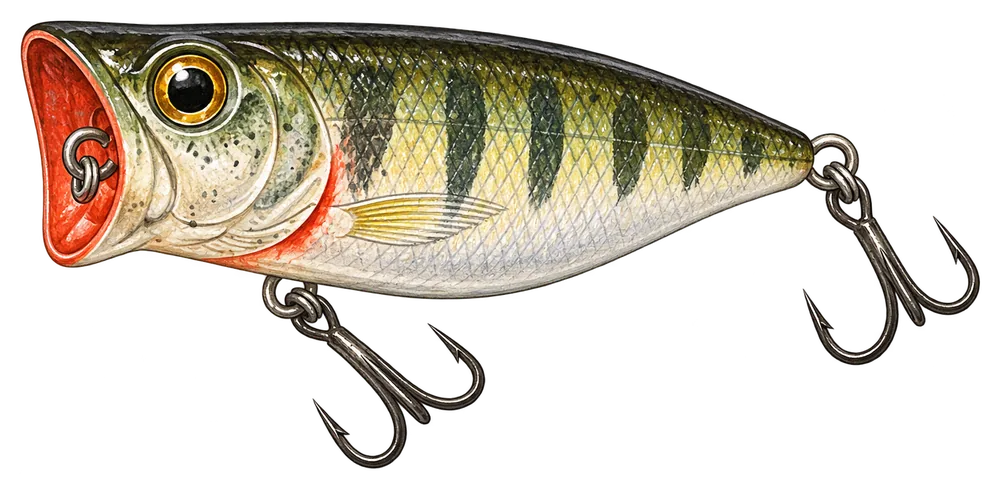 Popper | Surface | Active: short jerks, then a pause | tuna are feeding on the surface and you want to cast at them accurately from the boat |
 Jig | Bottom to mid-water | Vertical: drop to the bottom, lift, let it fall; from a boat it can also be cast a long way | the fish are holding deep and you want to fish vertically from a drifting boat |
What you need
- Multiplier reelAll-metal with a lever drag and plenty of line: big fish take several hundred metres on the first run. More on this
- Sea rodShort and strong: the 130 lb class for marlin and big tuna, more like 50 to 80 lb for yellowfin tuna. More on this
- Swivel and snapA strong swivel takes the leader loop. More on this
- DehookerIt lets you release the hook while the fish stays in the water. More on this
More on the method: Spinning.
At a glance
Editorial assessment, not measured values.
If it does not work
The model is not built for that speed. Use a trolling plug made for high speed, or go slower.
Do not tie the hook on rigidly; give it a little play in a protected loop, otherwise the wire fatigues.
Put wire in front of the skirted lure and the plug; monofilament will not stand up to those teeth.
Choose a hook whose gape is at least as wide as the head, and keep the line tight at all times during the fight.
Choose a leader at least about a metre and a half long, so the tail does not hit the main line.
Spread the outer lines on the outriggers and check all baits regularly for tangles and flotsam.
Frequently asked questions
How fast do you troll offshore lures?
That depends on the lure. For marlin the North Carolina fisheries authority gives 4 to 8 knots; tuna are trolled at roughly 6 to 12 knots. Home-made octopus lures run well at 6 to 9 knots, and special plugs can take 10 knots and more.
Do I need a wire leader?
Where wahoo, barracuda or king mackerel bite, yes: their teeth cut through monofilament. In a skirted lure the wire stays hidden anyway. For tuna, which see well, anglers prefer monofilament or fluorocarbon.
Why put a ballyhoo behind the skirt?
The skirt brings colour and action, the bait fish real prey. The North Carolina fisheries authority names this combination for yellowfin tuna and wahoo. In US marlin and sailfish tournaments it requires non-offset circle hooks.
What is a teaser?
A lure without a hook that runs in the wake. It is meant to bring marlin up to the surface, where the baits with hooks are running.
Are marlin and sailfish released?
Many are, and off north-west Australia practically all sailfish. NOAA Fisheries advises leaving the fish in the water for this and working with circle hooks and a dehooker. What you may keep is set by the country of the fishery.
Before fishing, the current permits, state rules and water rules apply: bait bans, number of hooks, closed seasons, protected species and catch limits can differ. Many federal states expressly ban live baitfish. Take bait remains and packaging away with you. All details are guide values without guarantee and do not replace legal advice.
Sources
- North Carolina Division of Marine Fisheries: Blue Marlin
- North Carolina Division of Marine Fisheries: Sailfish
- North Carolina Division of Marine Fisheries: Yellowfin Tuna
- North Carolina Division of Marine Fisheries: Wahoo
- NOAA Fisheries: HMS Recreational Compliance Guide 2026
- NOAA Fisheries: Hawaii Troll Fishery
- Florida Museum of Natural History: Dolphinfish
- Florida Museum of Natural History: Wahoo
- NSW Department of Primary Industries: Game Fish Tagging Program, Jahresbericht 2021/22
- Journal of the Royal Society of Western Australia: Historic fisheries data, sailfish off northwestern Australia (2011)
- Blinker: Köder beim Hochseeangeln
- Blinker: Großfischköder selber bauen
- Blinker: Thunfisch angeln
- Blinker: Hochseefischen auf Marlin vor den Azoren
- Fisch & Fang: Blue Marlin mit 881 Pfund
- Fisch & Fang: Blue Marlin von 1.150 englischen Pfund
The sources explain terms and basic principles. Retrieve, colour choice and values are editorial starting points and depend on water, weather and lure.
More hardbaits
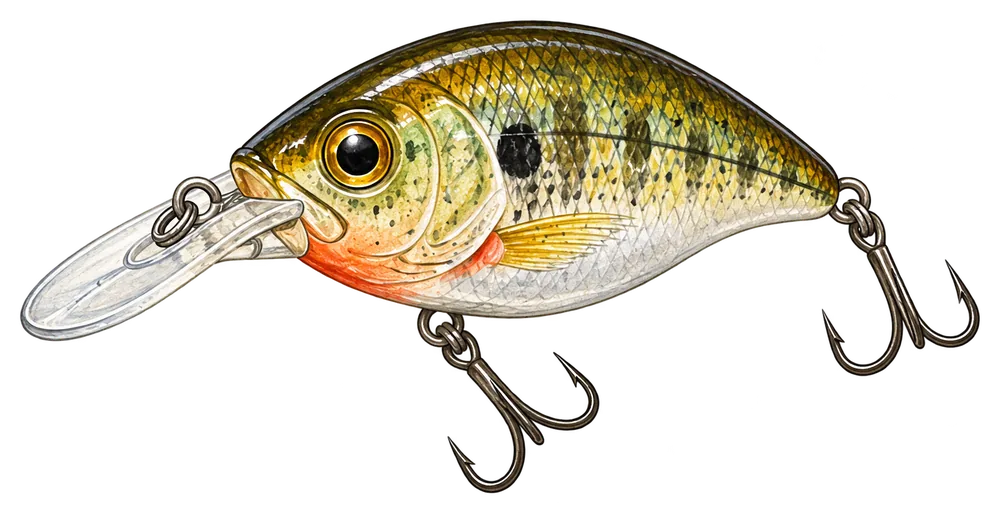 Crankbait
 Twitchbait
 Jerkbait
 Stickbait
 Swimbait
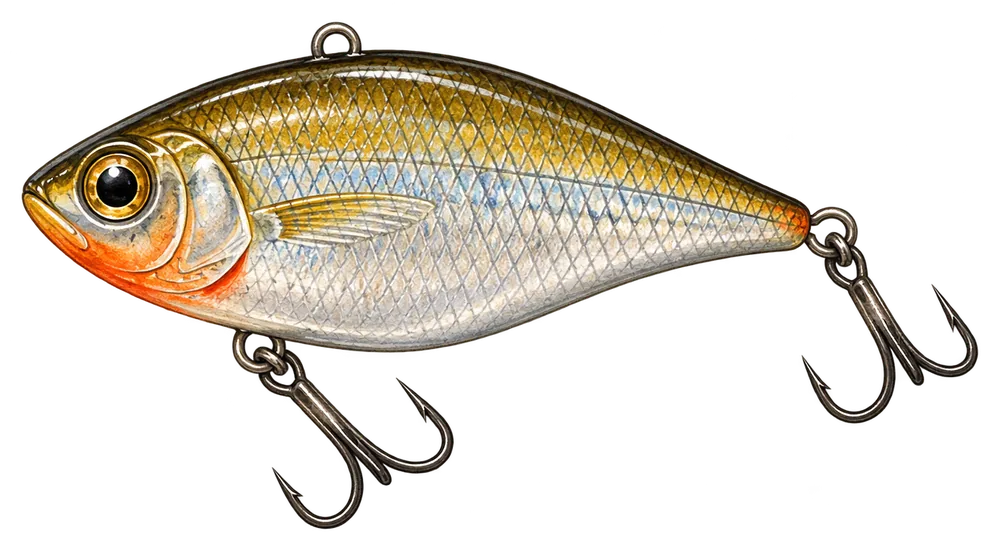 Lipless crankbait
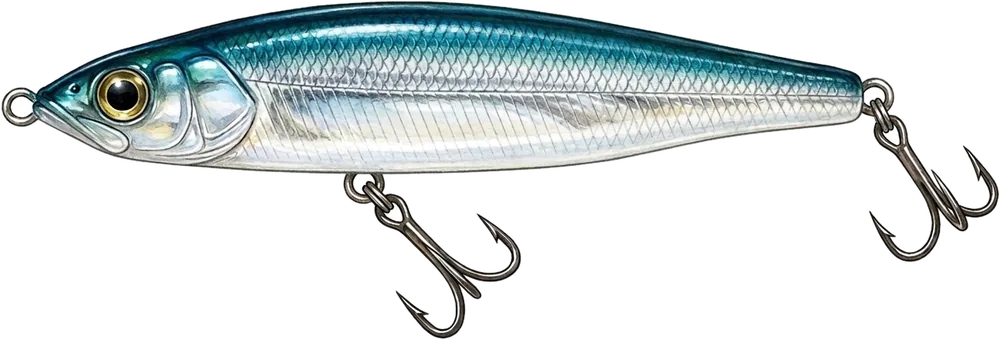 Inshore plug
Created with AI support from the sources listed (AI notice). Last updated: 31 October 2026. Found a mistake? Write to us. Who is behind the site: About me.