
Knowledge – Fish
Yellowfin tuna: Features, habitat, season and baits
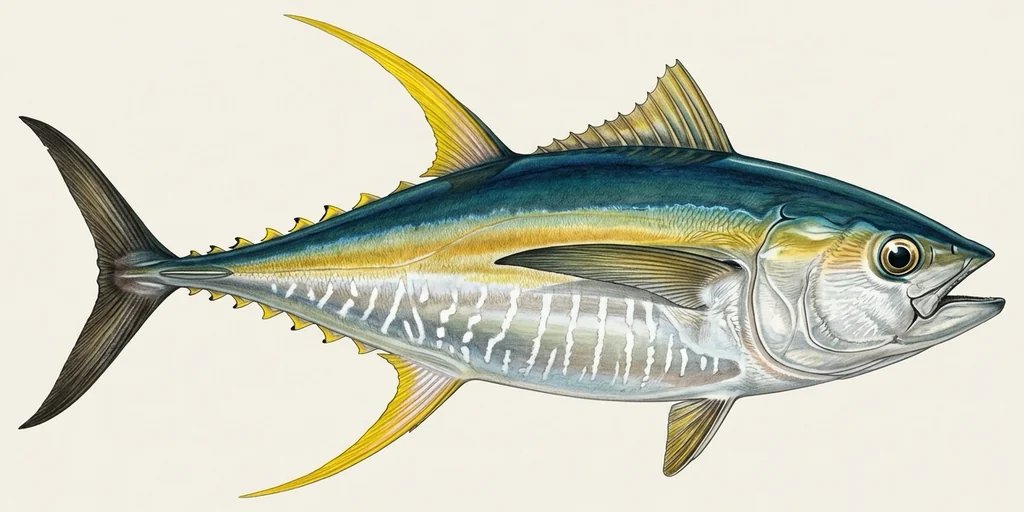
The yellowfin tuna (Thunnus albacares) is a fast schooling fish of warm oceans, easy to recognise by its bright yellow fins. It grows to over two metres long and usually lives in the upper 100 metres. In North Carolina it is the most important species for the offshore charter fleet.
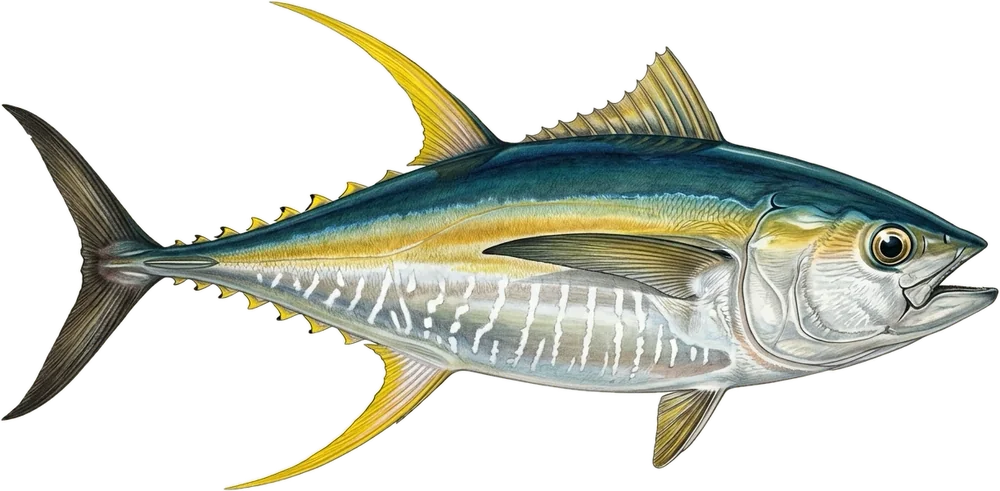
In short: According to the catch calendar, the best time is April to October. Good spots off the coast: open water and just below the surface. Proven baits: colourful trolling lures, often combined with garfish, on a rod or handline. The long, bright yellow second dorsal and anal fins set it apart from the Atlantic bluefin tuna. According to the BfR, tuna is among the fish with the highest methylmercury levels. Step by step: fishing for yellowfin tuna.
- Long, bright yellow second dorsal fin and anal fin
- Yellow finlets with a narrow black edge in front of the tail fin
- Yellow lengthwise stripe on the flank, below it about 20 broken vertical lines on the belly
Catch chances through the year
- Hardly any chance
- Possible
- Good
- Peak season
- Spawning (observe the closed season)
Editorial assessment for the home water (south-eastern coast of the USA and Gulf of Mexico), not a measured value and not a guarantee. The rules of the country you travel to are what count.
How to recognise it
The yellowfin tuna has a torpedo-shaped, slightly laterally flattened body. The back and upper flanks are metallic dark blue, and towards the belly the colour shifts through yellow to silver. A yellow stripe runs along the flank, and in many fish about 20 broken, almost vertical lines cross the belly.
The fins are the most striking feature. The second dorsal fin, the anal fin and the small finlets behind them are bright yellow, and the finlets have a narrow black edge. In large fish the second dorsal and anal fins become very long. The pectoral fins usually reach beyond the start of the second dorsal fin.
According to FishBase the species reaches up to 239 centimetres fork length and 200 kilograms, with around 150 centimetres being typical. NOAA Fisheries gives a lifespan of about seven years, FishBase a maximum age of 18 years. Most fish can spawn at two to three years old.
The fisheries authority (Fischereibehörde) of North Carolina names bigeye tuna, blackfin tuna and albacore as common mix-ups. According to NOAA, it differs from the Atlantic bluefin tuna by its long yellow dorsal fin, the yellow side stripe and its slimmer body.
Side by side
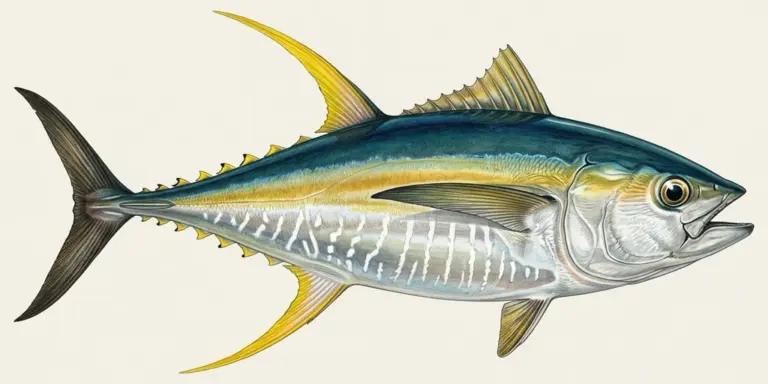
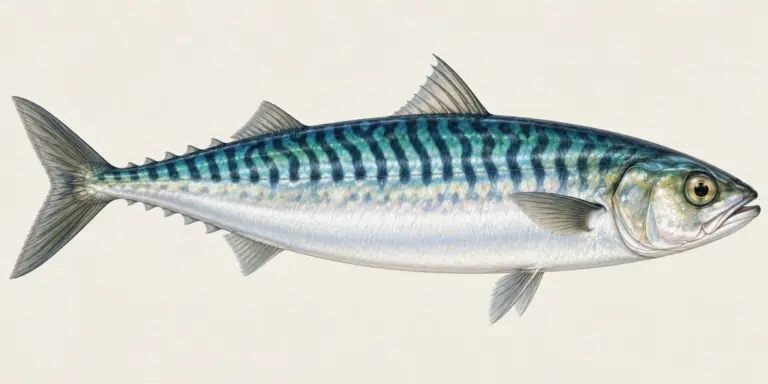
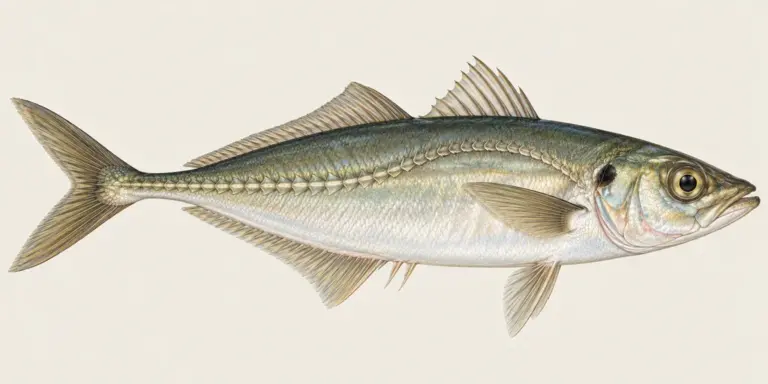
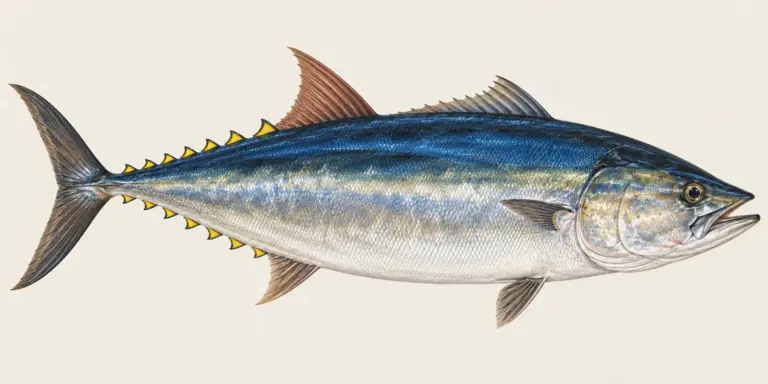
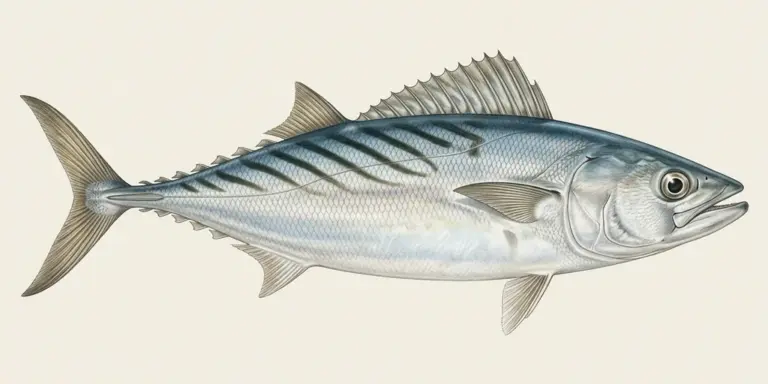
AI-generated illustrations.
Where it holds
The yellowfin tuna lives worldwide in tropical and subtropical seas, but is absent from the Mediterranean. In the western Atlantic it ranges, according to the ICCAT manual, from southern Canada to northern Argentina. According to NOAA it prefers water of 18 to 31 °C and moves to higher latitudes each year as temperatures rise.
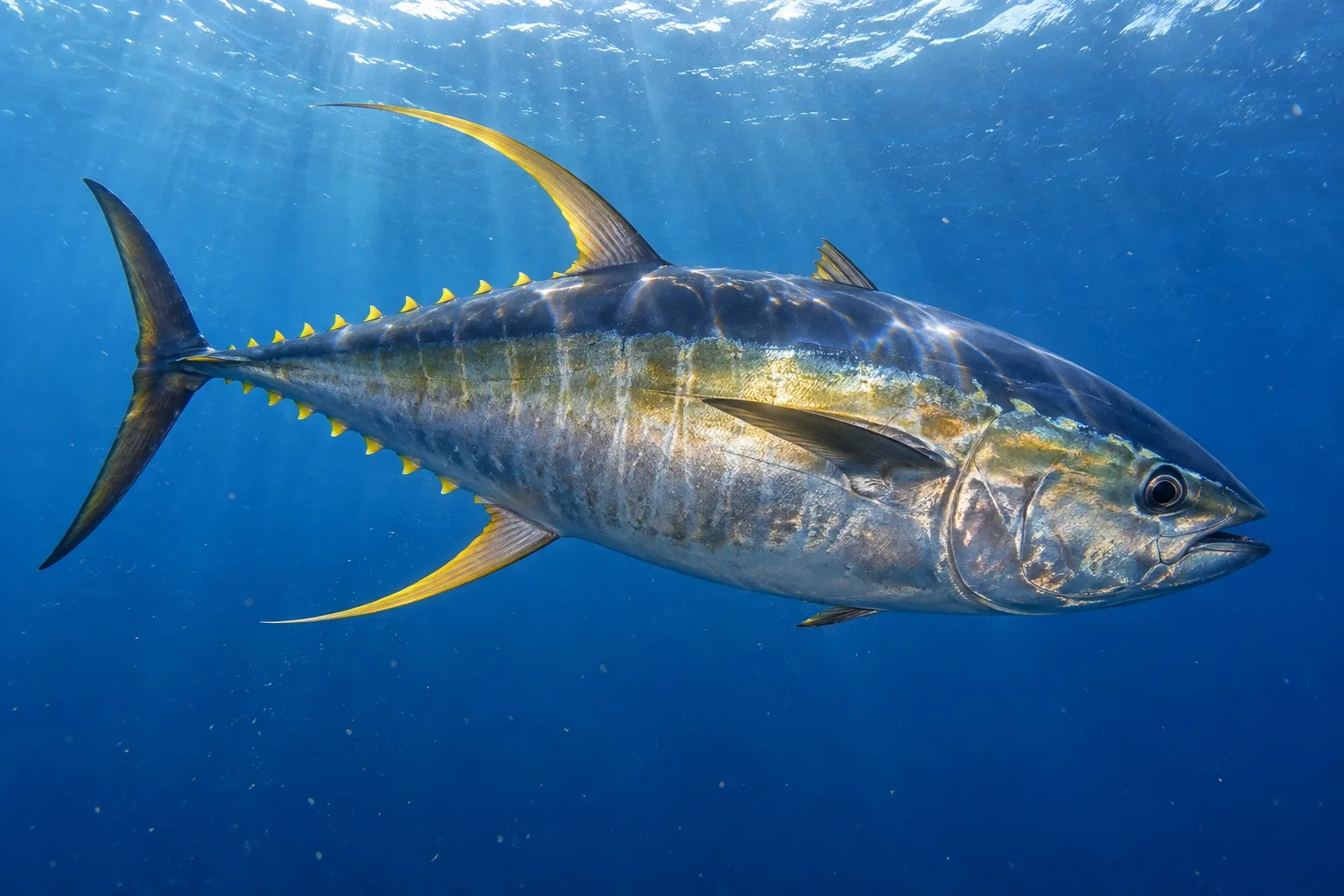
Adults and young fish spend most of their time above 100 metres depth. They usually dive only as deep as the water is at most about 8 degrees colder than at the surface, and avoid oxygen-poor water. In the tropics it is therefore rarely caught below 250 metres.
Holding spots in the picture
Choose the time of day: the picture shows where the species holds. We do not show German seasons for travel fish; the bars give the chance of a catch for each month. Tap a fish or a spot in the list to bring it closer. The picture is schematic and AI-generated, and every water is different.
Chance of a catch per month according to the catch calendar
- J
- F
- M
- A
- M
- J
- J
- A
- S
- O
- N
- D
Spawning season
On the coast
Open water, mid-water
Yellowfin tuna are found here all year round.
Just below the surface
Yellowfin tuna are found here all year round.
In the warm water of the open sea the yellowfin tuna travels in schools of similar-sized animals. They gather under flotsam, buoys and drifting weed fields, and large fish often swim with dolphins.
Depth: It spends most of its time above 100 metres and rarely goes into layers more than about 8 degrees colder than the surface water.
Size comparison: AI-generated drawing, schematic.
How it hunts and spawns
Yellowfin tuna travel in schools of fish of equal size, alone or mixed with other tuna species. In the eastern Pacific large fish often swim with dolphins; in the Atlantic, the Indian Ocean and the rest of the Pacific this has not been observed, according to the Florida Museum. The species gathers under flotsam, anchored buoys and fish aggregating devices (FADs), and in the Caribbean also near whale sharks and whales.
It feeds on fish, squid and crustaceans. According to the fisheries authority (Fischereibehörde) of North Carolina, many prey animals come from sargassum, a drifting brown alga: young crabs, shrimp, squid, filefish, triggerfish and jacks.
In the western Atlantic the species spawns, according to NOAA, from May to August in the Gulf of Mexico and from July to November in the south-eastern Caribbean. During this time females spawn roughly every three days, releasing 1 to 4 million eggs each time.
When and where the season is
The season information applies to the south-eastern coast of the USA and the Gulf of Mexico. According to its fisheries authority (Fischereibehörde), North Carolina reports more yellowfin tuna from recreational fishing than any other US state. The species keeps the offshore charter fleet in business there.
Because the fish move to higher latitudes as water temperatures rise, the calendar rates April to October as good and the cool months as possible. The calendar therefore does not show any peak months.
What you catch it with
Step by step: Fishing for yellowfin tuna: tips on bait, rig and tackle – season, spots, baits, tackle and rules on one page.
According to NOAA, recreational anglers catch yellowfin tuna by trolling, with rod and reel, with the handline and occasionally by freediving with a spear. In North Carolina, according to the fisheries authority (Fischereibehörde), colourful artificial lures with a garfish (ballyhoo) are mostly trolled at high speed.
Because the fish gather under flotsam, seaweed fields and buoys, it is worth heading for such spots deliberately. In US waters the rule is: a tuna you do not keep is released immediately and without lifting it out of the water.
Watch for flotsam: Drifting sargassum fields, wood or buoys gather baitfish and with them tuna. Head for such spots deliberately instead of just searching open water.
Identify the species before keeping it: Yellowfin, bigeye and bluefin tuna are subject to different rules in the USA. Check the fin colour, the side stripe and the body shape before you keep a fish.
Suitable lures
Colourful trolling lures, often combined with garfish, on a rod or handline.
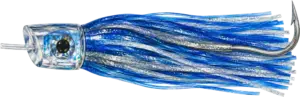
AI-generated illustrations. A click opens the lure’s page.
Look for fish under flotsam, sargassum and near dolphins
Rules, permit and health
The rules of the country in whose waters you fish and the authority there are what count. In the USA, the federal rules for highly migratory species (HMS) apply to tuna in the Atlantic, summarised in the NOAA Fisheries guide. For tuna a boat needs a permit not only in federal waters but also in the coastal waters of almost all states. Charter boats have their own permit, under which the guests fish.
A minimum size (Mindestmaß) and a daily bag limit per person apply to yellowfin tuna. Until landing, the tail fin and at least one pectoral fin must remain on the fish. Catching, tagging and releasing are allowed. According to NOAA the Atlantic stock is not overfished after the 2024 assessment, and the IUCN lists the species as not threatened.
Health: the Federal Institute for Risk Assessment (BfR) names tuna, alongside shark and swordfish, as an example of large predatory fish with the highest levels of methylmercury. According to the BfR, pregnant and breastfeeding women should avoid fish species with high levels. This does not replace medical advice.
Frequently asked questions (FAQ)
How do I recognise a yellowfin tuna?
By the long, bright yellow second dorsal and anal fins, the yellow finlets with a black edge and the yellow stripe on the flank.
How big does a yellowfin tuna get?
According to FishBase up to 239 centimetres and 200 kilograms, with around 150 centimetres being typical.
Is yellowfin tuna a concern to eat?
According to the BfR, tuna is among the fish with the highest methylmercury levels. Pregnant and breastfeeding women should avoid such species. This does not replace medical advice.
Sources
The rating of catch chances is an editorial assessment. The facts come from these sources, and the text is worded in our own words. The illustration is an original design by Angel Momente in the style of a natural history plate (AI-generated, see the AI notice).
- FishBase: Thunnus albacares, Yellowfin tuna
- NOAA Fisheries: Atlantic Yellowfin Tuna
- NOAA Fisheries: Pacific Yellowfin Tuna
- ICCAT: Manual: Yellowfin Tuna
- North Carolina Division of Marine Fisheries: Yellowfin Tuna
- NOAA Fisheries: HMS Recreational Compliance Guide
- Bundesinstitut für Risikobewertung: Schwangere und Stillende sollten Fischarten mit hohen Gehalten an Methylquecksilber meiden
Created with AI support from the sources listed. Figures only appear in the text if a source gives them. Last updated: 27 October 2026. Found a mistake? Write to us. Who is behind this site: About me.
More in the lexicon
- All fish species at a glance
- Catch calendar – month, water temperature and profile for 93 species
- Line calculator – breaking strain after the knot, drag guideline, backing
- Angling methods