
Knowledge – Fish
Yellowfin tuna fishing
Catching yellowfin tuna means this: on the open sea, run up to flotsam, weed fields and buoys and troll colourful lures briskly behind the boat there. Here is the way there in nine steps, each with a link to the detailed page.
The Bundesinstitut für Risikobewertung (Federal Institute for Risk Assessment) names tuna, together with shark and swordfish, as large predatory fish whose flesh contains particularly high levels of methylmercury. According to the BfR, pregnant and breastfeeding women should avoid such species. This does not replace medical advice.
 Choose another fish117 fish with guides
 EelOff-peak season
 EelpoutPossible
 IdePossible
 ArapaimaGood
 GraylingPeak season
 Atlantic salmonSpawning time, please spare
 Brown troutSpawning time, please spare
 Brook troutSpawning time, please spare
 BarbelOff-peak season
 BarramundiSpawning season
 Greater amberjackGood
 Topmouth gudgeonOnly as bycatch
 Blue marlinSpawning season
 BonefishSpawning season
 BonitoGood
 BreamOff-peak season
 Dusky grouperOnly as bycatch
 CobiaPossible
 Spiny dogfishOnly as bycatch
 CodPeak season
 ChubPeak season
 MinnowOnly as bycatch
 European sturgeonOnly as bycatch
 FlounderPeak season
 PerchPeak season
 Largemouth bassGood
 Ballan wrasseOnly as bycatch
- Yellowfin tunaSpawning season
 Giant trevallyGood
 Prussian carpPossible
 BrillPossible
 Gilthead breamSpawning time, please spare
 Golden doradoSpawning season
 Golden mahseerOnly as bycatch
 Dolphinfish (mahi-mahi)Good
 Grass carpPossible
 Great barracudaGood
 GudgeonPossible
 White breamPossible
 DaceOff-peak season
 PikePeak season
 HalibutOff-peak season
 HerringPossible
 GarfishOut of season
 Huchen (Danube salmon)Possible
 Crucian carpOnly as bycatch
 CarpOff-peak season
 RuffeOff-peak season
 VendaceOnly as bycatch
 DabPeak season
 GurnardPossible
 Coley (saithe)Peak season
 Chinook salmonHardly any chance
 King mackerelSpawning season
 LingPeak season
 TuskOff-peak season
 MackerelPossible
 Bighead carpOut of season
 WhitefishPossible
 Conger eelOff-peak season
 Sea troutSpawning time, please spare
 Grey mulletPossible
 Murray codSpawning season
 MuskellungeGood
 Common nasePossible
 Nile perchPossible
 PayaraPossible
 Peacock bassPeak season
 PermitGood
 WeeverOnly as bycatch
 PollackOff-peak season
 BurbotOff-peak season
 AspPossible
 Red snapperSpawning season
 Rainbow troutPeak season
 RoosterfishGood
 RoachPeak season
 RedfishOut of season
 Bluefin tunaOnly as bycatch
 RuddPossible
 Russian sturgeonOnly as bycatch
 HaddockOff-peak season
 SnakeheadPossible
 TenchOff-peak season
 SpirlinOnly as bycatch
 PlaiceOff-peak season
 Greenland halibutOnly as bycatch
 Round gobyOnly as bycatch
 SwordfishGood
 Lake troutSpawning time, please spare
 HakeSpawning time, please spare
 Alpine charSpawning time, please spare
 MonkfishPossible
 SoleOff-peak season
 SailfishGood
 Silver carpOut of season
 SnookPeak season
 PumpkinseedOnly as bycatch
 SpratOnly as bycatch
 Atlantic wolffishSpawning time, please spare
 TurbotPeak season
 SterletOnly as bycatch
 SmeltOnly as bycatch
 Horse mackerelPossible
 TaimenGood
 TarponGood
 TigerfishSpawning season
 BleakPossible
 WahooGood
 Wels catfishOff-peak season
 WhitingPeak season
 Sea bassOff-peak season
 ZanderPeak season
 White-eye breamOnly as bycatch
 Blue breamOnly as bycatch
 Brown bullheadPossible
 VimbaOnly as bycatch
Season in October according to the catch calendar, an estimate and not a guarantee of a catch. The fish pictures are reduced natural-history plates and AI-generated.
Best time
From April to October.
In January: PossibleIn February: PossibleIn March: PossibleIn April: GoodIn May: Good, spawning seasonIn June: Good, spawning seasonIn July: Good, spawning seasonIn August: Good, spawning seasonIn September: Good, spawning seasonIn October: Good, spawning seasonIn November: Possible, spawning seasonIn December: Possible
Good spot
- Coast: open water and just below the surfaceopen water and just below the surfaceopen water and just below the surfaceopen water and just below the surface
Top baits
Starter tackle
- Rod: short boat rod, for yellowfin tuna usually class 50 to 80 lb
- Line: well suited to trolling: monofilament; for tuna fishing 30 to 130 lb (about 14 to 59 kg) is usual
- Rod: short boat rod, preferably with a curved handle, class 50 to 80 lb
- Line: monofilament, for tuna fishing 30 to 130 lb (about 14 to 59 kg)
- Hook: circle hook, not stainless steel
In short
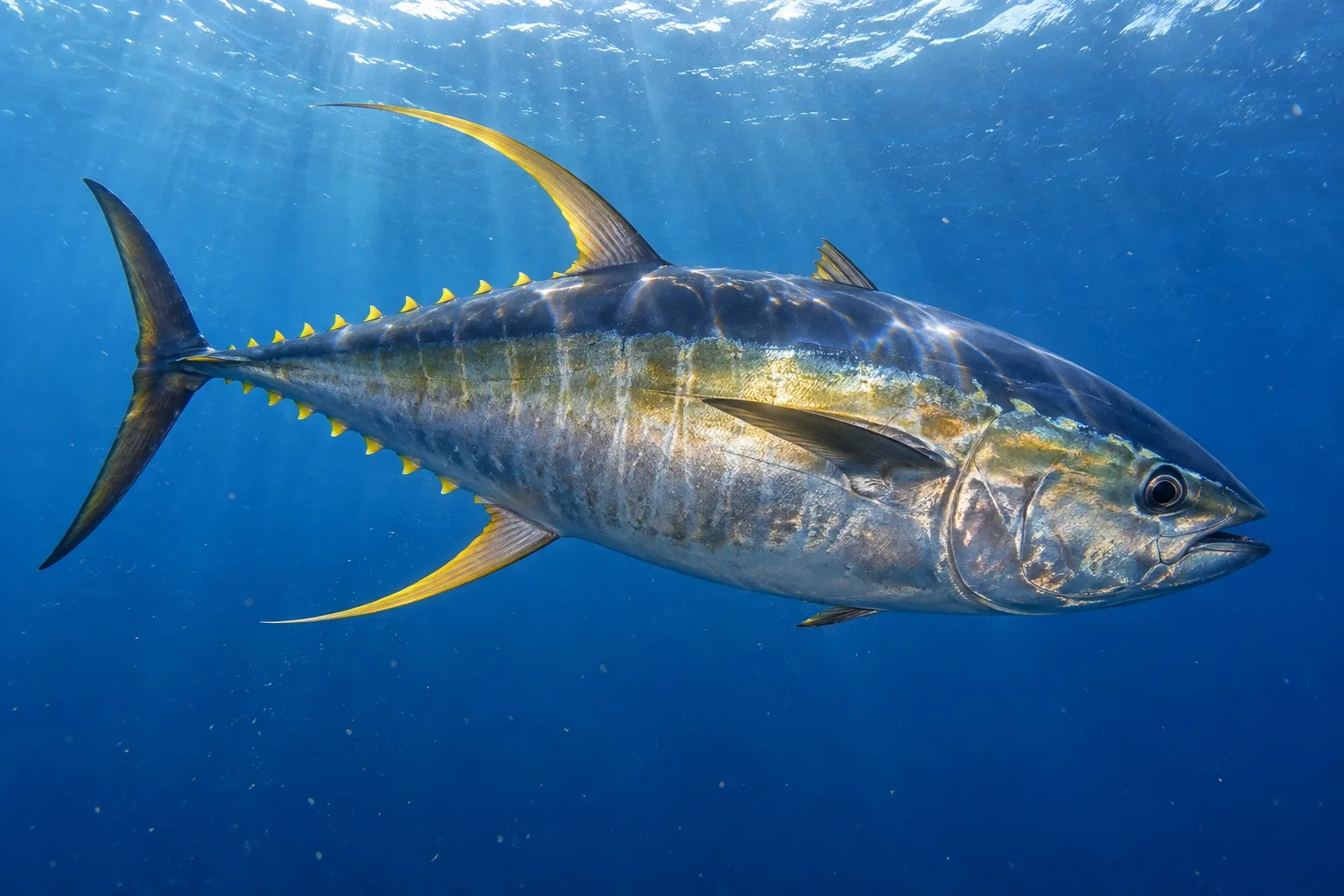
In short: According to the catch calendar, the best time is April to October. Good spots on the coast: open water and just below the surface. Proven baits: colourful trolling lures, often combined with ballyhoo (halfbeak), on a rod or hand line. The long, bright yellow second dorsal and anal fins distinguish it from the bluefin tuna. According to the BfR, tuna is among the fish with the highest methylmercury levels.
Quick to recognise
A torpedo-shaped tuna with a metallic dark blue back, a yellow stripe on the flank and bright yellow fins. The small finlets behind the dorsal and anal fins are yellow with a narrow black edge. Around 150 centimetres is usual, and FishBase gives up to 239 centimetres fork length and 200 kilograms.
When
Off the south-east coast of the USA and in the Gulf of Mexico, April to October count as good, and in the cool months a catch is possible. The calendar gives no peak season, because the fish move north as the water warms. Spawning takes place in the Gulf of Mexico from May to August, in the south-eastern Caribbean from July to November.
- JanPossible
- FebPossible
- MarPossible
- AprGood
- MayGood, spawning
- JunGood, spawning
- JulGood, spawning
- AugGood, spawning
- SepGood, spawning season
- OctGood, spawning season
- NovPossible, spawning season
- DecPossible
Peak seasonGoodPossibleHardly any chanceSpawning season
Season in the destination
In the Gulf of Mexico and off the south-east coast of the USA the chances are good from April to October, and in the cool months catches are only possible. Yellowfin tuna stay in water of about 18 to 31 degrees, usually in the top 100 metres. In higher latitudes they spawn mainly in summer, in the tropics all year round.
Season and biting time
In January: PossibleIn February: PossibleIn March: PossibleIn April: GoodIn May: Spawning seasonIn June: Spawning seasonIn July: Spawning seasonIn August: Spawning seasonIn September: Spawning seasonIn October: Spawning seasonIn November: Spawning seasonIn December: Possible
Where it is now
On the coast
Look for it on the open sea in warm water, usually in the top 100 metres. Schools of similar-sized fish gather under flotsam, drifting sargassum fields and anchored buoys, and in the eastern Pacific large tuna also often travel with dolphins. Head for such spots deliberately instead of only covering open sea.
How to go about it: You search on the open sea over deep water: under driftwood, seaweed and boats, at anchored buoys and FADs, at current edges and over seamounts. Directly at the coast you will rarely find yellowfin tuna.
| All year round | open water, just below the surface |
|---|
Holding spots in the picture
Choose a season and time of day: the picture shows where the species sits then. Tap a fish or a spot in the list to bring it closer. The picture is schematic and AI-generated, every water is different.
Chance of a catch in springgood
Chance of a catch in summergoodSpawning, observe the closed seasons
Chance of a catch in autumngoodSpawning season, observe the closed seasons
Catch chance in winterpossible
- J
- F
- M
- A
- M
- J
- J
- A
- S
- O
- N
- D
Spawning season
On the coast
Open water, mid-water
Yellowfin tuna are found here all year round.
Just below the surface
Yellowfin tuna are found here all year round.
In the warm water of the open sea the yellowfin tuna travels in schools of similar-sized animals. They gather under flotsam, buoys and drifting weed fields, and large fish often swim with dolphins.
Spring: chance of a catch according to the catch calendar possible in March, good in April and May.
Summer: chance of a catch good according to the catch calendar. This is when spawning falls, so observe the closed seasons.
Autumn: chance of a catch according to the catch calendar good in September and October, possible in November. The spawning season falls in this period, so observe the closed seasons.
Winter: catch chance according to the catch calendar possible.
Depth: It spends most of its time above 100 metres and rarely goes into layers more than about 8 degrees colder than the surface water.
Size comparison: AI-generated drawing, schematic.
How
Recreational anglers catch it by trolling, with rod and reel or with a hand line. In North Carolina it is mainly colourful artificial lures, combined with ballyhoo, that run behind the boat at high speed.
Easiest way
The simplest way is trolling from a boat: several colourful skirted lures, often with ballyhoo, run briskly over deep water. The crew scans for seabirds, flotsam and current edges while you take the rod as soon as a tuna comes up.
Trolling skirted lures and ballyhoo
The usual way of searching for yellowfin tuna: from the moving boat, several artificial lures, often with ballyhoo, run at speed over deep water.
- Signs on the water
Look out for seabirds, jumping fish and dolphins, which often give away hunting tuna. Driftwood, seaweed and buoys are worth a circuit, because whole schools like to hold under them.
- Currents and seamounts
Good grounds lie where two currents meet and over seamounts or steep drop-offs. Boats trolling off Hawaii prefer to run up to such spots and to FADs.
- Skirt with ballyhoo
In North Carolina most anglers troll colourful skirted lures with ballyhoo. Because tuna see well, an inconspicuous leader of monofilament or fluorocarbon goes in front.
- Spread the lines
Run four to five lines, the outer ones from outriggers so that they don’t tangle. Boats off Hawaii usually pull artificial lures at 7 to 8.5 knots, and with live bait they go slower.
- Vary speed and lure
If the bites stop, change speed and lure size; large tuna sometimes take strikingly small prey. Offshore fish feed most in the twilight hours, and in the midday sun the schools go deeper.
- Rarely alone
Tuna travel in schools of equally large fish. When one is hooked, let the other lures keep running: the hooked fish draws others out of the school, and they then take the remaining lures.
- Strength against strength
A big yellowfin tuna can strip several hundred metres of line off the reel. Heavy tackle keeps the fight short, and a crew that talks things through makes the fight and landing easier.
- Unhook in the water
If the tuna is going back, it stays in the water and you take the hook out beside the boat. A gaff never goes into the body of a fish you want to release.
Chumming from a drifting boat
When chumming, you draw tuna to the drifting or anchored boat with sardines and offer them baitfish at different depths.
- Flotsam and fish aggregating devices
Start fishing where tuna gather anyway: around flotsam, anchored buoys and fish aggregating devices. A look at the echo sounder shows whether fish are holding underneath.
- Scatter sardines
From on board, keep feeding sardines or other small fish. That brings the tuna from the open sea close to the boat and your baits.
- Hide the hook
Sardines and other baitfish serve as bait. Hide the hook well in the bait, otherwise wary tuna often leave it alone.
- Circle hook on a thin hooklength
When chumming, many anglers reach for a circle hook, which usually catches in the corner of the mouth. The hooklength should be as inconspicuous as possible, so fluorocarbon or clear monofilament.
- Several depths
With weights and balloons you hang the baits at different depths. That way you find out where the tuna are feeding that day.
- Go finer
If there are no bites although fish are present, switch to a thinner hooklength. Wipe it down now and then with a clean cloth, which makes it harder to see in the water.
- Rod out of the holder
After the bite the tuna suddenly pulls line off the reel. Rods with a bent butt are easier to lift out of the rod holders on the gunwale and fight.
What with
Among offshore trolling lures, skirted heads and fast plugs come into question, at roughly 4 to 12 knots depending on the lure. Tuna eat fish, squid and crustaceans, many of them from the sargassum.
- Offshore trolling lureswhen searching over open water, mainly by day
In North Carolina, trolling colourful artificial lures with a ballyhoo is the usual way to catch yellowfin tuna.
Tackle
A sturdy sea rod for trolling from a boat, matched to a fast fish of over two metres. You choose reel and line with the line calculator and the page on fishing line.
Trolling skirted lures and ballyhoo
- Rod
- short boat rod, usually class 50 to 80 lb for yellowfin tuna
- Reel
- all-metal multiplier reel with lever drag, room for about 400 to 500 m of line
- Line
- well suited to trolling: monofilament; 30 to 130 lb (about 14 to 59 kg) is usual for tuna fishing
- Leader
- inconspicuous monofilament or fluorocarbon, at least about 1,5 m long
Chumming from a drifting boat
- Rod
- short boat rod, preferably with a bent butt, class 50 to 80 lb
- Reel
- All-metal multiplier reel with lever drag
- Line
- monofilament, 30 to 130 lb (about 14 to 59 kg) for tuna fishing
- Leader
- fluorocarbon or monofilament, as inconspicuous as possible
- Hooks
- circle hook, not stainless steel
Common mistakes
- Hooklength too thick: Yellowfin tuna see well and avoid conspicuous hooklengths. If bites stay away, switch to a thinner fluorocarbon and wipe it clean of bait slime and oil now and then.
- Searching only at the surface at midday: In full sun the shoals go deeper. Fish at different depths and use the twilight, when the tuna come up to feed.
- Trolling close to dolphins: Big tuna sometimes travel with dolphins. Keep your distance from the pod; NOAA Fisheries sees an increased risk of injuring animals when trolling close to dolphins.
- Tackle that is too light: An exhausted fish survives release less well. Choose tackle strong enough to keep the fight short.
- Lifting the tuna out for a photo: Out of the water its own weight bears heavily on the fish and lowers its chance of survival. Leave a tuna you are not keeping in the water and take the photo there.
Rules
For yellowfin tuna the rules of the country where you fish apply, not the German fisheries acts (Fischereigesetze). Each country, often each water, sets its own licence, closed seasons (Schonzeiten), minimum sizes (Mindestmaße) and rules on keeping fish.
What the profile says: The long, bright yellow second dorsal and anal fins distinguish it from the bluefin tuna. According to the BfR, tuna is among the fish with the highest methylmercury levels.
The fisheries authority (Fischereibehörde) of the country you travel to is what counts. Ask about the current rules before the trip and read in the profile how threatened the species is.
After the catch
Playing and landing
Keep the fight short and the tackle strong enough, as an exhausted tuna recovers less well. If it is going back, it stays in the water: remove the hook beside the boat with a hook remover, and if it sits too deep, cut the hooklength close in front of it. Then tow the fish alongside with the boat moving slowly and its head in the water until it swims off strongly again. The country where you fish decides the rules, licence and keeping of fish.
In US waters you release a tuna you are not keeping at once and do not lift it out of the water to do so; catching, tagging and releasing are allowed there. Before you take a fish home, identify the species by fin colour, side stripes and body shape, because yellowfin, bigeye and bluefin tuna fall under different rules in the USA.
Frequently asked questions
How fast do you troll for yellowfin tuna?
Blinker gives about 6 to 12 knots for tuna. The trolling boats in Hawaii mostly pull their artificial lures at 7 to 8,5 knots, and much slower with live bait.
What tackle do you need for yellowfin tuna?
For yellowfin tuna, Blinker gives rods of class 50 to 80 lb, a multiplier reel with lever drag and 400 to 500 metres of line. In front of that goes an inconspicuous hooklength of fluorocarbon or monofilament.
When do yellowfin tuna bite best?
Often at dawn and dusk. Then open-water fish rise to feed; in the glare of midday the shoals sit deeper.
Where do you find yellowfin tuna?
Over deep, warm water, mostly in the upper 100 metres. Shoals like to sit under flotsam, seaweed and buoys, and seabirds and jumping fish show hunting tuna.
Can you catch yellowfin tuna on a popper?
Yes, if the tuna are striking at the surface. Then you cast poppers or stickbaits with a heavy spinning rod; Blinker names dedicated popping rods of around 2,50 metres for this.
Similar species
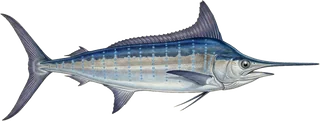
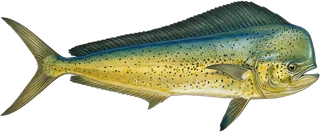
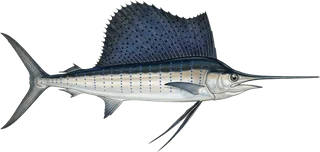
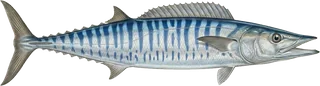
Anyone who catches yellowfin tuna can also fish for these species with similar tackle:
Sources
As of October 2026. The practical knowledge comes from 8 sources, summarised in our own words.
View all 8 sources
- Yellowfin Tuna (Species Profile) · North Carolina Department of Environmental Quality, Division of Marine Fisheries
- Hawaii Troll Fishery (MMPA List of Fisheries) · NOAA Fisheries
- Thunnus albacares – Yellowfin Tuna (Discover Fishes) · Florida Museum of Natural History, University of Florida
- Thunnus albacares, Yellowfin tuna (Species Summary) · FishBase
- Thunfisch angeln im Geschwindigkeitsrausch · Blinker (Redaktion)
- Köder beim Hochseeangeln: Erfolg auf hoher See · Blinker (Redaktion)
- Ethical Angling: Atlantic Highly Migratory Species Catch and Release (Careful Catch and Release Brochure) · NOAA Fisheries, Atlantic Highly Migratory Species Management Division
- Trolling for Artisanal Fishers (2nd Workshop on Development and Management of FAD Fishery) · Vanuatu Fisheries Department mit Japan International Cooperation Agency (JICA)
Text AI-assisted, based on the sources named and these pages: Yellowfin tuna (profile), Sea fishing, Offshore trolling lures, Releasing fish.