
Knowledge – Fish
Fishing for bleak
Fishing for bleak means: finding the shoal at the surface, holding it with fine feed and offering a tiny bait just below the surface. Here is the way there in nine steps, each with a link to the detailed page.
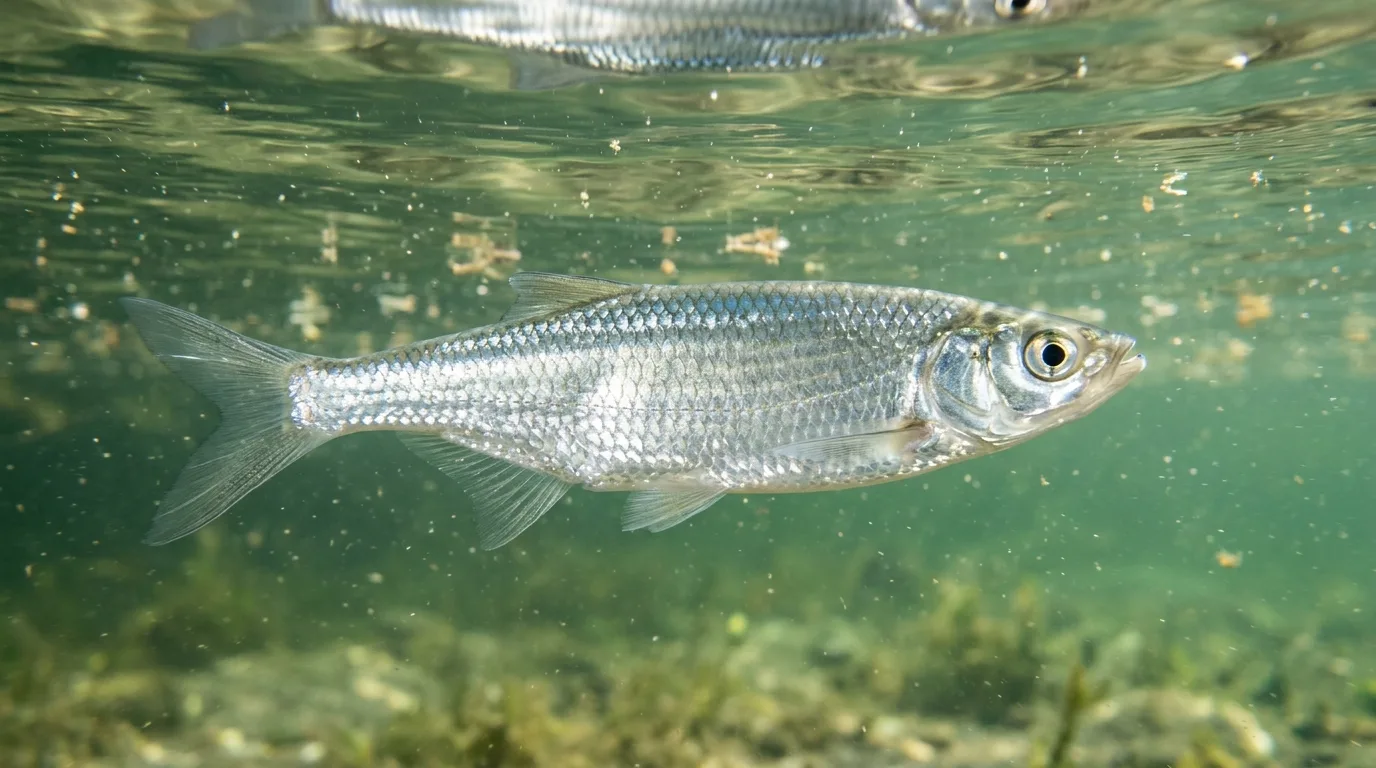
 Choose another fish117 fish with guides
 EelOff-peak season
 EelpoutPossible
 IdePossible
 ArapaimaGood
 GraylingPeak season
 Atlantic salmonSpawning time, please spare
 Brown troutSpawning time, please spare
 Brook troutSpawning time, please spare
 BarbelOff-peak season
 BarramundiSpawning season
 Greater amberjackGood
 Topmouth gudgeonOnly as bycatch
 Blue marlinSpawning season
 BonefishSpawning season
 BonitoGood
 BreamOff-peak season
 Dusky grouperOnly as bycatch
 CobiaPossible
 Spiny dogfishOnly as bycatch
 CodPeak season
 ChubPeak season
 MinnowOnly as bycatch
 European sturgeonOnly as bycatch
 FlounderPeak season
 PerchPeak season
 Largemouth bassGood
 Ballan wrasseOnly as bycatch
 Yellowfin tunaSpawning season
 Giant trevallyGood
 Prussian carpPossible
 BrillPossible
 Gilthead breamSpawning time, please spare
 Golden doradoSpawning season
 Golden mahseerOnly as bycatch
 Dolphinfish (mahi-mahi)Good
 Grass carpPossible
 Great barracudaGood
 GudgeonPossible
 White breamPossible
 DaceOff-peak season
 PikePeak season
 HalibutOff-peak season
 HerringPossible
 GarfishOut of season
 Huchen (Danube salmon)Possible
 Crucian carpOnly as bycatch
 CarpOff-peak season
 RuffeOff-peak season
 VendaceOnly as bycatch
 DabPeak season
 GurnardPossible
 Coley (saithe)Peak season
 Chinook salmonHardly any chance
 King mackerelSpawning season
 LingPeak season
 TuskOff-peak season
 MackerelPossible
 Bighead carpOut of season
 WhitefishPossible
 Conger eelOff-peak season
 Sea troutSpawning time, please spare
 Grey mulletPossible
 Murray codSpawning season
 MuskellungeGood
 Common nasePossible
 Nile perchPossible
 PayaraPossible
 Peacock bassPeak season
 PermitGood
 WeeverOnly as bycatch
 PollackOff-peak season
 BurbotOff-peak season
 AspPossible
 Red snapperSpawning season
 Rainbow troutPeak season
 RoosterfishGood
 RoachPeak season
 RedfishOut of season
 Bluefin tunaOnly as bycatch
 RuddPossible
 Russian sturgeonOnly as bycatch
 HaddockOff-peak season
 SnakeheadPossible
 TenchOff-peak season
 SpirlinOnly as bycatch
 PlaiceOff-peak season
 Greenland halibutOnly as bycatch
 Round gobyOnly as bycatch
 SwordfishGood
 Lake troutSpawning time, please spare
 HakeSpawning time, please spare
 Alpine charSpawning time, please spare
 MonkfishPossible
 SoleOff-peak season
 SailfishGood
 Silver carpOut of season
 SnookPeak season
 PumpkinseedOnly as bycatch
 SpratOnly as bycatch
 Atlantic wolffishSpawning time, please spare
 TurbotPeak season
 SterletOnly as bycatch
 SmeltOnly as bycatch
 Horse mackerelPossible
 TaimenGood
 TarponGood
 TigerfishSpawning season
- BleakPossible
 WahooGood
 Wels catfishOff-peak season
 WhitingPeak season
 Sea bassOff-peak season
 ZanderPeak season
 White-eye breamOnly as bycatch
 Blue breamOnly as bycatch
 Brown bullheadPossible
 VimbaOnly as bycatch
Season in October according to the catch calendar, an estimate and not a guarantee of a catch. The fish pictures are reduced natural-history plates and AI-generated.
Best time
From July to August, in the morning, during the day and at night.
In January: Hardly any chanceIn February: Hardly any chanceIn March: PossibleIn April: Good, spawning seasonIn May: Good, spawning seasonIn June: Good, spawning seasonIn July: Main seasonIn August: Main seasonIn September: GoodIn October: PossibleIn November: Hardly any chanceIn December: Hardly any chance
Good spot
- Lake: surface and open watersurface and open watersurface and open waterdeep bottom
- River: main current and rifflemain currentmain currentquiet bay
Top baits
Starter tackle
- Rod: pole without a reel, length depending on the distance of the shoal
- Line: thin monofilament with a fine hooklength
- Hook: 16–22, up to 24 for ultra-fine pole fishing, light and fine-wire
- Rod: light fly rod
- Line: floating fly line with a fine leader
- Hook: very small dry flies
In short
In short: the best time to catch bleak is from July to August, in the morning, during the day and at night. Good spots on the lake: surface and open water; on the river: main current. Proven baits: a single maggot or pinkie on a shallow-set pole rig, a small bread flake or a tiny dry fly. Use bleak as baitfish only when dead: many federal states (Bundesländer) expressly forbid live baitfish. Catching and using baitfish is governed by state law and the water rules.
Quick to recognise
A slim, silvery shoaling fish, also called Laube in German, with a steeply upturned mouth and very loosely attached scales. It is usually 10 to 20 centimetres long, rarely 25.
When
July and August are the best months; April to June and September are also good. When the water cools, bites become rarer. From April to June it spawns in the shallow shore zone.
- JanHardly any chance
- FebHardly any chance
- MarPossible
- AprGood, spawning
- MayGood, spawning
- JunGood, spawning
- JulPeak season
- AugPeak season
- SepGood
- OctPossible
- NovHardly any chance
- DecHardly any chance
Peak seasonGoodPossibleHardly any chanceSpawning season
Spring tactics
From April the shoals at the surface become more active. Until June they spawn in shallow water over gravel and stones. Whether restrictions apply in this period is governed by the rules of your federal state (Bundesland).
Summer tactics
July and August bring the most fish. On clear, sunny days they stand right at the top; a shallow-set float and regular feeding keep them in place.
Autumn tactics
In September bleak still bite reliably. In cloudy or cooler weather you set the float deeper, down to mid-water.
Winter tactics
The shoals retreat to calm, deeper areas and hardly feed. If at all, they then follow the bait down to the bottom.
Is it biting today?
In January: Out of seasonIn February: Out of seasonIn March: PossibleIn April: Spawning season, please spare the fishIn May: Spawning season, please spare the fishIn June: Spawning season, please spare the fishIn July: Main seasonIn August: Main seasonIn September: Off-peak seasonIn October: PossibleIn November: Out of seasonIn December: Out of season
Today’s catch index needs JavaScript. Season and spawning time are in the catch calendar.
Where it is now
In the lake
On a lake the shoal stands just below the surface, in open water as well as near the bank. On windless days many small rings give it away; in winter it moves deeper or to sheltered spots.
How to go about it: On a lake the shoals stand in open water near the surface, often not far from the bank. Put in a cloud of feed and fish shallow, a little deeper on dull days.
| Spring | surface, open water |
|---|---|
| Summer | surface, open water |
| Autumn | surface, open water |
| Winter | deep bottom |
In the river
On a river you look for it in slow-flowing, medium to large waters near the surface, usually not far from the bank. In winter the shoals move into oxbow lakes and other quiet zones.
How to go about it: On a river the shoals stand in the free current just below the surface from spring to autumn, and in quiet bays in winter. On canals the stretches near a river mouth are especially worthwhile. In the current the float carries a little more than in still water so that it stays upright.
| Spring | main current, riffle |
|---|---|
| Summer | Main current |
| Autumn | Main current |
| Winter | calm bay |
Bite time: in the morning, during the day and at night. What this looks like at the water is shown by the picture of the fishing spots just below.
Holding spots in the picture
Choose the season and time of day: the picture shows where the species stands then. Spots outlined in red apply only in the chosen season. Tap a fish or a spot in the list to bring it closer. The picture is schematic and AI-generated, every water is different.
Chance of a catch in springgoodSpawning, observe the closed seasons
Catch chance in summerPeak season
Catch chance in autumnpossible
Catch chance in winterhardly any
- J
- F
- M
- A
- M
- J
- J
- A
- S
- O
- N
- D
Spawning season
Active time In lakes the bleak feeds most strongly in the first half of the day and takes windblown insects from the surface at night; in summer the shoal moves from the bank into open water for the night.
Active time In lakes the bleak feeds most strongly in the first half of the day and takes windblown insects from the surface at night; in summer the shoal moves from the bank into open water for the night.
No main time In lakes the bleak feeds most strongly in the first half of the day and takes windblown insects from the surface at night; in summer the shoal moves from the bank into open water for the night.
Active time In lakes the bleak feeds most strongly in the first half of the day and takes windblown insects from the surface at night; in summer the shoal moves from the bank into open water for the night.
In the lake
Deep bottom
Bleak are found here only in winter.
Open water
Bleak are found here only in spring, summer and autumn.
Just below the surface
Bleak are found here only in spring, summer and autumn.
Bleak live in shoals just below the surface, in open water as well as near the bank. There they take plankton and insects that fall on the water.
Spring: catch chances according to the fishing calendar possible in March, good in April and May. This is spawning time, so observe the closed seasons (Schonzeit). From April to June they spawn in the shallow shore zone, on stones, roots and water plants.
Summer: catch chance according to the catch calendar is good in June and peak season in July and August.
Autumn: catch chance according to the catch calendar good in September, possible in October, hardly any in November.
Winter: catch chances according to the fishing calendar hardly any. In winter the bleak retreats to deeper areas or to well-sheltered spots.
In the river
Gravelly shallow (riffle)
Bleak are found here only in spring.
Calm bay with aquatic plants
Bleak are found here only in winter.
Free current in mid-river
Bleak are found here only in spring, summer and autumn.
In rivers the bleak inhabits the open water of slow-flowing, medium to large rivers of the barbel and bream zones. The shoals stand near the surface in open water, often close to the bank, and prefer calm spots.
Spring: catch chances according to the fishing calendar possible in March, good in April and May. This is spawning time, so observe the closed seasons (Schonzeit). During the spawning period from April to June the fish look for shallow spots with flowing water over them.
Summer: catch chance according to the catch calendar is good in June and peak season in July and August.
Autumn: catch chance according to the catch calendar good in September, possible in October, hardly any in November.
Winter: catch chances according to the fishing calendar hardly any. In winter bleak form large gatherings in oxbow lakes and other calm areas.
Size comparison: AI-generated drawing, schematic.
How
With a pole or a very light float set so shallow that the bait hangs just below the surface. With a fly rod you catch it on small dry flies.
Easiest way
To start, a pole with a short, light float of 0,1 to 1,5 g and a fine-wire hook in size 16 to 20 is enough. On a sunny day set the float only 30 to 50 cm deep and offer a maggot. Find a quiet spot on the bank of a lake, a river or a canal connected to a river, where the shoal stands at the top.
Shallow pole fishing with a cloud of feed
The usual method for bleak when the shoal feeds near the bank just below the surface.
- Open water
Bleak avoid dense plants and stand in open water in front of the bank. On canals the stretches near a river mouth are especially worthwhile.
- Wet cloud
Mix a very wet groundbait with maggots and a little hemp and feed small amounts regularly. The fine particles form a cloud at the top in which the fish feed confidently.
- Short and compact
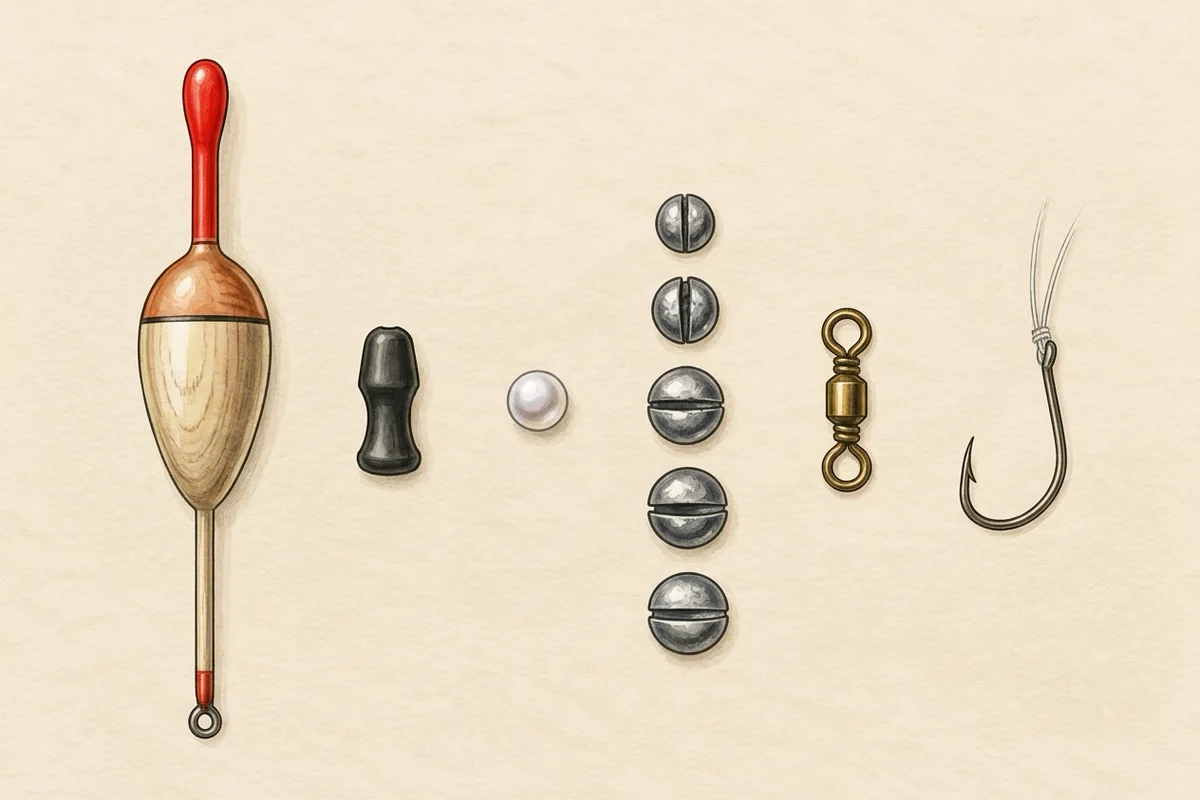
Take a very short float that stands up at once, and bunch all the micro shot in one place, for example above the loop connection to the hooklength.
- Set it shallow
In clear, sunny weather a depth of 30 to 50 cm is enough. When it is dull, you look for the fish in mid-water too; in winter they sometimes follow the bait down to the bottom.
- One maggot
A single maggot on a light, long-shank hook is enough. In very fine pole fishing some anglers go down to size 24.
- On the drop
Bleak often take the bait while it is still sinking. If the float does not settle or goes under, strike at once.
- Without delay
Swing the small fish to you and unhook it with wet fingers. The scales come off very easily, so handle it as briefly as possible.
Dry fly for rising bleak
For calm summer days, when the shoals take insects from the surface and give themselves away with many small rings.
- Find the rings
On windless days look for many small rings in open water in front of the bank.
- Small fly
Tie a small, well-floating dry fly to a fine leader. The bleak’s mouth is tiny.
- Into the shoal
Place the fly gently between the rings and leave it without moving it.
- Lightning fast
The fish takes the fly only briefly. Lift the rod at the moment the ring appears.
- Unhook quickly
Draw the fish across the water to you and remove the hook without delay so that it loses as few scales as possible.
What with
A single maggot or a tiny piece of bread flake on the smallest hook. A little fine feed that forms a cloud at the top keeps the shoal in place. Strike quickly, because the fish takes the bait only briefly.
- Maggots & larvaeall year round, as a single maggot
The maggot is tough, gives quick bites one after another and belongs in the feed as well.
- Breadon calm days in summer
A small piece of white bread sinks slowly and meets the fish on the way down when they are standing at the top.
- Dry flyfor rising fish on windless days
Bleak like to feed on windblown insects and then take a small dry fly very readily.
Tackle
A pole with a fine rig is quite enough; for the dry fly take a fly rod.
Shallow pole fishing with a cloud of feed
- Rod
- Pole without a reel, length depending on the distance of the shoal
- Line
- thin monofilament with a fine hooklength
- Leader
- short: about 7 cm when the bites are good, around 15 cm when they are hesitant
- Hooks
- 16–22, up to 24 for ultra-fine pole fishing, light and fine-wire
- Weight, float, lead
- short float of 0,1–1,5 g depending on depth, current and rod length; micro shot bunched compactly
Common mistakes
- Float set too deep: In sunshine the shoals stand right at the top. Start at 30 to 50 cm and go deeper only in dull weather.
- Shot spread along the hooklength: Then the float stands up too slowly and bites on the drop are lost. Bunch all the shot in one place.
- Always the same hooklength: With quick bites a very short hooklength is enough; if the fish hesitate, lengthen it to around 15 cm.
- Irregular feeding: Without a steady supply the shoal moves on. Feed small portions at short intervals and try out how much feed gives the most hooked fish.
- Heavy-wire hook: A heavy hook is noticed by the small fish and makes delicate baits wash out. Take a light, fine-wire model.
Rules
For the bleak our overview of the states has no figures for the minimum size (Mindestmaß) or the closed season (Schonzeit). That does not mean there are no rules: individual states and water rules protect the species or set their own limits.
What applies in your country is on the country pages under Fishing waters in Germany.
The regulation and your fishing permit (Erlaubnisschein) are what count. Lake Constance, the Rhine and the coast, for example, have their own rules: Fishing waters in Germany.
After the catch
Playing and landing
There is hardly any fight with a bleak: strike quickly and swing the fish straight to you. Remove the hook with wet fingers or a disgorger without squeezing the fish, and if you may not keep it, put it straight back into the water.
Because the scales hardly hold, you touch fish to be released only with wet hands and unhook them promptly in the water. The flesh is considered tasty; a fish you take home you stun and kill immediately.
Frequently asked questions
Which hook size for bleak?
Sizes 16 to 22 are usual, and 24 for very fine pole fishing. The hook should be light and fine-wire.
How deep should you set the float for bleak?
On clear, sunny days 30 to 50 cm. In dull weather also in mid-water, in winter occasionally down to the bottom.
Which float for fishing bleak?
A very short float with a capacity of 0,1 to 1,5 g, depending on depth, current and rod length. The shot sit close together so that the float settles quickly.
How do you feed bleak?
With very wet groundbait, maggots and a little hemp in small, frequent portions. The cloud near the surface keeps the shoal in front of you.
Why does the bleak lose so many scales?
Its scales are very loose. So handle it only with wet hands and as briefly as possible.
Similar species
If you catch bleak, you can fish for these species too with similar tackle:
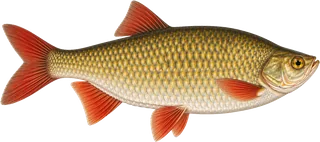 Fishing for ruddPossible
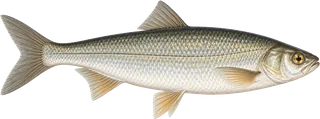 Dace fishingShoulder season
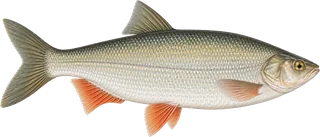 Ide fishingPossible
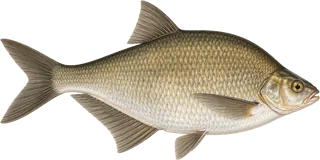 Fishing for breamShoulder season
Sources
As of October 2026. The practical knowledge comes from 4 sources, summarised in our own words.
See all 4 sources
- Lauben-Montage · BLINKER (Redaktion)
- Stippangeln: Die Sache mit den Angelhaken · BLINKER (Thomas Pruß)
- Bleak · Canal & River Trust (Fisheries & Angling Team)
- Rotfeder mit der Fliege: Sommer-Highlight · BLINKER (Florian Pippardt)
Text written with AI support, based on the sources named and these pages: Bleak (profile), Pole fishing, Fly fishing, Dry fly, Bread.