
Knowledge – Fish
Fishing for redfish
Fishing for redfish means: taking a natural bait down to great depth from a boat with heavy tackle, and first finding out whether you are allowed to catch it there at the moment. Here is the way there in nine steps, each with a link to the detailed page.
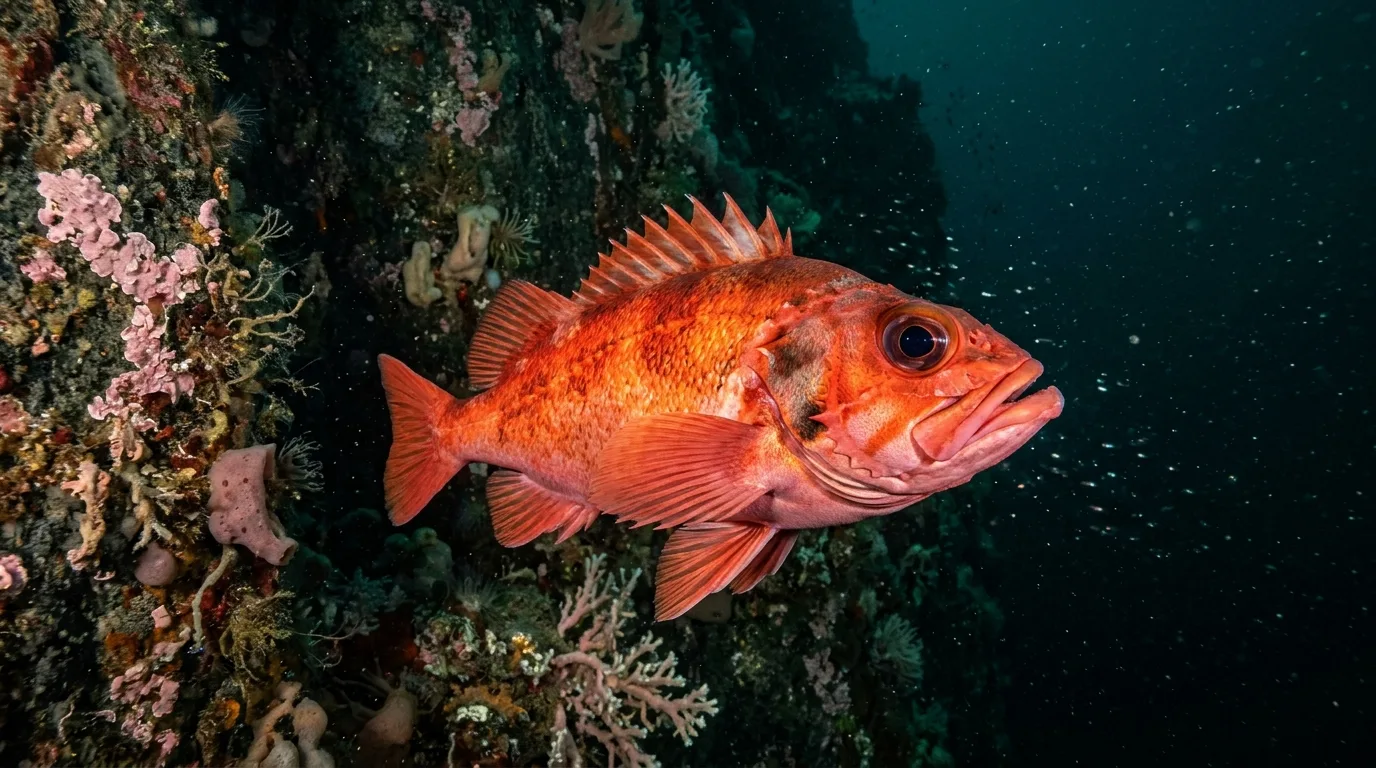
 Choose another fish117 fish with guides
 EelOff-peak season
 EelpoutPossible
 IdePossible
 ArapaimaGood
 GraylingPeak season
 Atlantic salmonSpawning time, please spare
 Brown troutSpawning time, please spare
 Brook troutSpawning time, please spare
 BarbelOff-peak season
 BarramundiSpawning season
 Greater amberjackGood
 Topmouth gudgeonOnly as bycatch
 Blue marlinSpawning season
 BonefishSpawning season
 BonitoGood
 BreamOff-peak season
 Dusky grouperOnly as bycatch
 CobiaPossible
 Spiny dogfishOnly as bycatch
 CodPeak season
 ChubPeak season
 MinnowOnly as bycatch
 European sturgeonOnly as bycatch
 FlounderPeak season
 PerchPeak season
 Largemouth bassGood
 Ballan wrasseOnly as bycatch
 Yellowfin tunaSpawning season
 Giant trevallyGood
 Prussian carpPossible
 BrillPossible
 Gilthead breamSpawning time, please spare
 Golden doradoSpawning season
 Golden mahseerOnly as bycatch
 Dolphinfish (mahi-mahi)Good
 Grass carpPossible
 Great barracudaGood
 GudgeonPossible
 White breamPossible
 DaceOff-peak season
 PikePeak season
 HalibutOff-peak season
 HerringPossible
 GarfishOut of season
 Huchen (Danube salmon)Possible
 Crucian carpOnly as bycatch
 CarpOff-peak season
 RuffeOff-peak season
 VendaceOnly as bycatch
 DabPeak season
 GurnardPossible
 Coley (saithe)Peak season
 Chinook salmonHardly any chance
 King mackerelSpawning season
 LingPeak season
 TuskOff-peak season
 MackerelPossible
 Bighead carpOut of season
 WhitefishPossible
 Conger eelOff-peak season
 Sea troutSpawning time, please spare
 Grey mulletPossible
 Murray codSpawning season
 MuskellungeGood
 Common nasePossible
 Nile perchPossible
 PayaraPossible
 Peacock bassPeak season
 PermitGood
 WeeverOnly as bycatch
 PollackOff-peak season
 BurbotOff-peak season
 AspPossible
 Red snapperSpawning season
 Rainbow troutPeak season
 RoosterfishGood
 RoachPeak season
- RedfishOut of season
 Bluefin tunaOnly as bycatch
 RuddPossible
 Russian sturgeonOnly as bycatch
 HaddockOff-peak season
 SnakeheadPossible
 TenchOff-peak season
 SpirlinOnly as bycatch
 PlaiceOff-peak season
 Greenland halibutOnly as bycatch
 Round gobyOnly as bycatch
 SwordfishGood
 Lake troutSpawning time, please spare
 HakeSpawning time, please spare
 Alpine charSpawning time, please spare
 MonkfishPossible
 SoleOff-peak season
 SailfishGood
 Silver carpOut of season
 SnookPeak season
 PumpkinseedOnly as bycatch
 SpratOnly as bycatch
 Atlantic wolffishSpawning time, please spare
 TurbotPeak season
 SterletOnly as bycatch
 SmeltOnly as bycatch
 Horse mackerelPossible
 TaimenGood
 TarponGood
 TigerfishSpawning season
 BleakPossible
 WahooGood
 Wels catfishOff-peak season
 WhitingPeak season
 Sea bassOff-peak season
 ZanderPeak season
 White-eye breamOnly as bycatch
 Blue breamOnly as bycatch
 Brown bullheadPossible
 VimbaOnly as bycatch
Season in October according to the catch calendar, an estimate and not a guarantee of a catch. The fish pictures are reduced natural-history plates and AI-generated.
Best time
From June to August, mainly in the evening and at night.
In January: Slim chancesIn February: Slim chancesIn March: Slim chancesIn April: Slim chances, spawning seasonIn May: Slim chances, spawning seasonIn June: Possible, spawning seasonIn July: PossibleIn August: PossibleIn September: Slim chancesIn October: Slim chancesIn November: Slim chancesIn December: Slim chances
Good spot
- Coast: deep waterdeep waterdeep waterdeep water
Starter tackle
- Rod: boat rod around 2 m, test curve 20–30 lb; with weights up to 1000 g a strong boat rod up to 50 lb or more
- Line: braid 0,20–0,30 mm (about 25–40 lb breaking strain), preferably changing colour every 10 m
- Hook: circle hook from 2/0, usually 3/0–6/0; for half or whole baitfish 6/0 on a two-hook rig
In short
In short: You catch redfish best from June to August, mainly in the evening and at night. Good spots on the coast: deep water. Proven baits: small fish strips on a paternoster in deep water. Deep-sea fish, grows very slowly. In Norway north of Stad (62° N) only allowed from 1 June to 31 August with the jukse (as of October 2026), and listed on the Red List as endangered.
Quick to recognise
A golden-red deep-water fish of the North Atlantic with strong spines, also called golden redfish. Around 45 centimetres is typical; it rarely grows beyond 60 centimetres. It grows very slowly and only matures at 10 to 12 years.
When
The redfish has no season in the true sense, it stays in the deep all year round; in northern Norway, however, you may only catch it between 1 June and 31 August. It gives birth to live young: mating is in autumn, the larvae arrive in spring, depending on the source in April and May or into June. North of Stad (62° N) this exception applies only to fishing with the jukse (as of October 2026); ask before the trip whether your rig counts.
- JanHardly any chance
- FebHardly any chance
- MarHardly any chance
- AprHardly any chance, spawning season
- MaySlim chances, spawning season
- JunPossible, spawning season
- JulPossible
- AugPossible
- SepHardly any chance
- OctHardly any chance
- NovHardly any chance
- DecHardly any chance
Peak seasonGoodPossibleHardly any chanceSpawning season
Spring tactics
In spring the females release their larvae. In large parts of Norway targeted fishing for redfish is not allowed at this time; check the current rule before the trip.
Summer tactics
North of Stad (62° N) you may only catch it from 1 June to 31 August, and even then only with the jukse (as of October 2026). Then take only a few fish, because the redfish grows very slowly and a weakened stock needs decades.
Autumn tactics
The redfish stays in the deep and can still be caught, but north of Stad catching it is banned from September. The Fiskeridirektoratet names no exception for accidental catches for recreational anglers, so when fishing for ling or tusk avoid the depths where redfish sit.
Winter tactics
In winter too it sits deep and in Norway targeted fishing is mostly closed. On top of that there are often wind and strong drift, in which you can hardly hold the right depth.
Is it biting today?
In January: Out of seasonIn February: Out of seasonIn March: Out of seasonIn April: Spawning season, please spare themIn May: Spawning season, please spare themIn June: Spawning season, please spare themIn July: PossibleIn August: PossibleIn September: Out of seasonIn October: Out of seasonIn November: Out of seasonIn December: Out of season
Today’s catch index needs JavaScript. Season and spawning time are in the catch calendar.
Where it is now
On the coast
The redfish stands in a shoal in deep water, on the continental slope, along the coast and in places in fjords, mostly between 100 and 500 metres. By day the shoals stay close to the bottom, at night they leave it. You often catch it in the same spots as ling and tusk.
How to go about it: In fjord Norway, for example in the Hjeltefjord and the Sognefjord, redfish sit on slopes that fall away in terraces and below 100 m. Large fish occur mainly off the Vesterålen, off Sørøya and in the Øksfjord. Calm days suit fishing; the biting phase often begins around low water with the rising tide.
| All year round | deep water |
|---|
Biting time: mainly in the evening and at night. What that looks like in the water is shown by the picture of the holding spots just below.
Holding spots in the picture
Choose a season and time of day: the picture shows where the species sits then. Tap a fish or a spot in the list to bring it closer. The picture is schematic and AI-generated, every water is different.
Catch chances in springhardly anyspawning season, observe the closed seasons (Schonzeit)
Catch chances in summerpossible
Catch chance in autumnhardly any
Catch chance in winterhardly any
- J
- F
- M
- A
- M
- J
- J
- A
- S
- O
- N
- D
Spawning season
No main time By day the shoals stay near the seabed, at night they leave it; for redfish of the genus Sebastes in the north-west Atlantic it is described that they rise into open water to feed around sunset and return to the bottom at dawn.
No main time By day the shoals stay near the seabed, at night they leave it; for redfish of the genus Sebastes in the north-west Atlantic it is described that they rise into open water to feed around sunset and return to the bottom at dawn.
Active time By day the shoals stay near the seabed, at night they leave it; for redfish of the genus Sebastes in the north-west Atlantic it is described that they rise into open water to feed around sunset and return to the bottom at dawn.
Active time By day the shoals stay near the seabed, at night they leave it; for redfish of the genus Sebastes in the north-west Atlantic it is described that they rise into open water to feed around sunset and return to the bottom at dawn.
On the coast
Deep, colder water
Redfish are present here all year round.
The redfish stands in shoals near the bottom in deep water: on the shelf, along the coast and in places in the fjords. By day the shoals stay near the seabed. Juveniles live close to the coast in fjords and bays.
Spring: catch chance according to the catch calendar slim. The spawning season falls in this period, so observe closed seasons (Schonzeit). From April to June the females release their larvae. In spring they eat capelin, herring and krill.
Summer: catch chance according to the catch calendar possible. In summer the redfish feeds mainly on krill.
Autumn: catch chance according to the catch calendar slim. Mating takes place in autumn. Herring are now the main food.
Winter: catch chance according to the catch calendar slim. Herring are also the main food in winter.
Depth: The redfish lives near the bottom at 100 to 500 metres depth, occasionally down to 1000 metres. In fjords it is caught on terraces between 100 and 170 metres.
Size comparison: AI-generated drawing, schematic.
How
You fish from the boat with heavy natural baits at depths from 100 metres to over 300 metres. A redfish paternoster is usual, that is a rig with several side arms one above the other.
Easiest way
First ask locally whether targeted fishing for redfish is currently allowed. Then, on a calm day, head for a steep edge at 120 to 250 m depth and lower a ready-made redfish rig with three side arms, small strips of fish and a heavy weight. A boat rod of the 20 to 30 lb class with a multiplier reel is enough for this.
Paternoster in deep water
From the boat at deep edges and underwater mountains when there is little wind and drift.
- Edges in deep water
Look on the sea chart for steep edges at underwater mountains and plateaus, or deep underwater bays. A good redfish spot often produces fish for years, because the shoals stay faithful to their places.
- Three side arms
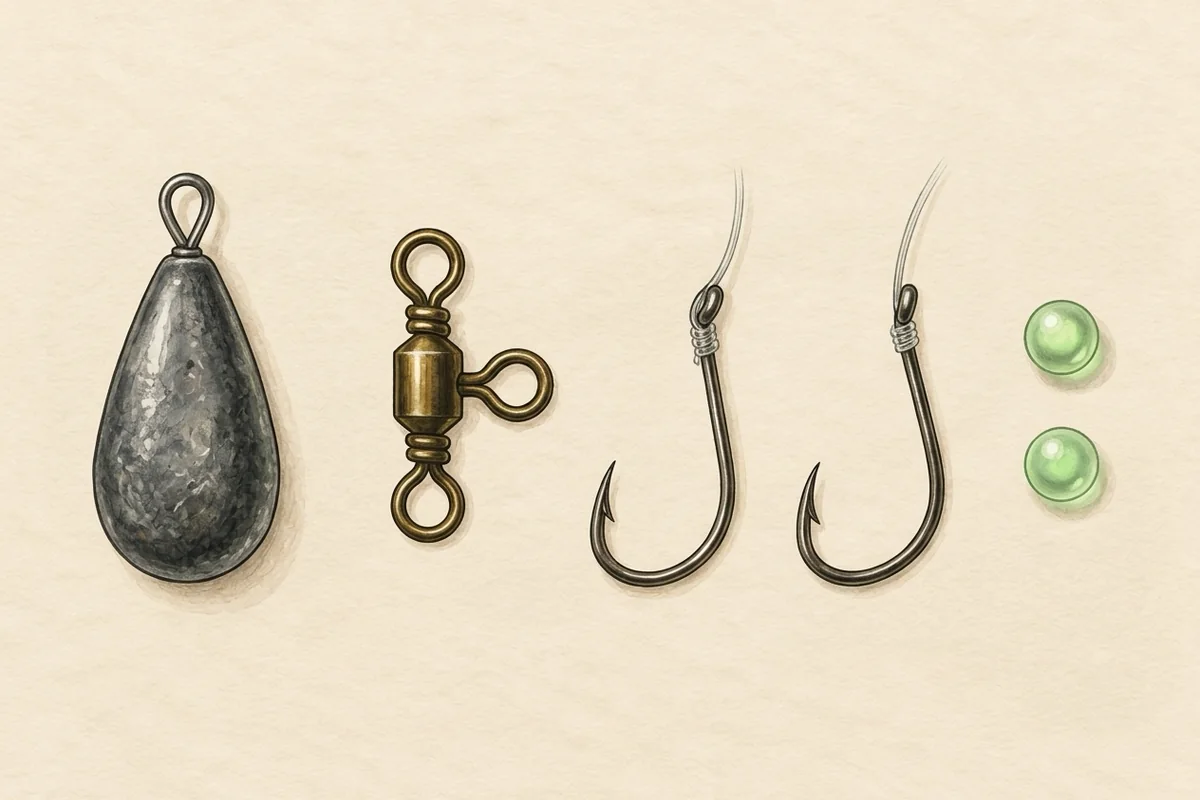
A paternoster made of thick monofilament, about 3 m long, carries three doubled side arms with circle hooks, preferably with a piece of luminous tubing or a small luminous octopus in front. A heavy weight hangs at the bottom.
- Small fish strips
Cut herring or mackerel into strips a few centimetres long and pierce them several times. Secure deep-sea prawns with elastic bait thread. Tough belly flaps of coley or pollack last especially long.
- Lower and lift
Let the rig sink to the bottom and immediately wind in about 10 m of line. That way small tusk and spurdog on the bottom do not reach the baits so easily.
- Search in steps
Wait a few minutes, then wind the rig up another 10 m very slowly and wait again. Redfish often sit well above the bottom. With colour-changing line you remember the depth at which it plucks.
- Wait for the plucks
A bite shows as energetic jerking in the rod tip. With circle hooks you do not strike: stop, let the fish hook itself as it swims off, and then wind steadily.
- Slowly up
The way up is long. Wind steadily and without haste, because anyone who reels in too fast loses many fish just below the surface.
- Grip with a glove
Lift the fish into the boat on the line or take a landing net, and handle it only with sturdy gloves. A foam pad on the rail helps with unhooking without the side arms tangling.
What with
Whole baitfish or fish strips, for example of mackerel or herring, go on the side arms. The hooks are quite large at 3/0 to 5/0, and the weight is 500 to 1000 grams so that the bait gets down at all.
- Cut baitall year round, standard bait on the paternoster
Strips of herring and mackerel spread a lot of scent in the dark depths and stay well on the circle hook.
- Crustaceans & musselsas an alternative or alternating with strips
Deep-sea prawns are part of the redfish’s natural prey and are easy to get locally in Norway.
- Sea paternosteron every deep-water session
Several side arms one above the other cover a wide depth range, because the shoals often sit well above the bottom.
Tackle
For these depths you need a boat rod of 30 to 50 lb and a robust multiplier reel that holds at least 500 metres of braid. Sturdy angling gloves belong with it, because the gill covers and dorsal fin carry hard, sharp spines and rays.
Paternoster in deep water
- Rod
- Boat rod around 2 m, test curve 20–30 lb; with weights up to 1000 g a strong boat rod up to 50 lb or more
- Reel
- Multiplier reel with about 400 m of braid; from roughly 150–200 m depth an electric multiplier reel makes the work easier
- Line
- Braid 0,20–0,30 mm (about 25–40 lb breaking strain), preferably changing colour every 10 m
- Leader
- Paternoster of monofilament from 0,80 mm, about 3 m long with three side arms; ready-made rigs have hooklengths spaced 60–80 cm apart
- Hooks
- Circle hook from 2/0, usually 3/0–6/0; for half or whole baitfish 6/0 on a two-hook rig
- Weight, float, lead
- Weight 300–1000 g, depending on depth and drift
Common mistakes
- Hooks too small: A redfish has a big mouth. Use hooks from 2/0, ideally circle hooks, with which fewer fish pull free on the long way up.
- Reeled in too fast: An electric multiplier reel in particular tempts you into high speed. Wind in steadily and slowly, otherwise the hooks pull out.
- Baits lying on the bottom: Right on the bottom tusk and small sharks clear the hooks. After touching bottom lift the rig by about 10 m and then search upwards.
- Fishing in strong drift: If the boat drifts too fast, you miss the depth and lose more fish. Pick calm days; a drogue helps against wind, not against current.
- Caught more than needed: A redfish from great depth usually does not survive being returned. Stop as soon as the amount is enough for the kitchen.
Rules
Our country overview gives no figures for minimum size (Mindestmaß) or closed season (Schonzeit) for the redfish. That does not mean there are no rules: individual countries and water regulations protect the species or set their own limits.
On the coast the rules of the coastal states apply, partly with their own catch restrictions: North Sea coast, Baltic coast of Schleswig-Holstein and Baltic coast of Mecklenburg-Western Pomerania.
The regulation and your fishing permit (Erlaubnisschein) are what count. Lake Constance, the Rhine and the coast, for example, have their own rules: Fishing waters in Germany.
After the catch
Playing and landing
Do not strike with a circle hook; start winding steadily as soon as the pull is clear, and bring the fish up without haste. On board you handle it only with sturdy gloves, because spines and fin rays sting. Because a redfish from the deep usually does not survive being returned, you kill a fish you may keep straight away and stop fishing if it is protected or you have enough.
If you bring a redfish up from 100 to 300 metres, it dies even after being returned, so every hooked fish counts as taken. If it is protected, you do not target it; otherwise you stop as soon as the amount is enough for your kitchen. A fish you may keep you stun and kill straight away; when scaling and filleting, a filleting glove protects against the spines.
Frequently asked questions
At what depth do you catch redfish?
120 to 250 m is usual; large redfish mostly sit below 100 m. On terrace-like slopes in fjords they also bite between 100 and 170 m.
What is the best bait for redfish?
Strips of herring or mackerel and deep-sea prawns are considered the most effective baits. Pilkers catch too, but less reliably than natural baits.
What hook size for redfish?
Hooks from 2/0, usually 3/0 to 6/0, ideally circle hooks. For half or whole baitfish aimed at big specimens 6/0 is fine.
Can you return a redfish?
Usually not. On the way up the swim bladder expands so much that fish from 100 m and deeper generally do not survive being returned. So every hooked redfish practically counts as taken.
Is the redfish poisonous?
That is disputed. The Norwegian health guide NHI names stings from the redfish as a possible cause of similar complaints to those from a weever fish. What is certain: the spines of the dorsal fin and the thorns on the gill cover are hard and sharp, a sting hurts and can swell noticeably. So handle it only with sturdy gloves and see a doctor if complaints persist.
How do you tell redfish from lesser redfish?
The lesser redfish stays under about 35 cm and has two to four dark spots on its sides. It lives closer to the coast at 50 to 300 m, the large redfish mostly deeper.
Similar species
If you catch redfish, you can fish for these species with similar tackle too:
 Cod fishingPeak season
 Flounder fishingMain season
 Fishing for garfishOut of season
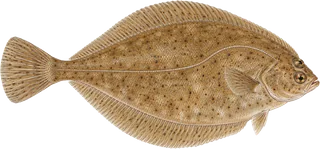 Dab fishingPeak season
Sources
As of October 2026. The practical knowledge comes from 11 sources, summarised in our own words.
See all 11 sources
- Angeln auf Rotbarsch: 3 Einsteigertipps vom Meeresexperten · BLINKER (Rainer Korn)
- Rotbarsch: Infos und Angeltipps zu diesem Meeresfisch · BLINKER (Jannik Westerkamp)
- Angelmontage für Norwegen: Einfach selber bauen! · BLINKER (Johannes Müller)
- Tiefseeangeln: Ab in die Tiefe · RUTE & ROLLE (Jesco Peschutter)
- Gerätetipps für Norwegen · RUTE & ROLLE (Timo Keibel)
- Angelausrüstung für Norwegen: Dieses Gerät brauchst du! · BLINKER (Mathias Arnham mit Erik Axner)
- Norwegen: Angeln im Fjord – Technik, Taktik und Traumreviere · BLINKER (Joshua Zettelmeier u. a.)
- Barotrauma bei Fischen: Wie tief darf ich angeln? · BLINKER (Frank Schlichting)
- Uerfamilien · Havforskningsinstituttet
- Freda og delvis freda artar · Fiskeridirektoratet
- Stikk av fjesing eller dvergfjesing · Norsk Helseinformatikk (NHI)
Text AI-assisted, based on the sources listed and these pages: Redfish (profile), Sea fishing, Fish strips, Sea rod.