
Knowledge – Fish
Conger fishing
To go conger fishing means: at night, offer a strong fish bait on the bottom at rocks, breakwaters or wrecks, and haul the conger out of its hideout straight after the bite. Here is the way there in nine steps, each with a link to the detailed page.
 Choose another fish117 fish with guides
 EelOff-peak season
 EelpoutPossible
 IdePossible
 ArapaimaGood
 GraylingPeak season
 Atlantic salmonSpawning time, please spare
 Brown troutSpawning time, please spare
 Brook troutSpawning time, please spare
 BarbelOff-peak season
 BarramundiSpawning season
 Greater amberjackGood
 Topmouth gudgeonOnly as bycatch
 Blue marlinSpawning season
 BonefishSpawning season
 BonitoGood
 BreamOff-peak season
 Dusky grouperOnly as bycatch
 CobiaPossible
 Spiny dogfishOnly as bycatch
 CodPeak season
 ChubPeak season
 MinnowOnly as bycatch
 European sturgeonOnly as bycatch
 FlounderPeak season
 PerchPeak season
 Largemouth bassGood
 Ballan wrasseOnly as bycatch
 Yellowfin tunaSpawning season
 Giant trevallyGood
 Prussian carpPossible
 BrillPossible
 Gilthead breamSpawning time, please spare
 Golden doradoSpawning season
 Golden mahseerOnly as bycatch
 Dolphinfish (mahi-mahi)Good
 Grass carpPossible
 Great barracudaGood
 GudgeonPossible
 White breamPossible
 DaceOff-peak season
 PikePeak season
 HalibutOff-peak season
 HerringPossible
 GarfishOut of season
 Huchen (Danube salmon)Possible
 Crucian carpOnly as bycatch
 CarpOff-peak season
 RuffeOff-peak season
 VendaceOnly as bycatch
 DabPeak season
 GurnardPossible
 Coley (saithe)Peak season
 Chinook salmonHardly any chance
 King mackerelSpawning season
 LingPeak season
 TuskOff-peak season
 MackerelPossible
 Bighead carpOut of season
 WhitefishPossible
- Conger eelOff-peak season
 Sea troutSpawning time, please spare
 Grey mulletPossible
 Murray codSpawning season
 MuskellungeGood
 Common nasePossible
 Nile perchPossible
 PayaraPossible
 Peacock bassPeak season
 PermitGood
 WeeverOnly as bycatch
 PollackOff-peak season
 BurbotOff-peak season
 AspPossible
 Red snapperSpawning season
 Rainbow troutPeak season
 RoosterfishGood
 RoachPeak season
 RedfishOut of season
 Bluefin tunaOnly as bycatch
 RuddPossible
 Russian sturgeonOnly as bycatch
 HaddockOff-peak season
 SnakeheadPossible
 TenchOff-peak season
 SpirlinOnly as bycatch
 PlaiceOff-peak season
 Greenland halibutOnly as bycatch
 Round gobyOnly as bycatch
 SwordfishGood
 Lake troutSpawning time, please spare
 HakeSpawning time, please spare
 Alpine charSpawning time, please spare
 MonkfishPossible
 SoleOff-peak season
 SailfishGood
 Silver carpOut of season
 SnookPeak season
 PumpkinseedOnly as bycatch
 SpratOnly as bycatch
 Atlantic wolffishSpawning time, please spare
 TurbotPeak season
 SterletOnly as bycatch
 SmeltOnly as bycatch
 Horse mackerelPossible
 TaimenGood
 TarponGood
 TigerfishSpawning season
 BleakPossible
 WahooGood
 Wels catfishOff-peak season
 WhitingPeak season
 Sea bassOff-peak season
 ZanderPeak season
 White-eye breamOnly as bycatch
 Blue breamOnly as bycatch
 Brown bullheadPossible
 VimbaOnly as bycatch
Season in October according to the catch calendar, an estimate and not a guarantee of a catch. The fish pictures are reduced natural-history plates and AI-generated.
Best time
From June to October, mostly in the evening and at night.
In January: Slim chancesIn February: Slim chancesIn March: Slim chancesIn April: PossibleIn May: PossibleIn June: Good, spawning seasonIn July: Good, spawning seasonIn August: Good, spawning seasonIn September: GoodIn October: GoodIn November: PossibleIn December: Slim chances
Good spot
- Coast: wreck, reef, stony mixed ground and deep waterwreck, reef, stony mixed ground and deep waterwreck, reef, stony mixed ground and deep waterwreck, reef, stony mixed ground and deep water
Starter tackle
- Rod: beachcaster of 3,6–4 m for weights of 170–225 g; at rock marks in South Wales one for 140–170 g
- Line: monofilament of about 40 lb, braid of 50 lb or braid of 0,20 mm with a shock leader of 0,70 mm; plus about 80 lb abrasion-resistant line against barnacles
- Hook: strong single hooks 6/0–8/0
- Rod: boat rod of the 20 lb class at a reef, 30 lb class at a wreck; for big wreck congers a short 50 lb rod
- Line: braid of 50 lb with a long, strong mono leader, alternatively monofilament of 20–30 lb
- Hook: 8/0–10/0, up to 12/0 for big baits
In short
In short: You catch conger best from June to October, mostly in the evening and at night. Good spots on the coast: wreck, reef, stony mixed ground and deep water. Proven baits: pieces of mackerel or squid and whole fish fillets on a big hook with a running lead. In German waters it is extremely rare according to the Red List; it is caught mainly in Norway and in the English Channel. The dorsal fin starts above the pectoral fin, much further back in the river eel.
Quick to recognise
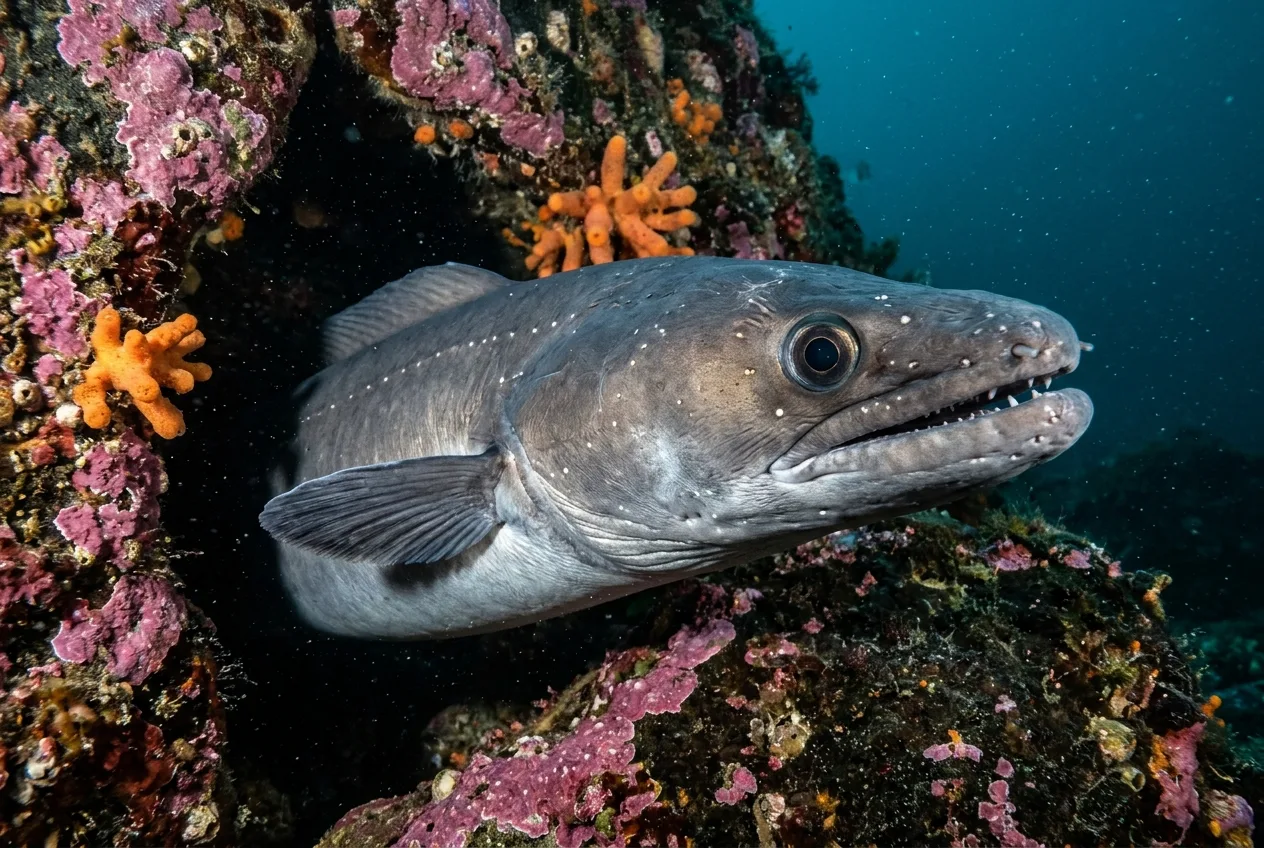
The largest eel species in Europe, spending its whole life at sea. The long dorsal fin starts right above the pectoral fin. It usually measures 1 to 1,5 metres; FishBase gives up to 3 metres.
When
From June to October the chances are good, in May possible, in winter slim. On the English Channel coast July and August are the best months. Spawning takes place in summer far out in the Atlantic or in the Mediterranean, only once in a lifetime, not in the North Sea or Norway.
- JanHardly any chance
- FebHardly any chance
- MarHardly any chance
- AprPossible
- MayPossible
- JunGood, spawning
- JulGood, spawning
- AugGood, spawning
- SepGood
- OctGood
- NovPossible
- DecHardly any chance
Peak seasonGoodPossibleHardly any chanceSpawning season
Spring tactics
Skippers off Plymouth and shore anglers in South Wales already count spring as conger time. It only gets really good in the warm months, though.
Summer tactics
The main season, on the English Channel coast above all July and August. On summer nights many shore anglers target conger from big breakwaters in southern England and Wales. Fresh mackerel is often the best bait in early summer.
Autumn tactics
Reefs and wrecks keep producing until late autumn. From October, when there are many squid in the water, squid often catches better than mackerel on the Dorset coast.
Winter tactics
The chances are slim. Shore marks on the Bristol Channel only produce conger in mild winters.
Is it biting today?
In January: Off seasonIn February: Off seasonIn March: Off seasonIn April: PossibleIn May: PossibleIn June: Spawning season, please spare themIn July: Spawning season, please spare themIn August: Spawning season, please spare themIn September: Shoulder seasonIn October: Shoulder seasonIn November: PossibleIn December: Off season
Today’s catch index needs JavaScript. Season and spawning time are in the catch calendar.
Where it is now
On the coast
Look for hideouts with crevices: rocky coasts, wrecks, breakwaters, harbour walls and sheet piling above a bed of boulders. From the shore, spots where the rock carries on under water and quickly drops away are good. In German waters it is extremely rare. Catches are described mainly on the English Channel coast, in Ireland and on the south Norwegian coast.
How to go about it: The best shore areas lie on the rocky coasts of Cornwall, Wales and Ireland; off Plymouth charter boats catch at night in less than 10 m of water over reefs close to the harbour. Now and then shore catches come off on the south Norwegian coast and in Brittany, usually smaller fish there. For the really big congers you have to go out to the wrecks off the coast.
| All year round | Wreck, reef, stony mixed ground, deep water |
|---|
Biting time: mainly in the evening and at night. What that looks like in the water is shown by the picture of the holding spots just below.
Holding spots in the picture
Choose a season and time of day: the picture shows where the species sits then. Tap a fish or a spot in the list to bring it closer. The picture is schematic and AI-generated, every water is different.
Catch chances in springpossible
Chance of a catch in summergoodSpawning, observe the closed seasons
Catch chance in autumngood
Catch chance in winterhardly any
- J
- F
- M
- A
- M
- J
- J
- A
- S
- O
- N
- D
Spawning season
No main time By day usually only the head peeks out of the hideout. At dusk and at night the conger comes alive, so from the shore you fish in the evening and at night.
No main time By day usually only the head peeks out of the hideout. At dusk and at night the conger comes alive, so from the shore you fish in the evening and at night.
Active time By day usually only the head peeks out of the hideout. At dusk and at night the conger comes alive, so from the shore you fish in the evening and at night.
Active time By day usually only the head peeks out of the hideout. At dusk and at night the conger comes alive, so from the shore you fish in the evening and at night.
On the coast
Stony mixed ground
Conger is here all year round.
Wreck, reef
Conger is here all year round.
Deep, colder water
Conger is here all year round.
The conger hides in rock crevices, caves and wrecks. It also takes to harbours, breakwaters, sheet piling and bridges, as long as the bottom there consists of blocks with crevices and gullies. From the shore you look for rocks that continue under water and drop steeply into the deep.
Spring: chances according to the catch calendar are slim in March, possible in April and May.
Summer: chance of a catch good according to the catch calendar. This is when spawning falls, so observe the closed seasons.
Autumn: catch chance according to the catch calendar good in September and October, possible in November.
Winter: catch chance according to the catch calendar hardly any.
Depth: Young congers stay close inshore, adults move into deeper water. Shore congers are usually clearly smaller than the fish at wrecks.
Size comparison: AI-generated drawing, schematic.
How
You fish on the bottom with a running-lead rig through which the line runs freely, so the conger hardly feels any resistance when it takes. The best times are dusk and night, especially at the turn of the tide with weak current. After the strike you pump it quickly away from the bottom.
Easiest way
A night session at a harbour or rock wall with water dropping straight into the deep is a good start. You need a strong beachcaster for weights of about 170 to 225 g, strong line with abrasion protection, a short paternoster with a 6/0 to 8/0 hook and a whole small mackerel. Cast only a short way, to the foot of the wall.
A night session at a wall or rocks
From the shore you catch conger where weed-covered blocks or walls drop steeply into a deep gully, best at night around low water.
- Deep gully at the foot
Look for walls or rock armour with mussels and barnacles, in front of which the current has scoured a deep gully. Prawns, crabs and small fish live there, and so does the conger.
- Time after the tide
At British rock marks experienced anglers fish at night from about two hours before to two hours after low water, preferably on medium to big tides. Arrive early enough to find a firm, safe stance.
- Short paternoster
A side arm of 60 to 120 cm sits at most 30 cm above the weight. Hang the weight on a piece of weaker line; if it snags in the rock, only that piece breaks and not the whole rig.
- Whole small mackerel
Thread a small frozen mackerel on so that the hook point comes out at the head end, and tie the tail on with a little elastic thread. A head with guts or a big mackerel flapper also catches well.
- Short to the wall
Do not cast further than about 20 m. A long cast puts the bait in shallower water, away from the foot of the wall where the congers live.
- Rod in hand
Bites often come quickly. Pick up the rod at the first tug and strike on the first clear pull; if you wait for a second, the tail is often already in a crevice.
- Pump without a pause
Pump and wind without a break until the fish is free above the bottom. With a soft rod and thin line you will not get a conger up there.
From a boat at a reef or wreck
For bigger congers you go out by charter boat to reefs and wrecks and fish a running-lead rig with a big fish bait right on the bottom.
- Anchored precisely
The skipper anchors the boat over the reef or wreck. Medium tides with some current are considered good because the congers feed then; on very small or very strong tides it gets harder.
- Running lead on a slider
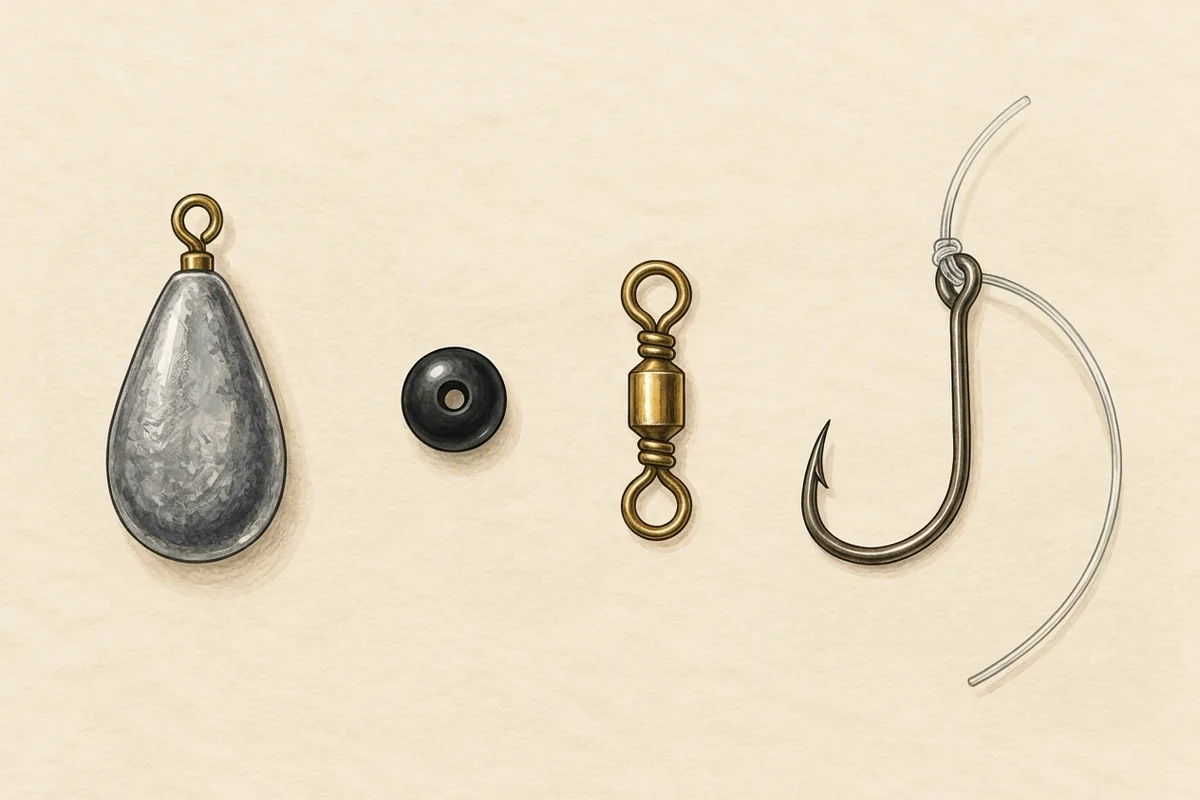
The weight hangs on a slider that runs between two beads and a good swivel. That way the conger can take the bait without feeling weight straight away.
- Big fillet
Offer a whole mackerel fillet, a flapper or a piece of fillet at least 10 cm long. British experts also swear by fresh pouting (Franzosendorsch), and by squid on the south coast in autumn.
- Line first, then the strike
When you feel the first careful pluck, lower the rod or give a bit of line. When it takes the bait properly, make contact, tighten the line and strike hard.
- Away from the wreck
Set the drag firm and pump the fish up quickly. If it wraps its tail round an obstacle it will not let go; you give line only in an emergency.
- Unhook with a disgorger
A long, strong monofilament leader ahead of the hooklength makes unhooking at the boat safer. Remove the hook with the disgorger, because a conger bites down on fingers. Many British skippers release their congers.
What with
Strong pieces of mackerel or whole fillets rather than small scraps; squid catches too. Small whole baitfish work as well, and Irish guides also name crab. The hook must be big, with 6/0 as the smallest size.
- Cut baitall year round, especially in early summer
Mackerel counts as the standard bait in German and British angling magazines, and a big fillet, a flapper or a head with guts sits securely on the big hooks needed.
- Baitfishfrom the shore as well as from a boat
A whole small mackerel or a fresh pouting (Franzosendorsch), whiting or small pollack matches natural prey; British experts even consider pouting better than mackerel.
- Crustaceans & musselsas a supplement, for example at walls with lots of crabs
Congers eat crustaceans as well as fish; shellfish are therefore also on the bait list in the angling press.
Tackle
From the shore a strong bottom rod with a reel and strong line is enough, which you can estimate with the line calculator. At the wreck, where the big congers live, a heavy boat rod and a strong multiplier reel are needed, with wire or very strong monofilament as the hooklength. Set the drag firm so the fish does not get into its hideout.
A night session at a wall or rocks
- Rod
- Beachcaster of 3,6–4 m for weights of 170–225 g; at rock marks in South Wales one for 140–170 g
- Reel
- big fixed-spool reel or a medium to strong multiplier reel
- Line
- Monofilament of about 40 lb, braid of 50 lb or braid of 0,20 mm with a shock leader of 0,70 mm; plus about 80 lb abrasion-resistant line against barnacles
- Leader
- short wire hooklength or monofilament of about 150 lb breaking strain
- Hooks
- strong single hooks 6/0–8/0
- Weight, float, lead
- Weight 140–225 g on weaker line as a rotten bottom, no grip lead in the rock
From a boat at a reef or wreck
- Rod
- Boat rod of the 20 lb class at a reef, 30 lb class at a wreck; for big wreck congers a short 50 lb rod
- Reel
- medium to big multiplier reel
- Line
- Braid of 50 lb with a long, strong mono leader, alternatively monofilament of 20–30 lb
- Leader
- Monofilament of about 150 lb or 1,0–1,5 mm, around 3 m long; or wire
- Hooks
- 8/0–10/0, up to 12/0 for big baits
- Weight, float, lead
- with braid often 225–340 g, depending on current 200–500 g
Common mistakes
- Tackle too light from the shore: With thin line of about 0,35 mm and a soft rod you will not get a conger out of the rocks. Take a heavy beachcaster and line with a breaking strain of at least 40 lb.
- Cast too far: The conger lives at the foot of the wall or rock. A cast beyond 20 m often lands in shallower water away from its hideouts.
- Line chafed through on barnacles: Put an abrasion-resistant line of about 80 lb ahead of the main line so the edges of shells and barnacles do not cut through it.
- Rig stays in the rock: Hang the weight on a piece of weaker line and do without grip leads. Still expect break-offs; at good spots they come with the territory.
- Ordinary eel hooklength: The conger’s teeth and rolling tear thin monofilament apart. Take wire or very thick monofilament of about 150 lb.
Rules
For the conger our country overview has no figures on minimum size (Mindestmaß) or closed season (Schonzeit). That does not mean there are no rules: individual countries and water regulations protect the species or set their own limits.
On the coast the rules of the coastal states apply, partly with their own catch restrictions: North Sea coast, Baltic coast of Schleswig-Holstein and Baltic coast of Mecklenburg-Western Pomerania.
The regulation and your fishing permit (Erlaubnisschein) are what count. Lake Constance, the Rhine and the coast, for example, have their own rules: Fishing waters in Germany.
After the catch
Playing and landing
Stand securely before the bite and strike on the first clear pull, then pump the conger off the bottom without a pause with the drag set firm. At the surface it twists and writhes violently, so keep your hands away from the head and work with the disgorger. A fish of legal size that you may keep you stun and kill at once; all others you unhook in the water if possible, or at the side of the boat, and release.
A fish of legal size that you may take you stun and kill at once. Protected or undersized fish you unhook in the water if possible and release gently. For sea anglers in Norway minimum sizes, lists of protected species and an export quota apply: currently 15 kilograms twice a year, from 1 January 2027 only 10 kilograms, and only for fish caught through a registered fishing business (as of October 2026).
Frequently asked questions
What is the best bait for conger?
Fresh or frozen mackerel, as a whole fish, flapper or head with guts, plus squid and cuttlefish. British experts often consider fresh pouting (Franzosendorsch), whiting or small pollack even more productive.
What hook size for conger?
You should not go below 6/0. From the shore 6/0 to 8/0 is usual, from a boat 8/0 to 10/0, up to 12/0 for very big baits.
Can you catch conger from the shore?
Yes, above all on the rocky coasts of Cornwall, Wales and Ireland and on breakwaters in southern England. From the shore the fish are usually clearly smaller than at wrecks, but at good marks up to about 9 kg, in exceptional cases much more.
Do you need a wire hooklength for conger?
Not strictly, but an ordinary hooklength is not enough. Wire or very thick monofilament of 1,0 to 1,5 mm is usual; British skippers fish 150 lb monofilament.
Is a conger dangerous?
It is not aggressive, but it bites down on fingers that get too close. So remove the hook with a disgorger. As in the river eel, its raw blood is poisonous. According to the Japanese Ministry of Health, the poison in the blood serum of eels and congers is a protein that is inactivated after five minutes at 60 degrees. Cooked, the fish is therefore harmless, but fresh blood should not get into the eyes, mouth or wounds.
Similar species
If you catch conger, you can fish for these species with similar tackle as well:
 Dab fishingPeak season
 Fishing for brillPossible
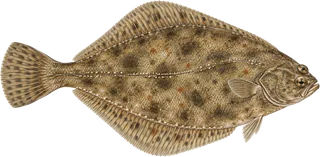 Flounder fishingMain season
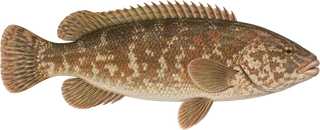 Fishing for ballan wrasseOnly as bycatch
Sources
As of October 2026. The practical knowledge comes from 10 sources, summarised in our own words.
See all 10 sources
- Steckbrief Conger · BLINKER (Redaktion)
- Conger: Der größte Aal der Welt · BLINKER (Redaktion)
- Catching Conger Eels From the Shore · Sea Angler (Redaktion)
- Fishing for Conger Eels From Reefs and Wrecks · Sea Angler (Redaktion)
- Sea Fishing Tactics and Tackle for Cardiff Foreshore · Sea Angler (Redaktion)
- Friar's Point Beach Sea Fishing Mark · Sea Angler (Redaktion)
- Top 10 sea angling baits · Sea Angler (Redaktion)
- The Best Way to Fish a Sea Wall or Pier · Sea Angler (Redaktion)
- Britain's Most Dangerous Fish · Sea Angler (Redaktion)
- Risikoprofil natürlicher Toxine: Fische, Serumtoxin (自然毒のリスクプロファイル:魚類:血清毒) · Ministerium für Gesundheit, Arbeit und Soziales Japan (MHLW)
Text prepared with AI support, based on the sources given and these pages: Conger eel (profile), Bottom fishing, Fish strips, Natural-bait rig for the sea.