
Knowledge – Fish
Haddock fishing
Fishing for haddock means: fish from the boat over sand and gravel and offer a small, fresh strip of fish bait close to the bottom. Here is the route there in nine steps, each with a link to the detailed page.
 Choose another fish117 fish with guides
 EelOff-peak season
 EelpoutPossible
 IdePossible
 ArapaimaGood
 GraylingPeak season
 Atlantic salmonSpawning time, please spare
 Brown troutSpawning time, please spare
 Brook troutSpawning time, please spare
 BarbelOff-peak season
 BarramundiSpawning season
 Greater amberjackGood
 Topmouth gudgeonOnly as bycatch
 Blue marlinSpawning season
 BonefishSpawning season
 BonitoGood
 BreamOff-peak season
 Dusky grouperOnly as bycatch
 CobiaPossible
 Spiny dogfishOnly as bycatch
 CodPeak season
 ChubPeak season
 MinnowOnly as bycatch
 European sturgeonOnly as bycatch
 FlounderPeak season
 PerchPeak season
 Largemouth bassGood
 Ballan wrasseOnly as bycatch
 Yellowfin tunaSpawning season
 Giant trevallyGood
 Prussian carpPossible
 BrillPossible
 Gilthead breamSpawning time, please spare
 Golden doradoSpawning season
 Golden mahseerOnly as bycatch
 Dolphinfish (mahi-mahi)Good
 Grass carpPossible
 Great barracudaGood
 GudgeonPossible
 White breamPossible
 DaceOff-peak season
 PikePeak season
 HalibutOff-peak season
 HerringPossible
 GarfishOut of season
 Huchen (Danube salmon)Possible
 Crucian carpOnly as bycatch
 CarpOff-peak season
 RuffeOff-peak season
 VendaceOnly as bycatch
 DabPeak season
 GurnardPossible
 Coley (saithe)Peak season
 Chinook salmonHardly any chance
 King mackerelSpawning season
 LingPeak season
 TuskOff-peak season
 MackerelPossible
 Bighead carpOut of season
 WhitefishPossible
 Conger eelOff-peak season
 Sea troutSpawning time, please spare
 Grey mulletPossible
 Murray codSpawning season
 MuskellungeGood
 Common nasePossible
 Nile perchPossible
 PayaraPossible
 Peacock bassPeak season
 PermitGood
 WeeverOnly as bycatch
 PollackOff-peak season
 BurbotOff-peak season
 AspPossible
 Red snapperSpawning season
 Rainbow troutPeak season
 RoosterfishGood
 RoachPeak season
 RedfishOut of season
 Bluefin tunaOnly as bycatch
 RuddPossible
 Russian sturgeonOnly as bycatch
- HaddockOff-peak season
 SnakeheadPossible
 TenchOff-peak season
 SpirlinOnly as bycatch
 PlaiceOff-peak season
 Greenland halibutOnly as bycatch
 Round gobyOnly as bycatch
 SwordfishGood
 Lake troutSpawning time, please spare
 HakeSpawning time, please spare
 Alpine charSpawning time, please spare
 MonkfishPossible
 SoleOff-peak season
 SailfishGood
 Silver carpOut of season
 SnookPeak season
 PumpkinseedOnly as bycatch
 SpratOnly as bycatch
 Atlantic wolffishSpawning time, please spare
 TurbotPeak season
 SterletOnly as bycatch
 SmeltOnly as bycatch
 Horse mackerelPossible
 TaimenGood
 TarponGood
 TigerfishSpawning season
 BleakPossible
 WahooGood
 Wels catfishOff-peak season
 WhitingPeak season
 Sea bassOff-peak season
 ZanderPeak season
 White-eye breamOnly as bycatch
 Blue breamOnly as bycatch
 Brown bullheadPossible
 VimbaOnly as bycatch
Season in October according to the catch calendar, an estimate and not a guarantee of a catch. The fish pictures are reduced natural-history plates and AI-generated.
Best time
From July to September.
In January: PossibleIn February: PossibleIn March: Possible, spawningIn April: Possible, spawningIn May: Good, spawningIn June: Good, spawningIn July: Peak seasonIn August: Peak seasonIn September: Peak seasonIn October: GoodIn November: PossibleIn December: Possible
Good spot
- Coast: sandy bottom and stony mixed groundsandy bottom and stony mixed groundsandy bottom and stony mixed groundsandy bottom and stony mixed ground
Top baits
Starter tackle
- Rod: boat rod 8–15 lbs, 2,20–2,40 m
- Line: braid with about 20 kg breaking strain
- Hook: small hooks, size 2 when there are many missed bites
- Rod: pirk rod with a casting weight of up to about 200 g or a boat rod of about 30 lbs
- Line: braid of about 0,18 mm on the pirk rod, about 0,25 mm on the boat rod
- Hook: single hook on the pirk, for testing size 2 with a small strip of fish
In short
In short: The best time to catch haddock is July to September. Good spots on the coast: sandy bottom and stony mixed ground. Proven baits: strips of herring or mackerel on a paternoster close to the bottom; also pirks and soft plastics (shads). Export from Norway is only allowed for fish caught through a registered angling business: 15 kg twice a year, 10 kg from 1.1.2027 (as of October 2026).
Quick to recognise
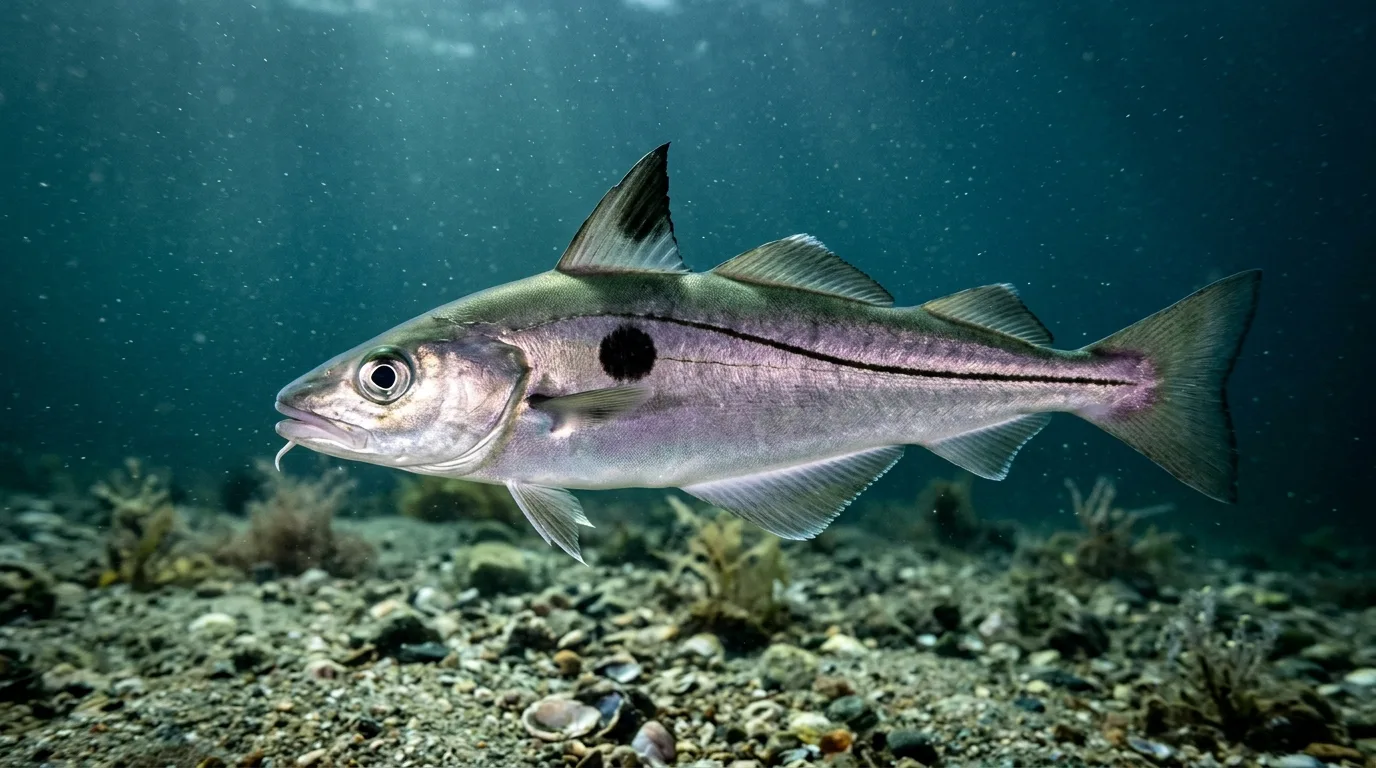
A member of the cod family with a large black spot above the pectoral fin, living close to the bottom. Around 35 centimetres is typical, and in the North Sea it stays smaller than further north.
When
It goes best from July to September, and October is still good. Depending on the stock, spawning runs from March to June.
- JanPossible
- FebPossible
- MarPossible, spawning season
- AprPossible, spawning season
- MayGood, spawning
- JunGood, spawning
- JulPeak season
- AugPeak season
- SepPeak season
- OctGood
- NovPossible
- DecPossible
Peak seasonGoodPossibleHardly any chanceSpawning season
Spring tactics
At spawning time many large fish stand on their spawning grounds. In southern Norway it can nevertheless bite all year round at skerries and fjord entrances, and targeted trips usually pay off from May.
Summer tactics
The best phase begins now. In the fjords you find haddock close to the shore over sand and gravel, in the north also on flat sandy plateaus at around 30 m, often together with cod and coley.
Autumn tactics
In September it is still going at a high level, in October it is usually good. Then search deeper plateaus down to about 120 m as well, and offer the bait there close to the bottom.
Winter tactics
Targeted catches are rare. The best chance is in southern Norway at skerries and at the mouth of fjords, when the weather allows a trip out.
Is it biting today?
In January: PossibleIn February: PossibleIn March: Spawning, please spare the fishIn April: Spawning, please spare the fishIn May: Spawning, please spare the fishIn June: Spawning, please spare the fishIn July: Peak seasonIn August: Peak seasonIn September: Peak seasonIn October: Minor seasonIn November: PossibleIn December: Possible
Today’s catch index needs JavaScript. Season and spawning time are in the catch calendar.
Where it is now
On the coast
Look for sandy and gravelly areas instead of bare rock; that is where the haddock stands just above the bottom. In Norwegian fjords you often find it close to the shore and in bays whose sandy bottom slopes gently.
How to go about it: From the boat you search soft ground: sandy or gravelly bays with a gently sloping bottom, slopes and plateaus down to about 120 m, and underwater mounts rising from the mud. Let the bait work there close to the bottom and expect whiting, flatfish and gurnard as bycatch.
| All year round | Sandy ground, stony mixed ground |
|---|
Waters with rules for haddock
Holding spots in the picture
Choose a season and time of day: the picture shows where the species sits then. Tap a fish or a spot in the list to bring it closer. The picture is schematic and AI-generated, every water is different.
Catch chance in springpossibleSpawning season, observe closed seasons
Catch chance in summerPeak season
Catch chance in autumngood
Catch chance in winterpossible
- J
- F
- M
- A
- M
- J
- J
- A
- S
- O
- N
- D
Spawning season
On the coast
Sandy bottom
Haddock are present here all year round.
Stony mixed ground
Haddock are present here all year round.
Haddock stay just above the seabed, over sand, gravel, shell ground or rock. In the fjords these are often sandy and gravelly areas near the shore and bays with a slowly sloping sandy bottom.
Spring: according to the fishing calendar, catch chances are possible in March and April and good in May. The spawning season falls in this period, so observe the closed seasons (Schonzeit). Spawning takes place from March to June at a depth of 50 to 150 metres.
Summer: according to the fishing calendar, catch chances are good in June and peak in July and August. For fjord Norway the angling press names summer to autumn as a favourable time.
Autumn: catch chance according to the catch calendar is peak season in September, good in October and possible in November.
Winter: according to the fishing calendar, catch chances are possible. In the winter months the sexually mature fish move to the spawning grounds.
Depth: The haddock lives close to the bottom, usually at a depth of 10 to 200 metres. In Norwegian fjords it is caught over sandy and gravelly ground at depths of just 25 to 45 metres.
Size comparison: AI-generated drawing, schematic.
How
You catch most reliably from the boat with natural baits close to the bottom. The haddock also takes pirks and soft plastics, jigged too in mid-water where shoals of herring gather.
Easiest way
It goes most easily in summer in a Norwegian fjord. Use the boat to find a bay with a sandy or gravel bottom at 25 to 45 m depth and lower a rig with two or three small hooks and narrow pieces of mackerel along with a bottom weight. A medium boat rod is enough for this.
Hooklength on a side arm with fish strip
The most dependable method from the boat over sand, gravel and soft ground, at anchor or in a calm drift.
- Find soft ground
Head for bays where the bottom rises gently and the echo sounder shows soft ground. Plateaus and slopes down to about 120 m can also hold haddock, often together with hake and ling.
- Halved feathered rig
Shorten a mackerel rig to two or three hooks and clip a bottom weight on at the bottom. Ready-made rigs for hake and haddock serve the same purpose.
- Small pieces
Cut narrow, short strips from freshly caught mackerel or herring. A piece not much bigger than the hook suits the small mouth and is sucked in whole.
- Keep contact with the bottom
Let the rig down to the bottom and keep just enough tension for the weight to touch the bottom lightly. If the boat drifts, give a little line.
- Read the plucks
Many light plucks without a hook-up are a typical sign of haddock or whiting. Then use a smaller hook with an even smaller strip of fish instead of changing spot at once.
- Pump up calmly
If the pull is steady, lift the rod and bring the fish up in calm strokes. Do not let any slack line develop.
- Decide at the boat
You lift smaller fish over the gunwale and take bigger ones with the landing net. From great depth haddock usually do not survive being returned, so you keep only what you want to use.
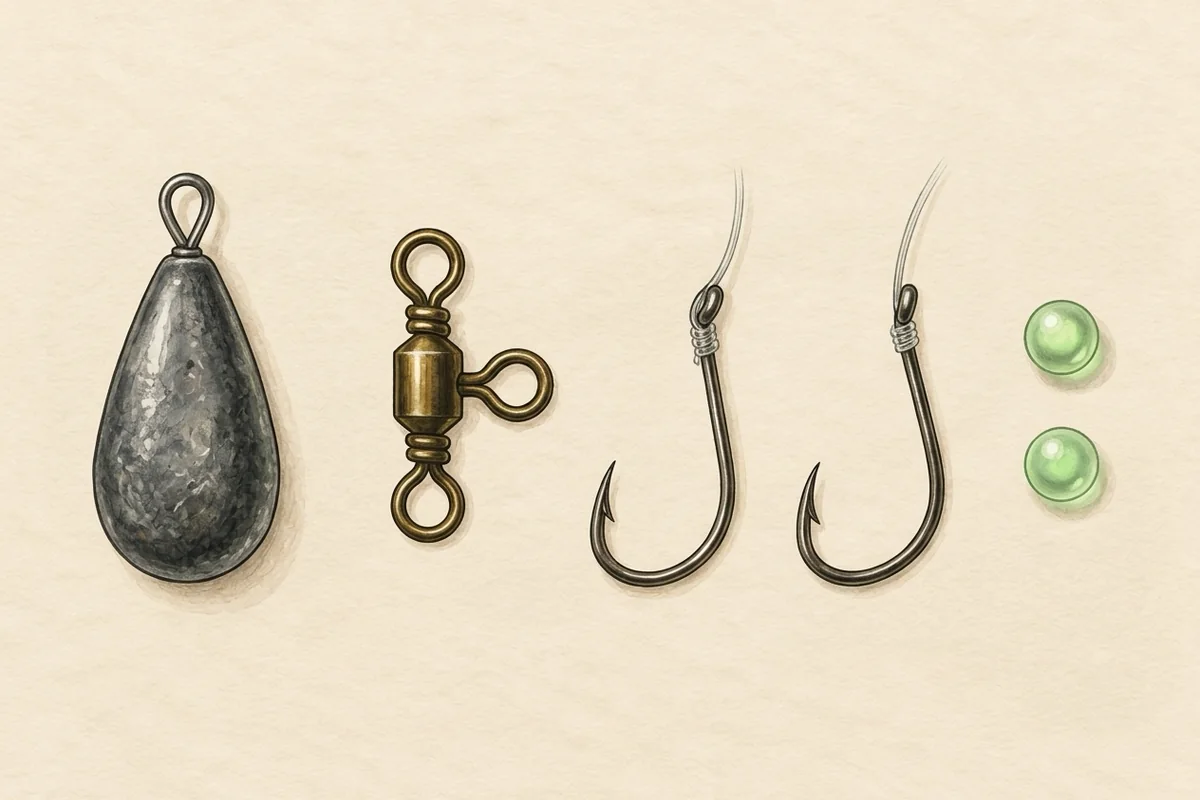
Pirk with fish strip on a single hook
When you are jigging at underwater mounts or on sandy plateaus anyway and haddock are holding among cod and ling.
- Mount and plateau
Underwater mounts rising from soft ground and shallower sandy plateaus among the skerries pay off. There haddock mix with cod, ling and coley.
- Single hook instead of treble
Replace the treble on the pirk with a single hook and put a piece of fish on it. The smell brings the bottom feeders to the bait.
- Check contact with the bottom
Let the pirk sink to the bottom and make sure you can feel it. In strong wind the drift becomes so fast that a light pirk loses contact.
- Lift briefly
Lift the pirk only a little and let it touch down again at once, so the strip of fish stays near the bottom, where the haddock looks for food.
- Many plucks
If small plucks keep coming without anything staying on, there are probably haddock or whiting at the spot. A small size 2 hook with a short strip of fish will soon settle it.
- Wind steadily
Pump the fish up without jerking and keep the line taut all the time, otherwise a lightly hooked fish easily comes off.
What with
Fresh strips of mackerel or herring, ideally caught yourself on the spot and cut just before use. The mouth is small, so choose bait and hook on the small side.
- Cut baitall year round, on the natural-bait rig
Mackerel or herring you have caught yourself, in small pieces, smells strongly and fits the small mouth.
- Pilkerat underwater mounts and on plateaus, when you are also fishing for cod and ling
Fitted with a single hook and a strip of fish, it takes the scent bait down quickly and holds the bottom in a drift.
- Soft plastic (shad)rarely, more as a side catch over sandy ground
It is hardly documented for haddock as a target; anyone who fishes over sand with small soft plastics just above the bottom occasionally gets one on the hook.
Tackle
A boat rod for 8 to 15 lbs with a medium multiplier reel and braid. For the weights, count on 80 to 300 grams. The page on the sea rod shows the differences between a boat rod and a pirk rod.
Hooklength on a side arm with fish strip
- Rod
- Boat rod 8–15 lbs, 2,20–2,40 m
- Reel
- medium multiplier reel
- Line
- Braid with about 20 kg breaking strain
- Leader
- Hooklength on side arms with two to three hooks, for example a halved mackerel rig or a hake/haddock rig
- Hooks
- small hooks, size 2 when there are many missed bites
- Weight, float, lead
- Bottom weight 80–300 g depending on depth and drift
Pirk with fish strip on a single hook
- Rod
- Pirk rod with a casting weight of up to about 200 g or a boat rod of about 30 lbs
- Reel
- Fixed-spool reel with the pirk rod, multiplier reel with the boat rod
- Line
- Braid of about 0,18 mm on the pirk rod, about 0,25 mm on the boat rod
- Hooks
- Single hook on the pirk, for testing size 2 with a small strip of fish
- Weight, float, lead
- Pirk about 100–500 g, depending on depth and drift
Common mistakes
- Bait pieces too big: Large strips are only nibbled. Shorten them to a narrow length that barely extends past the hook.
- Searching over bare rock: The haddock needs sand, gravel or mud. Head for soft areas and underwater mounts with soft surroundings instead of steep rock faces.
- Deep-sea tackle on shallow ground: At 25 to 60 m a boat rod of the 8 to 15 lbs class with a light weight is enough. With heavy tackle you hardly feel the fine plucks.
- Treble on the pirk: A large treble grips the small mouth poorly. Swap it for a single hook with a small strip of fish.
Rules
Our country overview has no figures for a minimum size (Mindestmaß) or closed season (Schonzeit) for the haddock. That does not mean there are no rules: individual countries and water regulations protect the species or set their own limits.
On the coast the rules of the coastal states apply, partly with their own catch restrictions: North Sea coast, Baltic coast of Schleswig-Holstein and Baltic coast of Mecklenburg-Western Pomerania.
The regulation and your fishing permit (Erlaubnisschein) are what count. Lake Constance, the Rhine and the coast, for example, have their own rules: Fishing waters in Germany.
After the catch
Playing and landing
With fine plucks, wait until the pull becomes steady, then lift the rod calmly. Pump the fish up without haste and keep the line taut. Haddock brought up from deep water hardly survive being returned, so you take only fish of legal size for your own needs and stun and kill them straight away on board.
Haddock brought up from great depth do not survive being returned, so take only as many as you can use. A fish of legal size that you may take is stunned and killed straight after the catch. The flesh can contain roundworm larvae; freezing or thorough cooking kills them.
Frequently asked questions
Which bait for haddock?
Small pieces of mackerel or herring you have caught yourself are best. Prawns are also considered a classic haddock bait at sea.
Where do you catch haddock in Norway?
In fjords over sand and gravel, often close to the shore at depths of 25 to 60 m. Also on plateaus down to about 120 m and, in the north, on flat sandy plateaus.
Which hook size for haddock?
Rather small. With many missed bites it is worth switching to size 2 with a short strip of fish so that the hook sits in the small mouth.
When is the best time for haddock in Norway?
Summer to autumn is considered the best time in the fjords. In southern Norway it also bites at skerries and fjord entrances spread across the year.
Which rod for haddock fishing?
A boat rod of the 8 to 15 lbs class, 2,20 to 2,40 m long, and a medium multiplier reel with braid are enough. The bottom weights usually weigh 80 to 300 g.
Similar species
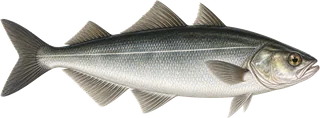
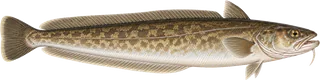
If you catch haddock, you can fish for these species with similar tackle:
Sources
As of October 2026. The practical knowledge comes from 8 sources, summarised in our own words.
View all 8 sources
- Norwegen: Angeln im Fjord – Technik, Taktik und Traumreviere · BLINKER (Joshua Zettelmeier u. a.)
- Angeln in Südnorwegen: So nah, so gut · BLINKER (Johannes Radtke)
- Was sind die besten Angelplätze in Norwegen? · BLINKER (Florian Pippardt)
- Angeln vor den Lofoten: Kapitale Aussichten im hohen Norden · BLINKER (Steve Kaufmann)
- Trysnes/Norwegen: Natur pur, Fisch satt · FISCH & FANG (Redaktion)
- Die 7 besten Naturköder zum Meeresangeln · BLINKER (Redaktion)
- Mit Garnelen angeln: Der perfekte Naturköder · BLINKER (Justus Müller)
- Barotrauma bei Fischen: Wie tief darf ich angeln? · BLINKER (Frank Schlichting)
Text AI-assisted, based on the sources listed and these pages: Haddock (profile), Pirk fishing, Fish strips, Sea rod.