
Knowledge – Fish
Haddock: Features, habitat, angling and cooking
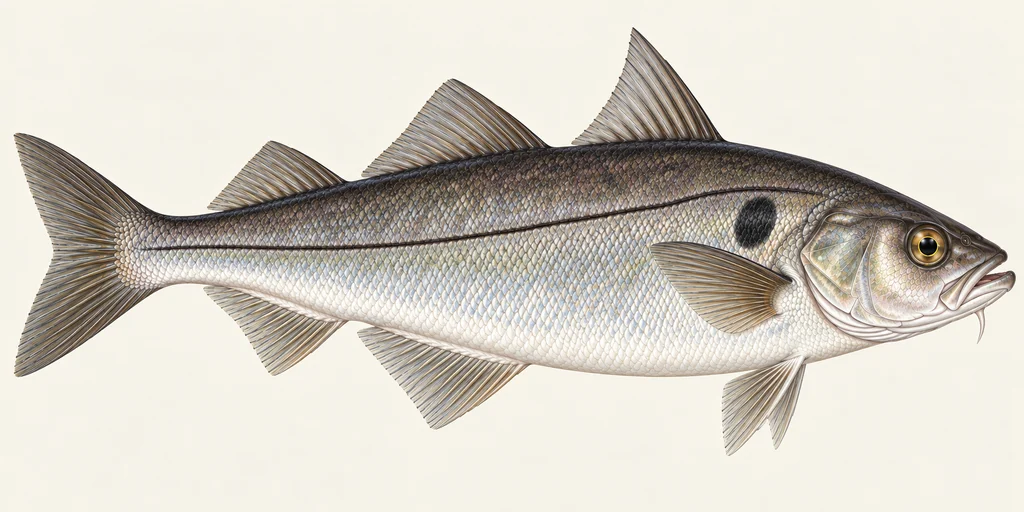
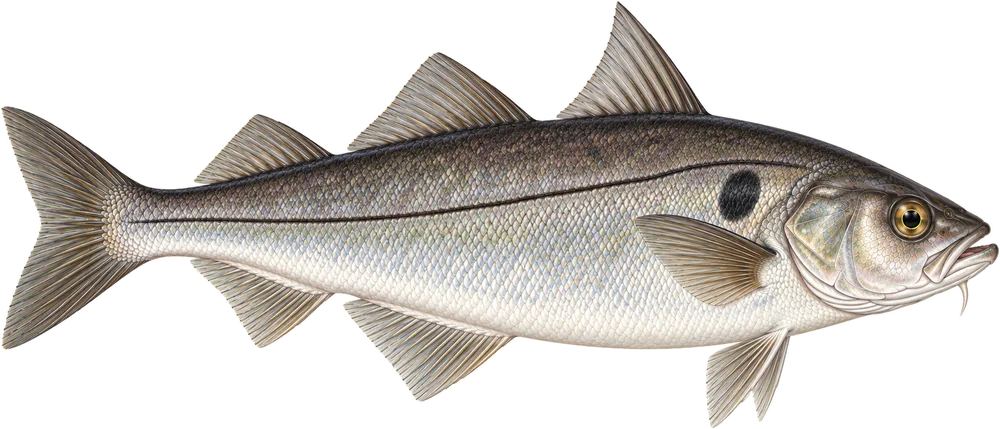
The haddock (Melanogrammus aeglefinus) belongs to the cod-like fishes and is easy to recognise by the large black spot above the pectoral fin. It lives just above the bottom and stays clearly smaller in the North Sea than in the Barents Sea. Anglers catch it mainly in Norway and in the northern North Sea.
In short: You catch haddock best from July to September. Good spots on the coast: sandy ground and stony mixed ground. Proven baits: strips of herring or mackerel on a paternoster just above the bottom; also jigs and soft plastics. Export from Norway only for fish caught through a registered fishing business: 15 kg twice a year, from 1.1.2027 10 kg (as of October 2026). Step by step: Fishing for haddock.
- Large, round black spot above the pectoral fin
- Black, clearly standing-out lateral line
- Protruding upper jaw with a short chin barbel, three dorsal fins
Catch chances through the year
- Hardly any chance
- Possible
- Good
- Peak season
- Spawning (observe the closed season)
Editorial assessment for waters in Germany, not a measured value and no guarantee. Spawning time is not the same as the legal closed season.
Species profile and sources in the catch calendarAll species compared month by monthThe rules of your federal state
How to recognise it
At first glance the haddock looks like a small cod: three dorsal fins and a chin barbel, which is much smaller, though. The mouth is relatively small, and the upper jaw projects beyond the lower. The back is dark grey with a violet tint, the flanks and belly whitish-silver.
Two features are enough to identify it. The lateral line is black and stands out clearly. Below it, on each side of the body, sits the large, round black spot above the pectoral fin.
Size depends on the stock. FishBase gives 35 centimetres as the usual length, the maximum is 112 centimetres and 16,8 kilograms at up to 20 years of age. The Norwegian Institute of Marine Research gives up to 110 centimetres and 14 kilograms for the Barents Sea stock, but only about 60 centimetres and 4 kilograms for the North Sea and Skagerrak at up to 15 years. In Norway it is called Hyse, in the south and east of the country also Kolje.
The black spot sets it apart from the cod, along with the much smaller chin barbel. The haddock’s mouth is smaller too.
The whiting also carries a dark spot, but only a small one, at the upper base of the pectoral fin. Its chin barbel is small or missing altogether. The whiting stays smaller, usually about 24 centimetres.
Side by side
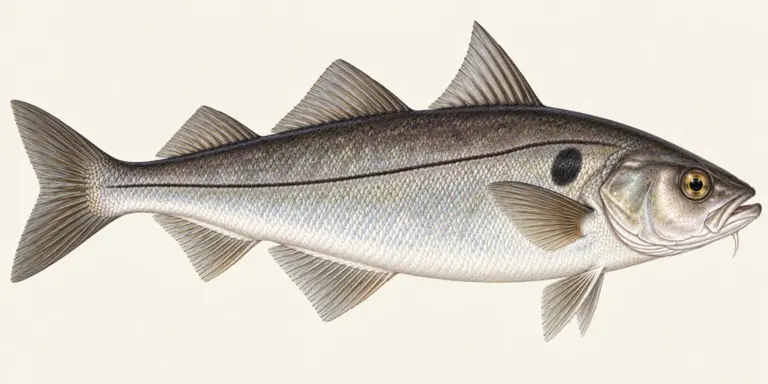
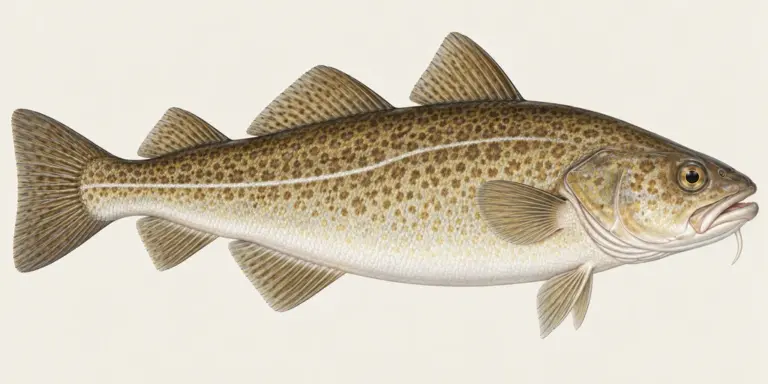
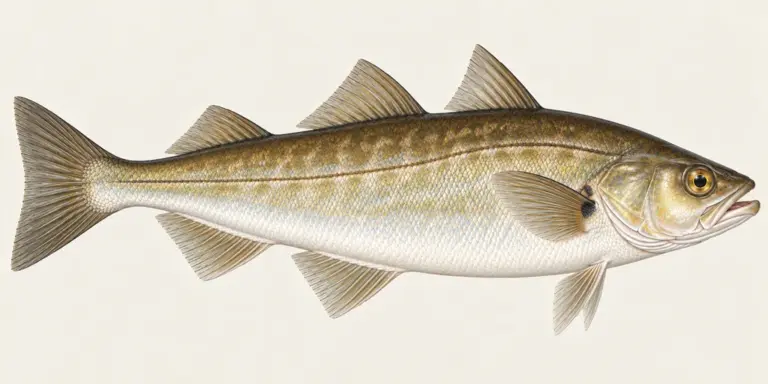
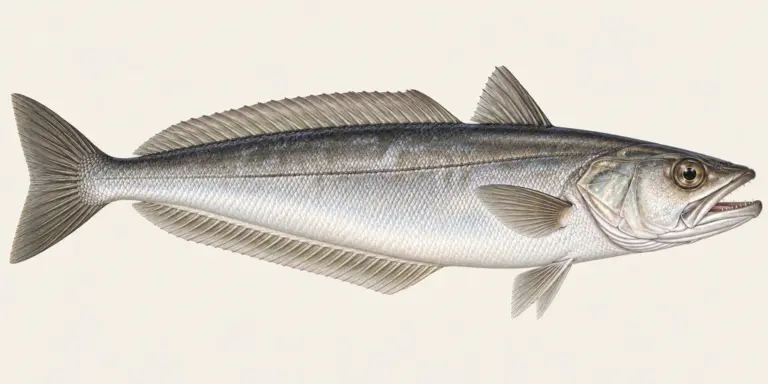
AI-generated illustrations.
Where it holds
The range covers the north-east Atlantic from the Bay of Biscay to the Barents Sea. The fish is common in the North Sea including Skagerrak and Kattegat, west of the British Isles, around Iceland and along the Norwegian coast. Only the odd fish strays into the Baltic. For Norway, the Norwegian Institute of Marine Research lists two large stocks: the north-east Arctic stock and that of the North Sea, Skagerrak and west of Scotland.
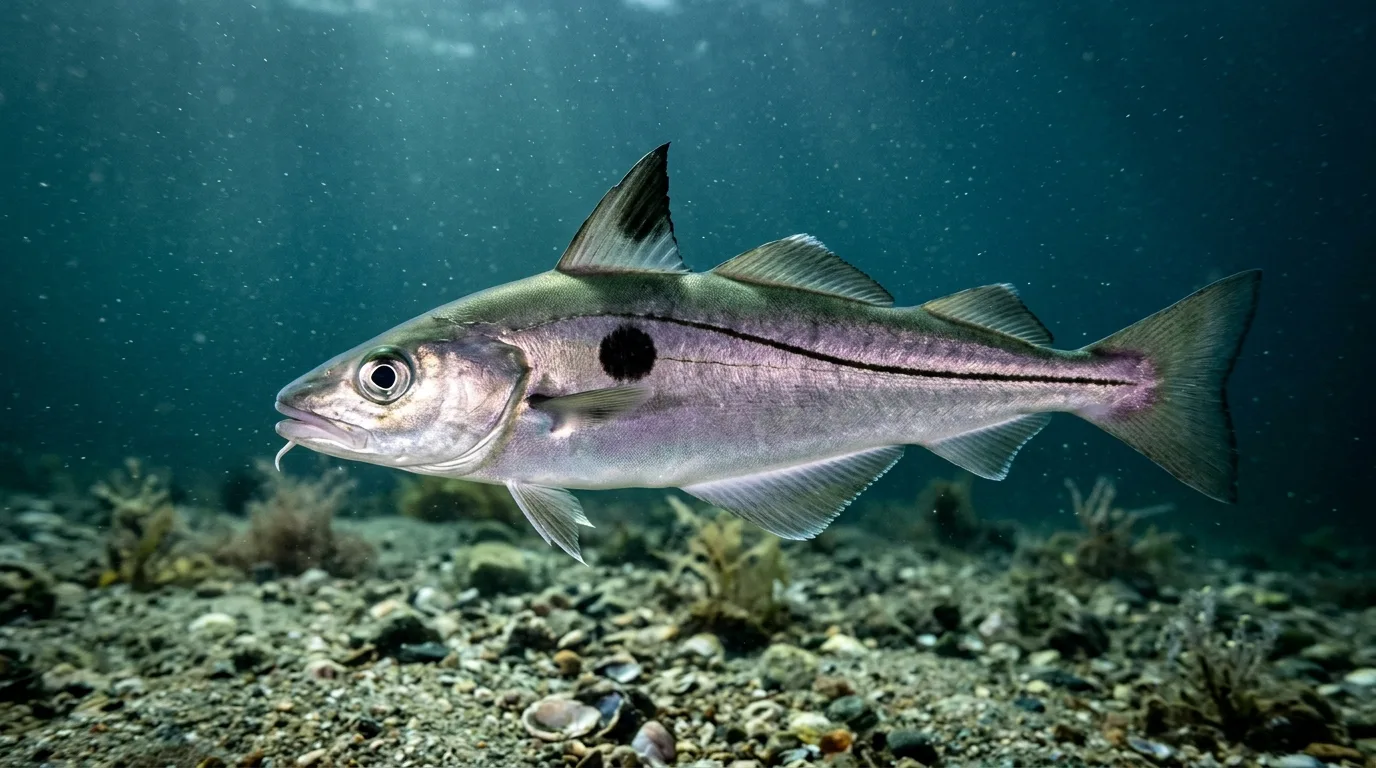
It stays just above the bottom, usually at depths of 10 to 200 metres, according to FishBase most often at 80 to 200 metres, at 4 to 10 degrees. The ground is rock, sand, gravel or shell debris. In Norwegian fjords, according to Blinker, it is caught on sandy and gravelly ground even at 25 to 45 metres.
Holding spots in the picture
Choose a season and time of day: the picture shows where the species sits then. Tap a fish or a spot in the list to bring it closer. The picture is schematic and AI-generated, every water is different.
Catch chance in springpossibleSpawning season, observe closed seasons
Catch chance in summerPeak season
Catch chance in autumngood
Catch chance in winterpossible
- J
- F
- M
- A
- M
- J
- J
- A
- S
- O
- N
- D
Spawning season
On the coast
Sandy bottom
Haddock are present here all year round.
Stony mixed ground
Haddock are present here all year round.
Haddock stay just above the seabed, over sand, gravel, shell ground or rock. In the fjords these are often sandy and gravelly areas near the shore and bays with a slowly sloping sandy bottom.
Spring: according to the fishing calendar, catch chances are possible in March and April and good in May. The spawning season falls in this period, so observe the closed seasons (Schonzeit). Spawning takes place from March to June at a depth of 50 to 150 metres.
Summer: according to the fishing calendar, catch chances are good in June and peak in July and August. For fjord Norway the angling press names summer to autumn as a favourable time.
Autumn: catch chance according to the catch calendar is peak season in September, good in October and possible in November.
Winter: according to the fishing calendar, catch chances are possible. In the winter months the sexually mature fish move to the spawning grounds.
Depth: The haddock lives close to the bottom, usually at a depth of 10 to 200 metres. In Norwegian fjords it is caught over sandy and gravelly ground at depths of just 25 to 45 metres.
Size comparison: AI-generated drawing, schematic.
How it feeds and spawns
The haddock looks for food on the bottom. It eats worms, brittle stars, mussels and crabs as well as fish fry and the roe of herring and capelin. Larger fish also take herring, capelin and other small fish.
For spawning, haddock move in winter to particular areas, above all in the northern North Sea, off Norway, around Iceland and the Faroe Islands. According to FishBase, spawning takes place at depths of 50 to 150 metres. The eggs float freely and rise to the surface, the larvae sink to the bottom at 5 to 10 centimetres. According to FishBase, a haddock matures at around 35 centimetres. In the north-east Atlantic the fish migrate, partly over long distances, especially in the Barents Sea and around Iceland.
It tolerates warm water better than the cod. In a laboratory experiment with fish accustomed to 12 degrees, the critical maximum temperature was 23,9 degrees, for cod 21,4 to 23,0 degrees. At sea both live in much cooler water; the value is only an upper limit.
When it bites
For fjord Norway the angling press names summer to autumn as the best time for haddock. In spring the fish spawn; the main spawning time falls, depending on the stock, between March and June.
If you are looking for bigger fish, head north. The Barents Sea stock gets clearly bigger than that of the North Sea. As the travel season for northern Norway, Blinker names May to September.
Today’s catch index needs JavaScript. Season and spawning time are in the catch calendar.
You will find the monthly overview of all species and the water temperature check in the catch calendar.
What you catch it with
Step by step: Fishing for haddock: tips on bait, rig and tackle – season, spots, bait, tackle and rules on one page.
The most reliable method is light to medium natural-bait fishing from a boat: a hooklength with strips of herring or mackerel, offered close to the bottom. The basics are shown by the natural-bait rig, the baits by the page on cut bait. As tackle, Blinker names a boat rod of 8 to 15 lbs, a medium multiplier reel with braid rated at 20 kilograms and weights of 80 to 300 grams.
It is best to catch your baits yourself on site: freshly caught mackerel and herring make the best strip baits.
Haddock also take jigs and soft plastics. Blinker mentions speed jigging and active jigging in mid-water, where shoals of herring gather. Do not choose hook or bait too large, because the mouth is small. More on the technique under Jigging.
Fish brought up from greater depth do not survive release. According to Blinker, every fish cranked up from 50 to 200 metres is finished by the drop in pressure. Only plan as many as you can use.
Sand and gravel instead of rock: Look for sandy or gravelly areas. According to Blinker, whiting, flatfish and gurnards also bite there.
Catch fresh baits on site: It is best to catch strips of mackerel or herring yourself. Keep them cool and cut them to size just before use.
Keep baits small: The mouth is small, and big chunks often mean the fish only nibble. A slim strip on the right hook catches more reliably.
Suitable lures
Strips of herring or mackerel on a paternoster just above the bottom; also jigs and soft plastics.
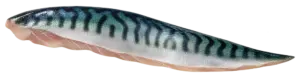

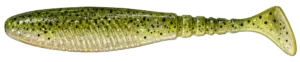
AI-generated illustrations. A click opens the lure’s page.
Rigs for these baits: natural bait rig for the sea.
What haddock tastes like and what to bear in mind when you use it
The haddock has pale, tender flesh that suits poaching and frying. In Germany it is the classic fish for cooking. In the shops it is available fresh, as fillets, frozen, smoked, marinated or dried. Rod-caught haddock is especially sought after because its flesh has not been crushed in nets. How to prepare it is shown by Gutting fish and Filleting fish; for smoking, Smoking fish helps.
As a cod-like fish, the haddock can carry roundworm larvae in its flesh. The Lower Saxony food institute LAVES therefore screens pale-fleshed cod-like fish in the laboratory. According to its information, the larvae are killed by freezing or heat, and fish that is cooked through is safe. More under Parasites in fish. This does not replace medical advice.
What you need to observe
Closed seasons, minimum sizes and harvest slots are set by the federal states (Bundesländer) and by the fisheries authorities of the neighbouring countries on the coast (Denmark, Norway, Poland). They vary by type of water, stretch of coast and time of year. We only give figures together with the date and source; the fisheries regulation of your federal state and your fishing permit (Erlaubnisschein) are always what is binding. You will find a list of links to the official sources in the catch calendar.
A fish of legal size that you want to keep you stun and kill at once, in line with animal welfare rules. Protected, undersized fish or fish too large under a harvest slot you unhook, if possible still in the water and with wet hands, and release gently. What exactly applies is regulated by state law and your fishing permit (Erlaubnisschein).
For visiting anglers in Norway, minimum sizes and an export quota apply: you may only take fish out of the country if you caught it through a registered fishing business, currently up to 15 kilograms twice a year, from 1 January 2027 up to 10 kilograms (as of October 2026). The authority that counts is the Fiskeridirektoratet.
As for protection status, the picture depends on the yardstick. According to the Thünen Institute, the haddock is considered not threatened in Europe, but worldwide the IUCN lists it as vulnerable. This global assessment dates from 1996 and, according to the Thünen Institute, needs updating. On the Norwegian Red List it is listed as not threatened.
What closed season, minimum size and harvest slot mean and where to find them is explained on the page Closed season and minimum size explained.
Frequently asked questions (FAQ)
How do I recognise a haddock compared with a cod?
By the black spot above the pectoral fin, the black lateral line and the much smaller chin barbel. The haddock’s mouth is smaller too.
How big does a haddock get?
In the North Sea and Skagerrak it stays at about 60 centimetres. In the Barents Sea it reaches up to 110 centimetres. FishBase gives 35 centimetres as the usual length.
Are there haddock in the Baltic Sea?
Only occasionally. The fish is not a target species there. You fish for it deliberately in the North Sea or off Norway.
Sources
The rating of catch chances is an editorial assessment. The facts come from these sources, and the text is worded in our own words. The illustration is an original design by Angel Momente in the style of a natural history plate (AI-generated, see the AI notice).
- Wikipedia: Schellfisch
- Havforskningsinstituttet: Hyse (Schellfisch)
- FishBase: Melanogrammus aeglefinus
- Thünen-Institut, Fischbestände online: Schellfisch
- Blinker: Norwegen, Angeln im Fjord (Saison, Naturköderangeln)
- Norin et al. 2019, PeerJ: Thermal biology of Atlantic cod and haddock (CTmax)
- Fiskeridirektoratet: Sea angling in Norway, regulations (geschonte Arten, Ausfuhrquote)
- Blinker: Barotrauma bei Fischen
- Store norske leksikon: Hyse (Schellfisch)
- FishBase: Merlangius merlangus (Wittling)
- LAVES Niedersachsen: Parasiten in Fischen und Fischereierzeugnissen
Created with AI support from the sources listed. Figures only appear in the text if a source gives them. Last updated: 27 October 2026. Found a mistake? Write to us. Who is behind this site: About me.
More in the lexicon
- All fish species at a glance
- Catch calendar – month, water temperature and profile for 93 species
- Line calculator – breaking strain after the knot, drag guideline, backing
- Angling methods