
Knowledge – Fish
Whiting / Merlan: Features, habitat, season and bait
The whiting (Merlangius merlangus), also called merlan or Weißling, is a small relative of the cod. It lives in shoals over mud and sand and is caught mainly from a boat or cutter.
In brief: You catch whiting best from September to November, mainly by day and at night. Good spots on the coast: deep water, sandy bottom, and wrecks or reefs. Proven baits: lugworm, pieces of prawn and small strips of herring on a paternoster; small twisters or cod flies as droppers. A shoal fish: where one bites, more are usually nearby. The best time depends on the region: late summer to autumn in the Baltic, November to January around the British Isles. Step by step: Fishing for whiting.
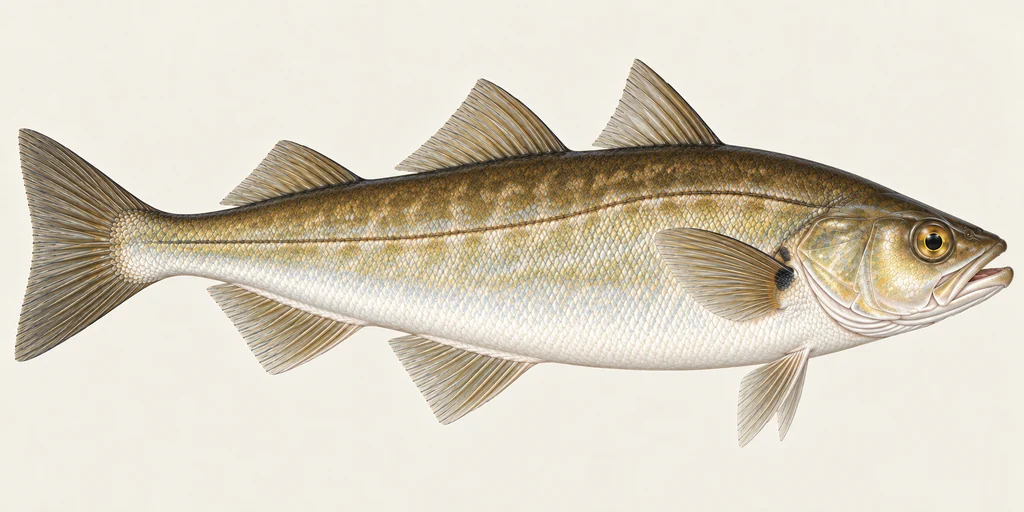
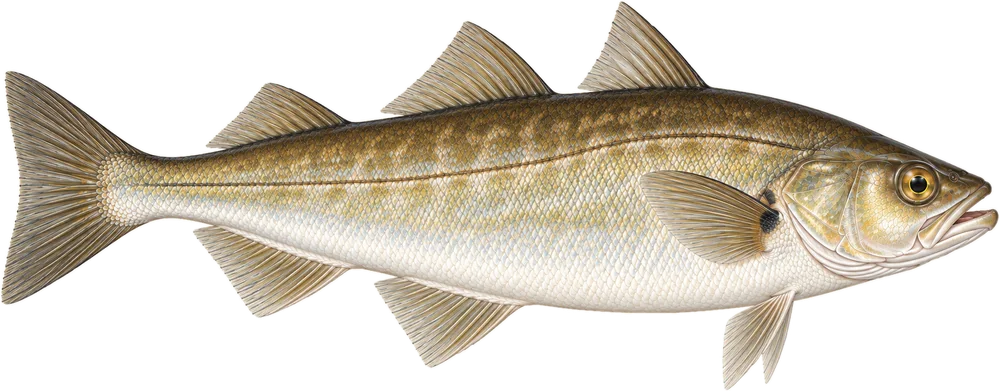
- Dark spot at the upper base of the pectoral fin
- Protruding upper jaw, chin barbel tiny or absent
- Three dorsal fins and two anal fins, the first anal fin strikingly long
Catch chances through the year
- Hardly any chance
- Possible
- Good
- Peak season
- Spawning (observe the closed season)
Editorial assessment for waters in Germany, not a measured value and no guarantee. Spawning time is not the same as the legal closed season.
Species profile and sources in the catch calendarAll species compared month by monthThe rules of your federal state
How to recognise it
The whiting has an elongated body, a small head and a clearly protruding upper jaw with pointed teeth. The small chin barbel of young fish often disappears completely later on. It has three dorsal fins and two anal fins.
The colour ranges from yellowish brown to dark blue, and the belly is silvery white. There is often a dark spot above the base of the pectoral fin. Whiting are usually 30 to 40 centimetres long, at most 70 centimetres and three kilograms.
The whiting differs from the young cod by its missing or tiny chin barbel and its projecting upper jaw. The haddock also has a dark spot. In the haddock it is large and round and lies at the black lateral line. In the coley the lower jaw projects.
Side by side
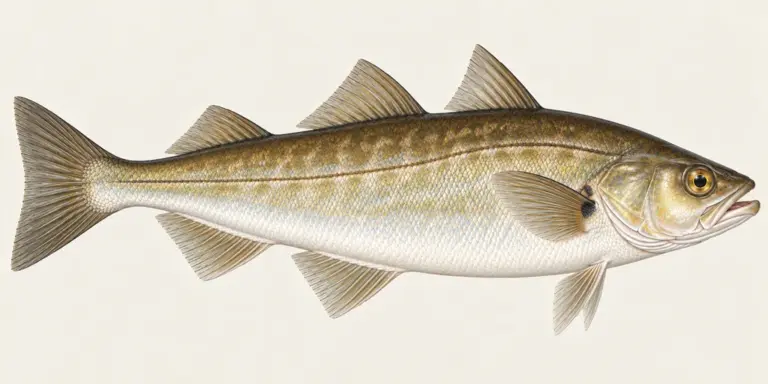
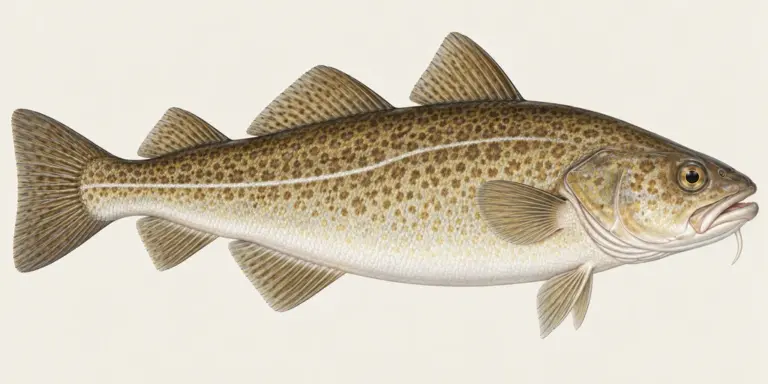
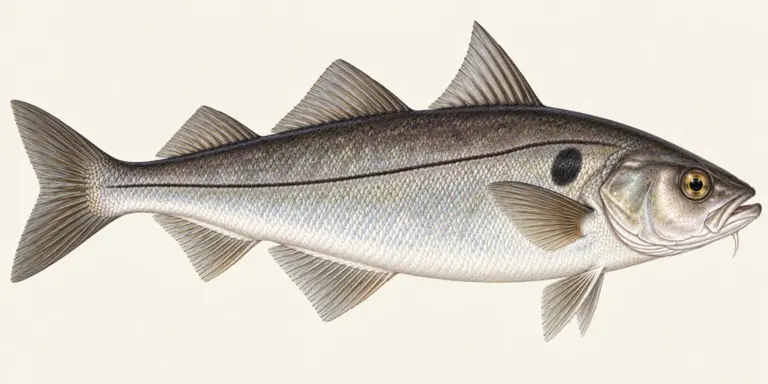
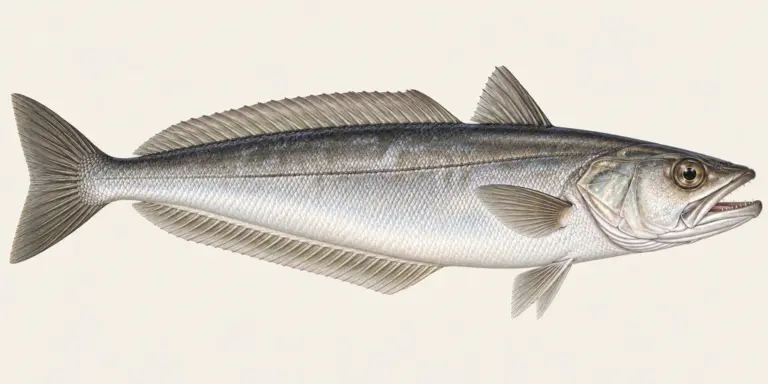
AI-generated illustrations.
Where it holds
The whiting is found from the Barents Sea to Portugal, and also in the North Sea, the Kattegat and the western Baltic. It prefers 30 to 100 metres of water over muddy ground.
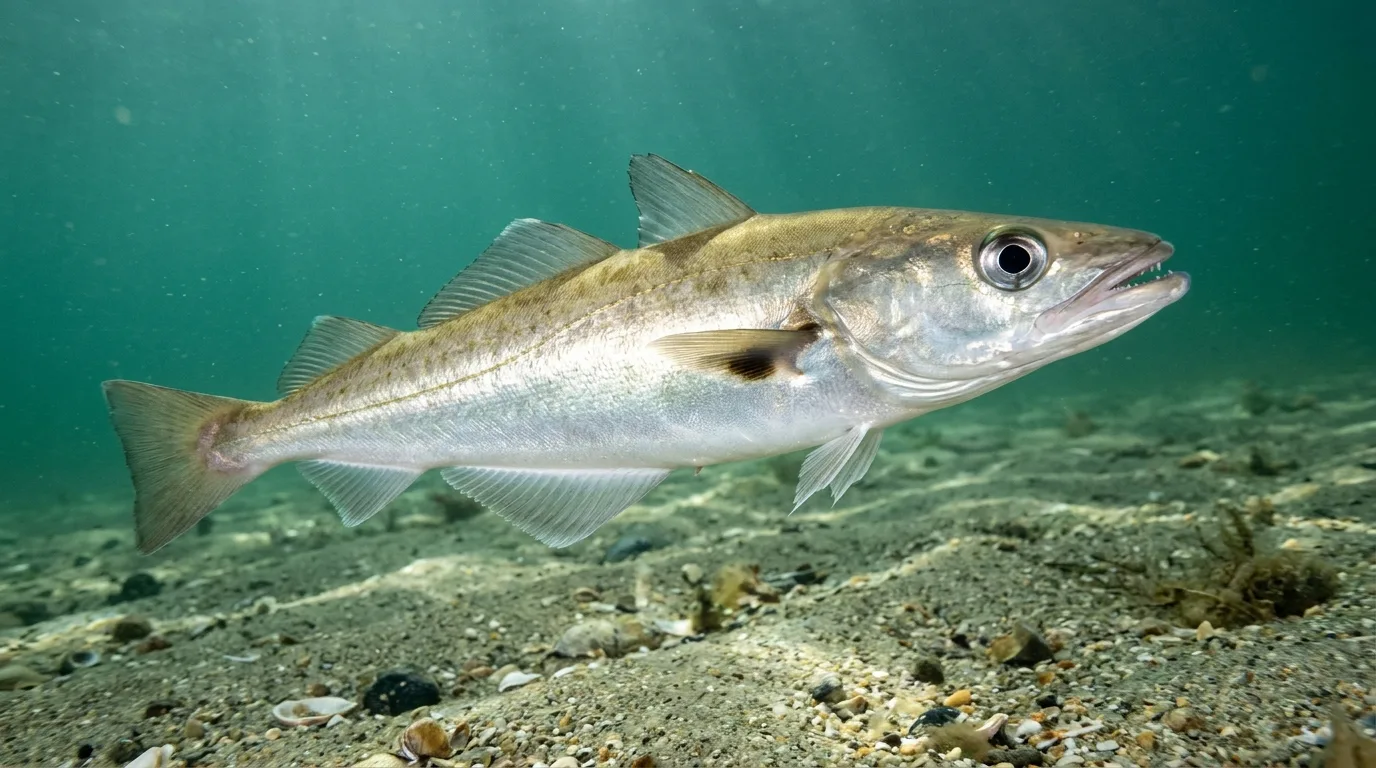
It avoids shallow water. Anglers look for it in deep bays from about 20 metres of water, usually close to the bottom. When small fish pass through, the shoals rise almost to the surface.
Holding spots in the picture
Choose a season and time of day: the picture shows where the species sits then. Tap a fish or a spot in the list to bring it closer. The picture is schematic and AI-generated, every water is different.
Catch chance in springpossibleSpawning season, observe closed seasons
Chance of a catch in summerpossibleSpawning, observe closed seasons
Catch chance in autumnPeak season
Chance of a catch in wintergoodSpawning, observe the closed seasons
- J
- F
- M
- A
- M
- J
- J
- A
- S
- O
- N
- D
Spawning season
Not the main time The whiting feeds on bottom-dwelling prey mainly at night and on free-swimming prey rather by day.
Active time The whiting feeds on bottom-dwelling prey mainly at night and on free-swimming prey rather by day.
Not the main time The whiting feeds on bottom-dwelling prey mainly at night and on free-swimming prey rather by day.
Active time The whiting feeds on bottom-dwelling prey mainly at night and on free-swimming prey rather by day.
On the coast
Sandy bottom
Whiting are found here all year round.
Wreck, reef
Whiting are found here all year round.
Deep, colder water
Whiting are found here all year round.
Whiting usually hold close to the bottom in deep water, preferably over mud and sand, sometimes also at deep breakwaters, reefs and wrecks. They also leave the bottom and follow prey fish up almost to the surface. Young fish stay near the coast in their first year, and in a rough sea the shoals retreat to deeper water.
Spring: catch chance according to the catch calendar possible. This is when the spawning season falls, observe closed seasons.
Summer: according to the catch calendar, chances are possible in June and July, good in August. The spawning season falls in this period, so observe the closed seasons.
Autumn: according to the catch calendar, chances are in the main season. On the Baltic Sea the late summer and autumn are given as the main season.
Winter: according to the catch calendar, chances are good in December and January, possible in February. The spawning season falls in this period, so observe the closed seasons. In the southern North Sea spawning already begins in January and goes on for months.
Depth: The whiting lives at depths of 10 to 200 metres, mostly 30 to 100 metres. Anglers look for it from a water depth of about 20 metres.
Size comparison: AI-generated drawing, schematic.
How it hunts and spawns
Whiting are shoal fish and predators. They eat prawns, crabs, worms and small fish such as sand eels and herring.
Spawning stretches over months, from January to July in the North Sea. In the south it starts earlier than in the north. The fish mature at about two years old, at 25 to 30 centimetres long.
When it bites
In the Baltic, late summer and autumn are considered productive, around the British Isles the months from November to January.
On cutter trips, the whiting is often the fish that bites when the cod stay away. In rough seas the shoals retreat to the deep.
Today’s catch index needs JavaScript. Season and spawning time are in the catch calendar.
You will find the monthly overview of all species and the water temperature check in the catch calendar.
From the blog: Fishing in November: which fish bite now and where I look for them
What you catch it with
Step by step: Fishing for whiting: tips on bait, rig and tackle – season, spots, bait, tackle and rules on one page.
You fish with natural baits on a paternoster: lugworm, small pieces of prawn and small strips of herring or mackerel. The baits must be fresh, and the tackle can be light.
If you run into a shoal while jigging, a hooklength above the pilker with two or three small twisters or cod flies helps. Work the rig just above the bottom with gentle twitches.
Stay with the shoal: Where one whiting bites, there are usually more nearby. Lower the rig back down quickly.
Expect bycatch: Natural-bait rigs fished near the bottom also bring flounder and dab. Identify every fish before you keep it.
Suitable lures
Lugworm, pieces of prawn and small strips of herring on a paternoster; small twisters or cod flies as droppers.
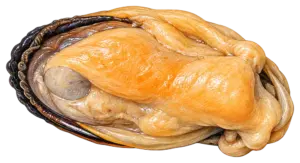
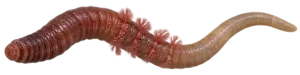
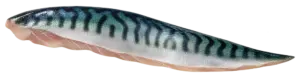
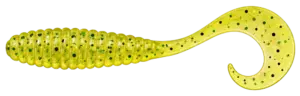
AI-generated illustrations. A click opens the lure’s page.
Rigs for these baits: surf rig, natural bait rig for the sea.
Natural baits must be fresh.
How to use whiting in the kitchen
The whiting gets its name from its white flesh, and in Norway it is therefore also called the chicken of the sea. The flesh is lean, restrained in flavour and so loose that it is hardly suited to poaching in stock. It works well fried skin-side down, but is best suited to fish mousse. Because whiting do not grow large but usually bite several at a time, they count as a fish for the cooking pot. Cutting it up is shown in filleting fish.
Fish spoils quickly because it contains a lot of water and delicate protein. So keep the catch cold and prepare it on the same day if possible; details are under storage and hygiene. Like any sea fish, the whiting can carry roundworm larvae, which die when deep-frozen and heated. So never eat fish you caught yourself raw or nearly raw if they were not frozen through sufficiently.
What you need to observe
Closed seasons, minimum sizes and harvest slots are set by the federal states (Bundesländer) and by the fisheries authorities of the neighbouring countries on the coast (Denmark, Norway, Poland). They vary by type of water, stretch of coast and time of year. We only give figures together with the date and source; the fisheries regulation of your federal state and your fishing permit (Erlaubnisschein) are always what is binding. You will find a list of links to the official sources in the catch calendar.
A fish of legal size that you want to keep you stun and kill at once, in line with animal welfare rules. Protected, undersized fish or fish too large under a harvest slot you unhook, if possible still in the water and with wet hands, and release gently. What exactly applies is regulated by state law and your fishing permit (Erlaubnisschein).
In the Baltic, the catch rules for sea anglers change from year to year. Check the current version for your coastal state before every trip. This also applies to trips on an angling cutter.
What closed season, minimum size and harvest slot mean and where to find them is explained on the page Closed season and minimum size explained.
Frequently asked questions (FAQ)
Is merlan the same as whiting?
Yes. Merlan, Weißling and Gadden are other names for the whiting (Merlangius merlangus).
How do I tell whiting and haddock apart?
On the whiting the dark spot is small and sits at the base of the pectoral fin. On the haddock it is large and round, and the lateral line is black.
What does whiting taste like?
Mild and lean, but the white flesh is rather loose and falls apart easily in stock; it works better fried skin-side down. The fillet yield is lower because the fish is smaller.
Sources
The rating of catch chances is an editorial assessment. The facts come from these sources, and the text is worded in our own words. The illustration is an original design by Angel Momente in the style of a natural history plate (AI-generated, see the AI notice).
- Wikipedia: Wittling
- Havforskningsinstituttet: Hvitting (Wittling)
- FishBase: Merlangius merlangus
- Blinker: Steckbrief Wittling
- Thünen-Institut, Fischbestände online: Schellfisch
- Lex.dk (Den Store Danske): hvilling (Abschnitt Udnyttelse)
- BZfE: Fisch und Meeresfrüchte, vom Einkauf in die Küche
- BZfE: Fisch und Meeresfrüchte, Gesundheit und Umwelt
- LAVES Niedersachsen: Parasiten in Fischen und Fischereierzeugnissen, ein Problem?
- DTU Orbit: Rindorf (2003), Diel feeding pattern of whiting in the North Sea, Marine Ecology Progress Series 249
Created with AI support from the sources listed. Figures only appear in the text if a source gives them. Last updated: 1 November 2026. Found a mistake? Write to us. Who is behind this site: About me.
More in the lexicon
- All fish species at a glance
- Catch calendar – month, water temperature and profile for 93 species
- Line calculator – breaking strain after the knot, drag guideline, backing
- Angling methods