
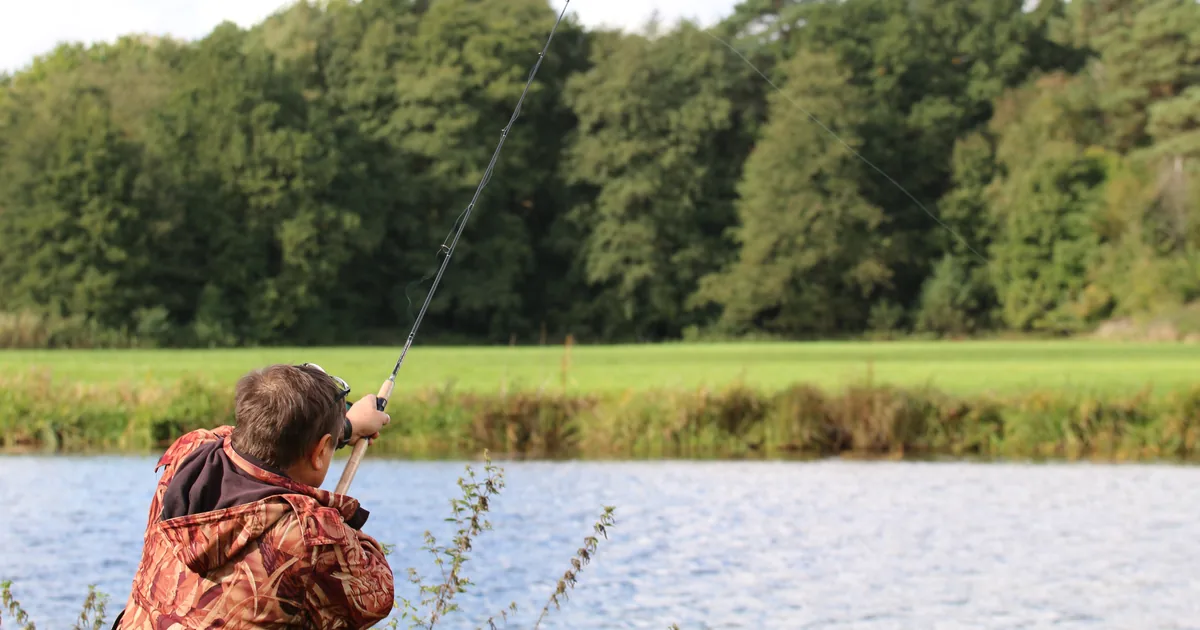
At a glance
- Peak season
- Pike and zander: edges and holes first from the bank
- Good
- Perch, roach, chub and, on the coast, flounder
- High water
- Harbours, groyne fields and quiet bays instead of the main current
- Scania
- Brown trout, sea trout and burbot are spawning now
- Cod
- banned all year round in the Baltic Sea in 2026, bycatch goes straight back
What the water does in November
In autumn the surface of a lake cools until warm and cold water no longer separate. Then the wind turns the whole lake over. The Lexikon der Biologie describes this full circulation for lakes in temperate latitudes in spring and autumn; nutrients and oxygen are exchanged as it happens. After that there is no warm surface layer left, which is what I go by in summer. How this unfolds over the year is shown on the page The year at the water.
At the same time the leaves fall. In small streams and rivers that is more than flotsam: researchers at Eawag, the water research institute of ETH Zurich, call leaf fall the foundation of many waters. Small animals break the leaves down and in turn end up in the stomachs of fish. When a lot of leaves are drifting, I take a quick look at the lure after every cast.
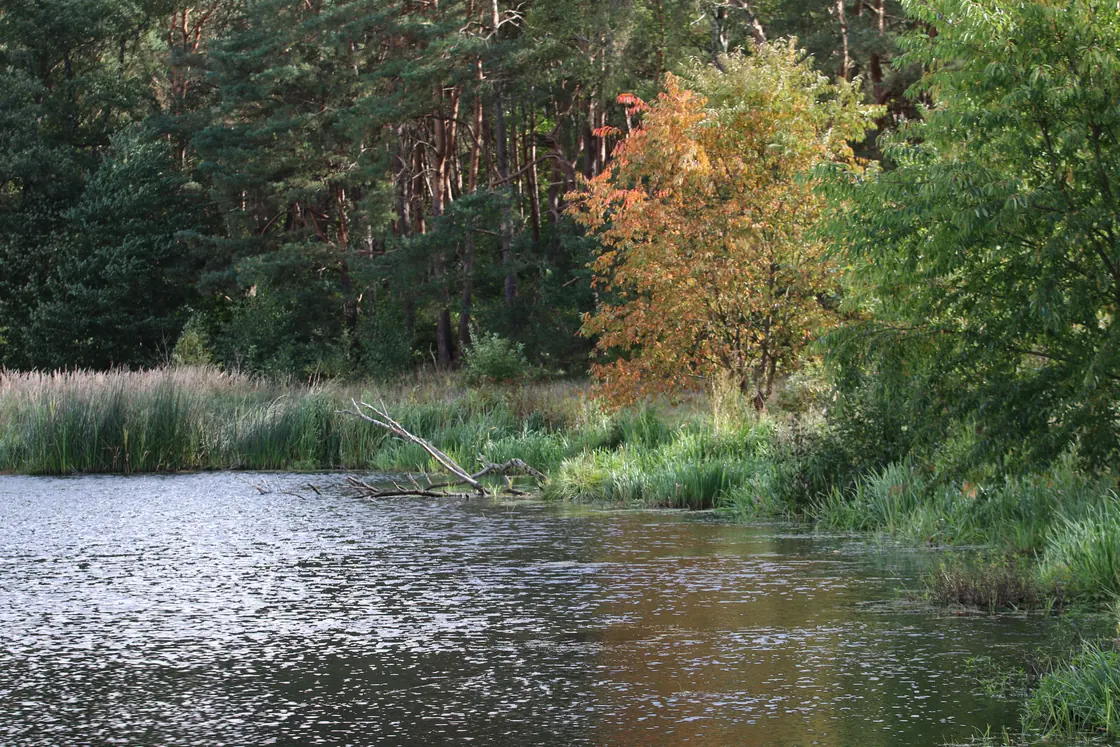
My November list from the fishing calendar
In the fishing calendar, pike and zander are at peak season in November, and perch, roach, chub and flounder are rated Good. The table shows where I look for these species now and what I start with. The ratings are a rough estimate, not a promise for any single day.
| Species | November rating | Where I look | Lure and method |
|---|---|---|---|
| Pike | Peak season | edges to deeper water | small soft plastic on a jig head |
| Zander | Peak season | steep edges, holes with a sandy bottom | soft plastic, slowly reel-lifted |
| perch | Good | channels and holes on the bottom | drop shot, very slowly |
| Roach | Good | deeper spots in the lake | maggots on a fine float |
| Chub | Good | overhanging bushes, undercut banks | luncheon meat on the bottom |
| Flounder | Good | beach, pier, brackish river mouth | lugworm from dusk |
Pike and zander at edges and holes
In the fishing calendar the pike stays at peak season from October to December. In November the bites in the shallows become rarer and, depending on how fast the water cools, it moves to edges with a little more depth. How I look for it there with small soft plastics and why dead wood matters more now is covered under Pike in autumn.
The zander avoids bright light. On short, overcast November days I therefore cast at midday too. If the sun shines into clear autumn water, it sits deeper, and I tap the bottom with a soft plastic or move my fishing time to the evening. At night it comes into shallower areas along the bank, where I work a shallow-running crankbait. By day I cast at steeply sloping edges, underwater humps and holes with a sandy bottom.
I now fish the soft plastic more slowly. Lift-and-drop (Faulenzen) means working the lure along the bottom with the reel alone. In early autumn I usually need three turns of the handle for this, in late autumn only one or two, so that it hops over the bottom in short jumps.
Perch, roach and chub in cold water
In the fishing calendar the perch drops from peak season to Good in November. Where the shoals hold near the bottom now, I have written up under Perch in autumn. In November what changes for me is mainly the pace. I fish a drop-shot rig, where the weight hangs at the bottom of the hooklength and the hook sticks out a little above it. That keeps a worm or small soft lure in one place for a long time, quivering only slightly. In shallow still water around 3 grams of weight is enough, in deep lakes I use up to 35, and in a river the weight depends on the current.
The roach gets more sluggish with every cooler week. So I feed a fine winter groundbait without coarse particles and put maggots on the hook. I leave out pellets and other oily baits because oil hardly works in cold water. In a lake roach otherwise like to stand in mid-water, but in winter they retreat to deep spots. As soon as the water turns cold, I therefore look for them in the deeper water first (Fig. 1) and fish there with a fine float.
For the chub the time of the big winter fish begins in mid-November. I now put out hefty mouthfuls such as luncheon meat or a paste with chicken liver on the bottom. Small silver fish are more likely to pick these baits out than maggots. Because the weed has largely gone, chub stand under overhanging bushes and along undercut banks, preferably with a calm eddy in front. Water slightly clouded by rain suits me; in clear water the fish are warier.
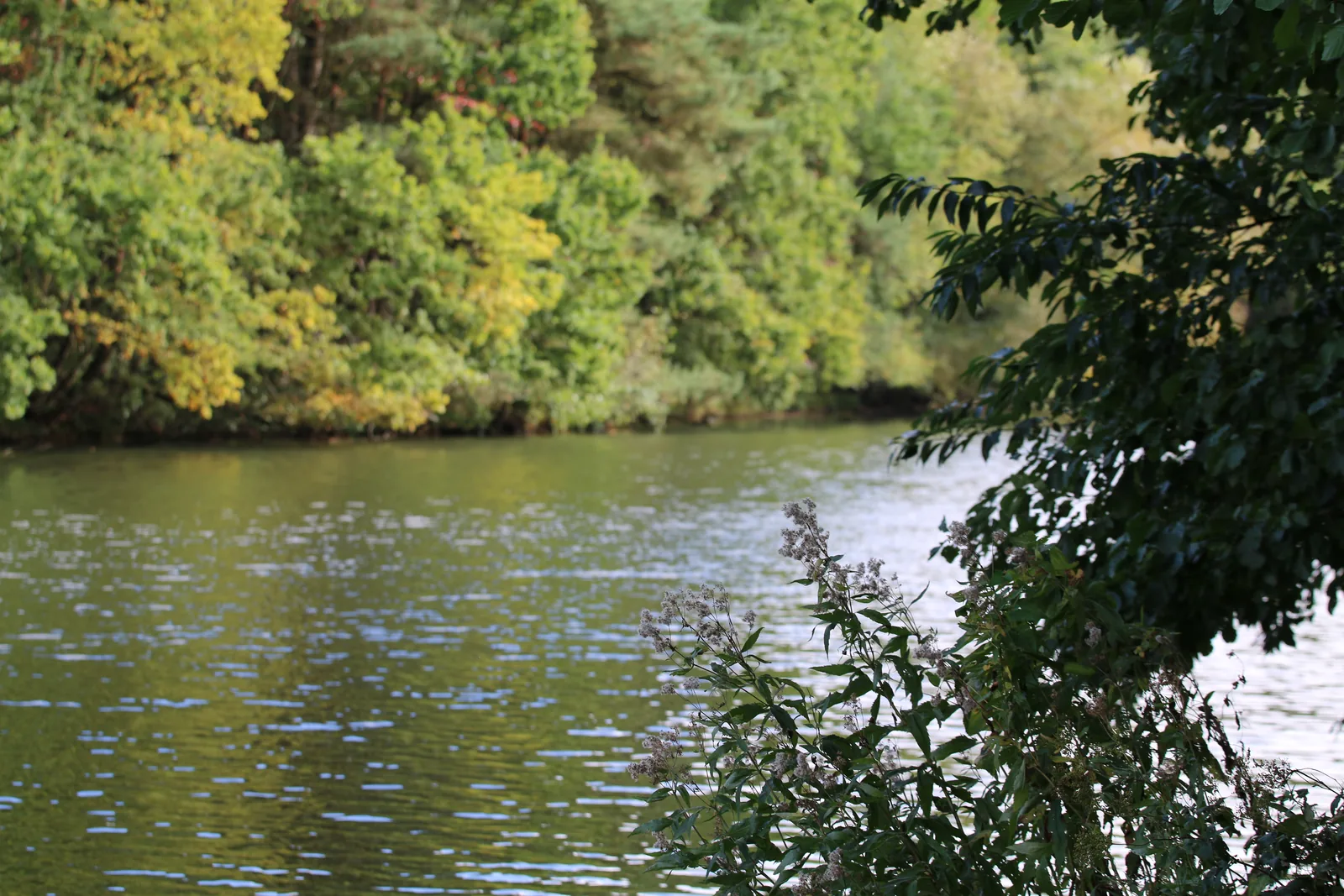
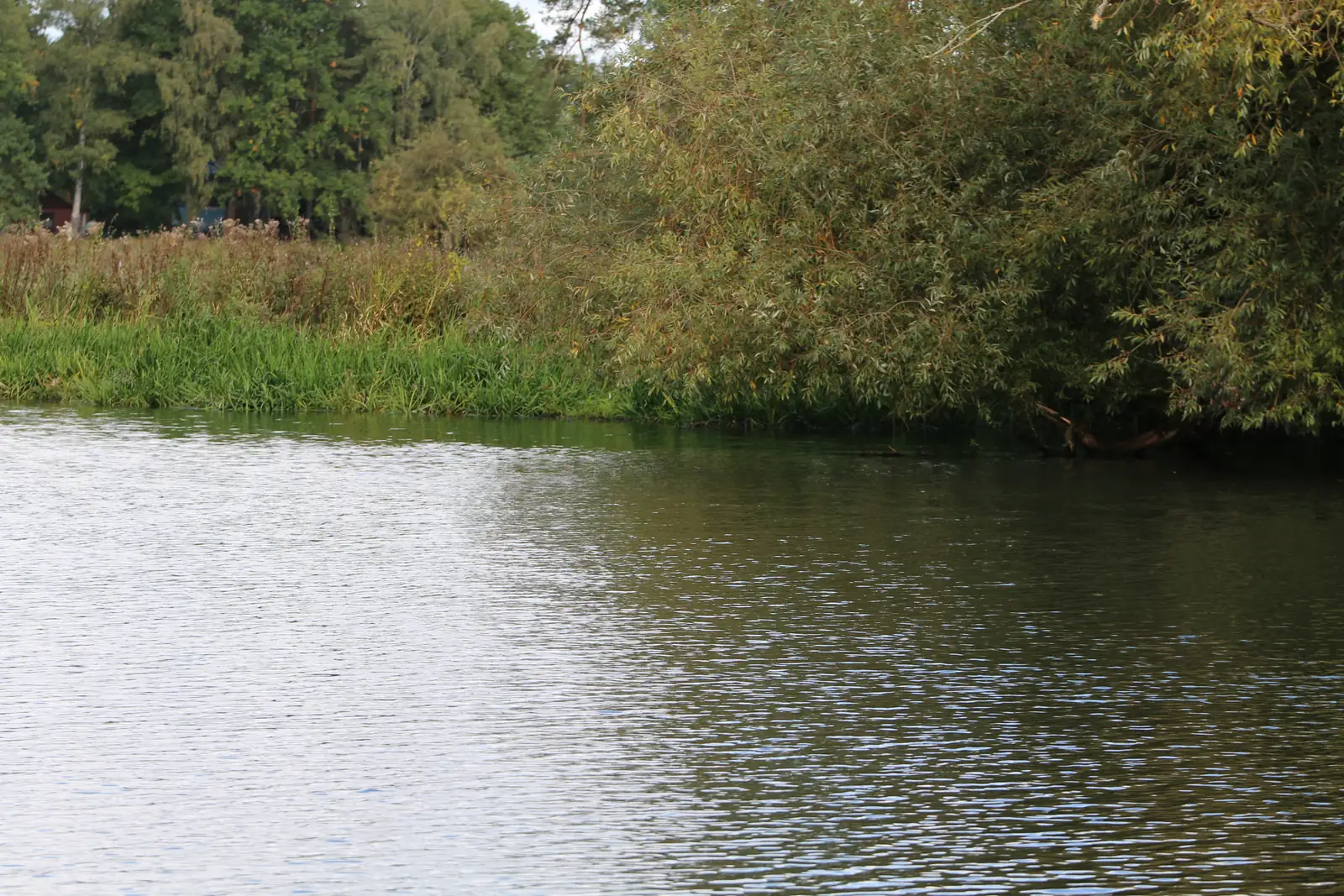
Into calm water when the river is high
On 1 November the hydrological winter half-year begins in water management. According to the Umweltbundesamt, floods occur in both half-years, somewhat more often in winter, when it rains for days or weeks or a thaw coincides with rain. When the river rises, I do not look for the fish in the main current but where they step aside from it.
For typical river fish, deep areas with little current are, according to the Landesanstalt für Umwelt Baden-Württemberg (LUBW), a resting place, winter quarters and refuge in high water all at once. These include bays and oxbows with little flow. The state of Lower Austria also names side arms to which some species are tied in winter and during high water. So I work my way through a groyne field, a harbour and the entrance of an oxbow one after another. A groyne field is the calm basin between two stone dams that jut from the bank into the river.
On the bank itself in high water, the DLRG warns that even a current that only reaches the knee can sweep you off your feet. For the current situation it refers to the cross-state flood portal of the federal states. I check the gauges there before setting off. Weather at the water shows me the day’s wind, rain and temperature. What applies to wet slopes and waders is covered under Bank and waders.
These species I leave alone in November
Some fish are spawning right now. According to the fish lexicon of the Landesfischereiverband Bayern, the brown trout spawns from October to February, and my fishing calendar lists it as Hardly any chance in November. The sea trout is rated Possible there. If it has turned brown, it is preparing to spawn, and I put it back gently.
According to the Landesfischereiverband Bayern the burbot spawns from November to March. On the Red List of freshwater fish of Germany it is classed as endangered. Because of its spawning time it is only rated Possible in the fishing calendar in November, and I do not target it this month.
Spawning time and closed season are not the same thing. Whether a species is protected right now, whether it is protected all year round in your state and which minimum size (Mindestmaß) applies is set by state law and your fishing permit (Erlaubnisschein). The basics are covered under Closed season and minimum size explained.
On the coast: flounder instead of cod
From November flatfish also visit the brackish water in the mouths of big rivers. The flounder is rated Good in the fishing calendar. I fish it from the beach, from a pier or at a river mouth with lugworm on the bottom, on the coast with the surf rig. By day it lies sluggish in the sand, and with dusk it moves into the shallows to feed. After a storm and with an onshore wind I therefore sit down on the beach in the evening and cast to the seaward side of a sandbank.
The fishing calendar lists the whiting at peak season in November; where I look for it from the shore is covered in the guide Whiting fishing.
I skip the cod in the Baltic Sea altogether. According to the state of Schleswig-Holstein, recreational fishing for cod in the Baltic Sea is banned all year round in 2026, based on Regulation (EU) 2025/2454. If a cod does take the hook while you are fishing for other species, it must go straight back, gently (as of the state’s page: 9 January 2026). The EU fisheries council deliberates on 2027 at the end of the year. The rating in the fishing calendar says when the cod bites, in Norway for example, and not where you are allowed to fish for it.
Frequently asked questions
Which fish bite best in November?
In the fishing calendar pike and zander are at peak season, and on the coast the whiting too. Perch, roach, chub and flounder are rated Good. Region, water and weather shift this from year to year.
Is fishing in high water worth it?
On the river I then look for harbours, groyne fields and oxbows where the fish find shelter from the current. Slightly clouded water suits the chub. Beforehand I check the gauges and stay away from banks where the current can reach me.
Can I fish for cod in November?
Not in the Baltic Sea. Recreational fishing for cod is banned there all year round in 2026, and a cod caught by accident must go straight back, gently. The rules for 2027 will be deliberated again at the end of the year.
Which fish spawn in November?
Among others brown trout, sea trout and burbot. Whether they are then protected is decided by each federal state itself. I leave them alone this month.
Related
- Pike fishing: season, spots and baits step by step
- Zander: features, way of life and spawning time in profile
- Fishing for zander: groyne basins, edges and lures step by step
- Fishing for chub: running weight, maggot feeder and winter float
- Fishing for roach: pole, float and groundbait in winter
- Fishing for flounder: beach, pier and baits for the flatfish
- Pike in autumn: weed, dead wood and the edge in November
- Perch in autumn: where the shoals go as the water turns cold
Sources
- Spektrum, Lexikon der Biologie: See (Zirkulation im Herbst)
- Eawag, Abteilung Aquatische Ökologie: Laubstreu-Dynamik in kleinen Fließgewässern (Laubfall als Nahrungsgrundlage)
- Umweltbundesamt, Monitoringbericht 2023 zur Deutschen Anpassungsstrategie: Indikator Hochwasser (hydrologisches Winterhalbjahr, Hochwasser im Winter)
- LUBW und WBW Fortbildungsgesellschaft: Kompaktinfo 3, Fischlebensräume erhalten, entwickeln, anlegen (strömungsarme Bereiche als Hochwasserrefugien)
- Amt der Niederösterreichischen Landesregierung, Abteilung Wasserbau: Lebensraum Gewässer (Nebenarme als Winter- und Hochwassereinstand)
- DLRG: Hochwasser (Strömung, Hochwasserportal)
- Landesfischereiverband Bayern: Fischlexikon (Laichzeiten von Bachforelle und Quappe)
- Rote-Liste-Zentrum: Quappe (Gefährdung)
- Land Schleswig-Holstein: Freizeitfischerei auf Dorsch in der westlichen Ostsee auch im Jahr 2026 verboten (Dorschverbot, Beifang, Stand)
- Blinker: Welche Fische beißen beim Angeln im November, Zanderangeln im Herbst, Hechtangeln im Herbst, Döbelangeln im Herbst, Steckbrief Rotauge (Döbel, Rotauge, Dropshot, Meerforelle, Plattfische, Zander, Hecht im November, Rotauge im Winter)
- Blinker: Steckbrief Flunder (Beißzeit und Plätze der Flunder)
- Fisch & Fang: Zielfisch Barsch, wo schwimmen sie denn (Barsche von November bis März am Grund)
Text AI-assisted, drawing AI-generated, photos: Iwan Belokurov. Sources opened and checked in October 2026; no graphic was taken from the sources.
All information is a guide only and given without guarantee. Ratings, holding spots and biting times vary with the water and the year; closed seasons, minimum sizes and fishing bans are set by state law.