
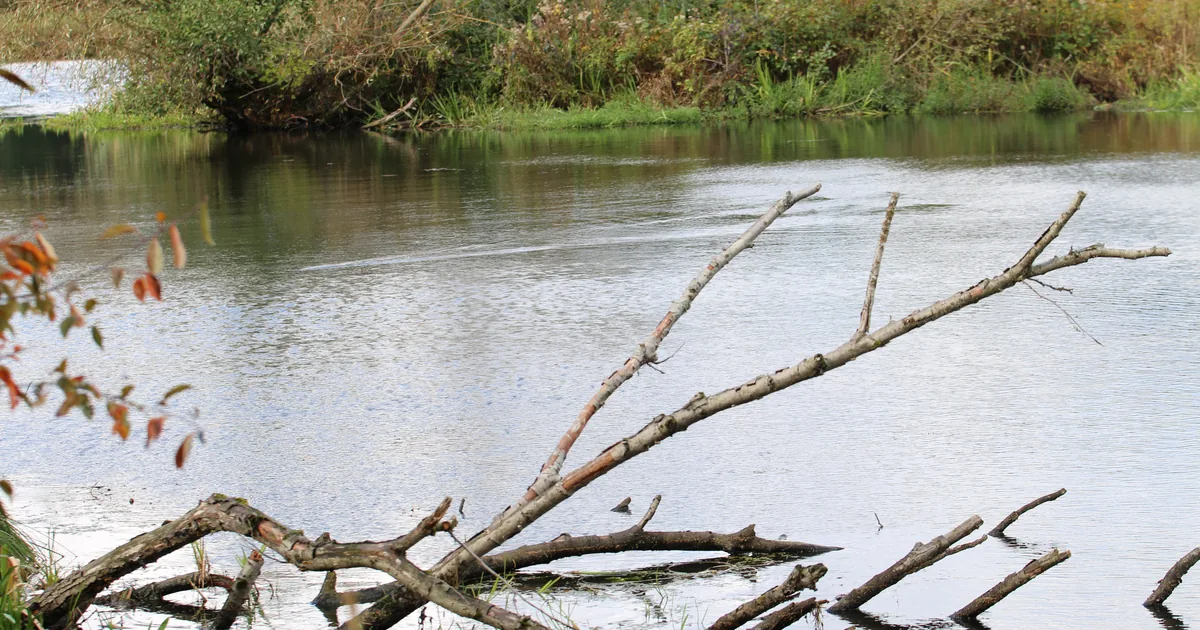
What changes underwater in autumn
At the water I watch the plants above all. In larger lakes the pondweeds, a group of submerged water plants, last well into autumn and give the pike cover for a long time. Only after the first night frosts do leaves and stems turn soft. Until then I cast deliberately into gaps and along the edges of the beds; afterwards the lure can also be pulled straight through the weed.
In late autumn there is not much green left. Pike then often sit out in the open. Their prey fish retreat as the water cools, and the predators cover longer distances while hunting. For me this is when the best pike season of the year begins. In the catch calendar pike is rated Good in September and Peak season from October to December.
Where the pike sits in autumn
The order in which I work the spots in autumn, from pond to weir, is in Fishing spots in autumn. Here the point is why the pike sits there and how that shifts from October to November. In October many pike still sit shallow at weed edges, at the remains of old weed beds and at the reeds.
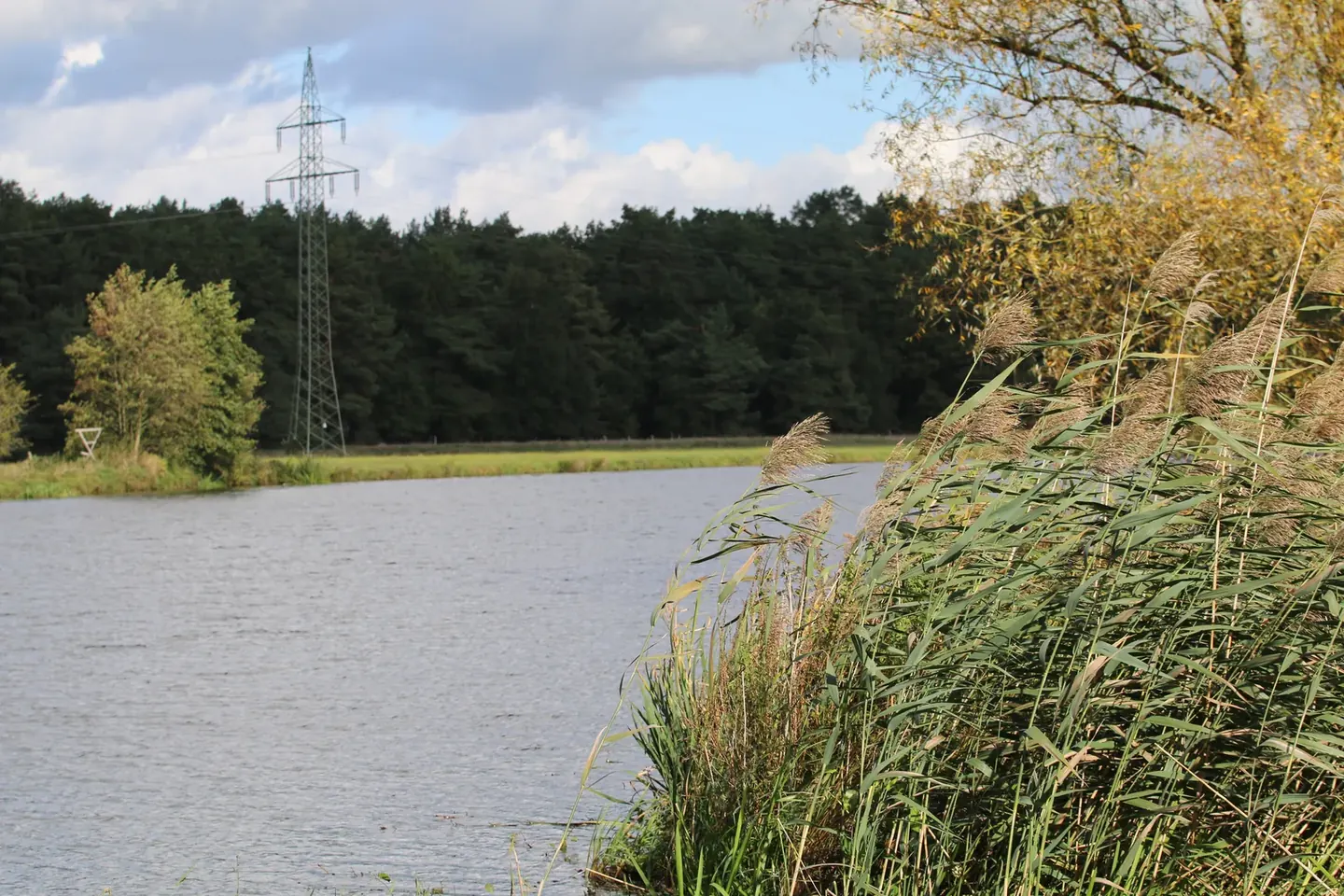
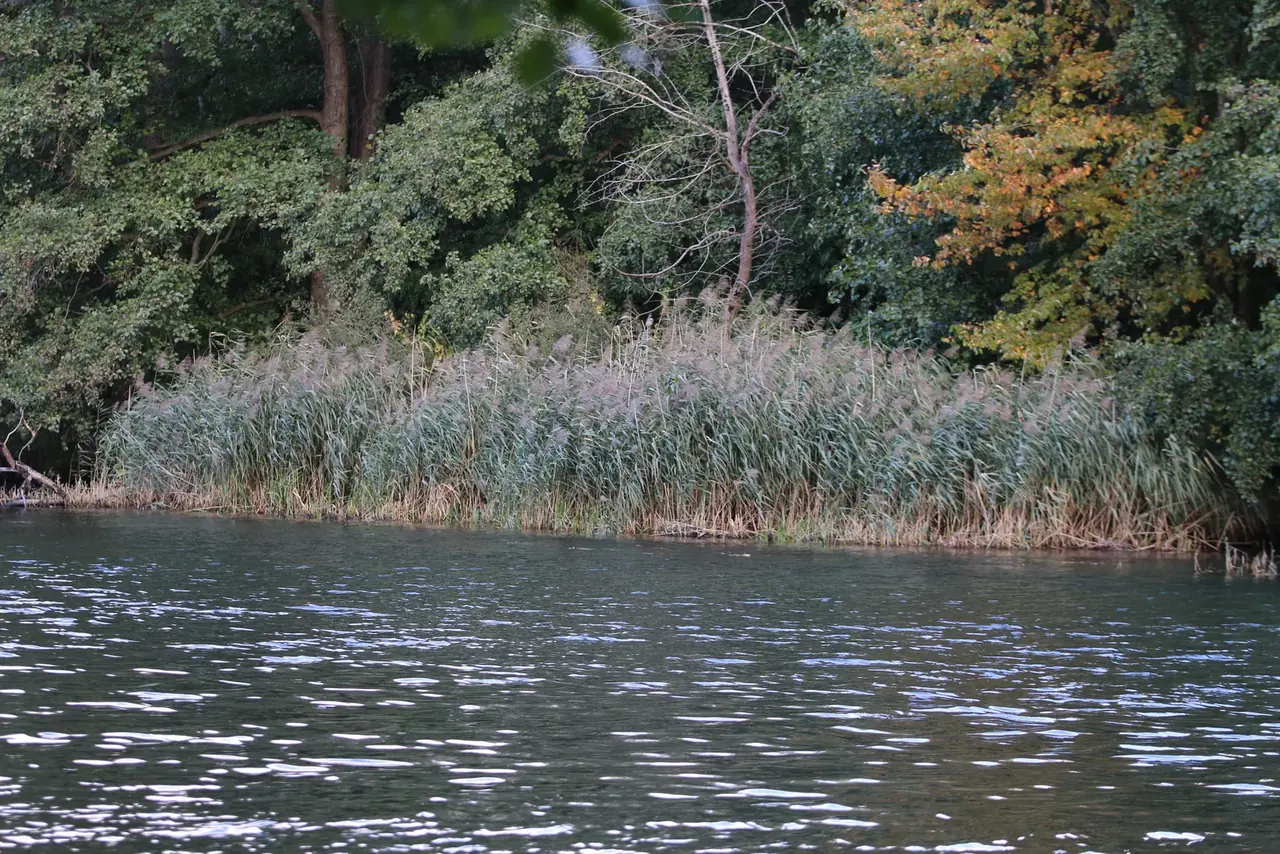
That I am right to fish the reeds is confirmed by a study from Lower Saxony. Researchers electrofished eight gravel-pit lakes there in all four seasons, with the autumn round at the end of October. In the reed belt, meaning reeds and other plants that stand out of the water, they found more pike in every season than on open shore or at the dead-wood piles that had been put in.
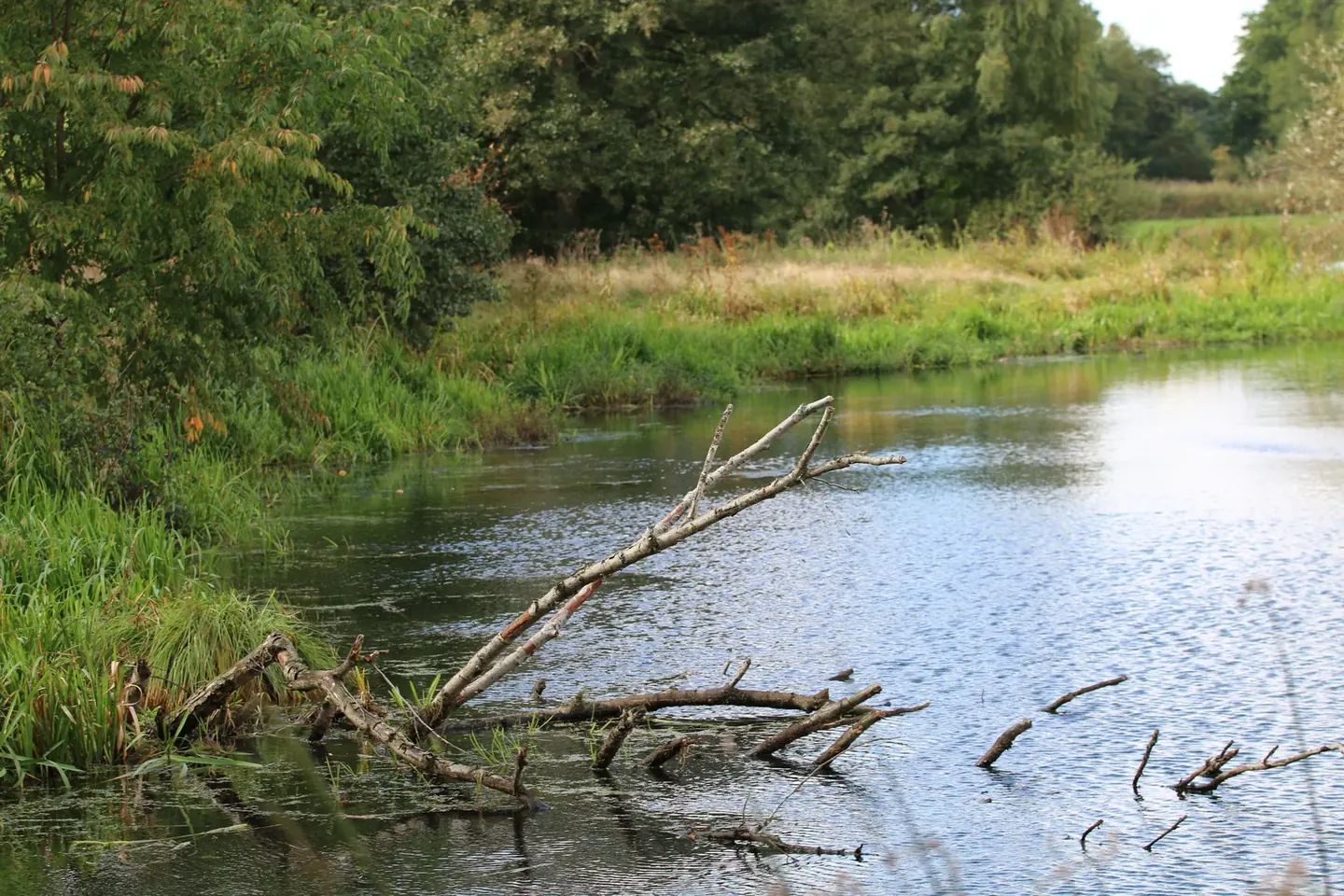
Dead wood when the weed falls
The more the weed collapses, the more time I spend at wood in the water. In the same study the most pike sat in the dead-wood piles in winter. The researchers see the wood as a partial substitute for the underwater plants that vanish in winter. A fallen tree simply stays where it is when the green has long gone.
To the edge in November
In November things usually get quieter in the shallows. How early that happens depends on how fast the water cools; the pike then pull back into somewhat deeper water. I look for them at structure, above all at edges where the shallows drop into the deep. Fig. 1 shows exactly this change.
In the river
Pike do not like strong current. So I look for them in the groyne fields, the calm basins between the stone dykes, and hardly at all at the heads of the groynes. The upper groynes take most of the pressure; those further downstream are more worthwhile.
Lures and presentation in autumn
There are two schools of thought on lure size. In favour of smaller soft plastics is that in autumn the pike key in on masses of small baitfish. When they really feed in cool water, though, it can be one size up, above all jerkbaits worked with twitches of the rod, and large soft plastics. The question catalogue for the Bavarian angling exam (Fischerprüfung) gives 15 to 20 centimetres as the right soft-plastic size for autumn pike. According to the German Anglers‘ Association (DAFV), lures over 15 centimetres also catch fewer undersized pike, and the hook sits deep less often.
I stick to a few patterns for presentation. In the shallows I work sinking jerkbaits with upward pulls rather than downward ones. A twitchbait, meaning a plug with a small diving lip, I work in three steps:
- After the cast, two or three short, hard twitches until it is down to depth.
- Then three to four metres of steady retrieve.
- Two or three more twitches and a short pause in which the lure rises towards the surface.
If plants are still standing, I steer it past them with the rod.
I like to work the edges with small soft plastics on a jig head. I spare myself an extra treble: with the single hook on the jig head far less weed hangs on the lure.
On mild, calm autumn days I try a surface lure once more.
Pike remember lures
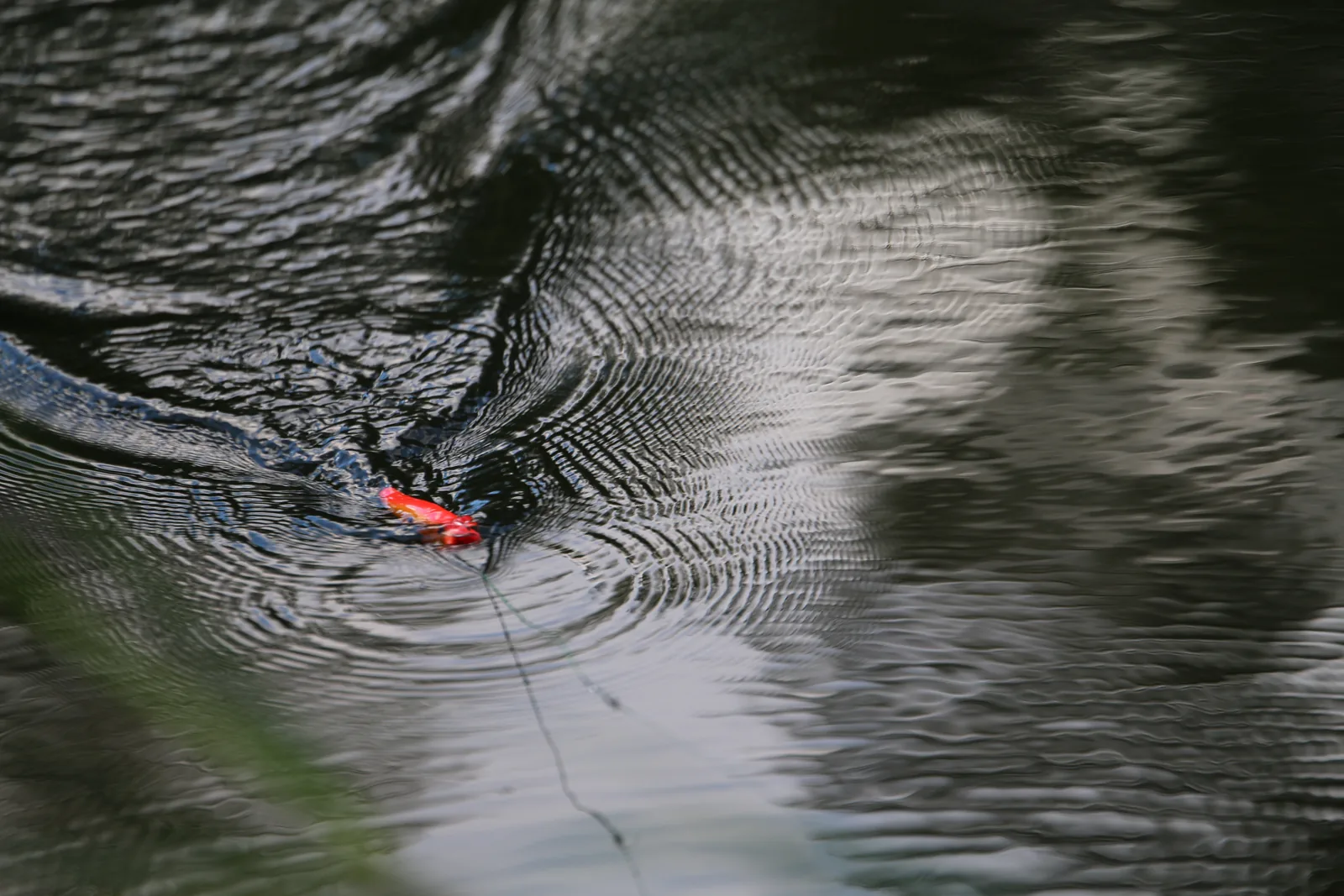
How quickly pike learn was studied by the Fischereiforschungsstelle Baden-Württemberg in Langenargen in tank trials. With every new encounter with a lure the pike attacked less often, cautious fish just like bold ones. The researchers speak of learned lure avoidance. Older pond trials quoted by the DAFV showed this already with the spinner, but not with deadbaits. It fits that catches drop after days of heavy angling pressure. For me that means: I prefer to leave heavily fished spots alone for a while.
By contrast, pike in the weed are surprisingly little bothered by the angler himself, much less than asp or chub.
Time of day and weather
When the water falls to around 10 to 15 degrees in autumn, pike feed throughout the day. What I like best then is proper pike weather: a grey sky, cool air and wind.
What I prepare for in the evening: often almost nothing happens for an hour, and then shortly before sunset the water suddenly starts to boil because the predators begin to hunt. Then I cast one after another.
A study from Brandenburg fits this. In 2005 researchers fished deliberately for pike on a small lake from spring into autumn and analysed the catches from the end of May to mid-September. They caught most in cooler water and strong wind, and dusk was particularly productive. Air pressure and rain, by contrast, made hardly any difference. Pike tagged with transmitters in a small Brandenburg lake were mainly on the move at dusk in summer; in winter there were no such peaks. The autumn months themselves were not part of the analysis. As autumn lies between these two patterns, I plan mornings and evenings firmly, but something also happens during the day.
Hooklength, landing net and release
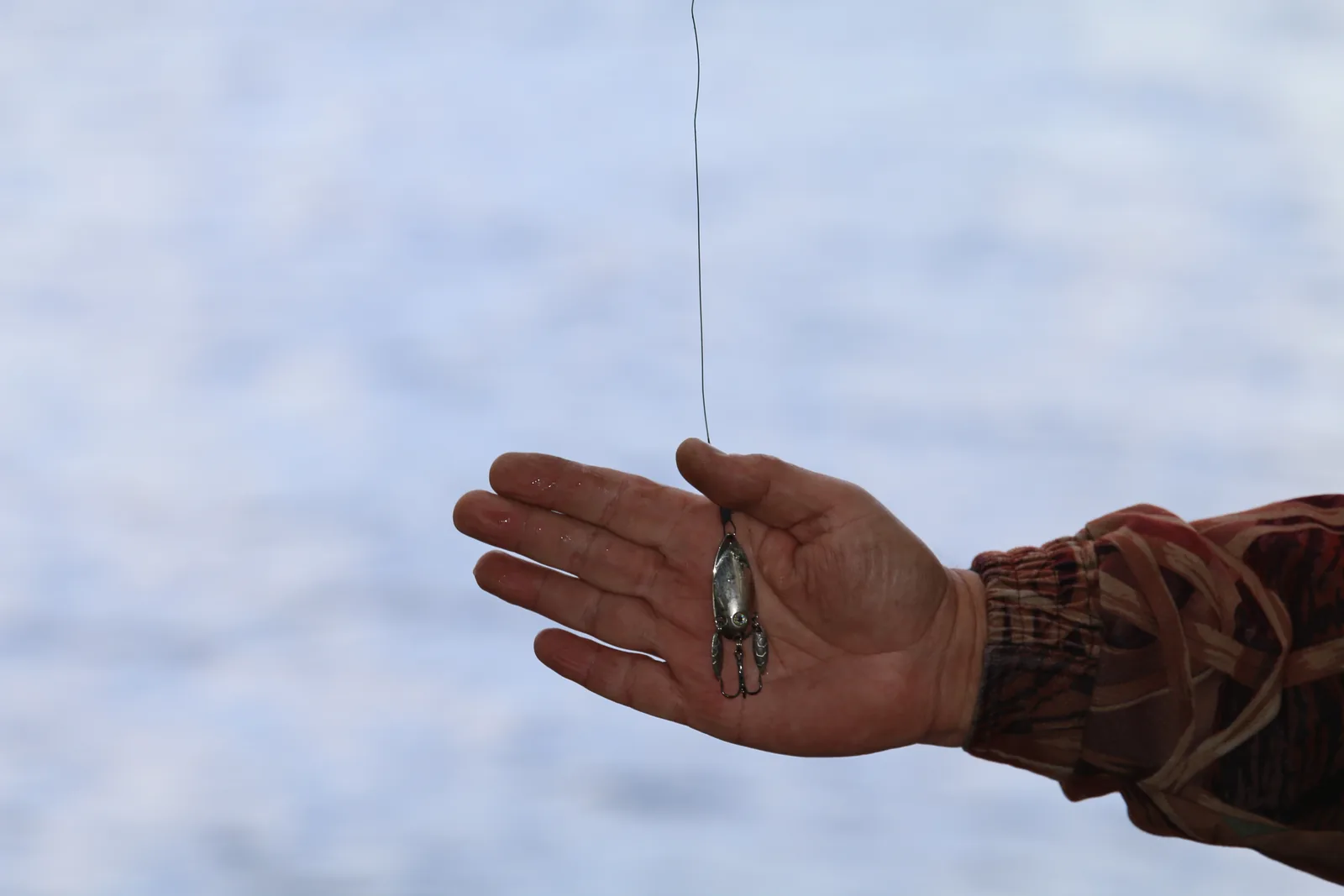
I do not cast any lure for pike without a bite-proof hooklength. Its teeth are sharp and cut through normal line, and if it breaks, the pike swims off with the lure in its mouth. The question catalogue for the Bavarian angling exam therefore requires a hooklength of bite-proof material such as steel, and the DAFV expressly recommends metal hooklengths for pike fishing. I use a steel or titanium pike hooklength.
From my own experience
- When fishing with poppers and plugs the trebles like to wrap around the hooklength. For these I use a twisted titanium hooklength. Even if it has wrapped right around the hooks, it does not kink permanently and is straight again afterwards.
- I have fished with braid of PE 1.0 and a fairly tight drag. If a big pike bolts into the middle of the lily pads and a whole clump of weed wraps around line and fish, that is pure gambling with such light gear. The line can break at any moment.
- After many casts a small loop can form on the spool unnoticed. If the line then snaps on the strike, the lure is gone, and at worst a fish swims off with it. With such rough lure work I therefore check the line lay constantly.
To land the fish I use a landing net with a knotless, rubberised mesh. I take the hook out in the water if I can. If the pike does have to come out, it lies on a wet mat so that its slime layer is not damaged.
Cool autumn water helps with release. According to the DAFV, most pike survive capture without harm as long as they are handled gently and air time and water temperature stay low. At high temperatures the association advises avoiding catching pike you intend to release as far as possible. I keep the fight and air time short in autumn too.
Closed season and minimum size
Before I make the first cast on a new water, I read the fishing permit (Erlaubnisschein). Whether and from what length you may take a pike, and when it is protected, is regulated by your federal state (Bundesland). Added to that are the conditions in the permit, for example on lures or on taking fish.
Frequently asked questions
Where do pike sit in autumn?
In October I still look for them shallow at weed remains and thin reeds, in November more at edges with a little more depth. Dead wood becomes more important the more the weed collapses. In rivers they sit in calm areas such as groyne fields, harbours and oxbows.
Big or small lures in autumn?
Both have their place. Smaller soft plastics suit the many small baitfish. The Bavarian exam catalogue, on the other hand, gives 15 to 20 centimetres for autumn, and lures over 15 centimetres catch fewer undersized pike according to the DAFV.
Which hooklength do I use in autumn?
Always a bite-proof one made of steel or titanium, even when I am actually fishing for perch. Pike teeth cut through normal line. For poppers and plugs with trebles I use a twisted titanium hooklength that is straight again after tangling.
Related
- Pike: features, spawning and attempts to catch it at weed edges, profiled
- Fishing for pike: step by step through the whole year
- Pike lures: lure groups by season, weed and depth
- Pike trace: wire, titanium and fluorocarbon compared
- Releasing a fish: keep the fight and air time short
- Fishing spots in autumn: the six spots I cast at first
- Pike on the coast of Mecklenburg-Western Pomerania: what the harvest slot means
- Fishing in an east wind: what the wind changes at the water
Sources
- Deutscher Angelfischerverband: Der Hecht, Fisch des Jahres 2016 (Broschüre) (Ködergröße, Wetter und Dämmerung, Lernen, Vorfach, Zurücksetzen)
- Fischereiforschungsstelle Baden-Württemberg, Lucas u. a.: Effects of behavioral strategies on catchability, bait selectivity, and hunting behavior in northern pike (2023) (gelernte Ködermeidung)
- Fischereiforschungsstelle Baden-Württemberg, Lucas u. a.: Predator responses in recreational fishing (2025) (Kescher, Abhaken im Wasser, nasse Matte)
- Maday u. a., Projekt BAGGERSEE: Seasonal and diurnal patterns of littoral microhabitat use by fish in gravel pit lakes (Hydrobiologia 2023) (Hechte im Röhricht und im Totholz)
- Kobler u. a.: Contrasting pike movement and habitat choice between summer and winter in a small lake (Hydrobiologia 2008) (Aktivität im Sommer und Winter)
- Bayerische Landesanstalt für Landwirtschaft: Prüfungsfragen zur Fischerprüfung 2023/2024 (PDF) (Vorfach, Gummifischgröße im Herbst)
- Blinker: Hechtangeln im Herbst, Tipps vom Experten (Laichkräuter, Flachwasser, Schilf, Führung, November)
- Blinker: Hechte im Herbst, hungrig und ohne Deckung (schwindendes Kraut, weitere Wege)
- Blinker: Insiderwissen zum Angeln im Oktober (10 bis 15 °C, Fressen über den Tag, Hechtwetter, Ködergröße)
- Blinker: Hechtangeln im Fluss, die besten Stellen (Buhnenfelder, Altarme)
- Fisch & Fang: Stachelritter-Spots (Raubfische im Fluss im Herbst)
Text AI-assisted, drawing AI-generated, photos: Iwan Belokurov. Sources opened and checked in October 2026; no graphic was taken from the sources.
All information is a guide only and given without guarantee. Pike holding spots and biting times vary with the water and the year; closed season and minimum size are set by state law.