
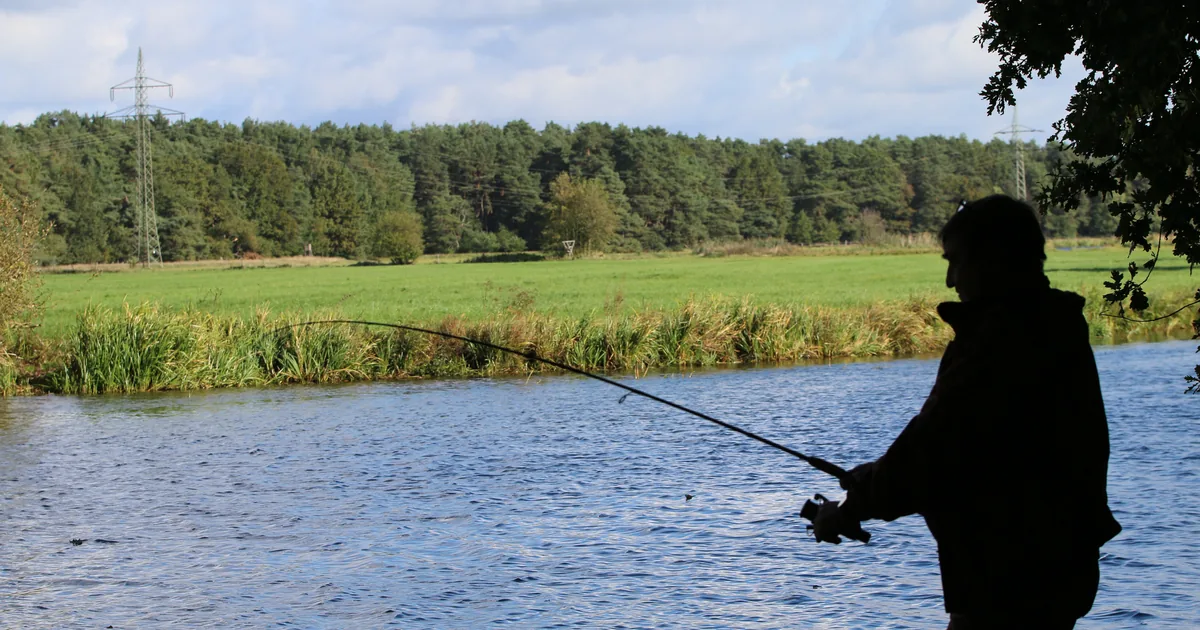
Where the old saying comes from
Roughly, it goes: if it blows from the south or west, hold your rod tight; if it blows from the east or north, you can throw it away. Two researchers from the Institut für Binnenfischerei Potsdam-Sacrow took it up in an article for the Landesanglerverband Brandenburg. One of them picked it up from his uncle about 50 years ago.
What weather an east wind brings
East wind is the exception here. In North Rhine-Westphalia, at freely exposed measuring stations, the wind comes most often from the south-west to west according to the state agency (LANUV), with a smaller second peak belonging to north-easterly situations. In April and May, according to the Deutscher Wetterdienst (DWD), only about every fifth day on average over the years 1881 to 2008 falls on an easterly situation.
Where the wind blows from depends on the position of highs and lows. According to the DWD, east wind is caused mainly by strong, often stationary highs over northern and north-eastern Europe, which meteorologists call blocking. East wind therefore often means high-pressure weather here. In a high, the air sinks, warms and dries out, the clouds mostly clear and the sun shines. In winter, however, high fog often persists beneath it.
How warm the easterly air is depends on the season. According to the DWD, continental air from Eastern Europe is warm in summer and cool in winter, and Russian subpolar air is cold in winter. In spring the east wind can tap cold air that is still lying over Eastern Europe. Hence the familiar contradiction: a steel-blue sky, and you still shiver. At the end of April 2026 it looked like this: a large high, a cloudless sky, at times a strong east wind, and in the very dry air temperatures in the early morning often fell below zero, above all in the eastern half of the country.
High air pressure is no reason to stay at home
Many anglers regard the high air pressure that comes with an east wind as a bad sign. That has not been shown. For the Brandenburg pike that I present in the guide Pike in autumn, the catch rate was linked neither to the air pressure nor to its change. Physics argues against it as well: if a fish swims ten centimetres higher or lower, the pressure on it changes as much as it does in going from a high to a low.
The Brandenburg researchers consider the rapid changes of wind, rain, cloud cover and temperature during a change in the weather more plausible. So what worries me is not the stable high but the day it suddenly turns cold.
Wind direction in catch studies
For native fish I know of only one study that tests wind direction, and it is thin. At the Kleiner Döllnsee in Brandenburg, from 27 May to 17 September 2005, anglers fished specifically for pike and noted the weather every day. Wind direction had no measurable influence on the catch rate. But the wind came from the west in 40 observations, from the south in 38, from the east in 14 and from the north in 2. And it was summer, the water was just under 15 to 24 degrees. So the study says nothing about the cold east wind in spring.
More data comes from North America. At Escanaba Lake in Wisconsin, researchers evaluated fishing trips from 2003 to 2015. For walleye, a close relative of our zander, trips with wind from the east were even slightly more often successful, 74 to 76 per cent. The muskellunge, a large relative of the pike, did best with wind from the west-north-west. The authors classify both differences as very small.
The Brandenburg article nevertheless gives the uncle some credit, because walleye bit slightly worse in north and north-east winds than in south and south-east winds. For the east wind itself, the rule does not hold there. At the Döllnsee it was not the direction that counted but the strength: with more wind, more pike were caught. For walleye and muskellunge it was the other way round.
What I take from this: that fish bite worse in an east wind is not proven. For our species it has not been disproved either, as there is too little data, and for the spring east wind none at all. As long as nobody has examined it more thoroughly, the rule is for me an angler’s saying without evidence.
The saying could still have a grain of truth, just not because of the compass direction. Fish take the temperature of the water around them. When it gets colder than the range of their species, circulation, energy demand and appetite slow down, according to the Brandenburg article. If an east wind in spring brings frosty nights, the cold would be the reason for sluggish fish, not the direction. I have not found a study that tests this.
What an east wind shifts in a lake
Wind pushes the warm upper layer of water towards the shore it blows onto. There it piles up, the thermocline, that is the boundary with the cold deep water, tilts, and at the shore the wind blows from, cooler water moves in. At Lake Opeongo in Canada, the shallow shore water on the side the wind blew onto was 0,6 to 1,3 degrees warmer than on the opposite side from mid-June to mid-July, and the zooplankton, that is animal plankton, was denser there, though strongly fluctuating.
In Lake Constance a strong west wind in spring 2007 pushed the warm surface water to the east, and deep water came up in the western part. Zooplankton and young fish drifted passively with it.
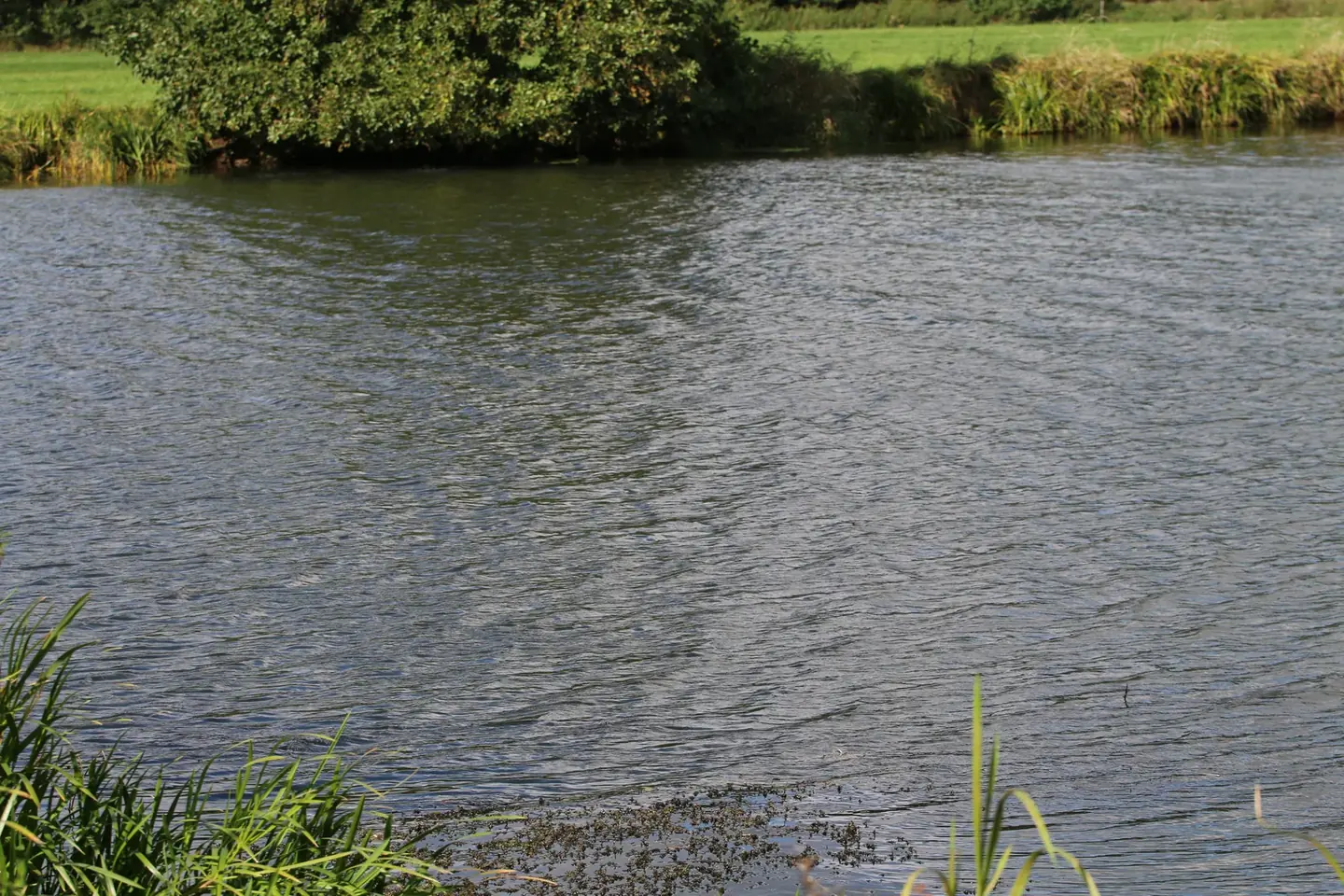
In an east wind this runs mirror-reversed (fig. 1): warmth, plankton and baitfish drift to the west, and it can get cooler at the east bank. For me that is the real difference from an ordinary windy day. Because the wind here mostly comes from the west, the west bank is otherwise in the lee. In an east wind it is precisely this calm side that becomes the windward shore, and the usual windward shore in the east lies still. All this holds only as long as the lake is stratified. In autumn it cools down, and the wind mixes it from top to bottom. A warm top layer that it could shift is then no longer there. In late autumn, with an east wind, mostly waves and flotsam remain on the west bank.
My approach in an east wind
First I look at what the east wind brings on that day. In high summer it is warm, towards winter cool, and in March or April it can mean frost after a clear night. In the Weather by the water tool I see wind, rain and temperature before I set off.
On a lake I turn my usual choice of bank around. Where waves roll in with a west wind, it is calm now, and the west bank, usually sheltered, gets them. For the choice between the wave side and the sheltered side, the same applies to me as on any windy day; I wrote that down under Fishing spots in autumn. What is new in an east wind is only which side the waves are on.
Under the clear sky of a high I prefer to put my time at the water at the edge of the day. For pike the probability of a catch is highest at dusk and drops in strong sun, according to the Brandenburg article.
After a frosty night in spring I lower my expectations, because cold water slows the appetite. I do not stay at home because of it, though. The Brandenburg researchers, too, stress that fishing is always about probabilities, and they send their readers to the water in any weather.
On the coast the water level counts
On the coast, in an east wind I am less concerned with the bite than with the water itself. In October 2023, because of long-lasting, at times stormy winds from the east, the Bundesamt für Seeschifffahrt und Hydrographie (BSH) expected a severe storm surge on the Baltic Sea and extreme low water on the North Sea coast at the same time. The BSH advises checking its site regularly for the current situation in such conditions. Before I go onto a pier or the beach in a strong east wind, I do exactly that.
Frequently asked questions
Is fishing in an east wind worthwhile?
For me, yes. That fish bite worse then has not been shown. For pike in Brandenburg wind direction played no role, though with only 14 east-wind observations from one summer. For American walleye an east wind was even marginally better.
Which bank do I look at in an east wind?
Wind drives warm surface water and plankton towards the shore it blows onto, so to the west in an east wind. That is often the side that otherwise lies in the lee. None of the studies has measured whether more fish bite there, so I try both sides.
Why is an east wind in spring so often cold?
It brings dry continental air, and in spring cold air still partly lies over Eastern Europe. Under a clear sky the dry air also cools strongly at night.
Related
- Fishing spots in autumn: windward shore, sheltered side and other spots
- Pike in autumn: wind, water temperature and dusk for pike
- Weather, air pressure and wind: air pressure, light and rain compared across studies
- Weather by the water: the day’s conditions before you set off
- Water temperature and oxygen: the thermocline and oxygen in a lake
- Fishing on the coast and in the surf: gullies, sandbars and wind on the beach
- Pike fishing: season, spots and baits step by step
- Zander fishing: dusk, drop-offs and baits step by step
Sources
- Spektrum, Lexikon der Biologie: See (Zirkulation im Herbst)
- Landesanglerverband Brandenburg, Beitrag des Instituts für Binnenfischerei Potsdam-Sacrow: Beeinflusst das Wetter den Fangerfolg? (Anglerspruch, Wind, Luftdruck, Temperatur, Licht)
- Kuparinen, Klefoth, Arlinghaus, Fisheries Research 105 (2010): Hecht-Fangraten am Kleinen Döllnsee (Windrichtung und ihre Häufigkeit, Wassertemperatur)
- Shaw und Kollegen, PLOS ONE 16 (2021): Walleye und Muskellunge am Escanaba Lake, Wisconsin (Windrichtung bei zwei amerikanischen Arten)
- Lennox und Kollegen, Fish and Fisheries 18 (2017): What makes fish vulnerable to capture by hooks? (Luftdruck und Wassertiefe)
- Kaevats, Sprules, Shuter, Environmental Biology of Fishes 74 (2005): Wind, Wassertemperatur und Zooplankton am Lake Opeongo (warmes Wasser am Ufer, auf das der Wind zuweht)
- Universität Konstanz, Rinke und Kollegen, Limnology and Oceanography 54 (2009): Verteilung von Temperatur, Plankton und Fischen im Bodensee (Wind verschiebt Wasser und Jungfische)
- Deutscher Wetterdienst: Thema des Tages „Immer dieser kalte Ostwind“ vom 30.05.2023, Wetterlexikon Hochdruckgebiet, Wetterlexikon Luftmassen, Thema des Tages vom 29.04.2026 (Ostlagen, Wetter im Hoch, Luft aus Osten)
- LANUV, Klimaatlas Nordrhein-Westfalen: Windrichtung und Windgeschwindigkeit (häufigste Windrichtungen)
- Bundesamt für Seeschifffahrt und Hydrographie: Pressemitteilung vom 19.10.2023 (Sturmflut an der Ostsee, Niedrigwasser an der Nordsee bei Ostwind)
Text AI-assisted, drawing AI-generated, photos: Iwan Belokurov. Sources opened and checked in October 2026; no graphic was taken from the sources.
All information is indicative and without guarantee. The studies on wind direction apply to the species and waters examined; on the coast the BSH water-level warnings take priority.