
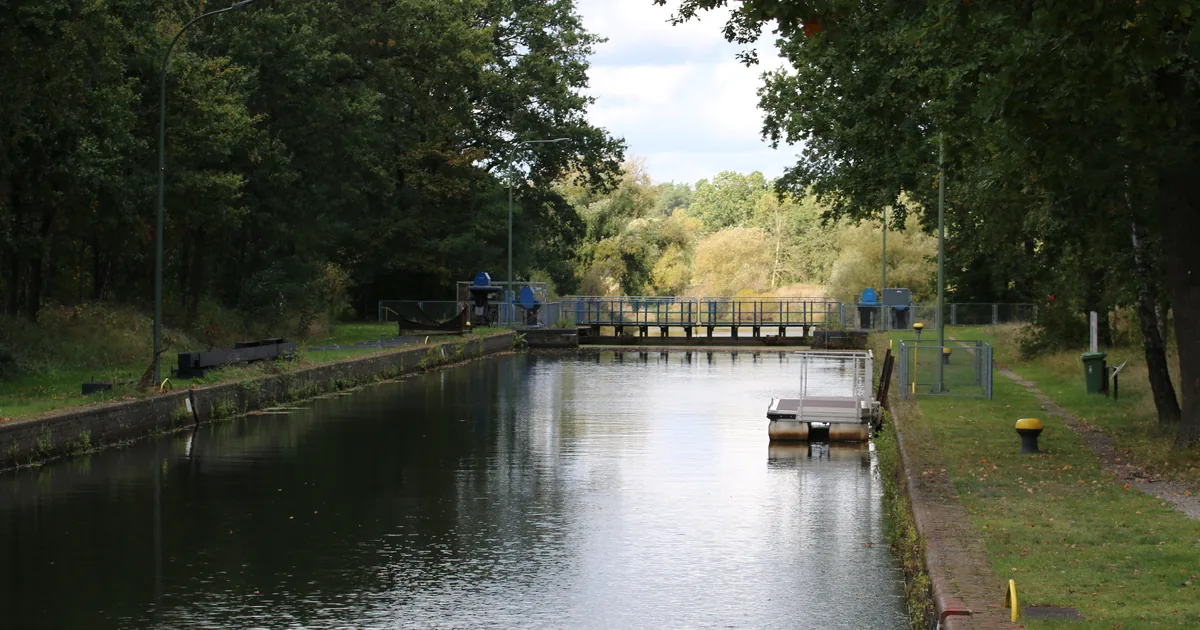
At a glance
- Fish pass
- Fishing in it is banned in all five states checked
- Stretch alongside
- set by the authority, 100 metres in Mecklenburg-Western Pomerania
- Federal installations
- Do not enter locks and weirs (§ 2 WaStrBAV)
- Signs A.1, A.6
- apply to vessels, not an angling ban on the bank
- Danger
- Roller at the foot of the weir, suction in the outer harbour, bathing banned up to 100 metres from the weir
Why fish cannot get past a weir
I only understood the rules at a weir and lock complex once I knew what a weir does to the river. It dams it up: upstream lies the headwater, downstream the tailwater, and between them a step in height. According to the Bundesanstalt für Gewässerkunde (BfG), such cross structures obstruct many fish species on their migration or block them entirely. On the federal waterways alone the BfG counts more than 200 damming structures, including weirs and locks, where fish cannot pass freely.
For Atlantic salmon, sea trout and eel, according to a brochure by the Wasserstraßen- und Schifffahrtsverwaltung, the survival of the species depends on moving freely between sea and river. Species such as the barbel also roam, only over shorter distances. That is why fish passes are built at weirs, formerly simply called fish ladders and mostly called Fischwege in state laws. Their entrance is built where the current is strongest, because according to the same brochure fish orient themselves mainly by the current. Pools with calmer water let the animals rest on the way.
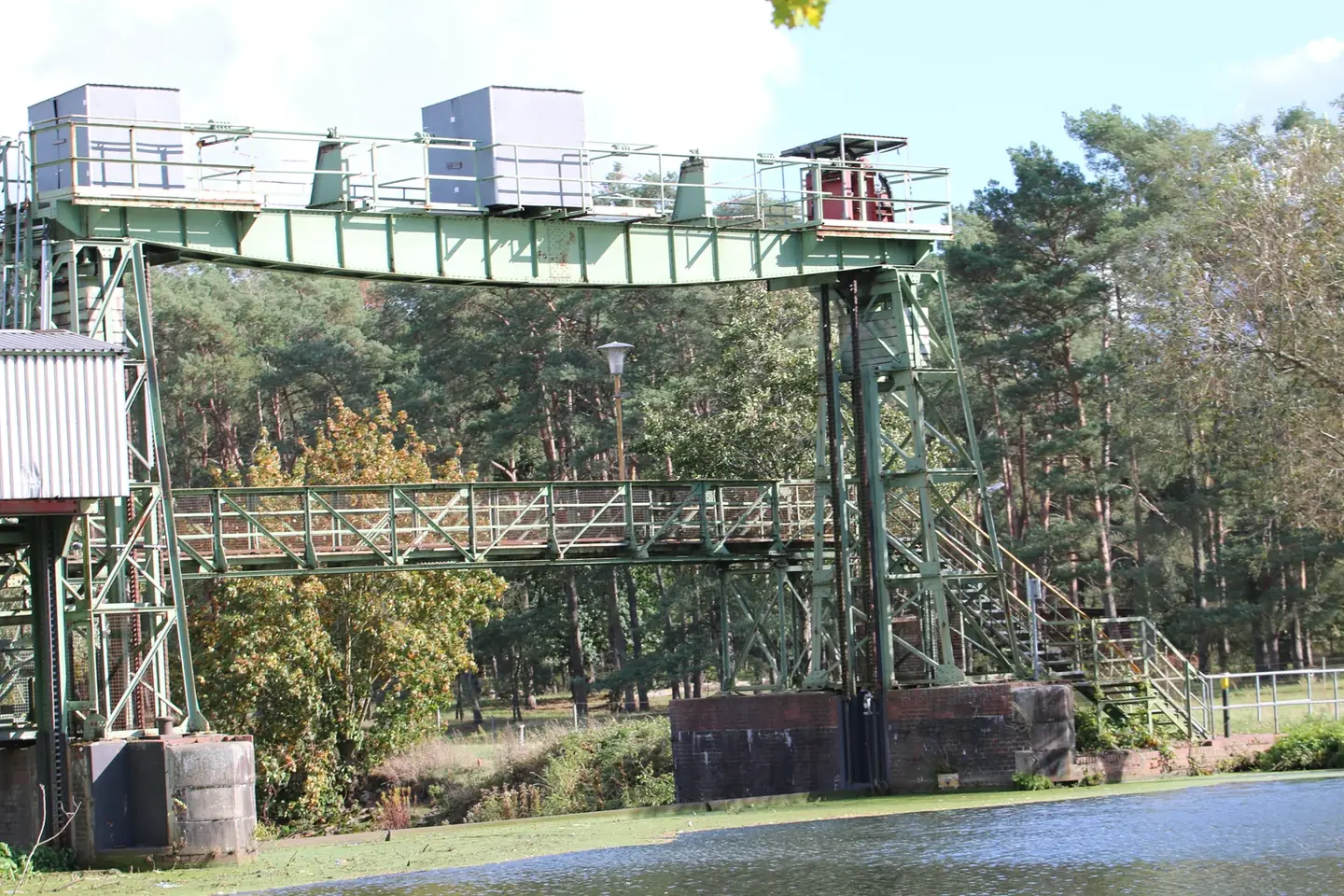
It is exactly these fish passes that the states’ protective rules address.
What the states ban at a fish pass
Fisheries law is state law, and every state words it itself. I read the regulations of five states in full, Lower Saxony first, because that is where I took my fishing licence (Fischereischein). All five ban fishing in the fish pass itself. The differences concern the stretch in front of it and behind it:
- Lower Saxony (§ 49 Nds. FischG): banned while the fish pass must be open; the limits are set by the district or city (Landkreis)
- North Rhine-Westphalia (§ 47 LFischG): banned while the fish pass must be open; the stretch is determined by the higher fisheries authority and is marked
- Bavaria (§ 15 para. 1 no. 5 AVBayFiG): banned on the stretches above and below, which the Kreisverwaltungsbehörde determines
- Brandenburg (§ 30 para. 7 BbgFischG): banned while the fish pass must be open; the extent is set by the fisheries authority
- Mecklenburg-Western Pomerania (§ 7 BiFVO M-V): banned on the adjoining 100 metres
A fixed number of metres appears only in the regulation of Mecklenburg-Western Pomerania. The competent state office LALLF has publicly announced such 100-metre stretches, for example, for the fish passes at one weir. In the other four states an authority sets the stretch for the individual fish pass; in North Rhine-Westphalia it has it marked on site. In Lower Saxony, North Rhine-Westphalia and Brandenburg the ban next to the fish pass applies for the time it must be open. The authorities in Lower Saxony, North Rhine-Westphalia and Mecklenburg-Western Pomerania can allow exceptions, for example for scientific studies.
What I clear up before the first cast
The paragraphs above name the fish pass, not the weir as a whole. So what applies at a particular weir and lock complex, I always clear up in the same order:
- State law: the fisheries act and fisheries regulation of your federal state (Bundesland). The section Law & licence gives an overview.
- Notice from the authority: where the stretch at the fish pass is set by order or regulation, the competent fisheries authority knows the limits.
- Fishing permit and water rules: that is where the closed stretches and protected areas set by the lessee are listed; more under Fishing permit and water map.
- Signs on site, in North Rhine-Westphalia for example the marking of the stretch at the fish pass.
As of October 2026: nowhere here do I say that you may fish at a particular weir or lock. I only show where it is regulated. If you are missing a piece of information, ask the lessee or the fisheries authority before you cast.
Entering: bank, walkways and installations
At a lock, a second layer comes in for me alongside fisheries law. First the state: in Lower Saxony and North Rhine-Westphalia state law gives anglers a right to enter banks and even weirs and locks at their own risk, as far as they have to go there in order to fish (§ 10 Nds. FischG, similarly § 20 LFischG NRW). Both paragraphs carry a reservation: in Lower Saxony bans on entry under laws and authority decisions remain in place; in North Rhine-Westphalia the right applies only if public-law provisions do not stand in the way.
On the federal waterways the Wasserstraßen-Betriebsanlagenverordnung applies in addition. Its § 2 prohibits using locks, weirs and other federally owned operating installations outside their purpose, expressly including by entering them.
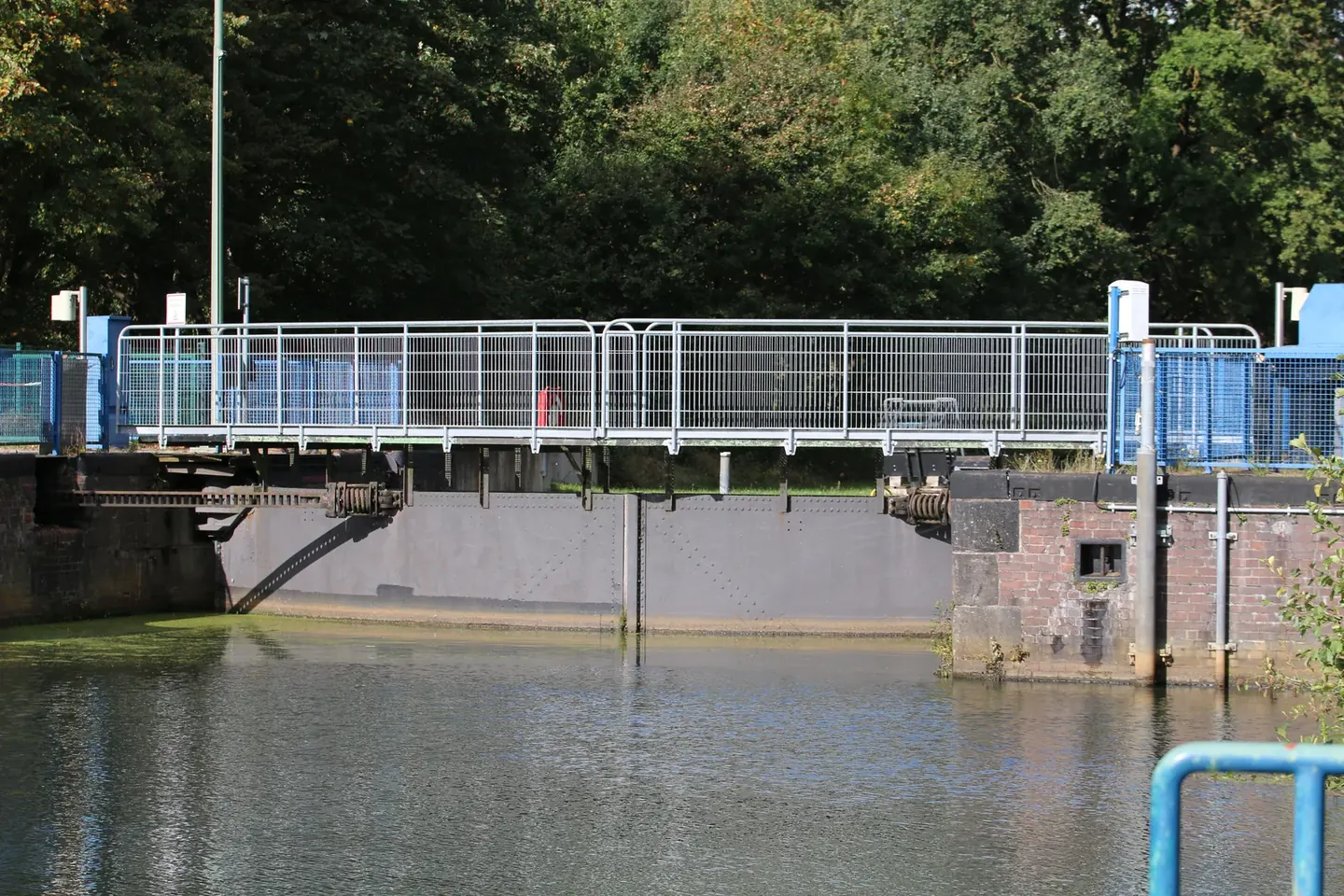
A lock includes more than the chamber. The Binnenschifffahrtsstraßen-Ordnung (BinSchStrO) counts as part of the lock area also the water surfaces above and below where ships moor and wait for locking, the so-called outer harbour (§ 6.28).
What the signs and buoys mean
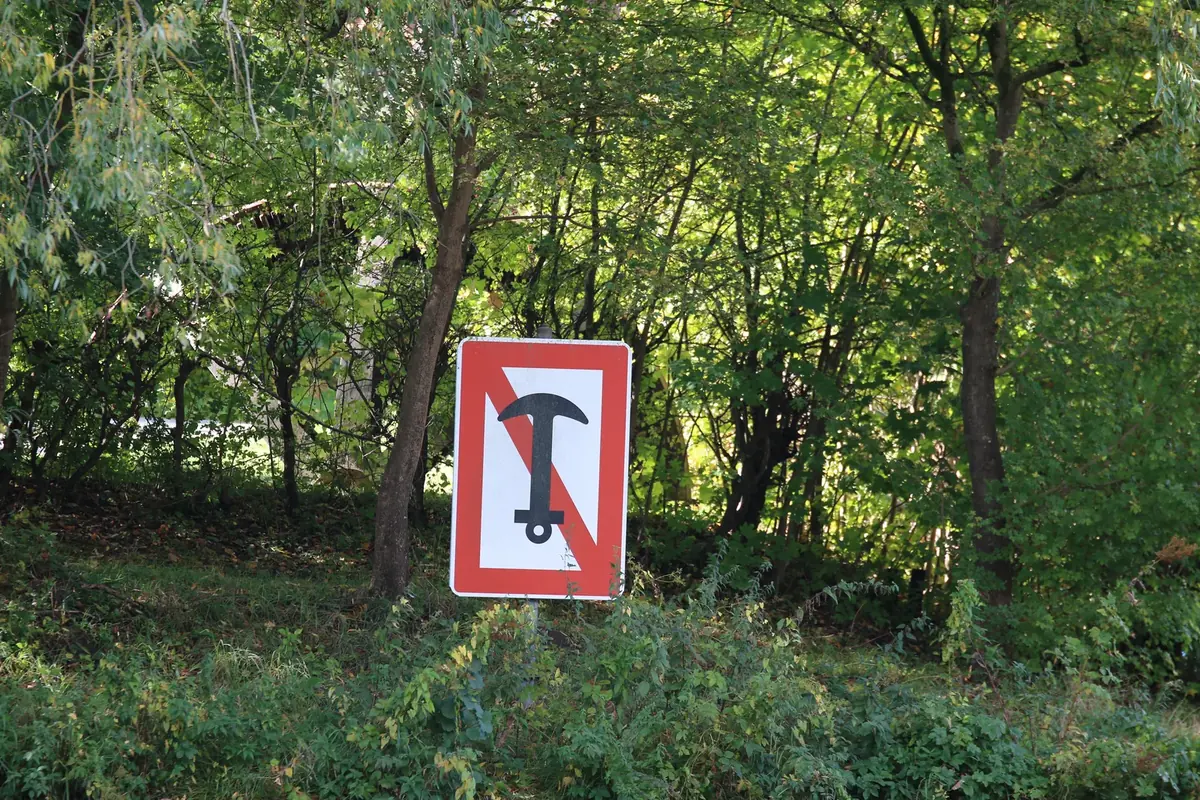
The signs I see at locks and weirs are navigation signs. The BinSchStrO applies on the federal waterways, with the exception of, for example, the Rhine and Moselle, and describes the signs in annex 7: A stands for prohibitions, B for mandatory signs, C for restrictions, D for recommendations and E for information. I explain three of them in more detail here.
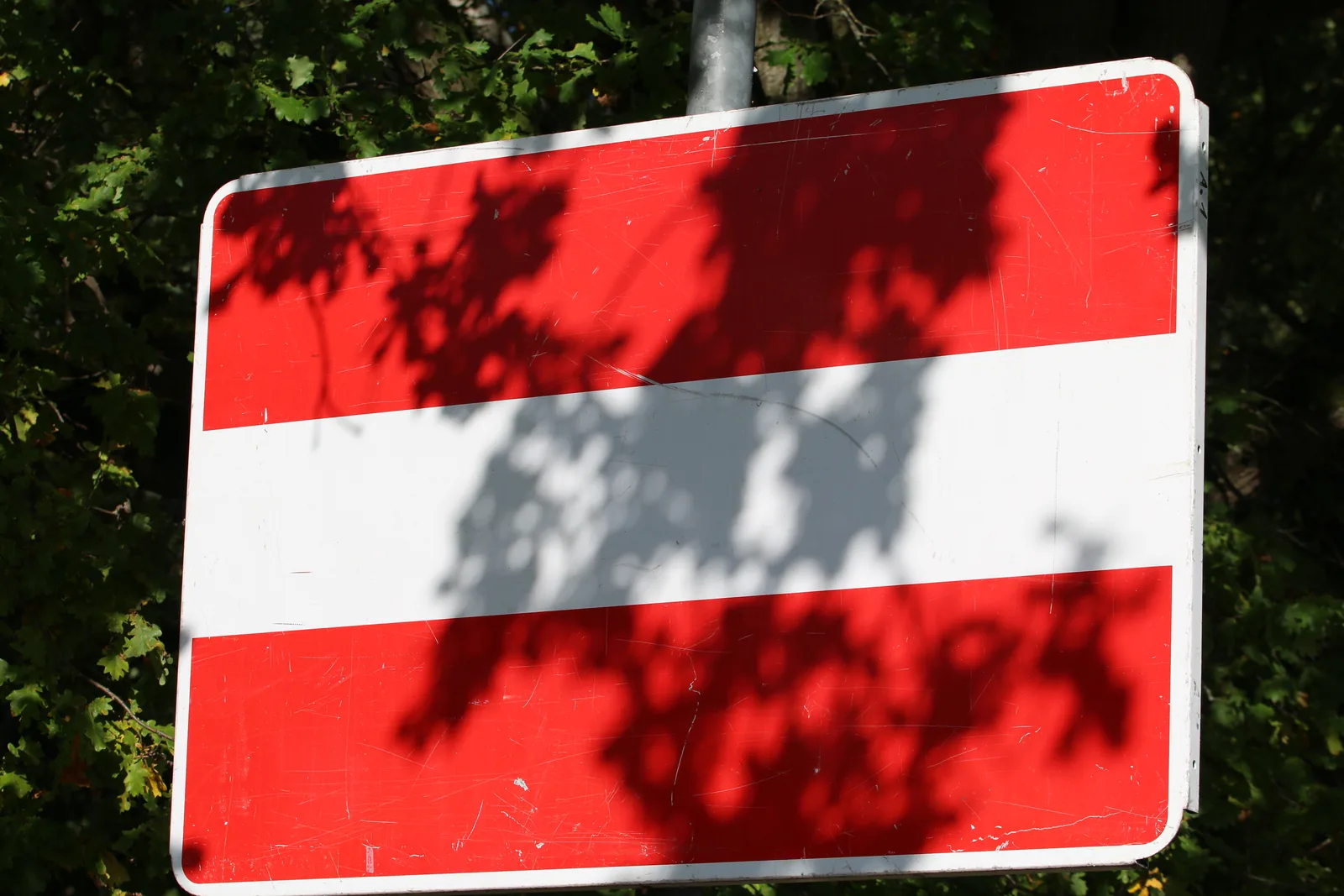
The board with horizontal red-white-red stripes is A.1, the general prohibition sign for passage and navigation. If the authority announces a closure with it, a vessel must stop in front of the sign (§ 6.22).
White with a red border, a black anchor and a red diagonal bar: that is A.6, the ban on anchoring. On the bank side of the sign no vessel may anchor, from 50 metres above to 50 metres below the sign (§ 7.03).
Yellow buoys, also with a topmark in the colours of A.1, mark off a closed water area according to annex 8. No vessel and no floating object may travel on a water area bounded by a row of such buoys (§ 6.22).
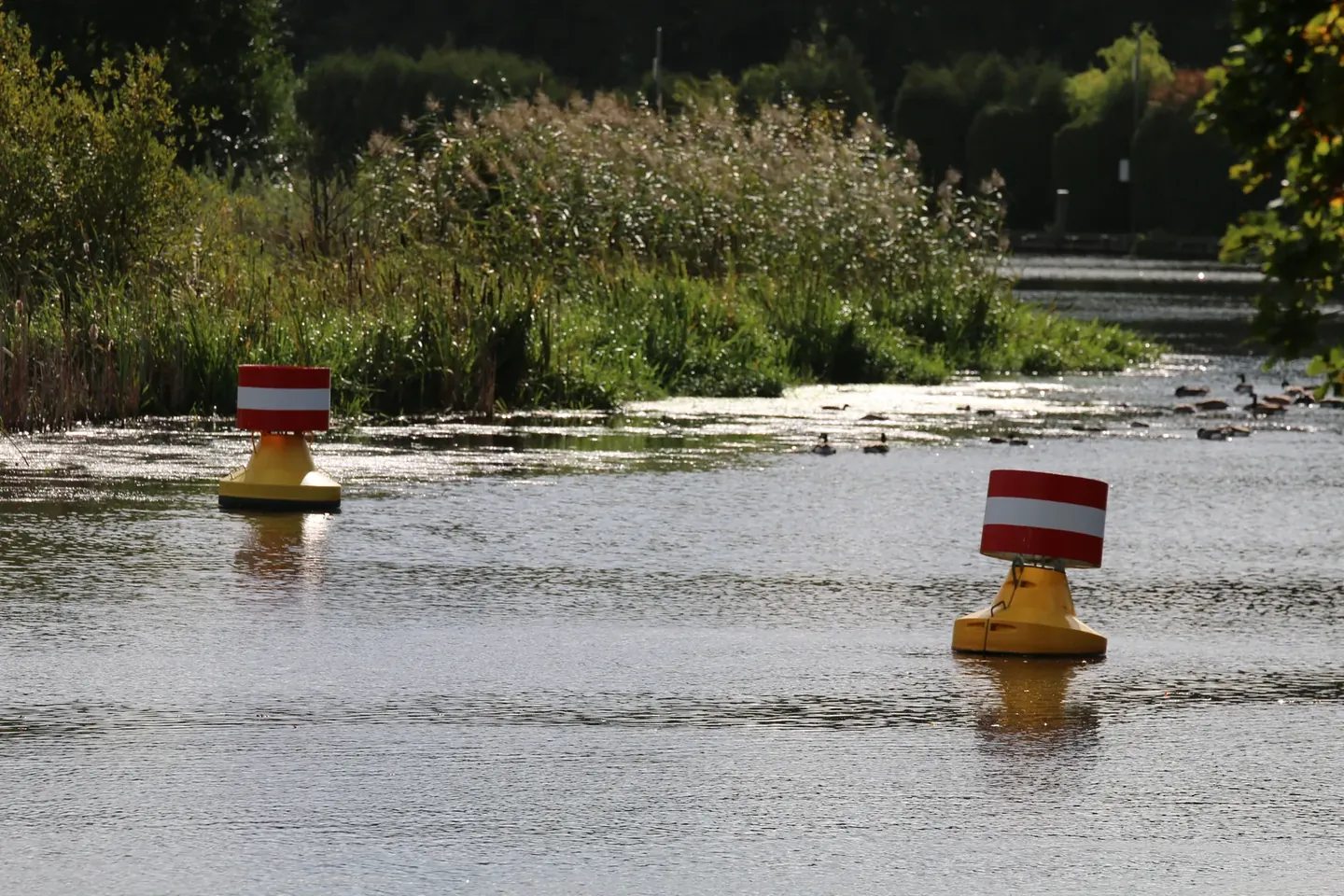
All three provisions are addressed to vessels. A ban on fishing from the bank is in none of them; whether you may fish there from land is decided by state law and the fishing permit (Erlaubnisschein).
Hazards at weirs and locks
Below a weir I have the most respect, and the DLRG explains why. At the foot of a weir a roller can form, also called a backflow. The water shooting down hits calm water and curls under at the surface, as the section in fig. 1 shows. How strongly it pulls is hard to judge from outside; for swimmers it always means danger to life, according to the DLRG. On top of that, water with a lot of air carries a body less well.
Water moves at a lock too. The Wasserstraßen- und Schifffahrtsamt (WSA) Westdeutsche Kanäle explains that when the chamber is filled and emptied, suction arises in the outer harbours that even practised swimmers cannot swim against; at a weir the overflowing water even pulls constantly. The BinSchStrO therefore bans bathing and swimming in the lock area and up to 100 metres above and below a weir (§ 8.10).
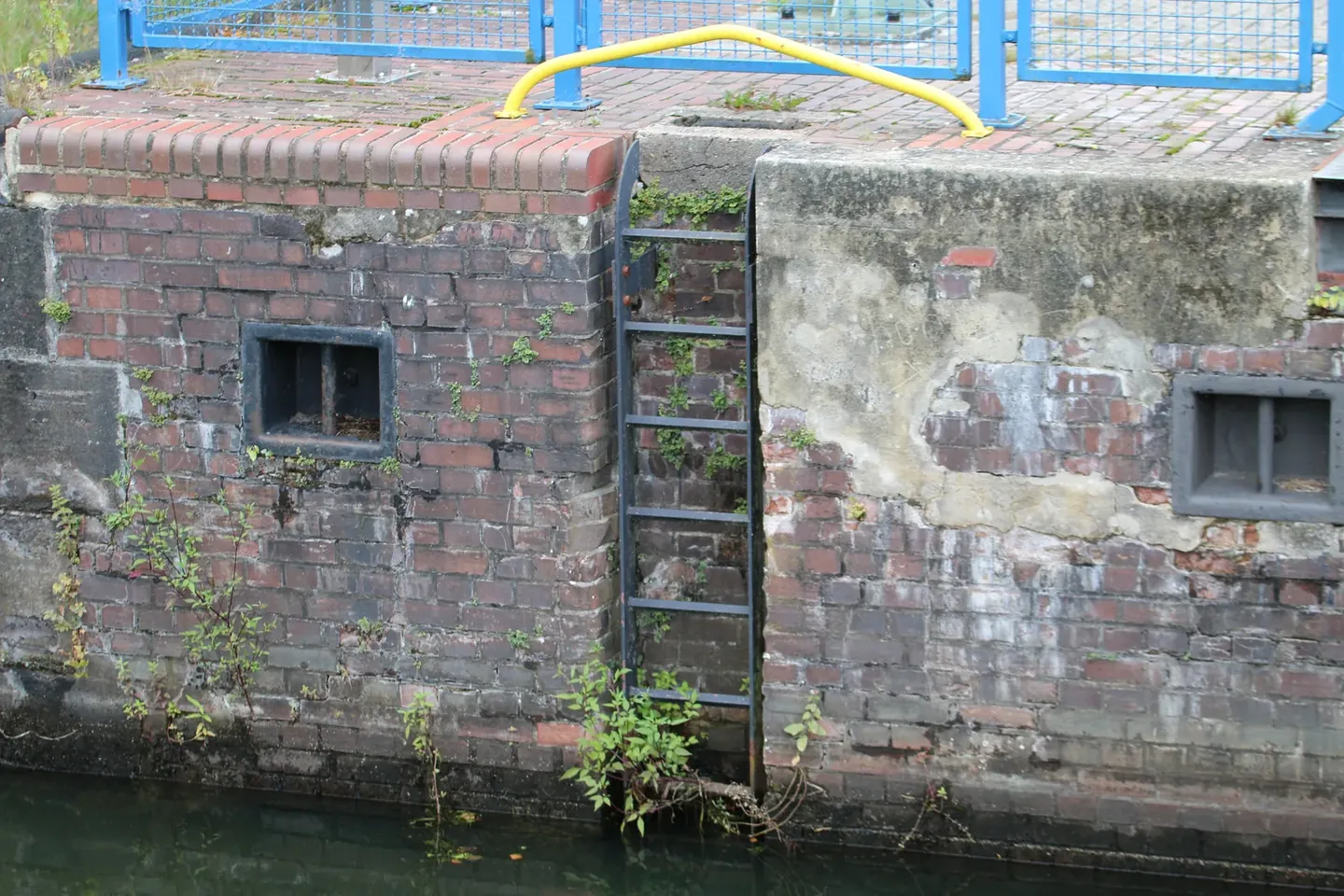
Canals often lack shallow banks. The WSA Mittellandkanal/Elbe-Seitenkanal points to vertical steel sheet piling and calls the ladders in it a rescue aid for people in trouble. That is why, when I arrive, I look at where the nearest ladder and the nearest lifebuoy are. This section does not replace training in water rescue or medical advice.
Frequently asked questions
May I fish directly below a weir?
That cannot be answered across the board. If there is a fish pass there, all five states checked here ban fishing in it and on an adjoining stretch, in part only while the fish pass must be open. Its length is given in the authority’s notice, in Mecklenburg-Western Pomerania at 100 metres in the regulation. Further closed stretches are listed in your fishing permit (Erlaubnisschein).
Does the red-white-red sign also apply to anglers on the bank?
The BinSchStrO describes A.1 as a ban on passage and a closure of navigation; the duty to stop applies to vessels. The provision contains no ban on fishing from the bank. Whether you may fish there is regulated by state law and the fishing permit (Erlaubnisschein).
May I go onto the lock grounds?
On the federal waterways § 2 WaStrBAV prohibits entering locks and weirs outside their purpose. Pedestrians may use bankside plots and service roads at their own risk. On other waters the right of entry of your state applies, with its limits.
Related
- Fishing on a canal: ship waves, sheet piling and the rules for banks and service roads
- Fishing permit and water map: where closed stretches and protected areas are listed
- Fishing licence and angling exam: which papers you need at the water
- Bank and waders: standing safely on a slope, wall and stones
- Atlantic salmon: the life cycle of a migratory fish between sea and river
- Eel fishing: spots, baits and rules step by step
- Barbel fishing: current, feeding spot and rig step by step
- Fishing spots in autumn: where I start from the bank at a weir and lock complex, if fishing is allowed
Sources
- Land Niedersachsen: Niedersächsisches Fischereigesetz (Nds. FischG) (Betretungsrecht § 10, Fischweg und angrenzende Strecke § 49)
- Land Nordrhein-Westfalen: Landesfischereigesetz, Fassung ab 1. Juli 2026 (Zugang zu Gewässern § 20, Fischfang an Fischwegen § 47)
- Freistaat Bayern: Verordnung zur Ausführung des Bayerischen Fischereigesetzes, § 15 (Fischpässe und Fischwege)
- Land Brandenburg: Fischereigesetz für das Land Brandenburg (Fischwege § 30 Abs. 7)
- Landesamt LALLF, Mecklenburg-Vorpommern: Fischaufstiegshilfen und Binnenfischereiverordnung M-V (Arbeitskopie) (100 Meter nach § 7)
- Bundesministerium der Justiz: Wasserstraßen-Betriebsanlagenverordnung (Betretungsverbot für Schleusen und Wehre, § 2)
- Bundesministerium der Justiz, Binnenschifffahrtsstraßen-Ordnung: Anlage 7 Schifffahrtszeichen, Anlage 8, § 6.22, § 6.28, § 7.03, § 8.10; Einführungsverordnung, § 1 (Zeichen A.1 und A.6, gelbe Tonnen, Schleusenbereich, Ankerverbot, Badeverbot, Geltungsbereich)
- Deutsche Lebens-Rettungs-Gesellschaft: Sicherheit und Verhalten in strömenden Gewässern, Teilnehmerbroschüre (Walze am Wehr, Auftrieb in luftreichem Wasser)
- Wasserstraßen- und Schifffahrtsamt Westdeutsche Kanäle: Baden im Kanal (Sog in Schleusenvorhäfen und am Wehr)
- Wasserstraßen- und Schifffahrtsamt Mittellandkanal/Elbe-Seitenkanal: Fragen und Antworten (Spundwände, Leitern als Rettungsmittel)
- Bundesanstalt für Gewässerkunde: Ökologische Durchgängigkeit an den Staustufen der Bundeswasserstraßen (mehr als 200 Stauanlagen)
- Bundesministerium für Verkehr und Wasserstraßen- und Schifffahrtsverwaltung: Freie Fahrt auch für Fische (Wanderfische, Lage des Einstiegs, Ruhezonen; Stand November 2015)
Text AI-assisted, drawing AI-generated, photos: Iwan Belokurov. Sources opened and checked in October 2026; no graphic was taken from the sources.
All information is indicative and without guarantee. What counts is the fisheries law of your federal state, the notices of the fisheries authorities, the lessee’s fishing permit and the navigation signs of the waterways administration, as of October 2026.