
Knowledge – Fish
Eel: Features, life cycle and protection
The European eel (Anguilla anguilla) hatches in the Sargasso Sea, grows up in European coastal and inland waters and migrates back to the Atlantic to spawn. The species is considered critically endangered worldwide.
In short: The best time to catch eel is from June to September, in the evening, at night and in the morning. Good spots on a lake: a weed bed and a sunken tree; on a river: rock armouring and an undercut bank. Proven baits: worms, also several on one hook, or small dead baitfish on the bottom. The European eel is considered critically endangered, and its stock is protected by the EU Eel Regulation. State rules apply to eel (for example minimum sizes, closed seasons and catch restrictions). Step by step: Fishing for eel.
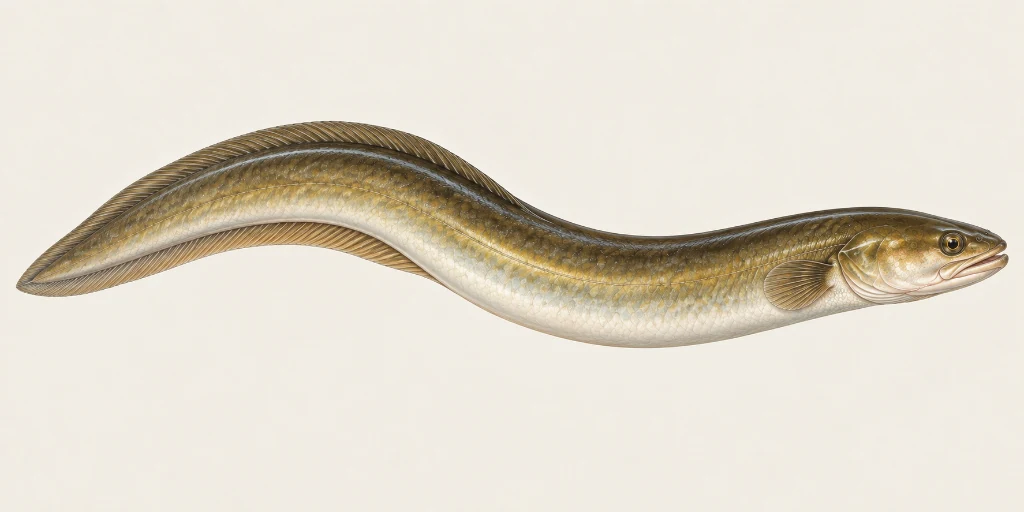
- Snake-like, rounded body with a continuous fin fringe
- Superior mouth, lower jaw slightly longer
- Upper side black to dark green, underside yellow to white
Catch chances through the year
- Hardly any chance
- Possible
- Good
- Peak season
- Spawning (observe the closed season)
Editorial assessment for waters in Germany, not a measured value and no guarantee. Spawning time is not the same as the legal closed season.
Species profile and sources in the catch calendarAll species compared month by monthThe rules of your federal state
How to recognise an eel
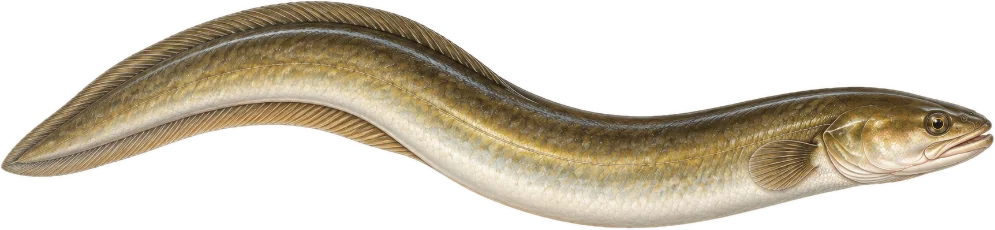
The eel has a snake-like, elongated body. The dorsal, tail and anal fins merge into one continuous fringe, and there are no pelvic fins. The pectoral fins sit directly behind the head. The lower jaw protrudes slightly, and the gill openings are small and set to the sides. Very small scales lie embedded in the thick layer of slime on the skin.
The back is grey-brown to dark green, the sides and belly yellowish to white. At sexual maturity the back darkens, the belly turns silvery white, and the eyes and pectoral fins grow larger. This eel is called a silver eel.
According to the Landesfischereiverband Bayern, eels are on average 40 to 80 centimetres long, while females grow clearly larger. The Thünen Institute gives maximum values of 133 centimetres, 23 years and 6,6 kilograms. According to FishBase, males stay at up to 50 centimetres.
The life stages of the eel
| Stage | Appearance | Where and when |
|---|---|---|
| Leptocephalus (willow-leaf larva) | transparent, leaf-shaped | drifts in the sea with the Gulf Stream to Europe |
| Glass eel | about 70 mm, transparent | coast and river mouths |
| Elver | fully pigmented | moves up into rivers at 10 to 12 °C |
| Yellow eel | sides and belly yellowish | grows up over many years in river, lake or coast |
| Silver eel | larger eyes, silvery belly, no longer feeds | migrates out in late summer and autumn |
In fresh water two feeding types of the same species are distinguished: the narrow-headed eel, which eats worms, snails, small crustaceans and insect larvae, and the broad-headed eel, which hunts mainly small fish, crayfish and amphibians.
The eel shares its slim shape with the burbot. The burbot, however, has a chin barbel, pelvic fins under the throat and two dorsal fins. Lampreys have a jawless sucker mouth and no paired fins.
Side by side
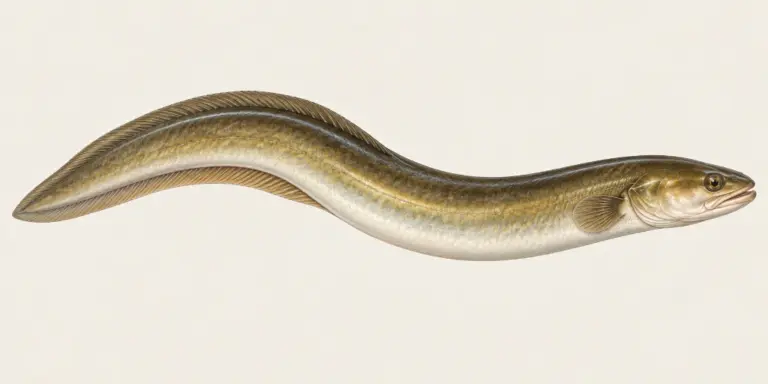
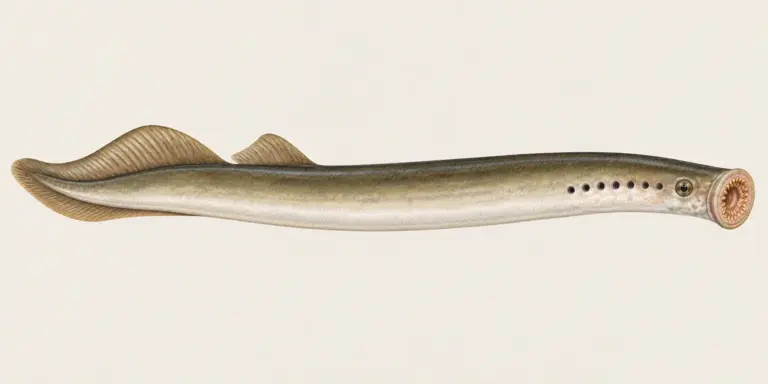
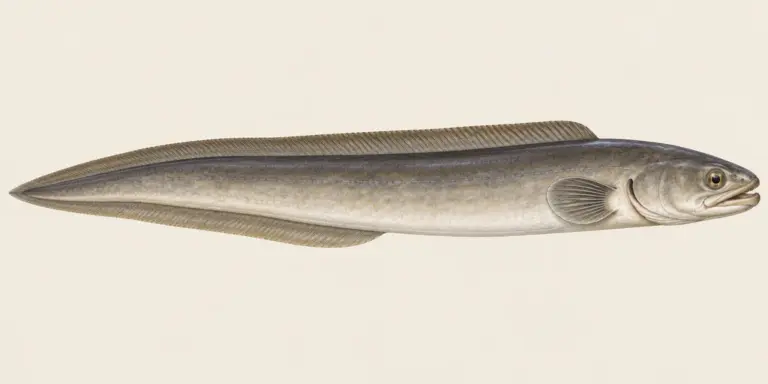
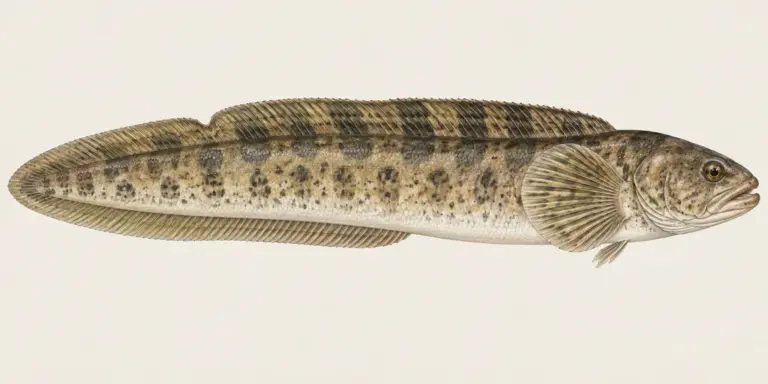
AI-generated illustrations.
Where the eel lives
Eels settle in almost all still and running waters, from mountain streams to the banks of large rivers and lakes, and on the coasts too. Naturally they occur only in waters connected to the sea. They reach isolated lakes and ponds through stocking.
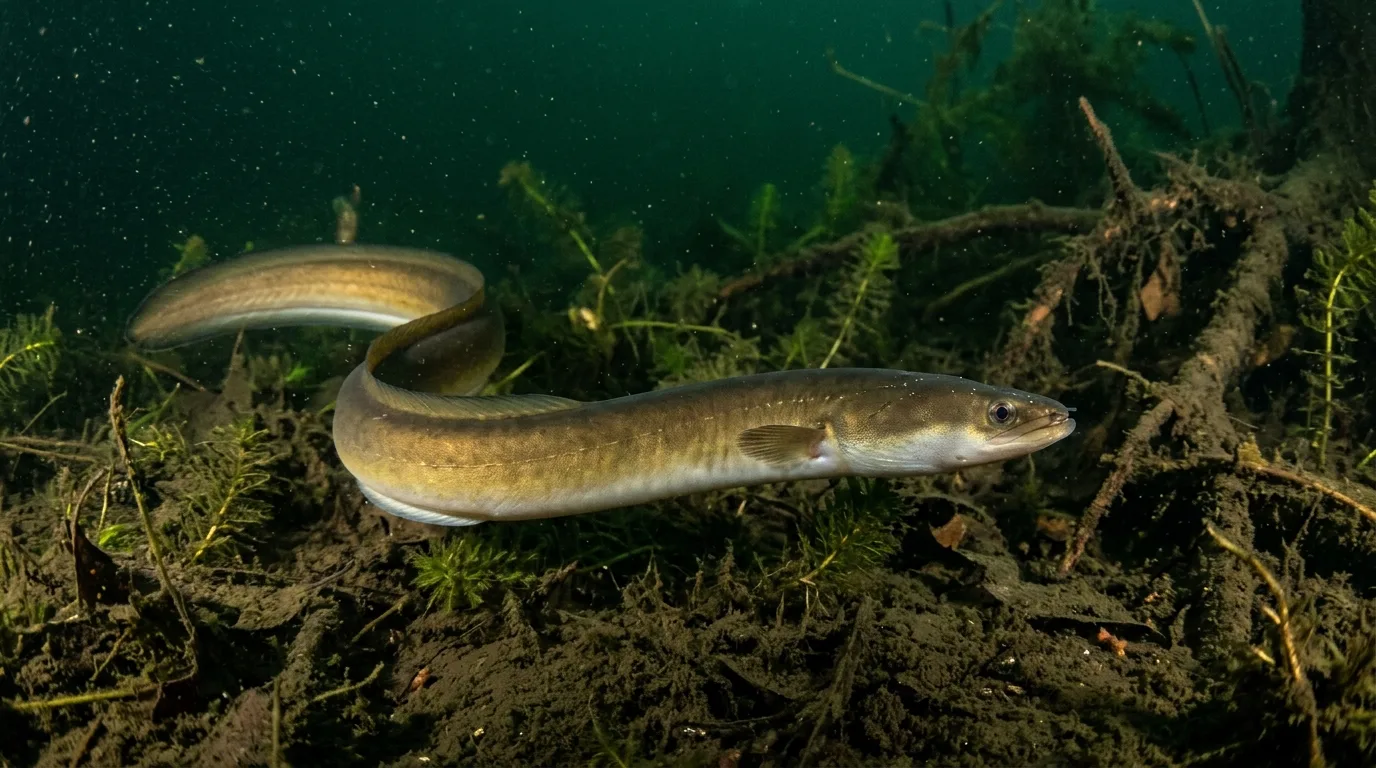
They reach the coasts as glass eels. Some stay in the brackish water, while the rest move up into the rivers as soon as the water reaches about 10 to 12 °C. As yellow eels many travel further upstream, in some cases as far as the headwaters.
Eels stay under stones, in crevices and in the mud. According to FishBase they are territorial and solitary. Anglers target them at rock armouring and rugged natural banks with undergrowth, close to the bank. They tolerate 0 to 30 °C, but become sluggish below about 10 °C and lie on the bottom in winter.
Holding spots in the picture
Choose a season and time of day: the picture shows where the species sits then. Tap a fish or a spot in the list to bring it closer. The picture is schematic and AI-generated, every water is different.
Chance of a catch in springgood
Catch chance in summerPeak season
Catch chance in autumngood
Catch chance in winterhardly any
- J
- F
- M
- A
- M
- J
- J
- A
- S
- O
- N
- D
Active time The eel is mainly active at dusk and at night, but big eels are also caught during the day.
Not a prime time The eel is mainly active at dusk and at night, but big eels are also caught during the day.
Active time The eel is mainly active at dusk and at night, but big eels are also caught during the day.
Active time The eel is mainly active at dusk and at night, but big eels are also caught during the day.
In the lake
Water lilies and weed bed
Eels are present here all year round.
Sunken tree
Eels are present here all year round.
In a lake the eel stays close to the bank on the bottom and hides among snags and in weed. It lies under stones, in crevices or buried in the mud.
Spring: chance of a catch according to the catch calendar possible in March, good in April and May. In lakes with distinct shallow zones the eels get moving as soon as the water near the bank reaches about 10 °C.
Summer: chance of a catch according to the catch calendar: peak season. Late spring and early summer are regarded as a good time, above all humid, warm, dark nights.
Autumn: chance of a catch according to the catch calendar peak season in September, good in October, possible in November. In autumn the silver eels migrate downstream. At water temperatures around 10 °C the remaining eels become sluggish.
Winter: chance of a catch according to the catch calendar hardly any. In much colder water the eel falls into winter torpor and rests on the bed of the water.
In the river
Undercut bank, overhanging branches, timber
Eels are present here all year round.
riprap, sheet piling, harbour
Eels are present here all year round.
On a river, rock rubble and rugged natural banks with undergrowth count as good spots. The eel hides among snags, in weed and between stones, and is fished for close to the bank on the bottom.
Spring: chance of a catch according to the catch calendar possible in March, good in April and May. The first warm weeks are worth a try on rivers with shallow zones, as soon as the water near the bank reaches about 10 °C.
Summer: chance of a catch according to the catch calendar: peak season. Late spring and early summer are regarded as a good time. Dark, warm nights and cloudy water after heavy rain are favourable.
Autumn: chance of a catch according to the catch calendar peak season in September, good in October, possible in November. In October and November the silver eels move off in the evening and at night, especially in storm and rain. In the big rivers they let themselves drift in mid-water.
Winter: chance of a catch according to the catch calendar hardly any. In much colder water the eel falls into winter torpor and rests on the bed of the water.
Depth: The eel lives on the bottom and is mostly fished for close to the bank. It also hunts small fish in mid-water and at the surface.
Size comparison: AI-generated drawing, schematic.
How it lives and migrates
Eels eat almost anything that lives on the bottom, above all worms, snails, small crustaceans and insect larvae. They find prey with a very fine sense of smell and taste. Broad-headed eels also eat fish, crayfish and amphibians.
The change into a silver eel begins at 6 to over 20 years of age. The animals then stop feeding, and the gut regresses. They migrate out to sea, mostly during high water in late summer and autumn. The journey to the Sargasso Sea in the Atlantic is up to 7.000 kilometres long, and the exact route is unknown. The animals die after spawning. According to the Thünen Institute, a female lays millions of eggs, and all European eels belong to a single population.
The larvae drift with the Gulf Stream to Europe. The sources give different figures for how long this takes, from about seven months to three years. Shortly before the coast they turn into glass eels. Hazards on the way include hydropower turbines, barriers to migration and the swim-bladder nematode introduced from Asia, which probably impairs the spawning migration. The fatty tissue also accumulates pollutants.
When it is active
The eel is a bottom fish that moves mainly at dusk and at night. Anglers report, however, that many large eels also bite during the day. The magazine Blinker names late spring and early summer as the best time; from about 10 °C at the bank the eels come to life. In the catch calendar the main season runs from June to September.
At water temperatures below 10 °C eels become sluggish, and in much colder water they fall into winter torpor. Dark nights are better than full-moon nights. Our catch calendar does not show closed seasons or bans on taking fish. Check the rules for eel before every session.
Today’s catch index needs JavaScript. Season and spawning time are in the catch calendar.
You will find the monthly overview of all species and the water temperature check in the catch calendar.
From the blog: Eel fishing ban: what applies in autumn 2026 on the coast and inland · Fishing at locks and weirs: what applies and what the signs mean · Fish of the Year 2027: the crucian carp and what anglers can do for it
How to catch it
Step by step: Fishing for eel: tips on bait, rig and tackle – season, spots, bait, tackle and rules on one page.
Eel is most often fished on the bottom with a running rig, see also bottom fishing and night fishing. The weight should be only just heavy enough to hold the bottom, so that the eel feels little resistance when it pulls off. For the same reason many anglers open the reel’s drag or bail arm and use a bite indicator.
The hooklength is short. Anglers recommend monofilament hooklengths of no more than 0,30 millimetres or soft braid, because stiff hooklengths bring fewer bites. A long-shanked hook is easier to remove from the small mouth.
Worms work well as bait: two or three dung worms or redworms, or pieces of lobworm, on one hook in sizes 2 to 6. Eels swallow smaller hooks deep more often, which does particular harm to a threatened species. Alternatively use finger-length dead baitfish or strips of fish. A float rig with a light float works at night on still water.
If the eel is to be returned, rigs with a swallow guard help, as they prevent the hook from being swallowed deep. For handling the catch see Releasing fish and, if you are allowed to take an eel, Eel killer as well as Stunning and killing fish.
Open the drag: Large eels pull off after the bite. Even slight resistance can scare them away. Open the reel’s drag or bail arm and put a bite indicator on the line.
Avoid deep swallowing: If an eel is to be returned, use a swallow guard and a long-shanked hook. That way the hook stays in the mouth and is easier to remove.
Check the rules first: Special rules apply to eel depending on the state and the water, for example on minimum sizes, closed seasons and catch restrictions. Read the terms of your fishing permit (Erlaubnisschein) carefully.
Suitable lures
Worms, also several on one hook, or small dead baitfish on the bottom.
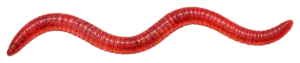
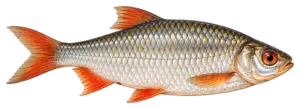
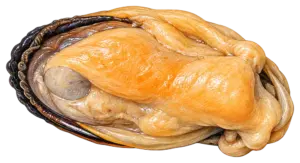
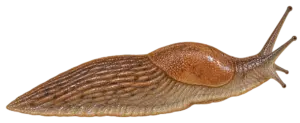
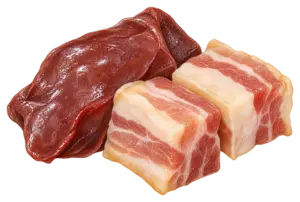
AI-generated illustrations. A click opens the lure’s page.
Rigs for these baits: Running ledger rig, Baitfish rig, Paternoster rig, Float rig.
Critically endangered: whether you may fish for eel is regulated by the federal state (Bundesland) and the fishing permit (Erlaubnisschein).
What you can do with eel
The flesh of the eel is fatty and therefore particularly suited to smoking. In Germany, according to the Thünen Institute, around 80 percent of eel is sold smoked. Smoking fish shows how it is done, and Gutting fish and Scaling and skinning fish explain the rest.
Think beforehand about whether you want to take an eel. The stock is severely threatened, and the rules are set by the states and by individual waters.
What you need to observe
The IUCN lists the European eel as critically endangered, and Germany’s Red List as severely threatened, with a very sharp decline over the long term and a sharp decrease over the short term. According to the Thünen Institute, the International Council for the Exploration of the Sea (ICES) recommends that no more eels be caught in any habitat, including by recreational anglers. The glass eel index for the North Sea stood at 1,1 percent of the reference value in 2024.
The European Eel Regulation of 2007 obliges member states to draw up eel management plans. Its aim is that at least 40 percent of the silver eel biomass can escape to sea. International trade is restricted under the CITES species protection convention. Since 2023 EU law has banned recreational eel fishing at sea entirely, including in brackish waters such as estuaries, coastal lagoons and transitional waters. In 2026 Article 14 of Regulation (EU) 2026/249 applies for this (as of October 2026). Where the boundary with inland waters lies is set by the states: in Schleswig-Holstein, for example, the Lower Elbe, Lower Eider, Schlei and Trave are exempt on the landward side of the official boundary lines. For the Baltic Sea there is the additional rule that eel from active fishing may not be kept on board, and eels caught unintentionally must be released immediately. In Norway all eel fishing is prohibited. Otherwise eel fishing is regulated nationally, for example through licences and minimum sizes. In Germany the federal states set the rules.
Closed seasons, minimum sizes and harvest slots are set by the federal states (Bundesländer) and by the fisheries authorities of the neighbouring countries on the coast (Denmark, Norway, Poland). They vary by type of water, stretch of coast and time of year. We only give figures together with the date and source; the fisheries regulation of your federal state and your fishing permit (Erlaubnisschein) are always what is binding. You will find a list of links to the official sources in the catch calendar.
A fish of legal size that you want to keep you stun and kill at once, in line with animal welfare rules. Protected, undersized fish or fish too large under a harvest slot you unhook, if possible still in the water and with wet hands, and release gently. What exactly applies is regulated by state law and your fishing permit (Erlaubnisschein).
What closed season, minimum size and harvest slot mean and where to find them is explained on the page Closed season and minimum size explained.
What state law specifies on the closed season (Schonzeit) and minimum size (Mindestmaß) for this species can be found in the “At a glance” box on all 16 state pages: Baden-Württemberg, Bavaria, Berlin, Brandenburg, Bremen, Hamburg, Hesse, Mecklenburg-Western Pomerania, Lower Saxony, North Rhine-Westphalia, Rhineland-Palatinate, Saarland, Saxony, Saxony-Anhalt, Schleswig-Holstein and Thuringia.
Frequently asked questions (FAQ)
Where does the eel spawn?
Not in our waters, but in the Sargasso Sea in the Atlantic. The larvae drift with the current for up to several years to the European coasts.
How do I avoid deeply swallowed hooks when fishing for eel?
With a swallow guard, a long-shanked hook and the reel’s drag open. The eel can then take line without feeling resistance, and the hook usually sits in the mouth.
May I still fish for eel?
That depends on the water and the state. At sea and in the adjoining brackish waters recreational eel fishing is banned under EU law, while inland state rules apply. ICES recommends catching no eels at all.
Sources
The rating of catch chances is an editorial assessment. The facts come from these sources, and the text is worded in our own words. The illustration is an original design by Angel Momente in the style of a natural history plate (AI-generated, see the AI notice).
- Landesfischereiverband Bayern: Fischlexikon (Laichzeit, Lebensraum, Nahrung, Aktivität)
- Thünen-Institut, Fischbestände online: Aal, europäischer (Lebenszyklus, Schutzstatus)
- Rote-Liste-Zentrum: Europäischer Aal (Rote Liste Deutschlands: stark gefährdet, Aalverordnung, Gefährdungsursachen)
- Blinker: Steckbrief Aal (Lebensweise, beste Zeit, Montagen, Köder)
- FishBase: Anguilla anguilla (Lebensweise, Laichwanderung)
- Verordnung (EG) Nr. 1100/2007 mit Maßnahmen zur Wiederauffüllung des Bestands des Europäischen Aals
- Thünen-Institut, Fischbestände online: Bestandsdatenblatt Europäischer Aal (gültig 11/2024 bis 11/2025)
- Verordnung (EU) 2026/249, Artikel 14 (Aal: Meeres- und Brackgewässer, Verbot der Freizeitfischerei)
- Schleswig-Holstein: Anpassung Aalverordnung 2026 (Ausnahmen Unterelbe, Untereider, Schlei, Trave; Stand 30.04.2026)
- DAFV: Fisch des Jahres 2025, der Europäische Aal (Hakengröße und Schluckrate)
- Wikipedia: Europäischer Aal
Created with AI support from the sources listed. Figures only appear in the text if a source gives them. Last updated: 4 November 2026. Found a mistake? Write to us. Who is behind this site: About me.
More in the lexicon
- All fish species at a glance
- Catch calendar – month, water temperature and profile for 93 species
- Line calculator – breaking strain after the knot, drag guideline, backing
- Angling methods