
Knowledge – Fish
Eelpout: Features, habitat, best time and baits
The eelpout (Zoarces viviparus) is a slender bottom fish of the North Sea and Baltic coasts. It is one of the few fish in our coastal waters that give birth to live young. Anglers catch it mainly in harbours, on breakwaters and rock armour, often by the way while surf fishing.
In short: The best time to catch eelpout is March to September, especially in the evening and at night. Good spots on the coast: eelgrass, stony mixed ground and sandy bottom. Proven baits: lugworm and ragworm, also pieces of worm on small hooks, under a sliding float or on a light paternoster. One of the few live-bearing bony fish on our coasts; from October to January the females carry their young inside. In Schleswig-Holstein the minimum size (Mindestmaß) is 23 cm and the closed season (Schonzeit) runs from 15.9. to 31.1. (as of October 2026). Step by step: Fishing for eelpout.
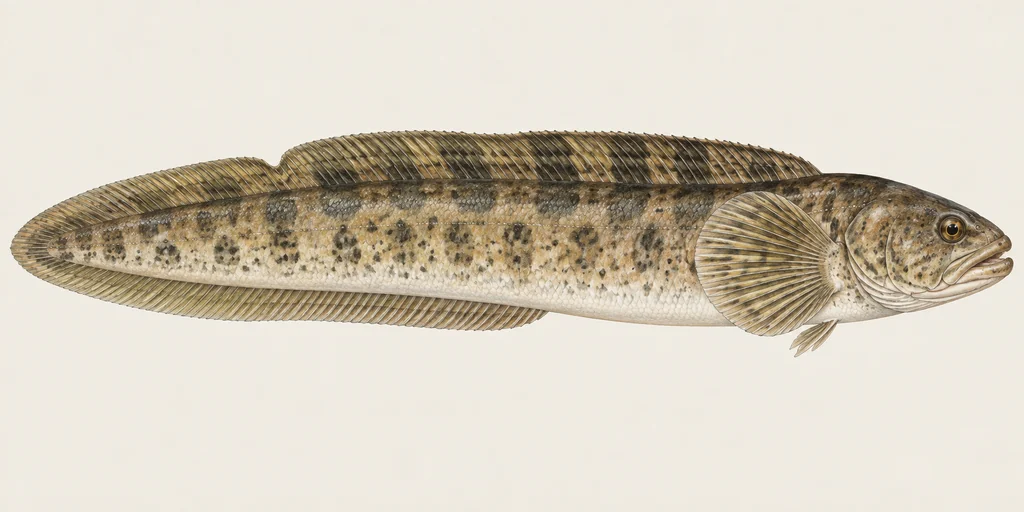
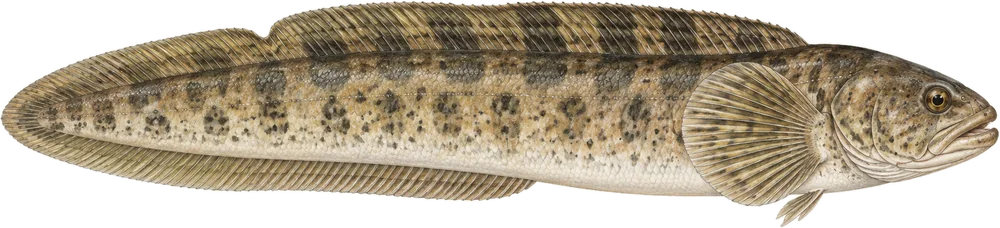
- Continuous fin fringe formed by the dorsal and anal fins without a separate tail fin, with a notch just before the end of the dorsal fin
- Large, fan-shaped pectoral fins about the size of the head, pelvic fins by contrast tiny
- Dark cross bands over the back and dorsal fin, 13 to 15 dark speckles on the flanks
Catch chances through the year
- Hardly any chance
- Possible
- Good
- Peak season
- Spawning (observe the closed season)
Editorial assessment for waters in Germany, not a measured value and no guarantee. Spawning time is not the same as the legal closed season.
Species profile and sources in the catch calendarAll species compared month by monthThe rules of your federal state
How to recognise it
The eelpout has an elongated, rounded body that tapers to a point at the rear. The dorsal fin starts on the crown of the head and runs to the tail, and the anal fin runs from the vent to the end of the body. The two merge into a single fringe at the tail, and there is no separate tail fin. A distinct notch sits just before the end of the dorsal fin.
The strong pectoral fins stand out, about as big as the head. The pelvic fins, by contrast, are greatly reduced. The colour matches the ground: yellow-green to yellow-brown over sandy eelgrass, grey-brown to almost black over mud or red algae. Dark cross bands run over the back and dorsal fin, there are 13 to 15 dark speckles on each flank, and the belly is yellowish white.
The small scales lie deep in the layer of slime, and the species has no swim bladder. According to FishBase, eelpout grow to 52 centimetres, with around 30 centimetres usual. The highest published weight is 510 grams, the highest reported age ten years. One oddity shows up in the kitchen: the bones contain the phosphate compound vivianite and turn green when cooked.
The eelpout shares only its name and its slim shape with the eel. The eel has no markings and is built far more like a snake. The name dates from a time when nobody knew where eels came from and the live-bearing coastal fish was thought to be their mother.
On the tidal flats and along stony shores the butterfish lives in similar hiding places. It is flattened from the sides and carries a row of twelve round eye spots along the back, which the eelpout lacks.
Side by side
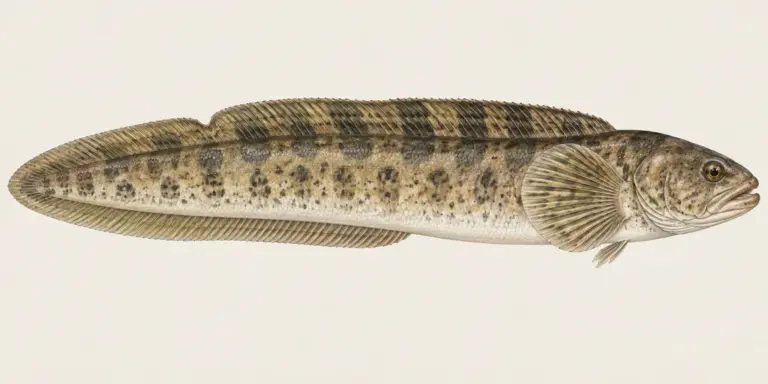
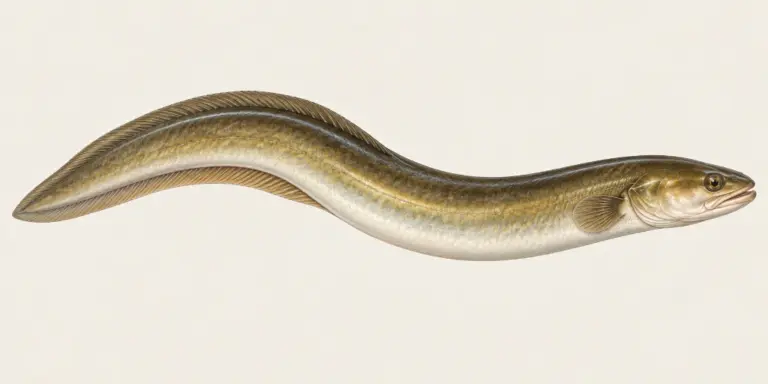
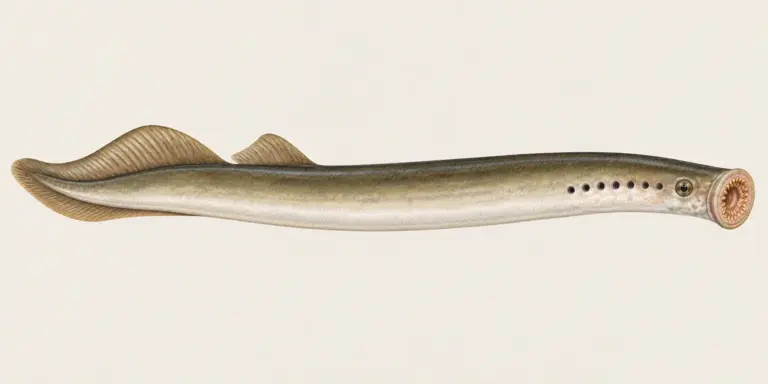
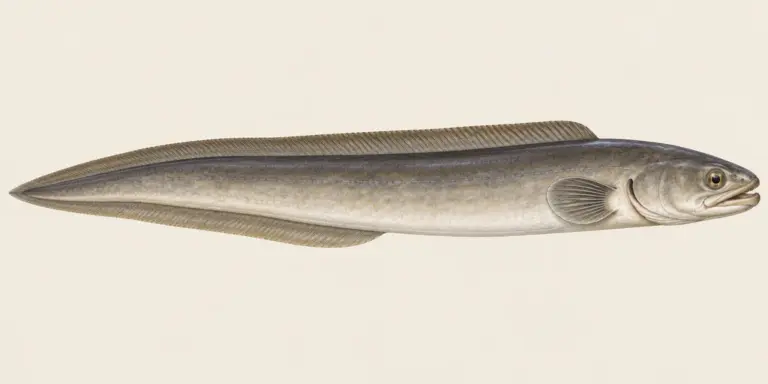
AI-generated illustrations.
Where it lives
The eelpout occurs in the north-east Atlantic from the White Sea and the Barents Sea to the English Channel, and also in the shallow North Sea and in the Baltic. It lives from the tidal zone down to about 40 metres, mostly between 2 and 20 metres.
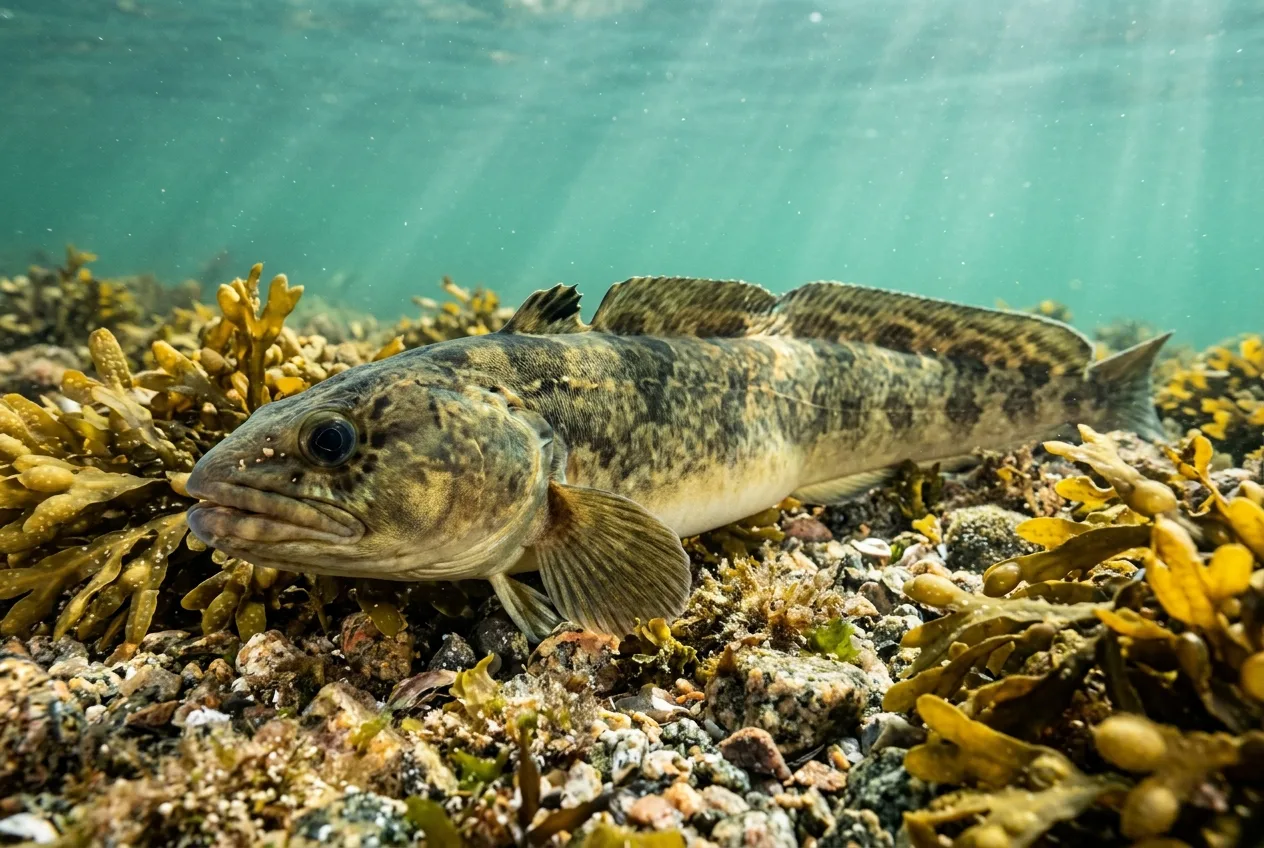
It stays on the bottom, especially over stony ground and mussel beds, among kelp and eelgrass. Even on bare sand it looks for the cover of single stones or tufts of algae. The fish are territorial and do not swim long distances. The species tolerates low salinity well, so it is also found in brackish water and river mouths.
For anglers, harbours, jetties, groynes, breakwaters and rock armour matter. According to the magazine Blinker, typical spots are about four metres of water over sand or mud with light growth. In winter the fish move a little deeper but seldom sit beyond ten metres. Under stones or kelp the eelpout can even survive out of the water for a while, breathing air.
Holding spots in the picture
Choose a season and time of day: the picture shows where the species sits then. Tap a fish or a spot in the list to bring it closer. The picture is schematic and AI-generated, every water is different.
Chance of a catch in springgood
Catch chance in summergood
Catch chance in autumnpossible
Catch chance in winterpossible
- J
- F
- M
- A
- M
- J
- J
- A
- S
- O
- N
- D
Spawning season
Not the main time Bites come mainly at dusk and on overcast days. At night the eelpout ventures right into very shallow water.
Not the main time Bites come mainly at dusk and on overcast days. At night the eelpout ventures right into very shallow water.
Active time Bites come mainly at dusk and on overcast days. At night the eelpout ventures right into very shallow water.
Active time Bites come mainly at dusk and on overcast days. At night the eelpout ventures right into very shallow water.
On the coast
Seagrass, gravel and stones in the shallows
Eelpout are found here all year round.
Sandy bottom
Eelpout are found here all year round.
Stony mixed ground
Eelpout are found here all year round.
The eelpout lurks on the bottom among stones, kelp and seagrass, preferably along overgrown harbour walls, piers and rock armour. It also feels at home over sand and silt with light growth, typically in about four metres of water.
Spring: catch chances according to the catch calendar are good.
Summer: chances according to the catch calendar are good. In spring and summer it stays in the shallow water of harbours and bays.
Autumn: according to the catch calendar, the chance of a catch is good in September and possible in October and November.
Winter: chances according to the catch calendar are possible. In winter it moves somewhat deeper but mostly stays in less than ten metres.
Depth: Eelpout live from the tidal zone down to about 40 metres, mostly between 2 and 20 metres.
Size comparison: AI-generated drawing, schematic.
How it feeds and has its young
The eelpout is an ambush hunter. With its large pectoral fins it darts out of cover and snaps up shrimps, sand hoppers, bristle worms, snails, midge larvae and the eggs and fry of other fish. This diet is also why the fish likes to sit along overgrown harbour walls.
Its reproduction is an exception among the bony fish of our coast. Mating takes place in August and September, and the eggs are fertilised inside the female. FishBase gives a total gestation of about five months. In winter the female, according to FishBase, gives birth to 30 to 400 fully developed young of 35 to 55 millimetres, which are independent at once. Eelpout mature at about 17 centimetres.
Because it stays put and gives birth to live young, the German Environmental Specimen Bank has used the eelpout for years as an indicator of pollutants on the coast. More recently, large specimens have become rarer; the cause is thought to be oxygen deficiency linked to higher water temperatures.
When it bites
Eelpout bite all year round, but in Schleswig-Holstein they are protected from 15 September to 31 January. In spring and summer they sit in the shallow water of harbours and bays, in winter a little deeper.
From October to January the females carry their young inside. Where no closed season applies, the magazine Blinker advises releasing females during this time. Overcast days and dusk work best, and at night the fish often come right up into very shallow water.
Today’s catch index needs JavaScript. Season and spawning time are in the catch calendar.
You will find the monthly overview of all species and the water temperature check in the catch calendar.
What to catch it with
Step by step: Fishing for eelpout: tips on bait, rig and tackle – season, spots, baits, tackle and rules on one page.
You fish for them deliberately with light tackle from a breakwater, jetty or rock armour. A fish of 35 centimetres already counts as good. In a calm harbour basin a sliding float works well, set so that the bait lies on the bottom or hovers just above it.
Alternatively you run a light paternoster as for flounder fishing; the magazine Blinker suggests a 20 to 30 gram running lead for it. Lugworm and ragworm catch best. Pieces of worm on small hooks are quite enough.
Many eelpout end up on the hook as bycatch when fishing for cod in the surf at night. You will find more about worm baits under Natural animal baits.
Strike early: The eelpout does not take hard but nibbles the bait off in small bites. When the rod tip trembles or the line twitches slightly, you strike at once.
Stay put: Where one eelpout bites, there are usually more. Rebait quickly and keep fishing the same spot.
Making sense of green bones: The green colour when cooked comes from the vivianite stored in the bones. That makes the fish hard to sell, yet the magazine Blinker still counts it among the very good table fish.
Suitable lures
Lugworm and ragworm, also pieces of worm on small hooks, under a sliding float or on a light paternoster.
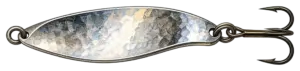
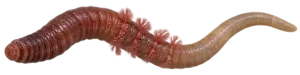
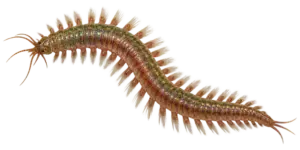
AI-generated illustrations. A click opens the lure’s page.
Rigs for these lures: surf rig.
Nibbling bite: small hooks and strike at once.
What you need to observe
The eelpout is listed as not threatened in the 2025 Red List of German marine fish. For the whole Baltic Sea the Helsinki Commission (HELCOM) has had it on the warning list (Vorwarnliste) since 2013. In Schleswig-Holstein a minimum size (Mindestmaß) of 23 centimetres and a closed season (Schonzeit) from 15 September to 31 January apply to eelpout in the North Sea and Baltic (as of October 2026). The official text is in the Küstenfischereiverordnung Schleswig-Holstein, Annex 1.
Closed seasons, minimum sizes and harvest windows are set by the federal states (Bundesländer) and by the fisheries authorities (Fischereibehörden) of the neighbouring coastal countries (Denmark, Norway, Poland). They vary with the type of water, the stretch of coast and the time of year. We give figures only with a date and a source; what is always binding is the fisheries regulation of your federal state and your fishing permit (Erlaubnisschein). Schleswig-Holstein regulates this, for example, in the Küstenfischereiverordnung und befristeten Allgemeinverfügungen. You will find a list of links to the official sources in the catch calendar.
A fish of legal size that you want to keep, you stun and kill immediately in line with animal welfare rules. Protected or undersized fish you unhook, if possible, with wet hands in the water and release gently.
What closed season, minimum size and harvest slot mean and where to find them is explained on the page Closed season and minimum size explained.
What state law prescribes for closed season and minimum size for this species is in the “At a glance” box on the state page for Schleswig-Holstein. For the other states our overview does not list this species; there the state fisheries regulation is what counts.
Frequently asked questions (FAQ)
Is the eelpout related to the eel?
No. The name goes back to the old misconception that the live-bearing coastal fish brought eels into the world. The eelpout belongs to a family of its own.
Why do eelpout bones turn green?
The phosphate compound vivianite is deposited in the skeleton. When cooked, it turns the bones green.
Where do I catch eelpout?
In harbours, at jetties, groynes, breakwaters and rock armour on the North Sea and Baltic, best at dusk with worm on the bottom.
Sources
The rating of catch chances is an editorial assessment. The facts come from these sources, and the text is worded in our own words. The illustration is an original design by Angel Momente in the style of a natural history plate (AI-generated, see the AI notice).
- FishBase: Zoarces viviparus (Größe, Alter, Tiefe, Fortpflanzung, Nahrung)
- Umweltprobenbank des Bundes (Universität Trier, UBA): Richtlinie zur Probenahme Aalmutter (Merkmale, Biologie, Bioindikator)
- Schutzstation Wattenmeer: Tier des Monats Aalmutter (Lebensraum, Nahrung, Unterscheidung von Aal und Butterfisch)
- Blinker: Steckbrief Aalmutter (Fangplätze, Beißzeiten, Montagen, Köder)
- Rote-Liste-Zentrum: Aalmutter (Rote Liste der Meeresfische Deutschlands 2025: ungefährdet)
- Store norske leksikon (Universität Oslo): ålekvabbe
- Land Schleswig-Holstein: Welche Mindestmaße und Schonzeiten gelten in Schleswig-Holstein?
- Land Schleswig-Holstein: Küstenfischereiverordnung (KüFVO), Anlage 1 Mindestmaße und Schonzeiten
- Blinker extra: Die Fische der Ostsee und wie man sie beangelt (Stand 2007)
Created with AI support from the sources listed. Figures only appear in the text if a source gives them. Last updated: 27 October 2026. Found a mistake? Write to us. Who is behind this site: About me.
More in the lexicon
- All fish species at a glance
- Catch calendar – month, water temperature and profile for 93 species
- Line calculator – breaking strain after the knot, drag guideline, backing
- Angling methods