
Knowledge – Fish
Lampreys (brook, river and sea lamprey): Identification and way of life
Lampreys are jawless cyclostomes and do not belong to the true fishes. Three species live in Germany: the brook lamprey (Lampetra planeri), the river lamprey (Lampetra fluviatilis) and the sea lamprey (Petromyzon marinus). All three are in Annex II of the Habitats Directive (FFH) and are not target species.

In short: Jawless cyclostomes, not true fishes. All three species are in Annex II of the Habitats Directive (FFH) and are not target species; the river lamprey is regarded in Germany as endangered, the sea lamprey as critically endangered.
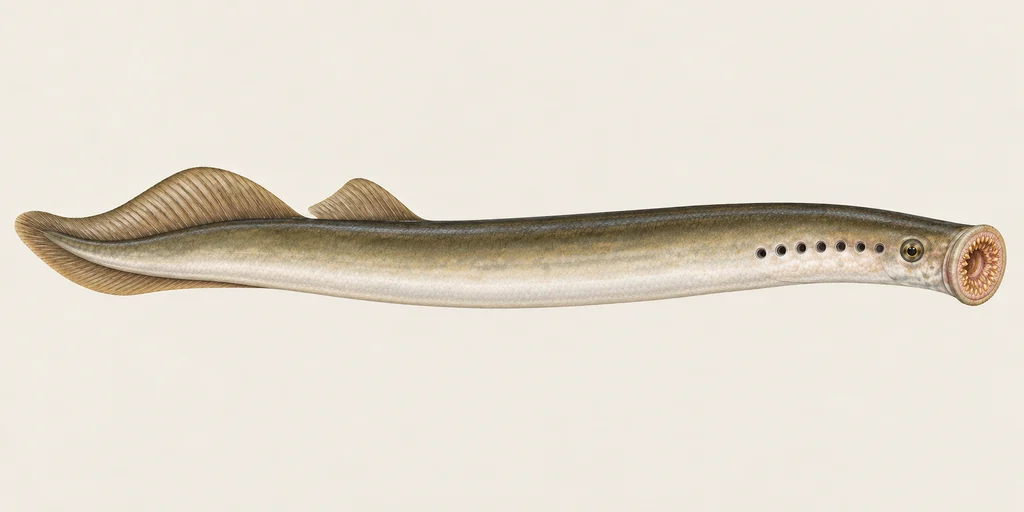
- Round, jawless oral disc with small teeth
- One eye, with seven gill openings in a row behind it
- Two dorsal fins merging at the rear into the tail and anal fins; no paired fins
Catch chances through the year
- Hardly any chance
- Possible
- Good
- Peak season
- Spawning (observe the closed season)
Editorial assessment for waters in Germany, not a measured value and no guarantee. Spawning time is not the same as the legal closed season.
Species profile and sources in the catch calendarAll species compared month by monthThe rules of your federal state
How to recognise it
Lampreys have an eel-like body without scales and without paired fins. Instead of jaws they have a round oral disc with small teeth, with which they suck themselves on. They owe their German name (nine eyes) to the view from the side: one nostril, one eye and seven gill openings add up to nine apparent eyes.
The three species differ mainly in size. According to the Bundesamt für Naturschutz (BfN) the brook lamprey grows up to 15 centimetres long, the river lamprey 30 to 45 centimetres, the sea lamprey over 90 centimetres. FishBase gives as much as 120 centimetres for the sea lamprey.
The brook lamprey is dark blue to dark green on top, yellowish green on the flanks and silvery white on the belly. The sea lamprey is olive to yellow-brown with distinct black marbling. The larvae of all three species are called Querder. They have no eyes and no teeth yet and hardly resemble the adults.
A lamprey in the landing net is often mistaken for a young eel. The eel, however, has jaws and paired pectoral fins directly behind the head. The lamprey lacks both, but you can see the row of gill openings and the round sucking mouth.
River and sea lamprey can be confused near the coast. According to FishBase the teeth of the sea lamprey stand in many successive circles, while the river lamprey has an outer ring of small teeth and an inner ring of large ones. Add to that the marbling of the sea lamprey. Adult brook and river lampreys are told apart mainly by size.
Side by side
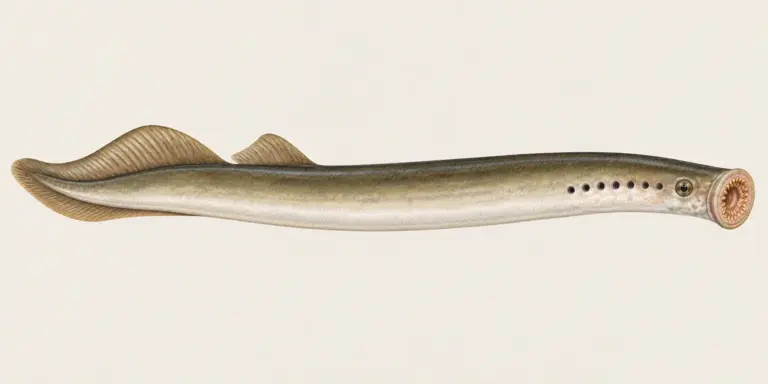
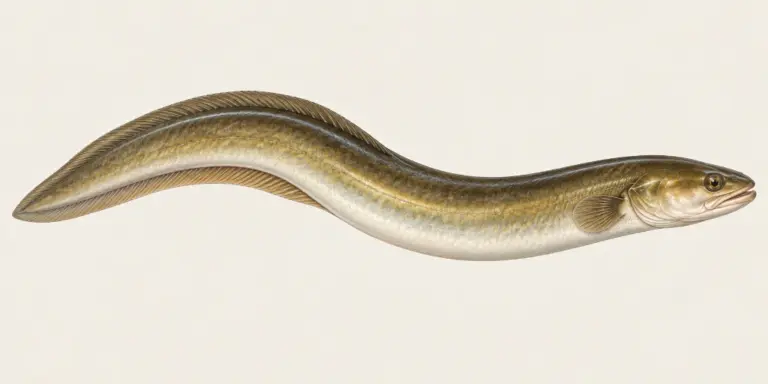
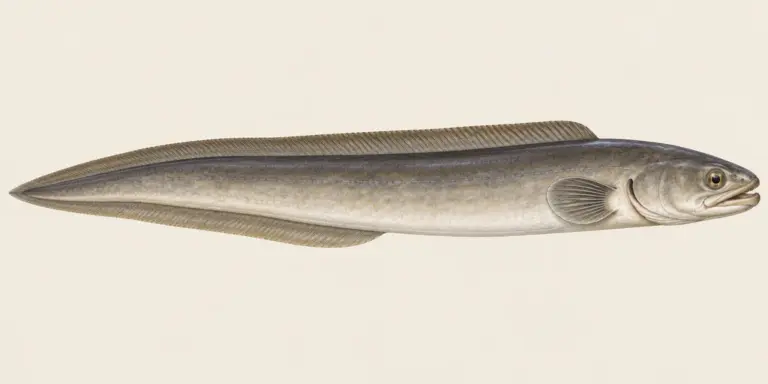
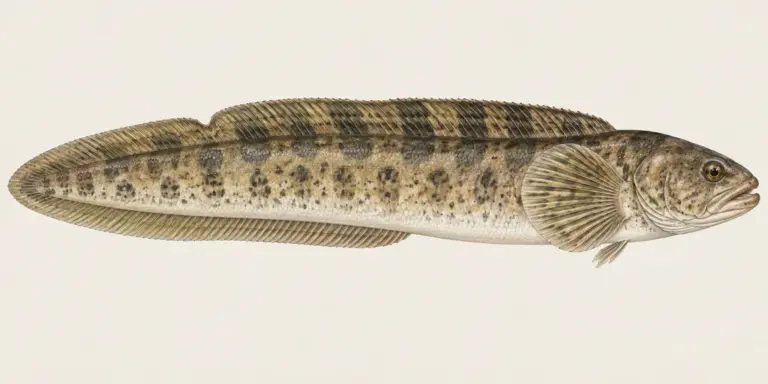
AI-generated illustrations.
Where they live
The brook lamprey spends its whole life in fresh water. It lives in clear streams, smaller rivers and well-flowing ditches, mainly in the upper and middle trout zone. In Germany it is widespread, with its stronghold in the uplands.
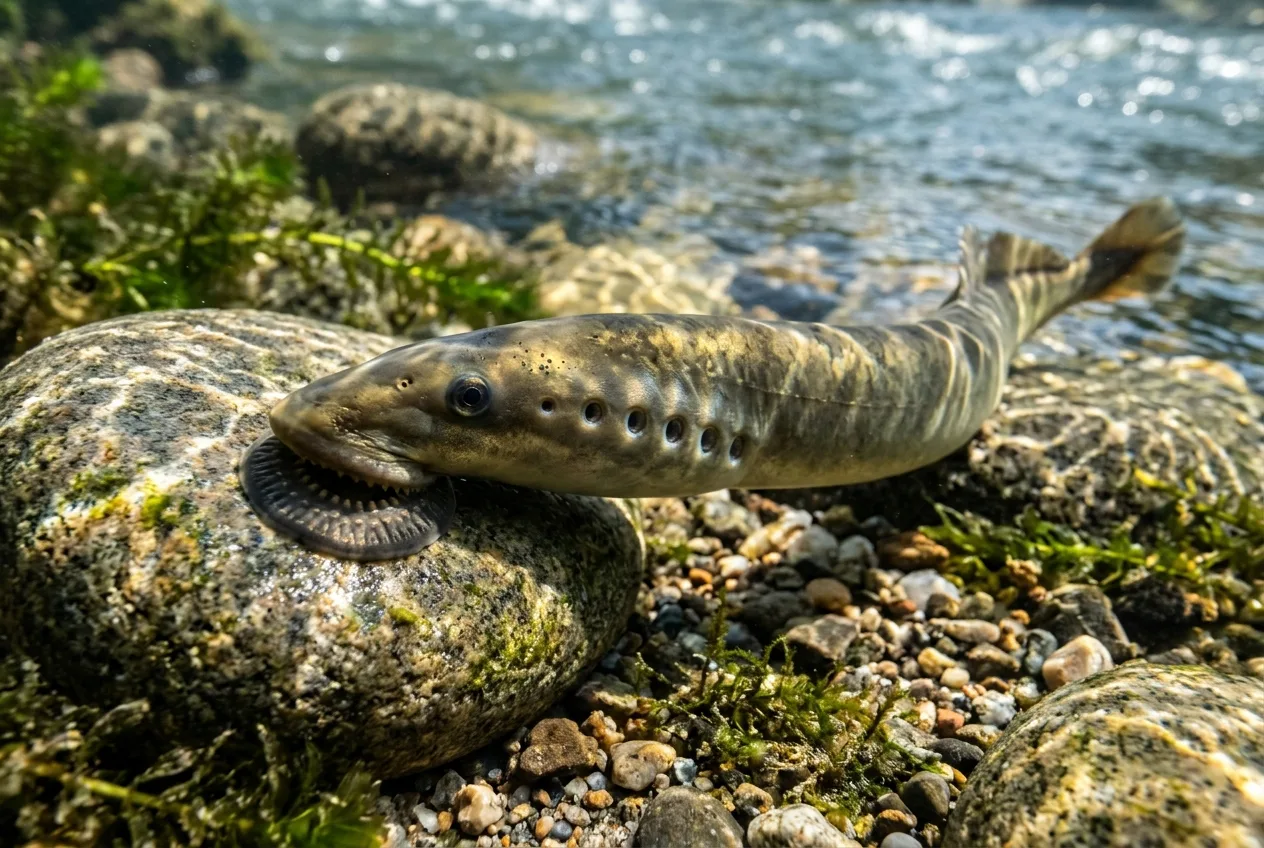
The river lamprey lives in the coastal waters of the North Sea and the Baltic Sea and enters almost all larger rivers to spawn, most of all the Rhine. In Germany the sea lamprey occurs mainly in the North Sea and ascends the Rhine, Weser, Ems and Elbe with their tributaries.
The Querder of all species lie buried for years in the fine sediment of quiet shore areas. In the brook lamprey they lie in humus-rich sand and under rotting leaves. If driftwood is removed during watercourse maintenance or the watercourse is straightened, these places are lost. Weirs and other transverse structures hinder the spawning run of the migratory species.
Holding spots in the picture
Choose a season and time of day: the picture shows where the species sits then. Tap a fish or a spot in the list to bring it closer. The picture is schematic and AI-generated, every water is different.
In the river
Undercut bank, overhanging branches, timber
Lampreys (brook, river and sea lamprey) are found here all year round.
Gravelly shallow (riffle)
Lampreys (brook, river and sea lamprey) are found here all year round.
Calm bay with aquatic plants
Lampreys (brook, river and sea lamprey) are found here all year round.
The larvae of all three species spend years in the fine sediment of slow-flowing bank areas, in the brook lamprey often under fallen leaves and among driftwood. The brook lamprey stays in clear streams and small rivers of the trout zone all its life. River and sea lampreys come from the sea only to spawn.
Spring: This is the spawning period, so observe the closed seasons (Schonzeit). In spring the animals dig spawning pits in gravel and sand, the brook lamprey often together in shallow water; afterwards the parents die.
Summer: This is the spawning period, so observe the closed seasons (Schonzeit). The sea lamprey spawns until July on quickly flowing gravel.
Winter: Already in winter river and sea lampreys begin their migration from the coast upstream.
On the coast
Deep, colder water
Lampreys (brook, river and sea lamprey) are found here all year round.
Open water, mid-water
Lampreys (brook, river and sea lamprey) are found here all year round.
River and sea lampreys spend their feeding period in the sea, above all in the North Sea and Baltic Sea. There they attach themselves to fish, the river lamprey often to herring. The sea lamprey lives in open water as well as on the bottom and goes down very deep.
Spring: The spawning season falls in this period; observe the closed seasons (Schonzeiten).
Summer: The spawning season falls in this period; observe the closed seasons (Schonzeiten).
Size comparison: AI-generated drawing, schematic.
How they live and spawn
The Querder filter detritus, that is decaying organic remains, and algae from the sediment. In the brook lamprey this phase lasts, according to the Landesfischereiverband Bayern, three to five years; FishBase gives five to six. In late summer the transformation begins: eyes, teeth and sex organs form and the gut is reduced. Adult brook lampreys no longer feed; they live only to reproduce.
After transformation, river and sea lamprey migrate to the sea and live there as parasites. According to the BfN the river lamprey attaches itself mainly to herring. The sea lamprey fastens onto large fish and even whales, feeds on blood, body fluids and tissue, and usually does not kill its host. According to FishBase it spends about 20 to 36 months at sea.
To spawn, lampreys excavate pits in gravel and sand. In the sea lamprey they can be over a metre long, and a female lays up to 240.000 eggs. A female brook lamprey manages about 500 to 2.000 eggs. After spawning the parents die.
The brook lamprey is very sensitive to temperature. A report for the Bund/Länder-Arbeitsgemeinschaft Wasser (LAWA) gives an upper lethal temperature of 24 °C for adults, the lowest value of all the species listed there. For river and sea lamprey it gives 30 and 31 °C.
Is there a season?
There is no angling season for lampreys.
The migratory species travel a long way. According to the BfN the river lamprey begins its spawning run as early as December and spawns in spring. The sea lamprey moves upriver from winter and spawns from May to July. The brook lamprey spawns in small groups in shallow water, regionally between the end of March and July.
You will find the monthly overview of all species and the water temperature check in the catch calendar.
What to do with a bycatch
Lampreys are not fished for. An adult brook lamprey does not feed and therefore hardly ever takes a bait.
If a lamprey does end up in the landing net or on the hook, put it straight back into the water. Touch it only with wet hands and do not leave it lying on land.
As a wading angler you can do something straight away: according to the BfN the Querder are sensitive to trampling. Avoid shallow sand and gravel bars in spawning areas, especially in spring.
Count the gill openings: Seven round openings behind the eye and no jaw: that is a lamprey, not a young eel.
Do not step into spawning pits: Shallow hollows in the gravel where several slender animals gather in spring are spawning grounds. Do not wade through them.
Suitable lures
We deliberately show no baits for this species.
All three species are FFH species, with river and sea lamprey endangered or critically endangered: do not fish for them, put bycatch straight back into the water.
What you need to observe
All three species are in Annex II of the Habitats Directive (FFH), the river lamprey also in Annex V. In the Red List of Germany of 2023 the brook lamprey is classed as not threatened, the river lamprey as endangered and the sea lamprey as critically endangered. For the sea lamprey, according to the Rote-Liste-Zentrum, populations have declined in many places over the past decade without the causes being known.
How to handle lampreys when fishing is regulated by the federal states. In Bavaria the brook, river and sea lamprey are protected all year round under the Ausführungsverordnung zum Bayerischen Fischereigesetz. Viable animals caught during the closed season (Schonzeit) must be put back there without delay and with care into the same stretch of water.
Closed seasons (Schonzeit), minimum sizes (Mindestmaß) and fishing bans are set by the federal states (Bundesland). They differ by state and water. We give figures only with a date and a source; what counts is always the fisheries regulation of your federal state and your fishing permit (Erlaubnisschein). You will find a list of links to the official sources in the Fishing calendar.
What closed season, minimum size and harvest slot mean and where to find them is explained on the page Closed season and minimum size explained.
What state law says about the closed season (Schonzeit) and minimum size (Mindestmaß) for this species is in the “At a glance” box on the state page for Bavaria. Our overview does not list this species for the other states; the state fisheries regulation applies there.
Frequently asked questions (FAQ)
Are lampreys fish?
No. Lampreys are jawless cyclostomes and form a group of their own. In the Bavarian fisheries regulation they are nevertheless on the list of protected species.
Why are they called nine-eyes (Neunauge in German)?
From the side you see one nostril, one eye and seven gill openings. Together that makes nine apparent eyes.
How do I tell a river lamprey from a sea lamprey?
The sea lamprey is larger, marbled in black and has teeth in many circles. The river lamprey has an outer ring of small teeth and an inner ring of large ones.
Sources
The rating of catch chances is an editorial assessment. The facts come from these sources, and the text is worded in our own words. The illustration is an original design by Angel Momente in the style of a natural history plate (AI-generated, see the AI notice).
- Landesfischereiverband Bayern: Fischlexikon – Bachneunauge (Kennzeichen, Querder, Lebensweise)
- Bundesamt für Naturschutz: Artenporträt Lampetra planeri (Bachneunauge)
- Bundesamt für Naturschutz: Artenporträt Lampetra fluviatilis (Flussneunauge)
- Bundesamt für Naturschutz: Artenporträt Petromyzon marinus (Meerneunauge)
- Rote-Liste-Zentrum: Bachneunauge (Rote Liste 2023: ungefährdet)
- Rote-Liste-Zentrum: Flussneunauge (Rote Liste 2023: stark gefährdet)
- Rote-Liste-Zentrum: Meerneunauge (Rote Liste 2023: vom Aussterben bedroht)
- FishBase: Lampetra planeri, European brook lamprey
- FishBase: Lampetra fluviatilis, European river lamprey
- FishBase: Petromyzon marinus, Sea lamprey
- LAWA-Projekt O 10.20 (Leibniz-IGB, 2021): Temperaturempfindlichkeiten der Fischgemeinschaften
- Bayern.Recht: Verordnung zur Ausführung des Bayerischen Fischereigesetzes (AVBayFiG) mit Anlage Schonzeiten
Created with AI support from the sources listed. Figures only appear in the text if a source gives them. Last updated: 8 November 2026. Found a mistake? Write to us. Who is behind this site: About me.
More in the lexicon
- All fish species at a glance
- Catch calendar – month, water temperature and profile for 93 species
- Line calculator – breaking strain after the knot, drag guideline, backing
- Angling methods