
Knowledge – Fish
Conger eel (Conger): Features, way of life, baits
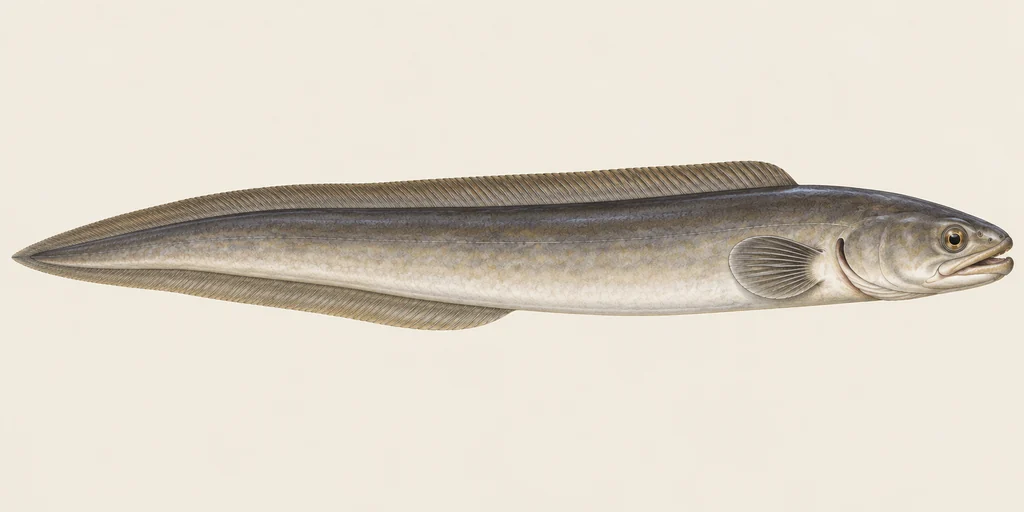
The conger eel (Conger conger), conger for short, is the largest eel species in Europe. Unlike the European eel it spends its whole life in the sea. It lives hidden in rock crevices and wrecks and hunts at night.

In short: The best time for conger eel is June to October, above all in the evening and at night. Good spots on the coast: wrecks, reefs, stony mixed ground and deep water. Proven baits: pieces of mackerel or squid and whole fish fillets on a large hook with a running lead. In German waters it is extremely rare according to the Red List; it is caught mainly in Norway and in the English Channel. The dorsal fin begins above the pectoral fin, in the European eel clearly further back. Step by step: Fishing for conger eel.
- Dorsal fin starts above the pectoral fin
- Smooth, scaleless skin in grey to greyish brown
- Pectoral fin behind the head as a reference point for the start of the dorsal fin
Catch chances through the year
- Hardly any chance
- Possible
- Good
- Peak season
- Spawning (observe the closed season)
Editorial assessment for waters in Germany, not a measured value and no guarantee. Spawning time is not the same as the legal closed season.
Species profile and sources in the catch calendarAll species compared month by monthThe rules of your federal state
How to recognise it
The conger eel has a long, eel-shaped body without scales. The base colour is dark grey to cement grey, often with a hint of brown, sometimes with a bluish sheen.
The surest feature is the long dorsal fin. It already starts above the rear edge of the pectoral fin when you lay the pectoral fin against the body.
FishBase gives a typical length of around one metre for males and 1,5 metres for females. The largest animals reach three metres and 110 kilograms. According to Store norske leksikon, conger eels of more than 30 kilograms have been recorded in Norway. The heaviest known fish from Denmark weighed 43 kilograms at a length of about two metres.
You can mainly confuse it with the European eel. In the European eel the dorsal fin begins clearly further back along the back, in the conger eel directly above the pectoral fin.
Side by side
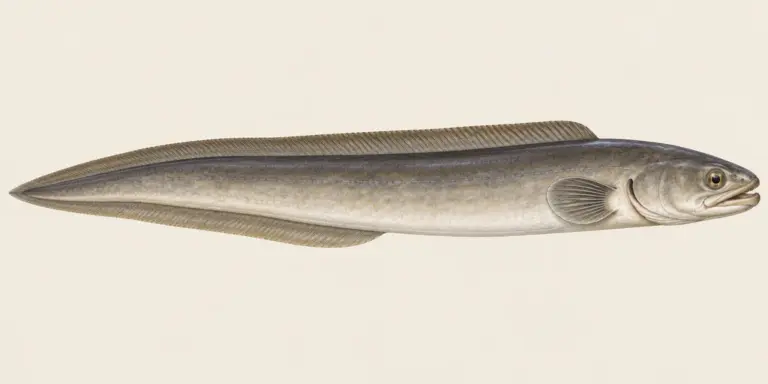
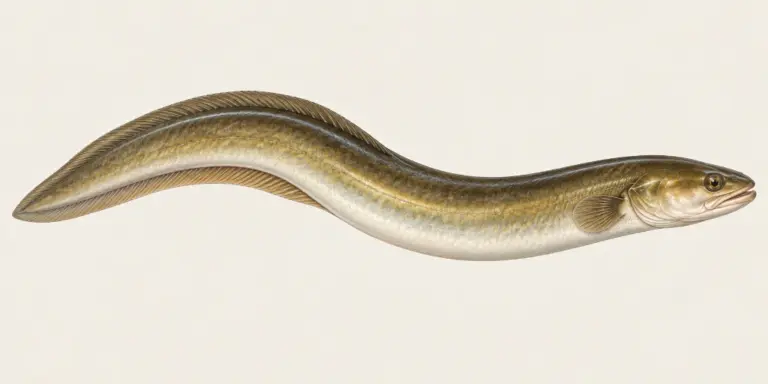
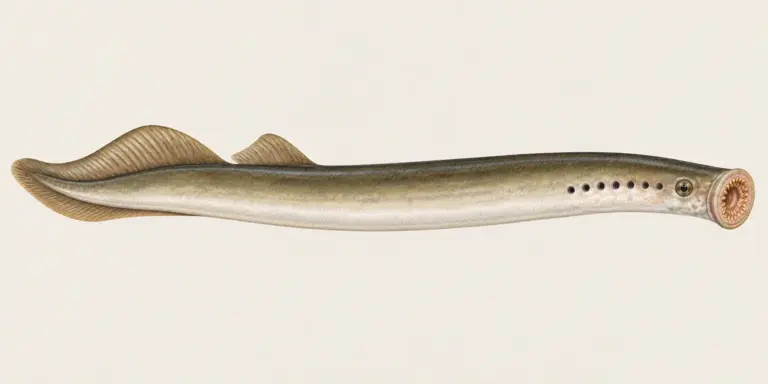
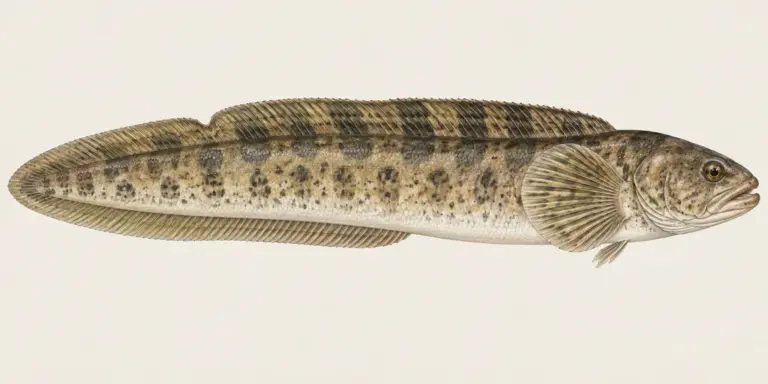
AI-generated illustrations.
Where it holds
The conger eel lives in the eastern Atlantic from Norway and Iceland to Senegal, and also in the Mediterranean and the Black Sea. In Norway, according to Store norske leksikon, it occurs only sparsely on stony ground, along the coast northwards to Troms. In Denmark it is comparatively rare and is caught mainly in the North Sea and the Skagerrak.
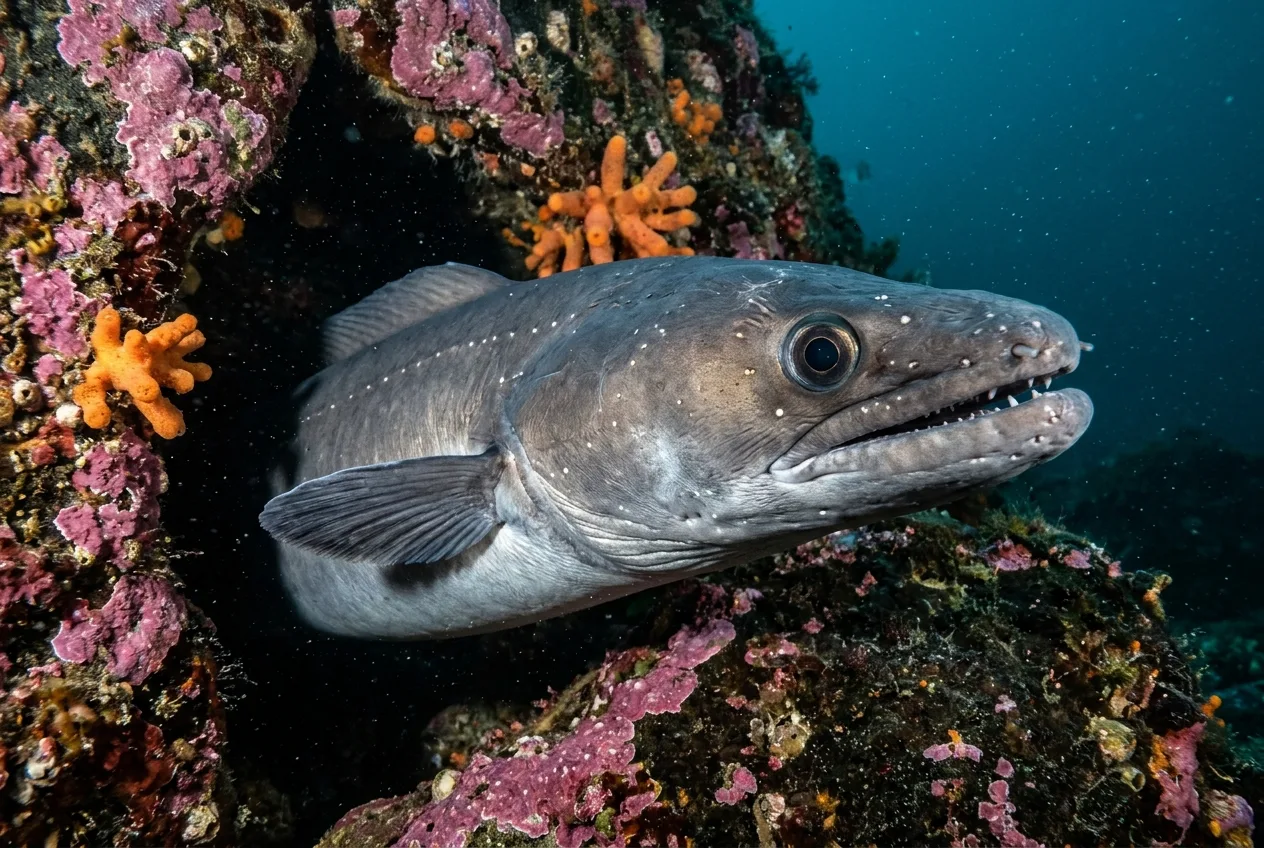
In German waters the Red List classes it as extremely rare. It lives mainly in the deeper parts of the North Sea; the German North Sea lies at the edge of its range.
It is usually caught between the coast and 500 metres depth over rock and sand bottoms. Juveniles stay near the coast, adults move deeper. During the day it hides in rock crevices, caves and wrecks, also at sheet piling, bridges, jetties and in harbours with rock-armoured bottoms.
Holding spots in the picture
Choose a season and time of day: the picture shows where the species sits then. Tap a fish or a spot in the list to bring it closer. The picture is schematic and AI-generated, every water is different.
Catch chances in springpossible
Chance of a catch in summergoodSpawning, observe the closed seasons
Catch chance in autumngood
Catch chance in winterhardly any
- J
- F
- M
- A
- M
- J
- J
- A
- S
- O
- N
- D
Spawning season
No main time By day usually only the head peeks out of the hideout. At dusk and at night the conger comes alive, so from the shore you fish in the evening and at night.
No main time By day usually only the head peeks out of the hideout. At dusk and at night the conger comes alive, so from the shore you fish in the evening and at night.
Active time By day usually only the head peeks out of the hideout. At dusk and at night the conger comes alive, so from the shore you fish in the evening and at night.
Active time By day usually only the head peeks out of the hideout. At dusk and at night the conger comes alive, so from the shore you fish in the evening and at night.
On the coast
Stony mixed ground
Conger is here all year round.
Wreck, reef
Conger is here all year round.
Deep, colder water
Conger is here all year round.
The conger hides in rock crevices, caves and wrecks. It also takes to harbours, breakwaters, sheet piling and bridges, as long as the bottom there consists of blocks with crevices and gullies. From the shore you look for rocks that continue under water and drop steeply into the deep.
Spring: chances according to the catch calendar are slim in March, possible in April and May.
Summer: chance of a catch good according to the catch calendar. This is when spawning falls, so observe the closed seasons.
Autumn: catch chance according to the catch calendar good in September and October, possible in November.
Winter: catch chance according to the catch calendar hardly any.
Depth: Young congers stay close inshore, adults move into deeper water. Shore congers are usually clearly smaller than the fish at wrecks.
Size comparison: AI-generated drawing, schematic.
How it hunts and reproduces
The conger is a nocturnal predator that feeds on fish, crustaceans and squid. During the day often only the head peeks out of its hiding place.
Like other eels it spawns only once in its life and dies afterwards. According to FishBase it matures at 5 to 15 years. Spawning takes place in summer, mainly in the Atlantic between Gibraltar and the Azores and in the Mediterranean. FishBase gives depths of 2000 to 3000 metres in the open sea for egg-laying.
The eggs hatch into transparent, ribbon-shaped larvae (leptocephalus larvae), which drift in open water for one to two years before taking on the typical eel shape. In Norwegian waters there is no self-reproducing stock.
When it bites
You can fish for conger all year round. For the English Channel coast Blinker names July and August as the best months, British fishing reports fish from spring to late autumn and in mild winters beyond that. Further north, in the North Sea and in Norway, the period is shorter, so the calendar rates summer and early autumn highest.
Your best chances are at night, from the shore as well as from a boat. According to Blinker, darkness combined with the turn of the tide, when the current is barely running, is particularly favourable.
Today’s catch index needs JavaScript. Season and spawning time are in the catch calendar.
You will find the monthly overview of all species and the water temperature check in the catch calendar.
What you catch it with
Step by step: Fishing for conger eel: tips on bait, rig and tackle – season, spots, baits, tackle and rules on one page.
The conger eel is caught on natural baits. Pieces of mackerel or squid work well. Instead of small scraps you offer strong fillet pieces or a whole fillet. The hook must be large; Blinker gives 6/0 as the smallest size. Small whole baitfish catch too, and on the Irish west coast crab is considered a good conger bait.
It is best to fish a running-lead rig, where the line runs freely through the lead. That way the conger feels hardly any resistance when it picks up the bait. From a boat you give a little line at the first tug and wait until it takes the bait properly, then you tighten the line and set a strong hook. From the shore on rocks it is different, because there the conger feeds close to its crevice: pick up the rod at the first twitch and strike at the first clear pull, otherwise its tail is already back in the hole.
After that every metre counts: lift the fish away from the bottom quickly, otherwise it clamps its tail around rock or wreck and is almost impossible to free. For big conger on a wreck you need heavy boat rods, strong multiplier reels and a wire trace or very thick monofilament. From the shore you catch rather smaller fish on rocky coasts, jetties and in harbours, also on the southern Norwegian coast.
Do not strike too early from a boat: The conger only takes the bait properly once it feels no resistance. If you strike at once from a boat, you pull the bait out of its mouth. On a rocky shore the opposite applies: there the first pull counts.
Set the drag firm: If the reel gives too much line, the fish reaches its hiding place. Set the drag firm and give line in measured amounts only in an emergency.
Take care at the surface: A landed conger spins quickly around its own axis. Keep away from the head and use a disgorger.
Suitable lures
Pieces of mackerel or squid and whole fish fillets on a large hook with a running lead.
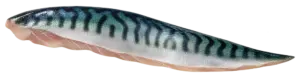
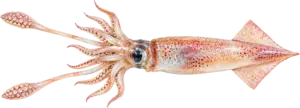
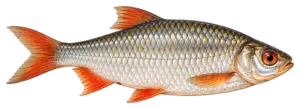
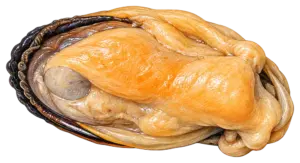
AI-generated illustrations. A click opens the lure’s page.
Rigs for these baits: Natural-bait rig for the sea, Surf rig.
Mainly at night; pump the fish away from the bottom at once.
How to cut up a conger in the kitchen
Conger eel is sold fresh and frozen, and eaten fried or from the oven. When cutting it up, the part of the body matters: the tail is full of bones and really only good for soup. Smaller conger you prepare like a European eel, from large ones you cut thick middle pieces and braise them like meat.
As a sea fish the conger can carry nematodes. Deep-freezing and heating kill the larvae, and thoroughly cooked fish is harmless in this respect. You should therefore eat a conger you caught yourself raw or almost raw only if it was sufficiently frozen through beforehand.
What you need to observe
Closed seasons, minimum sizes and harvest slots are set by the federal states (Bundesländer) and by the fisheries authorities of the neighbouring countries on the coast (Denmark, Norway, Poland). They vary by type of water, stretch of coast and time of year. We only give figures together with the date and source; the fisheries regulation of your federal state and your fishing permit (Erlaubnisschein) are always what is binding. You will find a list of links to the official sources in the catch calendar.
A fish of legal size that you want to keep you stun and kill at once, in line with animal welfare rules. Protected, undersized fish or fish too large under a harvest slot you unhook, if possible still in the water and with wet hands, and release gently. What exactly applies is regulated by state law and your fishing permit (Erlaubnisschein).
In Norway minimum sizes (Mindestmaße) apply to all sea anglers, along with lists of protected species and export rules. The Fiskeridirektoratet gives binding information. Germany’s Red List lists the conger eel as extremely rare, and the IUCN classes it as not threatened worldwide (Least Concern).
What closed season, minimum size and harvest slot mean and where to find them is explained on the page Closed season and minimum size explained.
Frequently asked questions (FAQ)
How do I tell conger eel from European eel?
By the dorsal fin. In the conger eel it begins above the pectoral fin, in the European eel clearly further back. The conger eel also has no scales.
When does the conger bite best?
At night, especially when the current is barely running around the turn of the tide. Over the year the warm summer months are regarded as the best time.
Are there conger eels in the German North Sea?
Only very sporadically. The Red List classes it as extremely rare there; it lives mainly in the deeper parts of the North Sea.
Sources
The rating of catch chances is an editorial assessment. The facts come from these sources, and the text is worded in our own words. The illustration is an original design by Angel Momente in the style of a natural history plate (AI-generated, see the AI notice).
- FishBase: Conger conger, European conger (Größe, Tiefe, Fortpflanzung)
- Store norske leksikon: havål (Größe, Fortpflanzung, Vorkommen in Norwegen)
- Lex (Den Store Danske, J. Nielsen): havål (Merkmale, Vorkommen in Dänemark)
- Rote-Liste-Zentrum: Artensteckbrief Meeraal (Rote Liste Meeresfische 2025)
- Blinker: Steckbrief Conger (Merkmale, Fangplätze, Saison, Köder, Montage)
- Fiskeridirektoratet: Minimum sizes for salt water species (Mindestmaße für Meeresangler)
- Inland Fisheries Ireland: South West Sea Angling Guide 2020 (Glattbutt, Conger: Köder und Plätze)
- Inland Fisheries Ireland: Shore & Small Boat Sea Angling Guide Shannon 2016 (Conger an Molen, nachts, Krabbe als Köder)
- Blinker: Er ist der größte Aal der Welt (Conger, Köder, Abend und Nacht vom Ufer)
- Sea Angler: Fishing for Conger Eels From Reefs and Wrecks (ganzjährig, bevorzugt Frühjahr bis Spätherbst)
- Sea Angler: Sea Fishing Tactics and Tackle for Cardiff Foreshore (Conger Frühjahr bis Herbst, in milden Wintern auch)
- Sea Angler: Catching Conger Eels From the Shore (Anhieb beim ersten Zug am Felsufer)
- BZfE: Fisch und Meeresfrüchte, Gesundheit und Umwelt
- LAVES Niedersachsen: Parasiten in Fischen und Fischereierzeugnissen, ein Problem?
Created with AI support from the sources listed. Figures only appear in the text if a source gives them. Last updated: 27 October 2026. Found a mistake? Write to us. Who is behind this site: About me.
More in the lexicon
- All fish species at a glance
- Catch calendar – month, water temperature and profile for 93 species
- Line calculator – breaking strain after the knot, drag guideline, backing
- Angling methods