
Knowledge · Lures
Squid & calamari
Animal natural baits · Waiting game with a float or on the bottom
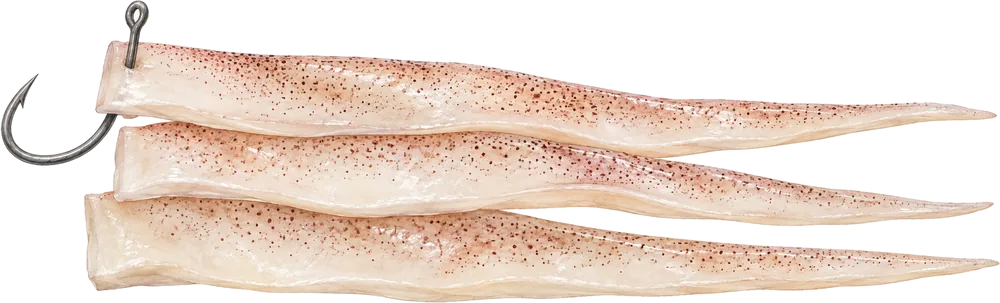
Squid stays on the hook where soft baits were plucked off long ago. Narrow strips from the mantle catch flatfish, sea bream and Atlantic wolffish, larger pieces and whole squid catch ling, conger eel, red snapper and swordfish. In fresh water, wels anglers use squid as an alternative to dead baitfish.
- Water depth
- Bottom, from a boat also just above it
- Presentation
- Stationary on the bottom, from a boat on a dropper or while drifting
- Fishing method
- Waiting game with a float or on the bottom
- Category
- Animal natural baits
LingAtlantic wolffishFlounderDabConger eelGilt-head breamWels catfishRed snapperSwordfish
AI-generated illustrations
How it works
A strip of squid works mainly through the eye and its firmness. The pale strip moves in the current and stands out, writes the Irish fisheries authority Inland Fisheries Ireland. Because the flesh is tough, it withstands attacks by small fish for longer than worms; on the Mediterranean, sea bream anglers use this deliberately.
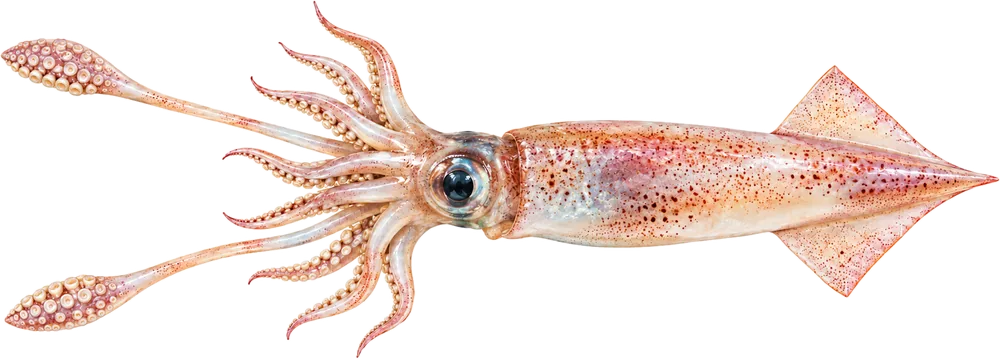
The squid has a slender, tube-shaped mantle, inside a transparent pen of chitin, large eyes on the head and eight arms and two longer tentacles. Mainly the firm mantle is cut: narrow for small mouths, wider as a chunk or bite for large predators. Large squid also go on the hook whole.
Squid often complements other baits. A thin strip on a lugworm keeps the worm up on the hook; wrapped around mackerel or worm and secured with bait elastic, the tough casing protects the soft core from crabs. According to NOAA Fisheries, longfin inshore squid have been caught as bait in the US since the late 19th century, and shortfin squid are still sold as bait today.
How to present the bait
Stationary on the bottom, from a boat on a dropper or while drifting
Schematic illustration, AI-generated.
- cast out
- lies on the bottom or hangs from the float
- wait for the bite
- re-bait
Anatomy
The points on the picture above explain the most important parts – on hover or tap.
- Arms and tentacles: Eight arms and two longer tentacles with suckers. On the hook they move in the current.
- Head and eyes: Large eyes, covered by a cornea in the longfin inshore squid. With a whole squid, head and arms stay on.
- Mantle: The tube-shaped main part with the inner pen. You cut the strips from its firm white flesh.
- Fin margin: Fins at the end of the mantle. With them and with jet propulsion the squid swims.
Rig in three steps
- 1. Strip or squid on the hookPierce the strip at the wide end and secure it with bait elastic; tie a whole squid firmly to the hook shank.
- 2. Dropper or trailing trace from the boatFrom a boat the piece hangs on a dropper above the weight or as a trailing trace behind it, for example for ling or Atlantic wolffish. Natural-bait rig for the sea
- 3. From the shore on the bottomA simple bottom rig is enough for sea bream and conger eel; for conger eel with a strong hooklength from about 0,50 millimetres, for wels with a heavy, firm weight. Running-weight rig step by step
Drawings: AI-generated, schematic.
When the target fish are in season
Hardly any chancePossibleGoodPeak seasonValues from the catch calendar.
When and where
From the shore, squid is used on the bottom rig: in the Mediterranean for sea bream, which bites best in harbours and at river mouths at dusk and at night, and for conger eel, which takes bottom bait of squid or mackerel. For flounder and dab, thin strips of frozen squid are a fallback when no worms are to be had.
From a boat, squid is considered a good bait for ling alongside mackerel and for Atlantic wolffish, whose top baits according to the magazine Blinker are squid, fish liver and shrimp. For red snapper, the Florida Museum names squid and ladyfish as the two most productive baits. Swordfish anglers off California lower a whole large squid with a light stick by day to a depth of 200 to 365 metres.
In fresh water, squid is an alternative to dead baitfish when sitting out for wels. Wels anglers use it in spring, when the fish rebuild their reserves after winter, and in autumn at baiting spots in the current. Live baitfish are in principle banned in Germany. The number of hooks, trebles and fishing rules are set by the country in question and the water regulations; for snappers off the US South Atlantic coast north of 28 degrees north, NOAA Fisheries prescribes circle hooks.
How to choose piece size and hook
For flatfish the strip stays thin and small, with a small hook to match. For Atlantic wolffish, ling and conger eel, a strong piece on a large, sharp hook is fine; the wolffish needs a needle-sharp hook because its mouth is hard and bony.
For wels the bait hangs on a sharp, robust single hook from 2/0 to 10/0. Some wels anglers use for worms and squid a system of a treble as a bait carrier and a smaller treble below it as the catching hook; whether trebles are allowed is regulated by the country.
How to get and store squid
Squid is available in most tackle shops, often deep-frozen, and as edible squid at the fishmonger’s; one pack is enough for many strips. Only thaw what you need for the day.
According to the Bundesamt für Verbraucherschutz und Lebensmittelsicherheit, raw fish should always be kept cool, stored apart from food that is not heated, and hands and work surfaces cleaned afterwards with hot water; it is best to treat bait squid in exactly the same way. Some wels anglers deliberately leave squid in the sun for a few days. Such a bait belongs even further away from food.
How to put strips and whole squid on the hook
- Pierce at the wide end Pierce the squid strip once or twice at the wide end.
- Narrow end swings free The narrow end stays free and swings in the water.
- Secure with bait elastic If small fish pick at it, wrap elastic bait thread around strip and hook.
Pierce the strip at the wide end once or twice so that the narrow end swings free. If small fish pick at it, secure the bait with elastic bait thread. With a cocktail, you thread on the worm first and put the strip on last, over the hook point.
Swordfish anglers tie a whole large squid firmly to the hook shank so that it does not tear off at the bite and does not tangle when lowered. On the bottom you give the fish time: an Atlantic wolffish sucks in the bite first, and only then comes a firm strike.
Keep it fresh and present it
Keeping it fresh: store natural baits cool and in the shade, take only as much as necessary and do not tip leftovers into the water. When baiting up, the hook point must stay free so that the strike takes hold.
Squid & calamari or another bait after all?
| Baits and lures | Depth | Presentation | Take this lure if … |
|---|---|---|---|
| Squid & calamari | Bottom, from a boat also just above it | Stationary on the bottom, from a boat on a dropper or while drifting | this page |
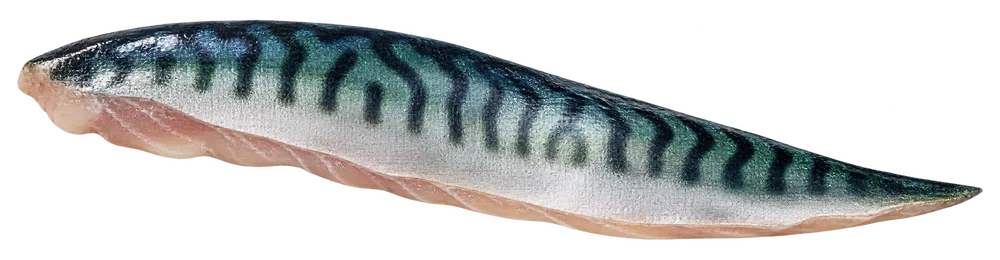 Cut bait | Bottom to mid-water | Stationary on the bottom or under the float, guided slowly from a boat with the drift | you have mackerel or herring to hand and need more scent than firmness |
 Lugworm | Bottom | Stationary on the bottom, cast far from the beach; wait for bites | you are deliberately fishing for flatfish from the beach and can get worms |
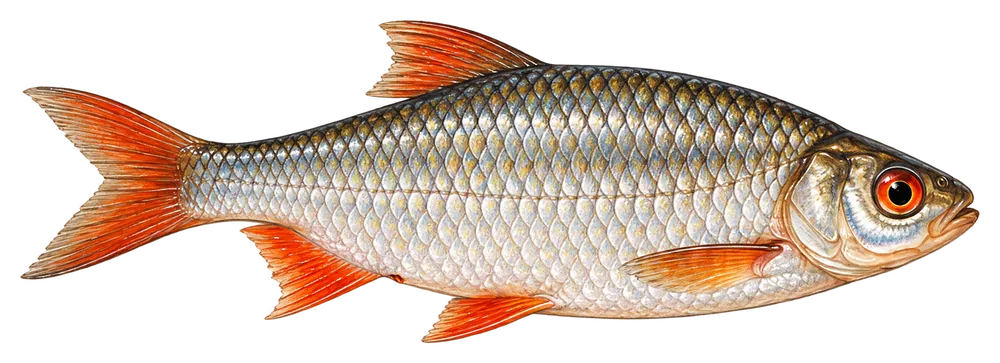 Baitfish | Bottom or mid-water | Stationary on the bottom or under the float, in summer twitched lightly at intervals | in fresh water you want to offer a whole dead fish for wels or pike |
What you need
- Sea rodFrom a boat a strong one with a multiplier reel, from the shore a surf or bottom rod. More
- Fishing hookSmall for flatfish, large and needle-sharp for ling, Atlantic wolffish and conger eel. More
- Cool boxKeeps the thawed bait cool and apart from provisions. More
- Fishing knifeA sharp knife cuts clean strips from the mantle. More
More on the method: Float fishing and Bottom fishing.
At a glance
Editorial assessment, not measured values.
If it does not work
Take tough squid strips and secure them with bait elastic.
Wrap the soft bait in a strip of squid and tie it with bait elastic into a sausage.
Thread on a thin strip of squid as a finisher; it holds the worm up.
Tie it firmly to the hook shank instead of just piercing it.
Cut the strips thinner and smaller and use a small hook.
Give the fish time to suck in the bite, then strike hard.
Frequently asked questions
Where do I get squid as bait?
In a tackle shop, often deep-frozen, or as edible squid at the fishmonger’s. One pack is enough for many strips; only thaw what you need for the day.
Why does squid stay on the hook so well?
The flesh of the mantle is tough. It survives bites from small fish for longer than worms and, wrapped around other baits, protects their soft core from crabs.
Do you catch wels on squid too?
Yes, when sitting out it counts as an alternative to a bundle of dew worms and dead baitfish. Wels anglers use it mainly in spring and autumn at baiting spots.
How do I present a whole squid?
Tied firmly to the hook shank so that it does not tear off at the bite. That is how swordfish anglers fish off California, with a light stick close to the hook.
Which fish take squid?
In the sea, among others, ling, Atlantic wolffish, conger eel, sea bream, flounder, dab, red snapper and swordfish, in fresh water the wels catfish.
Before fishing, the current permits, state rules and water rules apply: bait bans, number of hooks, closed seasons, protected species and catch limits can differ. Many federal states expressly ban live baitfish. Take bait remains and packaging away with you. All details are guide values without guarantee and do not replace legal advice.
Sources
- Inland Fisheries Ireland: South West Sea Angling Guide 2020
- Inland Fisheries Ireland: Shore & Small Boat Sea Angling Guide Shannon 2016
- Florida Museum of Natural History: Northern red snapper
- California Fish and Wildlife Journal: Recreational deep-drop fishery for swordfish off southern California (2022)
- NOAA Fisheries: Longfin Squid
- NOAA Fisheries: Shortfin Squid
- NOAA Fisheries: Red Snapper
- Australian Museum: Squid
- Bundesamt für Verbraucherschutz und Lebensmittelsicherheit: Lebensmittelhygiene, Fisch
- Blinker: Angeln in Kroatien, von Dorade bis Thunfisch
- Blinker: Plattfischangeln, 10 Tipps
- Blinker: Angeln auf Steinbeißer
- Blinker: Welsangeln, Tipps und Tricks
- Rute & Rolle: Tipps zum Wallerangeln im Frühling
- Fisch & Fang: Der Rhein bei Worms
- Fisch & Fang: Zielfisch Wels
- Fisch & Fang: Auftrieb für Waller
The sources explain terms and basic principles. Presentation and values are editorial starting points and depend on water, weather and bait.
More animal natural baits
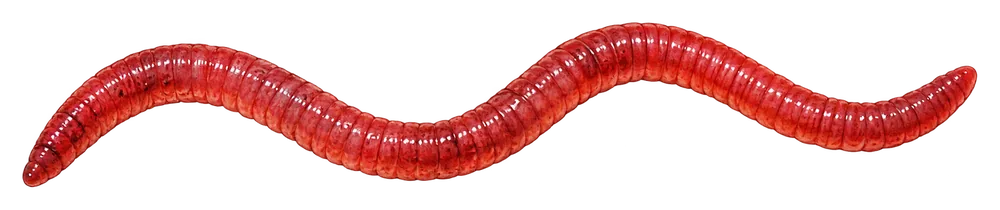 Worms
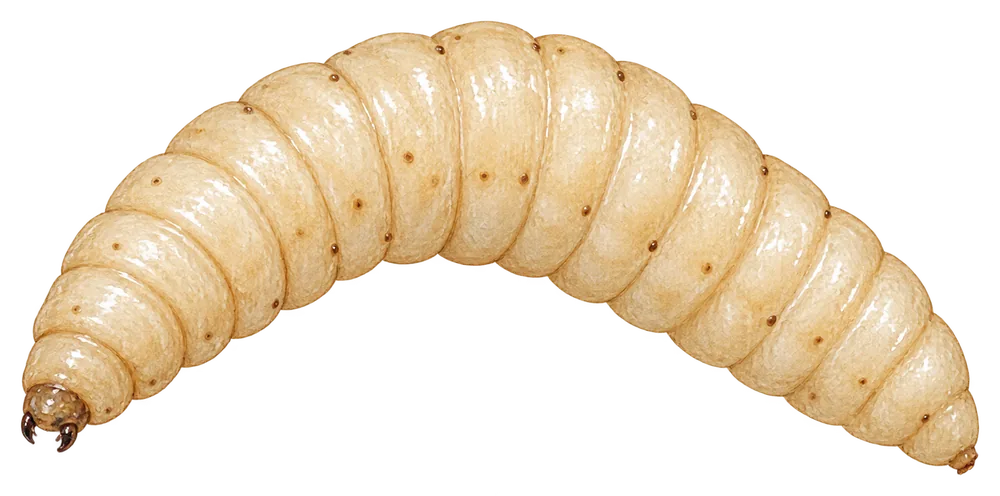 Maggots & larvae
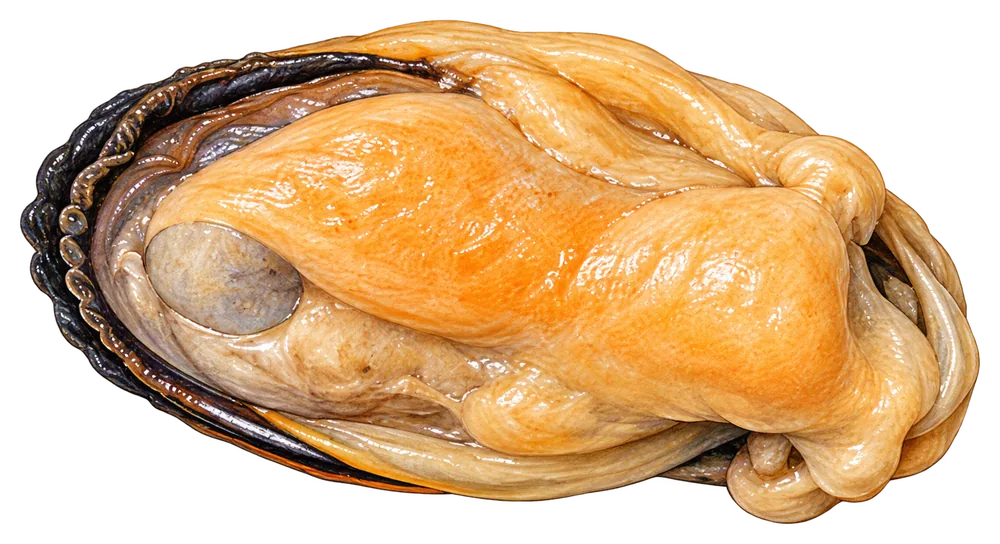 Crustaceans & shellfish
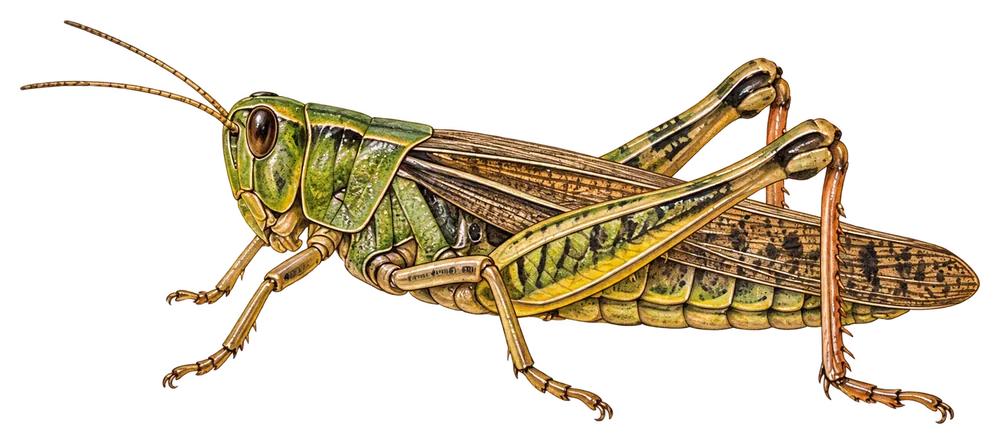 Insects
 Snails
 Offal & meat
 Ragworm
Created with AI support from the sources named (AI notice). Last updated: 23 October 2026. Found a mistake? Write to us. Who is behind the site: About me.