
Knowledge · Lures
Insects
Animal natural baits · Waiting game with a float or on the bottom
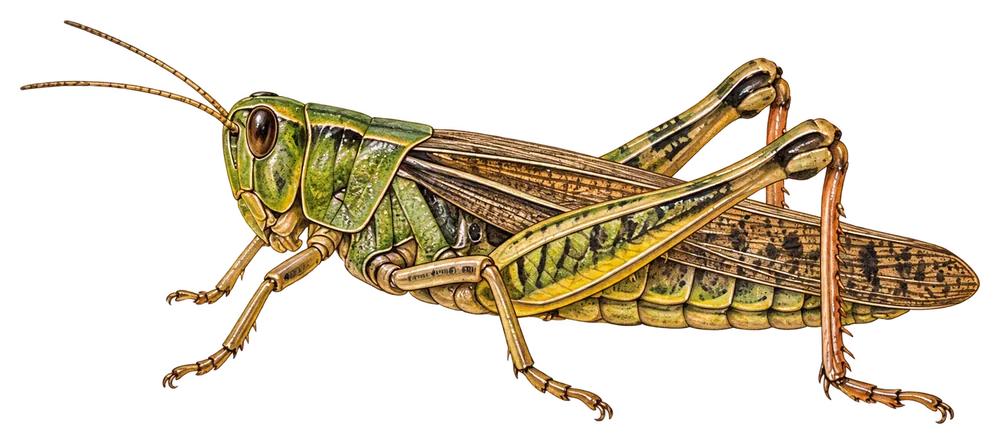
In summer insects keep falling into the water, and chub, rudd and trout wait for them. A grasshopper on the bubble float, or carefully dabbed onto the water, imitates exactly that. You do not need much tackle for it, but you do need consideration when collecting the animals.
- Water depth
- Surface
- Presentation
- Drifts on the surface, in a stream also slightly under water
- Fishing method
- Waiting game with a float or on the bottom
- Category
- Animal natural baits
How it works
An insect drifting on the surface is familiar prey for many fish. Besides trout and grayling, chub, roach and rudd are regarded as insect eaters. For chub the insect can hardly be too big. Grasshoppers float for a while before slowly sinking, and even drowned animals are still taken.
The grasshopper goes on a short-shanked hook in size 8 or 10. You can spear it or glue it on. Glued on, it moves more naturally on the water. Fisch & Fang describes that the animal dies when it is speared and the chances of a catch then drop. There the grasshoppers are held on the hook with waterproof superglue and keep the surface restless for a long time.
Because the bait weighs almost nothing, it needs help with casting. A partly filled bubble float on a long hooklength carries it out and looks like an air bubble to trout. Without casting weight it works with dabbing (Tippangeln): with a long rod you guide the insect over the water and set it down carefully. That only works in little wind or none at all.
An insect can also be presented under a float. The light float sits very flat, a split shot sits directly below it, and a long hooklength follows.
How to present the bait
Drifts on the surface, in a stream also slightly under water
Schematic illustration, AI-generated.
- present
- drifts with wind or current
- keep the line taut
- cast again
Anatomy
The points on the picture above explain the most important parts – on hover or tap.
- Head: This is where the fine-wire hook goes in.
- Body and wings: They carry the insect on the surface for a while.
- Jumping legs: They shape the silhouette the fish sees from below.
- Abdomen: This is where the hook point comes out and stays free.
Rig in three steps
- 1. Free lineFor dabbing, a long rod, main line, fine hooklength and hook are enough, without weight or float.
- 2. Bubble float for distanceA partly filled bubble float carries the light bait out to distance and looks like an air bubble on the water.
- 3. Set down gentlyA long, thin hooklength lets the insect settle gently and scares fewer fish.
Drawings: AI-generated, schematic.
When the target fish are in season
Hardly any chancePossibleGoodPeak seasonValues from the catch calendar.
When and where
The grasshopper’s time is high summer. Flies, beetles, craneflies, midges and moths are about earlier in the year, grasshoppers follow later. On trout ponds with meadows near the bank it can be decisive in high summer. Whether natural baits are allowed at a given fishery is set by the water rules and the fishing permit (Erlaubnisschein).
Good spots lie at meadows and densely overgrown banks. There insects land in the water by themselves, and the fish are tuned in to it. In a stream the grasshopper can also be presented under water: a split shot of 1 to 2 g on the line and a hooklength of about 50 cm are enough. Bites often come within seconds. Besides trout, dace, roach, perch and gudgeon take the bait, in one photo report even a small pike.
Collect only a few animals and only common meadow species. 81 species of grasshopper live in Germany, and more than 40 per cent are threatened in their populations. Several species are under special protection, for example the blue-winged grasshopper. Pursuing or catching them is forbidden under the Bundesnaturschutzgesetz. Animals you do not know for sure you leave alone, and likewise in protected areas.
How to match rig and hook to the water
- Short-shanked hook Take a short-shanked hook that is not too big. Size 8 or 10 is enough for grasshoppers.
- Insert at the head You insert the fine-wire hook at the head.
- Point free at the abdomen At the abdomen the hook point comes out again and stays free.
- Or glue on Instead of spearing the insect, you can glue it on. Then it moves longer and more naturally.
On still water and at a trout pond the bubble float with a long hooklength is the simplest solution. On a stream a free rig with a split shot is enough, which you let sink and draw carefully over the bottom. If you want to keep the insect on top, you fish with the float set flat or dab it down with the long rod.
The hook must be short-shanked and not too big; size 8 or 10 is enough for grasshoppers. The hooklength can be long and fine, and a thin hooklength matters more than a high breaking strain.
How to guide the insect over the water
Stay under cover and keep your distance from the fish. Cast or dab the insect upstream of the spot and let it drift. With a tail wind it is easier to control the setting down, with a head wind it hardly works.
After a bite not every grasshopper is gone: fish often eat it only partly. Check the bait after every missed bite and replace it before you cast again.
How to keep grasshoppers
You need a tub from which the animals can be taken out one at a time. Home-made it looks like this: the lower half of a water bottle is cut off and a piece of stocking is pulled over the opening. It draws together so that nothing escapes, and you can reach in comfortably.
Collect only shortly before fishing and only as many animals as you need for the day. Every animal you have left over you release where you found it.
Keep it fresh and present it
Keeping it fresh: store natural baits cool and in the shade, take only as much as necessary and do not tip leftovers into the water. When baiting up, the hook point must stay free so that the strike takes hold.
Insects or another bait after all?
| Baits and lures | Depth | Presentation | Take this lure if … |
|---|---|---|---|
| Insects | Surface | Drifts on the surface, in a stream also slightly under water | this page |
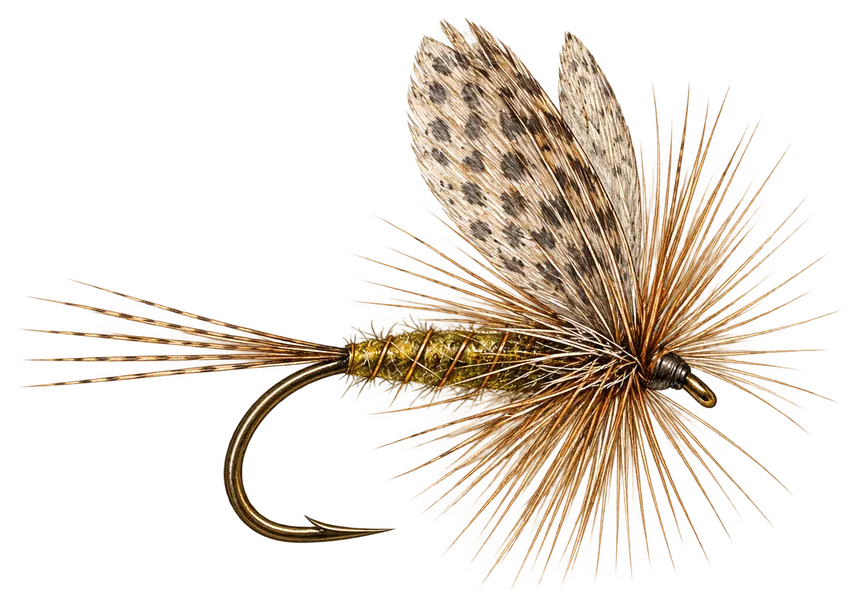 Dry fly | Surface | Drifts with the current, with no pull on the fly | you want to imitate the insect with a fly rod |
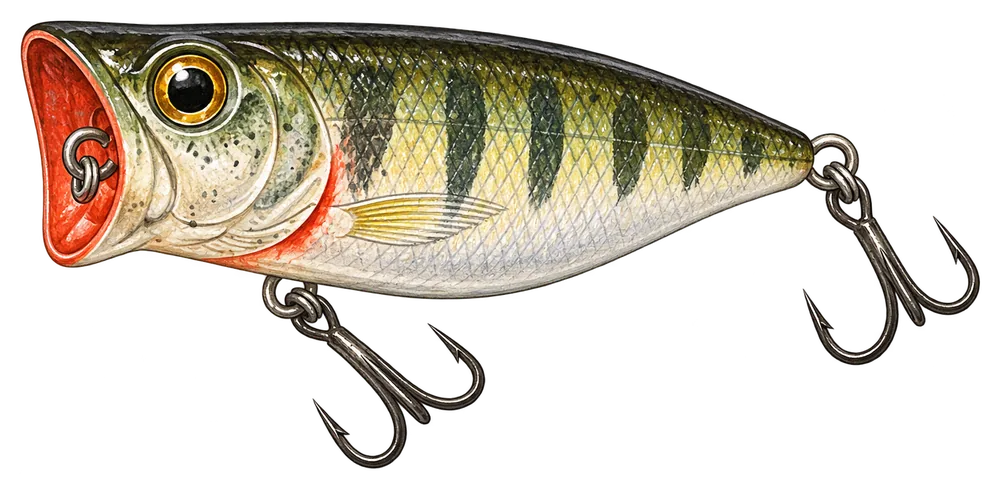 Popper | Surface | Active: short jerks, then a pause | you are after surface bites with a spinning rod |
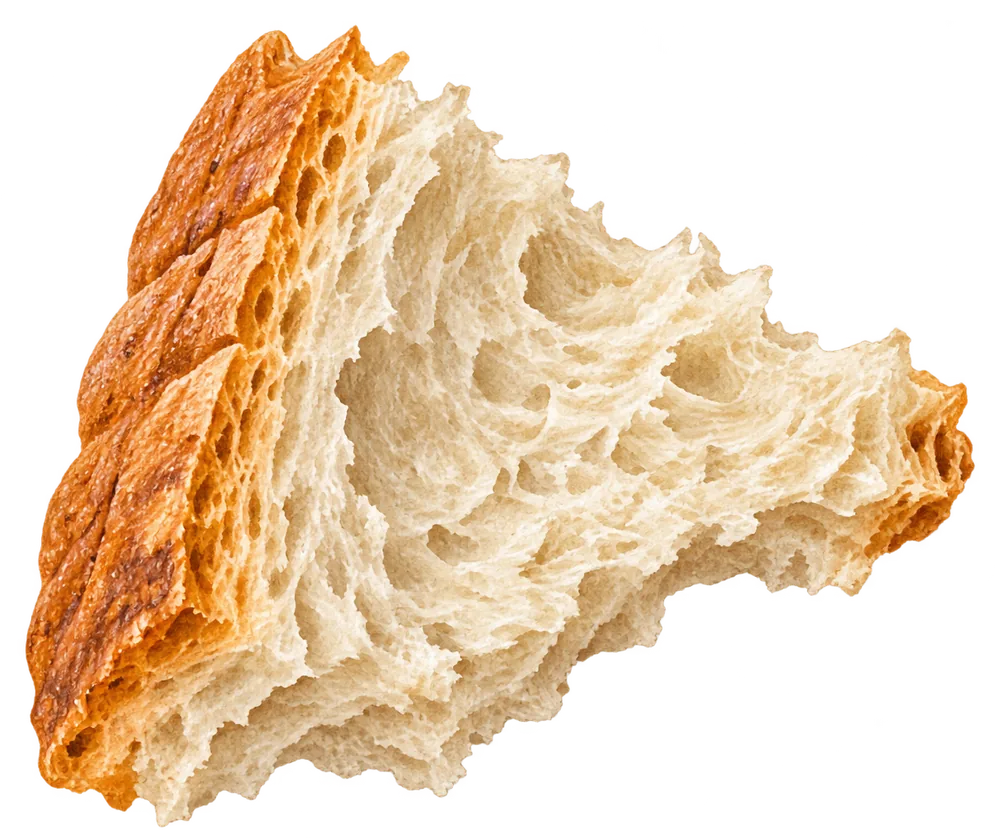 Bread | Surface to bottom | Let it drift without tension; dough resting on the bottom | you want to fish at the surface but do not want to collect insects |
What you need
- Light rodA fine, rather long rod guides the line over bankside vegetation. More
- LineThin monofilament line. A fine hooklength matters more than a high breaking strain. More
- Bubble floatCasting weight for the almost weightless bait.
- Polarised glassesThey take the glare off the surface so that you can see fish and bait. More
More on the method: Float fishing and Bottom fishing.
At a glance
Editorial assessment, not measured values.
If it does not work
No problem, drowned insects catch too. If you want to stay on top, glue the insect on instead of piercing it.
Keep your distance, move low and present the bait upstream of the fish.
Fit a water bubble in front as casting weight.
Glue on instead of spearing, then it moves longer and looks more natural.
Check after every missed bite and put on a fresh animal.
Take a tub with a narrow opening or a stocking entrance from which you take them one at a time.
Frequently asked questions
Which insects are suitable?
Mainly grasshoppers and locusts, plus beetles, flies and moths. Grasshoppers are big enough for the hook and float for a while.
Does the insect have to be alive?
No. Fish still take drowned insects too. A live animal that has been glued on, however, moves longer and more naturally.
Does it work on a trout lake too?
Yes, on ponds with meadows nearby the grasshopper on the bubble float catches in high summer. Check beforehand whether the fishery allows natural baits.
May I simply collect grasshoppers?
Only a few and only common species. Some grasshoppers are under special protection, and it is forbidden to pursue or catch them. If you do not know an animal, leave it.
Which hook suits a grasshopper?
A short-shanked hook in size 8 or 10. The point stays free so that the strike takes hold.
Before fishing, the current permits, state rules and water rules apply: bait bans, number of hooks, closed seasons, protected species and catch limits can differ. Many federal states expressly ban live baitfish. Take bait remains and packaging away with you. All details are guide values without guarantee and do not replace legal advice.
Sources
- Blinker: Angeln mit Insekten
- Blinker: Im Bach sind die Fische auf Heuschrecken heiß
- Fisch & Fang: Köder-Lexikon für Forellen
- Deutsche Gesellschaft für Orthopterologie: Heuschrecken und Fangschrecken
- Bundesartenschutzverordnung: Anlage 1, Schutzstatus der Arten
- Bundesartenschutzverordnung: § 1, besonders geschützte Arten
- Bundesnaturschutzgesetz: § 44, Vorschriften für besonders geschützte Arten
The sources explain terms and basic principles. Presentation and values are editorial starting points and depend on water, weather and bait.
More animal natural baits
 Worms
 Maggots & larvae
 Baitfish
 Crustaceans & shellfish
 Snails
 Offal & meat
 Lugworm
 Ragworm
 Fish strips
 Cuttlefish & squid
Created with AI support from the sources named (AI notice). Last updated: 23 October 2026. Found a mistake? Write to us. Who is behind the site: About me.