
Knowledge · Lures
Dry fly
Flies & feathers · Fly fishing
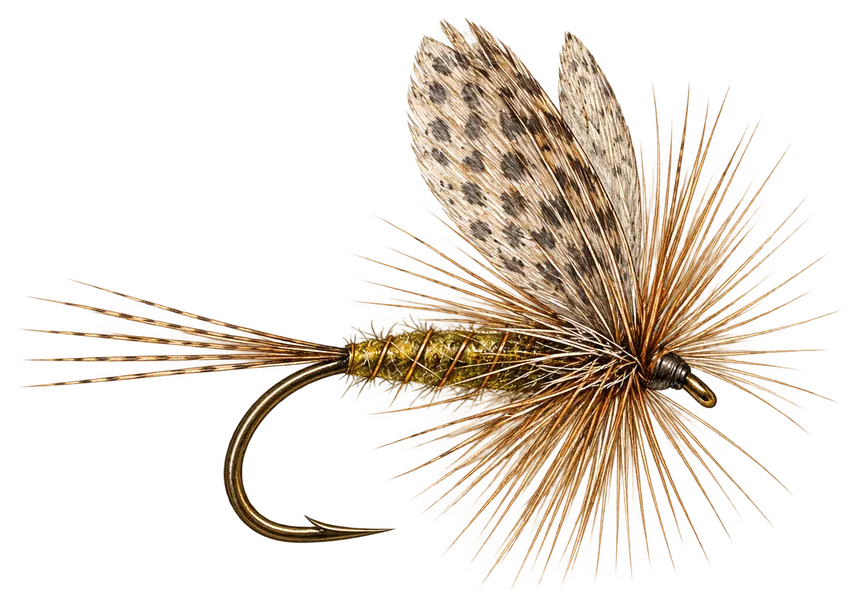
The dry fly sits on the surface film and represents an insect that is hatching there or has fallen in. Trout and grayling take it at the surface, and you see the take. For that to happen, the fly has to stay on top and drift freely.
- Water depth
- Surface
- Retrieve
- Drifts with the current, with no pull on the fly
- Fishing method
- Fly fishing
- Category
- Flies & feathers
Brown troutGraylingRainbow troutBrook troutChubGrass carpAlpine char
How it works
The dry fly is meant to make the fish believe there is an insect on the water. That means an animal that hatches at the surface, or one that has fallen in from the bank. Brown trout and grayling regularly eat this kind of terrestrial food, as the Landesfischereiverband Bayern describes in its fish encyclopaedia.
To keep the fly on top, tyers rely on little weight and a large contact area. On hackled patterns, the hackle fibres hold the fly on the surface film through surface tension. The questions of the Bavarian angling exam (Fischerprüfung) give buoyancy as the purpose of the hackles. Winged patterns also have upright wings. Flies made of duck preen-gland feathers (CDC) trap air between the fine fibres, and patterns with a foam body float because they are lighter than water.
How big the fly should be depends on the insect and the fish. For grayling, Blinker names patterns in hook size 14 and smaller; the smallest midge imitations go down to size 22. The higher the number, the smaller the hook. When tying, the rule of thumb is to make the tail two to two and a half times as long as the hook shank, the wing twice as long and the hackle one and a half times as long. Materials that soak up water are unsuitable, because the fly then sinks.
How to work the lure
Drifts with the current, with no pull on the fly
Schematic illustration, AI-generated.
- present
- drifts with wind or current
- keep the line taut
- cast again
Anatomy
The points on the picture above explain the most important parts – on hover or tap.
- Tail: Supports the fly at the back on the water. As a rule of thumb when tying, about two to two and a half times as long as the hook shank.
- Body: Tied slim, it gives the silhouette of the insect. Material that absorbs a lot of water is no good for dry flies.
- Wings: Stand upright and are about twice as long as the hook shank. They make the fly easy for you to see as well.
- Hackle: Its fibres increase buoyancy and carry the fly on the surface film. About one and a half times as long as the hook shank.
- Eye: This is where the knot of the leader tip sits. Exactly centred and not pulled fully tight: the small loop prevents twisting.
Rig in three steps
- 1. Leader tapering towards the tipFly leaders are tapered on one side. They transfer the cast all the way to the fly and lay it down gently.
- 2. Tie on the fine tipA piece of thin tip extends the leader and makes it inconspicuous. For grayling, it lies between 0.12 and 0.18 millimetres.
- 3. Fly to the eyeThe fly is tied on directly, without a swivel or snap. The knot sits in the middle, and a tiny loop is left open.
Drawings: AI-generated, schematic.
When the target fish are in season
Hardly any chancePossibleGoodPeak seasonValues from the catch calendar.
When and where
The dry fly’s hour has come when insects dance above the water and the fish are holding just below. You recognise it by rings on the surface. If they appear at short intervals always in the same spot, then according to the magazine Blinker it is certainly a grayling at work. In summer dusk, tiny flies often swarm, in winter black gnats. Then grayling eat the tiniest food, and the fly has to be correspondingly small.
Grayling like to hold in even current over gravel or sand, and the Landesfischereiverband Bayern describes them as a fish of oxygen-rich streams and rivers with a stony gravel bed. In fast water, coarsely hackled flies are easy to see; on clear, slow stretches, patterns made of CDC or without a hackle work better. On calm lakes, a thin leader tip with a fly without a hackle is suitable, because the leader hardly twists.
Many fly stretches have their own rules, for example on the number of flies, barbless hooks or permitted methods. The water rules and the fishing permit (Erlaubnisschein) tell you what applies on your stretch.
How to match fly and leader to current and water
- Tapered leader Use a leader that tapers towards the tip. It carries the cast through to the fly and sets it down gently.
- Tie on a fine tippet Tie on a length of thin tippet. It lengthens the leader and makes it inconspicuous.
- Fly to the eye Tie the fly directly to the eye, without a swivel or snap. The knot sits in the centre, and a tiny loop stays open.
The way it is tied decides, not the pattern name. A pattern for calm water often fails in strong current, and a current pattern works poorly in calm water. In fast water, bushy, easily visible hackled flies are the right fit. In clear, calm running waters, CDC patterns give a fine picture on the surface; in fast current they often look too inconspicuous.
The leader tip depends on the water and the fly. For grayling, it lies between 0.12 and 0.18 millimetres depending on fish size and fly size. In strong current it can be thicker, up to 0.25 millimetres, because the imprint on the surface is barely noticeable there. A leader for the fly rod tapers towards the tip, so it lays the fly down gently.
As tackle for grayling, a simple outfit in line class 4 to 5 with a floating line is enough. The line supplies the casting weight, so rod and line belong to the same class.
How to keep the fly on top and the leader smooth
CDC does not tolerate grease or floatants, which glue the fine fibres together. A soaked CDC fly you dry with desiccant or replace. With parachute flies, you only grease the wing post and the hackle, so that the body hangs in the surface film.
If the leader twists when casting, the knot often does not sit exactly in the middle of the eye. Do not pull it fully tight: a loop a millimetre in size is enough, and the fly centres itself during the cast. The thinner the leader, the more it twists.
How to lay down the fly and handle the fish
First watch where the fish is rising, and cast with a little lead so that the fly drifts towards it. Grayling ignore what does not drift in their direction; their field of vision is restricted at the sides. They rise from the depths and often let themselves drift a little way before they snap. Stopping the forward cast earlier and laying the leader down in S-curves avoids the fly dragging in front of the fish.
Dry flies are easy on fish: the hook usually sits in the front of the mouth, and even undersized trout come off best with the artificial fly. Grayling do come off easily, though, because the hook tears out of their pointed mouth faster than with trout of the same size.
Which colour?
Starting points to try, not rules. Depth and speed are usually more important than colour.
A dry fly, or another bait?
| Baits and lures | Depth | Retrieve | Take this lure if … |
|---|---|---|---|
| Dry fly | Surface | Drifts with the current, with no pull on the fly | this page |
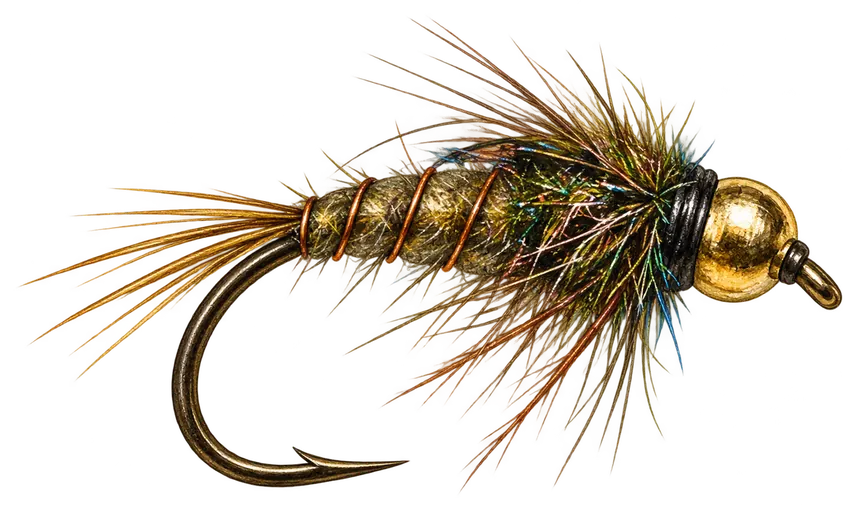 Nymph | Bottom to mid-water | Drifting in the current, as free as possible near the bottom | the fish are not rising but feeding on the bottom |
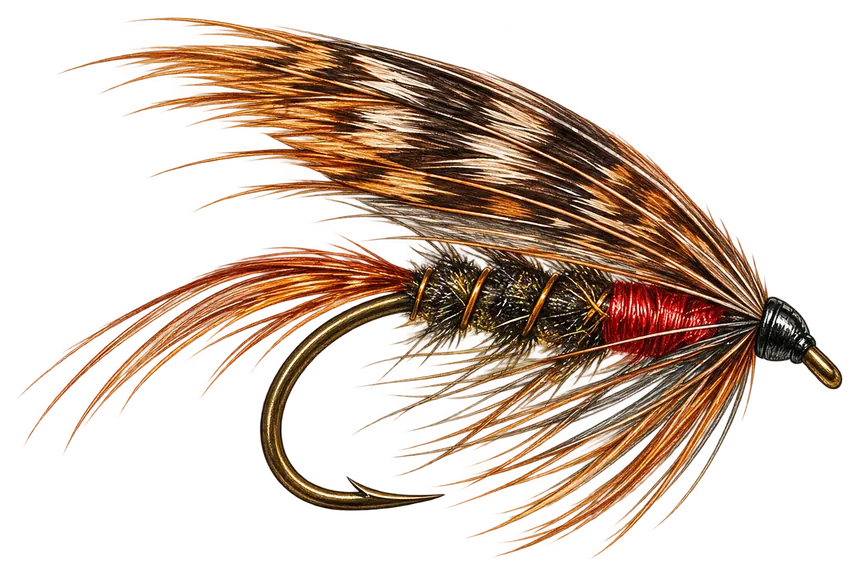 Wet fly | From the surface film to just below it | Drifts with the current, just under the surface film | you want to fish just under the surface |
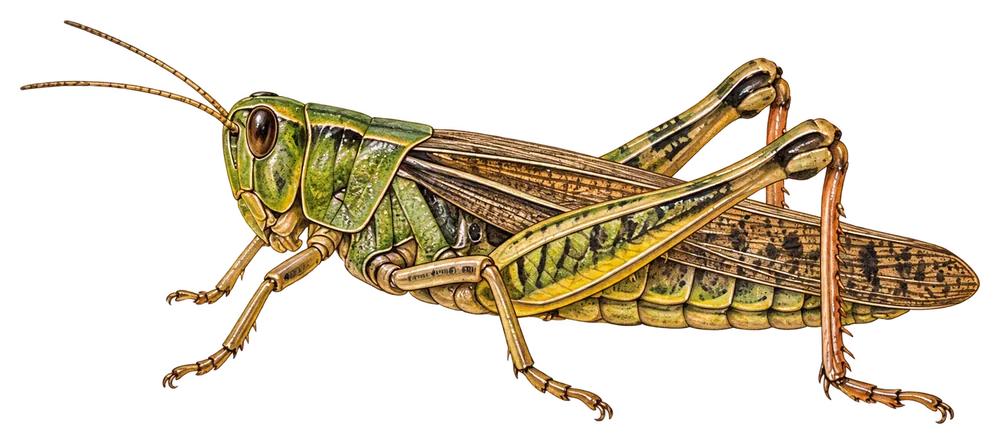 Insects | Surface | Drifts on the surface, in a stream also slightly under water | you fish with a real insect and no fly rod |
What you need
- Fly rodRods carry a line class instead of a casting weight. A light class is enough for grayling; rod and line have to match. More on this
- Fly lineThe line supplies the casting weight. A floating line carries leader and fly on the surface. More on this
- Wading netIn fly fishing, a short wading net with a loop for hanging over the shoulder is usually used. More on this
- DisgorgerFrees the small hook quickly and gently when you release the fish. More on this
More about the method: fly fishing.
At a glance
Editorial assessment, not measured values.
If it does not work
Cast with a lead and lay the leader down in S-curves. That way the current has no taut line to pull on.
Check that the knot sits in the middle of the eye and do not pull it fully tight. A tiny loop is enough to stop the twist.
Do not grease it, that glues the fibres together. Dry it or swap it for a fresh fly.
Check that the pattern suits the current, and lay the fly down so that it drifts exactly towards the fish.
For grayling, use a tip of 0.12 to 0.18 millimetres. Thicker tips suit strong current better.
Trim the hackle slightly on the underside; this also improves how it lands.
Frequently asked questions
What does drag mean?
When the current pulls on the line, the fly pushes a small wave in front of it. A real insect drifts calmly, so the fish turn away. Anglers also call it drag. Leading the cast and S-curves in the leader prevent it.
Does the fly have to imitate the insect exactly?
Not fibre for fibre. More important are a tie that suits the current, the right size and a free drift.
Which fish is the dry fly suited to?
Classic for grayling and trout. The Bavarian exam questions give grayling as an example, and according to Saxony-Anhalt, fly fishing is aimed at salmonids and some cyprinid species.
Which rod and line do I need for dry flies?
For grayling, a simple outfit in line class 4 to 5 with a floating line is enough. The line supplies the casting weight, so rod and line must belong to the same class.
Is the dry fly gentle on the fish?
It is regarded as gentle because the hook usually takes hold at the front of the mouth. Exam questions also name the artificial fly as the gentlest method for undersized trout. You free the hook quickly with the disgorger.
Before fishing, the current permits, state rules and water rules apply: bait bans, number of hooks, closed seasons, protected species and catch limits can differ. Many federal states expressly ban live baitfish. Take bait remains and packaging away with you. All details are guide values without guarantee and do not replace legal advice.
Sources
- Blinker: Erfolg mit Trockenfliegen, Tipps für das Fliegenfischen am See
- Blinker: Fliegenfischen, kleine Tipps mit großer Wirkung
- Blinker: Steckbrief Äsche
- Rute & Rolle: Eine für viele, Standardmuster der Eintagsfliege binden
- Bayerische Landesanstalt für Landwirtschaft: Prüfungsfragen zur Fischerprüfung 2023/2024
- Land Sachsen-Anhalt: Fragenkatalog zur Fischerprüfung
- Landesfischereiverband Bayern: Fischlexikon
- Kanton Aargau: Die Äsche
- Fischereiverein Löningen: Gerätekunde
The sources explain terms and basic principles. Retrieve, colour choice and values are editorial starting points and depend on water, weather and lure.
More flies & feathers
 Streamer
 Huchen braid
 Sea paternoster
Created with AI support from the sources listed (AI notice). Last updated: 31 October 2026. Found a mistake? Write to us. Who is behind the site: About me.