
Knowledge · Lures
Huchen braid
Flies & feathers · Spinning
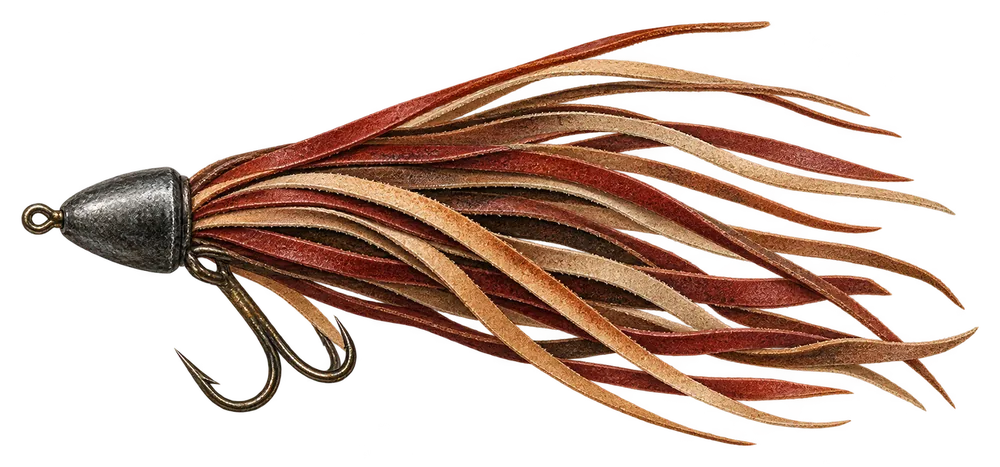
The Huchenzopf (huchen tassel) is a specialist lure for a single fish. A bundle of rubber or leather strips hangs from a lead head and imitates young lampreys. It is fished slowly and close to the bottom. The huchen is critically endangered, so more applies here than usual: first clarify the permit and the rules of the water.
- Water depth
- Bottom to mid-water
- Retrieve
- Active: worked slowly and close to the bottom, lifting and lowering
- Fishing method
- Spinning
- Category
- Flies & feathers
How it works
The huchen tassel consists of rubber and leather fringes that sit in a lead head at the front. The magazine Blinker gives 20 to 30 grams for the lead cap that holds the fringes together. This weight takes the lure down in the current and lets you cast it far.
The model is a bundle of lampreys. In the past, lampreys themselves were used as bait, later the tied tassel replaced them. The Bavarian exam questions list the artificial lamprey tassel as a bait for targeting huchen specifically, and as a permitted fishing tool alongside the spoon.
It is worked like a twister: slowly and close to the bottom. As it is lifted and sinks, the strips open and close, and this movement provokes the predator. According to the Bundesamt für Naturschutz, the huchen is a top predator that eats amphibians, reptiles and waterbirds as well as fish. The Landesfischereiverband Bayern gives its later food as mainly fish.
How to work the lure
Active: worked slowly and close to the bottom, lifting and lowering
Schematic illustration, AI-generated.
- Cast
- sink to the bottom
- lift and let fall
- reel in
Anatomy
The points on the picture above explain the most important parts – on hover or tap.
- Eye: This is where the snap with the hooklength is attached.
- Lead head: It gives casting weight and holds the strips together; about 20 to 30 grams for the lead cap.
- Treble hook: Sits directly behind the head between the strips. Choose sturdy quality: the huchen crushes weak hooks.
- Strips: Rubber or leather. They open and close as you lift and lower.
Rig in three steps
- 1. Strong hooklengthA big huchen is as strong as a bull and usually storms downstream after the strike. Hooklength and line have to withstand that.
- 2. Sturdy snapA strong snap swivel connects hooklength and lure and allows a quick change.
- 3. Hook into the eyeletSnap into the eye on the lead head, not into a treble hook.
Drawings: AI-generated, schematic.
When the target fish are in season
Hardly any chancePossibleGoodPeak seasonValues from the catch calendar.
When and where
The prime time is winter: the huchen’s hunger grows with the cold. It prefers to hunt at dusk, and low, clear water is regarded as promising, as are snowfall, fog and hard frost. Even then it takes patience: a huchen bite often takes 1.000 casts to come.
The huchen lives in fast-flowing, oxygen-rich stretches of the grayling and barbel zone and hunts from deep, fast-flowing areas. According to the Landesfischereiverband Bayern, these sedentary loners hold in deep, shady places such as undercut banks, deep pools, under bridges or behind weirs. Stream inflows and pool tails also belong here, as does hard ground of rock or coarse gravel. In such places the tassel should work slowly.
The huchen is listed on Germany’s Red List as critically endangered, and the Rote-Liste-Zentrum describes the stock as very rare with a very strong decline. The Bundesamt für Naturschutz estimates that in Germany it lives in only about half of its former waters, and only isolated populations sustain themselves. Whether, where and with what you may fish for it is regulated by the state, the water rules and the fishing permit (Erlaubnisschein). Ask before the first cast what applies on the stretch.
How to choose tackle, line and hooks
- Strong leader Use a strong leader. A big huchen usually charges downstream after the strike, and it has to withstand that.
- Sturdy snap A strong snap swivel connects the leader and lure, so you can change quickly.
- Into the eyelet on the lead head The snap goes into the eyelet on the lead head, not into a treble hook.
The tackle has to tame a very strong fish. The spinning rod is about three metres long, has a casting weight of 80 to 150 grams and a strong backbone. Large rings do not ice up as quickly, and dabbing them with glycerine helps against ice. According to Blinker, the reel holds 200 to 300 metres of monofilament of 0,40 millimetres or braid of 0,30 millimetres.
With the hook, quality counts. The huchen can crush a treble hook with its very hard mouth, so use only sturdy trebles with sharpened points. How many hooks, whether trebles and whether barbs are allowed is regulated by the water.
On lead: the head of the braid is made of it. As of November 2026: the EU has adopted the restriction on lead in fishing tackle with Regulation (EU) 2026/2501, which applies from 3 December 2026. It governs sales, not recreational angling. Weights and lures containing lead up to 50 grams may no longer be sold from 3 December 2029, heavier ones up to 1 kilogram from 3 December 2031, and lead wire and drop-off leads from as early as 3 June 2027.
How to work the tassel and land the fish
The tassel should run close to the bottom. You work it like a twister, slowly, lifting and lowering it as you go. The lifting and lowering is the retrieve, because that is when the strips open and close.
The strike has to be hard so that the hook grips in the glass-hard mouth. After the strike, a large huchen, pushed along by the current, usually storms downstream and the drag goes to work. For landing you need a large landing net.
Which colour?
Starting points to try, not rules. Depth and speed are usually more important than colour.
Huchen tassel or a different bait after all?
| Baits and lures | Depth | Retrieve | Take this lure if … |
|---|---|---|---|
| Huchen tassel | Bottom to mid-water | Active: worked slowly and close to the bottom, lifting and lowering | this page |
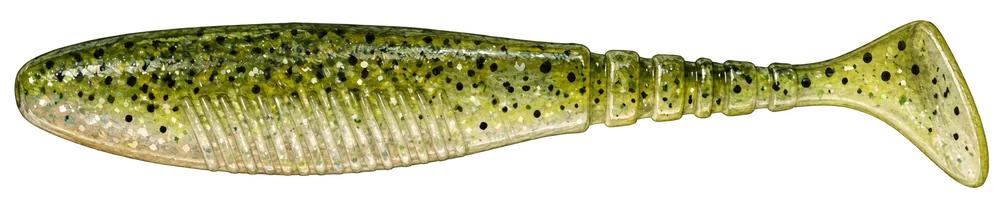 Soft plastic (shad) | Bottom to mid-water | Active: jigging with the rod or lift-and-drop with the reel, bites usually come on the drop | you want to work a large soft plastic bait in the current |
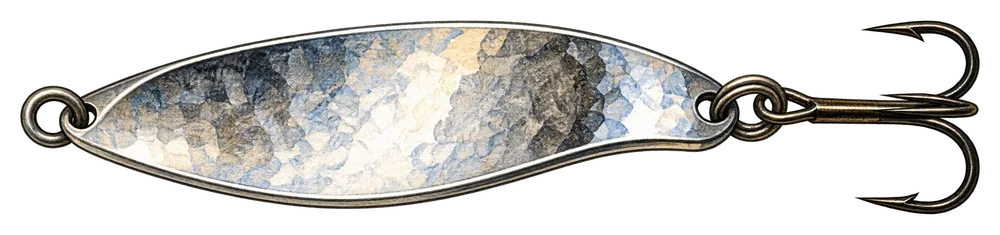 Spoon | All depths, depending on weight | Active: reel in tumbling, vary speed and stops | you want to cast far and fish faster |
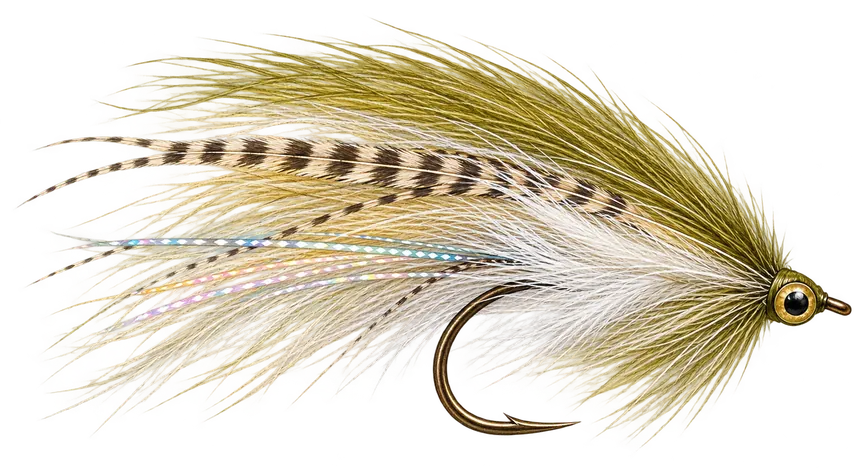 Streamer | Mid-water | Active: stripped by hand, with pauses | you are fishing for big trout with a fly rod |
What you need
- Strong spinning rodAbout 3 m long, casting weight 80 to 150 g and a very strong backbone. Large rings ice up more slowly. More
- LineThe reel should hold 200 to 300 m of monofilament of 0,40 mm or braid of 0,30 mm. More
- Strong treble hooksSharpened points and sturdy quality: the huchen crushes weak hooks in its hard mouth. More
- Large landing netFor safely landing a fish that is as strong as a bull and makes long runs. More
More on the method: Spinning.
At a glance
Editorial assessment, not measured values.
If it does not work
Work it slowly and close to the bottom. It should rise and fall, not be dragged through the water.
Use sturdy, good-quality trebles with sharpened points and strike hard.
Choose large rings, which ice up more slowly, and dab them with glycerine.
Frequently asked questions
What is the huchen tassel meant to imitate?
A bundle of lampreys. In the past lampreys themselves were used as bait; later the tied tassel of leather and rubber took over this role.
Is it a fly?
No. The huchen tassel is a weighted artificial lure made of lead, rubber or leather. It sits among the flies and feather lures because it is tied from strips.
May I fish for huchen anywhere?
No. The huchen is critically endangered. Whether, where and with what you may fish for it is regulated by the state, the water rules and the fishing permit (Erlaubnisschein). Ask about this before you fish.
When does the huchen tassel fish best?
In winter, in the coldest time of the year. As the temperature falls, the huchen’s hunger rises. It prefers to hunt at dusk, and low, clear water is considered favourable.
How heavy is a huchen tassel?
The lead cap weighs about 20 to 30 grams. It holds the strips of rubber or leather together.
Before fishing, the current permits, state rules and water rules apply: bait bans, number of hooks, closed seasons, protected species and catch limits can differ. Many federal states expressly ban live baitfish. Take bait remains and packaging away with you. All details are guide values without guarantee and do not replace legal advice.
Sources
- Blinker: Steckbrief Huchen
- Bundesamt für Naturschutz: Artenportrait Huchen (Hucho hucho)
- Rote-Liste-Zentrum: Artensteckbrief Huchen
- Landesfischereiverband Bayern: Fischlexikon
- Bayerische Landesanstalt für Landwirtschaft: Prüfungsfragen zur Fischerprüfung 2023/2024
- EUR-Lex: Verordnung (EU) 2026/2501 der Kommission vom 12. November 2026, Blei in bestimmtem Fischereigerät (Stichtage nach Berichtigung vom 17. November 2026)
- Deutscher Angelfischerverband: EU-Bleibeschränkung für Angelgeräte, aktueller Stand
The sources explain terms and basic principles. Retrieve, colour choice and values are editorial starting points and depend on water, weather and lure.
More flies & feathers
 Dry fly
 Wet fly
 Nymph
 Sea paternoster
Created with AI support from the sources listed (AI notice). Last updated: 20 November 2026. Found a mistake? Write to us. Who is behind this site: About me.