
Knowledge · Lures
Flies, fur and feather lures
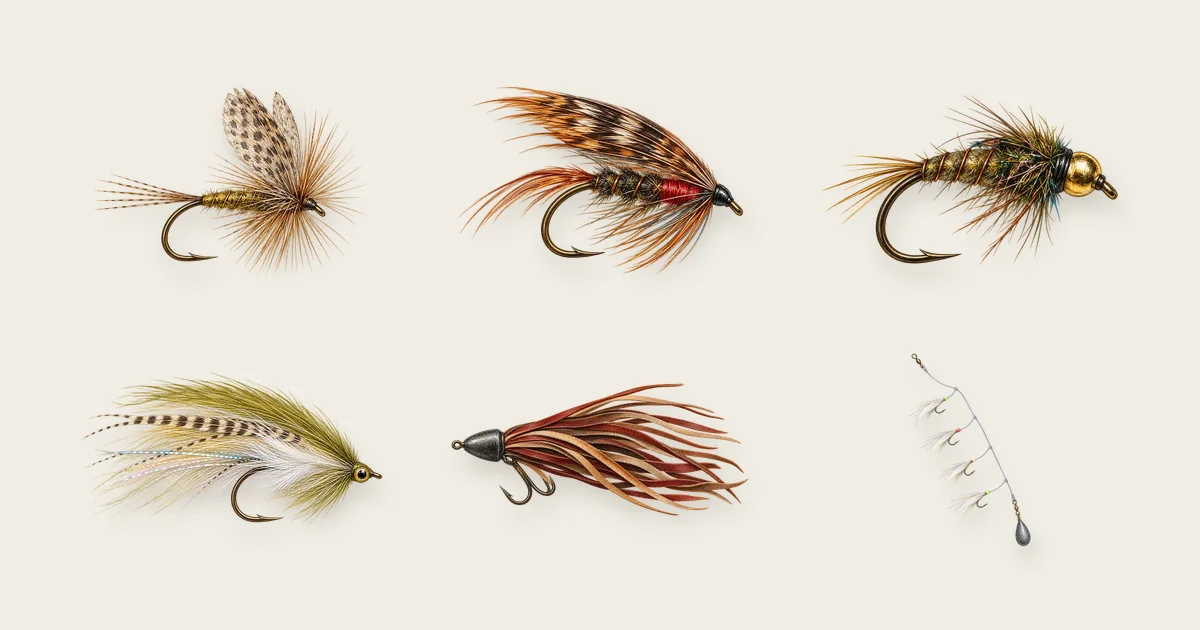
Fly lures are made of feathers, hair, thread and often synthetic fibres. They imitate insects, larvae, small fish or other food. Dry flies float on top, nymphs are presented under water and streamers move a larger prey profile. Multi-hook rigs and huchen lures are related specialist lures, but not classic flies. Because a fly weighs only a few grams, the heavier fly line carries the cast; floating or sinking lines also help determine the depth at which the fly runs.
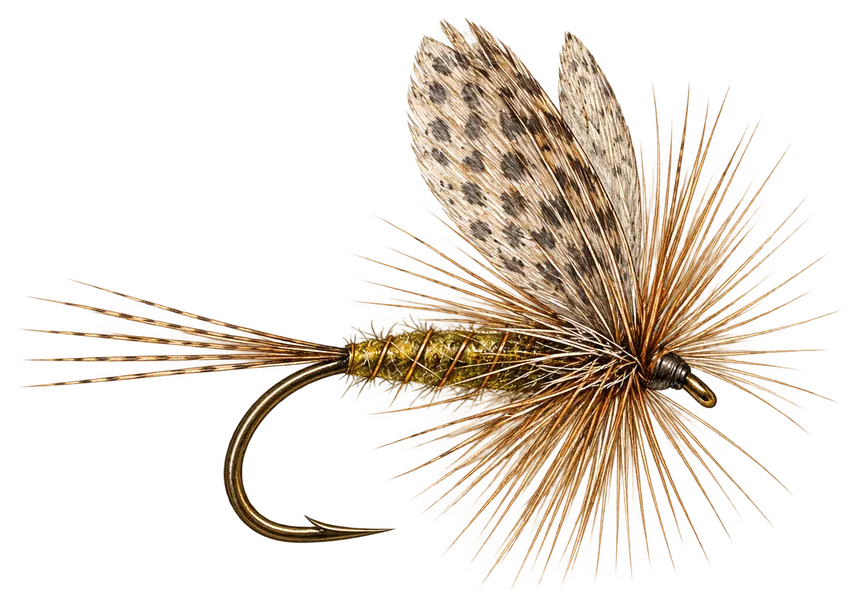 Dry flyDrifting with the current, no drag on the flyNear the surface
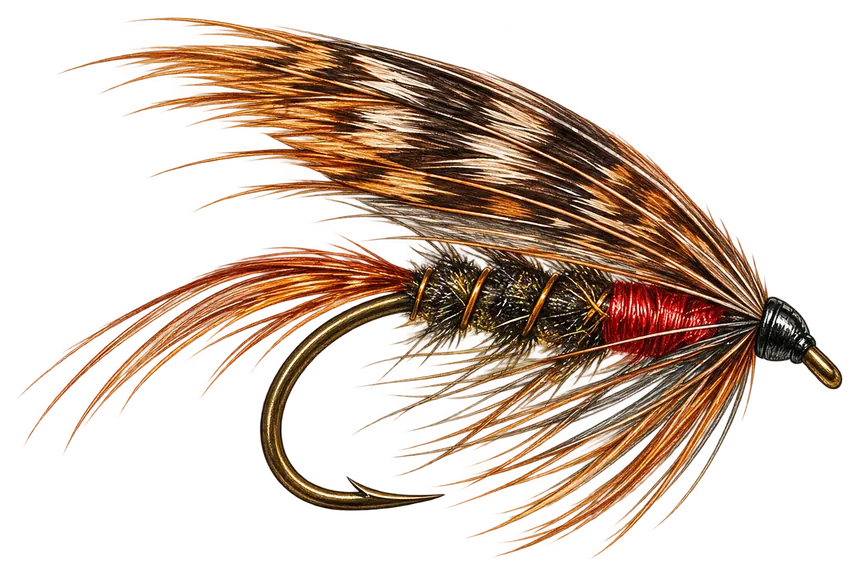 Wet flyDrifting with the current, just below the surface filmBottom
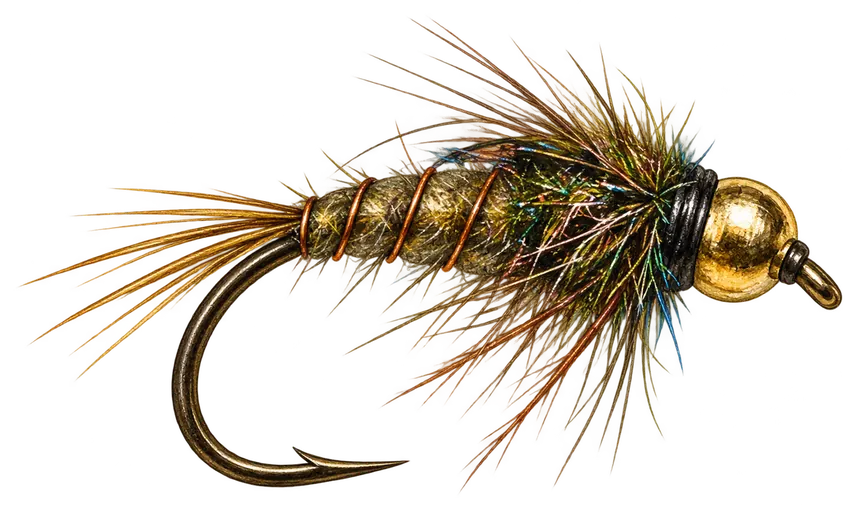 NymphDrifting in the current, as free as possible near the bottomMid-water
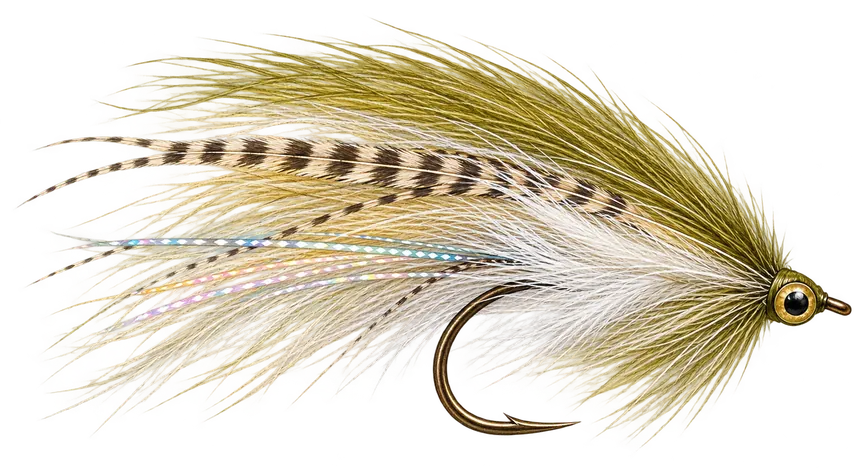 StreamerActive: stripped with the line hand, with pausesBottom
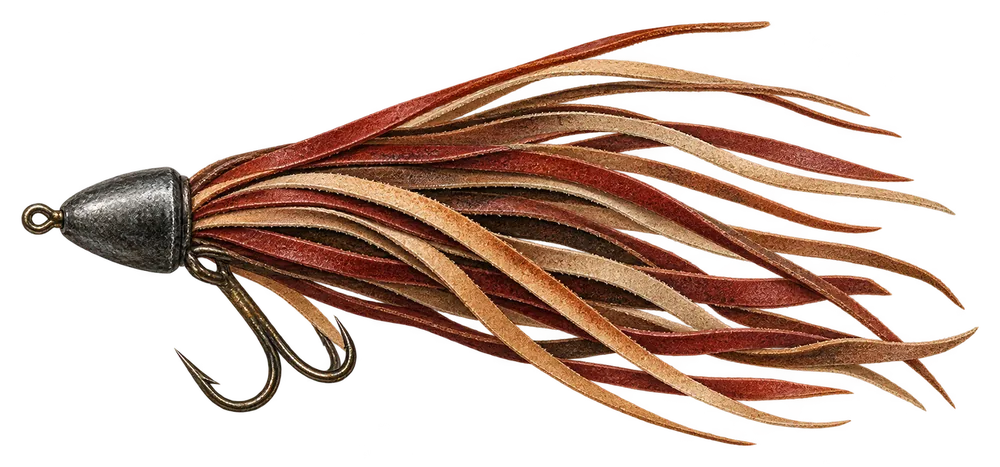 Huchen lamprey lureActive: worked slowly near the bottom, with lifting and loweringMid-water
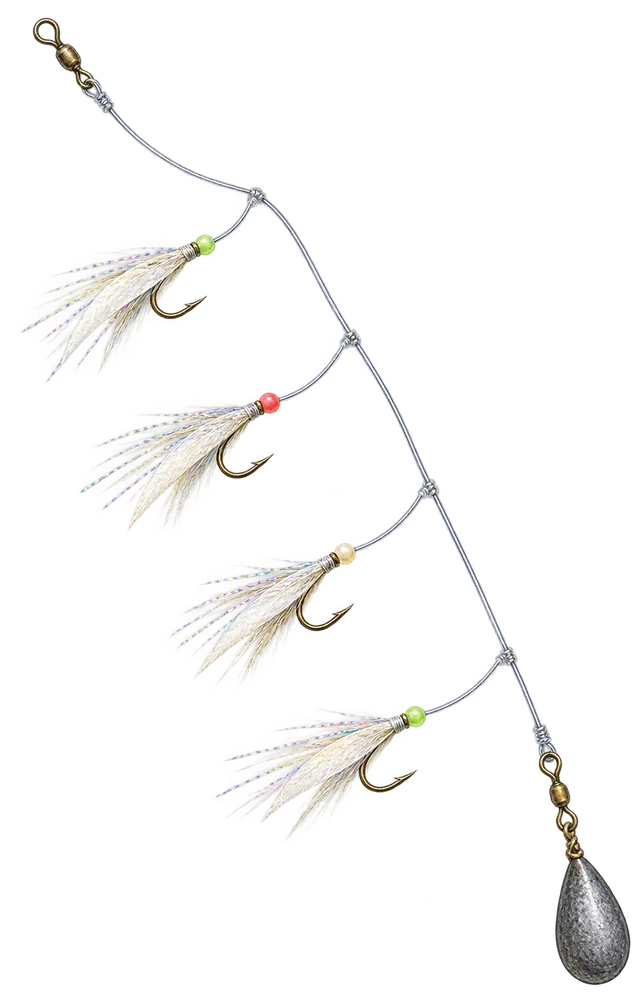 Sea paternosterCast, let it sink, keep the line taut and twitch gently
AI-generated illustrations. A click opens the lure’s page.
Mentioned in the fish profiles for: chub, brown trout, grayling, ide, rudd, asp, brook trout, huchen, rainbow trout, sea trout, herring, mackerel, coley, pollack, dace, bleak, Atlantic salmon, lake trout, Alpine char, whitefish, grey mullet, whiting, redfish, horse mackerel, sea bass
A good start
First watch where the fish are feeding. Rises you can see may point to a dry fly; under water, nymphs offer a different presentation. On a fly rod the fly line provides the casting weight. On a spinning rod, a permitted sbirolino can help you cast very light lures.
Tips for the water
| Use | Baits and lures | What to watch for |
|---|---|---|
| Trout or grayling rising | A suitable dry fly | Match the natural food and let it drift as freely as possible. |
| Feeding under water | Nymph | Control depth and drift; check the method and any extra weight. |
| Imitating larger prey | Streamer | Vary the pulls and pauses; for pike use a bite-proof leader. |
| Herring or mackerel | Sea paternoster | Match the rig to the target fish and observe the permitted number of hooks and the fishing rules. |
Avoid common mistakes
A suitable fly can fail because of an unnatural drift or the wrong depth. Not every material floats, and not every gold-head nymph reaches the same depth at every line angle. Consider leader, weight and positioning together.
Before you fish, the current fishing permits (Erlaubnisschein), state rules and the water’s rules apply: bait bans, hook numbers, groundbaiting, closed seasons and catch limits can differ. Do not treat protected animals as freely available bait. Take leftover bait and packaging home with you. All details are guidelines without guarantee and are no substitute for legal advice.
Sources
- Landesfischereiverband Baden-Württemberg, Gerätekunde: Fliegen, Nymphen, Streamer, Fliegenschnüre und Hegene/Paternoster
- LfL Bayern, Fragenkatalog Fischerprüfung: Hauptgruppen der Kunstfliegen, Trockenfliege, Wurfgewicht, Huchenzopf
- Blinker: Streamer als Beutefischimitation für große Forellen
- Blinker: Nymphenfischen – wenn keine Fische steigen, Präsentation am Grund
The sources explain terms and basic principles. Target-fish assignments and practical tips are editorial recommendations and depend on the water, the food available and the bait model. Water depth and presentation are typical starting points, not fixed rules. Accessed: 2 October 2026.
Created with AI support. Last updated: 25 October 2026.