
Knowledge · Lures
Nymph
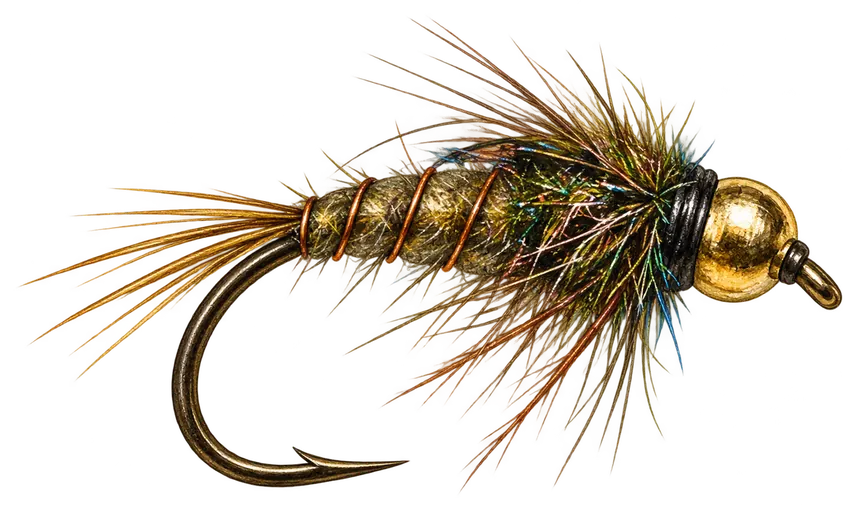
Flies & feathers · Fly fishing
Trout and grayling take most of their insect food underwater, usually close to the bottom. That is exactly where the nymph works: it represents insect larvae, often with a head bead that takes it down. You recognise the bite from the strike indicator or from the end of the line.
- Water depth
- Bottom to mid-water
- Retrieve
- Drifting in the current, as free as possible near the bottom
- Fishing method
- Fly fishing
- Category
- Flies & feathers
Brown troutGraylingRainbow troutBrook troutAlpine charWhitefish
How it works
The nymph represents the developmental stages of aquatic insects. The Fischereiverein Löningen describes it as a bait meant to embody a hatching insect as it rises. The training material of the Landesfischereiverband Baden-Württemberg adds: insect larvae lie on the bottom or drift in the water, which is why nymphs are sinking imitations. In the exam catalogue of the state of Saxony-Anhalt, the nymph is the bait for fly fishing for grayling.
The feeding behaviour shows why it is fished so often. Salmonids take about four fifths of their insect food underwater, mainly near the bottom. A trout rarely leaves its lie to follow a single nymph to the surface, as the effort would be greater than the gain. Because the current is strongest at the top, trout-like fish prefer to hold behind stones, flow breakers and along bank edges. That is where the nymph has to go, and for as long as possible.
It is tied with soft feathers that play well in the water. On nymphs the tail is about a third as long as the hook shank. A head bead of gold or tungsten serves as the weight, with lead wire added. Hooks in sizes 12 to 16 are common; the higher the number, the smaller the hook. The weight determines how quickly the nymph sinks and how long it stays down.
How to work the lure
Drifting in the current, as free as possible near the bottom
Schematic illustration, AI-generated.
- present
- drifts with wind or current
- keep the line taut
- cast again
Anatomy
The points on the picture above explain the most important parts – on hover or tap.
- Tail: A few soft fibres like the tail filaments of the larva. On nymphs about a third as long as the hook shank.
- Hook bend: Stays free so that the hook can grip on the strike.
- Abdomen with ribbing: The wire wrap divides the body into segments, as on the larva.
- Thorax: Tied thicker, with soft fibres that play in the water and suggest little legs.
- Head with bead: The head bead of gold or tungsten weights the nymph and takes it down.
Rig in three steps
- 1. Leader according to water depthAs a rule of thumb, it is the estimated water depth plus 50 per cent, so that the nymph reaches the bottom.
- 2. Split shot if neededIf the weight of the nymph is not enough, pinch a small split shot onto the leader about 20 centimetres above it.
- 3. Tie on the nymphTie the knot directly to the eye. The indicator sits at the join between fly line and leader.
Drawings: AI-generated, schematic.
When the target fish are in season
Hardly any chancePossibleGoodPeak seasonValues from the catch calendar.
When and where
The nymph is the answer when fish are not rising. Rain, no rings on the surface: that is when it has to go in. If you see no insects on the water, a general pattern that hints at several species is a good choice. Good spots are deep channels under the bank in the main current, because food collects there.
Which technique suits depends on the water. In small and medium-sized waters of manageable depth, the upstream method with a floating line and a light nymph works well. For deep channels, wild streams and slightly coloured water, Czech nymphing is the one: short line, long rod, heavy nymphs. In clear, wide waters, French nymphing with leaders up to nine metres long has become established. One technique from the Alpine foothills fishes close to the bottom over 25 metres and more in even current and fine-grained bed, typical of grayling waters.
Not every method is allowed everywhere. Some water managers have restricted certain jig flies or extra-long leaders, and in Austria two flies on the leader are banned on most waters. Bite indicators and weighted nymphs are also governed by the water rules.
How to choose pattern, weight and leader length
- Leader by water depth As a rule of thumb, take the estimated water depth plus 50 per cent so that the nymph reaches the bottom.
- Split shot if needed If the nymph is too light, pinch a small split shot onto the leader about 20 centimetres above it.
- Tie on the nymph Tie the nymph directly to the eye. The bite indicator sits at the join between fly line and leader.
A general pattern such as the hare’s ear gold-head nymph brings the weight it needs with its gold head. The pheasant tail nymph imitates slender mayfly larvae and can be presented deep with a small split shot, which you pinch onto the leader about 20 centimetres above the nymph.
As a rule of thumb, the leader length is the estimated water depth plus 50 per cent. Small pilot corks or poly tufts at the join between fly line and leader serve as a visual aid. They should be easy to see and disturb the drift of the nymph as little as possible.
On lead (as of November 2026): the EU has adopted the restriction on lead in fishing tackle with Regulation (EU) 2026/2501, which applies from 3 December 2026. It governs sales, not recreational angling. Weights and lures containing lead up to 50 grams may no longer be sold from 3 December 2029, heavier ones up to 1 kilogram from 3 December 2031, and lead wire and drop-off leads from as early as 3 June 2027.
How to present the nymph and spot the bite
A roll cast diagonally upstream puts the nymph on the water, then it drifts towards you. Take in line at the pace it approaches, otherwise the strike is lost in the slack line. The indicator should drift quietly and not move; only a fish moves it.
A bite shows when the indicator stops, twitches or moves a short way upstream. Then you lift the rod and tighten the line. If you see a trout feeding, wait two or three minutes until you are sure it is feeding. With wary brown trout in shallow water, one angler serves the nymph at a 45-degree angle downstream towards the middle of the river and lets it drift freely.
Which colour?
Starting points to try, not rules. Depth and speed are usually more important than colour.
A nymph, or another bait?
| Baits and lures | Depth | Retrieve | Take this lure if … |
|---|---|---|---|
| Nymph | Bottom to mid-water | Drifting in the current, as free as possible near the bottom | this page |
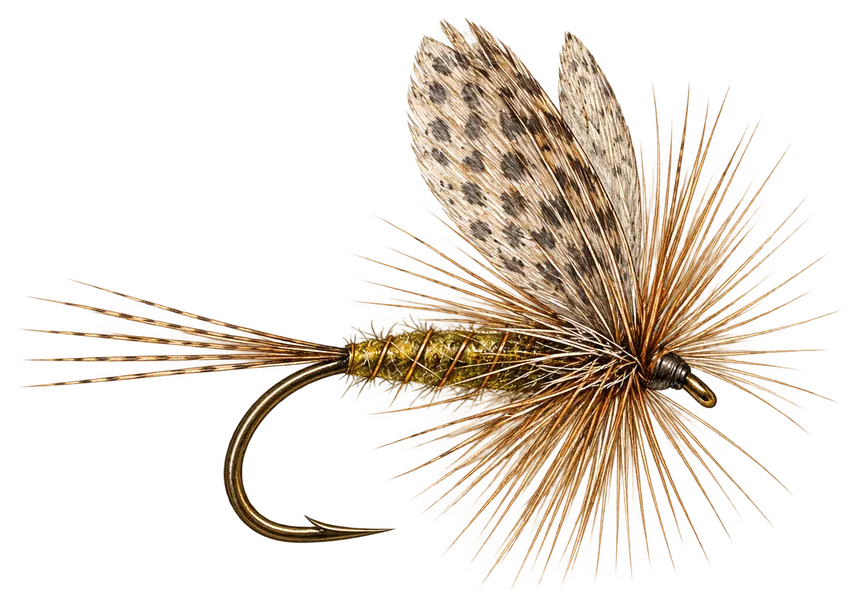 Dry fly | Surface | Drifts with the current, with no pull on the fly | fish are visibly rising |
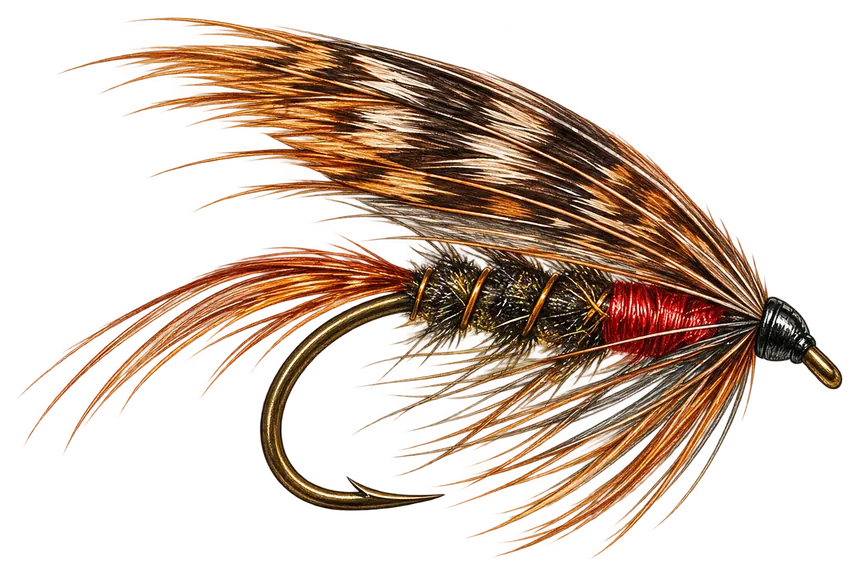 Wet fly | From the surface film to just below it | Drifts with the current, just under the surface film | you want to cover a lot of water just under the surface |
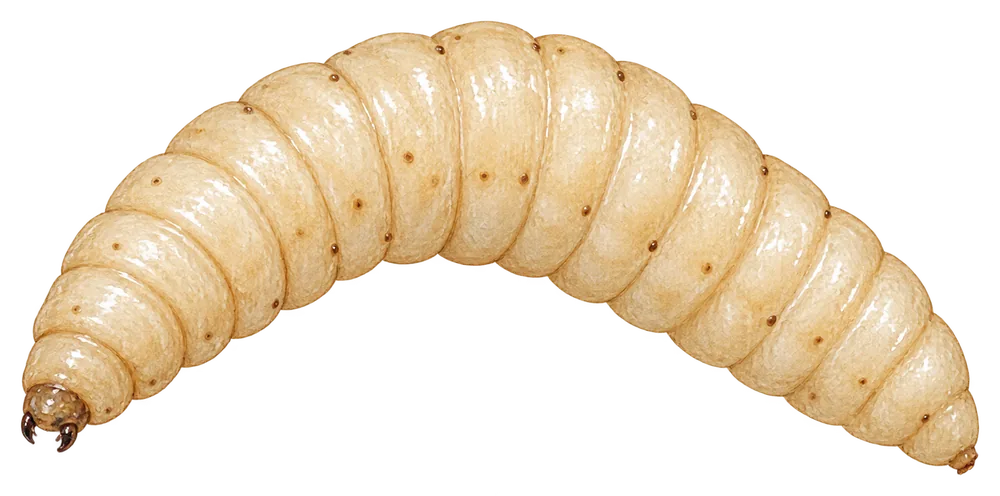 Maggots & larvae | Bottom to mid-water | Stationary on a float or ground rig, in the feed as an attractor | you fish with real larvae and no fly rod |
What you need
- Fly rodFor Czech nymphing, a long rod helps you guide the nymph under control just above the bottom. More on this
- Fly lineA floating line is enough for the upstream method. Sinking lines take the nymph deep but cost you control. More on this
- Bite indicatorSmall pilot corks or poly tufts make delicate bites visible. Check whether the water rules allow them.
- DisgorgerFrees the small nymph hook quickly when you release or keep the fish. More on this
More on the method: fly fishing and ultra-light fishing.
At a glance
Editorial assessment, not measured values.
If it does not work
Cast further upstream, lengthen the leader to water depth plus 50 per cent, or pinch a small split shot on about 20 centimetres above the nymph.
Take in line at the pace it drifts towards you. With slack line on the water, the strike never reaches the nymph.
If you keep constant contact with a sinking line, you often pull the nymph upwards. Work with a floating line, a long leader and a bite indicator.
Frequently asked questions
What is the gold head for?
The gold or tungsten bead gives the nymph weight so that it sinks faster. It often replaces weighting the leader with lead.
How do I recognise a bite?
The indicator stops, twitches or moves a short way upstream. Without an indicator, you watch the end of the fly line. Then you lift the rod and tighten the line.
Why is the nymph fished so often?
Salmonids take about 80 per cent of their insect food under water, mostly close to the bottom. When no fish are rising, the nymph catches where the fish are feeding.
How long should the leader for the nymph be?
As a rule of thumb, it is the estimated water depth plus 50 per cent. It also depends on current and weight. If it does not reach the bottom, a small split shot above the nymph helps.
May I weight nymphs with lead?
The use of lead is governed by the water rules. EU Regulation 2026/2501 governs sales, not recreational angling (as of November 2026).
Before fishing, the current permits, state rules and water rules apply: bait bans, number of hooks, closed seasons, protected species and catch limits can differ. Many federal states expressly ban live baitfish. Take bait remains and packaging away with you. All details are guide values without guarantee and do not replace legal advice.
Sources
- Blinker: Nymphenfischen, besser mit Bissanzeiger
- Blinker: Fliegenfischen mit Bissanzeiger, welche Nymphtechnik passt
- Blinker: Fliegenbinden für Anfänger, so einfach gelingt der Einstieg
- Land Sachsen-Anhalt: Fragenkatalog zur Fischerprüfung
- Fischereiverein Löningen: Gerätekunde
- Landesfischereiverband Baden-Württemberg: Gerätekunde, Präsentation 2022
- Landesfischereiverband Bayern: Fischlexikon
- EUR-Lex: Verordnung (EU) 2026/2501 der Kommission vom 12. November 2026, Blei in bestimmtem Fischereigerät (Stichtage nach Berichtigung vom 17. November 2026)
- Deutscher Angelfischerverband: EU-Bleibeschränkung für Angelgeräte, aktueller Stand
The sources explain terms and basic principles. Retrieve, colour choice and values are editorial starting points and depend on water, weather and lure.
More flies & feathers
 Streamer
 Huchen braid
 Sea paternoster
Created with AI support from the sources listed (AI notice). Last updated: 20 November 2026. Found a mistake? Write to us. Who is behind this site: About me.