
Knowledge · Lures
Sea paternoster
Flies & feathers · Spinning
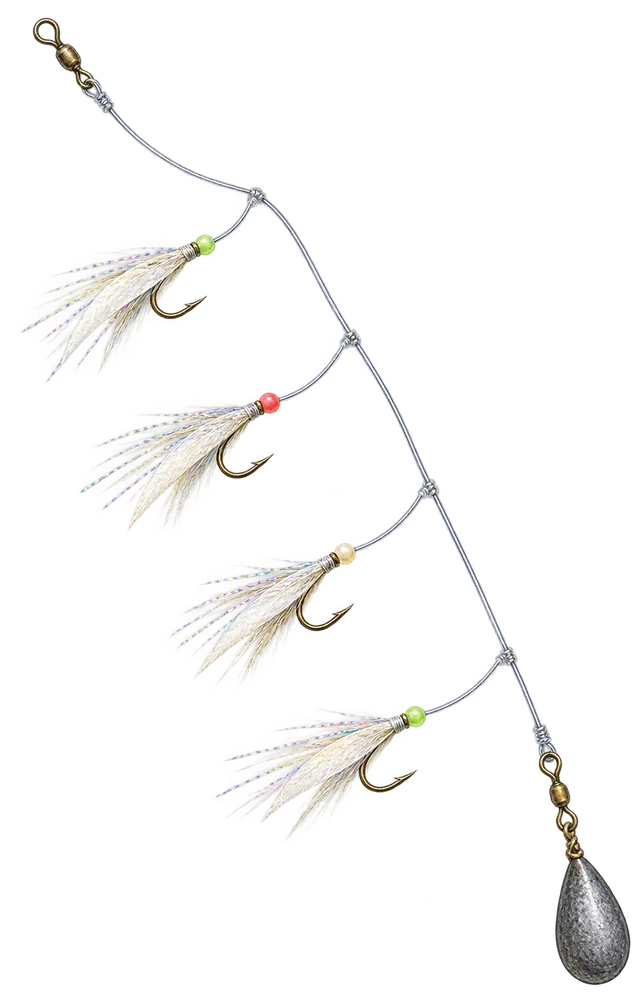
On the sea paternoster, several small hooks with foil, coloured wings or fish skin hang on short droppers, with a weight at the end pulling the rig down. Herring hunt plankton and dive onto twitching lures; in a shoal, several fish often bite one after another. Mackerel can also be caught this way.
- Water depth
- Mid-water
- Retrieve
- Cast, let it sink, keep the line taut and tug gently
- Fishing method
- Spinning
- Category
- Flies & feathers
How it works
Herring are shoaling fish and plankton hunters. They hunt small crustaceans by sight and dive onto small lures that twitch and jerk. The paternoster presents several such imitations one above the other: small gold hooks, usually dressed with foil, coloured wings or real fish skin. Even bare hooks catch if they are small enough.
The weight at the end takes the rig to the bottom. Herring weights have a lot of surface, so the droppers tumble slowly through the shoal. That matters, because herring have soft mouths in which hooks set well; but their violent thrashing makes the hooks easily come loose again. If you wait a moment after the first bite, you often bring up a second or third herring.
The paternoster catches mackerel too. They feed near the surface on zooplankton and smaller fish and are fast swimmers without a swim bladder. With several hooks you quickly bring a few fish out of a shoal.
How to work the lure
Cast, let it sink, keep the line taut and tug gently
Schematic illustration, AI-generated.
- Cast
- sink to the bottom
- lift and let fall
- reel in
Anatomy
The points on the picture above explain the most important parts – on hover or tap.
- Swivel: connects the rig to the main line and prevents twist.
- Dropper: short arm on which the hook plays freely and dances in the current.
- Gold hook with foil: small hook dressed with foil, coloured wings or real fish skin.
- Weight: pulls the rig down and keeps it stretched; choose a heavier one in a current.
Rig in three steps
- 1. Attach the paternosterThe finished rig goes on with its top swivel in the snap of the main line.
- 2. Check the side armsThe arms must stand out freely and must not wrap around the main line. Ready-made rigs carry up to five hooks; follow the rules on the spot. Side-arm rig step by step
- 3. Weight at the endThe weight depends on current and casting distance; a herring lead has a large surface and lets the side arms sink slowly. Running-weight rig step by step
Drawings: AI-generated, schematic.
When the target fish are in season
Hardly any chancePossibleGoodPeak seasonValues from the catch calendar.
When and where
You target herring in spring, when the shoals move in close to the coast to spawn. They come into harbours, fjords, canals and river mouths from the end of March until May. The spring herring of the western Baltic spawns on large algae and eelgrass along the coast, and the most important spawning ground is the Greifswalder Bodden. According to more recent observations, the fish move to the spawning grounds earlier after mild winters.
You are looking for deep water close to the shore: quay walls, bridges, jetties and narrow stretches of water. On gently shelving beaches the herring are usually absent. During the day they hold one to three metres above the bottom, and in the evening the shoals rise to the surface. They bite best in the morning and evening. If the bites stop after about half an hour, change spot. A fish finder helps with the search, but once you have found a shoal, switch it off, because herring hear well and flee from loud noises.
According to the Thünen-Institut, the spring herring of the western Baltic is far below the limit value for spawning stock biomass; the International Council for the Exploration of the Sea has been recommending for years that the fishery be closed. For anglers, the state, the water rules and the fishing permit (Erlaubnisschein) apply. Some places require an additional permit, and paternoster rigs are not allowed everywhere. You will find out on the spot how many hooks are permitted at the water.
Mackerel are summer visitors. You are more likely to target them on the North Sea coast, where boats set out to the shoals; they are also found in the Baltic Sea. Below a water temperature of 11 degrees they avoid the area. If no shoal shows on the surface or on the fish finder, try shallow plateaus with up to 20 metres of water and current edges.
How to choose the weight, hooks and rod
- Attach the paternoster Hook the finished rig by its top swivel into the snap on the main line.
- Check the side arms Check that the side arms stand clear and do not wrap around the main line.
- Lead at the end The lead goes at the end, and its weight depends on current and casting distance. A herring lead has a large surface and lets the side arms sink slowly.
Classic rigs have two to six small gold hooks, bare or with foil. For the weight, use a herring lead of 30 to 80 grams; in a current such as at the Rügendamm, an 80-gram pear-shaped lead holds the rig on the bottom. If the herring are moving in large shoals in mid-water, a light weight of around 35 grams or a light spoon is the right choice, because a weight that is too heavy fishes underneath them. From a boat, some anglers hang a pilker under the rig instead of the weight.
Opinions differ on the rod. A soft rod and monofilament line cushion the herring’s thrashing. For casting distance, a stiff three-metre rod with a casting weight of at least 40 grams, a 4000 reel and thin braid of 0,10 to 0,14 millimetres speak in favour. The advantage of distance: large shoals often hold far out.
How to work the paternoster
Cast straight out and not at an angle over your neighbours‘ lines. Let the rig sink until the weight is on the bottom and keep the line taut. The current makes the side arms dance above the bottom. Retrieve slowly and inch only gently; a slow retrieve usually brings more fish than hard jerking. If nothing happens, try another colour: in bright weather, coloured foil paternosters caught clearly more than white ones with fish skin in one comparison, and sometimes only a single colour catches.
When fishing for mackerel from a boat, you look for the shoal and let the rig sink through it. The fish often bite on the drop, so keep in contact with the line.
How to look after your catch
Keep herring damp, for example with a wet cloth, otherwise the scales dry onto the fish, your hands and the rod. Scaling can be done in a wire keepnet. For stunning and cutting the throat, a priest and a small knife belong in your bag, and a sturdy pair of scissors for gutting.
The Bundesamt für Verbraucherschutz und Lebensmittelsicherheit advises: raw fish can contain live parasites, so always keep it cool and cook it right through before eating. In the fridge, raw fish keeps for about a day at four degrees. On warm days, a cool box with ice belongs in your rucksack for the journey home.
Which colour?
Starting points to try, not rules. Depth and speed are usually more important than colour.
Sea paternoster or a different bait after all?
| Baits and lures | Depth | Retrieve | Take this lure if … |
|---|---|---|---|
| Sea paternoster | Mid-water | Cast, let it sink, keep the line taut and tug gently | this page |
 Jig | Bottom to mid-water | Vertical: drop to the bottom, lift, let it fall; from a boat it can also be cast a long way | you are fishing from a boat for cod or coley on the bottom |
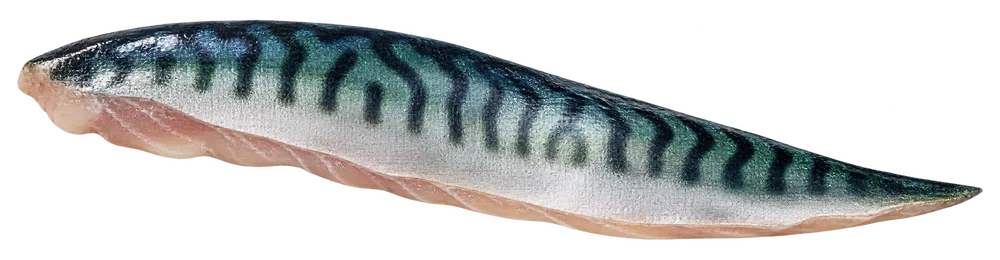 Cut bait | Bottom to mid-water | Stationary on the bottom or under the float, guided slowly from a boat with the drift | you want to use caught mackerel or herring as natural bait |
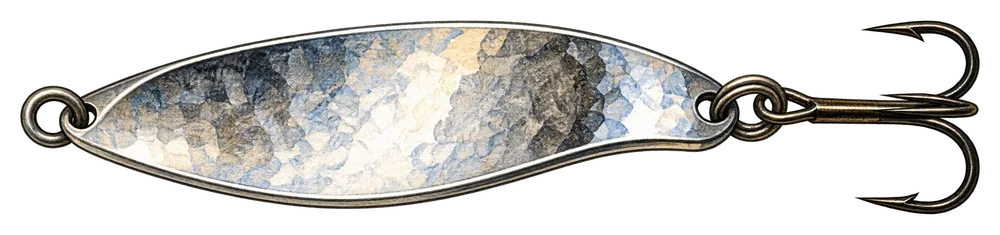 Spoon | All depths, depending on weight | Active: reel in tumbling, vary speed and stops | you are looking for garfish or sea trout by casting |
What you need
- Spinning rodAbout three metres, semi-parabolic or stiff for distance; casting weight up to 80 grams. More
- LineMonofilament cushions the thrashing; for distance, thin braid with a mono hooklength. More
- Herring leads30 to 80 grams, lighter for shoals in mid-water. More
- Priest and cool boxStun the fish and cut the throat, then store it cool. More
More about the method: spinning, sea fishing and pirk fishing.
At a glance
Editorial assessment, not measured values.
If it does not work
Cast gently and let it sink on a taut line; the side arms must not wrap around the main line.
Retrieve slowly and inch only gently; a slow retrieve usually brings more fish.
Use a soft rod and monofilament line that cushion the thrashing.
Use a light herring lead of around 35 grams or a light spoon so that the bait sinks slowly through the shoal.
Cast straight out, not at an angle. On busy quay walls, consideration for others counts.
Keep the fish damp with a wet cloth, then the scales come off easily.
Frequently asked questions
How many hooks may a paternoster have?
That is regulated by the individual water. Paternoster rigs are not allowed at every water, and some places limit the number of hooks. Ask about the conditions before you start fishing.
When is herring season?
Mainly in spring, when the shoals come close to the coast to spawn. On the German Baltic coast the main time is between the end of March and May, somewhat earlier or later depending on place and temperature.
Do I need bait on the hook?
No. The foil, the little wings and the fish skin are the bait. Herring will even take bare small hooks.
Which weight should I use?
Herring leads of 30 to 80 grams. In a current take a heavier one, and for shoals in mid-water a light one of around 35 grams.
Mono or braid when fishing for herring?
Monofilament line cushions the violent thrashing better. Thin braid gives more casting distance when the shoals hold far out.
Before fishing, the current permits, state rules and water rules apply: bait bans, number of hooks, closed seasons, protected species and catch limits can differ. Many federal states expressly ban live baitfish. Take bait remains and packaging away with you. All details are guide values without guarantee and do not replace legal advice.
Sources
- Blinker: Steckbrief Hering
- Blinker: Heringsangeln an der Ostsee
- Rute & Rolle: Hering (Clupea harengus)
- Rute & Rolle: Makrele (Scomber scombrus)
- Rute & Rolle: Makrele fängt fast alles
- Thünen-Institut: Fischbestände Online, Hering
- Thünen-Institut: Hering, Frühjahrslaicher westliche Ostsee
- Thünen-Institut: Fischbestände Online, Makrele
- Landesfischereiverband Baden-Württemberg: Gerätekunde
- Bundesamt für Verbraucherschutz und Lebensmittelsicherheit: Fisch zubereiten
The sources explain terms and basic principles. Retrieve, colour choice and values are editorial starting points and depend on water, weather and lure.
More flies & feathers
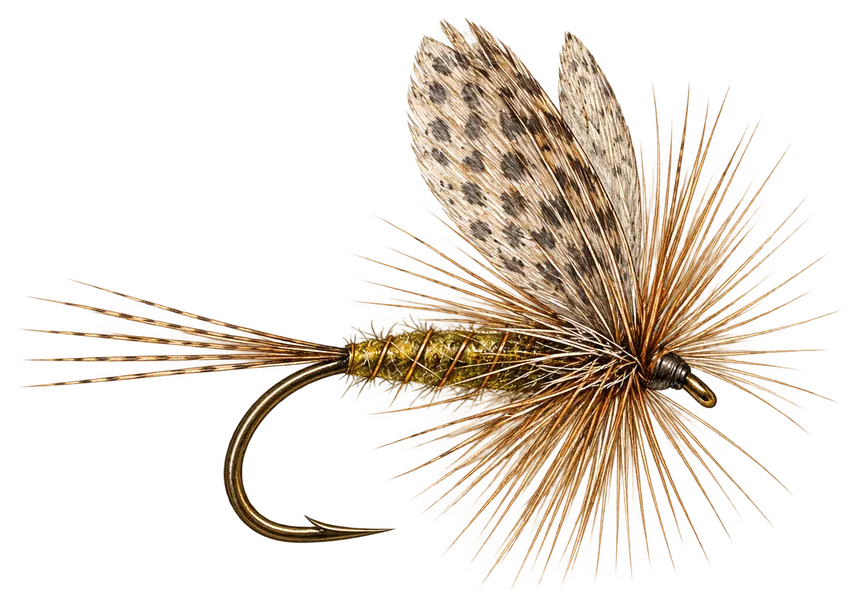 Dry fly
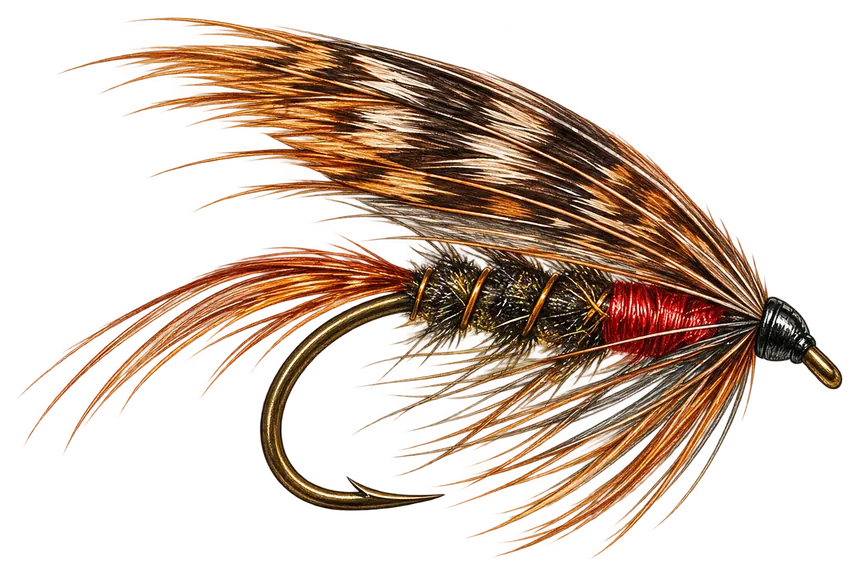 Wet fly
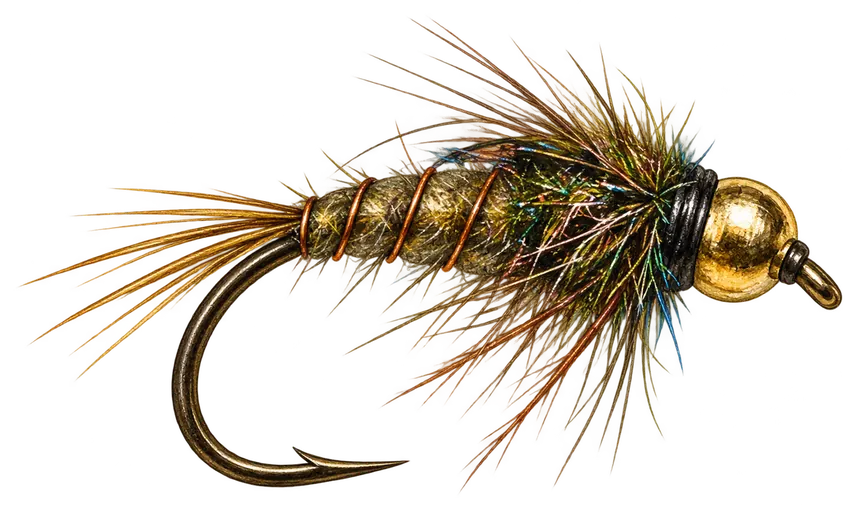 Nymph
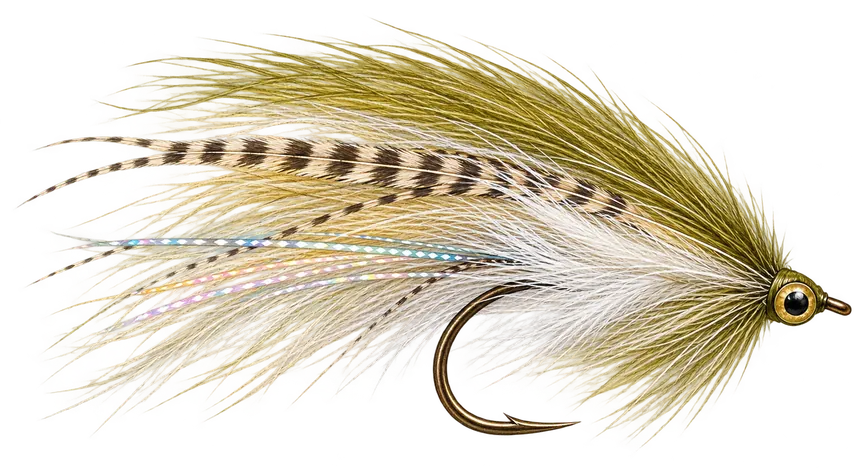 Streamer
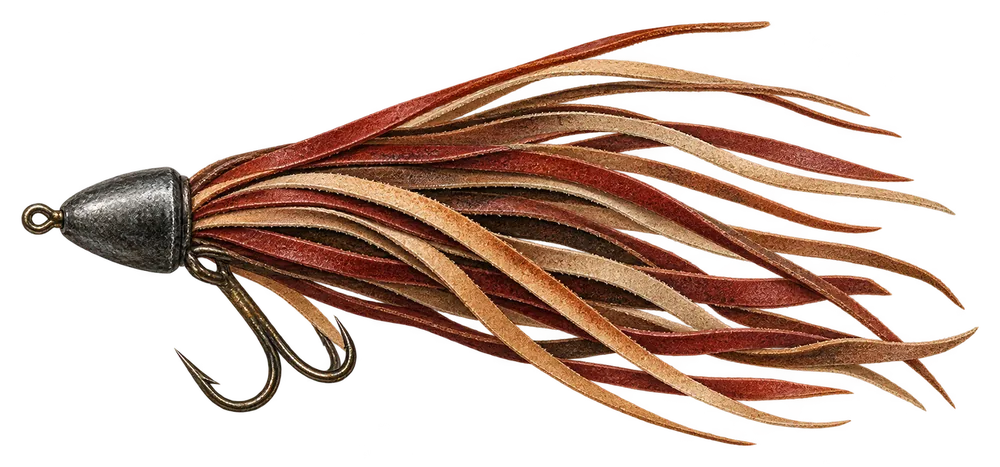 Huchen tassel
Created with AI support from the sources listed (AI notice). Last updated: 31 October 2026. Found a mistake? Write to us. Who is behind the site: About me.