
Knowledge · Lures
Streamer
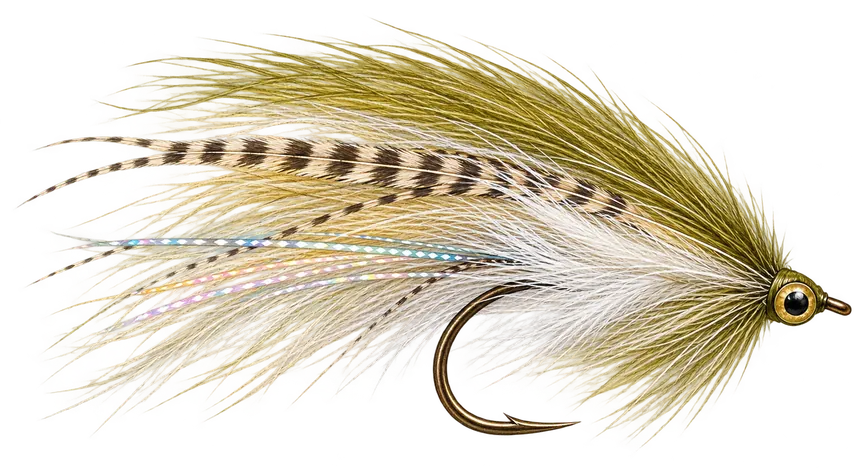
Flies & feathers · Fly fishing
The streamer is the fly for predators. It represents small fish and other larger food and is bigger than other fly patterns. You work it actively with the line hand, with quick pulls and pauses.
- Water depth
- Mid-water
- Retrieve
- Active: stripped by hand, with pauses
- Fishing method
- Fly fishing
- Category
- Flies & feathers
Brown troutRainbow troutBrook troutRiver perchPikeGarfishMackerelSea troutAspLake troutAlpine char
How it works
Streamers are imitations of small fish. The term comes from American English. Löningen also lists beetles as a model in its tackle guide. In the exam catalogues of Bavaria and Saxony-Anhalt, the streamer is a large artificial fly. The Landesfischereiverband Baden-Württemberg describes it as a fantasy pattern that provokes predatory fish with strong colours and pressure waves and is worked with jerky retrieving of the fly line.
There are two lines. Baitfish imitations in muted colours copy a prey fish found in the water, in appearance and movement. Attractor flies carry loud tones such as pink, chartreuse, yellow or red; they are meant to trigger an aggression bite and bring even non-hungry fish out of their reserve. The material determines the action: in calm water marabou, spey hackles and rabbit strips pulse. In medium and strong current, stiffer materials such as synthetic fibre or bucktail hold their shape better.
The size is allowed to be bold. A brown trout of 50 centimetres swallows prey of 10 to 15 centimetres. For pike, hand-length streamers are usual, and synthetic fibre takes up no water, so it is easier to cast. Whether the streamer is weighted depends on depth and pace. Heavily weighted jig streamers are hard to cast overhead; they are fished with short casts and the rod tip stays up.
How to work the lure
Active: stripped by hand, with pauses
Schematic illustration, AI-generated.
- Cast
- short pulls with the line hand
- Pauses: the streamer hangs or sinks
- reel in
Anatomy
The points on the picture above explain the most important parts – on hover or tap.
- Head with eye: The eye is the target point for the predator and makes the streamer look like a fish.
- Wing: Long hair or synthetic fibre that plays in the water and forms the back.
- Side feather: The striped feather traces the flank of a small fish.
- Glitter strands: They flash like scales and set points of light.
- Hook: Sits in the middle of the body. Fish that only nip at the end sometimes do not stay hooked; a stinger helps.
Rig in three steps
- 1. Suitably shortened leaderHeavy streamers are easier to control on shorter leaders. If it does not turn over, shorten it step by step by about 30 centimetres.
- 2. Bite-proof tip for pikeAs soon as pike are possible, a predator leader goes in front of the fly, for example hard mono of 0,80 millimetres.
- 3. Streamer on a loopAn open loop or a small snap lets the streamer move more freely and makes changing easier.
Drawings: AI-generated, schematic.
When the target fish are in season
Hardly any chancePossibleGoodPeak seasonValues from the catch calendar.
When and where
You fish the streamer for brown trout from spring until early autumn. In winter they have a closed season (Schonzeit), in Bavaria from 1 October to 15 March (as of October 2026); you will find the dates for the other states in the fishing calendar. It goes well soon after the closed season, when the water clears again after high water. In early autumn, as long as no closed season applies yet, the trout move about and feed up before spawning, especially on grey, rainy days. In summer they are active at dusk and at night. At 8 to 13 degrees they hunt aggressively, and below 6 degrees they become sluggish. The biggest fish hold where food and cover come together: in runs, pools and current shadows, and on lakes at drop-off edges, stream inflows and the windward shore.
To get started on pike, a shallow, still water up to about 1,5 metres deep is recommended, fished with a floating line and unweighted streamers. According to the Landesfischereiverband Bayern, the pike usually stands motionless among water plants and seizes passing prey with a lightning-fast lunge. Perch too are within streamer range; they prefer places with lush vegetation and, as older fish, feed mainly on fish.
Where streamers, stingers or several hooks are allowed is regulated by the water rules and the fishing permit (Erlaubnisschein). At water temperatures above 22 degrees, researchers at the Humboldt-Universität zu Berlin and the IGB advise against catching pike and releasing them.
How to choose rod, line and leader
- Leader cut to length You control heavy streamers better on shorter leaders. If it does not straighten out, shorten it step by step by about 30 centimetres.
- Bite-proof tip for pike As soon as pike are possible, a predator leader goes in front of the fly, for example hard mono 0,80 millimetres.
- Streamer into the loop Hook the streamer into an open loop or a small snap. That lets it play more freely and makes changing easier.
For trout streamers, tackle starts at line class 6. On rivers and larger lakes, according to the magazine Blinker, a 9,6-foot rod in class 6 to 8 is used. For flies that catch a lot of wind you can choose a line one class heavier than the rod. For pike, rods of class 8 to 10 are fished, and for getting started Rute & Rolle advises class 8. The line is front-weighted, with a short head.
The leader for trout is usually 3 to 5 metres long, and the tip usually measures 0,25 to 0,32 millimetres. Start with 4,5 to 5 metres and shorten it in 30-centimetre steps if it does not turn over in the cast. In murky, churned-up water a thicker leader is worthwhile. Fluorocarbon sinks faster and is less visible in clear water, while mono stays more flexible.
For pike, a bite-proof predator leader goes in front of the fly. An example from practice: two metres of 0,45, with a piece of 0,80 hard mono on it. The streamer hangs on a snap or on a loop that opens easily, such as a bowline.
How to work the streamer and make use of the bite
With trout, the lie is what counts: you offer an attractor fly right there, with abrupt, uneven strips, at an angle to the current of 30 to 45 degrees, so it swings round more slowly. At 8 to 13 degrees you work weighted streamers with long, fast pulls. Below 6 degrees long, even pulls with pauses and light twitches suit, close to the bottom.
With pike, after the cast you let the streamer sink for three to five seconds and slowly take up the loose line. Then come two fast pulls of 30 to 40 centimetres, a one-second pause, three brisk pulls and another pause. The pause is often the moment when the pike grabs.
Large streamers more often lead to missed bites. More fish stay on with tubes carrying a single treble or with a stinger, a single hook on titanium wire behind the fly. When unhooking a pike, an unhooking mat helps; hold the fish horizontally, not vertically.
Which colour?
Starting points to try, not rules. Depth and speed are usually more important than colour.
Streamer or a different bait after all?
| Baits and lures | Depth | Retrieve | Take this lure if … |
|---|---|---|---|
| Streamer | Mid-water | Active: stripped by hand, with pauses | this page |
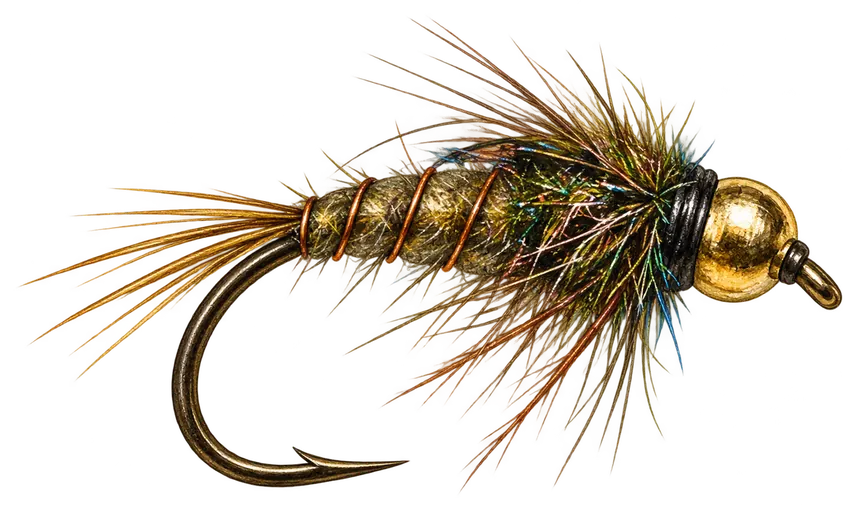 Nymph | Bottom to mid-water | Drifting in the current, as free as possible near the bottom | the fish are feeding on small food near the bottom |
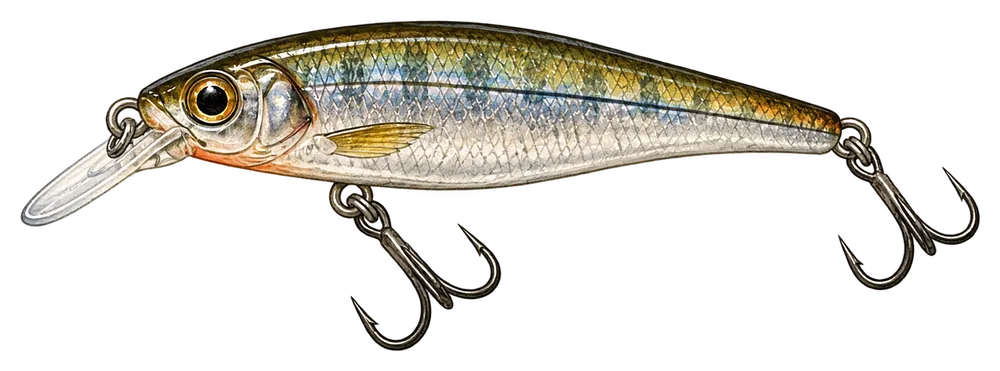 Twitchbait | Near the surface to mid-water | Active: twitch, reel, let it sit | you are fishing for the same predators with a spinning rod |
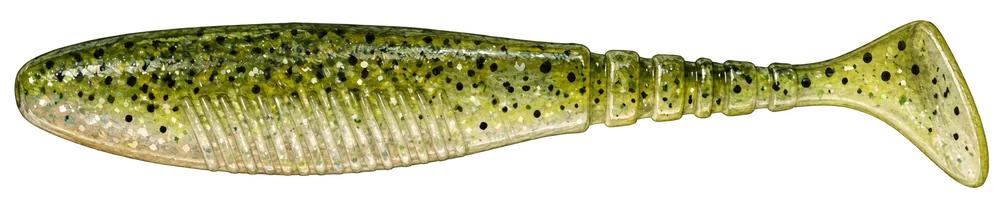 Soft plastic (shad) | Bottom to mid-water | Active: jigging with the rod or lift-and-drop with the reel, bites usually come on the drop | you want to fish deep and far with artificial lures |
What you need
- Fly rodStreamer rods start at line class 6; for pike 8 to 10 are usual. Rod and line must belong to the same class. More
- Fly lineA sinking line or sinking leader takes the streamer down without weighting it. Lines with a short head carry large flies. More
- Pike leaderStiff and bite-proof: steel, titanium or thick monofilament. With pike it goes in front of the fly. More
- Unhooking matLay a pike horizontally on the wet mat and remove the hook quickly. More
More about the method: fly fishing.
At a glance
Editorial assessment, not measured values.
If it does not work
Use a sinking line or a sinking leader and let it sink after the cast. With pike, wait three to five seconds.
Alternate fast pulls and pauses. It is precisely in the pauses that pike take the streamer.
Tie streamers on tubes with a single treble or use a stinger. Large flies more often lead to missed bites.
Frequently asked questions
What does a streamer imitate?
Mainly small fish, hence the name from American English. Löningen also names beetles. Baitfish imitations look natural, while attractor flies are loud and are meant to trigger an aggression bite.
Which rod do I need?
Serious streamer rods start at line class 6. The bigger and the more wind-prone the fly, the stronger the tackle. For pike, classes 8 to 10 are usual.
Floating or sinking line?
In shallow water a floating line is enough. If the streamer is to run deep, a sinking line or a sinking leader helps. For getting started on pike, a shallow water with a floating line is recommended.
Do I need a steel leader when streamer fishing for pike?
A predator leader goes in front of the fly, because the pike’s teeth cut through thin material. Steel, titanium or thick hard mono of about 0,80 millimetres are named.
How long should the leader be for a streamer?
For trout many start with 4,5 to 5 metres, and the tip measures 0,25 to 0,32 millimetres. If it does not turn over, you shorten it in 30-centimetre steps.
Before fishing, the current permits, state rules and water rules apply: bait bans, number of hooks, closed seasons, protected species and catch limits can differ. Many federal states expressly ban live baitfish. Take bait remains and packaging away with you. All details are guide values without guarantee and do not replace legal advice.
Sources
- Blinker: Angeln mit Streamer, so fängst du kapitale Forellen
- Blinker: So fangen Sie den Hecht mit Streamer und Fliegenrute
- Blinker: Fliegenfischen, kleine Tipps mit großer Wirkung
- Rute & Rolle: Mit Fliege auf Hecht, das kannst du auch
- Land Sachsen-Anhalt: Fragenkatalog zur Fischerprüfung
- Bayerische Landesanstalt für Landwirtschaft: Prüfungsfragen zur Fischerprüfung 2023/2024
- Fischereiverein Löningen: Gerätekunde
- Landesfischereiverband Baden-Württemberg: Gerätekunde, Präsentation 2022
- Humboldt-Universität zu Berlin und IGB: Waidgerechtes Zurücksetzen, Hecht
- Landesfischereiverband Bayern: Fischlexikon
- Bayern: Ausführungsverordnung zum Fischereigesetz (AVBayFiG), Anlage zu § 11: Schonzeiten und Mindestmaße
The sources explain terms and basic principles. Retrieve, colour choice and values are editorial starting points and depend on water, weather and lure.
More flies & feathers
 Dry fly
 Wet fly
 Huchen tassel
 Sea paternoster
Created with AI support from the sources listed (AI notice). Last updated: 31 October 2026. Found a mistake? Write to us. Who is behind the site: About me.