
Knowledge – Fish
Brook trout: Identification, habitat, spawning, status
The brook trout (Salvelinus fontinalis) is a salmonid from eastern North America. It was introduced to Europe in 1884 and lives in cold, clear streams, lakes and trout ponds. In Germany it is a non-native but established species that competes with the brown trout for the same waters.
In short: The best time to catch brook trout is April to June, in the morning, during the day and in the evening. Good spots in a river: pools, riffles and undercut banks; in a lake: a sunken tree and the shelf edge. Proven lures: nymphs and small dry flies; where allowed, the smallest spoons and spinners. Step by step: Fishing for brook trout.
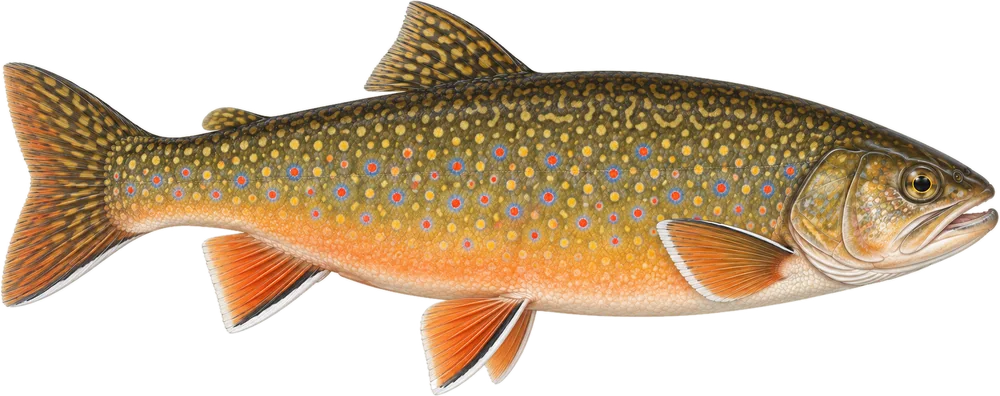
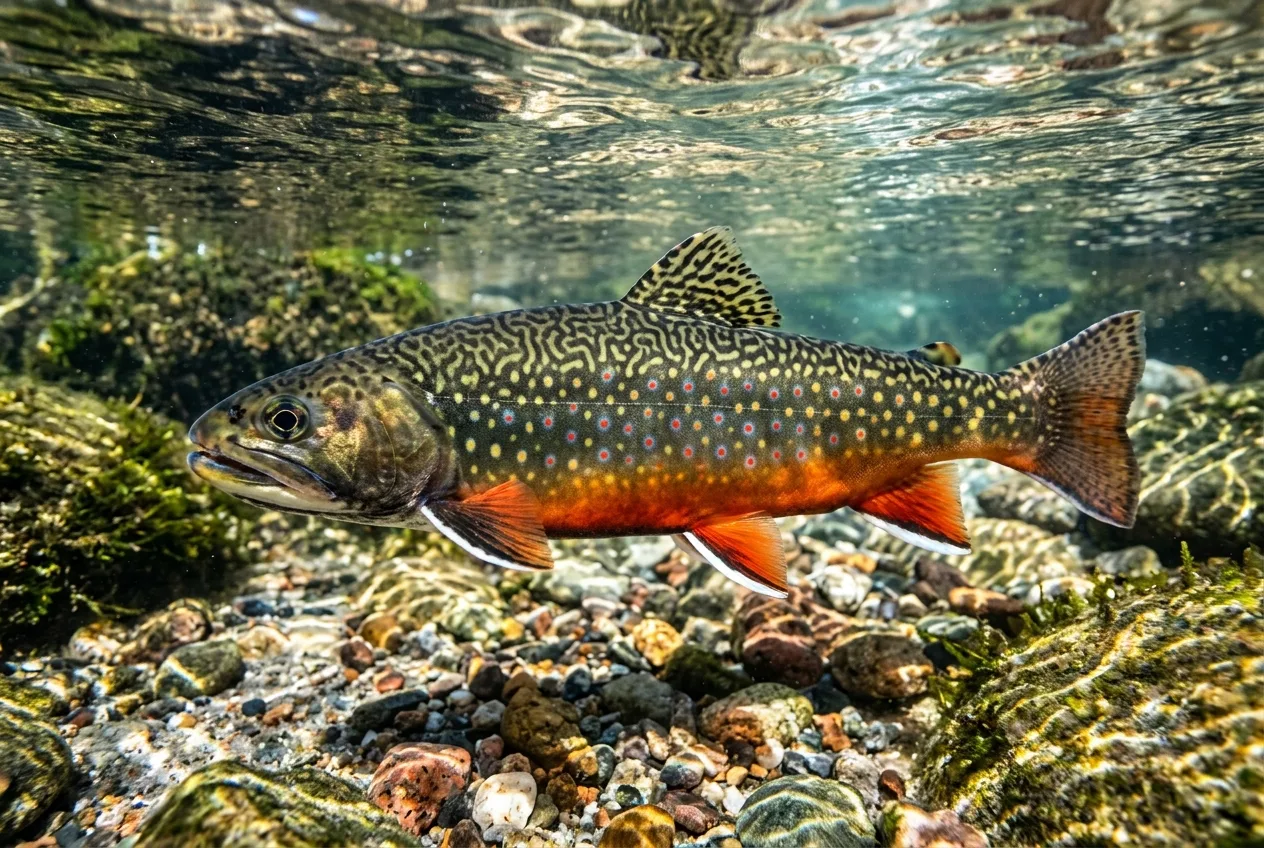
- Pale marbling on the back and dorsal fin
- White edge on the pectoral, pelvic and anal fins, set off by a black line
- Orange-red belly of the males at spawning time; red spots on the flanks, often ringed in blue
Catch chances through the year
- Hardly any chance
- Possible
- Good
- Peak season
- Spawning (observe the closed season)
Editorial assessment for waters in Germany, not a measured value and no guarantee. Spawning time is not the same as the legal closed season.
Species profile and sources in the catch calendarAll species compared month by monthThe rules of your federal state
How to recognise a brook trout
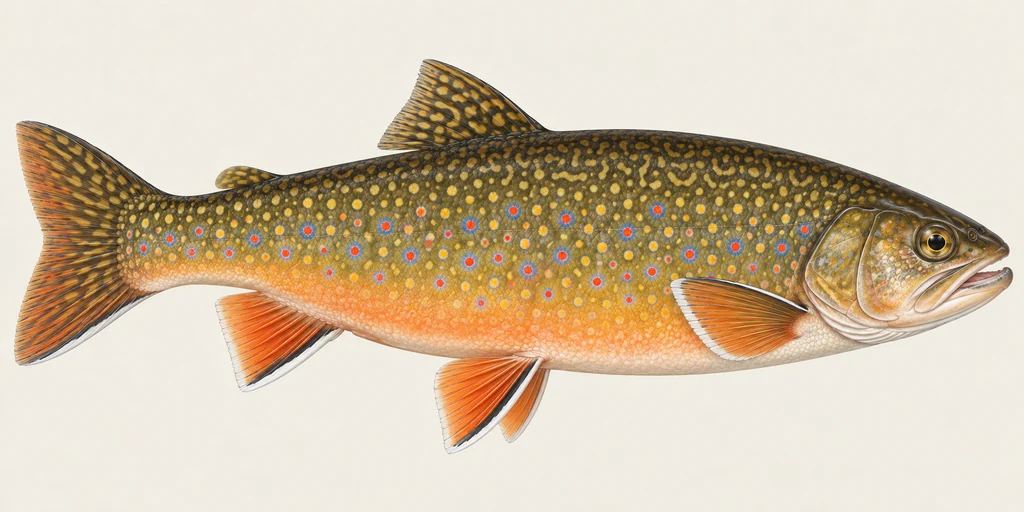
The brook trout has a powerful, torpedo-shaped body and the adipose fin typical of salmonids. The back is olive to brownish green, and the back and dorsal fin carry pale marbling. The flanks bear yellowish and red spots, the red ones often with a blue halo. The gape is wide and reaches behind the eye.
The most distinctive feature is the fins: the pectoral, pelvic and anal fins have a white leading edge, separated by a black line from the reddish rest of the fin. The belly is whitish to yellowish, orange-red in the male at spawning time.
The LFV Bayern gives 20 to 40 cm as the average. In Europe, according to the Landesanstalt für Landwirtschaft, it generally grows to no more than 50 cm and 3 kg. In its North American homeland up to 90 cm and 7 to 8 kg are possible; FishBase lists 86 cm and 8 kg as maximum values.
It differs from the brown trout in the pale marbled dorsal fin and the fins edged in white and black. The brown trout has red spots ringed with a pale halo.
It differs from the Alpine char in the same marbling on the back and dorsal fin, plus the black line in the fin edge. In the Alpine char the paired fins and the anal fin are edged in white only. The brook trout also has the larger mouth, which ends behind the eye.
Crossbreeds occur. Brook trout and brown trout spawn in the same place, and the sterile offspring are called tiger trout. Crossing with the Alpine char produces the Alsace char (Elsässer Saibling).
Side by side
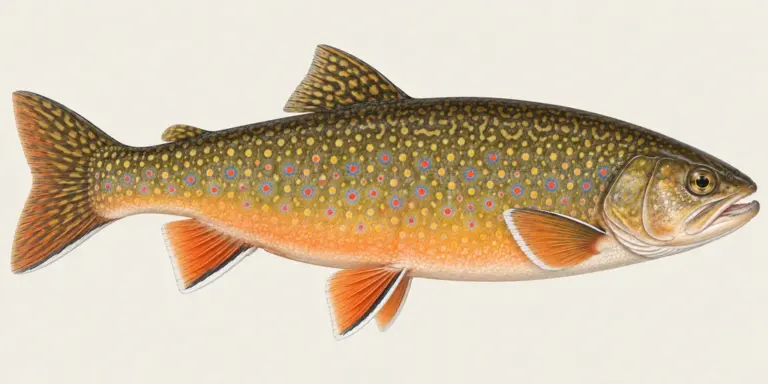
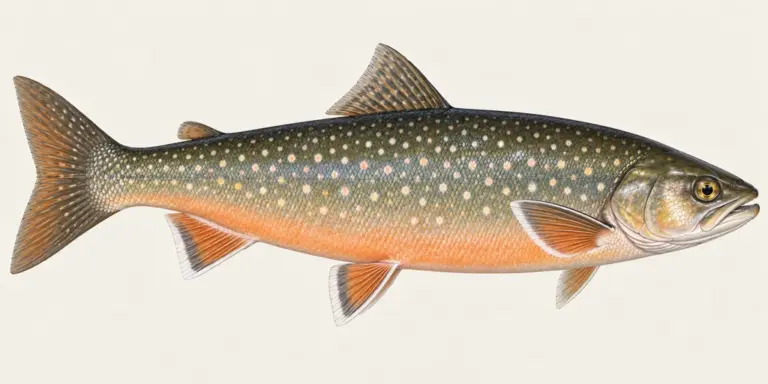
AI-generated illustrations.
Where the brook trout lives
It lives in cold, clear lakes and streams rich in oxygen. FishBase lists clear, cool, well-oxygenated streams, small to medium rivers and lakes, and in its homeland also coastal stretches where some fish spend up to three months at sea. In Europe, according to the Landesanstalt für Landwirtschaft, it found its place mainly in acidic, cold, structure-poor streams and increasingly in trout pond farming.
It stays put, makes few demands on hiding places and is more tolerant of pollution and acidification than the brown trout. Because it uses the same waters, it can displace the brown trout (fish zones in rivers).
Its naturalisation dates from the end of the 19th century; the Landesanstalt gives 1884. In North America, through stocking, it has spread far beyond its original range, and the Geological Survey describes cases there in which it has displaced native trout and chars.
Holding spots in the picture
Choose the season and time of day: the picture shows where the species stands then. Spots outlined in red apply only in the chosen season. Tap a fish or a spot in the list to bring it closer. The picture is schematic and AI-generated, every water is different.
Catch chance in springPeak season
Catch chance in summergood
Catch chance in autumnpossiblespawning, observe closed seasons
Catch chance in winterhardly any
- J
- F
- M
- A
- M
- J
- J
- A
- S
- O
- N
- D
Spawning season
Active time According to the Vermont fisheries authority, the brook trout feeds more heavily by day than brown and rainbow trout. The environmental authority of New York State, by contrast, names low light as the best time to fish: early in the morning, late in the day and under overcast skies.
Active time According to the Vermont fisheries authority, the brook trout feeds more heavily by day than brown and rainbow trout. The environmental authority of New York State, by contrast, names low light as the best time to fish: early in the morning, late in the day and under overcast skies.
Active time According to the Vermont fisheries authority, the brook trout feeds more heavily by day than brown and rainbow trout. The environmental authority of New York State, by contrast, names low light as the best time to fish: early in the morning, late in the day and under overcast skies.
Not a main time According to the Vermont fisheries authority, the brook trout feeds more heavily by day than brown and rainbow trout. The environmental authority of New York State, by contrast, names low light as the best time to fish: early in the morning, late in the day and under overcast skies.
In the river
Undercut bank, overhanging branches, timber
Brook trout are present here all year.
Gravelly shallow (riffle)
Brook trout are present here all year.
Pools, deep spot
Brook trout are present here all year.
The brook trout stays loyal to its spot in cold, clear streams and often spends its life in a single stretch of pool and riffle. It rests in pools and feeds in riffles and in fast current. It finds cover under undercut banks, branches and deadwood, but needs fewer hiding places than the brown trout.
Spring: catch chances according to the catch calendar possible in March, peak season in April and May.
Summer: catch chances according to the catch calendar peak season in June, good in July and August. In summer it often takes terrestrial insects such as grasshoppers too.
Autumn: catch chances according to the catch calendar good in September, possible in October, slim in November. Spawning falls in this period, so observe closed seasons (Schonzeit). Spawning takes place from October to December on gravel bars with a strong flow over them, often in upper reaches near springs. In this period the species is protected in many places.
Winter: catch chances according to the catch calendar slim. The spawning season runs into December. After that the fish, loyal to its spot, stays in its stretch of pool and riffle. Whether fishing is permitted in winter is regulated by the fishing permit (Erlaubnisschein).
In the lake
Shelf edge
Brook trout are present here all year.
Sunken tree
Brook trout are present here all year.
Just below the surface
Brook trout are present here only in spring and autumn.
In lakes and ponds the brook trout seeks shade under sunken wood and along overhanging peaty edges, from where it lies in wait for food. Edges where an inflow enters and washes in food are especially productive. According to the Vermont authority, it mostly stays in shallow, spring-fed areas.
Spring: catch chances according to the catch calendar possible in March, peak season in April and May. In spring it often holds near the surface, especially when insects hatch.
Summer: catch chances according to the catch calendar peak season in June, good in July and August. As the water warms, the fish gather at cold inflows and spring outlets. Accounts differ on depth: the New York authority describes a retreat into cool, deeper water just above the oxygen-poor bottom layer, the Vermont authority rather shallow spots cooled by groundwater.
Autumn: catch chances according to the catch calendar good in September, possible in October, slim in November. Spawning falls in this period, so observe closed seasons (Schonzeit). In autumn it comes back up. At the same time the spawning season begins, during which it is protected in many places.
Winter: catch chance according to the catch calendar hardly any.
Depth: In lakes and ponds, according to the same authority, it stays rather in shallow, spring-fed areas. In heat it seeks cold spring outlets instead of retreating into the depths.
Size comparison: AI-generated drawing, schematic.
How it feeds and spawns
The brook trout eats insect larvae, worms, small crustaceans and terrestrial insects, and fish as it gets older. FishBase also lists leeches, molluscs, amphibians and occasionally small mammals. Larger individuals thus become predators that also take small fish.
To spawn, the fish seek out gravel bars with a strong current. The males are then splendidly coloured and drive other males away from the female. The female digs shallow redds, lays the eggs and covers them with gravel. The LFV Bayern gives October to December. Brook trout, brown trout and Alpine char use the same sites, which is why crossbreeding occurs.
The brook trout matures early, at one year in good conditions, usually after two to three years. Fish from pond farms can be ready to spawn at just 100 to 150 g.
When to find it
As soon as the water warms up in spring, the brook trout feeds much more. Maine’s fisheries authority (Fischereibehörde) names spring as the best time; in summer it avoids warm water. Spawning falls in late autumn.
In its homeland the brook trout, according to FishBase, migrates upstream in early spring, summer and late autumn, and downstream in late spring and autumn. (The year at the water).
Today’s catch index needs JavaScript. Season and spawning time are in the catch calendar.
You will find the monthly overview of all species and the water temperature check in the catch calendar.
From the blog: Freshwater fish in Germany: which species you catch where
What catches it
Step by step: Fishing for brook trout: tips on bait, rig and tackle – season, lies, lures, tackle and rules on one page.
In its homeland the brook trout is regarded as a popular sport fish, especially among fly anglers (fly fishing). Its diet gives the fly patterns: nymphs imitate insect larvae, dry flies terrestrial insects, small streamers small fish.
With a spinning rod, small spinners and spoons come into play. The brook trout shares waters and food with the brown trout. For the latter Blinker recommends a light rod of around two metres, monofilament of about 0,20 mm with a swivel placed ahead of the spinner, size 0 to 2, which you guide slowly past the lies (spinning). The tackle carries over.
Which baits and hooks are allowed is set by the fishing permit (Erlaubnisschein). Where natural baits are permitted, worms suit its diet, but small fish easily swallow them deep.
Imitate the food: The brook trout eats insect larvae, small crustaceans and terrestrial insects. Choose flies and lures that imitate this prey.
Telling brook trout and brown trout apart: Check the back, dorsal fin and fin edge before you keep a fish. The marbling and the white-and-black edge separate it from the brown trout and Alpine char. Crossbreeds occur, and a fish with mixed features cannot then be assigned clearly.
Release gently: Fish that have to go back, you unhook in the water with wet hands or a disgorger (returning fish).
Suitable lures
Nymphs and small dry flies; where allowed, the smallest spoons and spinners.
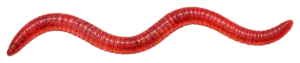
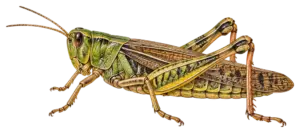
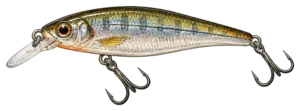
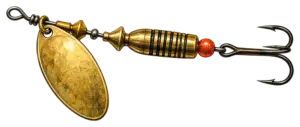
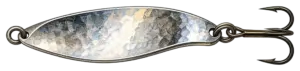
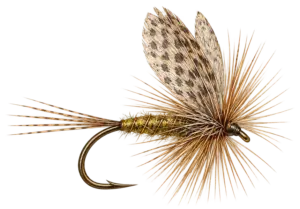
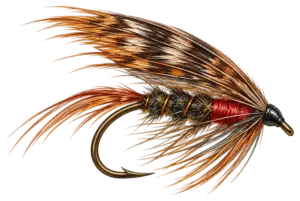
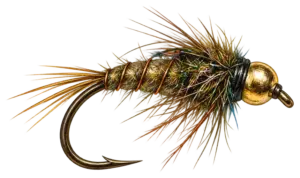
AI-generated illustrations. A click opens the lure’s page.
Also suitable: streamers.
Rigs for these lures: float rig, running ledger rig.
What brook trout tastes like
Opinions on the taste differ. Older assessments considered the flesh dry and less popular; later the brook trout enjoyed a renaissance. Fish ready to spawn lose flavour. FishBase records the species as fresh and smoked.
To prepare: gutting fish and smoking fish. Keep only fish of legal size, as the closed season (Schonzeit) and minimum size (Mindestmaß) on your water allow.
Status and rules
Closed seasons (Schonzeit), minimum sizes (Mindestmaß) and harvest windows are set by the federal states (Bundesland), and on many waters additionally by the club or leaseholder. They differ depending on the water and the time of year. We give figures only with a date and a source; always binding are the fisheries regulation of your federal state and your fishing permit (Erlaubnisschein). You will find a list of links to the official sources in the catch calendar.
A fish of legal size that you want to keep you stun and kill at once, in line with animal welfare rules. Protected, undersized fish or fish too large under a harvest slot you unhook, if possible still in the water and with wet hands, and release gently. What exactly applies is regulated by state law and your fishing permit (Erlaubnisschein).
The brook trout is a non-native species. The 2023 Red List of freshwater fish of Germany lists it as a neobiont, not evaluated, the Bundesamt für Naturschutz as an established, potentially invasive species on its action list. Stocking and taking are governed by state law and the water’s rules.
What closed season, minimum size and harvest slot mean and where to find them is explained on the page Closed season and minimum size explained.
What state law says about the closed season (Schonzeit) and minimum size (Mindestmaß) for this species is in the “At a glance” box on the state page for Bavaria. Our overview does not list this species for the other states; the state fisheries regulation applies there.
Frequently asked questions (FAQ)
How do I recognise a brook trout?
By the pale marbling on the back and dorsal fin and by the white-edged pectoral, pelvic and anal fins, whose edge is separated from the reddish rest of the fin by a black line. The flanks carry red spots with a blue halo.
Is the brook trout native?
No. It comes from eastern North America and was introduced to Europe in 1884. In Germany it is regarded as established and can displace the brown trout.
When does the brook trout spawn?
In autumn, from October to December according to the LFV Bayern, over gravel bars with a strong current. Brown trout and Alpine char also spawn there, which is why crossbreeds arise.
Sources
The rating of catch chances is an editorial assessment. The facts come from these sources, and the text is worded in our own words. The illustration is an original design by Angel Momente in the style of a natural history plate (AI-generated, see the AI notice).
- Landesfischereiverband Bayern: Fischlexikon (Laichzeit, Lebensraum, Nahrung, Aktivität)
- FishBase: Salvelinus fontinalis (Bestimmungsmerkmale, Herkunft, Lebensraum)
- Bundesamt für Naturschutz: Gebietsfremde Fische, naturschutzfachliche Invasivitätsbewertung
- Rote-Liste-Zentrum: Bachsaibling (Gesamtartenliste 2023: Neobiota, nicht bewertet)
- Bayerische Landesanstalt für Landwirtschaft: Leistungs- und Qualitätseigenschaften zweier Herkünfte des Seesaiblings und des Bachsaiblings sowie ihrer Kreuzungen (Schriftenreihe 19/2006)
- BMLUK Österreich: Seesaibling (traditionelle Lebensmittel; Unterscheidung vom Bachsaibling)
- U.S. Geological Survey: Salvelinus fontinalis (Brook Trout), Nonindigenous Aquatic Species Profile
- Blinker: Steckbrief Bachforelle (Merkmale, Lebensraum, Alter, Angeln)
- Maine Department of Inland Fisheries and Wildlife: Brook Trout, Species Information (Frühjahr als beste Zeit, Sommer kühles Wasser)
- Wikipedia: Bachsaibling (Einführung 1884, Größe, Höchstalter, Lebensweise, Nahrung)
- Iowa Department of Natural Resources: Brook Trout (Lebensraum, Gumpen und Rauschen, Deckung, Laichzeit)
- Vermont Fish and Wildlife Department: Brook Trout (Lebensraum in Bächen und Seen, Deckung, Laichwanderung)
- New York State Department of Environmental Conservation: Guide to Brook Trout Fishing in Adirondack Ponds (Tageszeit, Plätze im Teich nach Jahreszeit, Köder)
Created with AI support from the sources listed. Figures only appear in the text if a source gives them. Last updated: 7 November 2026. Found a mistake? Write to us. Who is behind this site: About me.
More in the lexicon
- All fish species at a glance
- Catch calendar – month, water temperature and profile for 93 species
- Line calculator – breaking strain after the knot, drag guideline, backing
- Angling methods