
At a glance
- Very common
- Perch and roach, with pike, bream and chub also common
- Endangered
- Burbot, crucian carp, grayling, huchen (Danube salmon) and vimba
- “Rare”
- the Red List only counts fish that reproduce on their own
- Never put back
- Pumpkinseed, topmouth gudgeon and black bullhead from the EU Union list
- Baitfish
- dead only, live baitfish are banned
Reading the Red List correctly
The 2023 Red List of freshwater fish gives two details for each species. The population status ranges from “extremely rare” to “very common”, estimated in comparison with the most common species, usually the roach (Plötze or Rotauge). The category, on the other hand, says whether a species is threatened.
The list rates carp as rare, but classes it as not threatened with a clearly growing population. The experts did not count stocked populations, nor fish in garden and breeding ponds, and in Germany carp hold their own mainly through stocking. They increasingly reproduce on their own in southern Germany, where the waters are getting warmer. The eel is missing entirely: it spawns in the sea and is listed among the marine fish.
So “rare” on a card below does not mean that the species is rare at my pond, and “threatened” does not mean that it is protected. Whether a fish may be taken home is decided by state law and the fishing permit (Erlaubnisschein).
Predatory fish in lakes and rivers
I look for pike, zander and perch from the bank where they find cover or prey: along weed edges, over deep, firm bottoms and under jetties. The wels catfish, at up to three metres our largest native freshwater fish, and the asp, a hunting cyprinid, are classed as rare in the Red List.
Common according to the Red List. A loner that lies in wait for prey almost motionless among water plants, in lakes and rivers alike. Best months in the catch calendar: October to December.
Moderately common according to the Red List. The largest member of the perch family here looks for large, deep, murky waters with a firm bottom. Main season from September to December.
Very common according to the Red List and hardly fussy: river, lake, canal, even the slightly salty water of the Bodden lagoons. Best in September and October.
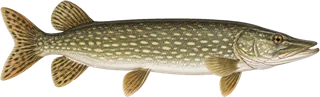
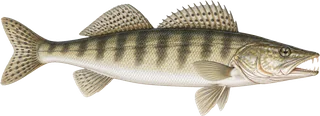
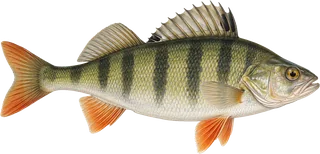
The fish pictures on the cards are AI-generated illustrations. Clicking the picture or the name opens the profile; the coloured band shows the months according to the catch calendar.
Coarse fish in ponds, lakes and canals
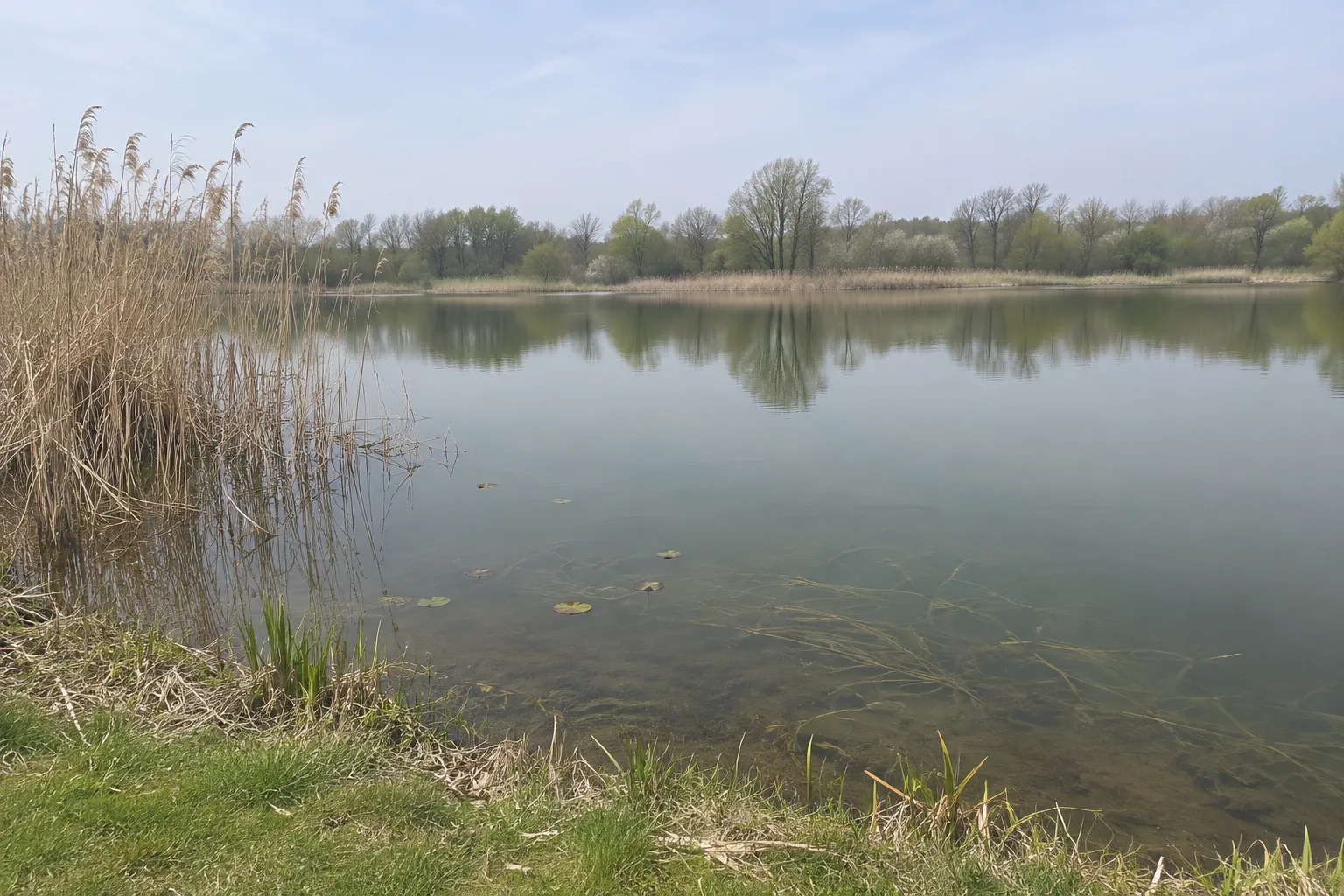
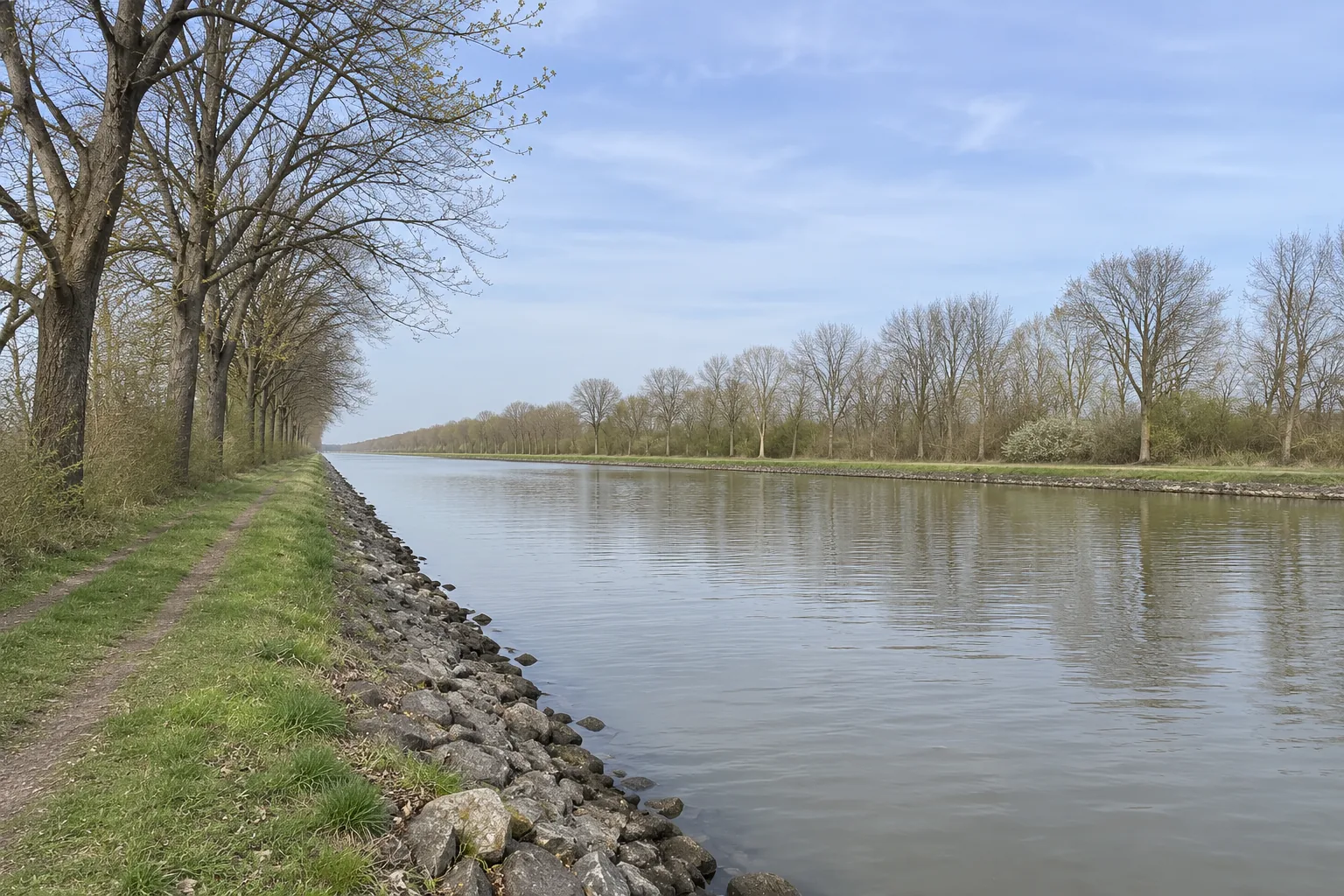
Roach and bream live in shoals and occur almost everywhere in lakes, ponds, canals and slow rivers. Tench, carp and crucian carp like warm, weedy ponds and oxbows with a soft bottom. How to tell rudd and silver bream from roach and bream is explained in How to tell silver fish apart reliably.
 AI-generated
 AI-generated
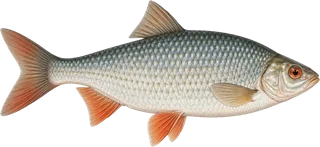
Very common according to the Red List; the list usually measures the other species against it. An undemanding shoal fish in lakes, ponds and slow rivers.
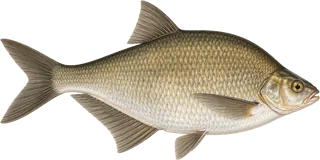
Common according to the Red List. Deep-bodied, with a protrusible tube mouth; at night it searches the soft bottom of shallow margins in groups for worms and larvae.
Moderately common according to the Red List. Lives over mud among weed and reeds in ponds and oxbows; its small scales lie beneath a thick layer of slime.
Not threatened according to the Red List and yet “rare”, because the list only counts populations that reproduce on their own, not stocked fish. Likes warm, calm water rich in plants.
Even survives its pond drying out or freezing through by burrowing into the mud. Endangered according to the Red List; whether it is protected is up to your federal state (Bundesland).
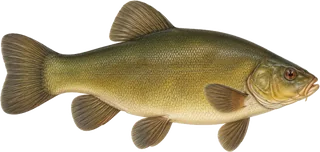
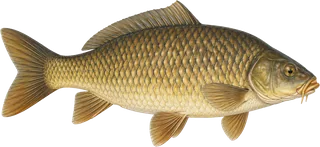
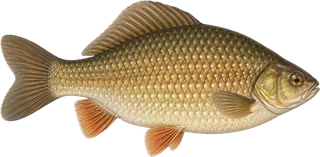
Coarse fish in flowing water
On a river, the species you can expect depend on the spot. Experts divide it into fish zones, each with an indicator fish, from the trout and grayling zones in the upper reaches to the bream zone, the richest in species. How to recognise them is shown in Fish zones in a river. That is where you are most likely to catch chub and barbel; the common nase is rare according to the Red List.
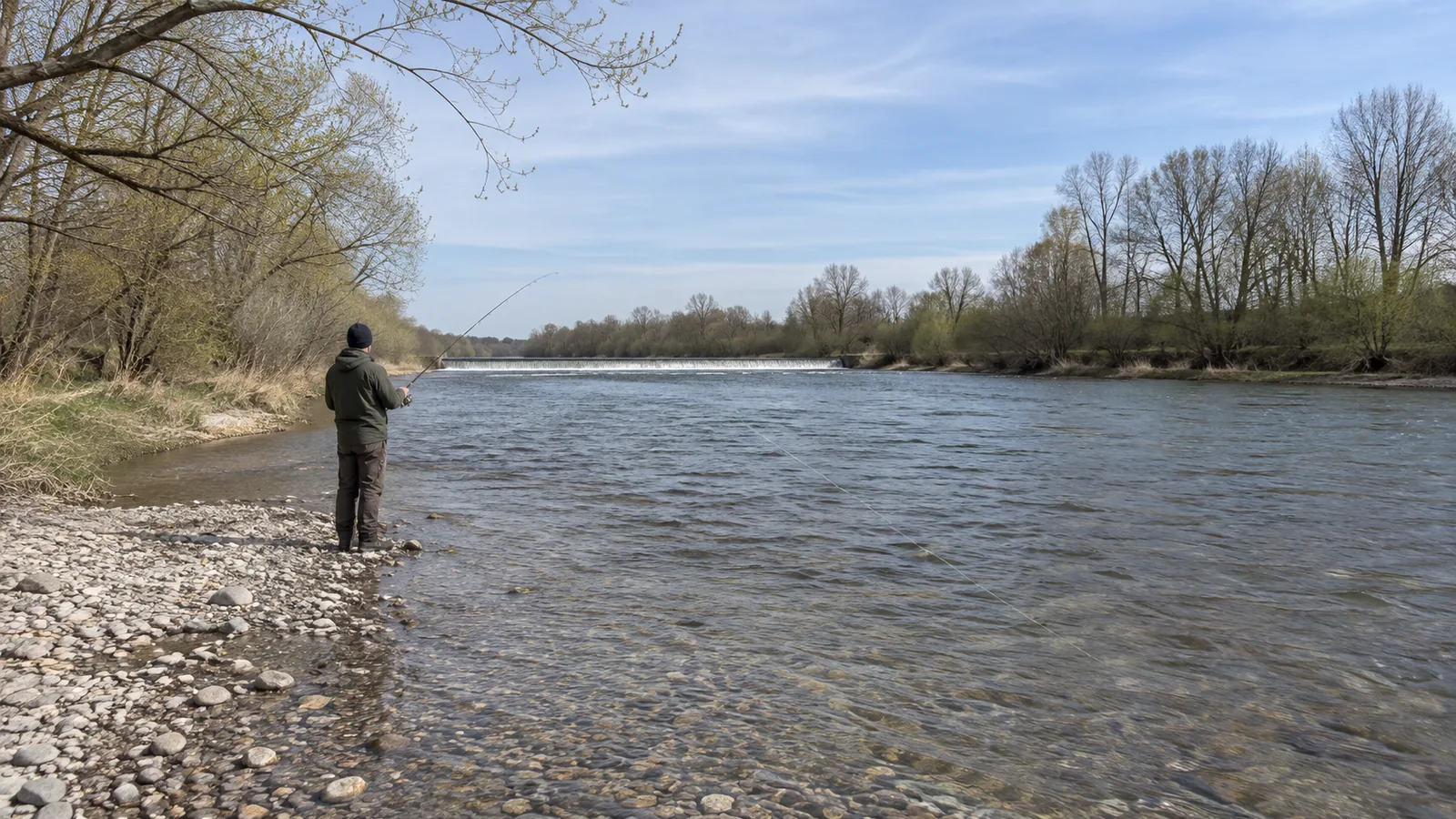
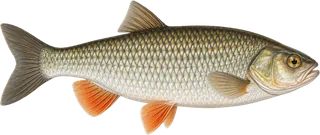
Common according to the Red List. Lives in running waters from the trout zone to the bream zone; young chub in groups near the bank, large ones more often alone in open water.
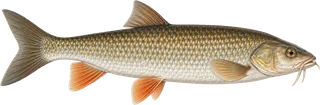
Indicator fish of the zone named after it, on the early-warning list of the Red List. A bottom fish over sand and gravel, with a trunk-like snout and four barbels on the upper lip.
Trout and grayling in cold water
Brown trout and grayling need cool, clear, oxygen-rich water. Rainbow trout and brook trout come from North America and arrived here in the late 19th century. In an angling pond they are mostly rainbow trout from aquaculture. The huchen (Danube salmon) occurs naturally only in the Danube basin.
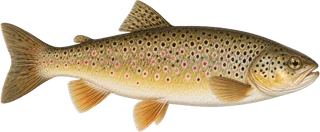
Red spots on the flanks, often ringed with white. Indicator fish of the uppermost river zone, vulnerable according to the Red List. Its main season in the catch calendar starts in April.
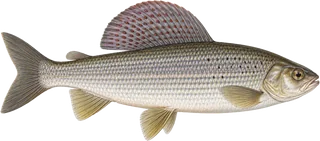
Its tall dorsal fin is called the flag. Holds in oxygen-rich streams and rivers over gravel and stones; endangered according to the Red List.
Eel, salmon and sturgeon between sea and river
The eel grows up in almost all lakes and rivers and migrates as far as the Sargasso Sea to spawn. At sea and in adjoining brackish water, fishing for it is banned under EU law, according to the Federal Ministry of Agriculture in April 2026. Inland, the federal states set the minimum size (Mindestmaß) and closed season (Schonzeit), see Eel fishing ban.
The salmon had disappeared from Germany by around 1950; today’s populations go back to stocking since the 1980s, and it is reproducing again in the Rhine, Elbe and Weser. The sea trout runs up small streams mainly from September to December. The European sturgeon is considered extinct; young sturgeon have been released into the Elbe since 2008. If one is on the hook, I unhook it in the water.
Protecting small fish, choosing the right baitfish
Bitterling, weatherfish, bullhead and vairone (Strömer) are listed in Annex II of the FFH Directive, with which the EU protects species and habitats. In North Rhine-Westphalia, bitterling, weatherfish, bullhead, sunbleak, stone loach and minnow must not be taken at any time of the year.
Small silver fish as live bait are strictly forbidden for anglers for animal welfare reasons, according to the IGB. I only use dead baitfish of a species I am also allowed to keep. Brandenburg, for example, expressly prohibits using fish that are under a fishing ban as bait.
Removing introduced species
Six fish species found here are on the Union list of EU Regulation 1143/2014 on invasive species. Established are the pumpkinseed, topmouth gudgeon, black bullhead and two Asian weatherfish species, which have been on the list since August 2025; the Amur sleeper is considered unestablished.
The lengthwise stripe of the topmouth gudgeon can be missing in older fish; then the mouth helps. Art. 7 of the Regulation prohibits releasing, keeping or transporting these species. That is why I never put such a fish back, nor put it alive into a bucket or keepnet. I stun and kill it humanely on the bank, because under § 12 of the Tierschutz-Schlachtverordnung every fish must be stunned immediately before it is killed. What happens to the fish afterwards I look up in the water rules. According to the management sheet (Maßnahmenblatt) from Lower Saxony, making use of it is generally better than disposing of it.
From my own experience
- If a small catfish with barbels is on the hook, I look at its back just before the tail before unhooking it: if there is an adipose fin, it is not a native wels catfish. Then I identify the species exactly, because a black bullhead does not go back.
- Before releasing a small, slender whitefish with a dark lateral stripe, I look at its mouth. Two barbels and a downward-facing mouth point to the native gudgeon, a mouth without barbels that points upwards to the topmouth gudgeon.
Classifying the fish on your hook
Before a fish comes home with me or swims back, I assign it to one of these five groups. Examples from EU law, North Rhine-Westphalia and Saxony, as of 4 November 2026.
| Group | Examples | What I do | Where it lives |
|---|---|---|---|
| Union list | Pumpkinseed, topmouth gudgeon, black bullhead | stun, kill, never take away alive | Art. 7 Regulation (EU) 1143/2014, in Saxony § 12 SächsFischVO |
| protected all year round | in NRW e.g. burbot, bitterling, salmon, sea trout | unhook in the water, straight back | § 1 LFischVO NRW |
| in the closed season (Schonzeit) or undersized | any species with a closed season (Schonzeit) or minimum size (Mindestmaß) | back immediately and carefully | § 4 LFischVO NRW, state law |
| Species unclear | young silver fish, crucian carp or Prussian carp | treat like a protected species | my own rule |
| allowed and of legal size | Roach, bream, pike outside the closed season | keep as the fishing permit (Erlaubnisschein) allows, stun and kill first | Fishing permit (Erlaubnisschein), water rules |
Each federal state (Bundesland) sets closed seasons (Schonzeiten), minimum sizes (Mindestmaße) and species protected all year round in its fisheries regulation, and many waters have their own rules in the fishing permit (Erlaubnisschein) as well. I read both before my first day’s fishing on a new water. How the terms fit together is explained in Closed season and minimum size explained.
Frequently asked questions
Which freshwater fish are the most common in Germany?
The 2023 Red List classes perch and roach as very common, and pike, bream and chub as common. Only self-sustaining populations are counted.
Why is carp considered rare when almost every pond has some?
Because the Red List does not count stocking. There are still few populations that reproduce on their own, but they are increasing, especially in the warmer south. Carp are not threatened.
What do I do with a pumpkinseed on the hook?
Do not release it and do not take it away alive, because it is on the Union list. I stun and kill it on the bank and make use of it unless the water rules say otherwise.
Related
- Fish zones in a river, indicator fish from stream to estuary
- Water types, river, lake, pond and canal
- Catch calendar, all species month by month
- Identify a fish, the species in a few questions
- Returning a fish, gently back into the water
- Stunning and killing a fish, humanely and quickly
- Fish of the Year 2027: the crucian carp, what anglers can do
- Carp in autumn, placing baits and feeding
Sources
- Rote-Liste-Zentrum: Rote Liste der Süßwasserfische und Neunaugen Deutschlands 2023, Artensteckbrief Karpfen (Bestand und Gefährdung, Umgang mit Besatz, Aal)
- LFV Bayern: Fischlexikon (Merkmale und Lebensraum der Arten)
- LfU Brandenburg: Sonnenbarsch, Blaubandbärbling, Schwarzer Zwergwels (Merkmale in Abb. 1)
- BfN: Europäischer Stör, Huchen (Danube salmon), Bitterling, Vierte Erweiterung der Unionsliste (FFH-Schutz, Stör, Huchen, Schlammpeitzger)
- HLNUG Hessen: Unionsliste invasiver gebietsfremder Arten (Status in Deutschland)
- Amtsblatt der EU: Verordnung (EU) Nr. 1143/2014 (Verbote nach Art. 7)
- Gesetze und Verordnungen: § 12 Tierschutz-Schlachtverordnung, Landesfischereiverordnung NRW, Sächsische Fischereiverordnung, Fischereiordnung Brandenburg (Betäuben, Schonung, Zurücksetzen, Köderfische)
- NLWKN Niedersachsen: Management- und Maßnahmenblatt Sonnenbarsch, Vollzugshinweise Lachs, Vollzugshinweise Meerforelle (Verwertung, Lachs, Meerforelle)
- DAFV: Perch, Fisch des Jahres 2023, Die Rückkehr der Lachse (Barsch, Lachs)
- Weitere Fachstellen: IGB, Boddenhecht 2023, BMLEH, Pressemitteilung 39/2026, BfN, Wels als Fisch des Jahres 2026, LALLF, Merkblatt Angelteiche, UBA, Wassertemperatur von Fließgewässern, FishBase, Carp (Köderfische, Aal, Wels, Angelteiche, Fischregionen, Karpfen)
Text AI-assisted, drawing and all images in the text AI-generated, cover photo: Iwan Belokurov. Sources opened and checked in November 2026, no graphics taken from the sources.
All figures are guideline values without guarantee, as of 4 November 2026. Which species occur in a water depends on region, stocking and year; fishing bans, minimum sizes (Mindestmaße) and closed seasons (Schonzeiten) are governed by EU and state law.