
Knowledge – Fish
Vairone (Strömer): Features, habitat and protection
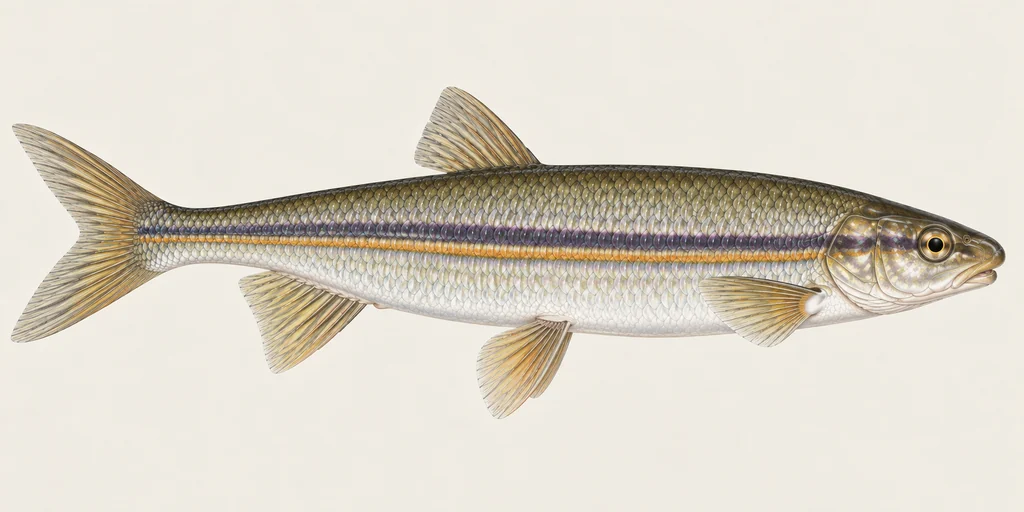
The vairone (Strömer) (Telestes souffia) is a slender cyprinid of the grayling zone that in Germany now occurs only in the south. On a live fish the orange lateral line catches the eye at once. The species is listed in Annex II of the Habitats Directive (FFH), is regarded in Germany as critically endangered and is not a target species.
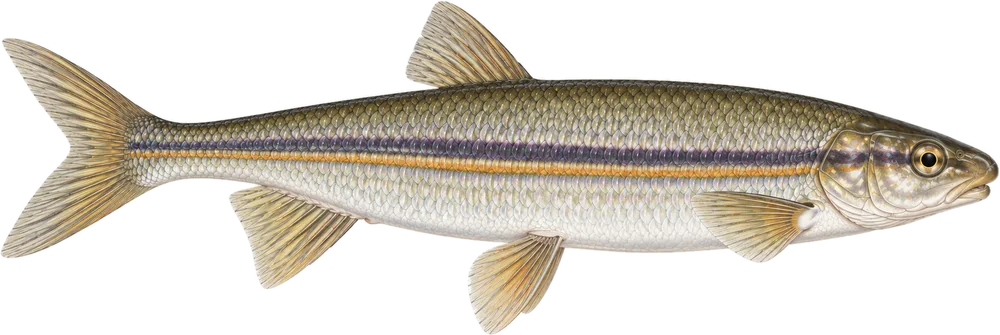
In short: Critically endangered and an FFH species: not a target, and bycatch is put back immediately and gently. You can recognise it by the orange lateral line with a dark edge.
- Yellow to orange-red lateral line, narrowly edged dark above and below
- Dark, violet-glossed longitudinal band from the eye to the tail fin, clearest at spawning time
- Slightly inferior mouth under a blunt, projecting snout
Catch chances through the year
- Hardly any chance
- Possible
- Good
- Peak season
- Spawning (observe the closed season)
Editorial assessment for waters in Germany, not a measured value and no guarantee. Spawning time is not the same as the legal closed season.
Species profile and sources in the catch calendarAll species compared month by monthThe rules of your federal state
How to recognise it
The vairone (Strömer) is slender and almost spindle-shaped, and its head looks rather small in proportion. The mouth is slightly inferior, and the blunt snout projects a little beyond the upper lip. The dorsal fin begins roughly above the base of the pelvic fins.
The surest feature is the lateral line. It is yellow to orange-red and is accompanied on both sides by a fine dark line. The fin bases and the edge of the gill cover are also orange. The back and flanks shimmer grey-brown to silvery with a bluish gloss, the belly is white and the fins are yellowish to light brown.
At spawning time both sexes take on stronger colours. A dark, violet-glossed longitudinal band then appears, running from the eye to the tail fin. The males also carry spawning tubercles, small white nodules on the head. A vairone (Strömer) is usually 12 to 17 centimetres long. The Landesfischereiverband Bayern gives 24 centimetres as the maximum length, FishBase 25 centimetres.
In the same stretch of river you often find young chub and dace, which have a similarly slender shape. They lack the orange lateral line with its dark edge. An expert report for the fisheries association in Baden-Württemberg describes exactly this colour pattern as so typical that it makes the vairone (Strömer) unmistakable.
The schneider is most likely to mislead, because it also has orange fin bases and lives in the same waters. It is, however, deeper in the back, and its downward-curved lateral line is edged above and below by a row of black dots. In the vairone (Strömer) the lateral line itself is coloured.
Side by side
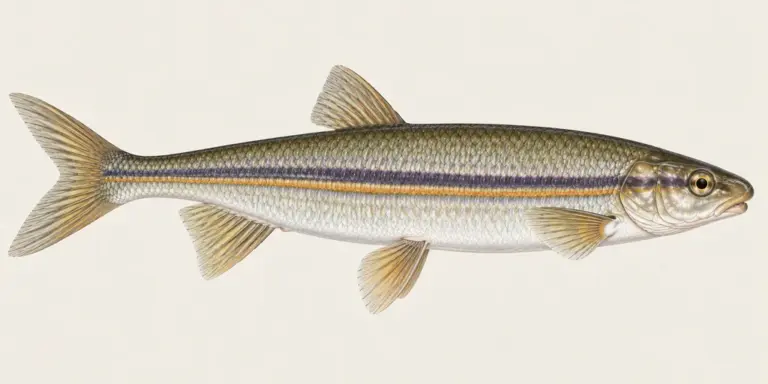
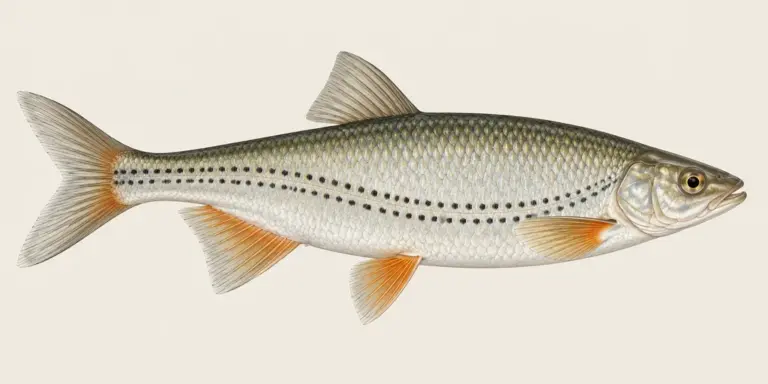
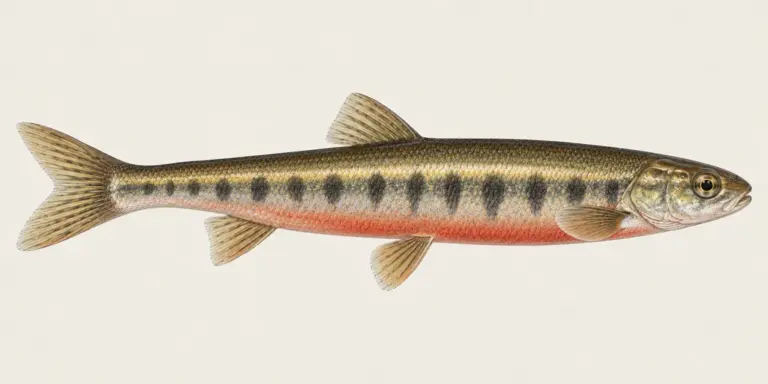
AI-generated illustrations.
Where it lives
The vairone (Strömer) needs clean, varied and fast-flowing streams and rivers with a gravel bed. Its stronghold is the grayling zone. It also occurs, however, in the lower trout zone, in the barbel zone and in the inflows and outflows of lakes. Typical neighbours are grayling, brown trout and barbel.
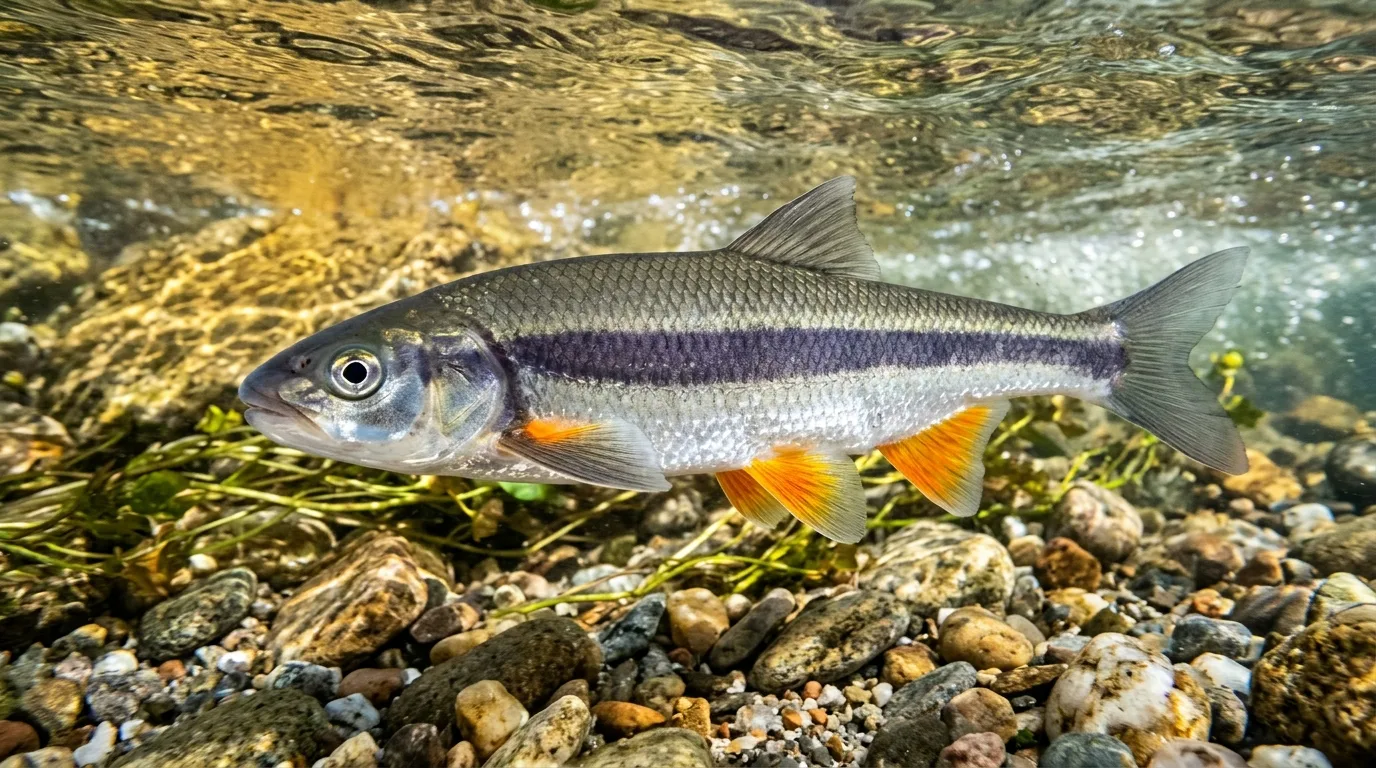
Deeper, only weakly flowing pools, that is scoured plunge pools, are vital for it. It rests and overwinters there. If such places are missing in the main watercourse, it must be able to move unhindered into side streams. Young vairone (Strömer) stand in quiet areas at the edge, for example in side ditches.
In Germany the species lives only in the south, with significant populations mainly in Baden-Württemberg. According to the Bundesamt für Naturschutz the northern limit runs through the catchment of the Neckar. It used to range as far as the Main. In Hesse the vairone (Strömer) is now regarded as lost, and an attempt at reintroduction in the 1990s did not lead to natural reproduction there. Outside Germany it lives in Austria, Switzerland, France and the western Balkans.
Holding spots in the picture
Choose the season and time of day: the picture shows where the species stands then. Spots outlined in red apply only in the chosen season. Tap a fish or a spot in the list to bring it closer. The picture is schematic and AI-generated, every water is different.
In the river
Gravelly shallow (riffle)
The vairone (Strömer) is found here in spring only.
Pools, deep spot
The vairone (Strömer) is found here all year round.
Current seam
The vairone (Strömer) is found here all year round.
Calm bay with aquatic plants
The vairone (Strömer) is found here all year round.
The vairone (Strömer) lives in groups in clean, fast-flowing streams and rivers with a gravel bed, mostly in the grayling zone. It moves between quickly flowing stretches for feeding and calm, deep pools for resting. Young fish stay in quiet margins and side ditches.
Spring: This is the spawning period, so observe the closed seasons (Schonzeit). Between March and June it travels short distances to shallow, flooded gravel banks, where the eggs stick in the gaps between stones.
Winter: It spends the winter in deep pools with hardly any flow.
Size comparison: AI-generated drawing, schematic.
How it lives and spawns
Vairone (Strömer) live gregariously in groups. Adult fish commute between quickly flowing sections where they feed and resting zones with little current. They eat mainly small invertebrates, besides algae and other plant material.
The vairone (Strömer) becomes sexually mature in its second year at the earliest, usually in the third, at a length of about 11 centimetres. Spawning takes place, depending on the source, between March and June, usually after only short spawning migrations. The fish seek out shallow, flowing gravel bars and spawn at around 10 to 12 °C. A female lays 1.500 to 6.000 sticky eggs of about 2 millimetres, which stick in the gaps between the pebbles.
When the larvae have used up their yolk sac, they live in open water. From a length of about one centimetre they stand in small shoals facing the current.
The species is threatened above all by transverse structures, river engineering and pollution. Too many nutrients make gravel bars grow over with algae, and then they no longer serve as spawning grounds. A fact sheet for Hesse also mentions trout stocking, because it can increase predation pressure on small fish.
Is there a season?
There is no angling season for the vairone (Strömer); it is not a target species. Through the year it moves between summer and winter habitat: it spends the winter in deep, quiet pools and in spring moves to the gravel bars to spawn.
It is easiest to recognise in spring, because the dark longitudinal band stands out particularly clearly then.
You will find the monthly overview of all species and the water temperature check in the catch calendar.
From the blog: Freshwater fish in Germany: which species you catch where
What to do with a bycatch
The vairone (Strömer) is not fished for. In waters where it occurs, it may nevertheless take a small hook meant for grayling or chub.
Then unhook it in the water and touch the fish only with wet hands if it cannot be avoided. Put it back on the same stretch of water. A vairone (Strömer) is protected and must not be kept.
Records of rare species are valuable to angling clubs and authorities. Note the water, the stretch and the date and, if you can do it quickly, take a photo in the landing net.
Watch the lateral line: A small, slender cyprinid with an orange lateral line with a dark edge in a southern German gravel river is very probably a vairone (Strömer). Treat it like a protected species.
Unhook in the water: Keep disgorger pliers to hand and work in the landing net under water. That way the fish’s mucous layer stays intact and it is free again within seconds.
Suitable lures
We deliberately show no baits for this species.
Critically endangered and an FFH species: do not target it, put bycatch back into the water immediately and gently.
Protection and rules
The vairone (Strömer) is in Category 1, critically endangered, of Germany’s Red List of 2023 and in Annex II of the Habitats Directive (FFH). The Bundesamt für Naturschutz rates its conservation status in the continental region as unfavourable-bad. Globally the IUCN lists the species as Least Concern.
In Bavaria the fisheries regulation (Fischereiverordnung) lists the vairone (Strömer) as a species protected all year round. Fish caught during the closed season (Schonzeit) must be put back immediately and carefully into the same stretch of water.
Other federal states (Bundesland) have their own rules. What counts is always the fisheries regulation of your federal state and your fishing permit (Erlaubnisschein). You will find a list of links to the official sources in the Fishing calendar.
What closed season, minimum size and harvest slot mean and where to find them is explained on the page Closed season and minimum size explained.
What state law says about the closed season (Schonzeit) and minimum size (Mindestmaß) for this species is in the “At a glance” box on the state page for Bavaria. Our overview does not list this species for the other states; the state fisheries regulation applies there.
Frequently asked questions (FAQ)
May I keep a vairone (Strömer)?
No. The species is critically endangered in Germany and protected all year round in Bavaria. A vairone (Strömer) that is caught is put back immediately and gently. In other federal states (Bundesland) the respective fisheries regulation applies.
What is the quickest way to recognise a vairone (Strömer)?
By the yellow to orange-red lateral line with a dark edge and the orange fin bases. At spawning time a dark longitudinal band from the eye to the tail is added.
Where in Germany do vairone (Strömer) still occur?
Only in the south. The most important populations are in Baden-Württemberg, and the northern limit runs through the catchment of the Neckar. In Hesse the species is regarded as lost.
Sources
The rating of catch chances is an editorial assessment. The facts come from these sources, and the text is worded in our own words. The illustration is an original design by Angel Momente in the style of a natural history plate (AI-generated, see the AI notice).
- Bundesamt für Naturschutz: Artenporträt Telestes souffia (FFH-Anhang II, Rote Liste 2023, Verbreitung, Fortpflanzung, Gefährdung)
- FishBase: Telestes souffia (Größe, Merkmale, Lebensraum, Verbreitung, Taxonomie, IUCN-Status)
- Landesfischereiverband Bayern: Fischlexikon, Strömer (Länge, Laichzeit, Kennzeichen, Lebensweise)
- Hessen-Forst FENA/HLNUG: Artensteckbrief Strömer, Stand 2006 (Biologie, Laichtemperatur, Bestand in Hessen)
- Verband für Gewässerschutz und Fischerei Baden-Württemberg: Der Strömer in den Gewässern im Landkreis Ludwigsburg, Bestandsuntersuchung 2013 (Biologie, Lebensraum)
- Bayerische Staatskanzlei: Verordnung zur Ausführung des Bayerischen Fischereigesetzes (AVBayFiG), Anlage und Rücksetzpflicht
Created with AI support from the sources listed. Figures only appear in the text if a source gives them. Last updated: 8 November 2026. Found a mistake? Write to us. Who is behind this site: About me.
More in the lexicon
- All fish species at a glance
- Catch calendar – month, water temperature and profile for 93 species
- Line calculator – breaking strain after the knot, drag guideline, backing
- Angling methods