
Knowledge – Fish
Dace: Features, habitat, best time and baits
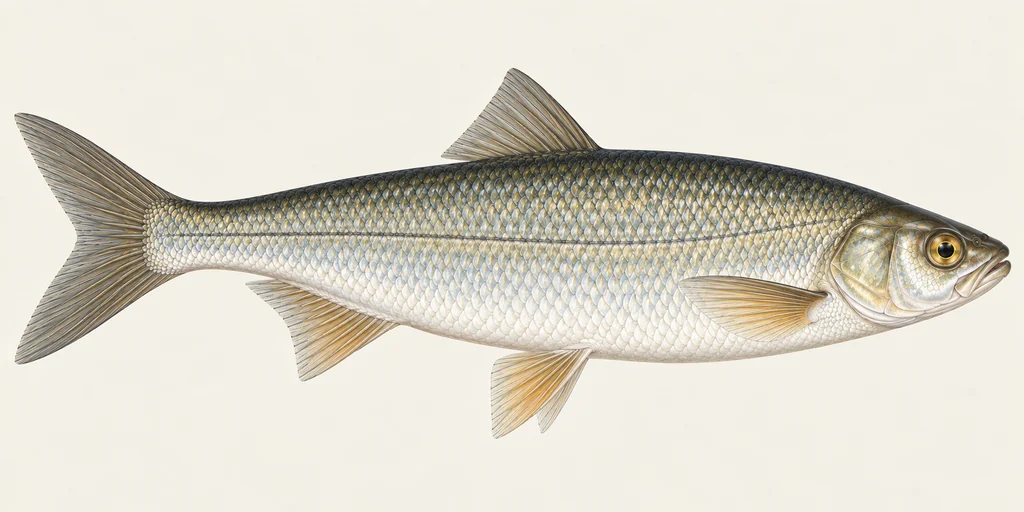
The dace (Leuciscus leuciscus) is a small, slender cyprinid of clear, cool running water. It lives in shoals, swims fast and is shy. It is often mistaken for a young chub, yet one look at the mouth and the anal fin is enough for a sure identification.
In brief: The best time to catch dace is May to October, mainly in the morning and evening. Good spots in the river: the main current. Proven baits: maggots or a small piece of worm on a fine, drifting float; also small dry flies and nymphs. Bavaria protects the dace from 1 March to 30 April, Mecklenburg-Western Pomerania from 1 March to 31 May, and Hamburg bans targeted fishing (as of October 2026). What applies on your water is set by state law (Landesrecht) and your fishing permit (Erlaubnisschein). Step by step: Dace fishing.
- Small, slightly inferior mouth that does not reach the edge of the eye
- Edge of the anal fin concave inwards
- Clearly notched tail fin on a slim, spindle-shaped body
Catch chances through the year
- Hardly any chance
- Possible
- Good
- Peak season
- Spawning (observe the closed season)
Editorial assessment for waters in Germany, not a measured value and no guarantee. Spawning time is not the same as the legal closed season.
Species profile and sources in the catch calendarAll species compared month by monthThe rules of your federal state
How to recognise it
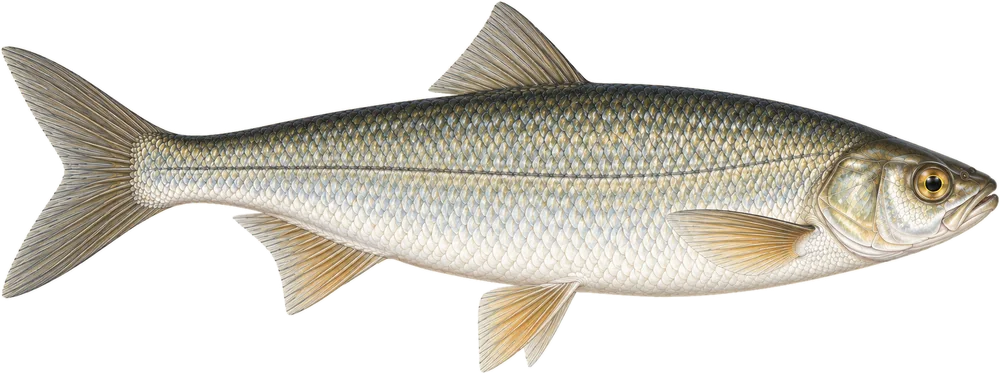
The dace has a spindle-shaped body, barely flattened at the sides, and a small head. The mouth is small, only slightly oblique and sits slightly below the tip of the snout. The gape does not reach the edge of the eye. The edge of the dorsal and anal fins is concave, and the tail fin is clearly forked.
The back is bluish-green to steel blue, the sides and belly gleam silver. The paired fins and the anal fin are pale yellowish to light orange. Along the lateral line you usually count 47 to 52 scales. In the spawning season the males carry fine-grained spawning tubercles.
According to the Landesfischereiverband Bayern, the size is 20 to 30 centimetres. FishBase gives 15 centimetres as a common length and 40 centimetres and one kilogram as maximum values. The life expectancy is about ten years on average, in exceptional cases up to 16 years.
The dace is most often confused with the chub, which is called Aitel in Bavaria. The chub has a large, broad head with a wide, terminal gape reaching almost below the eyes, large scales with a dark net pattern and an outward-curved anal fin. In the dace it is concave.
The Perlfisch has a visibly bulkier head and a more deeply forked tail fin. The bleak, known to us as Ukelei, has an upturned mouth with a steeply upward-pointing gape.
Side by side
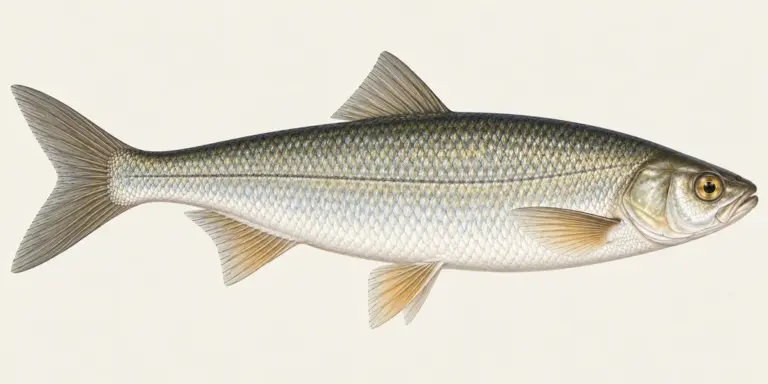
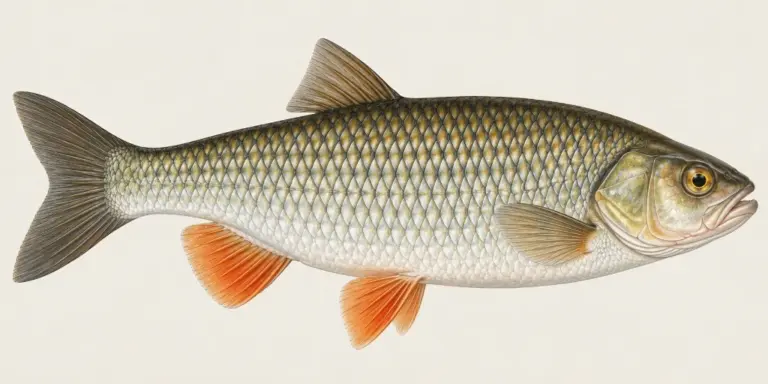
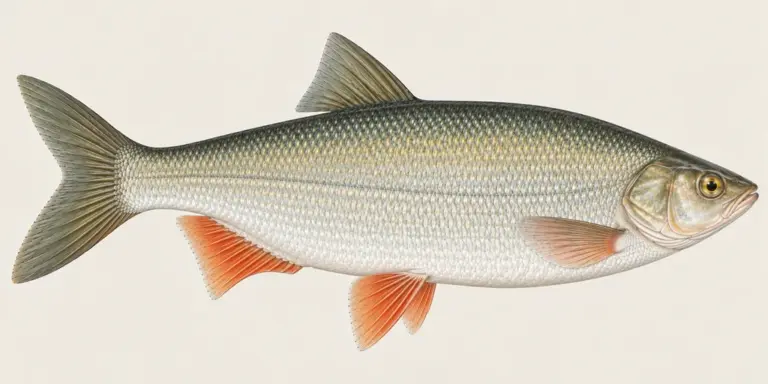
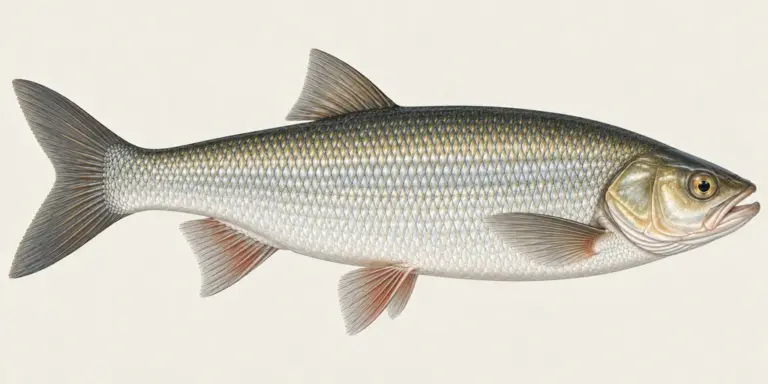
AI-generated illustrations.
Where it holds
The dace prefers fast-flowing, cool and clean watercourses with a firm, gravelly or stony bottom. It lives mainly in the grayling and barbel zones, but also from the trout to the barbel zone, in clear-water stretches and often in calmer or slow-flowing sections. It also occurs in river lakes and reservoirs.
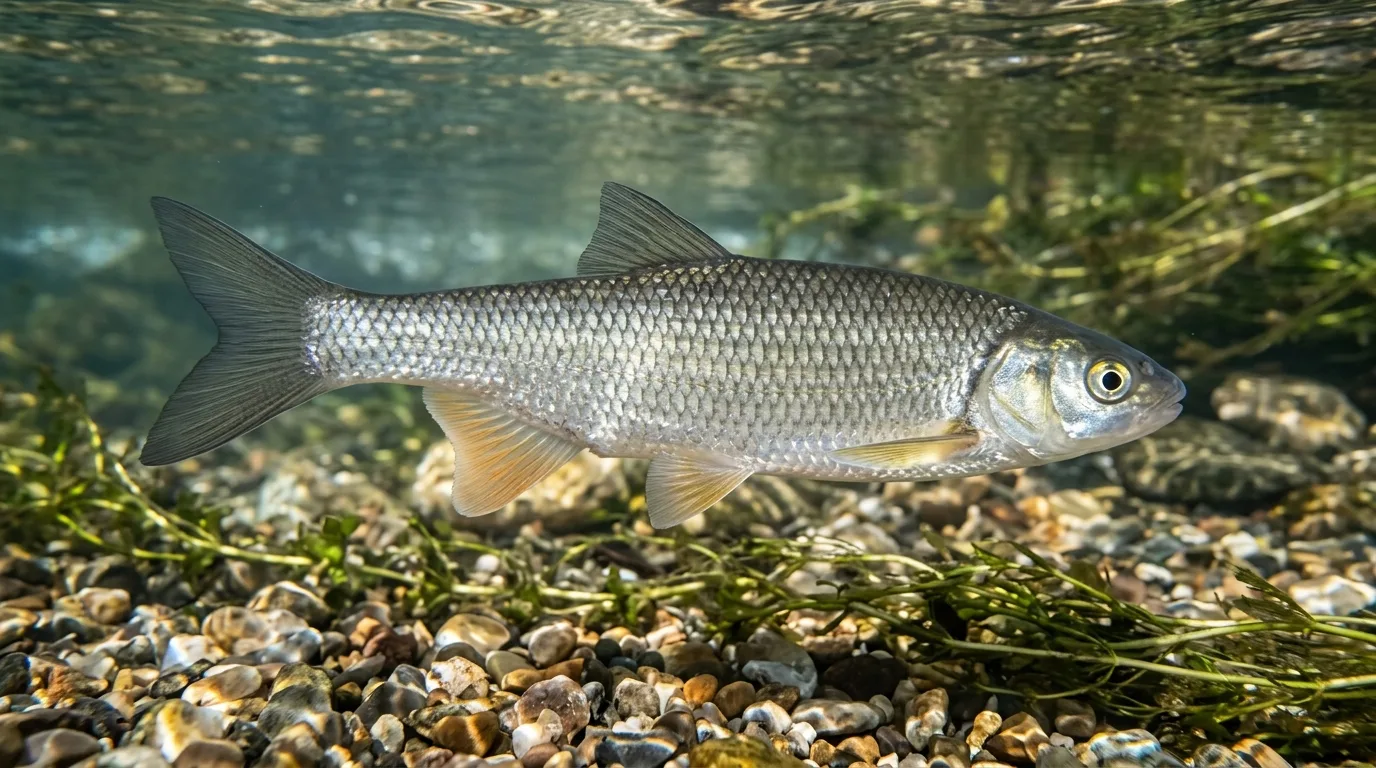
The dace can be found throughout the country, with density decreasing from south to north. There it often swims near the bank and just below the surface. In winter the fish gather in dense shoals in the lower reaches of rivers or in backwaters, and in autumn they often migrate into tributaries and overwinter there. Young fish overwinter in cavities along the bank.
Holding spots in the picture
Choose the season and time of day: the picture shows where the species stands then. Spots outlined in red apply only in the chosen season. Tap a fish or a spot in the list to bring it closer. The picture is schematic and AI-generated, every water is different.
Catch chance in springpossibleSpawning season, observe closed seasons
Catch chance in summergood
Catch chance in autumngood
Catch chance in winterpossible
- J
- F
- M
- A
- M
- J
- J
- A
- S
- O
- N
- D
Spawning season
Active time The dace usually feeds most strongly in the twilight hours.
No main time The dace usually feeds most strongly in the twilight hours.
Active time The dace usually feeds most strongly in the twilight hours.
No main time The dace usually feeds most strongly in the twilight hours.
In the river
Gravelly shallow (riffle)
Dace are found here only in spring.
Calm bay with aquatic plants
Dace are found here only in winter.
Free current in mid-river
Dace are found here only in spring, summer and autumn.
The dace is a sociable shoaling fish of clear running waters with a hard bottom and often swims near the surface. Depending on the source it stands in fast-flowing stretches or rather in calm zones and slow-flowing sections. It looks for food in all layers of the water.
Spring: catch chances according to the fishing calendar possible in March and April, good in May. This is spawning time, so observe the closed seasons (Schonzeit). In March and April the dace spawns on very shallow, fast gravel stretches less than 50 centimetres deep, often in small tributaries.
Summer: catch chance according to the catch calendar good.
Autumn: catch chance according to the catch calendar good in September and October, possible in November.
Winter: catch chances according to the fishing calendar possible. In winter the adult fish gather in dense shoals in the lower river stretches or in oxbow lakes. They often move into small tributaries too and overwinter there. They feed throughout the winter.
Size comparison: AI-generated drawing, schematic.
How it feeds and spawns
Among the cyprinids the dace is one of the fastest swimmers. It looks for food in all water layers, most actively at dusk. Its menu includes plankton, insect larvae, worms, snails and food from above, that is, insects falling onto the water, plus the occasional plant material.
Spawning takes place in March and April at water temperatures below 10 °C; the Landesfischereiverband gives March to May. Before spawning the fish sometimes migrate a few dozen kilometres upstream, often into tributaries. The spawning ground is shallow, fast-flowing and stony, and the sticky eggs cling to stones and plant parts. Dace usually mature in their fourth year.
The Landesfischereiverband names lack of passability due to cross-river structures and silting up as threats. According to the 2023 Red List, the dace shows a short-term negative population trend, which the assessments from the states in the core of its range also confirm.
When it bites
From late spring into autumn, dace stand spread out in the current and feed regularly. On summer evenings they take insects from the surface. In the cold season the shoals retreat to deeper, calmer areas, often also into small tributaries. They keep feeding there: the fish biologist Mark Everard describes the dace at the Canal & River Trust as well adapted to the cold, feeding and growing throughout the winter. The bites become rarer, but you need not give up on it entirely in winter.
During the spawning season you should avoid shallow gravel stretches. Dace are sensitive to temperature: in hot summers with low water they suffer directly, according to the Red List. A study commissioned by the Länderarbeitsgemeinschaft Wasser gives 33 °C as the upper lethal temperature of adult fish. In low water and heat you are better off fishing elsewhere, or leaving the shoal in peace.
Today’s catch index needs JavaScript. Season and spawning time are in the catch calendar.
You will find the monthly overview of all species and the water temperature check in the catch calendar.
From the blog: Roach or rudd, bream or silver bream: how to tell these silver fish apart reliably
What you catch it with
Step by step: Dace fishing: tips on bait, rig and tackle – season, swims, bait, tackle and rules on one page.
The dace is a fish for fine tackle. The Lower Austrian Landesfischereiverband names pole, ledger and fly fishing. In the current, a light float rig that drifts with the water works well (float fishing, pole fishing). Small animal natural baits such as maggots or a piece of worm on a small hook are suitable as bait. On a bite, strike promptly, because the dace takes quickly and lets go.
Because it eats food from above, the dace can also be caught with the fly rod. Small dry flies and nymphs suit its small mouth.
A small landing net is enough for landing. With such a small fish, the hook can usually be removed easily with a disgorger. How to handle it gently is explained under Landing and unhooking a fish.
Keep your distance: dace are shy. Step quietly and let the bait drift down into the shoal with the current.
Small hooks, small baits: a single maggot often catches better than a full hook, and a fine hooklength gets more bites.
Move on instead of waiting: dace stand in groups but are shy. After playing a fish, the rest of the shoal is usually spooked, according to Fisch & Fang. If the bites stop, try the next spot. Feed only in small amounts.
Suitable lures
Maggots or a small piece of worm on a fine, drifting float; also small dry flies and nymphs.
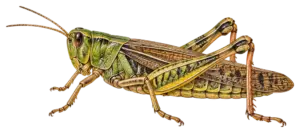
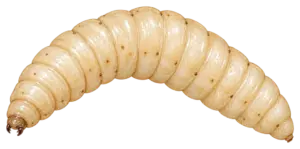
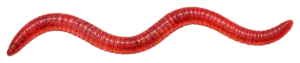
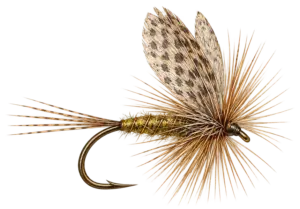
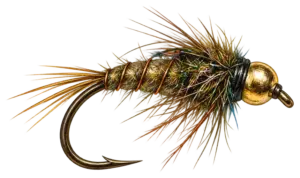
AI-generated illustrations. A click opens the lure’s page.
Rigs for these lures: float rig, running ledger rig.
What you need to observe
According to FishBase, the dace is commonly used as baitfish, but in Germany usually only dead: many federal states (Bundesländer) expressly ban fishing with live baitfish. Details are set out in state law (Landesrecht) and the water regulations (Gewässerordnung).
Bavaria protects the dace from 1 March to 30 April, Mecklenburg-Western Pomerania from 1 March to 31 May. Brandenburg sets a minimum size (Mindestmaß) of 15 cm, and in Hamburg you may not target it. As of October 2026. What is binding is the fisheries regulation of your federal state and your fishing permit (Erlaubnisschein); a list of links to the official sources is in the catch calendar.
A fish that you may take and want to keep you stun and kill straight away in line with animal welfare (Stunning and killing fish). Protected fish, undersized fish or fish too large under a harvest slot you return gently to the water with wet hands (Releasing fish).
What closed season, minimum size and harvest slot mean and where to find them is explained on the page Closed season and minimum size explained.
What state law sets for the closed season (Schonzeit) and minimum size (Mindestmaß) of this species is in the box „Auf einen Blick“ on the state pages for Bavaria, Brandenburg, Hamburg and Mecklenburg-Western Pomerania. Our overview does not list this species for the other states; the state fisheries regulation (Landesfischereiverordnung) is what counts there.
Frequently asked questions (FAQ)
How do I tell dace and chub apart?
The dace has a small, slightly inferior mouth and a concave anal fin. In the chub the mouth is large and terminal and the anal fin curves outwards.
When do dace spawn?
Mostly in March and April at water temperatures below 10 °C, in cool waters into May. It spawns on shallow, stony, flowing stretches.
What do I use to catch dace?
Small baits such as maggots or a piece of worm on a drifting float and fine tackle. Small dry flies also catch dace, because it takes insects from the surface.
Sources
The rating of catch chances is an editorial assessment. The facts come from these sources, and the text is worded in our own words. The illustration is an original design by Angel Momente in the style of a natural history plate (AI-generated, see the AI notice).
- Landesfischereiverband Bayern: Fischlexikon (Laichzeit, Lebensraum, Nahrung, Aktivität)
- FishBase: Leuciscus leuciscus (Höchstlänge, Höchstalter, Winterlager)
- Niederösterreichischer Landesfischereiverband: Fischarten in Niederösterreich, Hasel
- LAWA-Projekt O 10.20 (Leibniz-IGB, 2021): Temperaturempfindlichkeiten der Fischgemeinschaften
- Bundesamt für Naturschutz: Rote Liste und Gesamtartenliste der Süßwasserfische und Neunaugen Deutschlands (Naturschutz und Biologische Vielfalt 170 (6), 2023)
- Wikipedia: Hasel (Fisch) (Größe, Schuppenzahl, Laichzeit, Alter, Lebensweise)
- Bundesministerium der Justiz: Tierschutzgesetz, § 17 (Straftaten)
- Canal & River Trust: The princely dace (Hasel: kälteangepasst, frisst im Winter, Winterzug in kleine Bäche)
- Fisch & Fang: Pirsch auf Döbel & Co. (Hasel als Begleitfisch, nach einem Drill weiterziehen)
- Bayern.Recht: Verordnung zur Ausführung des Bayerischen Fischereigesetzes (AVBayFiG), Anlage Schonzeiten und Schonmaße
- Land Brandenburg: Fischereiordnung des Landes Brandenburg (BbgFischO), Anlage zu § 2
- LALLF Mecklenburg-Vorpommern: Binnenfischereiverordnung (BiFVO M-V), §§ 3 bis 5
- Freie und Hansestadt Hamburg: Durchführungsverordnung zum Hamburgischen Fischerei- und Angelgesetz, § 6
Created with AI support from the sources listed. Figures only appear in the text if a source gives them. Last updated: 8 November 2026. Found a mistake? Write to us. Who is behind this site: About me.
More in the lexicon
- All fish species at a glance
- Catch calendar – month, water temperature and profile for 93 species
- Line calculator – breaking strain after the knot, drag guideline, backing
- Angling methods