
At a glance
- On the bank
- Barbels, mouth, position and edge of the fins, colour last
- Roach, rudd
- Dorsal fin above or behind the pelvic fins
- Crucian carp, Prussian carp
- Edge of the dorsal fin, nape, spot on the tail base
- Chub, ide, dace
- Rear edge of the anal fin, then the mouth
- Belly lining
- separates crucian and Prussian carp reliably, but only on a dead fish
Reading features that don’t depend on colour
For the roach, the Landesfischereiverband Bayern describes the fin colour as highly variable, and the stone loach changes its colour to match its surroundings. So I go through the body shape in a fixed order: first the barbels, the feelers at the mouth, then the mouth position, then where the dorsal fin starts in relation to the pelvic fins, and finally whether the edge of the dorsal or anal fin curves outwards or inwards. Where each fin sits is shown in Body structure and fins.
The table separates what I can see while the fish lies in the landing net in the water from what only works on a photo or a dead fish. I never count scales on a wriggling fish, because the ranges in the Saxon species guide touch for bream and silver bream and overlap for roach and rudd.
| Pair | On the living fish first | To confirm | Only on a photo or dead fish |
|---|---|---|---|
| Roach, rudd | Dorsal fin above or behind the pelvic fins | Mouth terminal or upturned, belly edge rounded or keeled | 41 to 46 or 38 to 42 scales |
| Bream, silver bream | Pectoral fin reaches the pelvic fin or ends before it | Eye small, or larger than the snout is long | 51 to 56 or 45 to 50 scales |
| Crucian carp, Prussian carp | Dorsal fin edge convex, or straight to concave | Rounded nape, spot on the tail base of young crucian carp | Belly lining pale or dark |
| Chub, ide, dace | Anal fin convex, concave in ide and dace | Mouth large, small in the ide, underslung in the dace | 44 to 46, 55 to 60, 48 to 54 scales |
| Gudgeon, young barbel | two or four barbels | Band of spots on the gudgeon | not necessary |
| Stone loach, spined loach | cylindrical or flattened from the sides, six barbels each | Spine below the eye in the spined loach | not necessary |
Telling roach and rudd apart by the dorsal fin
With this pair I draw an imaginary vertical line down from the front base of the dorsal fin. In the roach it meets the base of the pelvic fins. In the rudd the dorsal fin starts clearly further back, and the pelvic fins lie in front of the line.
The mouth confirms the finding: terminal in the roach, clearly upturned in the rudd, with the gape pointing obliquely upwards. If I have the fish in my wet hand, I also look at the belly edge between the pelvic and anal fins. In the roach it is rounded; in the rudd the large scales form a sharp keel there. I only use eye colour to confirm, because the LFV Bayern describes the iris of the roach as yellow-red and that of the rudd as yellowish.
Telling bream and silver bream apart by the pectoral fin and eye
According to the LFV Bayern, the silver bream is often found together with the bream. I lay the pectoral fin flat: in the bream it reaches the base of the pelvic fins, in the silver bream it ends before them. Then the eye, which in the silver bream is larger in diameter than the snout is long. Reddish bases to the pectoral and pelvic fins also point to the silver bream.
Identifying crucian carp and Prussian carp on the living fish
The carp can be ruled out first, because it has four barbels, while the crucian carp and the Prussian carp have none, according to the Bavarian exam questions for the angling exam (Fischerprüfung). For this difficult pair without barbels, the Landesfischereiverband Baden-Württemberg names the dorsal fin as the best feature on the living fish. I wait until the fish raises it in the landing net and look at the upper edge: curved outwards in the crucian carp, straight or drawn slightly inwards in the Prussian carp.
I look at two further features on the same fish. In the crucian carp, according to the LFV Bayern, the head merges smoothly into the back; in the Prussian carp it does not. Young crucian carp often have a dark spot on the tail base, which the Prussian carp lacks. The fin rule becomes weak with slender crucian carp whose fin edge is barely curved.
If the case stays open, often only the belly lining can settle it, the skin that lines the inside of the body cavity: pale in the crucian carp, dark in the Prussian carp. You only see it on a dead, gutted fish, so it is no help for the decision on the bank. If a living fish remains unclear to me, I treat it as a crucian carp and put it back. It is endangered nationwide, Bavaria for example protects it all year round, and it is Fish of the Year 2027.
Recognising chub, ide, dace and asp by the anal fin
According to a report for the state of Hesse, young ide in particular are confused with chub, dace, roach and rudd. That is why I look at the rear edge of the anal fin. In the chub it curves outwards, which the report calls a reliable feature. In the dace and the ide it curves inwards.
If it is still between those two, the mouth decides: terminal and small in the ide, underslung in the dace. Roach and rudd have clearly larger scales than a young ide. I recognise the asp by its wide gape, which according to the Bavarian exam questions reaches to below the middle of the eye, and by the thickened lower jaw with a knob that fits into a notch above.
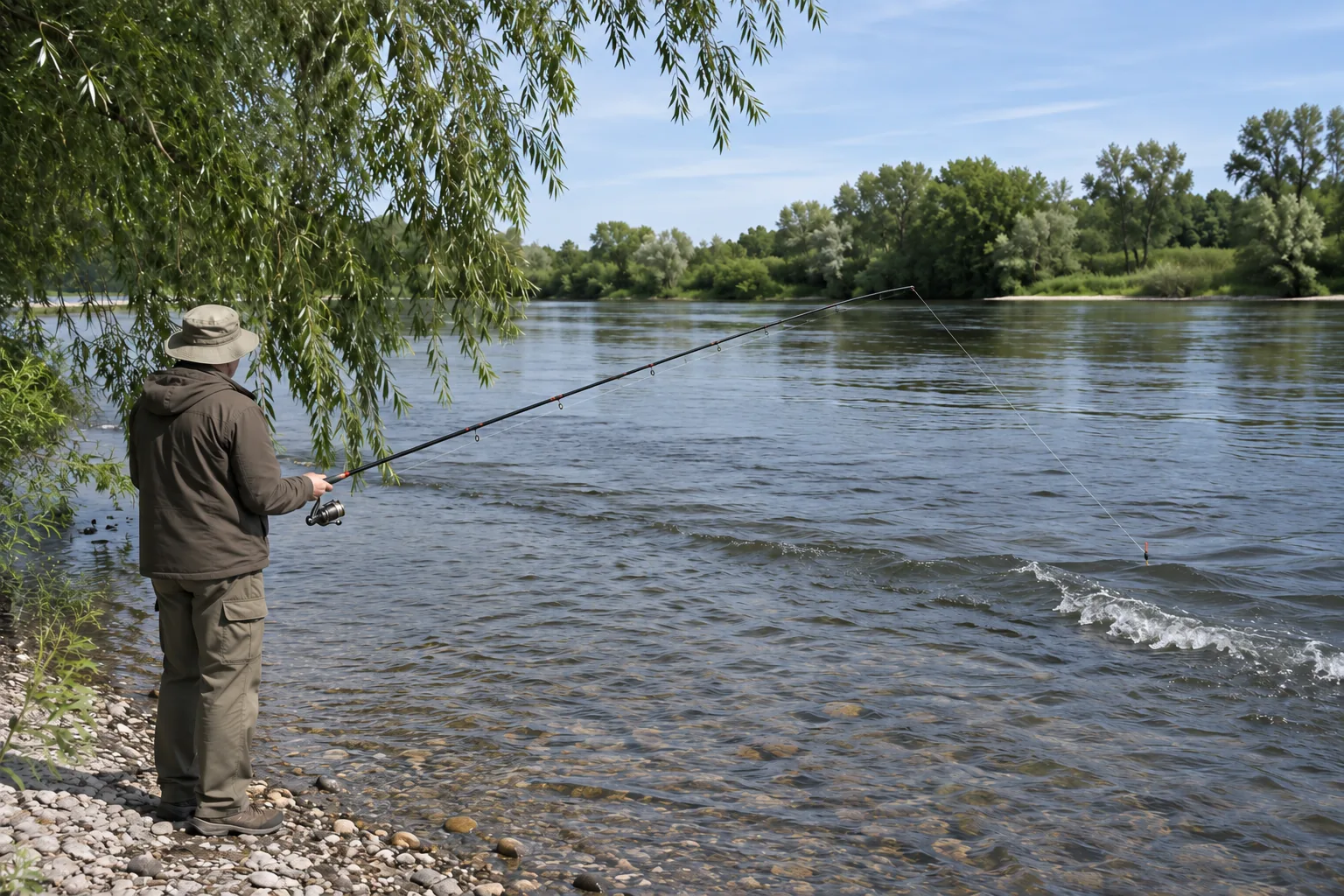 AI-generated
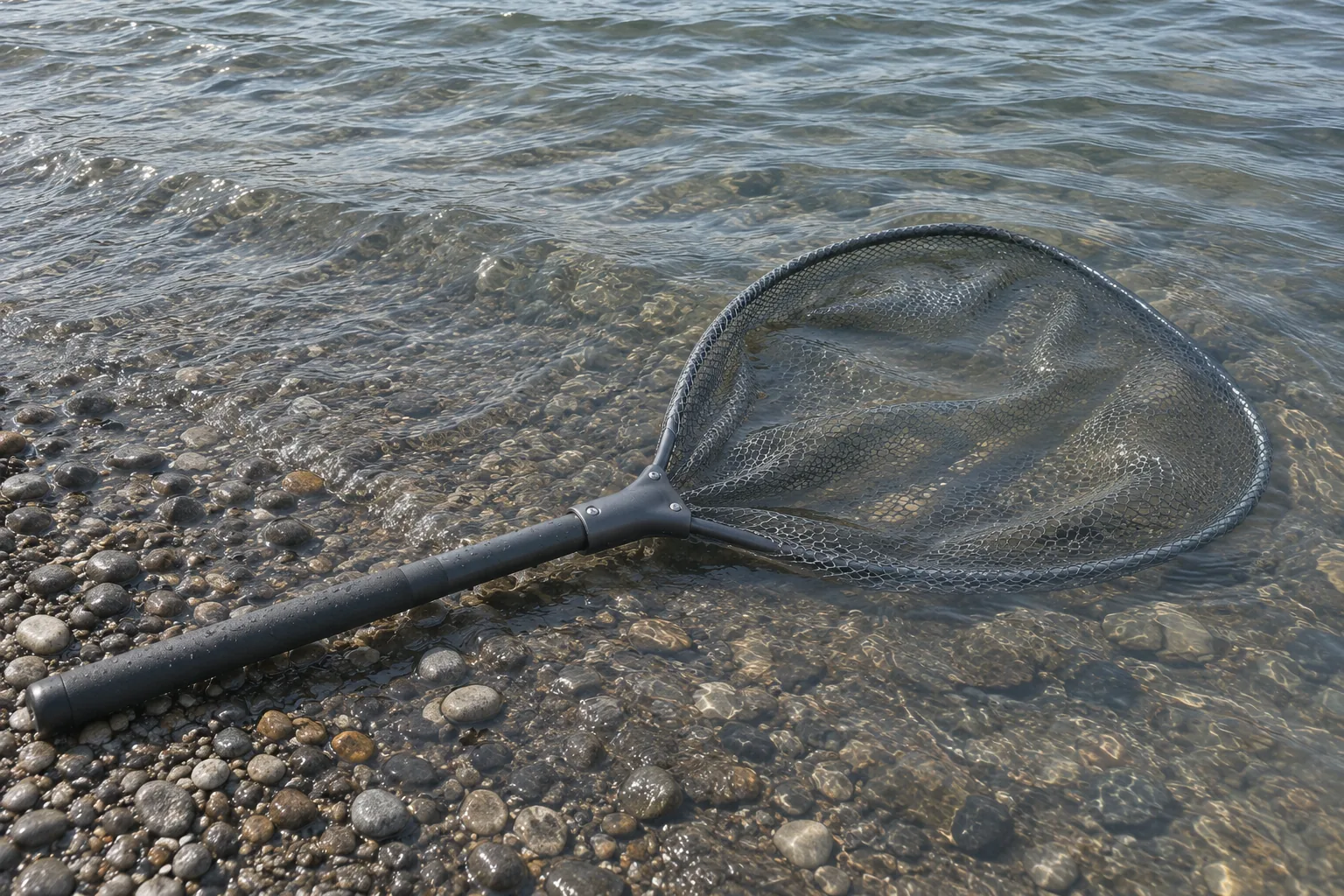 AI-generated
From my own experience
- In the landing net I first identify a chub by the net pattern of dark-edged scales and only then check the edge of the anal fin.
- If it is still chub or dace, I use the fin colour as a cross-check: pale, almost transparent fins fit the dace, a red-orange anal fin the chub.
Counting the barbels on small bottom fish
The gudgeon has two short barbels, one in each corner of the mouth, and a band of dark spots along its flank. A young barbel has four, and this exact difference is how the Bavarian exam questions tell the two apart. Six barbels are carried by the cylindrical, darkly marbled stone loach and by the spined loach. Its body is strongly compressed from the sides, and below the eye sits a movable spine with two points. The Saxon fisheries authority (Fischereibehörde) counts ten barbels on the weatherfish. The Bundesamt für Naturschutz lists the spined loach in Annex II of the European Habitats Directive (FFH Directive).
Identifying the species before you keep a fish
Closed season (Schonzeit), minimum size (Mindestmaß) and year-round protection depend on the species, and each federal state (Bundesland) sets them itself. Under the state fisheries regulation (Landesfischereiverordnung) of North Rhine-Westphalia, in the version in force from 3 July 2026, the ide has a minimum size of 25 centimetres and the chub has none. Stone loach, spined loach and weatherfish may not be taken there at any time of year, the barbel has a closed season and a minimum size, and the gudgeon is on none of these lists. In Bavaria the dace is protected under the implementing regulation from 1 March to 30 April; the chub is not.
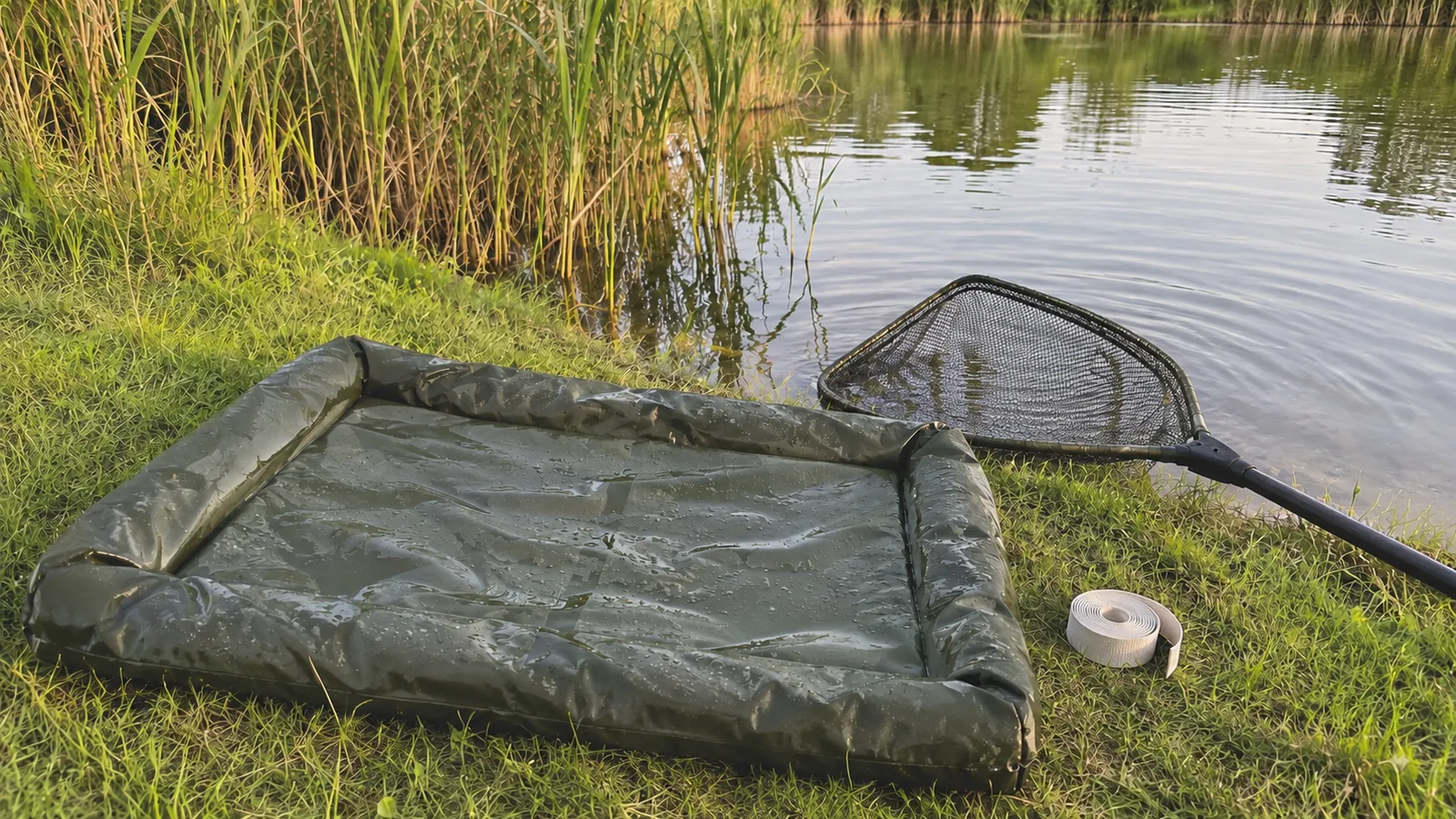
What applies to a species on your water is set out in the fisheries regulation of your federal state (Bundesland), in your fishing permit (Erlaubnisschein) and in the water rules. North Rhine-Westphalia and Bavaria are only examples here, as of 4 November 2026. You return protected or undersized fish immediately and gently, as Releasing fish describes. The terms are explained in Closed season and minimum size explained.
When the features contradict each other
According to the LFV Bayern, the roach can hybridise with rudd, bream and bleak, the silver bream with the bream, and carp and crucian carp produce the carp-crucian hybrid (Karpfkarausche). Such hybrids fall between their parents in body depth, mouth and pectoral fin base. So if the dorsal fin points to one species and the mouth to the other, I don’t commit and put the fish back. One picture from the side and one of the head, held in the landing net above the water, are enough to check later with the tools.
- Identify a fishFind the species in six questions at most
- Species trainerPractise recognising fish species from a picture
Frequently asked questions
Is a red eye a sure sign of a roach?
No. Yellow-red in the roach and yellowish in the rudd are too close together. The dorsal fin above the pelvic fins and the terminal mouth are more reliable.
Is every golden cyprinid without barbels a crucian carp?
No, often it is a Prussian carp. At the Fischereiforschungsstelle Baden-Württemberg, numerous reported crucian carp turned out to be Prussian carp. On the bank the edge of the dorsal fin, the nape and, in young fish, the spot on the tail base decide; the belly lining only once you gut the fish.
How do I recognise a young ide among roach?
By its small scales. The Saxon species guide counts 55 to 60 scales along the lateral line in the ide and 41 to 46 in the roach. On a sharp photo from the side you can count them at your leisure.
Related
- Roach and Roach fishing: habitat and feeding spot
- Rudd and Rudd fishing: the surface fish in the weed
- Bream and Silver bream, plus Bream fishing and Silver bream fishing
- Crucian carp and Crucian carp as bycatch: protection and the rules in each state
- Prussian carp and Fishing for Prussian carp: comparison table with the crucian carp
- Chub and Chub fishing: the net pattern of the scales
- Ide and Ide fishing: closed seasons in each state
- Fish of the Year 2027: why the crucian carp has become rare
Sources
- Sächsisches Landesamt für Umwelt, Landwirtschaft und Geologie: Artenkunde verwechselbare Fischarten (Merkmale der Paare, Schuppenzahlen, Barteln)
- Landesfischereiverband Bayern: Fischlexikon (Flossen und Iris, Nacken der Karausche, Rapfen, Steinbeißer, Kreuzungen)
- Bayerische Landesanstalt für Landwirtschaft: Prüfungsfragen Fischerprüfung 2023/2024 (Barteln, Maul des Rapfens)
- Landesfischereiverband Baden-Württemberg: Die Fischart Karausche (2017) (Rückenflosse am lebenden Fisch, Fleck am Schwanzstiel, Bauchfell, Fehlmeldungen)
- Hessen-Forst FENA für das Land Hessen: Fischökologische Untersuchung der Diemel, Artgutachten 2005 (Aland, Döbel)
- University College Dublin, Hayden u. a.: Hybridisation between two cyprinid fishes (BMC Evolutionary Biology 2010) (Körperform von Mischlingen aus Rotauge und Brasse)
- Rote-Liste-Zentrum: Crucian carp (Gefährdung 2023)
- Bundesamt für Naturschutz: Spined loach (FFH-Anhang II)
- Land Nordrhein-Westfalen: Landesfischereiverordnung, gültig ab 3. Juli 2026 (Schonzeiten, Mindestmaße, Zurücksetzen)
- Freistaat Bayern: AVBayFiG, Anlage Schonzeiten, Schonmaße und räumlicher Geltungsbereich (Schonzeit des Hasels, Döbel ohne Schonbestimmung)
Text AI-assisted, title image, drawings and all images in the text AI-generated. Sources opened and checked in November 2026; no graphic was taken from the sources.
All figures are guideline values without guarantee. Young fish and hybrids do not show every feature clearly. Which species are protected and which minimum size applies is set by state law.