
Knowledge – Fish
Stone loach: Features, habitat and look-alikes
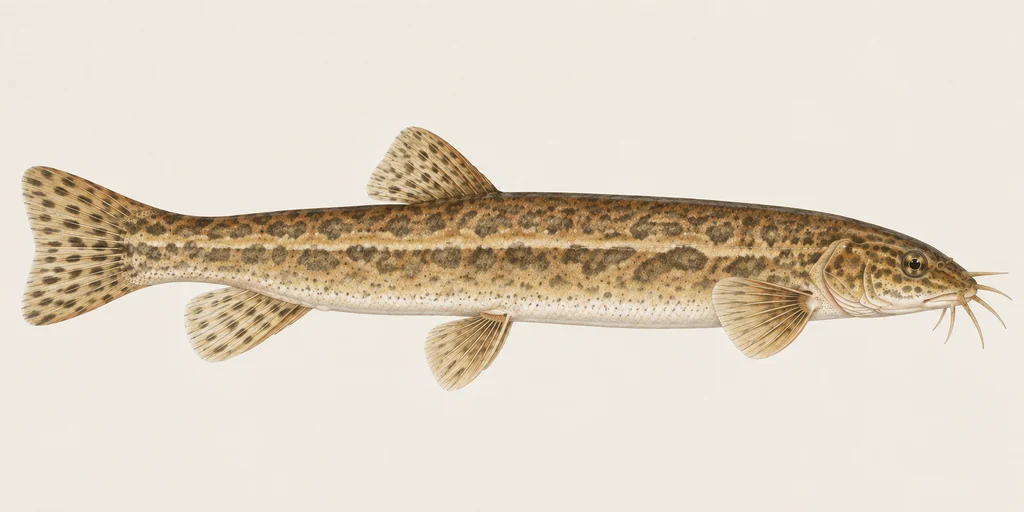
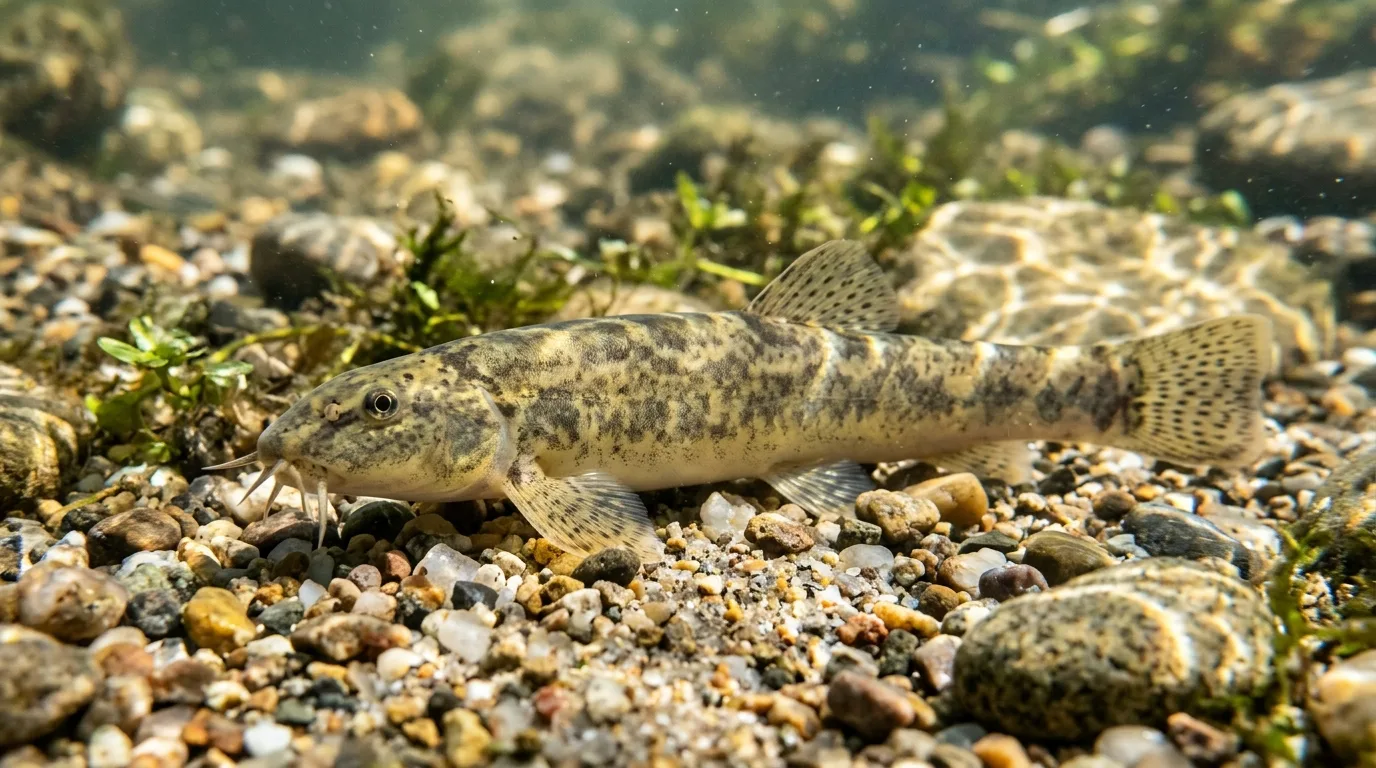
The stone loach (Barbatula barbatula) is a small, marbled bottom-dwelling fish with six barbels that hides under stones by day in clear streams. It is common and not threatened in Germany. It is not fished for deliberately. For anglers a close look is worthwhile, though, because several bottom-dwelling fish carry barbels.
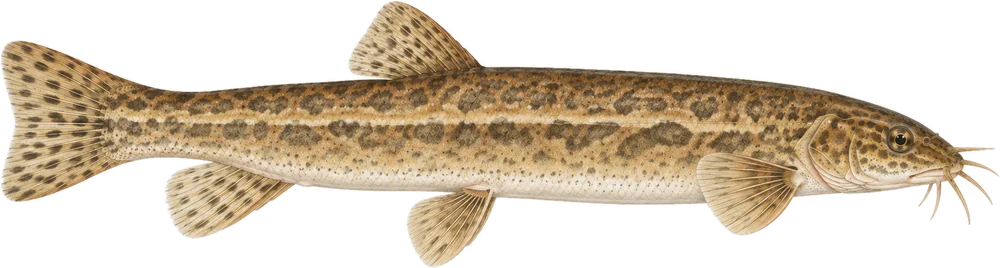
In short: Bottom-dwelling fish with six barbels, common and not threatened, but not a target species. Whether it may be used as bait fish is regulated by state law and the water’s rules.
- Six barbels on the upper jaw in front of the inferior mouth
- Sandy to brownish flanks with dark marbling and a pale, distinct lateral line
- Almost straight tail fin, slightly notched at the rear
Catch chances through the year
- Hardly any chance
- Possible
- Good
- Peak season
- Spawning (observe the closed season)
Editorial assessment for waters in Germany, not a measured value and no guarantee. Spawning time is not the same as the legal closed season.
Species profile and sources in the catch calendarAll species compared month by monthThe rules of your federal state
How to recognise it
The stone loach has an elongated, cylindrical body that is slightly flattened from the sides only in the tail section. The head is flat and the mouth inferior. It carries six barbels on the upper jaw. The front nostrils are drawn out into small tubes. The scales are very small, and the skin is covered by a thick layer of mucus.
The colouring adapts to the surroundings. The back and flanks are sandy to brownish with dark marbling, the belly whitish. The lateral line stands out as pale and is easy to see. The tail fin is almost straight, slightly notched at the rear.
A stone loach is usually 8 to 12 centimetres long, and the females grow larger than the males. FishBase gives 21 centimetres as the maximum length.
There are several bottom-dwelling fish with barbels, so counting them is worthwhile. The gudgeon has only two short barbels at the corners of the mouth and clearly larger scales. The young barbel has four barbels on the upper lip and a trunk-like snout.
The weatherfish has ten barbels, grows larger and lives in the mud of still waters. The spined loach (Steinbeißer, Dorngrundel) does have six barbels as well, but a strongly laterally flattened body and a movable, two-pointed spine under the eye. The stone loach lacks this spine.
Side by side
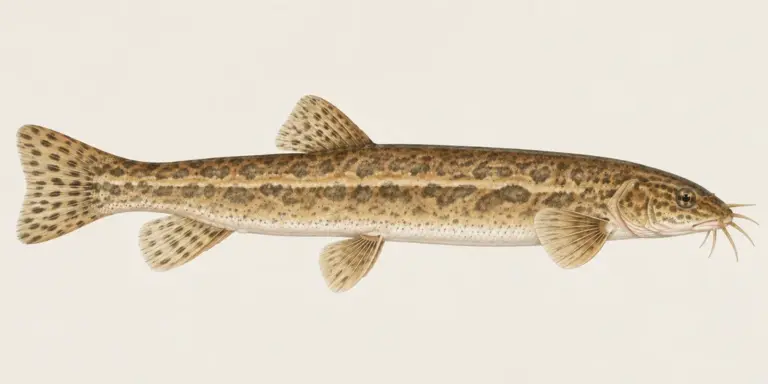

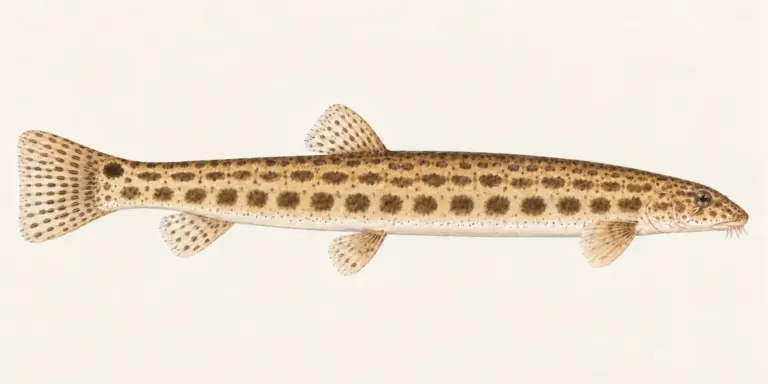
AI-generated illustrations.
Where it lives
The stone loach lives in clear, shallow streams and rivers with a gravel and stone bed, less often in the shore zones of clean lakes. FishBase also mentions sandy canals. Young loaches stand on sand in gentle current, and as they grow they move to gravel and faster water.
It is hardier than many other small fish. According to FishBase it tolerates moderate organic pollution and straightened stretches, but it is very sensitive to heavy metals. With heavy pollution it disappears, yet it is among the first species to recolonise a water after it has improved.
There is a special case in Baden-Württemberg: in the Aachtopf cave system live stone loaches that a research group described in 2017 in the journal Current Biology. The animals are largely without pigment, have reduced eyes and are regarded as the first known cave fish of Europe.
Holding spots in the picture
Choose a season and time of day: the picture shows where the species sits then. Tap a fish or a spot in the list to bring it closer. The picture is schematic and AI-generated, every water is different.
Active time The stone loach usually spends the day hidden under stones and searches the bottom for food at night.
No main time The stone loach usually spends the day hidden under stones and searches the bottom for food at night.
Active time The stone loach usually spends the day hidden under stones and searches the bottom for food at night.
Active time The stone loach usually spends the day hidden under stones and searches the bottom for food at night.
In the river
Undercut bank, overhanging branches, timber
The stone loach is found here all year round.
Slack water behind rocks
The stone loach is found here all year round.
Gravelly shallow (riffle)
The stone loach is found here all year round.
The stone loach lives on the bottom of clear, shallow streams and rivers with gravel and stones. Young fish stay on sand in gentle current, larger ones move onto gravel and into faster water. During the day it usually hides under stones.
Spring: This is the spawning period, so observe the closed seasons (Schonzeit). In spring it spawns in shallow water over clean gravel.
Size comparison: AI-generated drawing, schematic.
How it feeds and spawns
By day the stone loach hides under stones and roots. At dusk and at night it searches gravel and sand for food: freshwater shrimps, midge larvae and other insect larvae, worms and also fish spawn.
When the oxygen content falls, it gulps air at the surface and takes up the oxygen through the gut. It shares this intestinal breathing with the weatherfish.
Spawning takes place in spring, according to the Landesfischereiverband Bayern from March to May. Both sexes then carry fine spawning tubercles. The sticky eggs are laid in batches in shallow water over clean gravel. According to FishBase a female can spawn daily for a period. Stone loaches become sexually mature after one to two years.
When you can see it
There is no angling season for the stone loach. Because it is active at night and lies under stones by day, you rarely get to see it.
In spring the loaches spawn over clean gravel in shallow water. If you wade in small streams then, it is best to spare shallow gravel stretches.
You will find the monthly overview of all species and the water temperature check in the catch calendar.
From the blog: Roach or rudd, bream or silver bream: how to tell these silver fish apart reliably
What to do with a bycatch
The stone loach is not a target species. If it does take a small bait when you are fishing on the bottom, unhook it in the water or with wet hands and put it back.
Whether you may catch and use stone loaches as bait fish is regulated by state law and the water’s rules. Live bait fish are banned in Bavaria.
Count the barbels: Two barbels: gudgeon. Four with a long snout: young barbel. Six without a spine under the eye: stone loach. Ten: weatherfish.
Put stones back: If you lifted a stone while wading or catching bait fish, put it back in its place. Stone loaches and their food live underneath.
Suitable lures
We deliberately show no baits for this species.
Not fished for deliberately; catching it and using it as bait fish are regulated by state law and the water’s rules, and live bait fish are banned in Bavaria, for example.
What you need to observe
In the Red List of freshwater fish of Germany of 2023 the stone loach is classed as not threatened. Its population is rated as common and has declined moderately in the long term.
Catching and use are regulated by the federal states. In Bavaria the stone loach is, under the Ausführungsverordnung zum Bayerischen Fischereigesetz, on the list of fish without protective provisions. The same regulation bans fishing with live bait fish. Other states may have other rules.
Closed seasons (Schonzeit), minimum sizes (Mindestmaß) and fishing bans are set by the federal states (Bundesland). They differ by state and water. We give figures only with a date and a source; what counts is always the fisheries regulation of your federal state and your fishing permit (Erlaubnisschein). You will find a list of links to the official sources in the Fishing calendar.
What closed season, minimum size and harvest slot mean and where to find them is explained on the page Closed season and minimum size explained.
What state law says about the closed season (Schonzeit) and minimum size (Mindestmaß) for this species is in the “At a glance” box on the state page for Bavaria. Our overview does not list this species for the other states; the state fisheries regulation applies there.
Frequently asked questions (FAQ)
How many barbels does the stone loach have?
Six, all on the upper jaw. The gudgeon has two, the barbel four, the weatherfish ten.
Where does the German name Schmerle come from?
According to Wikipedia from the Middle High German schmerl, meaning greasy, probably because of the slimy skin.
Is the stone loach protected?
In Germany it is regarded as not threatened, and in Bavaria no protective provisions apply to it. What counts are the rules of your federal state and your fishing permit (Erlaubnisschein).
Sources
The rating of catch chances is an editorial assessment. The facts come from these sources, and the text is worded in our own words. The illustration is an original design by Angel Momente in the style of a natural history plate (AI-generated, see the AI notice).
- Landesfischereiverband Bayern: Fischlexikon – Bachschmerle (Kennzeichen, Lebensweise, Darmatmung)
- Rote-Liste-Zentrum: Bachschmerle (Rote Liste der Süßwasserfische Deutschlands 2023: ungefährdet)
- FishBase: Barbatula barbatula, Stone loach (Größe, Alter, Lebensraum, Fortpflanzung)
- Wikipedia: Bachschmerle
- LAWA-Projekt O 10.20 (Leibniz-IGB, 2021): Temperaturempfindlichkeiten der Fischgemeinschaften
- Bayern.Recht: Verordnung zur Ausführung des Bayerischen Fischereigesetzes (AVBayFiG) mit Anlage Schonzeiten
- Behrmann-Godel, Nolte, Kreiselmaier, Berka, Freyhof: The first European cave fish, Current Biology 27(7), R257–R258 (2017)
- Landratsamt Roth: Rothsee-Infotafel Laube, Stone loach, Gründling (Verstecke, Nachtaktivität)
Created with AI support from the sources listed. Figures only appear in the text if a source gives them. Last updated: 8 November 2026. Found a mistake? Write to us. Who is behind this site: About me.
More in the lexicon
- All fish species at a glance
- Catch calendar – month, water temperature and profile for 93 species
- Line calculator – breaking strain after the knot, drag guideline, backing
- Angling methods