
Knowledge – Fish
Ide fishing
Ide fishing means: follow the season, fish high in summer and put the bait at the edge of the feeding area. Here is the way there in nine steps, each with a link to the detailed page.
 Choose another fish117 fish with guides
 EelOff-peak season
 EelpoutPossible
- IdePossible
 ArapaimaGood
 GraylingPeak season
 Atlantic salmonSpawning time, please spare
 Brown troutSpawning time, please spare
 Brook troutSpawning time, please spare
 BarbelOff-peak season
 BarramundiSpawning season
 Greater amberjackGood
 Topmouth gudgeonOnly as bycatch
 Blue marlinSpawning season
 BonefishSpawning season
 BonitoGood
 BreamOff-peak season
 Dusky grouperOnly as bycatch
 CobiaPossible
 Spiny dogfishOnly as bycatch
 CodPeak season
 ChubPeak season
 MinnowOnly as bycatch
 European sturgeonOnly as bycatch
 FlounderPeak season
 PerchPeak season
 Largemouth bassGood
 Ballan wrasseOnly as bycatch
 Yellowfin tunaSpawning season
 Giant trevallyGood
 Prussian carpPossible
 BrillPossible
 Gilthead breamSpawning time, please spare
 Golden doradoSpawning season
 Golden mahseerOnly as bycatch
 Dolphinfish (mahi-mahi)Good
 Grass carpPossible
 Great barracudaGood
 GudgeonPossible
 White breamPossible
 DaceOff-peak season
 PikePeak season
 HalibutOff-peak season
 HerringPossible
 GarfishOut of season
 Huchen (Danube salmon)Possible
 Crucian carpOnly as bycatch
 CarpOff-peak season
 RuffeOff-peak season
 VendaceOnly as bycatch
 DabPeak season
 GurnardPossible
 Coley (saithe)Peak season
 Chinook salmonHardly any chance
 King mackerelSpawning season
 LingPeak season
 TuskOff-peak season
 MackerelPossible
 Bighead carpOut of season
 WhitefishPossible
 Conger eelOff-peak season
 Sea troutSpawning time, please spare
 Grey mulletPossible
 Murray codSpawning season
 MuskellungeGood
 Common nasePossible
 Nile perchPossible
 PayaraPossible
 Peacock bassPeak season
 PermitGood
 WeeverOnly as bycatch
 PollackOff-peak season
 BurbotOff-peak season
 AspPossible
 Red snapperSpawning season
 Rainbow troutPeak season
 RoosterfishGood
 RoachPeak season
 RedfishOut of season
 Bluefin tunaOnly as bycatch
 RuddPossible
 Russian sturgeonOnly as bycatch
 HaddockOff-peak season
 SnakeheadPossible
 TenchOff-peak season
 SpirlinOnly as bycatch
 PlaiceOff-peak season
 Greenland halibutOnly as bycatch
 Round gobyOnly as bycatch
 SwordfishGood
 Lake troutSpawning time, please spare
 HakeSpawning time, please spare
 Alpine charSpawning time, please spare
 MonkfishPossible
 SoleOff-peak season
 SailfishGood
 Silver carpOut of season
 SnookPeak season
 PumpkinseedOnly as bycatch
 SpratOnly as bycatch
 Atlantic wolffishSpawning time, please spare
 TurbotPeak season
 SterletOnly as bycatch
 SmeltOnly as bycatch
 Horse mackerelPossible
 TaimenGood
 TarponGood
 TigerfishSpawning season
 BleakPossible
 WahooGood
 Wels catfishOff-peak season
 WhitingPeak season
 Sea bassOff-peak season
 ZanderPeak season
 White-eye breamOnly as bycatch
 Blue breamOnly as bycatch
 Brown bullheadPossible
 VimbaOnly as bycatch
Season in October according to the catch calendar, an estimate and not a guarantee of a catch. The fish pictures are reduced natural-history plates and AI-generated.
Best time
In August.
In January: Hardly any chanceIn February: Hardly any chanceIn March: Possible, spawning seasonIn April: Good, spawning seasonIn May: Good, spawning seasonIn June: GoodIn July: GoodIn August: Peak seasonIn September: GoodIn October: PossibleIn November: Hardly any chanceIn December: Hardly any chance
Good spot
- River: undercut bank and riffleundercut bank, current edge and quiet bayundercut bank and deep poolsdeep pools
- Lake: surfacesurfacesurfacedeep bottom
Top baits
Starter tackle
- Rod: around 3,60 m (12 feet), test curve just under 1,5 lb, alternatively a match rod
- Line: monofilament 0,16–0,20 mm
- Hook: size 4–8 for a large bread flake
- Rod: 3,60–3,90 m feeder rod with the softest tip that suits the current; in a current up to about 150 g casting weight
- Line: mono 0,26–0,28 mm
- Hook: sturdy hooks size 8–14
- Rod: ultralight rod with up to about 7 g casting weight
- Line: thin mono or fine braid, matched to the light lures
In short
In short: The best time to catch ide is August. Good spots on the river: undercut bank; on a lake: the surface. Proven baits: small spinners and mini crankbaits; when sitting it out maggots, casters, sweetcorn or bread flake; in summer also dry flies. Bavaria protects the ide, called Nerfling there, from 1 March to 30 April with a 30 cm minimum size (Mindestmaß). In Rhineland-Palatinate and Thuringia it is protected all year (as of October 2026).
Quick to recognise
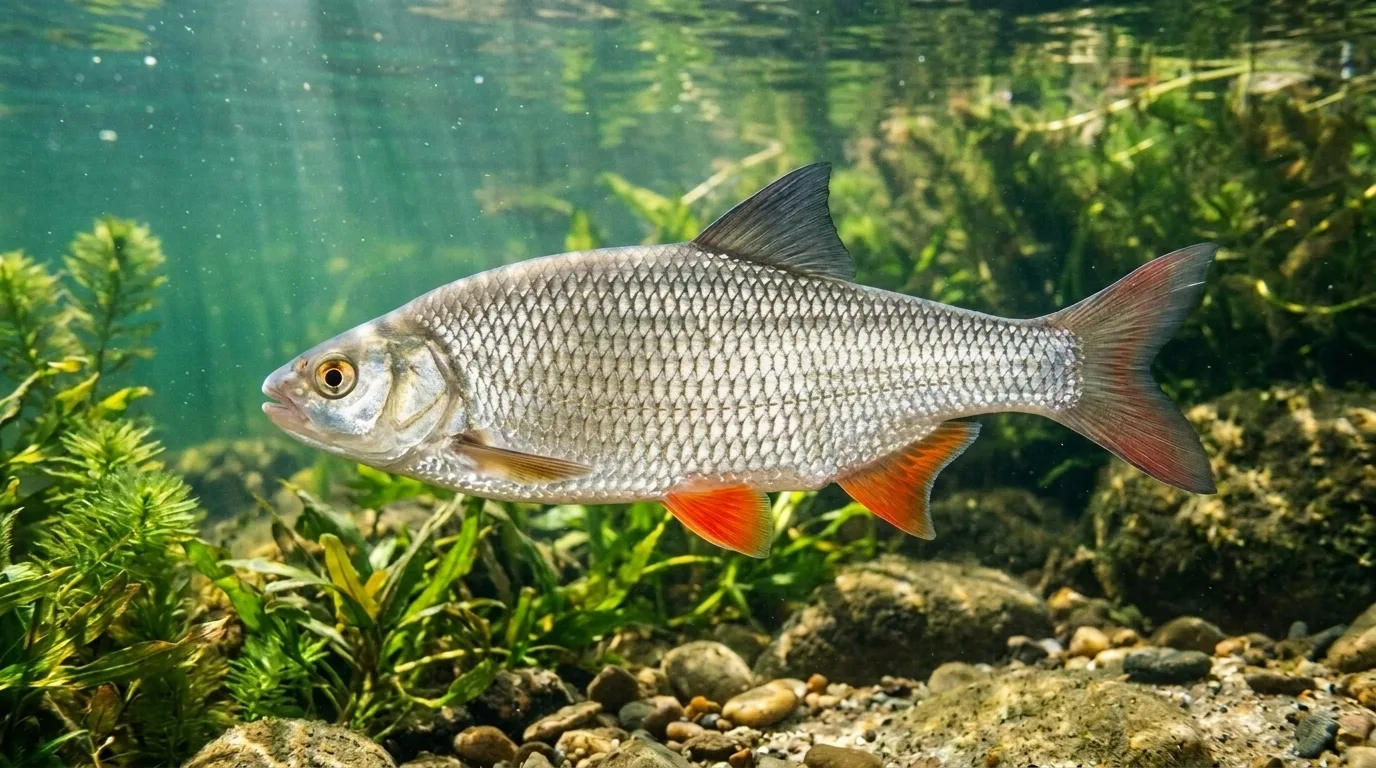
A cyprinid of big rivers and lakes, in the south also called Nerfling or Orfe. It is told from the chub by the anal fin, whose edge curves inwards on the ide. Most measure 30 to 50 centimetres.
When
Most happens in August, and from April to September the chances are good. In deep winter you will catch next to nothing. From March to May the shoals spawn, and while spawning they often do not bite at all.
- JanHardly any chance
- FebHardly any chance
- MarPossible, spawning season
- AprGood, spawning
- MayGood, spawning
- JunGood
- JulGood
- AugPeak season
- SepGood
- OctPossible
- NovHardly any chance
- DecHardly any chance
Peak seasonGoodPossibleHardly any chanceSpawning season
Spring tactics
While the water is cool, ide stay close to the bottom, so the feeder pays off on big rivers and canals. Leave spawning grounds in small tributaries alone. Some states protect the ide in spring, others all year; what applies where you are is shown in the Rules section further down.
Summer tactics
From May to September you catch ide on the surface with bread. Mild, overcast days are often better than bright sun; when it shines, you fish early in the morning or in the evening. Big ide take a firmly kneaded flake that sinks slowly more readily than floating bread.
Autumn tactics
When the water cools, ide become more predatory, and a small spinner becomes the most important lure. Retrieve it slowly in mid-water. Feeder fishing goes on, only with less feed.
Winter tactics
In deep winter hardly anything bites. If you try anyway, do it on the feeder in deep, quiet areas with two or three feeders of fine groundbait and only a few maggots.
Is it biting today?
In January: Off seasonIn February: Off seasonIn March: Spawning season, please spare themIn April: Spawning season, please spare themIn May: Spawning season, please spare themIn June: Shoulder seasonIn July: Shoulder seasonIn August: Peak seasonIn September: Shoulder seasonIn October: PossibleIn November: Off seasonIn December: Off season
Today’s catch index needs JavaScript. Season and spawning time are in the catch calendar.
From the blog: Roach or rudd, bream or silver bream: how to tell these silver fish apart reliably
Where it is now
In the river
In summer ide stand high and close to the bank, gladly at groyne heads, weirs, bridge piers, drifting debris and where small ditches flow in. In autumn they move deeper into river bends and below weirs, in winter into calm, deep water.
How to go about it: In big rivers ide like to stand on the current edge, in calmer rivers over shallow, soft bottom without silt. In clear water and at a low level they react sensitively to movement on the bank. On a canal you find them in front of stone revetments and rows of piles.
| Spring | undercut bank, riffle |
|---|---|
| Summer | undercut bank, current edge, quiet bay |
| Autumn | undercut bank, deep pools |
| Winter | Pools |
In the lake
On a lake the ide cruises in a shoal, usually just under the surface. In winter it moves to the deeper areas.
How to go about it: Small, shallow lakes suit bread on the surface well, because the fish notice it quickly there. Let a few pieces drift with the wind until ide show, and then offer your bait.
| Spring | Surface |
|---|---|
| Summer | Surface |
| Autumn | Surface |
| Winter | deep bottom |
Waters with rules for ide
Holding spots in the picture
Choose the season and time of day: the picture shows where the species stands then. Spots outlined in red apply only in the chosen season. Tap a fish or a spot in the list to bring it closer. The picture is schematic and AI-generated, every water is different.
Chance of a catch in springgoodSpawning, observe the closed seasons
Catch chance in summergood
Catch chance in autumnpossible
Catch chance in winterhardly any
- J
- F
- M
- A
- M
- J
- J
- A
- S
- O
- N
- D
Spawning season
In the river
Undercut bank, overhanging branches, timber
Ide are here only in spring, summer and autumn.
Gravelly shallow (riffle)
Ide are here only in spring.
Pools, deep spot
Ide are here only in autumn and winter.
Current seam
Ide are here only in summer.
Calm bay with aquatic plants
Ide are here only in summer.
The ide lives in shoals in the lower reaches of larger rivers. Bigger fish in smaller streams like to stand under overhanging trees and bushes, waiting for food carried down. In the Baltic Sea it also occurs in the coastal zone.
Spring: catch chances according to the catch calendar possible in March, good in April and May. The spawning season falls in this period, so observe the closed seasons. From the end of February ide move up to their spawning grounds, first singly, later in shoals. While the water is cold they stay near the bottom or in the lower mid-water. Spawning takes place in the shallows over sand and gravel, often in small tributaries.
Summer: catch chances according to the catch calendar good in June and July, peak season in August. With the warming, ide live near the surface and close to the bank. They stand at bridge piers, drifting debris, dense weed beds, current edges, groyne heads, weirs and at the mouths of small ditches and streams. Where cover is lacking, they also stand in open, strong current. On the feeder they are also caught on calmer, shallow stretches with weak current and soft bottom.
Autumn: catch chances according to the catch calendar good in September, possible in October, slim in November. As it cools, ide give up life at the surface. They move into mid-water and close to the bottom in deeper river bends, below weirs and at the mouths of small waters.
Winter: catch chances according to the catch calendar slim. In winter ide retreat into deeper, calmer water. Little is known about their wintering places.
In the lake
Deep bottom
Ide are here only in winter.
Just below the surface
Ide are here only in spring, summer and autumn.
The ide also lives in lakes, where it usually stays in a shoal near the surface. Young fish also look for food near the bank.
Spring: catch chance according to the catch calendar possible in March, good in April and May. This is the spawning period, so observe the closed seasons (Schonzeit).
Summer: catch chances according to the catch calendar good in June and July, peak season in August.
Autumn: catch chance according to the catch calendar good in September, possible in October, hardly any in November.
Winter: catch chances according to the catch calendar slim. In winter the ide retreats to deeper parts of the water.
Depth: The ide usually stays near the surface or in mid-water, sometimes also near the bottom. In winter it moves to deeper water.
Size comparison: AI-generated drawing, schematic.
How
In spring you fish with the float near the bottom, in summer with a shallow-set float just under the surface. On small streams the dry fly catches, and in autumn you work small spinners or pilkers near the bottom or in mid-water.
Easiest way
The easiest way to start is in summer with fresh white bread on a river or canal. Throw in a few pieces of bread, see where they are taken, and then let a flake drift on a light float exactly to that spot.
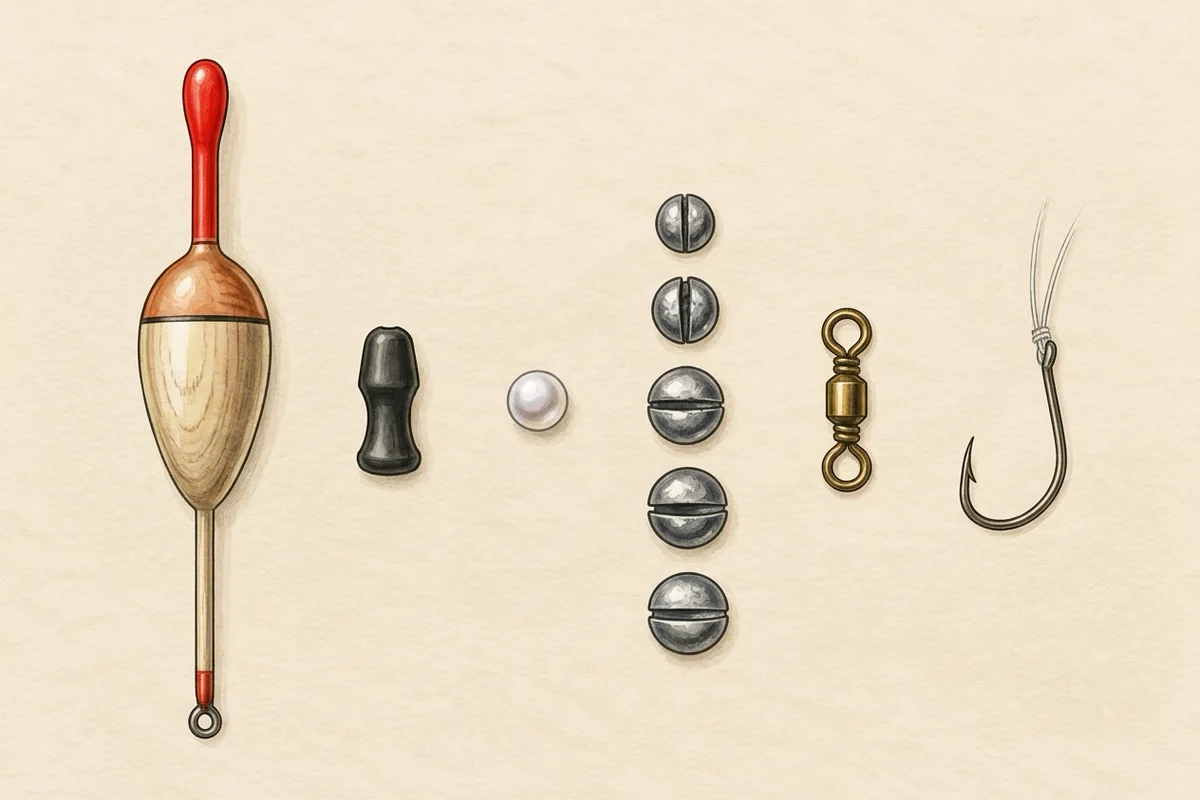
Drifting float with bread and maggot
For spring and summer on the river, in spring just above the bottom, in summer just under the surface.
- Keep your distance
Set your tackle up away from the bank, wear muted colours and approach the spot quietly. In clear water ide do stay put when they notice you, but then stop biting.
- Bread as a lure trail
Let a few pieces of bread drift with the current along the bank and watch where they are taken. For fishing on the bottom small helpings of soaked bread and maggots are enough.
- Light, with a chain of shot
Choose the float only as heavy as the current demands, and spread the shot like a chain on the line. When fish rise to the bread, set the flake just under the float.
- Finding the depth
In spring you set the bait just above the bottom and keep changing the depth until the first bite comes.
- Beyond the fish
Never cast straight onto the fish. Put the rig upstream or beyond them and let the current carry it slowly to them.
- Slow the drift
Hold the float back briefly now and then. The bait rises a little, and that is often exactly what triggers the bite.
- Then move on
After a fight the rest of the shoal is usually spooked. Instead of waiting long, you look for the next spot.
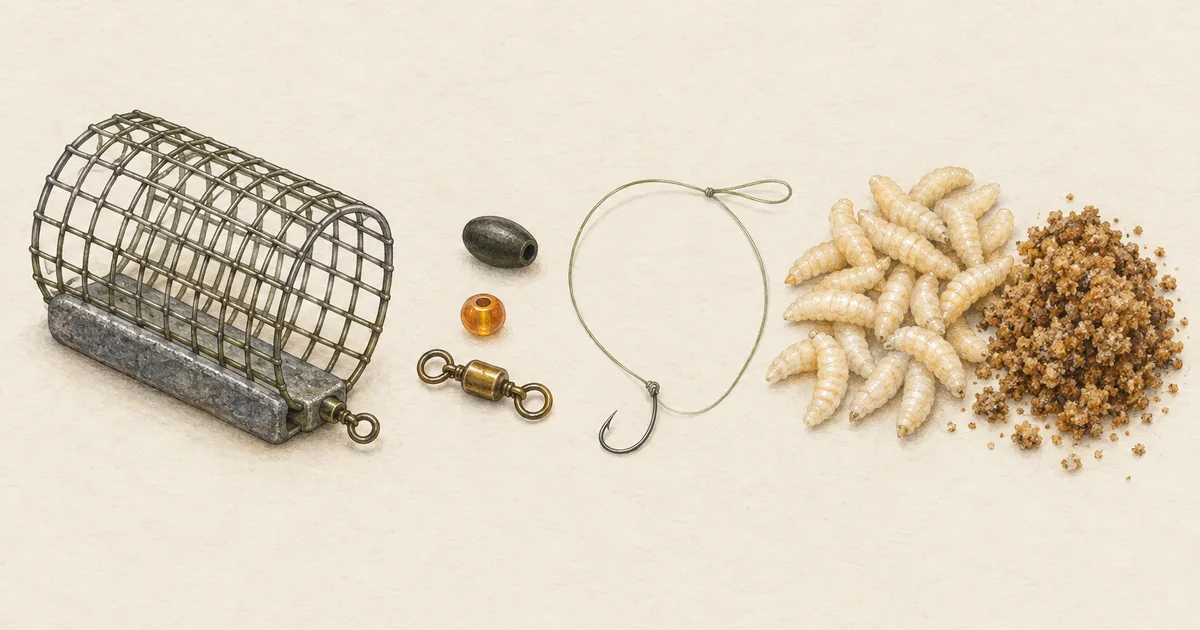
Feeder on river and canal
Especially in spring, when ide stand near the bottom, on big rivers and canals.
- Edge or shallow zone
On a big river you fish the current edge, on a calmer river shallow zones with soft, non-silty bottom. On a canal the rig lies in front of the stone revetment or at rows of piles.
- Feeding coarsely
Mix plenty of coarse particles such as sweetcorn or pellets into the feed; that holds back small silver fish. In summer about ten full feeders go out at the start, in winter only two or three with fine feed.
- Running rig with hooklength
Thread the feeder onto a running rig. The hooklength is at least 0,20 mm, 0,22 mm where barbel may bite too.
- Sweetcorn on the hook
One or two grains of sweetcorn catch quite selectively. In clear water red-dyed corn with two maggots stands out especially; you then scatter the corn into the feed as well.
- At distance
Out at 40 to 50 m distance ide are less shy than close to the bank. So cast further out.
- Drop-back bite
Often the ide takes the tension off the line at the bite and the tip springs back briefly. Strike at once then; it feels like a hard resistance.
- Cushioning head shakes
After the strike come powerful runs and head shakes. Stretchy mono and a soft tip cushion them, so the hook stays in the soft mouth.
Small spinner in autumn
For late summer and autumn, when ide feed more predatorily and take small artificial lures.
- Watching the food
See whether ide under overhanging bushes are picking up beetles or fruit, and choose the shape and colour of the lure accordingly.
- Swivel against twist
Put a ball-bearing swivel between line and spinner, otherwise the rotating blade twists the line.
- Size 0 to 1
Spinners in size 0 or 1 are enough for ide, alternatively crankbaits or soft plastics about 3 cm long. Copper blades suit sun and clear water, silver ones dull light.
- Audible splash-down
The sound of the splash can trigger a bite on its own, for instance with lures that imitate animals that have fallen into the water.
- Slow and even
Retrieve the lure slowly and evenly, in autumn near the bottom or in mid-water. Ide do not hunt as greedily as true predators.
What with
In spring a lobworm or a bunch of maggots, in summer bread flake, big flies, beetles and towards the end grasshoppers. In autumn small metal lures such as spinners. If you feed, the hookbait belongs at the edge, not in the middle.
- Breadsummer, at the surface or just below
Ide rise to drifting bread; big ones often prefer a firmly kneaded, sinking flake.
- Maggots & larvaespring on the bottom and on the feeder
In cool water ide prefer animal food, as a bunch under the float or together with sweetcorn on the feeder.
- Spinnerlate summer and autumn
A small blade in size 0 to 1 looks like an insect or a small fish when ide feed predatorily.
Tackle
A float rod for spring and summer, a fly rod for the stream and a spinning rod for spinners and small pilkers in autumn.
Drifting float with bread and maggot
- Rod
- around 3,60 m (12 feet), test curve just under 1,5 lb, alternatively a match rod
- Reel
- medium-sized fixed-spool reel
- Line
- Monofilament 0,16–0,20 mm
- Hooks
- size 4–8 for a large bread flake
- Weight, float, lead
- Avon or loafer float, as light as possible; for long casts an almost full water bubble around 20 g
Feeder on river and canal
- Rod
- 3,60–3,90 m feeder rod with the softest tip that suits the current; in a current up to about 150 g casting weight
- Reel
- Fixed-spool reel size 4000–5000
- Line
- Mono 0,26–0,28 mm
- Leader
- at least 0,20 mm, 0,22 mm with barbel as bycatch
- Hooks
- sturdy hooks size 8–14
- Weight, float, lead
- in a current a feeder over 100 g
Small spinner in autumn
- Rod
- Ultralight rod with up to about 7 g casting weight
- Line
- thin mono or fine braid, matched to the light lures
- Weight, float, lead
- spinners size 0–1, crankbaits or soft plastics about 3 cm
More on tackle
- Float rod: match, Bolognese and pole
- Feeder rod: classes, quivertips and set-up
- Fly rod: choose line class, length and action
- Spinning rod: choose length, casting weight and action
- Line calculator
- Fishing line: monofilament, braid or fluorocarbon?
- Spooling a reel properly – without line twist
- Wading net: the small landing net for wading
- Disgorger: unhooking quickly and gently
Common mistakes
- Too visible on the bank: In clear water ide notice every movement on the bank and stop biting without leaving the spot. Stay back and cast from cover.
- Rod too high in the fight: The ide then shoots to the surface, thrashes about and shakes the hook off. Keep the rod low and lift it only just before the net.
- Rod too stiff: The ide’s mouth is soft, and on a stiff rod the hook easily pulls out. Take the softest tip that suits the current.
- Maggots in the feed too early: Live feed attracts roach, silver bream and bream straight away. Mix in maggots only once the first ide has been landed.
- Rig cast onto their heads: A cast straight onto the fish scares them off. Cast beside or beyond them and let current or wind carry the rig.
Rules
Each federal state (Bundesland) sets its own closed season (Schonzeit) and minimum size (Mindestmaß). Choose your state; the values come from our state pages.
Baden-Württemberg
Our overview for Baden-Württemberg does not list the ide. What applies there is on the page Fishing in Baden-Württemberg with the state’s spots.
Bavaria
- Minimum size
- 30 cm
- Closed season
- 1.3.–30.4.
- Note
- in the regulation „Nerfling“
As of October 2026. All rules, exceptions and sources: Fishing in Bavaria.
Berlin
- Minimum size
- 30 cm
- Closed season
- none
Correct as of October 2026. All rules, exceptions and sources: Fishing in Berlin.
Brandenburg
- Minimum size
- 30 cm
- Closed season
- none
As of October 2026. All rules, exceptions and sources: Fishing in Brandenburg.
Bremen
Our overview for Bremen does not list the ide. What applies there is on the page Fishing in Bremen with the state’s spots.
Hamburg
Our overview for Hamburg does not list the ide. What applies there is on the page Fishing in Hamburg with the state’s spots.
Hesse
Our overview for Hesse does not list the ide. What applies there is on the page Fishing in Hesse with the state’s spots.
Mecklenburg-Western Pomerania
- Minimum size
- 25 cm
- Closed season
- none
As of October 2026. All rules, exceptions and sources: Fishing in Mecklenburg-Western Pomerania.
Lower Saxony
Our overview for Lower Saxony does not list the ide. What applies there is on the page Fishing in Lower Saxony with the state’s spots.
North Rhine-Westphalia
- Minimum size
- 25 cm
- Closed season
- none
As of October 2026. All rules, exceptions and sources: Fishing in North Rhine-Westphalia.
Rhineland-Palatinate
- Minimum size
- –
- Closed season
- protected all year round
As of October 2026. All rules, exceptions and sources: Fishing in Rhineland-Palatinate.
Saarland
Our overview for Saarland does not list the ide. What applies there is on the page Fishing in Saarland with the state’s spots.
Saxony
- Minimum size
- 20 cm
- Closed season
- none
Correct as of October 2026. All rules, exceptions and sources: Fishing in Saxony.
Saxony-Anhalt
Our overview for Saxony-Anhalt does not list the ide. What applies there is on the page Fishing in Saxony-Anhalt with the state’s spots.
Schleswig-Holstein
Our overview for Schleswig-Holstein does not list the ide. What applies there is on the page Fishing in Schleswig-Holstein with the state’s spots.
Thuringia
- Minimum size
- –
- Closed season
- protected all year round
As of October 2026. All rules, exceptions and sources: Fishing in Thuringia.
The regulation and your fishing permit (Erlaubnisschein) are what count. Lake Constance, the Rhine and the coast, for example, have their own rules: Fishing waters in Germany.
After the catch
Playing and landing
On the feeder the bite often comes as a drop-back; then you strike firmly. In the fight you keep the rod low so the ide does not rage at the surface, and lift it only just before the landing net. Unhook him with wet hands on a mat or in the water and lift him horizontally if you take him out of the net briefly.
As a food fish the ide is regarded as not very tasty. If you put him back, you remove the hook with wet hands, if possible in the water; a fish of legal size to take home you stun and kill at once. Because the stock is declining in places, ask locally about specific rules.
Frequently asked questions
Which bait is best for ide?
That depends on the season. On the feeder one or two grains of sweetcorn catch quite selectively, in summer bread on the surface, in autumn small spinners. In clear water red-dyed corn with two maggots can make the difference.
Where do ide stand in a river?
In big rivers on the current edge, in calm stretches over shallow, soft bottom. In summer they stay near the surface, on a canal in front of the stone revetment.
Which hook size for ide?
On the feeder sturdy hooks in size 8 to 14 do well, because fine ones bend open in the runs. For a large bread flake size 4 to 8 is fine.
Does the ide take spinners?
Yes, especially in autumn when he becomes more predatory. Small spinners in size 0 or 1, worked slowly and evenly, are a good choice then.
Is the ide a shoal fish?
Usually ide travel in loose packs in which big and small fish keep to themselves. Very big ide live more on their own and also hunt fish.
Can you catch ide in the Baltic Sea?
Yes, they occur in brackish water, for example in the Wismarbucht. They mostly bite there as bycatch when fishing for eel with lugworm or when spinning for sea trout with a spoon.
Similar species
If you catch ide, you can fish for these species with similar tackle:
 Chub fishingPeak season
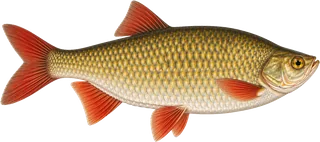 Fishing for ruddPossible
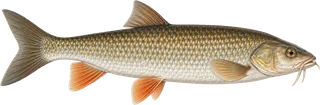 Barbel fishingMinor season
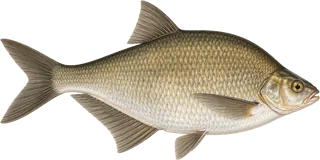 Fishing for breamShoulder season
Sources
Correct as of October 2026. The practical knowledge comes from 12 sources, summarised in our own words.
View all 12 sources
- Steckbrief Aland · BLINKER (Redaktion)
- Aland gezielt feedern: Kraftvolle Fische an der Feederrute · BLINKER (Thomas Pruß)
- Aland-Angeln: Die rote Gefahr · BLINKER (Thomas Pruß)
- Alles auf Aland · RUTE & ROLLE (Jesco Peschutter)
- Brotflocke auf Talfahrt · FISCH & FANG (Frerk Petersen)
- Pirsch auf Döbel & Co. · FISCH & FANG (Andal Grunert)
- Spannung pur: Friedfischangeln mit Oberflächenködern · RUTE & ROLLE (Tobias Norff)
- Mit Kunstköder auf Friedfische · RUTE & ROLLE (Lennart Düring)
- Spinnfischen mit dem Spinner: Ein Guide für Anfänger · BLINKER (Justus Müller)
- Aland (Leuciscus idus) – Fischkunde · RUTE & ROLLE (Redaktion)
- Fischlexikon: Nerfling (Aland) · Landesfischereiverband Bayern
- Fische landen: Wie nutze ich Kescher, Lip-Grip und Co.? · BLINKER (Nick Bremer)
Text produced with AI support, based on the sources listed and these pages: Ide (profile), Float fishing, Fly fishing, Spinning, Bread.