
Knowledge – Fish
Taimen fishing
Taimen fishing means this: in cold rivers of northern Mongolia, where it is allowed, you fish the deep pools with a streamer on a single barbless hook. Here is the way there in nine steps, each with a link to the detailed page.
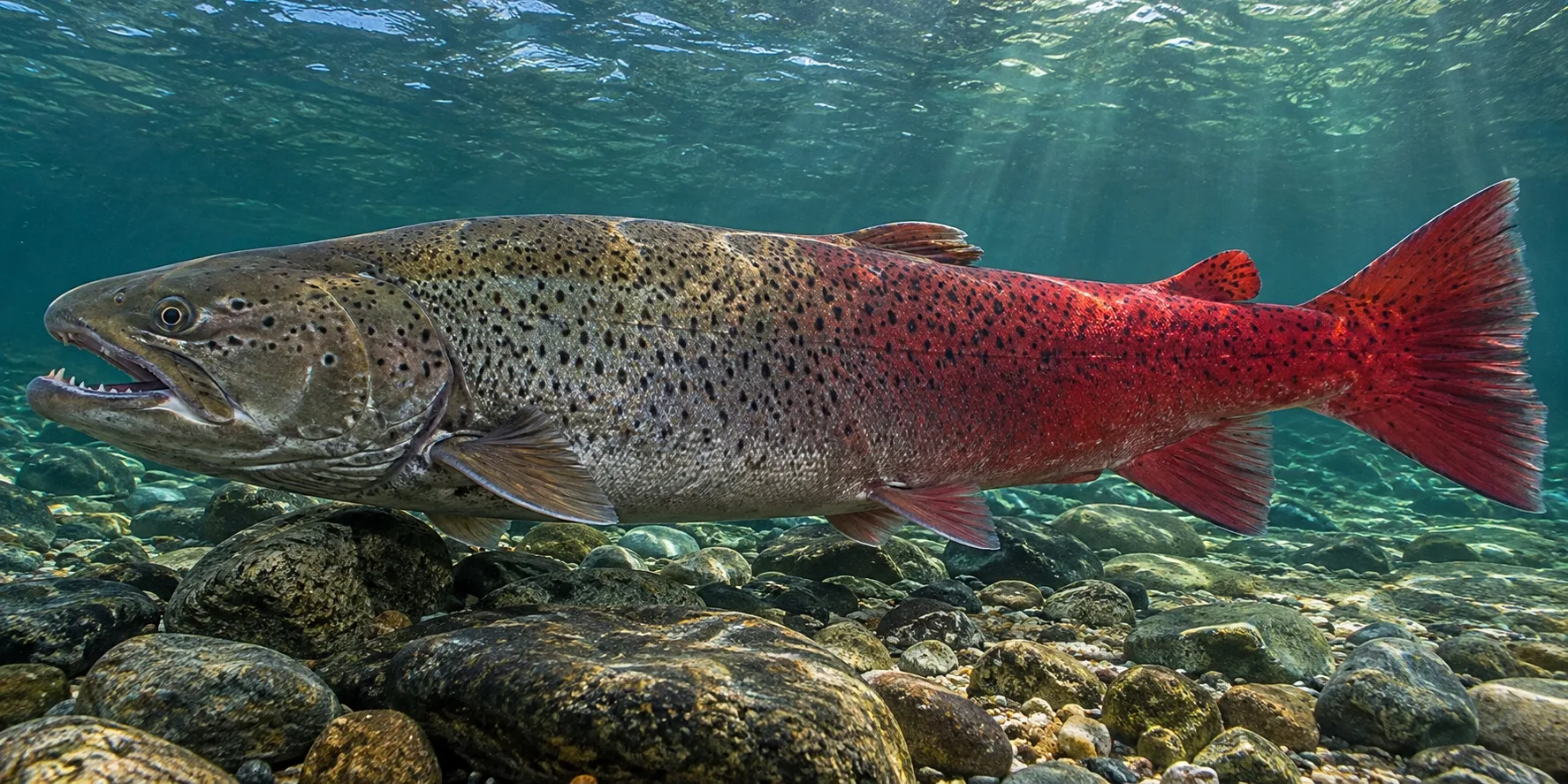
The taimen is threatened: the IUCN lists it worldwide as Vulnerable, Mongolia on its Red List of fishes. In Russia the stocks in the European part, in large parts of Western Siberia, in the Angara basin with Lake Baikal and on Sakhalin have been in the Red Data Book since 2020, and there you must not fish for it. Where angling is allowed, for instance on the fly-fishing waters of northern Mongolia, this applies: only with a permit, only from the start of the season, only with a single barbless hook, and every taimen goes straight back into the water. As of October 2026.
 Choose another fish117 fish with guides
 EelOff-peak season
 EelpoutPossible
 IdePossible
 ArapaimaGood
 GraylingPeak season
 Atlantic salmonSpawning time, please spare
 Brown troutSpawning time, please spare
 Brook troutSpawning time, please spare
 BarbelOff-peak season
 BarramundiSpawning season
 Greater amberjackGood
 Topmouth gudgeonOnly as bycatch
 Blue marlinSpawning season
 BonefishSpawning season
 BonitoGood
 BreamOff-peak season
 Dusky grouperOnly as bycatch
 CobiaPossible
 Spiny dogfishOnly as bycatch
 CodPeak season
 ChubPeak season
 MinnowOnly as bycatch
 European sturgeonOnly as bycatch
 FlounderPeak season
 PerchPeak season
 Largemouth bassGood
 Ballan wrasseOnly as bycatch
 Yellowfin tunaSpawning season
 Giant trevallyGood
 Prussian carpPossible
 BrillPossible
 Gilthead breamSpawning time, please spare
 Golden doradoSpawning season
 Golden mahseerOnly as bycatch
 Dolphinfish (mahi-mahi)Good
 Grass carpPossible
 Great barracudaGood
 GudgeonPossible
 White breamPossible
 DaceOff-peak season
 PikePeak season
 HalibutOff-peak season
 HerringPossible
 GarfishOut of season
 Huchen (Danube salmon)Possible
 Crucian carpOnly as bycatch
 CarpOff-peak season
 RuffeOff-peak season
 VendaceOnly as bycatch
 DabPeak season
 GurnardPossible
 Coley (saithe)Peak season
 Chinook salmonHardly any chance
 King mackerelSpawning season
 LingPeak season
 TuskOff-peak season
 MackerelPossible
 Bighead carpOut of season
 WhitefishPossible
 Conger eelOff-peak season
 Sea troutSpawning time, please spare
 Grey mulletPossible
 Murray codSpawning season
 MuskellungeGood
 Common nasePossible
 Nile perchPossible
 PayaraPossible
 Peacock bassPeak season
 PermitGood
 WeeverOnly as bycatch
 PollackOff-peak season
 BurbotOff-peak season
 AspPossible
 Red snapperSpawning season
 Rainbow troutPeak season
 RoosterfishGood
 RoachPeak season
 RedfishOut of season
 Bluefin tunaOnly as bycatch
 RuddPossible
 Russian sturgeonOnly as bycatch
 HaddockOff-peak season
 SnakeheadPossible
 TenchOff-peak season
 SpirlinOnly as bycatch
 PlaiceOff-peak season
 Greenland halibutOnly as bycatch
 Round gobyOnly as bycatch
 SwordfishGood
 Lake troutSpawning time, please spare
 HakeSpawning time, please spare
 Alpine charSpawning time, please spare
 MonkfishPossible
 SoleOff-peak season
 SailfishGood
 Silver carpOut of season
 SnookPeak season
 PumpkinseedOnly as bycatch
 SpratOnly as bycatch
 Atlantic wolffishSpawning time, please spare
 TurbotPeak season
 SterletOnly as bycatch
 SmeltOnly as bycatch
 Horse mackerelPossible
- TaimenGood
 TarponGood
 TigerfishSpawning season
 BleakPossible
 WahooGood
 Wels catfishOff-peak season
 WhitingPeak season
 Sea bassOff-peak season
 ZanderPeak season
 White-eye breamOnly as bycatch
 Blue breamOnly as bycatch
 Brown bullheadPossible
 VimbaOnly as bycatch
Season in October according to the catch calendar, an estimate and not a guarantee of a catch. The fish pictures are reduced natural-history plates and AI-generated.
Best time
From August to October.
In January: Slim chancesIn February: Slim chancesIn March: Slim chancesIn April: Slim chancesIn May: Slim chances, spawning seasonIn June: Possible, spawning seasonIn July: PossibleIn August: GoodIn September: GoodIn October: GoodIn November: Slim chancesIn December: Slim chances
Good spot
- River: deep pools, spots behind rocks and undercut banksdeep pools, spots behind rocks and undercut banksdeep pools, spots behind rocks and undercut banksdeep pools, spots behind rocks and undercut banks
Top baits
Starter tackle
- Rod: a strong fly rod that can cast big streamers and mouse flies
- Line: fly line matched to the rod class
- Hook: single barbless hook
In short
In short: According to the catch calendar the best time is August to October. Good spots in the river: deep pools, spots behind rocks and undercut banks. Proven baits: flies on a single barbless hook. Threatened according to the IUCN (Vulnerable), on the Red List in Mongolia; in Russia several stocks are in the Red Data Book and must not be fished. On the fly-fishing waters of northern Mongolia it is caught on a single barbless hook and released.
Quick to recognise
The largest salmonid in the world, also called Siberian huchen, with a round body, a long head that is flat on top and small dark spots in an X or half-moon shape. The tail fin of adult fish is reddish. It can reach two metres but grows slowly: it needs at least ten years to reach one metre.
When
In northern Mongolia the season runs from June to October, with August to October the best. In high summer, in July and August, the water level often rises markedly. Spawning takes place shortly after the ice melts, mostly from May to early June, so you only fish once the season in your region is open.
- JanHardly any chance
- FebHardly any chance
- MarHardly any chance
- AprHardly any chance
- MaySlim chances, spawning season
- JunPossible, spawning season
- JulPossible
- AugGood
- SepGood
- OctGood
- NovHardly any chance
- DecHardly any chance
Peak seasonGoodPossibleHardly any chanceSpawning season
Season in the destination
On the Eg and Uur in northern Mongolia the rivers mostly lie under ice from late November to early May, after which the taimen spawns. In July and August summer thunderstorms bring the highest water levels, which is why researchers set their fishing periods there in early summer and in the weeks between late August and mid-October. In autumn the water cools and the fish are clearly more on the move again; in Siberia the specialist press names September and October as a good time.
Season and biting time
In January: Slim chancesIn February: Slim chancesIn March: Slim chancesIn April: Slim chancesIn May: Spawning seasonIn June: Spawning seasonIn July: PossibleIn August: GoodIn September: GoodIn October: GoodIn November: Slim chancesIn December: Slim chances
Where it is now
In the river
A taimen holds a fixed territory that is often many kilometres long. Good spots are deep pools under rapids and waterfalls, places where small streams flow in, the slack water behind big boulders or bridge piers, and undercut banks. By day it mostly rests in deep, calm pools.
How to go about it: By day and in winter the taimen rests in deep pools with slow current, for example under rapids and waterfalls, at bridge piers or behind big boulders. Younger fish stand separately below the big ones or in smaller pools. Because a fish uses its territory over many kilometres and often moves on, you do better to fish many pools one after another than to stay long in one place.
| All year round | deep pools, spots behind rocks, undercut bank, current edge |
|---|
Holding spots in the picture
Choose a season and time of day: the picture shows where the species sits then. Tap a fish or a spot in the list to bring it closer. The picture is schematic and AI-generated, every water is different.
Chance of a catch in springslim
Catch chances in summerpossible
Catch chance in autumngood
Catch chance in winterhardly any
- J
- F
- M
- A
- M
- J
- J
- A
- S
- O
- N
- D
Spawning season
Time of day By day the taimen mostly rests in deep, calm pools.
In the river
Undercut bank, overhanging branches, timber
The taimen is here all year round.
Slack water behind rocks
The taimen is here all year round.
Pools, deep spot
The taimen is here all year round.
Current seam
The taimen is here all year round.
In cold, oxygen-rich rivers the taimen holds a fixed territory that is often many kilometres long. Good spots are deep pools below rapids and waterfalls, the mouths of small tributaries, the shadow of big boulders or bridge piers, and washed-out banks. After the ice melts it moves up into the upper reaches of tributaries to spawn.
Spring: chance of a catch according to the catch calendar slim.
Summer: chance of a catch according to the catch calendar possible in June and July, good in August.
Autumn: chance of a catch according to the catch calendar good in September and October, slim in November.
Winter: catch chance according to the catch calendar hardly any.
Size comparison: AI-generated drawing, schematic.
How
Fishing is done with the fly rod. On the Eg and Uur rivers in northern Mongolia, almost only fly anglers fished during a study, and every taimen went back into the water.
Easiest way
To start you need a strong fly rod that carries big streamers and mouse flies, and a single barbless hook. Offer the fly in deep, slow-flowing pools under rapids. Expect few bites: in northern Mongolia most anglers count on one or two hooked fish on a long day of fishing.
Big streamer and mouse fly
The usual way for taimen: big flies imitating fish, mice or other land animals, in big, cold rivers and on a single barbless hook.
- Choose pools
Start at deep pools with calm current under rapids, at the mouths of small tributaries, at big boulders and at scoured banks. A grown taimen leaves such places mainly to feed and to spawn.
- Tie on a big fly
Tie on a big streamer or a floating mouse fly. It carries a single barbless hook, just as is done in the catch-and-release fishery on the Eg and Uur.
- Plan on many casts
A taimen on the fly takes a lot of patience; locally it is also called the fish of a thousand casts. Fish one pool thoroughly and then move on to the next.
- Low or high
Let a mouse fly work at the surface, because taimen like to hunt there and snap at small mammals in the water. The big streamer, on the other hand, imitates the fish that grown taimen mainly live on.
- A violent strike
The taimen often shoots right out of the water when it strikes. Bites are rare, so stay alert even after hours without contact.
- Bring it in quickly
Fish of a metre and more are possible. Use the power of your tackle and bring the fish in quickly, because stress in the fight can later harm even a released taimen.
- Net and gills
Land the taimen in a large landing net and remove the hook without touching the gills. Release it only once it swims strongly again by itself.
What with
The streamer imitates a fish: you strip it in with your line hand and make pauses in between. Use a single hook and crimp down the barb. With live bait fish or treble hooks more fish die after you release them.
- Streamerall season; as a mouse pattern mainly at the surface
It imitates the big prey grown taimen live on: fish and land-living vertebrates such as mice.
Tackle
A fly rod that can cast a big streamer and, if needed, a sinking line or a sinking leader. The linked pages help with line class, length and reel.
Common mistakes
- Flies that are too small: Grown taimen eat fish and land-living vertebrates. So offer big streamers and mouse patterns; a Russian record fish took a big white streamer.
- Skipping the surface: Taimen like to hunt at the surface and snap at small mammals there. So always carry a floating mouse fly as well.
- Hours at the same pool: Taimen use a territory averaging over 20 kilometres and often change place. If a pool stays quiet, fish the next one.
- Trip timed for high water: In July and August the rivers of northern Mongolia rise highest after thunderstorms. If you can plan, move the trip to autumn.
- Injured gills: In a study on the Eg, 5 of 122 caught taimen bled heavily from the gill area; such fish probably do not survive. Never touch the gills and remove the hook quickly.
Rules
For the taimen the rules of the country where you fish apply, not the German fisheries laws. Licence, closed seasons, minimum sizes and keeping fish are set by each country, often by each water.
What the profile says: Threatened according to the IUCN (Vulnerable), on the Red List in Mongolia; in Russia several stocks are in the Red Data Book and must not be fished. On the fly-fishing waters of northern Mongolia it is caught on a single barbless hook and released.
The fisheries authority (Fischereibehörde) of the country you travel to is what counts. Ask about the current rules before the trip and read in the profile how threatened the species is.
After the catch
Playing and landing
Bring the taimen in quickly with strong tackle and land it in a large net. Remove the single barbless hook without touching the gills, because fish with heavily bleeding gills probably do not survive. The species is threatened and taking a fish can wipe out a stock for good, so release the taimen and let it go only once it swims strongly again by itself. Rules, licence and keeping fish are set by the country where you fish.
Release the taimen, as is customary on the fly-fishing waters of northern Mongolia. The linked fish welfare pages show how to land, unhook and release a big fish gently. In Russia fishing is banned in the regions whose stocks are in the Red Data Book. What else is allowed is set by the authorities in Mongolia or in Russia; ask there before every trip.
Frequently asked questions
When is the best time for taimen in Mongolia?
On the Eg and Uur mainly in the autumn weeks up to mid-October, when the water cools and the fish move around a lot. In early summer you fish only after spawning, and in high summer thunderstorms often make the rivers high.
Do taimen really eat mice?
Yes. Grown taimen eat land-living vertebrates as well as fish, and researchers describe how they shoot out of the water and snap up small mammals. Flies imitating floating mice are therefore considered especially effective.
Which fly catches taimen?
Big streamers imitating fish and mouse flies for the surface. A Russian record fish from the Siberian far east took a big white streamer.
How many taimen do you catch in a day?
Few. In a survey at a fly-fishing water in northern Mongolia most anglers counted on one or two hooked fish on an eight-hour day of fishing. Fish of 100 to 125 centimetres were among the largest two per cent of the catch there.
Does a taimen survive being released?
Usually yes. On the Eg and Uur, according to the researchers‘ estimate, 90 to 95 per cent of released fish survived. Fishing there is only with single barbless hooks, and gill injuries are the biggest risk factor.
Similar species
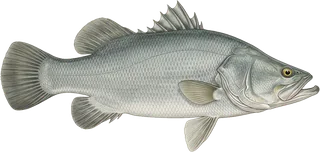
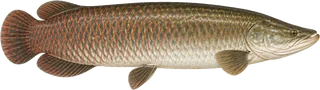
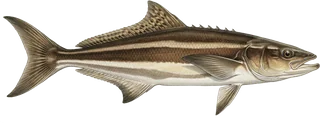
Anyone who catches the taimen can fish for these species with similar tackle:
Sources
Correct as of October 2026. The practical knowledge comes from 7 sources, summarised in our own words.
View all 7 sources
- Evaluating recreational fisheries for an endangered species: a case study of taimen, Hucho taimen, in Mongolia (Can. J. Fish. Aquat. Sci. 66: 1707–1718, 2009) · Jensen et al., University of Wisconsin–Madison (Center for Limnology), NRC Research Press
- Conservation of endangered Mongolian fishes · Jensen Lab, University of Wisconsin–Madison
- Home range and seasonal movement of taimen, Hucho taimen, in Mongolia (Ecology of Freshwater Fish, 2010) · Gilroy et al., University of Wisconsin–Madison (Center for Limnology)
- Angler preferences and satisfaction in a high-threshold bucket-list recreational fishery (Fisheries Research 220, 2019) · Golden, Free, Jensen, Rutgers University
- Hucho taimen, Taimen: Summary · FishBase
- Taimen – der größte aller Lachse · BLINKER (Redaktion, C. Leppin)
- From Madison to Mongolia: The crusade for a giant fish · University of Wisconsin–Madison (News)
Text AI-assisted, based on the sources named and these pages: Taimen (profile), Fly fishing, Streamer, Fly rod.