
Knowledge – Fish
Fishing for lake trout
Fishing for lake trout means: where whitefish live, follow their shoals, present the bait at their depth and bring plenty of patience. Here is the way there in nine steps, each with a link to the detailed page.
 Choose another fish117 fish with guides
 EelOff-peak season
 EelpoutPossible
 IdePossible
 ArapaimaGood
 GraylingPeak season
 Atlantic salmonSpawning time, please spare
 Brown troutSpawning time, please spare
 Brook troutSpawning time, please spare
 BarbelOff-peak season
 BarramundiSpawning season
 Greater amberjackGood
 Topmouth gudgeonOnly as bycatch
 Blue marlinSpawning season
 BonefishSpawning season
 BonitoGood
 BreamOff-peak season
 Dusky grouperOnly as bycatch
 CobiaPossible
 Spiny dogfishOnly as bycatch
 CodPeak season
 ChubPeak season
 MinnowOnly as bycatch
 European sturgeonOnly as bycatch
 FlounderPeak season
 PerchPeak season
 Largemouth bassGood
 Ballan wrasseOnly as bycatch
 Yellowfin tunaSpawning season
 Giant trevallyGood
 Prussian carpPossible
 BrillPossible
 Gilthead breamSpawning time, please spare
 Golden doradoSpawning season
 Golden mahseerOnly as bycatch
 Dolphinfish (mahi-mahi)Good
 Grass carpPossible
 Great barracudaGood
 GudgeonPossible
 White breamPossible
 DaceOff-peak season
 PikePeak season
 HalibutOff-peak season
 HerringPossible
 GarfishOut of season
 Huchen (Danube salmon)Possible
 Crucian carpOnly as bycatch
 CarpOff-peak season
 RuffeOff-peak season
 VendaceOnly as bycatch
 DabPeak season
 GurnardPossible
 Coley (saithe)Peak season
 Chinook salmonHardly any chance
 King mackerelSpawning season
 LingPeak season
 TuskOff-peak season
 MackerelPossible
 Bighead carpOut of season
 WhitefishPossible
 Conger eelOff-peak season
 Sea troutSpawning time, please spare
 Grey mulletPossible
 Murray codSpawning season
 MuskellungeGood
 Common nasePossible
 Nile perchPossible
 PayaraPossible
 Peacock bassPeak season
 PermitGood
 WeeverOnly as bycatch
 PollackOff-peak season
 BurbotOff-peak season
 AspPossible
 Red snapperSpawning season
 Rainbow troutPeak season
 RoosterfishGood
 RoachPeak season
 RedfishOut of season
 Bluefin tunaOnly as bycatch
 RuddPossible
 Russian sturgeonOnly as bycatch
 HaddockOff-peak season
 SnakeheadPossible
 TenchOff-peak season
 SpirlinOnly as bycatch
 PlaiceOff-peak season
 Greenland halibutOnly as bycatch
 Round gobyOnly as bycatch
 SwordfishGood
- Lake troutSpawning time, please spare
 HakeSpawning time, please spare
 Alpine charSpawning time, please spare
 MonkfishPossible
 SoleOff-peak season
 SailfishGood
 Silver carpOut of season
 SnookPeak season
 PumpkinseedOnly as bycatch
 SpratOnly as bycatch
 Atlantic wolffishSpawning time, please spare
 TurbotPeak season
 SterletOnly as bycatch
 SmeltOnly as bycatch
 Horse mackerelPossible
 TaimenGood
 TarponGood
 TigerfishSpawning season
 BleakPossible
 WahooGood
 Wels catfishOff-peak season
 WhitingPeak season
 Sea bassOff-peak season
 ZanderPeak season
 White-eye breamOnly as bycatch
 Blue breamOnly as bycatch
 Brown bullheadPossible
 VimbaOnly as bycatch
Season in October according to the catch calendar, an estimate and not a guarantee of a catch. The fish pictures are reduced natural-history plates and AI-generated.
Best time
In April, mostly during the day.
In January: Hardly any chanceIn February: Hardly any chanceIn March: GoodIn April: Peak seasonIn May: GoodIn June: PossibleIn July: PossibleIn August: PossibleIn September: Possible, spawning seasonIn October: Possible, spawning seasonIn November: Hardly any chance, spawning seasonIn December: Hardly any chance, spawning season
Good spot
- Lake: open water, drop-off edge and weed bedopen wateropen wateropen water and surface
Starter tackle
- Rod: spinning rod around 2,40 m, casting weight around 18 g for light lures; sturdier for long casts with heavy spoons
- Line: braid around 0,14 mm
- Rod: robust trolling rod
- Line: breaking strain not below about 10 kg
- Rod: around 2,40 m, casting weight around 18 g
- Line: braid around 0,14 mm
- Hook: size 4
In short
In short: The best time to catch lake trout is April, mostly during the day. Good spots on the lake: open water. Proven baits: mother-of-pearl spoons and plugs when trolling, deadbait on a rig, spinners in spring; in the current a lobworm on the drift, with the fly a streamer on a sinking line. Reachable with a spinning rod in spring, in deep water layers in summer. Many lakes have their own closed seasons (Schonzeiten), high minimum sizes and catch limits.
Quick to recognise
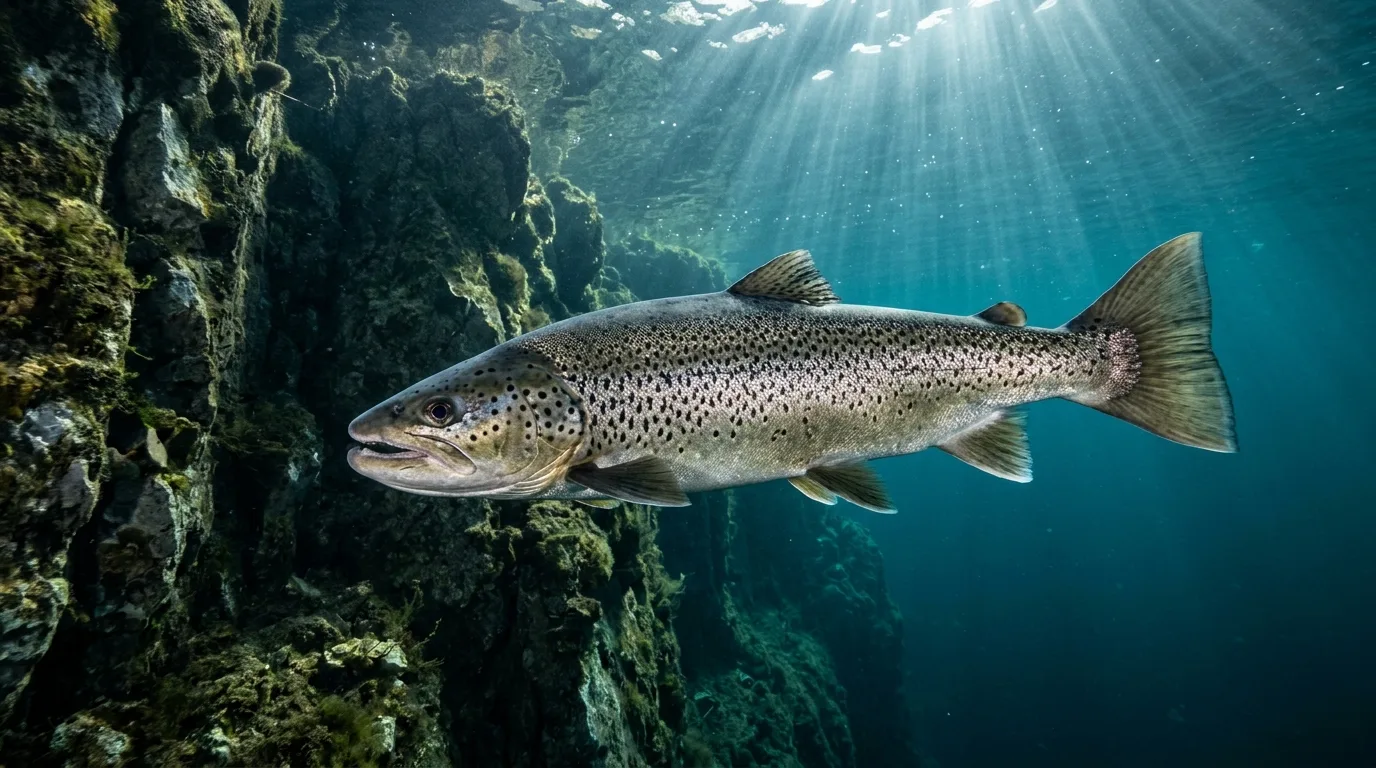
The large lake form of the trout, silvery with black, partly cross-shaped spots. 40 to 80 centimetres is typical, and single fish reach about a metre in length.
When
The chances are best in April; March and May are good too, when rising water brings the fish to the bank. In summer they hold deep and bite poorly, in autumn more often when trolling. From September to December they run up into the inflows to spawn, and the species is then protected in many places, in Bavaria for example from 1 October to 15 March, in Baden-Württemberg until 28 February (as of October 2026). The values are listed below under “Rules”, and on many lakes the fishing permit (Erlaubnisschein) also applies.
- JanHardly any chance
- FebHardly any chance
- MarGood
- AprPeak season
- MayGood
- JunPossible
- JulPossible
- AugPossible
- SepPossible, spawning
- OctPossible, spawning
- NovHardly any chance, spawning
- DecHardly any chance, spawning
Peak seasonGoodPossibleHardly any chanceSpawning season
Spring tactics
At the start of the season the fish hold shallow and feed as soon as the water reaches about 8 to 12 °C. The first days of the season bring the best catches on some lakes, after which it quickly gets tough. On reservoirs the late spring up to May is often seen as promising from the bank.
Summer tactics
Lake trout withdraw into deep, cool water, and bank catches are then rare. Trolling is done at about 5 to 30 m depth, often with a downrigger. If you have to return fish, stay shallower, because from great depth they survive it poorly.
Autumn tactics
In autumn the chances rise again, on reservoirs mainly when trolling, once the water level starts to fall. At the same time ripe fish run up into the inflows. Whether a closed season (Schonzeit) then applies is decided by your federal state (Bundesland) or the water’s rules.
Winter tactics
In winter the chances are slim, and on many lakes the lake trout is protected during this time, on some even all year. In some protected zones trolling is then banned too. Read your fishing permit (Erlaubnisschein) before the first cast.
Are they biting today?
In January: Off seasonIn February: Off seasonIn March: Shoulder seasonIn April: Peak seasonIn May: Shoulder seasonIn June: PossibleIn July: PossibleIn August: PossibleIn September: Spawning season, please spare themIn October: Spawning season, please spare themIn November: Spawning season, please spare themIn December: Spawning season, please spare them
Today’s catch index needs JavaScript. Season and spawning time are in the catch calendar.
Where it sits now
In the lake
Adult lake trout hunt in the open water of deep, cool lakes, specifically where the whitefish travel. On the echo sounder these shoals show as big clouds, and the predators hold at the same depth. In summer the thermocline narrows their territory, in winter smaller fish come close to the surface.
How to go about it: In large, deep lakes and reservoirs you catch lake trout in spring at the bank, at inlets and outlets, and later mainly by trolling in open water. Clear mountain lakes are especially difficult in sun and calm weather. Plan plenty of time; even on good waters it is considered hard to catch.
| All year round | Open water |
|---|---|
| Spring extra | shelf edge, weed bed |
| Winter extra | Surface |
Biting time: mainly during the day. How this looks in the water is shown by the picture of the holding spots just below.
Waters with rules for lake trout
Holding spots in the picture
Choose the season and time of day: the picture shows where the species stands then. Spots outlined in red apply only in the chosen season. Tap a fish or a spot in the list to bring it closer. The picture is schematic and AI-generated, every water is different.
Chance of a catch in springgood
Catch chances in summerpossible
Catch chance in autumnpossiblespawning, observe closed seasons
Catch chance in winterhardly any
- J
- F
- M
- A
- M
- J
- J
- A
- S
- O
- N
- D
Spawning season
No main time Trout are considered mainly daytime feeders, but lake trout usually run into the inflows in the dark to spawn.
Active time Trout are considered mainly daytime feeders, but lake trout usually run into the inflows in the dark to spawn.
No main time Trout are considered mainly daytime feeders, but lake trout usually run into the inflows in the dark to spawn.
No main time Trout are considered mainly daytime feeders, but lake trout usually run into the inflows in the dark to spawn.
In the lake
Water lilies and weed bed
Lake trout are found here in spring only.
Shelf edge
Lake trout are found here in spring only.
Open water
Lake trout are found here all year round.
Just below the surface
Lake trout are found here in winter only.
Adult lake trout live in the open water of deep, oxygen-rich lakes. Young fish stay at first at the mouths of the inflows and in the shore zone and later move into open water. The bigger the fish, the deeper they hold.
Spring: catch chances according to the catch calendar are good in March, peak season in April, good in May. In early spring rising water draws lake trout close to the bank. On Lake Constance they held at the start of April on an edge over gravel and weed beds at two to four metres‘ depth, and on reservoirs the stream inlets are a good place for bank anglers. On the Biggesee they can be caught with a spinning rod from March to early May. On the lakes of Upper Bavaria, too, people fish from the bank in spring and autumn.
Summer: catch chances according to the catch calendar are possible. In summer lake trout hold deep. A pronounced thermocline then limits their hunting ground.
Autumn: catch chances according to the catch calendar are possible in September and October, hardly any in November. This is when spawning takes place, so observe the closed seasons. From September to December ripe fish run up into the inflows, mostly in the dark and with higher flow after rain. In the lake they mostly bite when trolling in autumn.
Winter: catch chances according to the catch calendar are slim. In the cold season it is mainly smaller lake trout that stay near the surface. Spawning continues into December over gravel in the inflows, and the species is then protected in many places.
Depth: As they grow, lake trout stay at greater depths. Smaller suspended trout hold near the surface in the cold season.
Size comparison: AI-generated drawing, schematic.
How
In spring the way in is spinning from the bank. Larger fish mostly bite when trolling from a boat through open water, and at the lake outlet a lobworm on the drift also brings bites.
Easiest way
The simplest way is spinning from the bank right at the start of the season in spring. Take slim spoons or spinners and work the stream inlets and shallow, gravelly shore areas, ideally on cloudy, windy days after rain. Expect many hours without a bite.
Spoons and spinners from the bank
The chance in spring, when lake trout hunt close to the bank and just under the surface.
- Wait for the weather
Best are days with an onshore wind, slight turbidity and prey fish nearby. In calm weather and gin-clear water the bank is often empty, and a change in the weather with rain can alter that suddenly.
- Inlets and gravel
Look for stream inlets and shallow areas with gravel and weed beds, and the current at lake outlets. At the start of the season the fish often hold at only one to three metres‘ depth.
- Slim and shiny
Use slim spoons, size 3 spinners or shallow-running plugs. Where pike also live, some waters require a wire trace for fishing with artificial lures.
- Far out
Cast far and cover the area in front of you in a fan shape in several directions.
- Fish it shallow
In spring retrieve the lure shallow and briskly rather than dragging it over the bottom. Change speed and running depth until you get a touch.
- Expect jumps
A bigger lake trout jumps and runs far out. Give line when it bolts and keep the line tight when it jumps.
- Big landing net
A big enough knotless landing net should be within reach on the bank. Unhook a fish that has to go back in the water.
Trolling from a boat
The way to big lake trout in open water, close to the surface in spring, deep in summer and with good chances again in autumn.
- Prey and depth
The lake trout holds where its prey fish travel. In summer the fishing depth is often between 5 and 30 m, in spring you catch rather just under the surface.
- Choose the bait
Slim mother-of-pearl spoons, slim plugs and dead whitefish on a rig have proved their worth. How many rods and lures you may troll and whether baitfish are allowed is set by the fishing permit (Erlaubnisschein).
- Far behind the boat
Let the lure run at the surface far behind the boat; around 80 m is not considered too much on some reservoirs. For depth in summer anglers use downriggers or deep-sea trolling reels.
- Row briskly
Lake trout respond to fast-running lures, so row briskly. If you see rings on the surface, you can also cast to hunting fish specifically.
- Long runs
Big lake trout make long runs, so use robust tackle. Line with a breaking strain below about 10 kg quickly gives way then.
- Not too deep
A fish that comes up from great depth and has to go back often does not survive it. If you want to release fish, you therefore don’t troll deeper than about 20 m.
Lobworm on the drift
For flowing lake outlets in early spring, where lake trout hold over shallow gravel.
- Current over gravel
In the outlet look for shallow, fast-flowing areas with patterned gravel bottom, about two to four metres deep. Lake trout like to hold there in spring.
- Weight on the bottom
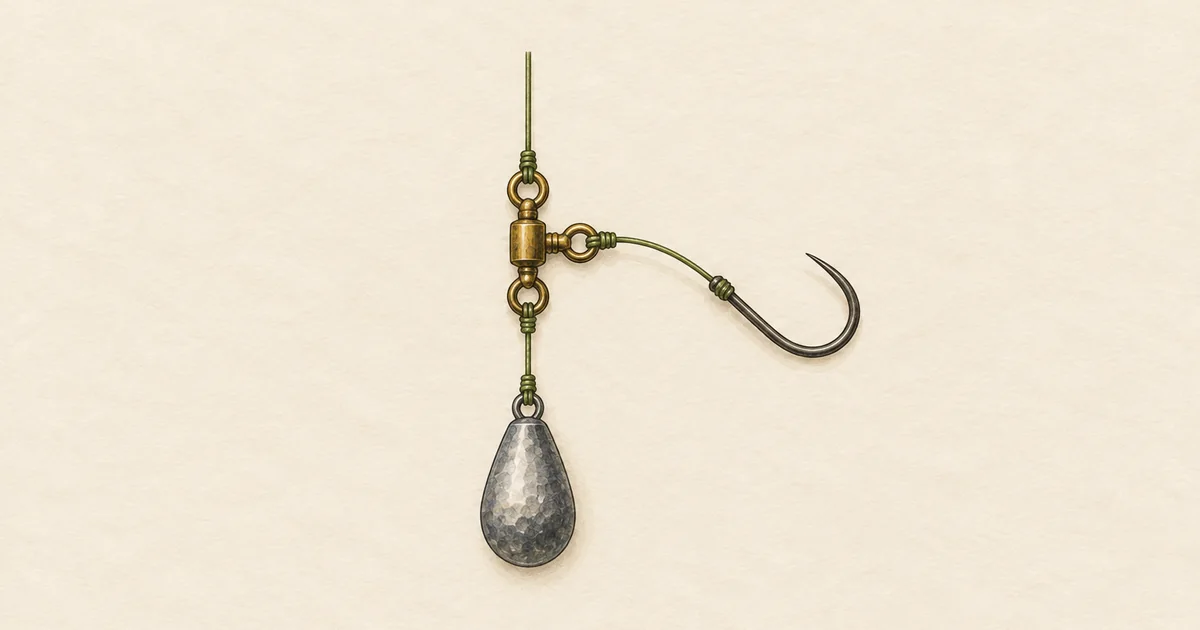
Choose the weight to suit the current; on some days 20 g is right, on others more or less. The worm runs ahead on a side arm.
- Across the current
Cast into the current and hold the rod steeply up. That way you offer the water less line, and the rig stays on the bottom.
- Pause and wind
Let the weight bounce over the bottom with the current, wait a few seconds and then take one turn of the handle. That way you search the stretch bit by bit.
- Watch the tip
Watch for every stronger nod of the rod tip, as bites are often fine. Strike then, before the fish takes the worm deep.
- Go with the fish
A strong lake trout often runs downstream and jumps. If the bank allows, walk a little way with it instead of forcing it against the current.
What with
For spinning, spinners, spoons and plugs are suitable, and when trolling also a dead whitefish on a rig. At the lake outlet a weight hops slowly over the bottom, the lobworm on the side arm runs ahead, and fly anglers use a streamer on a sinking line. Live baitfish are banned in many federal states (Bundesländern).
- Spoonspring at the bank, all year when trolling
Slim spoons catch at the start of the season fished shallow from the bank and are among the standard lures for brisk trolling.
- Spinnerspring from the bank, at inlets
Size 3 spinners are among the proven spring lures on reservoirs and work even on a steady retrieve.
- Wormsearly spring in the current at the lake outlet
On the drift the lobworm hops just above the gravel, exactly where lake trout hold in the outlet.
Tackle
For bank fishing in spring a light spinning rod is enough, with which you cast spoons and spinners far out. Because of the strong teeth a landing net is needed for landing.
Spoons and spinners from the bank
- Rod
- Spinning rod around 2,40 m, casting weight around 18 g for light lures; sturdier for long casts with heavy spoons
- Reel
- Fixed-spool reel size 2500
- Line
- Braid around 0,14 mm
- Leader
- about 1 m of fluorocarbon around 0,28 mm; where pike occur and it is required, wire
- Weight, float, lead
- Size 3 spinners, slim spoons and plugs
Trolling from a boat
- Rod
- robust trolling rod
- Reel
- reel with plenty of line; in summer a deep-sea trolling reel or downrigger
- Line
- breaking strain not below about 10 kg
- Weight, float, lead
- downrigger for 5–30 m in summer; slim spoons, plugs, dead whitefish on a rig
Lobworm on the drift
- Rod
- around 2,40 m, casting weight around 18 g
- Reel
- Fixed-spool reel size 2500
- Line
- Braid around 0,14 mm
- Leader
- about 1 m of fluorocarbon around 0,28 mm, side arm about 70 cm
- Hooks
- size 4
- Weight, float, lead
- Weight 10–30 g depending on the current
More on tackle
- Spinning rod: choose length, casting weight and action
- Bottom rod: length, casting weight and bite indicator
- Float rod: match, Bolognese and pole
- Line calculator
- Fishing line: monofilament, braid or fluorocarbon?
- Spooling a reel properly – without line twist
- Landing net: mesh, size and handle
- Pliers and forceps: removing a hook deep in the mouth
Common mistakes
- Only at the water in sun and calm weather: In clear water the fish see you and the lure too well. Use days with wind, rain or a change in the weather.
- Tackle too fine: A big lake trout on thin line and a light rod is hard to master, and the fight then takes a very long time. Choose your tackle for the biggest fish you can expect.
- Trolled too slowly or too short: A sluggish lure close to the boat achieves little. Row briskly and let the lure run far behind the boat.
- Trolled too deep even though fish are meant to go back: Fish from great depth often do not survive release. Stay in shallower layers then, up to about 20 m.
- Fished at stream mouths in autumn: Ripe fish gather there before running upstream. Some waters prescribe a distance from the mouths, so leave the fish there in peace.
Rules
Each federal state (Bundesland) sets its own closed season (Schonzeit) and minimum size (Mindestmaß). Choose your state; the values come from our state pages.
Baden-Württemberg
- Minimum size
- 50 cm
- Closed season
- 1.10.–28.2.
- Note
- Lake Constance with its own rules
As of October 2026. All rules, exceptions and sources: Fishing in Baden-Württemberg.
Bavaria
- Minimum size
- 60 cm
- Closed season
- 1.10.–15.3.
- Note
- Danube and Rhine catchments
As of October 2026. All rules, exceptions and sources: Fishing in Bavaria.
Berlin
Our overview for Berlin does not list the lake trout. The page Fishing in Berlin shows what applies there, with places in the state.
Brandenburg
Our overview for Brandenburg does not list the lake trout. The page Fishing in Brandenburg shows what applies there, with places in the state.
Bremen
Our overview for Bremen does not list the lake trout. The page Fishing in Bremen shows what applies there, with places in the state.
Hamburg
Our overview for Hamburg does not list the lake trout. The page Fishing in Hamburg shows what applies there, with places in the state.
Hesse
Our overview for Hesse does not list the lake trout. The page Fishing in Hesse shows what applies there, with places in the state.
Mecklenburg-Western Pomerania
Our overview for Mecklenburg-Western Pomerania does not list the lake trout. The page Fishing in Mecklenburg-Western Pomerania shows what applies there, with places in the state.
Lower Saxony
Our overview for Lower Saxony does not list the lake trout. The page Fishing in Lower Saxony shows what applies there, with places in the state.
North Rhine-Westphalia
Our overview for North Rhine-Westphalia does not list the lake trout. The page Fishing in North Rhine-Westphalia shows what applies there, with places in the state.
Rhineland-Palatinate
Our overview for Rhineland-Palatinate does not list the lake trout. The page Fishing in Rhineland-Palatinate shows what applies there, with places in the state.
Saarland
Our overview for Saarland does not list the lake trout. The page Fishing in Saarland shows what applies there, with places in the state.
Saxony
Our overview for Saxony does not list the lake trout. The page Fishing in Saxony shows what applies there, with places in the state.
Saxony-Anhalt
Our overview for Saxony-Anhalt does not list the lake trout. The page Fishing in Saxony-Anhalt shows what applies there, with places in the state.
Schleswig-Holstein
Our overview for Schleswig-Holstein does not list the lake trout. The page Fishing in Schleswig-Holstein shows what applies there, with places in the state.
Thuringia
Our overview for Thuringia does not list the lake trout. The page Fishing in Thuringia shows what applies there, with places in the state.
The regulation and your fishing permit (Erlaubnisschein) are what count. Lake Constance, the Rhine and the coast, for example, have their own rules: Fishing waters in Germany.
After the catch
Playing and landing
Keep the line tight and let the lake trout take line when it bolts, as big fish jump and run far. Land it with a large knotless net and, because of the teeth, don’t grab it by the mouth. Protected or undersized fish you unhook in the water and support until they swim off; a lake trout of legal size that you may take you stun and kill at once.
Land the lake trout with the net and unhook it as described on the page about unhooking. A fish of legal size that you may keep you stun and kill at once; protected or undersized fish you return in the water with wet hands. The firm flesh can be fried, boiled or smoked.
Frequently asked questions
When do lake trout bite best?
In spring straight after the season opens, when the water is about 8 to 12 °C, and in wind and under a cloudy sky. In autumn the chances when trolling are good again.
How deep do you troll for lake trout?
In spring just under the surface, in summer usually between 5 and 30 m, where the prey fish hold. If fish are to go back, don’t go deeper than about 20 m.
Which baits for lake trout?
From the bank slim spoons, size 3 spinners and shallow-running plugs. When trolling, mother-of-pearl spoons, slim plugs and, where allowed, dead whitefish on a rig.
Can you catch lake trout from the bank?
Yes, mainly in spring when they hold shallow, at inlets, outlets and gravelly banks. The rest of the year you mostly catch them from a boat.
How fast do you troll for lake trout?
Rather briskly, because fast-running lures trigger them. On some reservoirs the lure runs about 80 m behind the rowing boat.
What should you watch for when releasing a lake trout?
Handle it only with wet hands, unhook it in the water and support it until it swims off by itself. Fish from great depth often do not survive release.
Similar species
If you catch lake trout, you can fish for these species with similar tackle:
 Fishing for Alpine charSpawning season, please spare them
 Fishing for rainbow troutPeak season
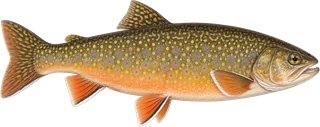 Brook trout fishingSpawning season, please spare
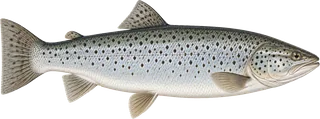 Sea trout fishingSpawning season, please spare
Sources
As of October 2026. The practical knowledge comes from 16 sources, summarised in our own words.
See all 16 sources
- Auf zur Seeforelle: Forellenstart am Bodensee · BLINKER (C. Arbeiter)
- Angeln am Sorpesee: Perle des Sauerlandes · BLINKER (V. Wilde)
- Angeln im Biggesee: Deutschlands bestes Seeforellengewässer · BLINKER (S. Blueme)
- Insiderwissen zum Angeln im März · BLINKER (A. Pawlitzki)
- Seeforellen-Kracher zum Saisonauftakt · BLINKER (A. Pawlitzki)
- Angeln im Schluchsee: Zander wie im Märchen · BLINKER (M. Wehrle)
- Möglichkeiten zur Bestandsstützung und Arterhaltung der Seeforelle im Starnberger See · Bayerische Landesanstalt für Landwirtschaft, Institut für Fischerei (P. Wendt)
- Bigge- und Listertalsperre · FISCH & FANG
- Schule der Demut · FISCH & FANG (B. Taller)
- Magischer Saisonbeginn · FISCH & FANG (B. Taller)
- Sauerland: Start der Seeforellensaison · FISCH & FANG
- Sauerland-Seeforellen · FISCH & FANG
- Top-Gewässer: Der Attersee · FISCH & FANG
- Top-Gewässer: Hallstätter See · FISCH & FANG
- Karte Fischerei Bodensee-Obersee · Landratsamt Bodenseekreis (Behörde)
- Nachhaltig fischen – Tipps für Angler:innen · Umweltbundesamt Österreich (mit österreichischen Landesfischereiverbänden)
AI-assisted text, based on the sources named and these pages: Lake trout (profile), Spinning, Deadbait, Landing a fish and unhooking it.